Table of Contents
Walk into the solar lighting aisle at any hardware store and the problem is obvious. Rows of boxes, every one claiming to light up your yard, almost none of them telling you which type actually belongs on your fence, your flower bed, or your front porch. So people guess. And guessing with outdoor lighting usually means a decorative pillar light doing a security light’s job, which is how you end up back at the store a month later wondering why your “security light” is basically a nightlight.
The fixtures themselves have gotten better, at least. Residential LEDs now use at least 75% less energy and last up to 25 times longer than the incandescent bulbs they replaced, per the U.S. Department of Energy. Pair that with a solar panel and a battery, and you get a fixture that costs nothing to run and needs almost no attention once it’s installed.
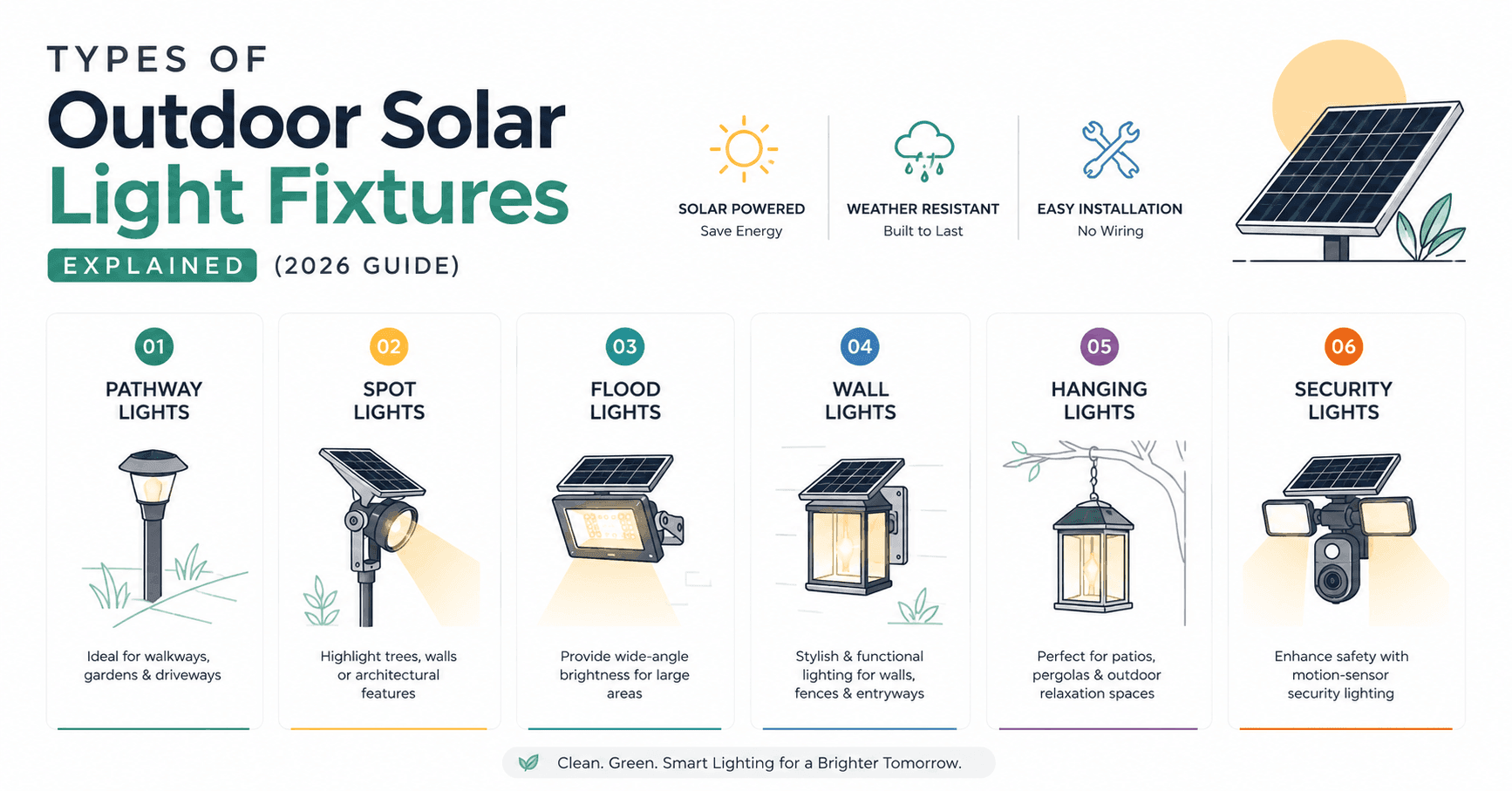
This guide is organized by where a fixture goes and what job it does, not by marketing category. Four groups, roughly two dozen sub-types between them. Find your problem, then find the fixture built for it.
Quick Comparison: Which Category Fits Your Yard?
| Category | Best For | Typical Brightness | How It Mounts |
|---|---|---|---|
| Post, Fence & Pillar-Mounted | Boundaries, gates, decks, columns | Low to medium | Onto an existing structure |
| Garden, Pathway & Hanging | Walkways, garden beds, patios | Low, ambience-focused | Ground stake, hook, or clip |
| Flood, Security & Smart | Driveways, entrances, blind spots | High | Wall or eave |
| Architectural & Structural | Rooflines, facades, flagpoles | Medium | Built into the structure |
How Outdoor Solar Lights Actually Work
Strip away the marketing and every solar fixture is the same four parts: a panel, a battery, an LED, and a light sensor. During the day, the panel converts sunlight into electricity and feeds it to the battery. Once dusk hits, a photosensor detects the drop in light and closes the circuit, and the LED switches on automatically, no timer, no wiring, no electrician invoice.
The battery is where budget tiers actually diverge. Cheaper fixtures use NiMH cells, which are fine in mild climates but lose capacity faster in the cold. Better fixtures use lithium-ion, which holds a charge longer and tolerates temperature swings better, worth knowing if you live somewhere winters actually happen.
Panels vary too. Monocrystalline panels convert sunlight most efficiently, including in partial shade, but cost more to produce. Polycrystalline is the mid-tier most fixtures settle on. Amorphous, or thin-film, panels are cheapest and least efficient, and you’ll mostly find them in bargain-bin stakes and string lights.
None of this matters, though, if the panel sits somewhere shaded. Placement decides more about a fixture’s performance than price does, a beautifully designed light with four hours of daily sun will underperform a plain one that gets eight.
Post, Fence & Pillar-Mounted Solar Lights
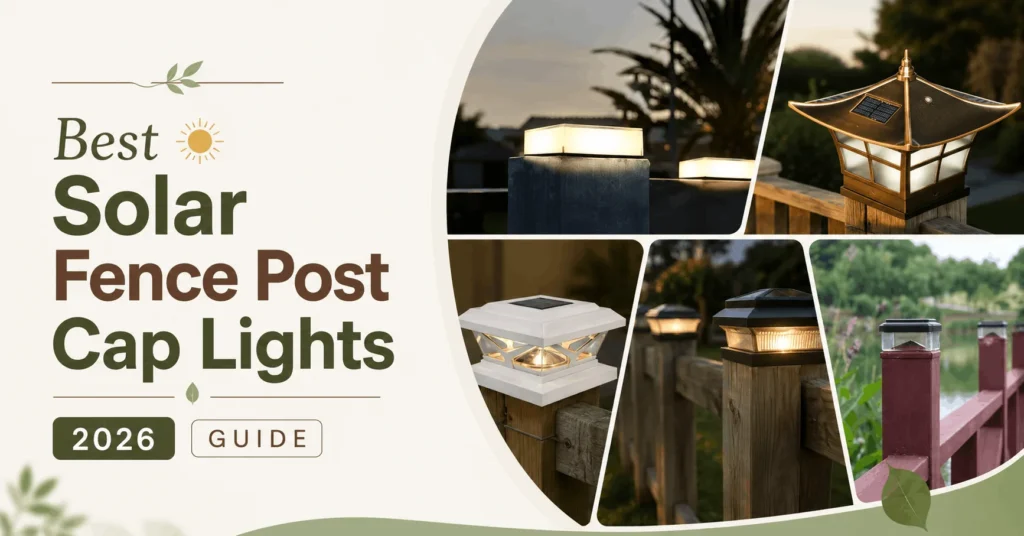
Anything that attaches to something already built, a deck post, a fence board, a brick column, a gate, falls here. These are usually the first solar lights homeowners buy, mostly because they do double duty: they mark a boundary and improve curb appeal at the same time.
Post cap and fence cap lights sit on top of a 4×4 post or run along a fence line, held in place by a friction fit rather than screws. Most installs take about five minutes. The one measurement that trips people up is post size, standard caps fit a true 4×4 (roughly 3.5 x 3.5 inches), but fence post dimensions vary more than most people expect, so measure before ordering. See our post cap lights for deck railing guide, or the fence post cap version if you’re working along a fence line instead.
Pillar lights are the taller, more architectural cousin, the kind flanking a driveway entrance, and they’re usually brighter and pricier than a basic cap, since they’re doing more visual work. Our pillar lights guide covers the models actually worth that extra cost. Solar light stands, by contrast, solve a different problem: no post required, just a freestanding base you can move as your landscaping changes. We break down the best stand types for people who want to experiment before committing.
Two more no-drill options round out this group. Magnetic lights attach to any sufficiently magnetic surface, painted steel railings sometimes aren’t strong enough, so check before buying, and our magnetic lights guide covers where they actually hold. Ground stakes push straight into soil, which makes them the fastest way to add light to a bed, though they’ll lean within a week in soil that’s too sandy or too compacted; the stakes guide has the fixes.
Last in this category, and honestly more of a workaround than a fixture type: lights with a separate solar panel. Some models put the light itself in a shaded spot, like under a porch roof, and run a thin wire to a panel placed somewhere sunnier. It’s a real solution to the single biggest complaint about solar lighting, not enough sun where the light actually needs to go — but the connecting wire has a fixed maximum length that varies by model, so measure the distance to your sunniest patch first. Full breakdown here.
Garden, Pathway & Hanging Solar Lights
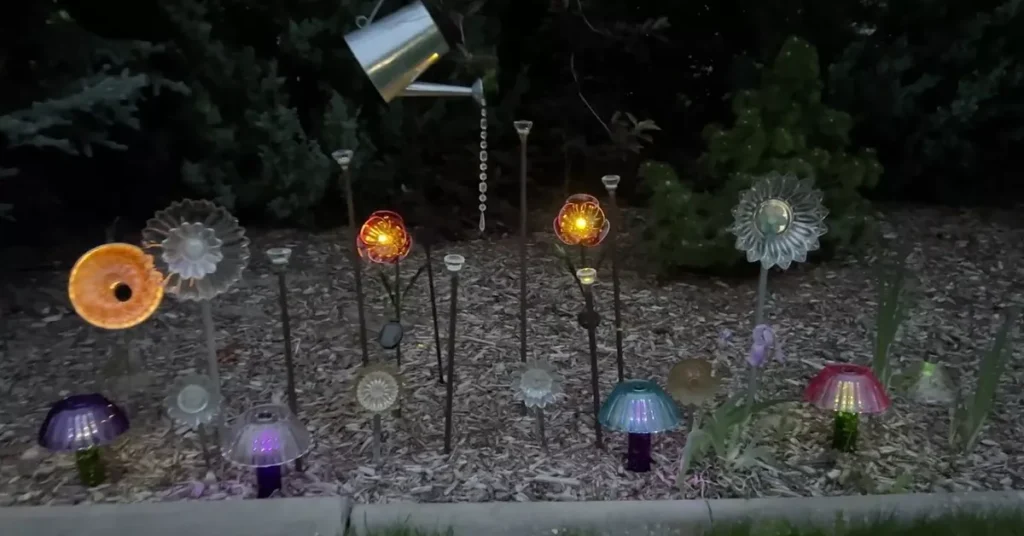
This group is about mood and safe footing more than raw output. Most fixtures here land in the 10 to 150 lumen range, plenty for a path, nowhere near enough to double as security lighting, and that’s by design.
Spacing does more work than brightness for pathway and perimeter lights. Space fixtures too close and the path looks like a runway; too far apart and you get awkward dark gaps between pools of light. Six to ten feet apart is the rough rule most landscapers use for even coverage. We cover this in detail in our guides to garden and pathway lights, pathway lights for alleys, and perimeter lighting specifically.
Accent lighting for plants, trees, and statues exists to highlight rather than illuminate. A spotlight aimed up through a tree canopy creates a completely different effect than one aimed across a statue’s face, and most adjustable heads let you angle them after installation, don’t lock in the first position you try. One expectation worth setting early: fixtures marketed for plant growth supplement daylight, they don’t replace it. See our guides on lights for plant growth, tree lighting, and garden statue lights.
Then there’s everything above eye level and below foot level. Hanging lights, string lights, lanterns, pendant fixtures, bring light over a patio or pergola, and the mounting hardware matters more than the fixture itself; hooks, clips, and adhesive mounts behave very differently on wood versus vinyl versus metal. Our hanging lights guide covers what actually holds. Deck, stair, and step lights solve a different problem entirely, consistency, not ambience. Every step in a staircase needs the same treatment, or the inconsistency itself becomes the trip hazard. (Our dedicated deck, stair, and step lights guide is in progress, check back soon.)
Flood, Security & Smart Solar Lights
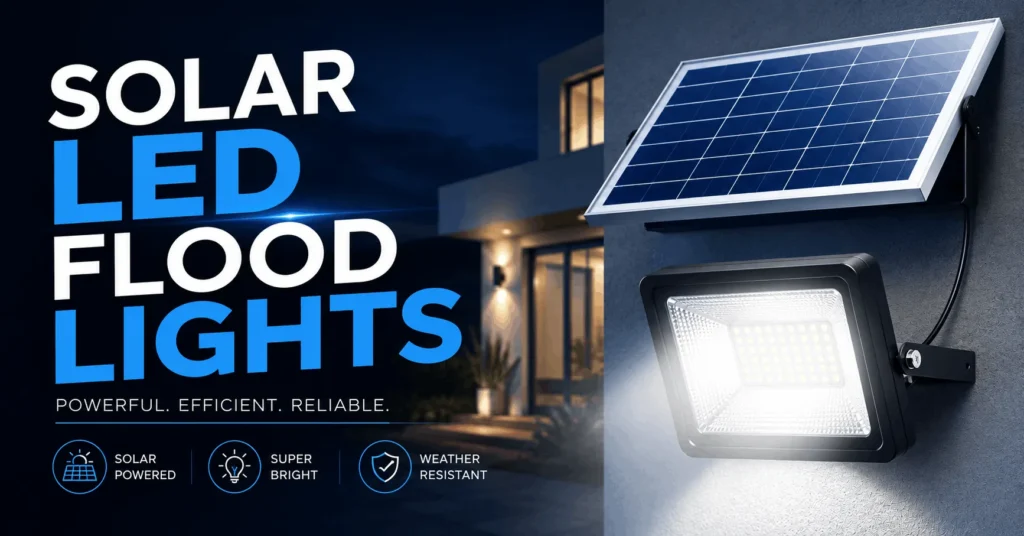
This is the biggest category on the page, and the one where solar power genuinely earns its keep. Outdoor lighting nationwide burns through roughly 1.3 quadrillion BTUs and $10 billion a year, and a meaningful share of that is security lighting left running all night out of habit rather than necessity. A motion-sensor fixture fires only when something actually moves, which is a small change that adds up.
Floodlights and motion sensors are the backbone of DIY home security, bright enough to deter, smart enough not to run continuously. One label to decode before buying: wattage claims like “400W” on a solar floodlight describe equivalent brightness, not real power draw. Solar fixtures don’t pull 400 watts from anywhere; they just produce light comparable to a 400-watt conventional fixture while using far less energy to do it. Our LED flood light, motion sensor, 400W flood, and UK security lights guides all dig into specific models.
Camera and AI-powered lights are the fastest-growing corner of this market, and also where spending a little more on a known brand actually pays off. Before buying, check where footage lives, some models save locally to a memory card, others upload to the cloud on a subscription, and that single detail affects both ongoing cost and how fast you can review an incident. See solar lights with camera and AI-powered solar lights for the current picks. (A dedicated comparison of security camera lights is in progress.)
WiFi, smart IoT, and app-controlled fixtures connect to your home network so you can check status or get a motion alert from your phone, and some double as mobile charging points. One honest caveat: outdoor WiFi range is rarely as strong as it is indoors, so a fixture at the far edge of a large property may drop connection even if it works fine closer to the router. Our WiFi security lights, smart IoT lights, and mobile-charging lights guides cover the practical trade-offs.
Finally, entryway lights sit right where first impressions happen, front doors, side gates, garage entries, balancing curb appeal against genuine security need. Anyone still torn between solar and a traditional wired security light can use a simple rule: good daytime sun and a preference for a fast, no-electrician install points to solar; a shaded, north-facing entry that needs light every single night without fail still favors wired. Full guide to entryway lighting here. (Our full solar-vs-wired comparison is in progress.)
Architectural & Structural Solar Lights
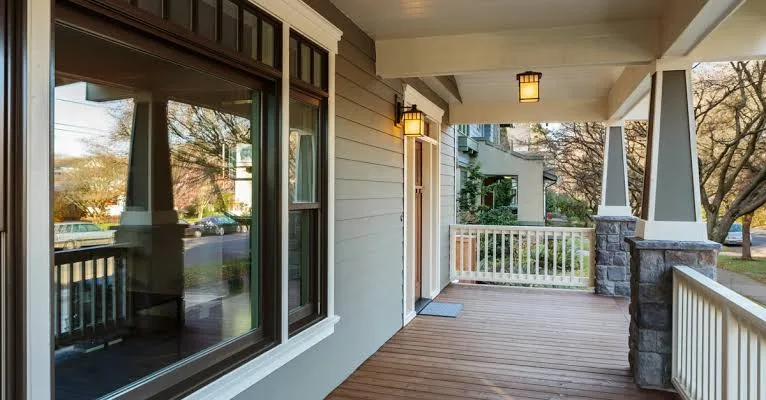
The smallest category on this page, but often the most visually striking, since these fixtures light the building itself rather than the yard around it.
Roofline, gutter, and facade lights wash light gently across siding, brick, or stone, the difference between a house that looks intentional after dark and one that just looks visible. Sun exposure is rarely the problem up there; access for maintenance is. Look for a strong weatherproof rating and a reliable battery, since a facade light that quietly fails in month four is far more annoying to replace than one you can reach from the ground. Our facade lights guide has current recommendations. (A dedicated gutter and roofline lighting guide is in progress.)
The specialty end of this category covers beacon, flagpole, and porch ceiling lights, rotating lighthouse-style beacons, dedicated flagpole spotlights, porch ceiling fixtures that replace a hardwired fan light. Flagpole lighting has an actual rule behind it worth knowing: under the U.S. Flag Code, a flag displayed after sunset should be properly illuminated, which is exactly why dedicated solar flagpole spotlights exist as their own product rather than a repurposed garden light. See our guides to the lighthouse beacon, flagpole lights, and porch ceiling lights.
How to Choose the Right Type for Your Yard
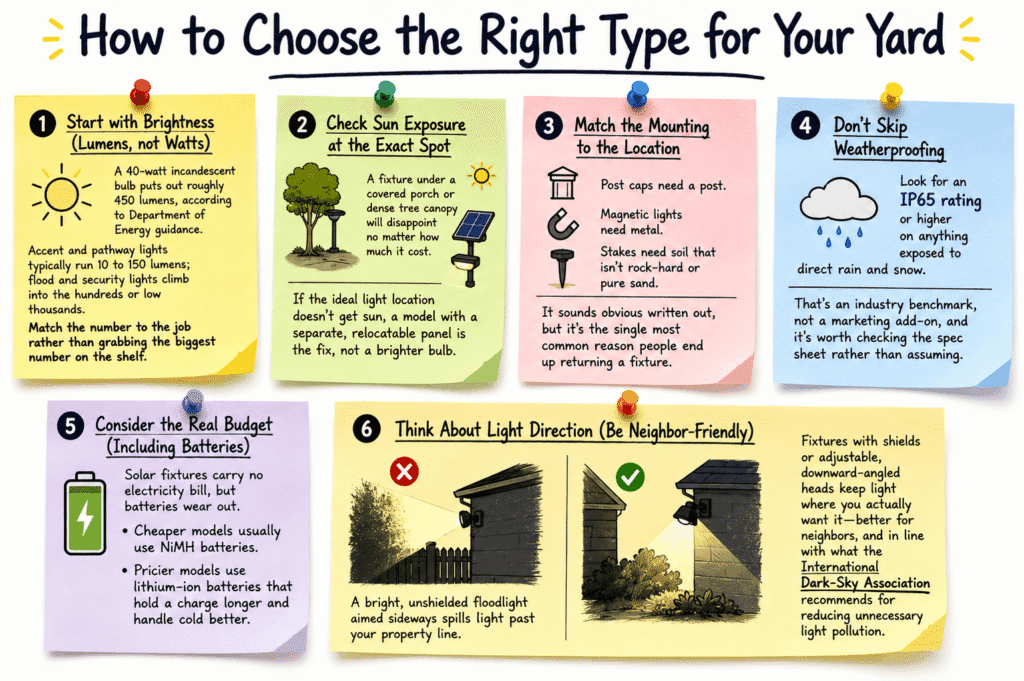
With four categories and roughly two dozen sub-types on the table, the actual decision usually comes down to a handful of practical questions.
Start with brightness, measured in lumens rather than watts, a 40-watt incandescent bulb puts out roughly 450 lumens, according to Department of Energy guidance, which gives you a reference point. Accent and pathway lights typically run 10 to 150 lumens; flood and security lights climb into the hundreds or low thousands. Match the number to the job rather than grabbing the biggest number on the shelf.
Then check sun exposure at the exact spot you’re planning to install, not just the general area. A fixture under a covered porch or dense tree canopy will disappoint no matter how much it cost. If the ideal light location genuinely doesn’t get sun, a model with a separate, relocatable panel is the fix, not a brighter bulb.
Mounting method matters more than it seems like it should. Post caps need a post. Magnetic lights need metal. Stakes need soil that isn’t rock-hard or pure sand. It sounds obvious written out, but it’s the single most common reason people end up returning a fixture.
Weatherproofing has an actual standard: look for an IP65 rating or higher on anything exposed to direct rain and snow. That’s an industry benchmark, not a marketing add-on, and it’s worth checking the spec sheet rather than assuming.
Consider the real budget, including batteries you’ll eventually replace. Solar fixtures carry no electricity bill, but batteries wear out, usually NiMH in cheaper models, lithium-ion in pricier ones that hold a charge longer and handle cold better.
And one that’s easy to overlook: a bright, unshielded floodlight aimed sideways instead of down spills light past your property line. Fixtures with shields or adjustable, downward-angled heads keep light where you actually want it, better for neighbors, and in line with what the International Dark-Sky Association recommends for reducing unnecessary light pollution.
FAQs
Do outdoor solar lights work on cloudy days?
Yes, at reduced output. Panels still capture diffused sunlight through cloud cover, just less of it than on a clear day. A fixture that’s charged well over a few sunny days usually has enough reserve to bridge a stretch of overcast weather.
Do solar lights work in winter?
They do, though shorter days mean less charging time and cold temperatures reduce battery efficiency, especially in older NiMH-powered fixtures. Lithium-ion models generally hold up better through a real winter.
How long do solar lights stay on at night?
Most quality fixtures run 6 to 12 hours on a full charge, enough for a full night through most of the year. Motion-sensor lights typically last even longer since they’re not running continuously.
Are solar lights actually bright enough for security?
The good ones are. Look specifically for flood or motion-sensor fixtures rated several hundred lumens or higher, not the low-output stakes and pathway lights built for ambience rather than deterrence.
How long do solar light batteries last before they need replacing?
Typically one to three years before performance drops off noticeably, depending on battery type and how much sun the fixture actually gets. Most models use a standard, replaceable battery, so the fixture itself usually outlasts it.
What’s the real difference between solar path lights and low-voltage path lights?
Solar lights charge themselves and need zero wiring, but depend entirely on sun exposure. Low-voltage lights run off a transformer wired into your home’s electrical system, so they’re not weather-dependent, though installation costs more and adds a small amount to your electric bill.
Can renters install outdoor solar lights without breaking a lease?
Usually, yes. Stakes, magnetic lights, hanging lights, and freestanding stands typically involve no drilling or permanent modification, making them one of the few outdoor upgrades a renter can add and remove cleanly. Still worth checking a lease before attaching anything to the building itself.
Summary
Start with the problem, not the product. A dark fence line calls for post or fence cap lights. A gloomy side yard calls for a flood or motion-sensor fixture. A flat, boring facade calls for architectural accent lighting. The type follows the need, not the other way around, and once you know which category fits, the guides linked throughout this page walk through the specific products worth buying within it.