The Author
Table of Contents
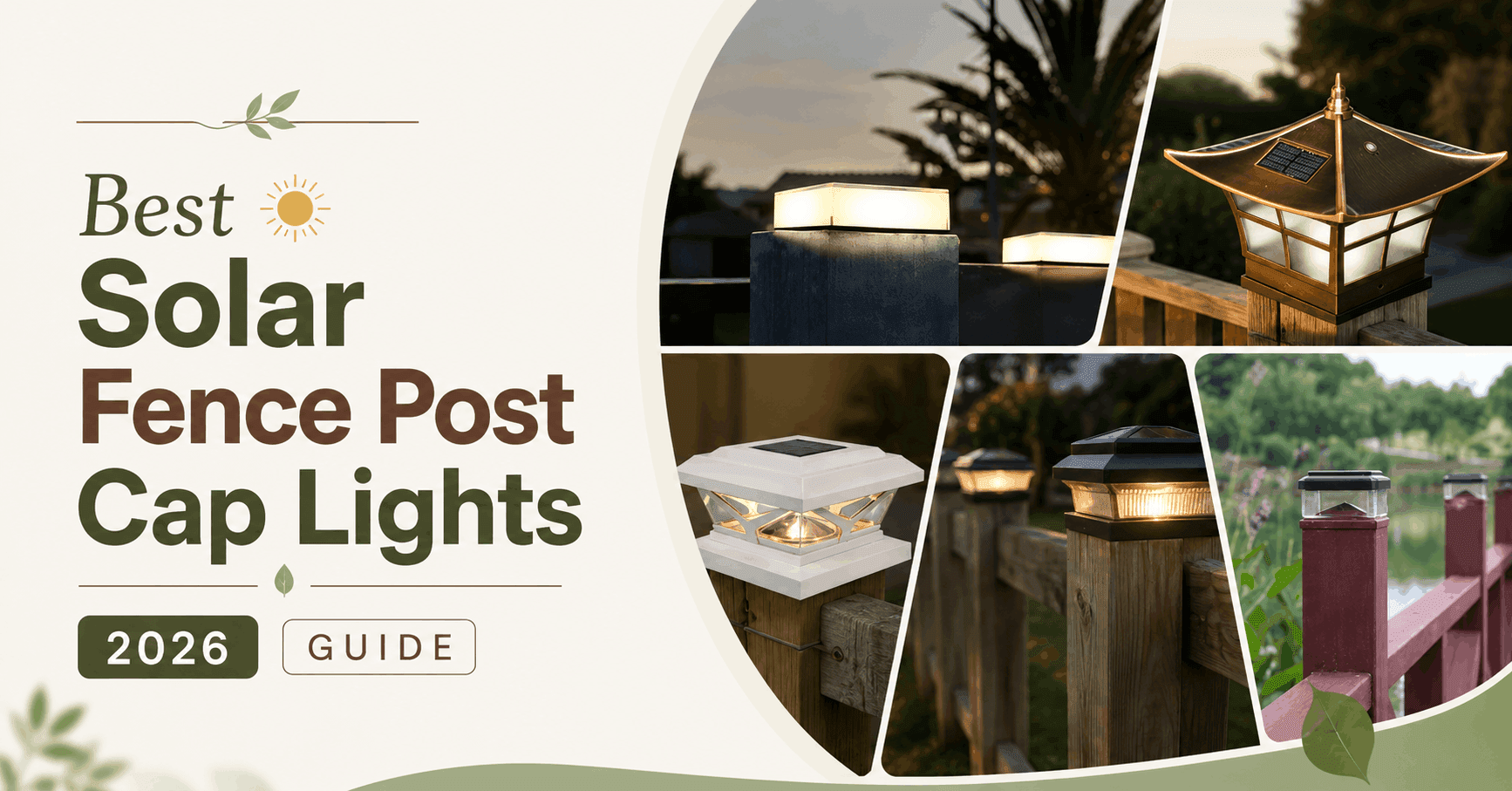
Your fence posts go dark the second the sun sets, and running electrical wire out to the back forty is nobody’s idea of a fun Saturday. Solar post cap lights fix that problem for the price of a screwdriver and an afternoon. No trenching, no electrician, no monthly bill bump, just a cap that soaks up sun all day and glows all night.
This guide breaks down the best solar post cap lights for 2026 by category, explains post sizing (including the nominal-vs-actual trap that trips up almost everyone), and covers the hollow-post problem that ruins more purchases than any other single mistake.
Quick Answer
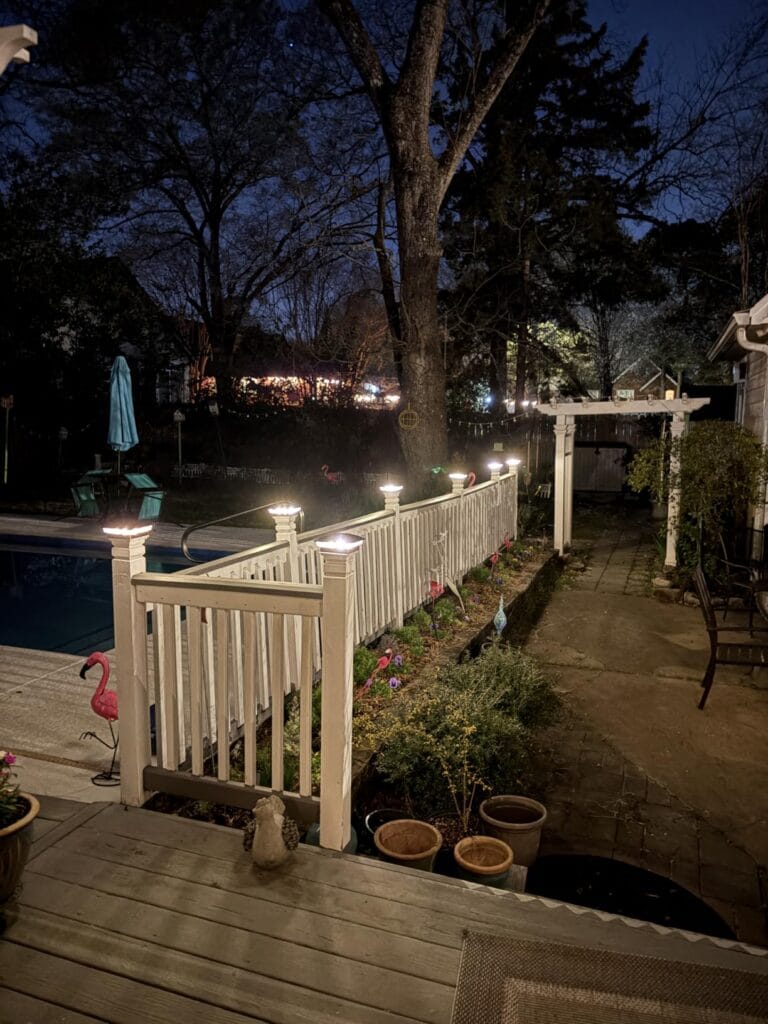
If you only read one section, read this one:
- Best overall / premium: A cast-aluminum-and-glass cap in the Classy Caps style, built to survive years outdoors, not just one season.
- Best budget / dependable: A dual-color-mode cap like APONUO, fits 4×4, 5×5, and 6×6 posts and just works.
- Best for 4×4 posts: A 12-pack designed specifically around the 3.5-inch actual dimension of a standard 4×4.
- Best for gate posts (5×5/6×6): A brighter, cast-aluminum cap pushing well past 100 lumens, since gate posts need to actually light something up, not just glow.
- Best decorative style: A flickering-flame cap for a campfire-lantern look without an open flame.
How We Picked These
Post cap lights all look similar in a thumbnail. The differences that matter, battery chemistry, lumen output, IP rating, and post-size fit — only show up once you dig into the specs. For this guide, we compared products across post-size compatibility, waterproof rating, battery type, real-world lumen output, housing material, and how each one handles the hollow-post problem that trips up vinyl and composite fence owners.
We also leaned on how outdoor lighting engineers describe performance in cloudy or cold climates, since a spec sheet number means little if the light goes dark by 10 p.m. every October.
One quick gut check before you buy anything: measure your post first. A huge share of returns and one-star reviews trace back to a cap that almost fit.
Post Size Guide
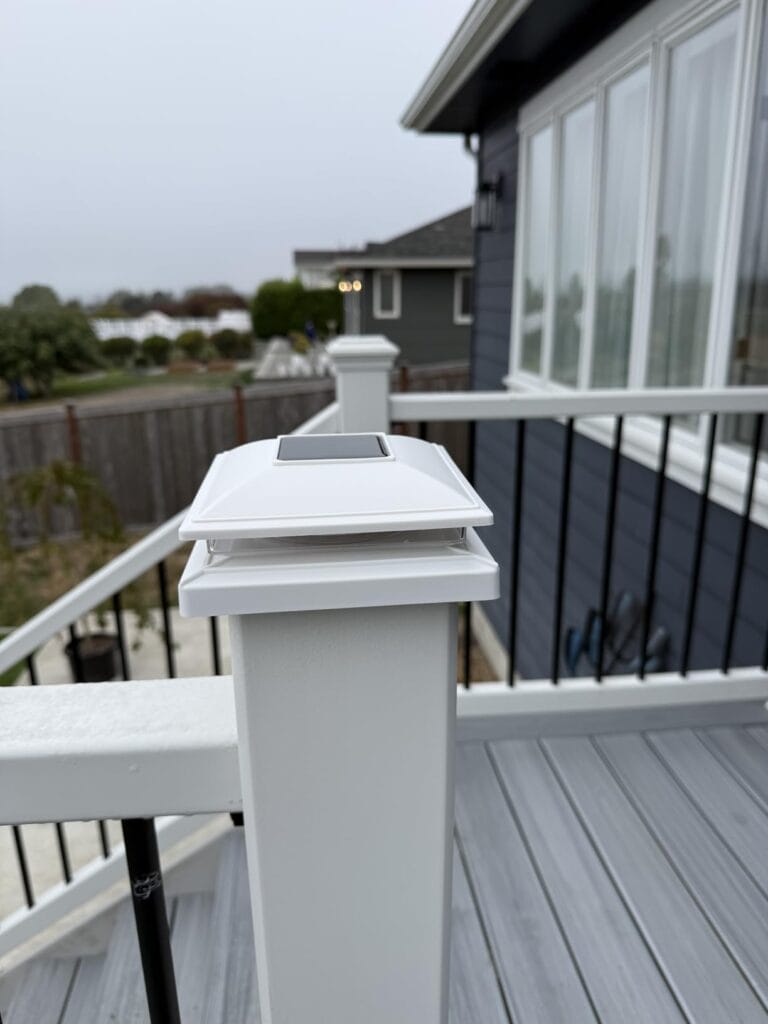
Lumber labels lie a little, and it’s not anyone’s fault, it’s just how the industry works. A “4×4” post measures 3.5 by 3.5 inches once it’s been dried and planed. A “6×6” measures 5.5 by 5.5 inches. That half-inch shrinkage happens on every dimensional board over an inch thick, so a “2×4” is really 1.5 by 3.5 inches too.
Here’s the quick-reference version:
| Nominal (label) size | Actual (real) size |
|---|---|
| 4×4 | 3.5″ x 3.5″ |
| 5×5 | 4.5″ x 4.5″ |
| 6×6 | 5.5″ x 5.5″ |
Vinyl and composite posts don’t follow this rule the same way. Their outer dimensions vary by manufacturer, so a “5×5 vinyl post” from one brand might not match another brand’s post of the same name. Always measure the actual outer face of your post with a tape measure before ordering, rather than trusting the label on the fence panel box.
Most solar cap manufacturers know about this confusion and ship universal caps with snap-in adapters for 3.5″, 4.5″, and 5.5″ posts, which covers the three standard wood sizes in one box. If your post falls outside that range, a 2×2 aluminum pool-fence post, for instance, you’ll need a cap built specifically for that dimension, since a generic adapter won’t bridge that big a gap.
The Hollow Post Problem (Vinyl and Composite Posts)
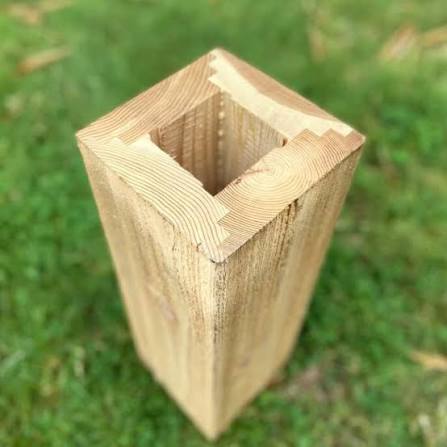
This is the single biggest reason people end up disappointed with a solar cap light, so it gets its own section.
Wood posts are solid, so a cap with a screw-down base works fine, pre-drill a pilot hole, drive two screws, done. Vinyl and composite posts are hollow. There’s nothing solid to screw into a few inches down, and a cap that relies on screws alone will eventually work loose or crack the thin vinyl shell around the screw holes.
The fix is simpler than it sounds. For hollow posts, skip the screws entirely and use a high-strength exterior silicone or a vinyl-specific construction adhesive instead, applied to the inside lip of the cap’s base before you set it on the post. Some manufacturers explicitly say their caps aren’t compatible with hollow posts unless you first install a flat filler cap or pack the post top with a wood block, which gives the screws something solid to bite into.
If you’re set on running low-voltage wired lights instead of solar down the road, hollow posts actually work in your favor, installers commonly fish wire through the inside of vinyl rails and posts, feeding it out through a drilled hole near the top, which keeps everything hidden. But for solar caps, adhesive is almost always the simpler, sturdier answer.
Best Solar Post Cap Lights by Category
Best Overall / Premium
For a cap you buy once and stop thinking about, look for cast-aluminum or diecast construction paired with a real glass lens rather than plastic. This is the Classy Caps approach, and it’s why their fixtures show up again and again in professional deck and fence installations, the metal housing shrugs off UV fade and impact damage that turns cheaper plastic caps chalky and brittle within a couple of summers.
If brightness matters more to you than heirloom looks, a cast-aluminum cap with a lithium-ion battery (rather than the NiMH cell most competitors use) holds a charge noticeably better through winter, which matters if you live somewhere with genuinely gray Januarys. Coastal homeowners should specifically look for a “coastal” or salt-air-rated line, since standard powder coating corrodes faster near open water.
Good for: homeowners who want to install once and forget it for a decade, not just a season.
Best Budget / Dependable
You don’t need to spend premium money to get a cap that fits well and works every night. Dual-color-mode caps, warm white for ambiance, cool white for a crisper look, that ship with adapters for 4×4, 5×5, and 6×6 posts hit the best combination of fit, price, and reliability. These typically run in 6- or 8-packs, which brings the per-unit cost down enough to light an entire fence line without blowing the budget.
The tradeoff versus premium metal caps is mostly cosmetic: molded ABS plastic instead of cast aluminum, and a NiMH battery instead of lithium-ion. For most yards, that’s a perfectly reasonable trade, the light output and runtime hold up fine, and the plastic housings handle rain and UV better than you’d expect from the price point.
Good for: capping an entire fence line without pricing yourself out of the project.
Best for 4×4 Posts
Since 4×4 is by far the most common fence and deck post size, this is where the widest selection lives. Look for a cap explicitly built around the 3.5-inch actual dimension (not just labeled “4×4,” which can mean the manufacturer is still thinking in nominal sizes). A snug, wobble-free fit matters more here than raw lumen count, since a cap that rocks on the post seal eventually lets water in.
A well-fitted 4×4 cap with an IP64 or better waterproof rating, roughly 6 to 8 hours of daytime charging, and 10 to 12 hours of nighttime runtime covers the vast majority of climates without leaving you in the dark before sunrise.
Good for: the standard wood or vinyl fence and deck post most homes already have.
Best for Gate Posts (5×5/6×6)
Gate posts do double duty, they need to look good and actually help you see the latch, the step, or the person walking up your driveway at 9 p.m. That means this is the one category where you should prioritize lumens over subtlety. Look for a cast-aluminum cap in the 100-to-160-lumen range with an IP65 rating, built around 5×5 or 6×6 posts (4.5″ or 5.5″ actual dimension).
For extra-wide gate columns, some premium caps ship with stacked adapters that stretch coverage from 5″ up to 7.5″, which is worth checking if your entry columns are oversized or stone-clad.
Good for: driveway entrances, gated yards, and anywhere you actually need to see, not just glow.
Best Decorative Style
If ambiance is the whole point, a flickering-flame LED cap gives you a campfire-like flutter with none of the fire risk, HOA complaints, or bug swarm of an actual torch. These typically use 8 SMD LEDs behind a warm-white lens and fit the standard 4×4/5×5/6×6 trio with included adapters.
Stained-glass and seagull-cutout lamp styles are the other popular decorative route, trading raw brightness (often just 7 to 10 lumens) for a genuinely pretty daytime silhouette and a soft glow at night. These work best as accent pieces rather than functional lighting, pair them with brighter caps at your gate or stairs if you actually need to see where you’re walking.
Good for: patios, garden fences, and anywhere the light itself is part of the decor.
Custom and Personalized Options
If you want your fence posts to say something more specific than “generic warm glow,” custom shops (Etsy sellers are the biggest source) offer hand-painted finishes, custom sizing for oddball post dimensions, and monogrammed or house-number caps that double as address markers for delivery drivers. A few metal fabricators build fully custom solar lamp posts, not just caps, with laser-cut monograms and house numbers welded into powder-coated steel.
Custom options run noticeably more than off-the-shelf caps, and lead times can stretch to a few weeks since most are made to order. They’re worth it for a genuinely unique entryway statement; they’re overkill if you’re just trying to light up a 40-foot fence line affordably.
Solar Post Cap Lights for Gate Posts and Entryways
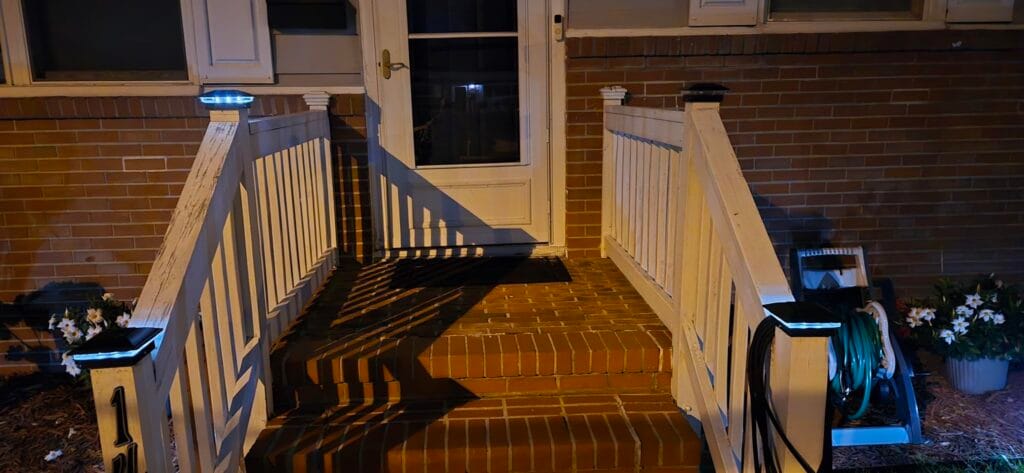
Gate and entry posts get held to a different standard than a fence running along your property line, and for good reason, they’re the first thing a guest, delivery driver, or your own tired self sees walking up at night.
A few things matter more here than elsewhere:
- Brightness. Aim for the 60-to-160-lumen range rather than the 5-to-20-lumen range that’s fine for a decorative fence cap.
- Symmetry. Gate entries almost always look better lit in matched pairs, so buy caps sold in even-numbered sets rather than mixing styles across the two posts.
- Post size. Gate posts and columns tend to run larger than standard fence posts, 5×5, 6×6, or oversized stone-clad columns, so double-check the adapter range before ordering.
- Dusk-to-dawn reliability. A failed light at your gate is more noticeable (and more of a safety issue) than one dark cap somewhere in the middle of a 100-foot fence line, so this is the spot to spend a little more on a proven battery chemistry.
Solar Post Cap Lights vs. Solar Lamp Posts
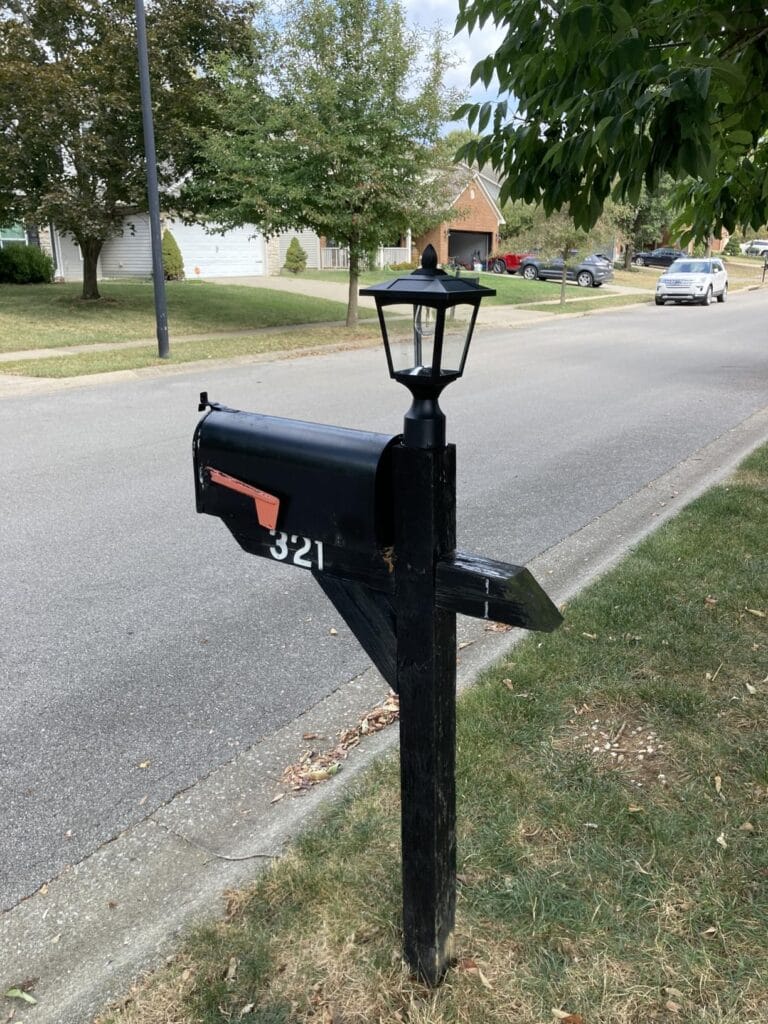
These two get confused constantly because they share the word “solar” and both end up in the same yard, but they solve different problems.
Solar post cap lights sit directly on top of an existing fence, deck, or gate post. They’re small, self-contained, and designed for ambiance — a soft glow that outlines your property line or deck perimeter rather than lighting up a whole area. Lumen output typically runs from around 5 lumens on decorative styles up to 160 or so on the brightest cast-aluminum models.
Solar lamp posts are freestanding fixtures, often 60 to 76 inches tall, that plant directly into the ground with their own base, no existing post required. They’re built for functional lighting: walkways, driveways, and entrances that need real visibility, and commercial-grade versions can push into the thousands of lumens with motion-sensor modes for security use.
The simplest way to decide: if you already have a fence or deck post and just want to accent it, get a cap. If you need a standalone light source somewhere with no existing post, beside a mailbox, along a driveway, at the start of a front walk, get a lamp post.
Installation Tips
A few habits separate a cap light that lasts eight years from one that’s dead by next spring:
- Measure before you buy. Actual post dimension, not the label on the lumber or fence panel.
- Charge before you judge. Give a new cap 24 to 48 hours of direct sun before deciding it’s “too dim”, batteries ship partially charged, not full.
- Install in the morning. That gives the panel a full day of light before the first night it’s expected to perform.
- Screws for solid wood, adhesive for hollow vinyl or composite. Pre-drill pilot holes in wood to avoid splitting; use exterior-grade silicone or vinyl cement on hollow posts.
- Keep the panel clean. Dust, pollen, and leaf litter cut into charging efficiency more than most people expect, especially heading into a cloudy season.
- Flip the internal switch to “on.” Sounds obvious, but plenty of “defective” caps are simply still shipped in their off position.
FAQs
What are the best solar fence post lights for 2026?
For most homes, a dual-color-mode cap that fits 4×4, 5×5, and 6×6 posts covers the widest range of needs at a fair price. If you want a light you’ll still be happy with in ten years, spend up for cast-aluminum-and-glass construction instead of molded plastic.
Which solar post cap lights hold a charge the longest?
Battery chemistry decides this more than any other single spec. Lithium-ion and LiFePO4 cells outlast NiMH batteries, which in turn outlast the older NiCd cells still found in the cheapest caps. NiCd batteries also lose capacity faster in cold weather, so if you live somewhere with real winters, prioritize a cap that specifies NiMH or lithium over NiCd.
Do solar fence post lights work in cloudy or rainy climates?
Yes, but with reduced output. Solar panels still charge from diffuse daylight on overcast days, just less efficiently, often somewhere in the 15 to 30 percent range of what they’d generate in full sun. Monocrystalline panels handle low-light and overcast conditions noticeably better than older polycrystalline panels. The real enemy isn’t rain, which barely dents charging and even helps wash panels clean, it’s snow sitting directly on the panel, which can block light absorption almost entirely until it’s brushed off.
Are solar post cap lights different for gate posts than fence posts?
Yes. Gate posts benefit from higher lumen output (60 to 160+ lumens versus 5 to 20 for purely decorative fence caps), matched pairs for visual symmetry, and often larger post-size adapters, since entry columns tend to run bigger than standard fence lumber.
What is the difference between a solar post cap light and a solar lamp post?
A post cap light sits on top of an existing post and provides accent lighting. A solar lamp post is a freestanding, ground-mounted fixture with its own pole, built for functional lighting like walkways and driveways, and capable of much higher lumen output.
How many lumens should a solar post cap light put out?
For pure ambiance along a fence line, 5 to 20 lumens is plenty. For anywhere you need actual visibility, gate posts, stairs, walkway edges, look for 60 lumens or more, with the brightest cast-aluminum caps reaching up to around 160 lumens.
Are custom or personalized solar post cap lights worth the extra price?
If you want a monogram, house number, or a genuinely unique entryway statement, yes, custom shops deliver on that in a way off-the-shelf caps can’t. If your main goal is simply lighting a fence line affordably, standard multi-packs deliver the same nightly glow for a fraction of the cost and with none of the wait time.
What post sizes do standard solar cap lights fit?
The three standard wood post sizes are 4×4 (3.5″ actual), 5×5 (4.5″ actual), and 6×6 (5.5″ actual). Most universal caps ship with adapters covering all three. Vinyl and composite posts vary by manufacturer, so measure the actual outer dimension rather than assuming it matches the labeled size.
What is a hollow post, and does it change which cap light I should buy?
Vinyl and composite fence posts are hollow rather than solid like wood, which means screws alone often can’t secure a cap long-term. Look for a cap rated compatible with hollow posts, or plan to mount it with an exterior-grade silicone or vinyl adhesive instead of relying on screws.