Last updated on October 27th, 2026 at 09:37 am
Quick Answer: Best overall: Dynaming Flickering Flame. Best value: Aponuo. Most durable: Classy Caps Imperial. Before you buy, measure your post, because a “4×4” is really 3.5 x 3.5 inches. Most solar post caps put out 5 to 15 lumens, glow for 6 to 10 hours, and need a fresh battery every 2 to 3 years.
Table of Contents
Best Solar Post Cap Lights at a Glance
| Pick | Best For | Lumens | Post Fit | Battery | Pack Size |
|---|---|---|---|---|---|
| Dynaming Flickering Flame | Best overall, ambience | Soft glow (not rated) | 4×4 and 5×5 wood or vinyl, 6×6 wood | 1 AA rechargeable | 8 |
| Aponuo | Best value, large areas | Not rated | 4×4 vinyl, 4×4 and 6×6 wood | 1 AA rechargeable | 6 |
| Classy Caps Imperial | Most durable | Not rated (brighter than most tested) | 3.5×3.5 and 4×4 wood or vinyl, 4.5×4.5 vinyl with adapter | 1 AA rechargeable | 2 |
| Dynaming 15-Lumen | Bright, low profile | 15 | 4×4 and 6×6 wood | 1 AA NiMH | 2 |
| Home Zone Security | Patios and decks | 12 | 3.5×3.5 wood, 4×4 vinyl | 1 NiMH rechargeable | 2 |
Specs come from manufacturer listings and published independent testing. Pack sizes and prices change, so confirm them at the retailer before you buy.
What Are Solar Post Cap Lights?
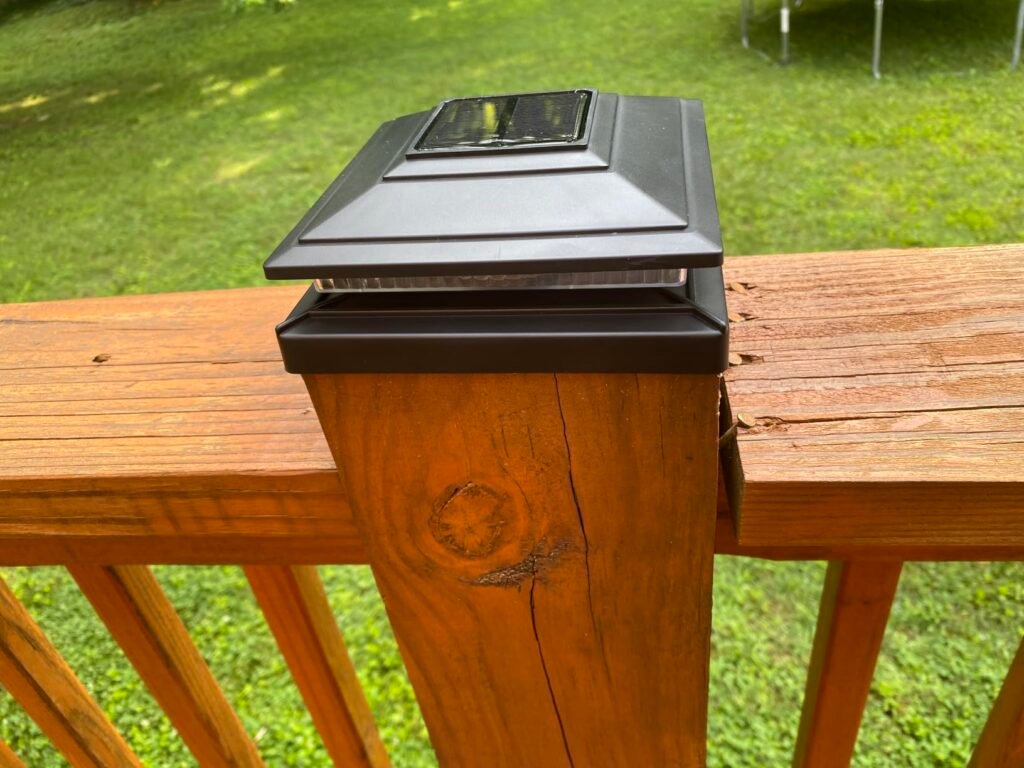
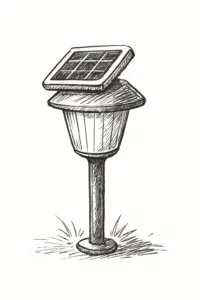
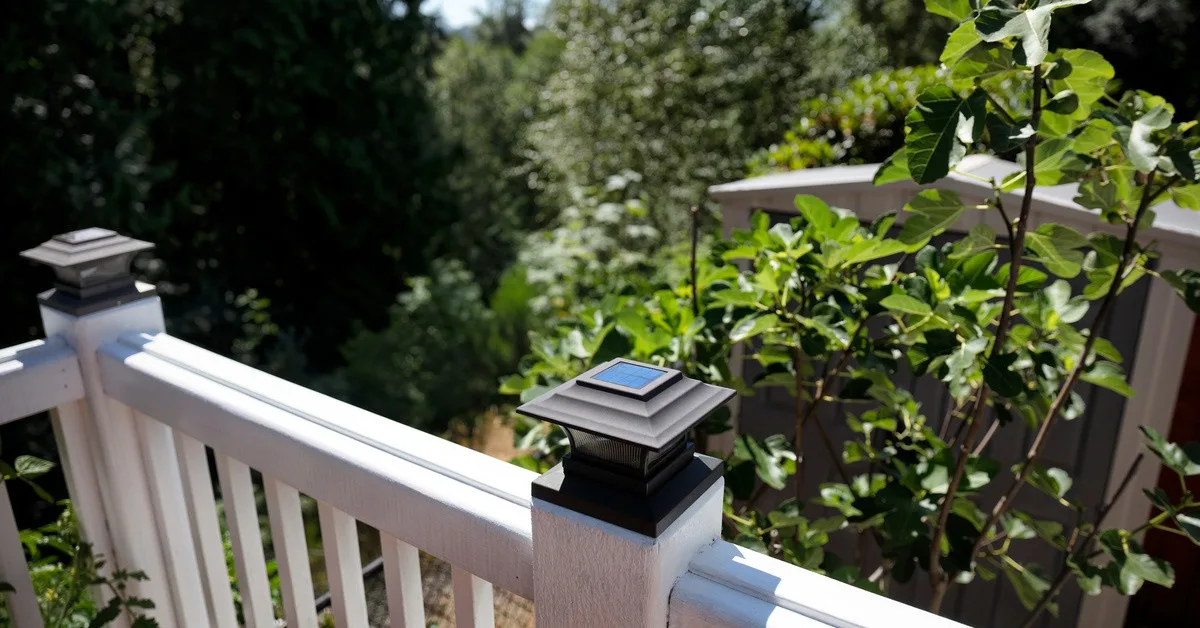
A solar post cap light replaces the plain cap on top of a post. A small solar panel on top collects sunlight. A rechargeable battery stores it. An LED lights up when the sun goes down.
That is the whole trick. It is a tiny power plant that never files a utility bill.
Where They’re Used
Most people put them in four places:
- Fences. They mark the property line and add a soft glow at night.
- Decks. They light railings so guests spot the steps before the steps spot them.
- Gates. They make entrances easier to see.
- Driveways and pathways. Short posts get the benefit of light close to the ground.
Shopping for taller fixtures too? Our guide to the best solar fence post cap lights in 2026 covers more fence-specific options.
Solar Post Caps vs Regular Post Caps
A regular cap keeps rain out of the wood grain. It does nothing else.
A solar cap does that job and adds light. The trade-off is upkeep. Solar caps have a battery that wears out, and a panel that needs sun. A plain cap needs neither.
How Do Solar Post Cap Lights Work?
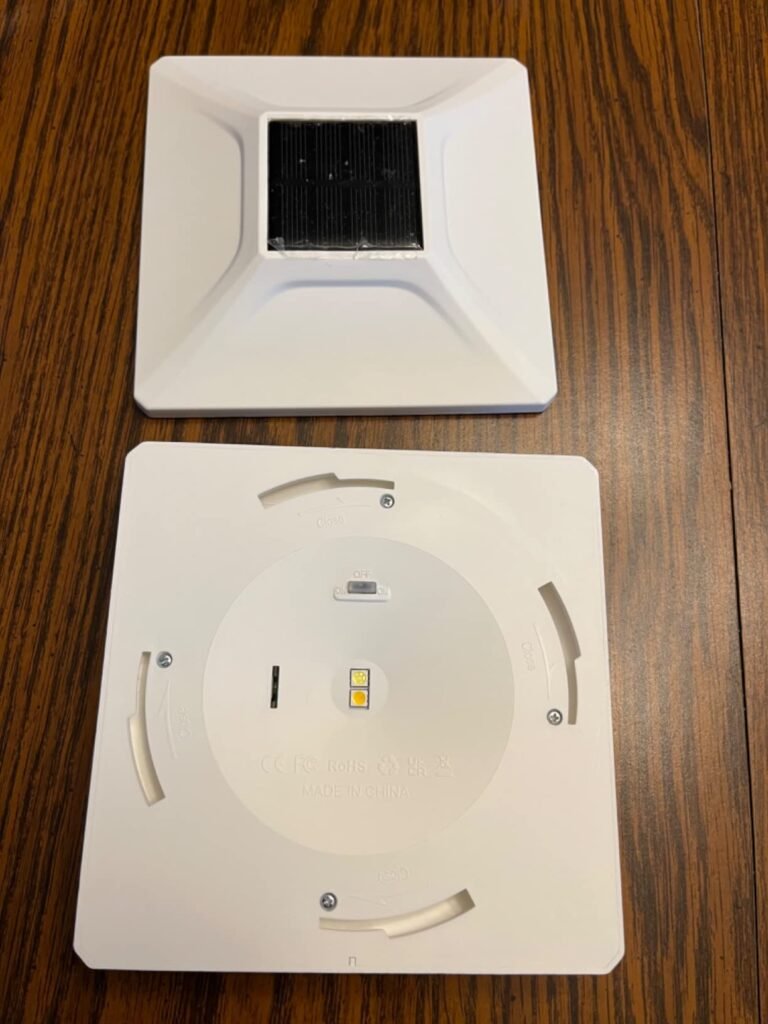
Three parts do all the work. When one fails, the whole light fails.
Solar Panel
The panel turns daylight into electricity. Direct sun charges fastest. Indirect light on a cloudy day still charges the battery, just more slowly.
In independent testing, one budget set even recharged after a couple of cloudy days. So a gray sky will not kill your lights. A tree canopy might.
Rechargeable Battery (Ni-MH vs Li-ion)
Most small solar lights use a rechargeable AA or AAA nickel-metal hydride (Ni-MH) battery. They are cheap, easy to find, and easy to swap.
Lithium-based batteries cost more. Battery guides generally point to them for brighter lights and for freezing climates. Never swap in a disposable alkaline battery, because solar lights are built to recharge, not to run a one-way trip.
LED and Dusk-to-Dawn Sensor
The LED is the part you see. The sensor is the part that makes it automatic. When daylight fades, the sensor switches the light on. At sunrise, it switches off and the battery recharges.
Most modern caps include this sensor. If yours has a manual switch too, make sure it sits in the “on” position. Yes, that is the most common fix. No, you are not the first.
Do Solar Post Cap Lights Really Work?
Yes, with realistic expectations. They are ambient lights. They are not floodlights.
Performance in Shade and Cloudy Weather
Sunlight is the fuel. Less sun means a shorter glow at night. A post under an oak tree will always lose to a post in an open yard.
If one side of your fence is shaded, put your brightest lights on the sunny side. Save the budget set for the rest.
Winter Performance
Winter makes solar lights work harder for less. Days are shorter, the sun sits lower, and snow can cover the panel.
Cold hurts the battery too. One battery guide notes that Ni-MH cells struggle when temperatures regularly fall below 14°F (-10°C). Another notes that charging drops off below 40°F. In harsh climates, a lithium-based battery handles cold better.
Some manufacturer manuals suggest a simple winter fix for off-season storage: charge the light on a sunny day, switch it off, and keep it indoors.
Realistic Brightness Expectations
Solar post caps range from about 5 lumens to over 200. Most decorative caps sit at the low end. Independent testers rated lights in the 5 to 15 lumen range as good for ambience and near-post visibility.
For scale, a standard 60-watt-equivalent household bulb puts out roughly 800 lumens. Your post cap is a candle at a dinner party, not a stadium. That is fine, as long as you buy it knowing that.
One tip from testers: several dim lights often beat one bright light. Brightness is per light, so adding posts adds light.
How to Choose Solar Post Cap Lights (Buying Guide)
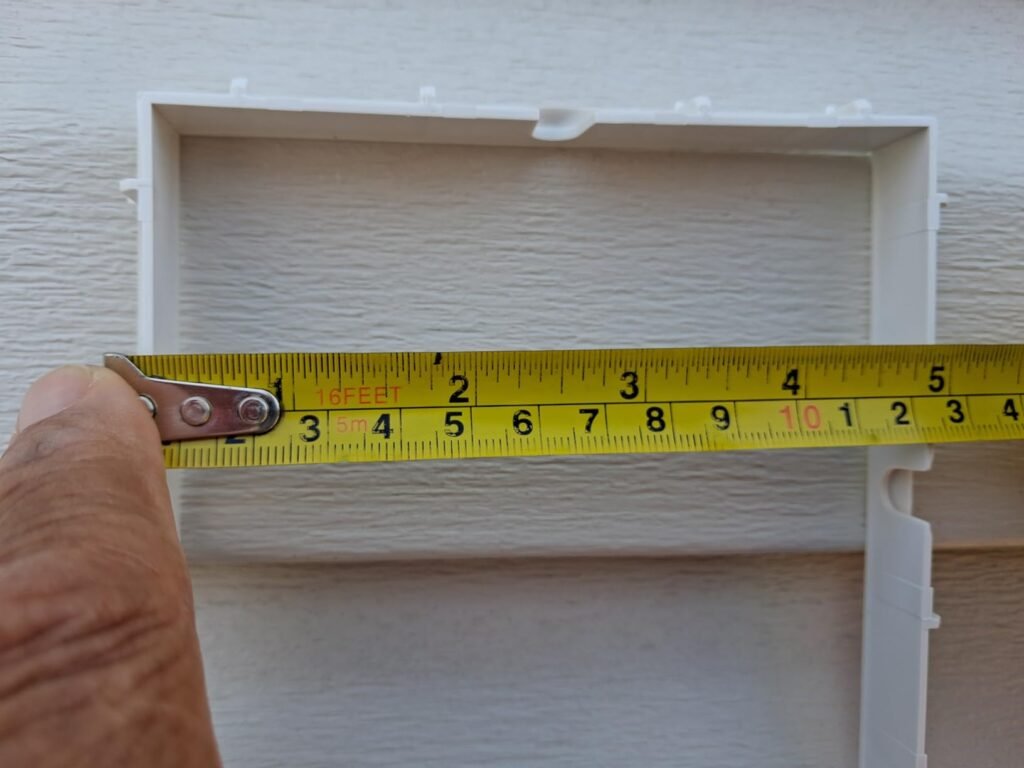
Post Size and Fit (4×4, 5×5, 6×6)
Fit is the number one reason people return these. The label on your post is not its real size.
Lumber carries a nominal size, which means “in name only.” After drying and planing, a 4×4 measures 3.5 x 3.5 inches. A 6×6 typically measures 5.5 x 5.5 inches. Vinyl posts follow their own sizing, so check yours.
Grab a tape measure. Measure the top of the post. Then compare the number to the product’s listed fit.
Lumens: How Bright Is Enough?
Use this simple rule:
- 5 to 10 lumens: soft mood lighting.
- 10 to 15 lumens: enough to see the post area and nearby steps.
- Over 15 lumens: for wide patios or paths. It can feel harsh at eye level.
Lumens beat LED count. A product with “24 LEDs” can still be dim.
Battery Type and Run Time
After a full charge, most solar post caps run about 6 to 10 hours. Charging usually takes 6 to 8 hours of good light.
Favor lights with a replaceable battery. The battery usually dies first, not the light. Manufacturer manuals commonly advise replacing it every 2 to 3 years.
Solar Panel Size and Charge Time
A bigger panel charges faster in weak light. Tiny panels on tiny caps can struggle in shade.
The panel’s position matters more than its size. A small panel in full sun beats a large panel under a porch roof.
Waterproof Rating (IP44 vs IP65)
An IP rating has two digits. The first covers dust and solid objects. The second covers water.
- IP44: protects against splashes. Fine for most rain and sprinklers.
- IP65: dust-tight and protected against low-pressure water jets. Better for exposed spots.
Testers note that anything above IP5 for water works well for outdoor lights. If your posts sit in a storm-prone yard, aim higher.
Light Color (Warm White vs Cool White)
Warm white (around 2700K to 3000K) feels cozy. Cool white feels sharper and reads as brighter. Some caps offer both modes. Pick warm for decks and cool for security-style visibility.
Materials and Finish (Plastic, Aluminum, Stainless Steel)
- Plastic: cheap, weather-resistant, comes in many colors. Less tough than metal.
- Cast aluminum: the most durable and the best-looking, but it costs more.
- Glass: elegant and diffuses light well. It can shatter.
Light Modes (Steady, Flicker, Motion)
Steady mode gives constant light. Flicker mode mimics a flame, which is lovely on a patio. Dual-color modes let you switch between warm and cool. Fewer moving parts usually means fewer things to fail.
Post Size Chart: Nominal vs Actual Dimensions
| Post Name | Actual Size (Wood) | Notes |
|---|---|---|
| 3.5×3.5 | 3.5 x 3.5 in | Same thing as a standard 4×4 |
| 4×4 | 3.5 x 3.5 in | The most common fence and deck post |
| 4.5×4.5 | 4.5 x 4.5 in | Often vinyl. Needs a product that lists this size |
| 5×5 | Varies | Often vinyl. Confirm the exact size on the listing |
| 6×6 | 5.5 x 5.5 in | Common on larger deck posts |
Measure your own post before ordering. Treated lumber can vary slightly when wet.
Top 5 Solar Post Cap Lights of 2026
These picks come from published independent testing and manufacturer specs. Our full approach is in the next section.
1. Best Overall: Dynaming Flickering Flame Solar Post Cap Lights

Verdict: The best mix of looks, ambience and durability.
Specs: Plastic body. Solar plus 1 AA rechargeable battery. Fits 4×4 and 5×5 wood or vinyl, and 6×6 wood. Sold in an 8-pack.
Pros
- Soft, flame-style light that sets a mellow mood
- Held up through a major windstorm in independent testing
- Stayed lit all night
Cons
- Included screws strip easily. Use your own wood screws.
Who should skip it: Anyone who needs bright, security-style light. This set is about ambience.
2. Best Value: Aponuo Solar Post Cap Lights
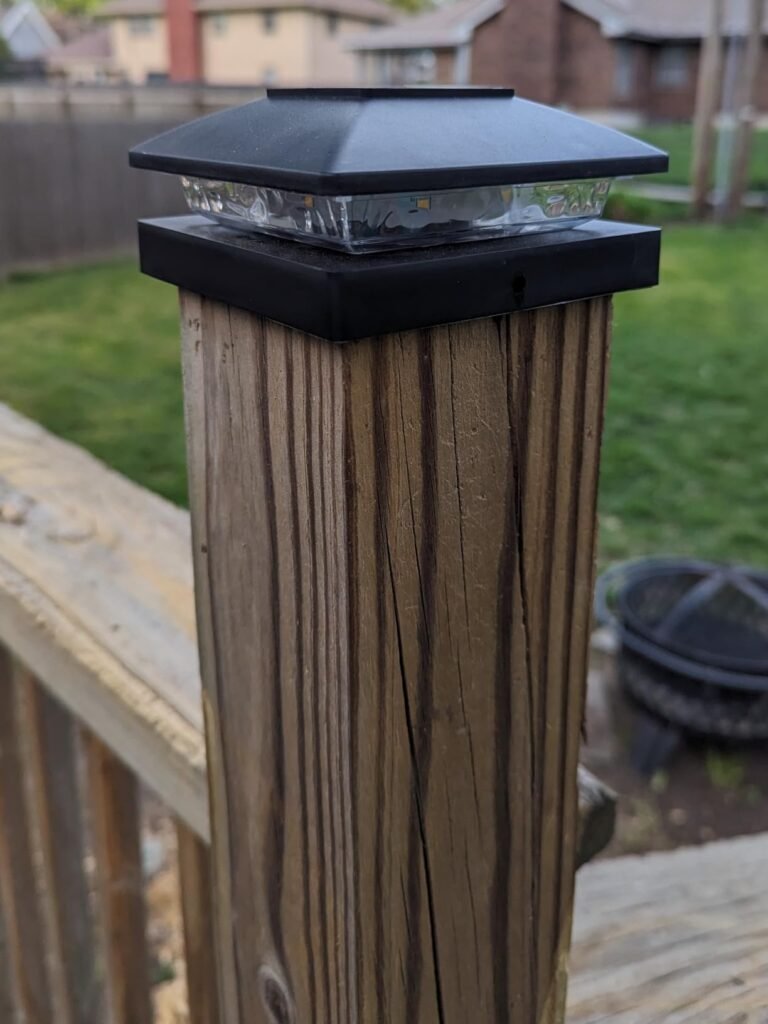
Verdict: The best way to light a lot of posts without wrecking your budget.
Specs: Plastic and polypropylene. Solar plus 1 AA battery. Fits 4×4 vinyl, plus 4×4 and 6×6 wood. Sold in a 6-pack with two light modes.
Pros
- Two modes, warm or bright
- Lasted all night without fading in testing
- Recharged even after a couple of cloudy days
- Side and top screws hold it firm in wind
Cons
- Very tight fit over the post
- Light leans bright more than warm
- Harder to remove later because of the extra screws
Who should skip it: Anyone who wants a quick, no-drill swap-out later.
3. Best Premium and Most Durable: Classy Caps Imperial Solar Post Cap Lights
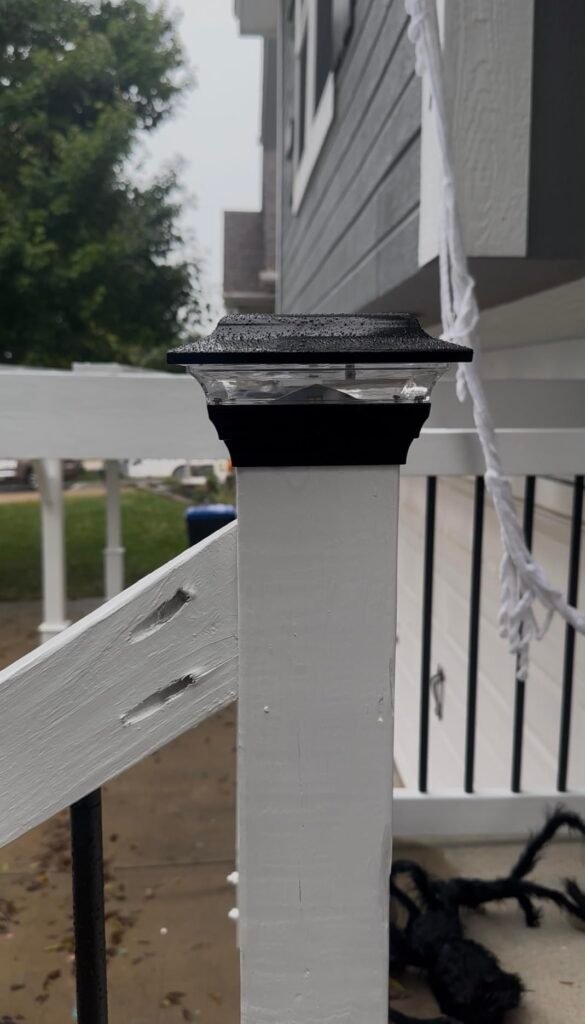
Verdict: The one to buy if you want to install it once and forget it.
Specs: Cast aluminum. Solar plus 1 AA rechargeable battery. Fits 3.5×3.5 and 4×4 wood or vinyl, and 4.5×4.5 vinyl with the included adapter.
Pros
- Cast-aluminum build outlasts plastic
- Sleek, low-profile look
- Brighter than most lights in its test group
- Good hardware, with no need to swap screws
Cons
- Does not fit 6×6 posts
- Costs more than most competitors
Who should skip it: Anyone with 6×6 posts, or anyone covering a long fence on a tight budget.
4. Best Bright, Low-Profile Pick: Dynaming 15-Lumen Solar Post Cap Lights

Verdict: A bright light in a small package.
Specs: Plastic, IP44. 15 lumens. Solar plus 1 AA NiMH battery. Fits 4×4 and 6×6 wood. About 2.4 inches tall. Charges in 6 to 8 hours and runs about 8 hours.
Pros
- Strong 15-lumen output
- Low profile that blends with most posts
- Fits two common post sizes
Cons
- Can feel overpowering at eye level
- Included screws are low quality
- IP44 means splash protection only
Who should skip it: People who want a gentle, candle-like glow.
5. Best for Patios and Decks: Home Zone Security Decorative Solar Post Cap Lights

Verdict: A good-looking glass cap that covers a patio well.
Specs: Plastic housing with a glass shell. 12 lumens. Solar plus 1 NiMH rechargeable battery. Fits 3.5×3.5 wood and 4×4 vinyl. Auto on/off sensor.
Pros
- 12 lumens is enough for a patio
- Glass diffuses light across a wide area
- Easy install with included hardware
- Stayed stable through wind in testing
Cons
- Glass can shatter
- Its height catches more wind
Who should skip it: Anyone with kids, kicked soccer balls, or a very windy yard.
See your own brick or stone columns? Our guide to the best solar pillar lights in 2026 is a better fit for those.
How We Chose These Picks (Methodology)
We did not run our own side-by-side lab test for this update. We want to be upfront about that.
Instead, we compared published independent test results with manufacturer specs. In the testing we relied on, eight lights were installed on 4×4 posts in full sun for two weeks. Reviewers judged setup, hardware quality, brightness, light direction, looks, and how each light handled a windstorm.
We then ranked the lights on five things: fit across post sizes, light quality, durability, hardware, and value.
Prices and pack sizes change often. Check the retailer before you buy. We review this guide regularly and log every change at the bottom of the page.
Solar vs Wired Post Lights
Both work. They solve different problems.
| Solar | Wired (Low-Voltage) | |
|---|---|---|
| Installation | Screw it on. Done. | Needs cable runs and a transformer |
| Running cost | None | Small electricity cost |
| Reliability | Depends on sun and battery | Steady and consistent |
| Best for | Fences, decks, quick upgrades | Permanent, high-output lighting |
The rule is simple. If you want light without a project, go solar. If you need steady, bright light every night in a shady yard, go wired.
How to Install Solar Post Cap Lights
Tools and Prep
You need a tape measure, a drill, a drill bit slightly smaller than your screws, and a few good wood screws. Skip the supplied screws if they feel soft. Independent testers replaced them in more than one set.
Step-by-Step Installation
- Measure the top of your post and match it to the product’s listed fit.
- Open the battery compartment and insert the rechargeable battery, if it is not already installed.
- Switch the light to “on.”
- Set the cap on the post and line it up.
- Predrill the screw holes to avoid splitting the wood and stripping the heads.
- Drive the screws in until the cap sits firm, but do not overtighten.
- Let the light charge in the sun. Some manuals suggest waiting for a sunny day before judging the first night.
Best Placement for Sun Exposure
Sun is the fuel. Put lights where the panel gets several hours of direct light.
Watch for shade from trees, roof overhangs and walls. A post that looks sunny at noon can sit in shadow by 2 p.m.
Maintenance and Troubleshooting
Why Solar Lights Stop Working
Check these causes in order:
- The switch is off. Check it first.
- The panel is dirty or shaded. Dust, pollen and snow block charging.
- The battery is worn out. This is the most common real cause.
- Moisture got in. Water can corrode the terminals.
- It is cold. Low temperatures cut battery capacity.
Here is the math. A solar light recharges once a day, which means about 365 cycles a year. A Ni-MH battery typically handles roughly 500 to 1,000 cycles. Do the division, and you get a battery that lasts about 1.5 to 3 years. That lines up with what manufacturers recommend.
Your light is not broken. It is just tired.
How to Replace the Battery
- Open the battery compartment. A small flathead screwdriver helps on some models.
- Remove the old battery.
- Insert a new rechargeable battery of the same type, size and voltage.
- Close the compartment firmly.
- Switch the light on and let it charge in the sun.
Use a rechargeable battery only. A disposable alkaline battery is not designed for daily recharging.
Cleaning the Panel
Wipe the panel with a soft, damp cloth every few weeks. Skip harsh cleaners. A clean panel charges better, and the cloth costs nothing.
How Much Do Solar Post Cap Lights Cost?
Independent testers saw prices from about $5 to $35 per light. Cost rises with brightness, build quality and materials such as cast aluminum.
Budget sets in plastic cost the least. Cast-aluminum caps cost the most but should last longer.
Also factor in battery replacement. It is a small cost, but it repeats every few years.
Cost Per Post for 10+ Posts
Here is quick math using that $5 to $35 range:
| Posts | Low End ($5 each) | High End ($35 each) |
|---|---|---|
| 10 | $50 | $350 |
| 20 | $100 | $700 |
| 30 | $150 | $1,050 |
For long fences, a mixed approach works well. Use premium caps at the gate and corners, and budget caps along the straight runs.
FAQs
What size post cap do I need?
Measure the top of your post first. A standard “4×4” wood post is really 3.5 x 3.5 inches, and a 6×6 is typically 5.5 x 5.5 inches. Then match those numbers to the product’s listed fit. Vinyl posts vary, so always check the listing.
How long do solar post lights last?
Independent testing puts a solar post cap’s overall life at about 2 to 8 years. Use, weather and battery replaceability decide where yours lands. The battery usually wears out first, often in 2 to 3 years, so a replaceable one extends the life of the light.
How bright should they be?
For mood lighting, 5 to 10 lumens works well. For visibility around steps or a patio, aim for 10 to 15 lumens. Brightness is per light, so adding more posts adds more total light. Above 15 lumens can feel harsh at eye level.
Do they work in winter?
Yes, but with less runtime. Shorter days, low sun, and snow on the panel reduce charging. Cold also cuts battery capacity. One battery guide notes that Ni-MH cells struggle below 14°F (-10°C). Brush snow off the panel and consider lithium-based batteries in harsh climates.
Can they stay on all night?
Often, yes. A full charge usually runs 6 to 10 hours, which covers a summer night. Winter nights are longer, and charging is weaker, so lights may fade earlier. Place them in full sun and keep the panel clean to stretch the glow.
Summary
Measure first. Everything else is secondary.
Here is the short version:
- Best overall: Dynaming Flickering Flame. Soft, durable and good-looking.
- Best value: Aponuo. The smartest buy for many posts.
- Best premium: Classy Caps Imperial. Cast aluminum that should outlast plastic.
- Best bright and low-profile: Dynaming 15-Lumen. A strong glow in a small cap.
- Best for patios: Home Zone Security. Glass diffusion and wide coverage.
Set realistic expectations. These lights add glow, not floodlight power. Pick the right size, give the panel some sun, and swap the battery every couple of years. Do that, and your posts will look good long after sunset.
Sources and References
- Independent hands-on testing of eight solar post cap lights on 4×4 posts, published by a national home-improvement outlet (product specs, ratings, runtime, charge time and durability notes)
- Manufacturer product listings and owner’s manuals (battery replacement intervals, charging guidance, winter storage)
- Ni-MH and lithium battery guides for solar lighting (cycle life, cold-weather performance)
- Standard nominal vs actual softwood lumber dimensions (American Wood Council and trade references)
- IEC 60529 Ingress Protection (IP) rating system