Table of Contents
Solar Lights With a Separate Panel: Review
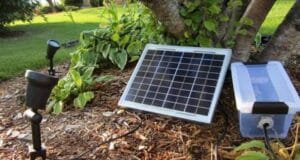
Outdoor lighting sounds simple until you actually try to place it. Trees, fences, roof overhangs, and nearby walls all block sunlight in ways that aren’t obvious until a light stops charging properly. That’s the exact problem this design is built to solve.
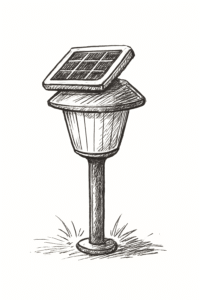
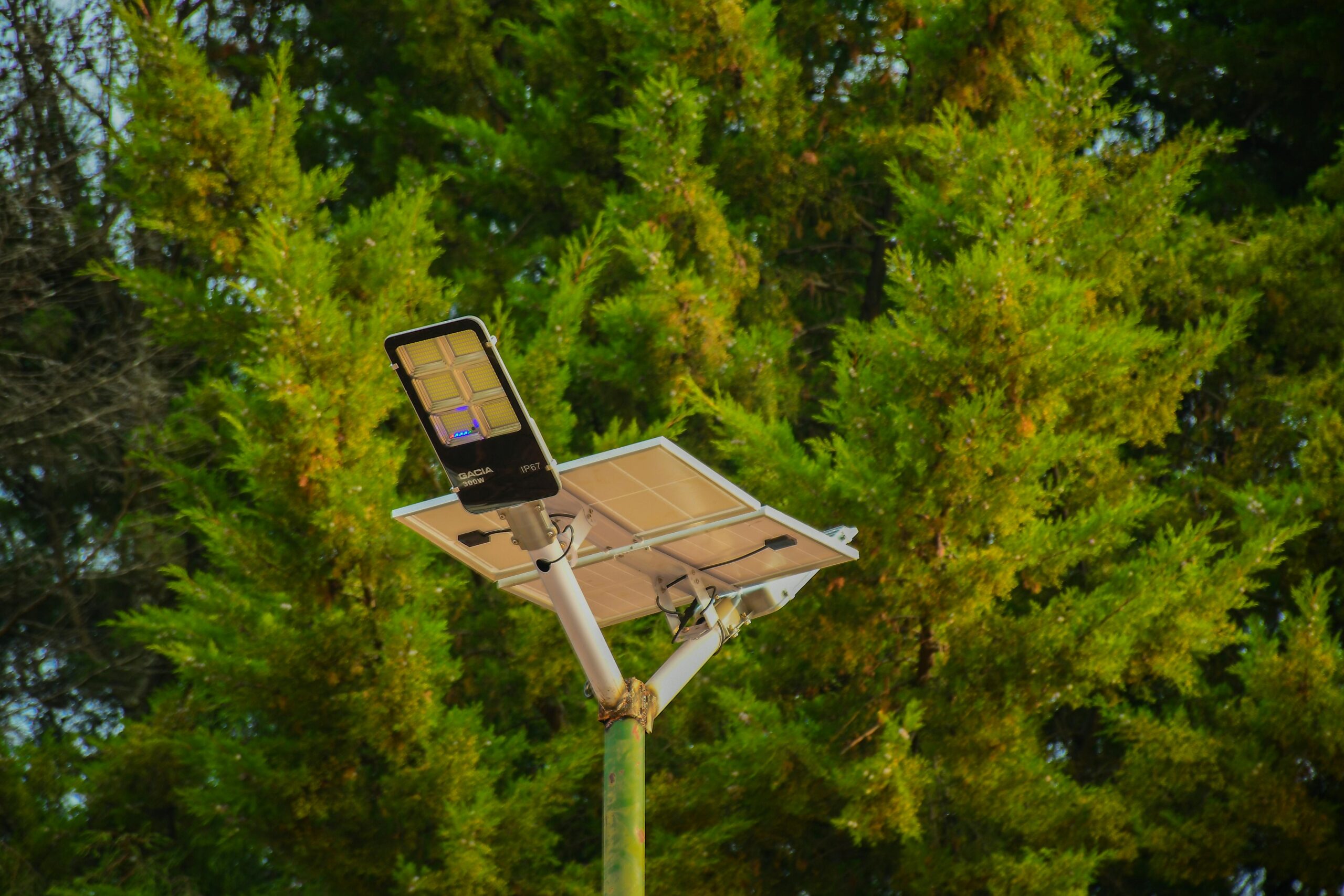
Instead of building the panel and the light into a single unit, manufacturers connect the two with a cable. You mount the panel wherever the sun actually reaches, and place the light wherever you need brightness — even if that spot never sees direct sun. A driveway, a garage entrance, a garden path, a shed, or a staircase often needs light precisely in a location that’s shaded most of the day. A separate panel lets you collect energy somewhere bright and use it somewhere dark.
Quick Overview
This style of solar light works best when your sunniest spot and your darkest spot aren’t the same place — which, for most homes, they usually aren’t. The panel does its job during the day from a sunny wall, fence, or roof edge, while the light stays fixed wherever it’s actually needed after dark.
Brightness needs vary a lot by use case, which is worth knowing before comparing products: small accent or garden lights typically sit around 150–400 lumens, general garden pathway lights run closer to 1,500–2,000 lumens, and driveway or residential security lights usually land in the 2,000–3,000 lumen range. Most run on rechargeable lithium-ion batteries in weather-resistant housings, often with a motion sensor to conserve stored energy overnight. With reasonable care, a well-built unit can keep working for several years.
If part of your yard sits in shade for most of the day, this design tends to outperform an all-in-one solar light in that same spot.
Key Specifications to Understand
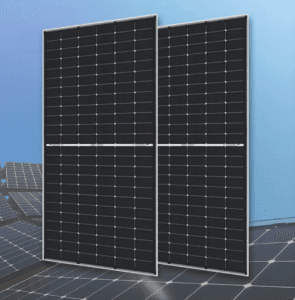
A few numbers tell you almost everything about how a unit will perform once it’s installed — but a couple of them are worth double-checking rather than taking at face value.
Panel wattage on residential separate-panel lights typically runs 2W to 8W for pathway and spotlight-style fixtures, higher for larger security or driveway units. One caution here: some listings use “wattage” more as a marketing label than an actual measured output. It’s worth checking the physical panel size and the battery capacity together rather than trusting a wattage number in isolation — a genuinely higher-output panel is noticeably larger, not just labeled bigger.
Battery capacity on most residential solar lights falls between 1,000mAh and 3,000mAh, with larger security or floodlight-style units running 4,000mAh to 8,000mAh or more. A bigger battery matters most during multi-day cloudy stretches, since it has more reserve to draw on.
Cable length between the panel and the light is commonly 2 to 5 meters on standard units, with some models offering close to 9 meters for more placement flexibility.
Waterproof rating matters more for the light fixture than most buyers expect. IP65 is the sensible baseline for a panel or light mounted somewhere fully exposed to rain and dust; IP44 is usually adequate only for a sheltered spot like under an eave.
Battery chemistry is worth a glance too. Standard lithium-ion is common and works fine, but LiFePO4 (lithium iron phosphate) is increasingly used in better-built units because it handles more charge cycles before degrading and tolerates temperature extremes better — a real factor in both summer heat and winter cold.
Panel type also plays a role in performance: monocrystalline panels generally convert light more efficiently, particularly in cloudy or lower-light conditions, while polycrystalline panels are cheaper and perform adequately in regions with consistently strong sun.
Why the Separate Panel Design Exists
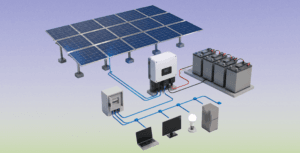
An all-in-one solar light forces the panel and the light into the same spot, for better or worse. If that spot happens to be shaded, both suffer — the panel undercharges, and the light dims early.
Splitting the two apart removes that constraint entirely. Mount the panel somewhere it gets real sun — a roof edge, a south-facing wall, an open fence line — and put the light wherever people actually need to see. The panel doesn’t care where the light ends up, and vice versa.
The payoff is longer nightly runtime. Two units with identical battery capacity can behave completely differently depending on how much sun their panels actually got that day — one under six hours of direct light, the other tucked under a tree, will not perform the same come 11pm.
It also opens up placement options that simply don’t work with built-in units: garages, storage sheds, side entrances, covered patios, wooden decks, and shaded walkways all become viable without running any electrical wiring.
How They Actually Perform, Season by Season
Sunny days are the easy case, though even here, real-world output typically runs 15–30% below the rated spec once you account for dust on the panel, heat, an imperfect sun angle, and minor cable resistance. That’s normal and expected — rated specs are measured under ideal lab conditions, not a driveway in July.
Cloudy weather cuts into charging, though the light still gets some charge — just less of it. A larger battery tends to smooth this out better, since it’s got more reserve to draw on. Most people notice a modest dip in brightness after two or three overcast days in a row; output recovers once the sun comes back.
Winter is the toughest test, and the numbers here are worth knowing: the same panel that reaches a full charge on a summer day may only reach 40–65% charge state in winter, simply due to shorter daylight hours and a lower sun angle. This isn’t a defect — it’s physics. Mounting the panel at a 30–35° tilt facing the strongest available sun (roughly south-facing in the Northern Hemisphere) rather than laying it flat can recover meaningfully more energy across the year — commonly cited estimates put the gain around 20–25% annually compared to a flat-mounted panel.
Shade is where built-in units really struggle — trees, fences, and buildings can block a fixed panel for most of the day with no way around it. A separate panel sidesteps the whole problem: mount it somewhere sunny, run the cable to the shaded spot where the light lives.
Installing and Placing the Panel
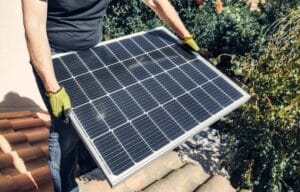
Getting this right mostly comes down to planning before you drill anything. The panel needs direct sun for most of the day — steer clear of spots under porch roofs or anywhere a roofline throws a long shadow for hours at a time.
Angle matters more than most people assume. A panel mounted at roughly 30–35° toward the sun, rather than flat against a wall or the ground, captures noticeably more energy over a full year — this is especially worth doing if the panel will stay in one fixed position through all four seasons.
The light itself should point toward wherever people actually walk, or wherever extra visibility matters most. If it has a motion sensor, aim it toward the direction movement is most likely to come from — that alone makes a noticeable difference in response time.
Cable routing deserves a bit of thought too. Run it along walls, fences, or beams using outdoor-rated cable clips, and leave a little slack at each connection point so temperature swings don’t put strain on it over time.
A few mistakes come up often enough to call out specifically:
- Mounting the panel under any kind of overhang or roof
- Facing the panel north (in the Northern Hemisphere, this rarely gets good sun)
- Mounting the panel flat when an angled tilt would capture meaningfully more energy
- Letting plants or decorations block the motion sensor’s view
- Leaving the cable loose against a sharp edge, where it’ll wear through eventually
Maintenance and How Long These Last
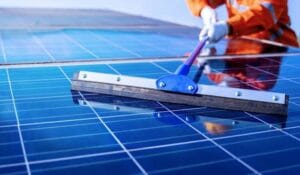
These units don’t ask for much, but a little upkeep goes a long way. Dust, pollen, and leaves settle on the panel over time and quietly cut into how much sun actually reaches it — wiping it down every few weeks with a soft, damp cloth keeps charging efficient, and matters even more in winter when every bit of available sun counts.
Battery lifespan depends a fair amount on chemistry. Standard lithium-ion batteries typically hold up for 2 to 5 years before capacity noticeably drops, while LiFePO4 batteries tend to last toward the higher end of that range or beyond, thanks to a higher tolerance for repeated charge cycles. Swapping in a replacement battery of the same type and capacity usually brings a unit right back to normal.
LEDs themselves last far longer than the battery — commonly in the 25,000 to 50,000 hour range — so the battery and housing are usually what determine how long a unit stays genuinely useful. Housings with tempered or well-sealed casings hold up better against rain, heat, and freezing temperatures than thinner plastic builds.
Common Problems and How to Fix Them
Light won’t turn on at all — check the power switch first; a surprising number of units ship with it switched off. Also confirm the battery connector is seated properly.
Light looks dim — clean the panel before anything else, since dirt blocks a meaningful amount of sunlight. Also check whether nearby branches or new growth have started casting shade that wasn’t there at install time, and confirm the panel isn’t mounted flat when an angled position would help.
Charging seems slow — recheck the panel’s angle and position. Moving it into more direct sun, or angling it toward 30–35°, usually shows improvement within a charge cycle or two.
Motion sensor isn’t responding — clear anything blocking its line of sight, and wipe down the sensor lens itself, since a thin layer of dirt can dull its sensitivity.
Battery drains fast after a few years — this is usually just normal battery wear, and the timeline depends on the battery chemistry described above. Replacing it with the same type and capacity the manufacturer specifies typically resolves it.
A word on spec sheets in general — a genuinely well-built solar light will list its battery capacity (mAh or Ah) and actual lumen output clearly. If a listing emphasizes a large wattage number but stays vague on battery capacity or lumens, that’s worth treating as a signal to look closer rather than a reason to walk away entirely — it’s a common pattern across the solar lighting market, not just one brand or product.
FAQs
How far can the panel be from the light?
Most cables run 2 to 5 meters, with some models offering cable runs close to 9 meters for more installation flexibility.
Do these work in winter?
Yes, though the same panel that fully charges in summer may only reach 40–65% of a full charge in winter due to shorter days and a lower sun angle. Angling the panel toward the strongest available sun helps offset this.
How long do the batteries actually last?
Typically 2 to 5 years, depending on the battery chemistry — LiFePO4 batteries generally last longer than standard lithium-ion under the same conditions.
Are they waterproof?
Look for at least an IP65 rating if the panel or light will be fully exposed to weather; IP44 is usually fine only for a sheltered spot.
Do they need direct sunlight to charge?
Direct sun charges fastest, but overcast daylight still charges the battery — just more slowly and to a lower overall charge state.
Who actually benefits most from this design?
Anyone dealing with a shaded pathway, garage, patio, garden, shed, or side entrance tends to see the biggest difference, since the whole point of the design is separating “where the sun is” from “where the light needs to be.”
Summary
The separate-panel design solves a specific problem: it lets the panel and the light sit in two different spots, so shade in one area doesn’t have to compromise lighting in another. That flexibility tends to show up as more consistent charging, steadier performance across seasons, and installation options a built-in solar light simply can’t handle well. Regular cleaning, a properly angled panel, and a battery matched to your actual runtime needs are really what determine whether one of these performs well for years or disappoints within a season.