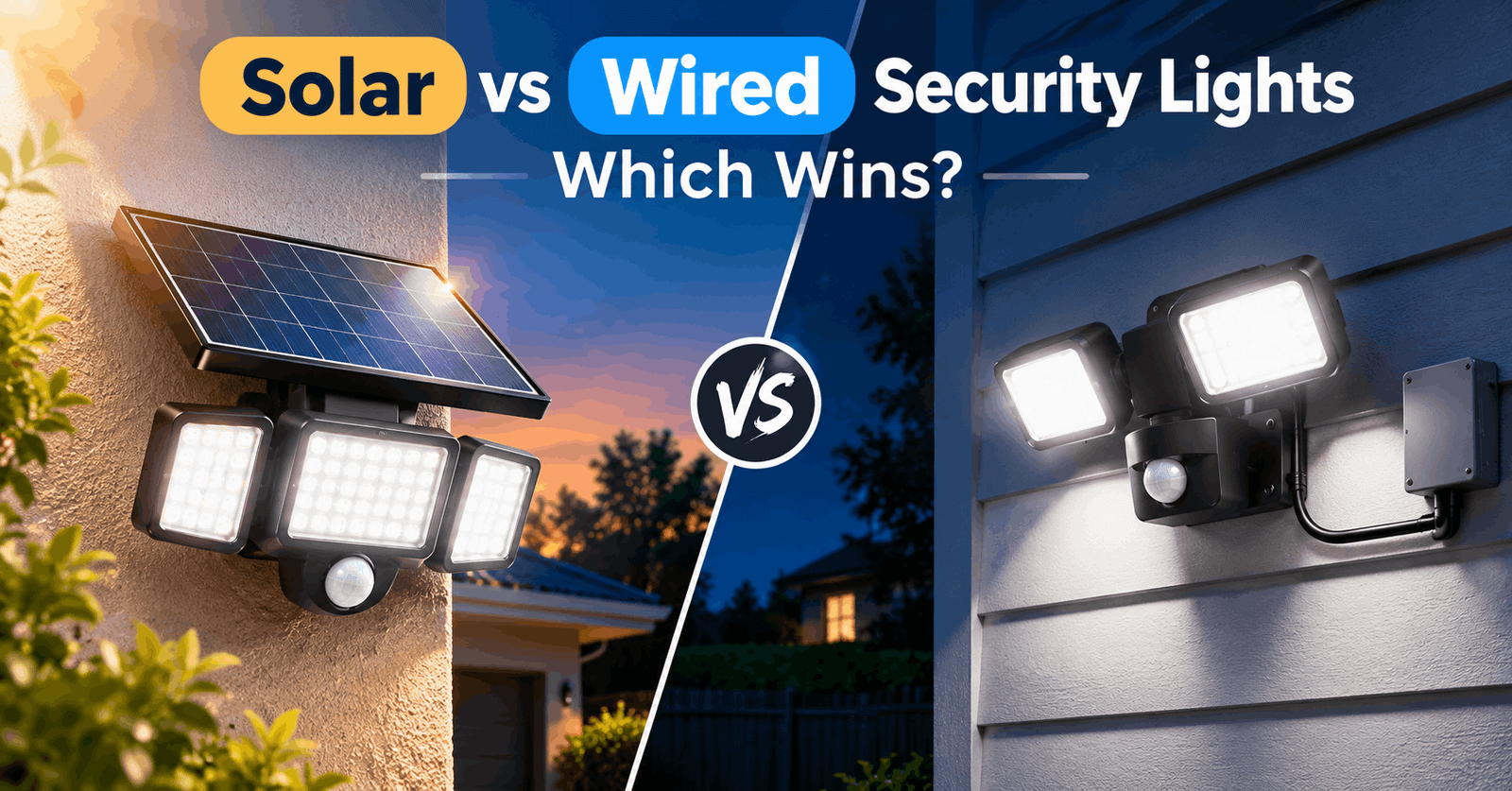

Last updated on October 31st, 2026 at 08:34 am
Quick Answer: The best solar light with a camera for most US homes is the eufy Solar Wall Light Cam S120 ($99.99 list). It has a 300-lumen light, 2K video and no required monthly fee. For a driveway or yard, choose the Tapo C615F KIT floodlight. Any solar camera needs direct sun on its panel for a few hours a day.
Table of Contents
Running power to an outdoor camera used to mean an electrician, a drill and a ruined Saturday. Now the sun does the heavy lifting. The catch is that “solar light with camera” covers very different products, and some are far better than others.
This guide sorts them out. It ranks 10 real products, explains the specs that matter and flags the costs most listings skip.
Best For: Quick Decision Table
| If you want… | Pick |
|---|---|
| The simplest wall light with camera | eufy Solar Wall Light Cam S120 |
| A real floodlight, no wiring | Tapo C615F KIT |
| Ring app and ecosystem | Ring Spotlight Cam Plus (Solar) |
| The brightest light in this group | Reolink Solar Floodlight Cam |
| 4K detail and wide coverage | Reolink Argus PT Ultra |
| A fast-charging panel combo | Tapo C420S1 + A200 panel |
| Apple HomeKit support | Arlo Pro 5S 2K + solar panel |
| Lowest entry price | Wyze Battery Cam Pro |
| Two lenses and zoom | eufy SoloCam S340 |
| No Wi-Fi at all | Reolink Go Plus Solar (4G) |
Quick Answer: Is a Solar Light With Camera Right for You?
It’s a good fit if…
- You have a spot with no outlet, such as a shed, barn, side gate or detached garage.
- You rent, or you don’t want to hire an electrician.
- You get direct sun on the mounting spot for a few hours a day.
- You want a visible deterrent, not only a recording.
Skip it if…
- The spot sits in deep shade all day. A panel that can’t see the sun can’t charge anything.
- You need 24/7 continuous recording. Most of these cameras record motion clips to save battery.
- You want very high light output. Wired floodlights still beat solar on raw brightness.
Why Solar Lights With Camera Help US Homeowners
Three things make this product category a good match for American homes.
Porch piracy is a real, measurable problem. A 2025 national report estimated that over 104 million packages were stolen in the US in a year, costing Americans about $15 billion. Estimates vary by method, but all sources agree that tens of millions of Americans get hit each year. A camera with a light at the door gives you footage and a deterrent in one box.
Many victims respond with cameras. In a 2024 survey, about half of Americans who reported porch theft said they installed a security system or doorbell camera afterward. Solar versions let you cover the driveway, side yard or back door too, without trenching wires across the lawn.
US sunlight is good enough for most of the country. Modeling based on NREL data puts the national average near 4.98 peak sun hours a day, with Arizona at about 6.54 and Alaska at about 3.17. Those figures are annual averages. Winter drops them, and cloudy northern states feel it most. We cover that below.
Temperature range matters too. The eufy S120 lists an operating range of -4°F to 122°F. That covers a Minnesota January and an Arizona July.
What Is a Solar Light With Camera?
It’s an outdoor device that charges a battery from sunlight. When it senses motion, it switches on a light and records video. You watch clips on your phone.
Solar wall light with camera (e.g., eufy S120)
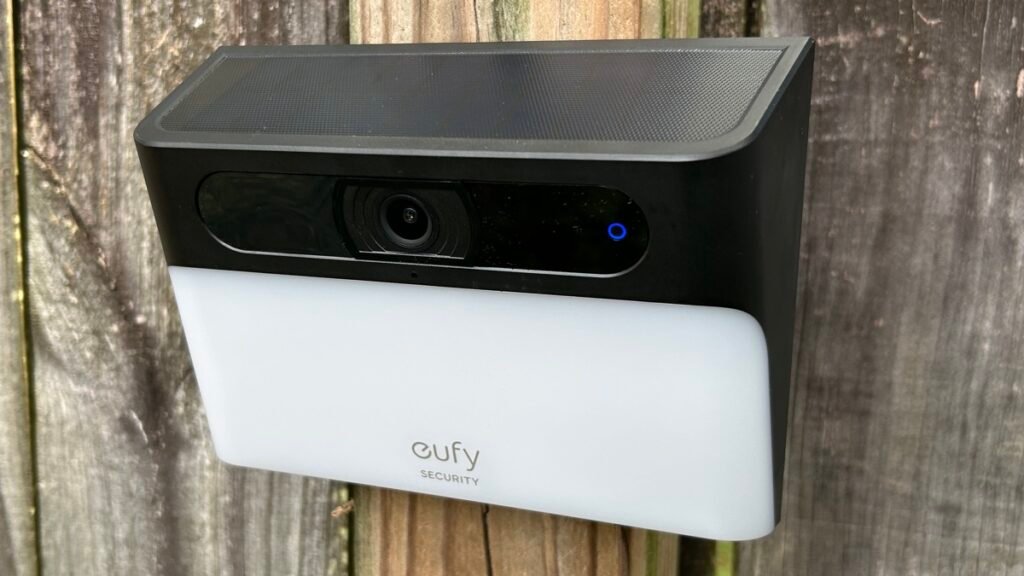
This looks like a regular wall light. The S120 packs a 300-lumen light, a camera and a built-in solar panel into one battery-powered unit. It’s the most “normal-looking” option.
Solar floodlight camera (e.g., Tapo C615F)
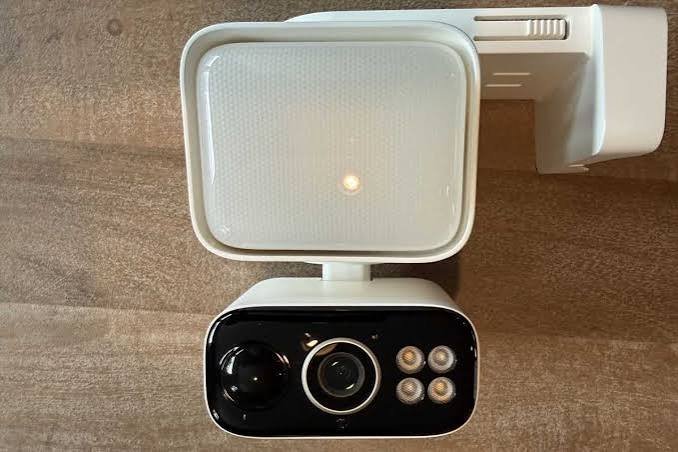
This one has a proper floodlight. The Tapo C615F combines a floodlight, a pan/tilt camera and a solar power system in one kit. Choose it for driveways and yards.
Solar camera with built-in spotlight
Many solar cameras add a small spotlight instead of a floodlight. The light helps with color night vision more than it lights up the yard. Color night vision usually comes from a spotlight LED or a starlight sensor. Ring, Arlo, Wyze and Reolink’s Argus line use this approach.
Solar street light with camera (commercial)
These are pole-mounted units sold mostly to businesses and municipalities. One supplier lists a 120W solar street light with a camera at a 500-piece minimum order. That’s a different shopping world from a home purchase, so this guide stays focused on residential products.
Dummy and hidden-camera solar lights
Some listings sell lights with a fake camera that records nothing. Others hide a real camera inside a garden light. One supplier lists a solar garden light with a hidden 1080p camera, infrared night vision and a motion sensor. Hidden cameras raise privacy issues, which we cover in the legal section.
| Type | Best use | Light output | Records video? |
|---|---|---|---|
| Wall light + camera | Doors, patios | About 300 lumens | Yes |
| Floodlight camera | Driveways, yards | 800–1,000 lumens | Yes |
| Spotlight camera | Entry points, sheds | Lower (spotlight) | Yes |
| Street light + camera | Lots, roads | Commercial | Yes |
| Dummy light | Deterrent only | Varies | No |
Best 10 Solar Lights With Camera (2026)
Quick comparison first. Each pick gets its own review below.
| # | Product | Light | Resolution | Storage | Connectivity | Price note |
|---|---|---|---|---|---|---|
| 1 | eufy S120 | 300 lm | 2K | 8 GB built in | Wi-Fi | $99.99 list |
| 2 | Tapo C615F KIT | 800 lm | 2K | microSD to 512 GB | 2.4 GHz Wi-Fi | Check current price |
| 3 | Ring Spotlight Cam Plus (Solar) | Spotlight | 1080p | Cloud plan | 2.4 GHz Wi-Fi | About $110–$150 camera |
| 4 | Reolink Solar Floodlight | 1,000 lm | 2K (4MP) | microSD / Home Hub | Wi-Fi | $109.99 MSRP |
| 5 | Reolink Argus PT Ultra | Spotlight | 4K | microSD / Home Hub | Wi-Fi | Varies by bundle |
| 6 | Tapo C420S1 + A200 | Spotlights | 2K QHD | Local (hub/card) | Wi-Fi | Panel $39.99 |
| 7 | Arlo Pro 5S 2K + panel | Spotlight | 2K | Cloud plan or hub | Wi-Fi | $249.99 list |
| 8 | Wyze Battery Cam Pro | 150 lm | 2.5K | microSD | 2.4/5 GHz Wi-Fi | $89.98–$109.98 |
| 9 | eufy SoloCam S340 | Spotlight | 3K + 2K | 8 GB built in | 2.4 GHz Wi-Fi | About $200 |
| 10 | Reolink Go Plus Solar | None (IR) | 2K | microSD | 4G LTE only | About $250–$280 |
1. eufy Solar Wall Light Cam S120: Best All-in-One Wall Light
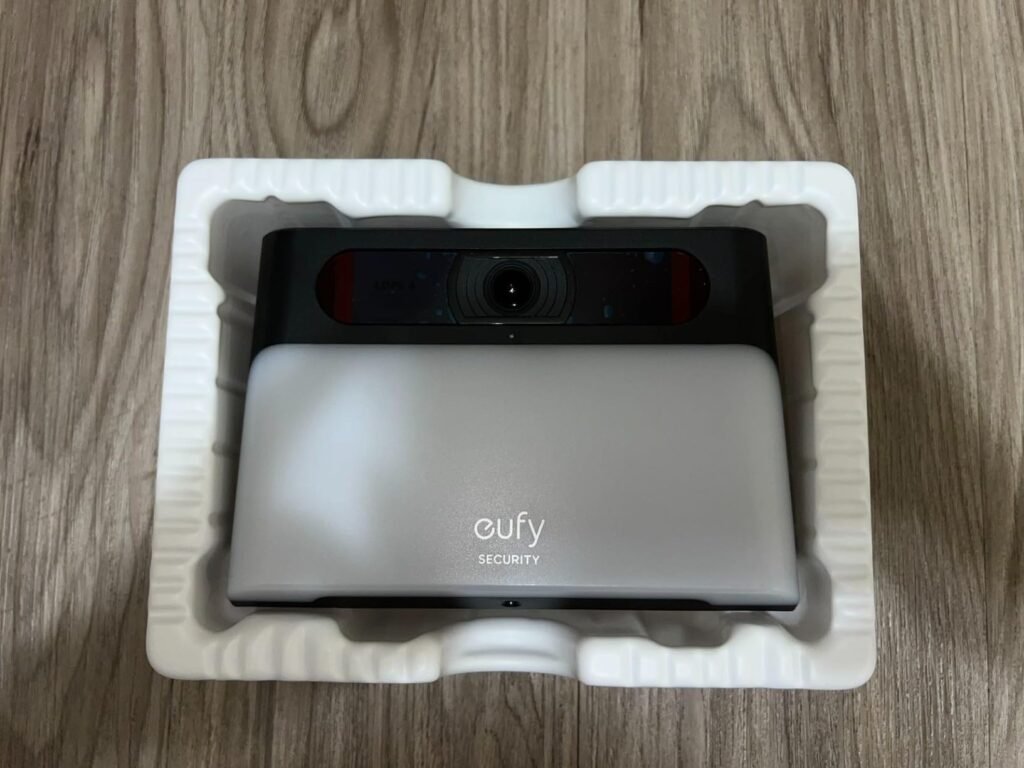
Best for: Doors, patios and side walls where you have no outlet.
Spec block:
- 300-lumen adjustable light, 5,200 mAh battery, built-in solar panel, $99.99 list price.
- 2304 x 1296 video, 120° field of view, no monthly fee.
- No hub needed, with 8 GB of storage that holds about two months of clips.
- IP65 weather rating.
Pros:
- eufy says two hours of direct sun can power it for a full day and night, depending on sunlight strength.
- An independent reviewer called it a strong DIY solution that needs few home modifications.
Cons:
- The built-in storage can’t be expanded.
- The reviewer noted placement limits, since the panel needs enough sun.
- No Apple HomeKit support.
What buyers say: Reviewers on one retailer page loved skipping the wiring and the subscription. One buyer found the mounting bracket flimsy and said a Wi-Fi extender might help in weak-signal spots.
Skip if: You want a light brighter than 300 lumens.
2. Tapo C615F KIT: Best Solar Floodlight
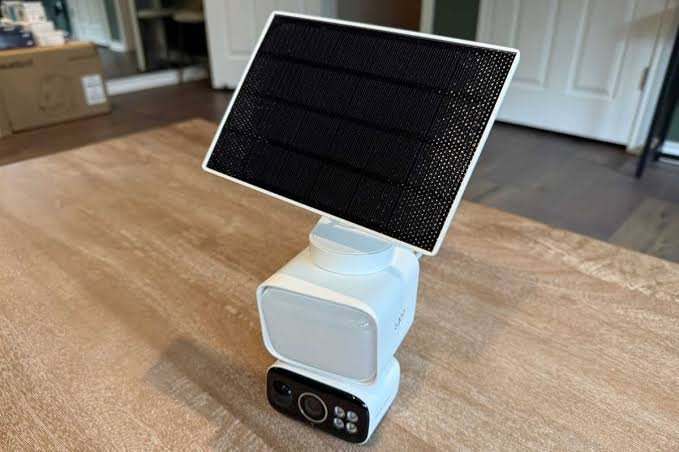
Best for: Driveways, garages and big yards.
Spec block:
- 2K pan/tilt camera, 800-lumen floodlight, 360° AI tracking.
- microSD up to 512 GB, 2.4 GHz Wi-Fi, claimed 140 days of battery with no sun.
- A 13-foot cable lets you mount the panel away from the camera for better sun.
Pros:
- One reviewer tested it on a detached garage with no other lighting, and it lit the whole structure.
- Separate panel placement helps in awkward spots.
Cons:
- 800 lumens won’t light a large open yard like a 2,000+ lumen wired floodlight.
- The same reviewer found the floodlight detection range limited to 15 feet.
What buyers say: Hands-on reviewers praise the coverage for the price. Treat the 140-day battery number as a manufacturer claim, because real life depends on motion events.
Skip if: You need a very wide, very bright flood.
3. Ring Spotlight Cam Plus (Solar): Best for Ring Users
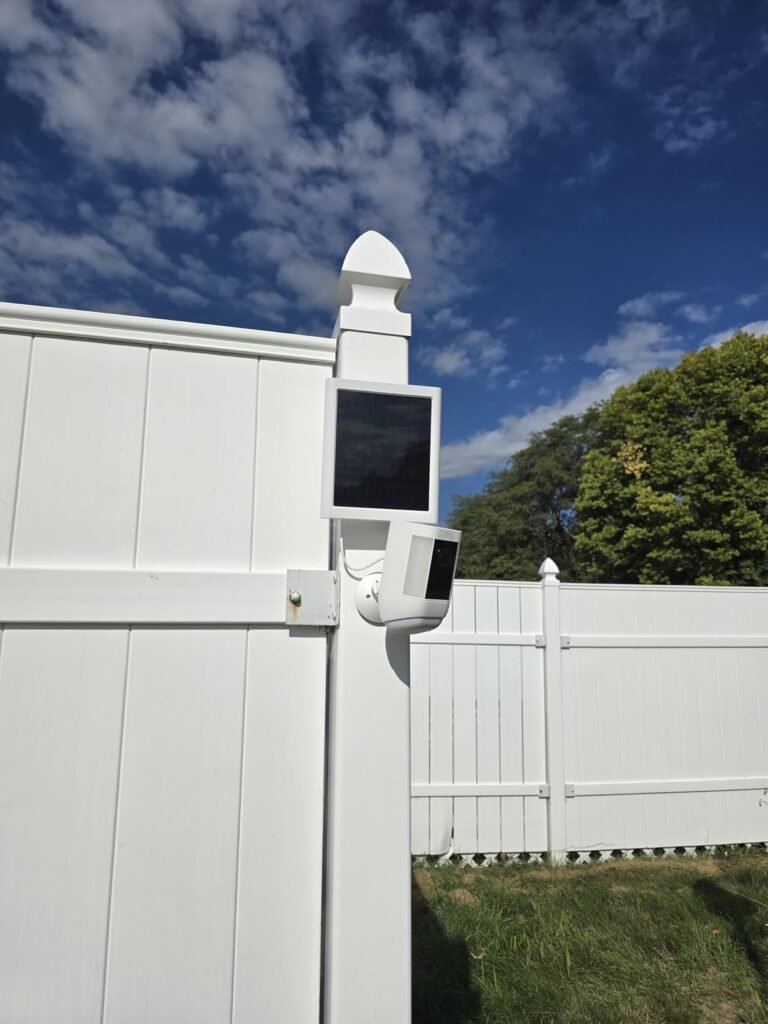
Best for: Households already on the Ring app.
Spec block:
- 1080p video with a 140° field of view.
- 2.4 GHz Wi-Fi only.
- No hub needed, plus easy custom motion zones.
Pros:
- Wide view and simple zone setup.
- Ties into other Ring devices.
Cons:
- Recordings need a Ring Protect subscription, and there’s no SD slot.
- One review notes solar charging can be intermittent.
What buyers say: Retailer reviewers praise easy installation and long battery life. One said adding the solar panel ended the need to recharge. A comparison page lists a 4.5 rating across nearly 19,500 ratings.
Price note: The camera was around $109.99 on sale versus $149.99 list in one August 2026 snapshot. The solar panel costs extra or comes in a bundle.
Skip if: You hate subscriptions.
4. Reolink Solar Floodlight Cam: Brightest Option
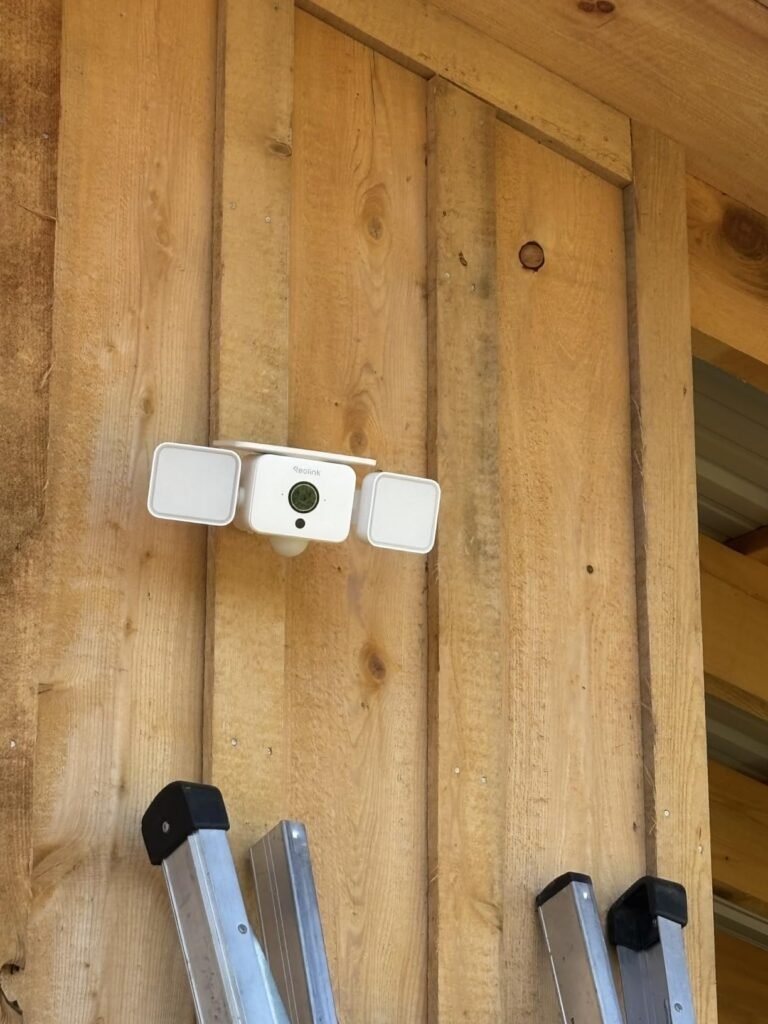
Best for: Backyards and drives where you want real light.
Spec block:
- 2K (4MP) video, 150° view, up to 1,000 lumens with adjustable color temperature.
- 7,800 mAh battery, 3W integrated solar panel, microSD up to 512 GB, IP66 rating.
- 110 dB siren and a stated battery life of three months.
- $109.99 MSRP.
Pros:
- No subscription fees.
- A reviewer finished installation in under 20 minutes.
Cons:
- One hands-on reviewer found the footage less sharp than Reolink’s usual standard.
- The brightness trails Reolink’s wired Elite models, which reach 3,000 lumens.
What buyers say: The listing is new. One third-party analysis found only 42 Amazon reviews, so treat star ratings as early.
Skip if: Picture sharpness matters more to you than light output.
5. Reolink Argus PT Ultra: Best 4K With Spotlight
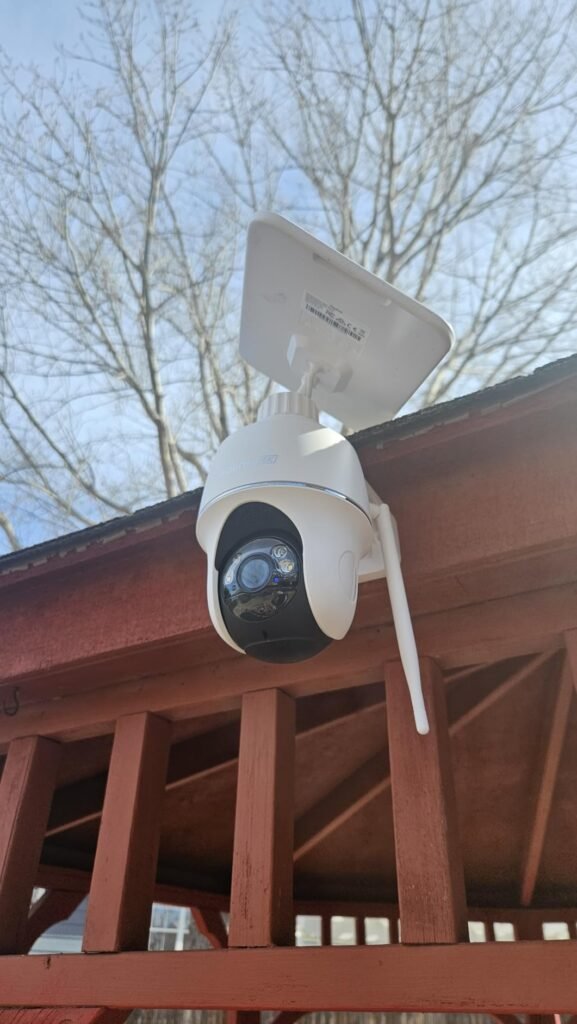
Best for: Wide yards where one camera needs to cover a lot.
Spec block:
- 8MP 4K video, 355° pan, 90° tilt, 21.6 Wh battery, solar-compatible.
- Built-in motion spotlight and color night vision up to 33 feet.
- Local storage on microSD or a Reolink Home Hub.
Pros:
- Reviewers cite sharper 4K, the added spotlight and reliable AI detection.
Cons:
- It’s a spotlight camera, not a floodlight.
- Pricing varies by bundle, so check whether the panel is included.
What buyers say: One retailer reviewer found it easy to link with the Reolink app but called the tie strap flimsy.
Skip if: You want a bright flood.
6. Tapo C420S1 + A200 Panel: Fast-Charging Pick
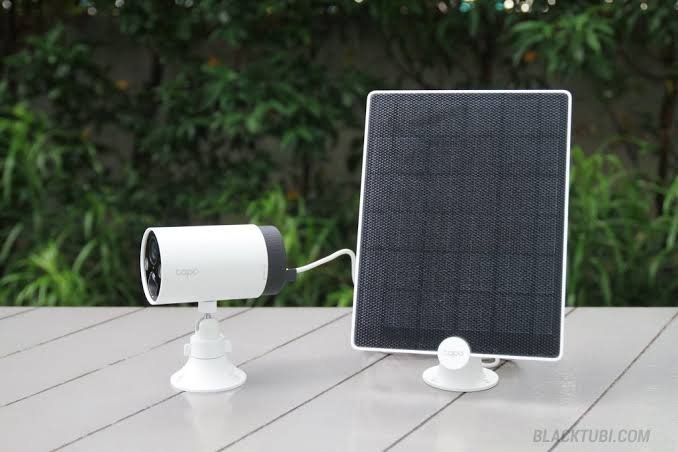
Best for: Buyers who want a bigger, separate panel.
Spec block:
- 2K QHD video (2560 × 1440), starlight sensor and onboard spotlights for color night vision.
- The A200 panel delivers up to 4.5W and has a 13-foot cable.
- One panel connects to only one camera.
Pros:
- Tapo says 30 minutes of standard sunlight a day can keep the battery going.
- A major national roundup named it the best solar-powered outdoor camera.
Cons:
- It still uses an older microUSB port.
- The A200 showed as sold out on Tapo’s US store at one check. Confirm stock.
What buyers say: One buyer reports the battery stays above 95% even on cloudy days.
Skip if: You need a floodlight.
7. Arlo Pro 5S 2K + Solar Panel: Best for Arlo and HomeKit Fans
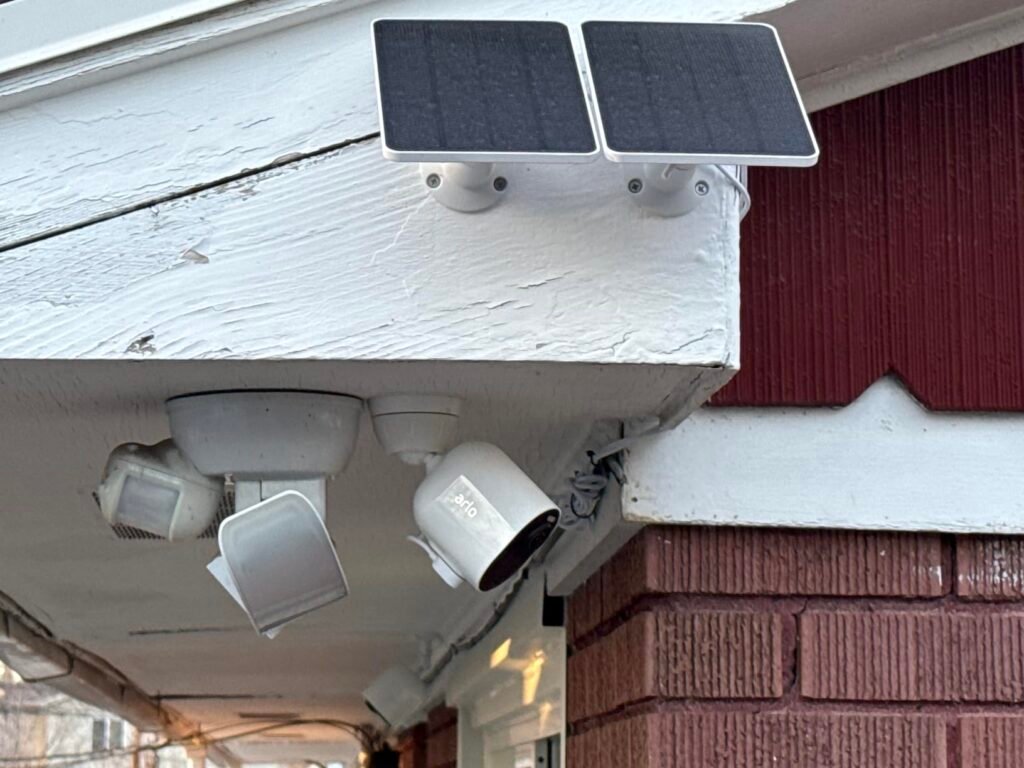
Best for: People who want polished video and the Arlo ecosystem.
Spec block:
- 2K HDR video, 160° view, integrated spotlight with color night vision, siren and an optional solar panel.
- $249.99 list price, with street prices often lower.
Pros:
- Retailer customers enjoy the video quality, battery life and ease of use.
Cons:
- One major review warns that subscription costs may push you elsewhere.
- Local storage requires a $100 hub.
What buyers say: One buyer who chose the solar panel says charging is no longer an issue.
Skip if: You want zero ongoing fees.
8. Wyze Battery Cam Pro: Best Budget Deterrent
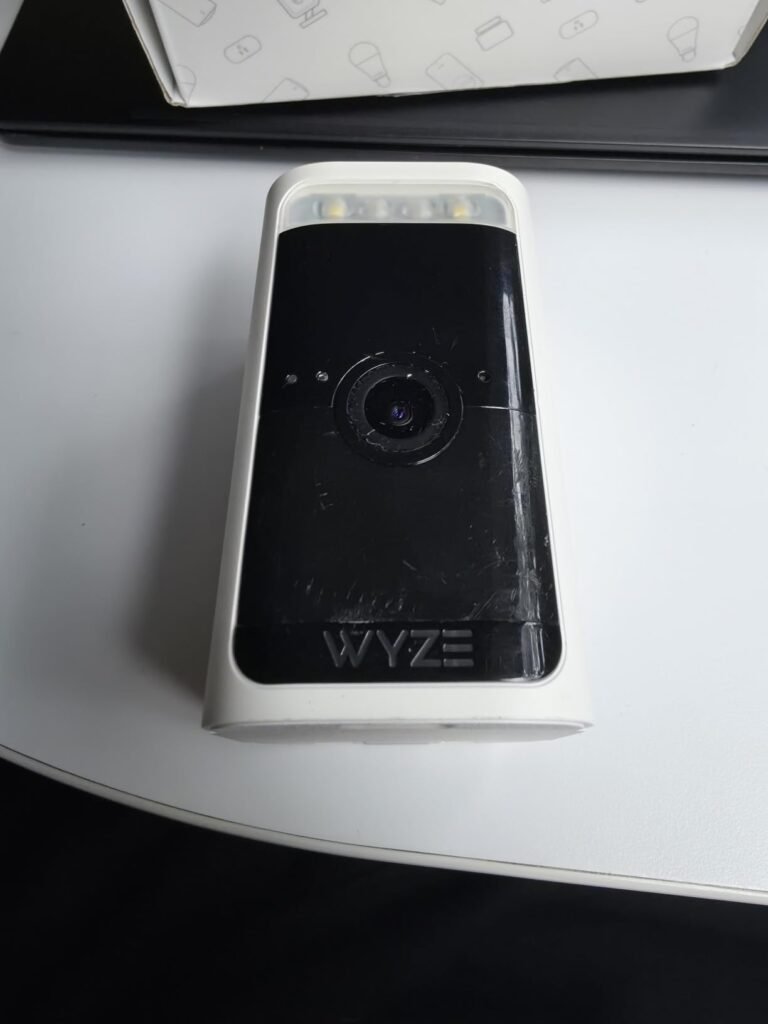
Best for: Small budgets and renters.
Spec block:
- 2.5K HDR video, integrated spotlight and siren, radar plus PIR motion detection, removable battery, IP65.
- $89.98 for the camera and $109.98 with a solar panel on Wyze’s pages.
- 150-lumen spotlight and battery life of up to six months.
Pros:
- Dual sensors aim to cut false alarms.
- The removable battery makes swaps easy.
Cons:
- 150 lumens is modest.
What buyers say: I couldn’t find enough verified buyer data for the solar bundle. An expert roundup scores it 7.8 out of 10 across four reviews and labels it good value.
Skip if: You want strong lighting.
9. eufy SoloCam S340: Best Dual-Lens
Best for: Properties where you want a wide view plus zoom.
Spec block:
- A 3K wide lens (135° view) plus a 2K telephoto lens with 8x hybrid zoom.
- 360° pan, 70° tilt, 8 GB local storage, 2.4 GHz Wi-Fi, 90 dB siren.
- A built-in spotlight enables color night vision.
- Around $199.99 in one recent snapshot.
Pros:
- Two views at once, motorized pan and tilt, and a solar panel that works.
Cons:
- It’s bulky, and the solar panel may not suit every location.
What buyers say: Retailer customers admire the camera quality and battery life, though one flagged AI tracking.
Skip if: You want a compact unit.
10. Reolink Go Plus Solar: Best Off-Grid (4G)
Best for: Barns, cabins and lots with no Wi-Fi.
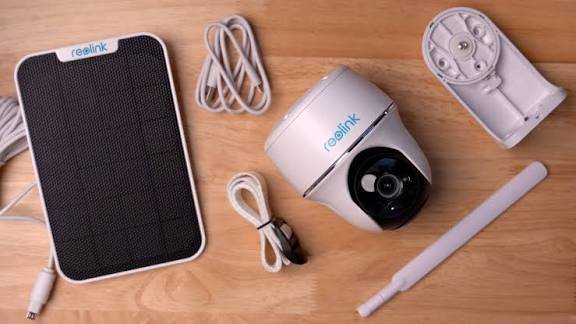
This pick is a camera, not a light. It’s here because it solves a problem the others can’t.
Spec block:
- It works only on 4G/3G cellular, not Wi-Fi, and needs a SIM and a data plan.
- 2K 4MP video, 4G LTE only.
- 33-foot infrared night vision.
- About $280 with a 6W panel in one roundup.
Pros:
- No Wi-Fi needed.
- One buyer says the battery lasts for weeks.
Cons:
- It can’t record 24/7.
- One listing says it doesn’t support Verizon. Reolink lists T-Mobile prepaid, Mint and FreedomPop as compatible. Check carrier support before buying.
What buyers say: One buyer calls it great without Wi-Fi but notes you need a SIM and memory card. Another says they never exceeded a 2 GB monthly plan.
Skip if: You have Wi-Fi at the install spot.
How We Chose and Researched These Picks
I did not lab-test these products. I compared manufacturer specs, independent reviews and buyer feedback from major retailer pages. I picked units that combine a light (or spotlight) and a camera with solar charging, and I added one 4G option for off-grid sites. Prices and models change, so verify before you buy.
How Solar Lights With Camera Work
Panel, battery and charging cycle
The panel charges a battery during the day. At night the battery runs the camera and light. Good units sip power while they wait.
Motion sensor, light and recording trigger
A motion sensor wakes the camera. The light switches on and the camera records a short clip. More triggers mean faster battery drain. A reviewer advises limiting how often recording triggers, since each one drains the battery.
Color night vision vs infrared
Infrared gives black-and-white footage. Color night vision needs light, and it comes from a spotlight LED or a starlight sensor. That’s why a spotlight or floodlight changes the footage, not just the yard.
How to Choose: What to Check Before Buying
Light output (lumens) and detection range
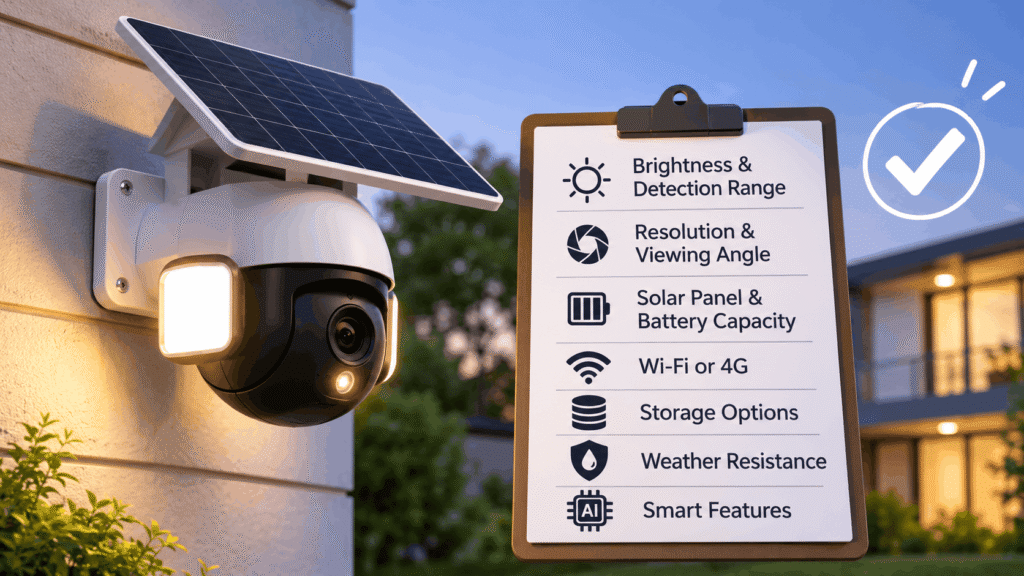
More lumens means a brighter scene. 800 lumens falls short of a large wired floodlight at 2,000+. Match brightness to the area. A door needs less than a driveway.
Resolution and field of view
2K is the sweet spot for most homes. 4K helps on big yards. Wider fields of view, like 140° to 160°, cover more ground with one camera.
Panel size, battery capacity and cloudy-day runtime
Bigger panels recover faster. Bigger batteries ride out gray weeks. Reolink’s floodlight, for example, pairs a 3W panel with a 7,800 mAh battery.
Solar panel add-ons worth knowing
Some cameras have a built-in panel. Others use a separate one, which you can aim at the best sunlight. Two examples:
- Tapo A200 Solar Panel: It delivers up to 4.5W through a 13-foot cable and works with the Tapo C400, C420 and C425. One panel connects to only one camera. It lists at $39.99 on Tapo’s US store, but it showed as sold out at one check, so confirm stock.
- Wyze Battery Cam Solar Panel: It extends battery life for the Wyze Battery Cam Pro and lists at $24.99 on Wyze’s pages. Wyze also sells the camera and panel together at $109.98.
Always match the panel to your exact camera model, since connectors differ.
Wi-Fi vs 4G
Most solar cameras use Wi-Fi, and several use only the 2.4 GHz band. The eufy S340 is 2.4 GHz only. Test your signal at the mounting spot first. For setups that need a connection, our guide to WiFi solar lights for home security explains how they connect and where to place them. If you have no Wi-Fi at all, a 4G model works, but you pay for data.
Local storage vs subscription
Some brands save clips on the device for free. Others lock history behind a plan. Ring requires a subscription to record. The eufy S120 stores clips locally.
Weather rating and temperature range
Look for at least IP65. Reolink’s floodlight carries IP66. Check the operating range too, especially in cold states.
Smart features: AI detection, siren, two-way audio
AI detection cuts false alerts from leaves and cats. Sirens and two-way talk help you scare off visitors. To see how this tech works in solar fixtures, read our piece on AI-powered solar lights.
Will Solar Work at Your Location?
Sun-hours guide
“Peak sun hours” measure sunlight strength, not daylight length. A cloudy winter day in Seattle can bring about nine hours of daylight but only about 1.2 peak sun hours. That’s why a camera that thrives in Phoenix may struggle in Seattle in January.
Brand claims vary. eufy cites two hours of direct sun for the S120. Tapo says 30 minutes for its A200 panel. Treat both as best-case numbers.
Panel direction and angle
In the US, a south-facing panel usually collects the most sun. A tilt helps in winter. A separate panel on a cable, like the Tapo’s, lets you aim it freely.
Shade, walls and trees
Even partial shade cuts charging. A reviewer flagged placement limits for this reason. Watch the spot for a day before you drill.
Mini checklist
- Does the panel see direct sun for several hours?
- Is shade from trees or eaves changing through the year?
- Will winter sun still reach it?
- Do you have a backup plan, such as a USB-C top-up?
Solar vs Wired vs Battery-Only
| Solar | Wired | Battery-only | |
|---|---|---|---|
| Install | Easy, no wiring | Needs power run | Easy |
| Light output | Moderate | Higher | Moderate |
| Upkeep | Occasional panel wipe | Low | Recharge by hand |
| Best for | Outlet-free spots | Brightest lighting | Short-term or shaded spots |
Wired Reolink models reach 3,000 lumens. Wyze rates its battery at up to six months. The eufy S120 lasts about two months on its battery. Solar fills the gap, since the sun keeps topping up the battery.
What It Really Costs Over 3 Years
Upfront price
Most picks run roughly $90 to $280, depending on bundle and brand.
Subscriptions
Ring needs a plan to store recordings. Arlo uses a cloud plan, or you can buy a $100 hub for local storage. eufy, Reolink and Tapo options store clips locally with no required monthly fee.
4G data plans
One buyer reports staying under a 2 GB monthly plan. Your own cost depends on the carrier and how often clips upload.
Battery replacement
eufy lists a product lifespan of 60,000 hours for the S120. Wyze’s battery is removable. Sealed batteries can mean replacing the whole unit later.
| Product | Ongoing cost to expect |
|---|---|
| eufy S120 / S340 | None required |
| Tapo C615F / C420S1 | None required |
| Reolink Solar Floodlight / Argus PT Ultra | None required |
| Wyze Battery Cam Pro | Optional storage card |
| Ring Spotlight Cam Plus | Subscription to save clips |
| Arlo Pro 5S | Cloud plan or $100 hub |
| Reolink Go Plus | Cellular data plan |
Installation Guide
Mounting height and angle
Mount high enough to avoid easy tampering, and aim at the approach path, not the sky. Skip pointing at a neighbor’s windows.
Panel placement
Put the panel in the best sun, even if the camera sits elsewhere. Tapo’s 13-foot cable helps here.
Wi-Fi signal test before drilling
Hold your phone at the spot and check the signal. One S120 buyer suggested a Wi-Fi extender for weak spots. Several of these cameras need 2.4 GHz, which travels farther than 5 GHz.
Common mistakes
- Mounting under a deep overhang.
- Aiming at a busy road, which triggers constant alerts.
- Skipping the full first charge.
One reviewer finished the Reolink floodlight install in under 20 minutes, so the work is quick once you pick the spot.
Privacy, Audio Recording and Neighbor Rules
Most states allow outdoor cameras and video on your own property, but they protect privacy. Federal and state law also bar recording people where they expect privacy. Keep cameras off bedrooms and neighbors’ windows.
Audio is stricter. Eleven states, including California, Florida and Massachusetts, require all parties to consent to audio recording. If you live in one, turn audio off unless you have permission, and use privacy zones to block neighbors’ doors and windows. This is general information, not legal advice, so check your state’s rules.
Common Problems and Fixes
Camera goes offline
Check the Wi-Fi band first, since many models need 2.4 GHz. Then check the signal at the mounting spot.
Battery drains fast
More motion triggers mean more drain. Cut down how often recording triggers, narrow your motion zones, and check that the panel gets sun.
Too many false alerts
Use AI person detection and motion zones. Wyze pairs radar with PIR to cut false alarms.
Blurry or dark night footage
Wipe the lens, and turn on color night vision with the spotlight. A brighter light usually helps the picture.
Solar Street Lights With Camera: When to Choose One
Choose a street-light version for lots, long driveways or business sites, not for a typical house. They need poles and often bulk ordering. One supplier lists a 120W unit with a 6V 12W panel at a 500-piece minimum. For a home, the products above are simpler and cheaper.
FAQs
Can someone steal them?
Yes. Mount them high and out of easy reach. Pick units with anti-tamper mounts where you can.
How long does the battery last?
It varies. eufy rates the S120 at about two months on average use. Wyze lists up to six months. Solar extends both.
Is there a monthly fee?
Depends on the brand. Ring needs a plan to record. Reolink’s floodlight has no subscription fees.
What happens on cloudy days?
Charging slows, and the battery covers the gap. A gray winter day can deliver only about 1.2 peak sun hours. A bigger battery helps through long stretches.
Do they need Wi-Fi?
Most do. The eufy S340 uses 2.4 GHz Wi-Fi. If you have none, the Reolink Go Plus works only on cellular and needs a SIM and data plan.
Do solar lights with cameras work at night?
Yes. They run on stored battery power after dark. Color night vision comes from a spotlight or starlight sensor. Without light, they fall back to infrared, which is black and white.
Final Verdict
- Driveway: Tapo C615F KIT or Reolink Solar Floodlight Cam.
- Backyard or wall: eufy S120.
- Shed or barn with no Wi-Fi: Reolink Go Plus (add your own light).
- Rental home: eufy S120 or Wyze Battery Cam Pro, since neither needs wiring.
- Remote property: Reolink Go Plus on a 4G plan.
- Tight budget: Wyze Battery Cam Pro or Reolink Solar Floodlight Cam.
Pick the spot with the best sun first, then pick the product. A great camera in the shade is just a very expensive paperweight.