Last updated on October 25th, 2026 at 09:10 am
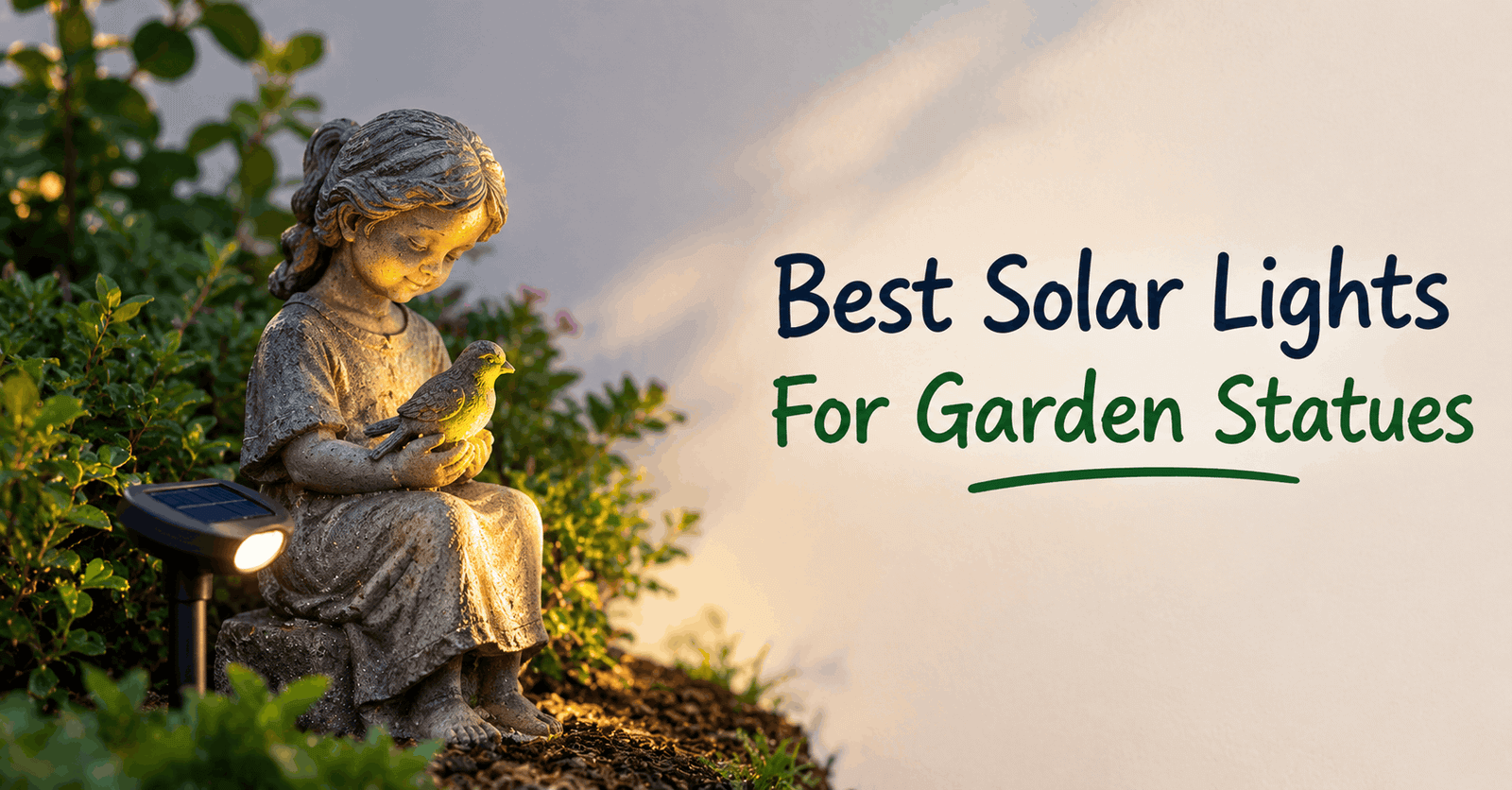
Quick Answer: The best solar lights for garden statues are adjustable, warm-white spotlights with a weatherproof rating and a replaceable battery. This guide covers both spotlights you aim at a statue and statues that come with a built-in solar light.
Table of Contents
Myth: Any solar light will make your garden statue look magical.
Reality: Most make it look like it’s hiding from someone. Light type, beam angle and sun exposure decide the result.
Best Solar Lights for Garden Statues

Pick an adjustable spotlight with a narrow beam, warm white light and an IP65 rating. For a tall statue, a narrow beam of about 15 to 30 degrees works well. Choose warm to neutral white between 2700K and 4000K and a replaceable NiMH battery. Give the panel six to eight hours of direct sun. For a small, cute piece, a statue with a built-in light also works.
| Best for | Pick this type |
|---|---|
| Tall, slim statue | Narrow-beam solar spotlight |
| Wide or detailed statue | Medium-beam spotlight, or two lights |
| Small figure, zero effort | Statue with built-in solar light |
| Statue in shade | Spotlight with a separate panel |
| Cold winters | Light with a replaceable battery |
| Memorial or quiet corner | Soft warm-white light, kept low |
Best Overall
An adjustable spotlight wins for most people. You control the angle, the spot and the mood. Look for warm white light, an IP65 rating and a battery you can swap.
Best Solar Spotlight
For tall or vertical statues, choose a narrow, adjustable head. Narrow beams highlight tall, slender features, and a narrow beam on a small sculpture brings out its details. If the statue sits in shade, choose a model with a separate panel.
Best Pre-Lit Solar Statue
Choose this for small decorative pieces like frogs, owls or gnomes. It works best in full sun, since the panel sits on the figure. Check the IP rating and look for a replaceable battery.
Best Budget Pick
A basic spotlight with a replaceable battery beats a sealed budget unit you toss when the battery dies. That’s my logic, not a sourced rule. Rechargeable batteries wear down a little with every charge and discharge, so a swappable battery stretches your money.
Best for Memorial and Grave Statues
Go for a soft, warm light at low brightness. Keep it simple, sturdy and respectful. More on that in the memorial section below.
Key Takeaways
Spotlights give control. Built-in lights give convenience. Warm light, a narrow adjustable beam, IP65 and a swappable battery cover most statues.
Solar Spotlight vs Statue with Built-In Light: Which Do You Need?
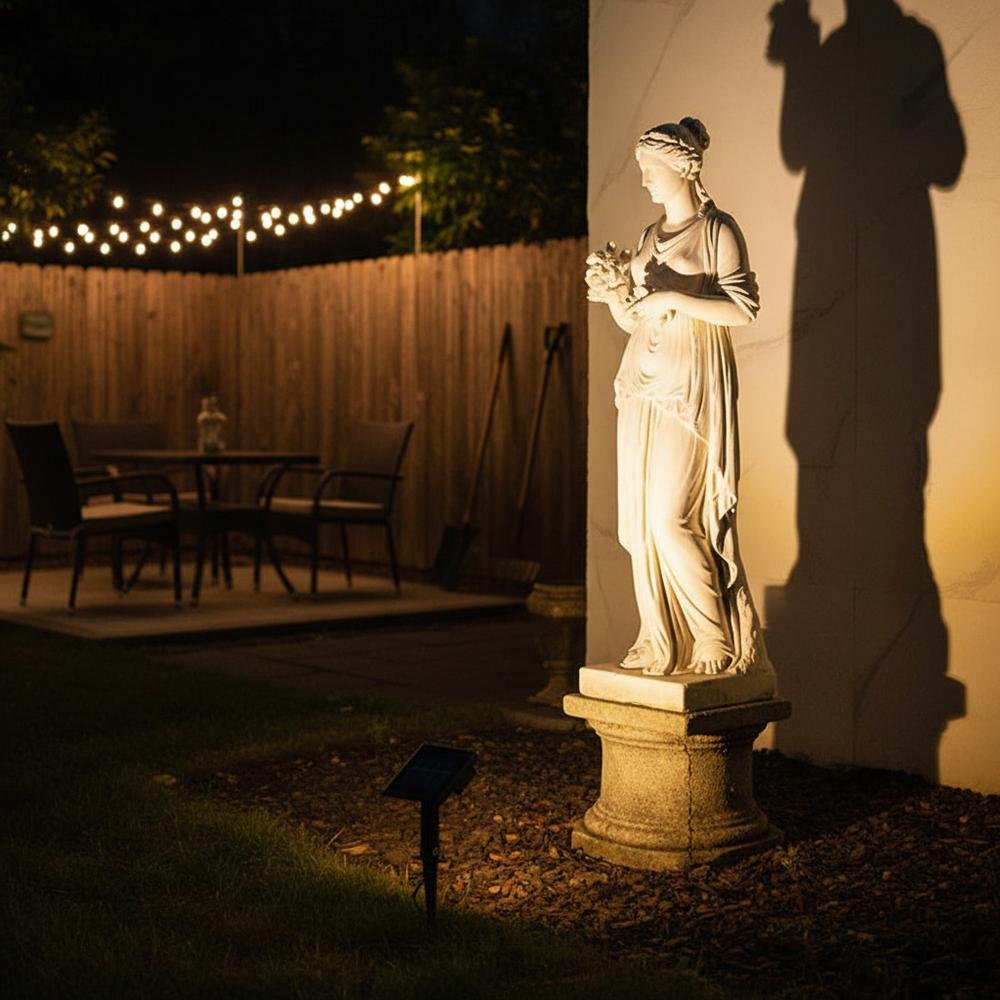
People use this keyword for two different things. Some want a light that shines on a statue they own. Others want a statue that glows on its own.
When a Spotlight Is Better
Pick a spotlight if you love your statue and want it to look good. You choose the angle, the spot and the mood. It also works on any statue, whatever its size or material.
When a Built-In Light Is Enough
Pick a built-in light for small, fun pieces. You push the stake in the ground and you’re done. The catch: the panel rides on the statue, so the statue has to sit in the sun.
How Solar Garden Lights Actually Work
A small panel collects sunlight. A battery stores it. An LED uses it at night. That’s the whole trick, and it’s less mystical than the box suggests.
Solar Panel, Battery and LED
The panel turns daylight into electricity. The battery holds it. Most small solar garden lights use rechargeable AA or AAA NiMH batteries. One source gives a simple runtime formula: battery capacity in watt-hours divided by lamp power in watts.
Dusk-to-Dawn Sensor
A light sensor switches the LED on when the sun goes down. Smart sensors help battery life by running the light only when needed. Sensors can also get fooled. One manufacturer manual lists a panel near other light sources as a cause of short runtime, so keep the panel away from porch lamps.
Why Cheap Lights Fail Early
The battery is usually the weak link. Rechargeable batteries degrade with every charge and discharge cycle. Marketing claims also assume ideal sunlight and new batteries, so real results run lower. Cheap lights aren’t doomed, but their batteries often age faster than the plastic around them.
What to Look For Before You Buy
Lumens: How Much Brightness Fits Your Statue
Lumens measure total light output. Too few leave the subject hard to see, and too many create glare. Small statues need less light, and large ones need more. That’s logic, not a sourced chart.
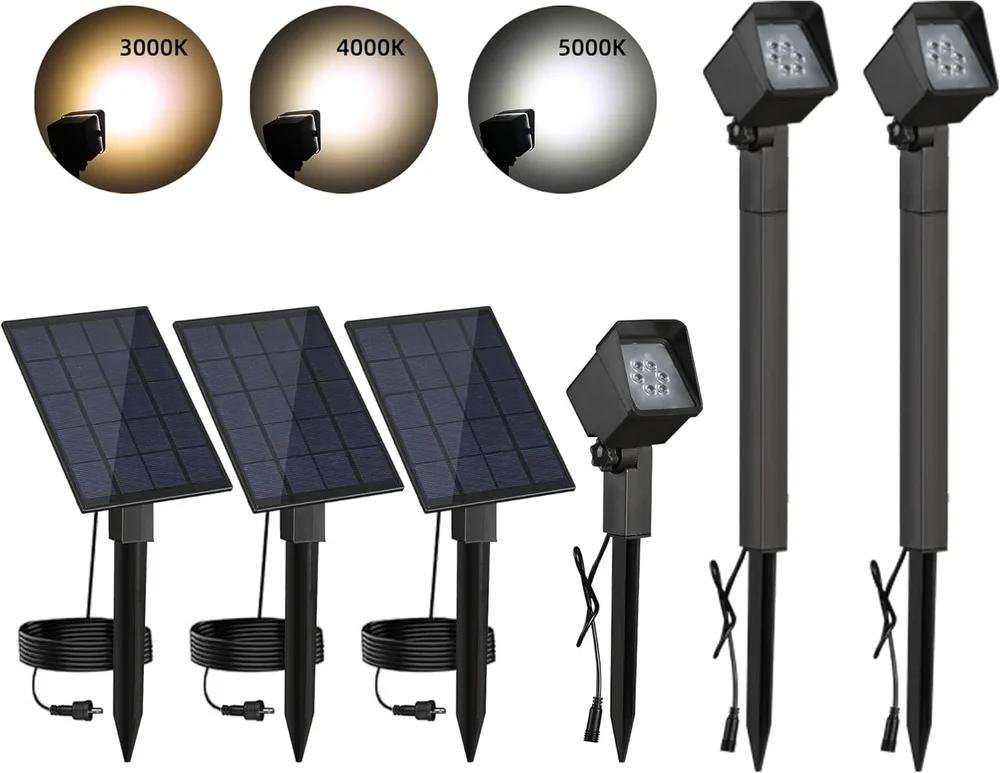
One manufacturer lists 200 to 600 lumens for narrow-beam spotlights and 120 to 250 lumens for medium-beam uplighting. Those figures describe wired landscape fixtures. Small solar lights often put out less, so read the box and treat the number as a best case.
Warm White vs Cool White Light
Warm white looks natural on stone, resin and concrete. For outdoor uplighting, 2700K to 4000K is common and gives warm or neutral light without harshness. Cool blue-white can make a statue look like a hospital corridor
Battery Type and Capacity
Most small garden lights use NiMH batteries in the 600 to 1000mAh range. One source says a 600mAh NiMH battery gives about 6 to 8 hours of soft light on a full charge.
Match the original battery. Voltage, size and chemistry all need to match. Never use regular alkaline batteries, which can leak, corrode and damage the light.
Panel Size and Placement
A bigger panel can refill the battery faster, but only if it sees the sun. Guidance says six to eight hours of direct sunlight is a good target. Panel direction counts too, since orientation and tilt affect how much energy the panel captures.
Waterproof Rating (IP Rating)
IP stands for Ingress Protection. The IEC 60529 standard defines it. The first digit covers dust and the second covers water.
- IP44 handles splashing water.
- IP65 is dust-tight and protects against low-pressure water jets from any direction.
- IP67 survives immersion up to 1 meter for 30 minutes.
IP65 is a sensible outdoor minimum for statues.
Adjustable Head and Beam Angle
An adjustable head lets you fix aiming mistakes without buying a new light. Beam angle matters because a closer object needs a narrower beam to stop light spilling past it.
Key Takeaways
Check five things: warm color, adjustable beam, swappable NiMH battery, IP65 and a realistic lumen claim. Everything else is decoration.
How to Light a Garden Statue (Step by Step)

Uplighting vs Spotlighting
Uplighting puts the light low and aims it up. For taller pieces, place the light near the base and light it upward. A low angle also helps because low-angle light makes long shadows that bring out texture, while overhead light can wash out detail.
Distance and Angle
Start close to the base. For bigger shadows, keep the light close to the feature and aim it up at a steep angle. Remember that the beam grows wider as distance grows. A new user can start with a 35-degree beam and adjust from there.
Avoiding Glare and Harsh Shadows
Aim for contrast, not a floodlit crime scene. Good lighting balances light and shadow, and an overlit subject distracts from the garden. Uplights can cast unwanted shadows if aimed carelessly, so walk the garden at night and check from where you actually stand.
When to Use More Than One Light
Use two lights when one side looks flat or too shadowy. One lighting guide describes a bronze statue lit with warm white LED uplights plus side lights. Big, wide statues benefit most from this.
Is your statue sitting in a flower bed? The plants need light too. Our guide to the best solar lights for plants and garden growth covers that side of the garden.
What If Your Statue Sits in the Shade?
Solar panels hate shade, and statues often live there. Don’t fight it.
Why Remote-Panel Lights Help
A spotlight with a separate panel splits the job in two. The lamp goes by the statue and the panel goes in the sun. It’s the neatest fix for shady corners, though the cable adds one more thing to hide.
Where to Put the Panel
Pick the spot with the longest direct sun. Aim for six to eight hours, and keep the panel away from other lights. In winter, angle the panel steeper than you would in summer.
Our Top Picks
Pros, Cons and Run Time by Pick Type
Solar spotlight. Pros: full control over angle and mood, and it works on any statue. Cons: more setup, and a poor aim creates odd shadows.
Spotlight with separate panel. Pros: it works for shaded statues. Cons: more pieces and a visible cable.
Statue with built-in light. Pros: no setup. Cons: it needs a sunny spot, and you can’t change the angle.
Run time. A small solar lamp usually runs about 6 to 10 hours after a good day of sun. Cloudy days shorten that.
Comparison Table
| Solar spotlight | Statue with built-in light |
|---|---|
| Control: you choose the angle and spot | Control: fixed, the glow comes from the statue |
| Setup: needs aiming and placement | Setup: push the stake in and go |
| Shade: works with a separate panel | Shade: the statue itself must sit in sun |
| Best for: statues you already own | Best for: small decorative pieces |
| Battery: often replaceable | Battery: check before you buy |
How We Choose These Picks
Research Setup
We did not run hands-on tests for this guide. We built the picks from lighting-manufacturer guidance, battery guidance, product manuals and the IEC 60529 standard. That’s why we describe pick types and skip brand rankings.
What the Numbers Can and Can’t Tell You
Run times and battery life vary by source. One source gives one to five years for solar light batteries, while another says one to two years for small NiMH cells. So treat every figure as a range. Lumen claims often reflect ideal conditions, and real garden results come in lower.
Solar Lights for Memorial and Cemetery Statues
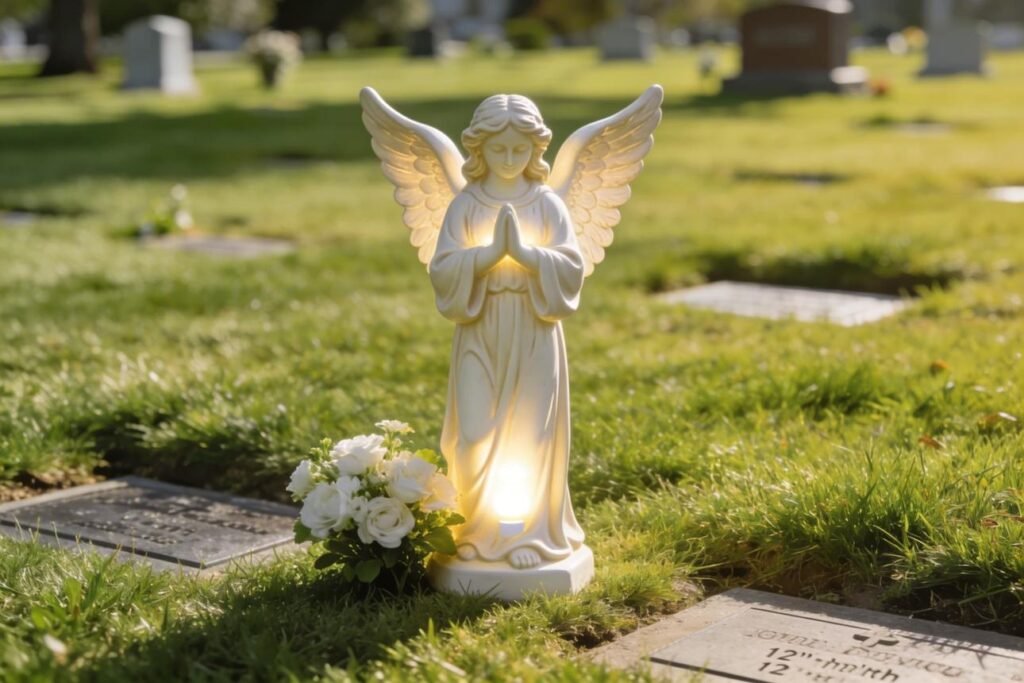
Many people light a pet memorial or a family grave with solar lights, and plenty of products are sold for that use.
What to Keep in Mind
Respectful: use a soft, warm light at low brightness. A 2700K-range warm tone sits at the gentle end of the common outdoor range.
Durable: pick IP65 or better and a sturdy stake, since the light will sit outside in all weather.
Allowed: check cemetery rules first. Some cemeteries restrict decorations.
Maintenance and Troubleshooting
Cleaning the Panel
Wipe the panel with a damp cloth and skip chemicals and abrasives. Keep debris and snow off it so the battery can charge.
When to Replace the Battery
Small NiMH batteries often need replacing every one to two years. Replace them when you notice dimmer light or shorter runtime, even if the battery isn’t fully dead. Recycle old ones, because local rules apply to disposal.
If the Light Is Dim or Won’t Turn On
- Check the sun. One manual says to place the light where it gets the most direct sun each day.
- Check nearby lights. A porch lamp can trick the sensor.
- Check the battery. The same manual says to replace an old battery.
- Recharge after snow. If snow covered the panel, the manual suggests 10 to 12 hours of full, direct sun to restore the charge.
FAQs
Do solar lights work in winter?
They work, but weaker. Daylight hours shrink, the sun sits lower, snow can cover the panel, and cold can reduce battery performance. Keep the panel clear and in direct sun.
How many lumens does a garden statue need?
There’s no universal number. Wired landscape spotlights use 200 to 600 lumens in narrow beams. Small solar lights often sit lower, so match brightness to statue size and avoid glare.
Do solar lights charge on cloudy days?
Yes, but less. Cold, cloudy weather and prolonged rain can all reduce battery charging. Expect shorter run time after gloomy days.
Is it safe to leave solar lights on all night?
Solar lights run every night by design, and the battery limits how long. The main safety point from manufacturer guidance is the battery: alkaline batteries can leak and corrode, so always use the correct rechargeable type.
Summary
The best solar lights for garden statues aren’t the brightest or the cheapest. They match your statue, your spot and your climate.
Choose a narrow, adjustable beam for tall pieces. Pick warm white light for a natural look, a swappable NiMH battery for long life and IP65 for weather. Place the light low, aim it up and check the view at night.
Once the statue looks right, look at the edges of your yard. Our breakdown of solar perimeter lights and what actually works around your property shows how to light the rest of the space.
Do that and your statue looks like a feature, not a ghost.