Table of Contents
Let’s Do The Math First
You want to charge a 100 amp-hour battery in 5 hours. That’s a lot of power flowing in a short time. Let me break this down so it makes sense.
A 100Ah battery holds different amounts of energy depending on voltage. Most systems use 12 volts. So a 12V 100Ah battery stores 1200 watt-hours. You want to fill this in 5 hours.
1200 watt-hours divided by 5 hours equals 240 watts. You need panels producing 240 watts to charge your battery at that speed. But wait. Nothing is that simple with solar.
Real Solar Production Isn’t Perfect
Solar panels don’t produce rated power all day. The 240 watt rating assumes peak sunlight at noon. Real world production varies wildly. Morning and afternoon produce less. Clouds reduce output. Dust and dirt steal power.
If you’re charging during peak hours only, you might hit close to rated power. If you’re spreading charging across the day, you need more capacity. Installers assume you’ll get about 75 percent of rated capacity on average sunny days.
So take 240 watts and divide by 0.75. You need 320 watts of panel capacity to reliably charge your battery in 5 hours during good sunlight.
Which Panel Size Works Best
Most residential solar panels range from 300 to 400 watts. A single 400 watt panel gives you enough capacity. That one panel produces around 300 watts on an average sunny day.
Two 200 watt panels work too. Three 150 watt panels work fine. One 350 watt panel gets close. You have options depending on what’s available.
The exact configuration matters less than total capacity. You need around 320 to 400 watts of panels to charge 100Ah in 5 hours comfortably.
Understanding Amp Hours And Watt Hours
Amp-hours measure charge capacity. Watt-hours measure energy. A 100Ah battery at 12 volts is 1200 watt-hours. A 100Ah at 24 volts is 2400 watt-hours. Check your battery voltage before calculating.
The Charging Controller Role
Your charge controller regulates how fast electricity flows into the battery. PWM controllers are cheap but less efficient. MPPT controllers cost more but get 30 percent more power. Better controllers mean smaller panels work.
Inverter Requirements For Your Setup
If you’re using an inverter, add power loss to your calculation. Inverters lose 5 to 15 percent as heat. This means if you charge the battery plus run AC loads, you need more panel capacity. Isolate battery charging from AC loads for simpler math.
Temperature Effects On Charging Speed
Cold reduces charging speed. Panels produce less in winter. Batteries accept charge slower in cold. Heat also reduces panel output. Plan for worst case conditions in your region. Use 50 percent of summer capacity as a rough winter estimate.
Panel Angle And Orientation Matter
Panels face south in northern hemisphere, north in southern hemisphere. The angle matters too. Panels at 30 to 45 degrees capture most light in temperate zones.
Panels lying flat on an RV roof get less output than properly angled panels. Shade blocks power dramatically. A tree branch covering 25 percent of a panel blocks 50 percent of output.
Mount your panels where they get unobstructed sun from 9 AM to 3 PM. This peak sun window is when charging happens fastest.
Real World Charging Scenarios
You’ve got a 400 watt panel and 12V 100Ah battery. On a perfect sunny day, the panel produces 320 watts average. You divide 1200 watt-hours by 320 watts. You get 3.75 hours to charge.
Not quite 5 hours, but close. Add controller losses and you’re right around 4.5 to 5 hours. This setup works.
Now add a cloudy day. The panel produces 100 watts instead of 320. You divide 1200 by 100 and get 12 hours. Charging takes all day with weak sun.
This shows why capacity matters. One panel barely works on cloudy days. Two panels give better reliability across weather conditions.
Wiring And Cable Losses
Thick cables between panels and controller are critical. Thin wires lose power to resistance. This loss reduces your effective panel output.
Use 10 AWG wire or thicker for systems under 30 amps. Use 8 AWG for higher current. Longer runs need thicker wire. Keep wire runs short when possible.
Bad wiring costs you 10 to 20 percent of power. This turns your 400 watt panel into 320 to 360 watts actual output. Size panels assuming 15 percent losses in the system.
So for 240 watts needed, divide by 0.85 efficiency. You get 282 watts. Add the 0.75 weather factor. You need 375 watts of panels.
MPPT Versus PWM Controllers
MPPT controllers track the panel’s maximum power point. They extract every watt available. They cost 200 to 400 dollars versus 50 to 100 for PWM. For serious charging, MPPT wins. The extra efficiency justifies the cost.
Pros Of This Setup
One or two panels is simple to install. Charging works on sunny days. Fast 5 hour turnaround is achievable. Panels last 25 to 30 years. No fuel costs. Quiet operation. Good for remote locations.
Cons Of This Setup
Cloudy days extend charging time significantly. Winter reduces capacity. Initial panel cost is 300 to 600 dollars per panel. Controller costs 50 to 400 dollars. Wiring and mounting add cost. Shade problems ruin daily charging. Weather dependent.
Speeding Up The Charging Process
Add more panels. Two 400 watt panels charge 100Ah in half the time. More panels mean faster charging and cloudy day reliability. Upgrade to MPPT controller. The extra 30 percent efficiency helps hit 5 hour targets on marginal days.
Use 24V system instead of 12V. Charging speeds up at higher voltages. Your panels push harder into the battery. Use thicker cables. Reduce resistance losses. Every watt counts when pushing for 5 hour charging.
Position panels perfectly. South facing in northern locations. No shade. Proper angle for season. Small adjustments add 10 to 20 percent output.
Different Battery Chemistries Matter
Lead-acid batteries accept charge at different rates than lithium. Lithium charges faster. Lead-acid needs slower charging to prevent damage. For lead-acid, limit charging to 25 percent of battery capacity per hour. That’s 25 amps for a 100Ah battery. You need 300 watts at 12 volts. Lithium batteries tolerate faster charging. You approach the 5 hour target easier with lithium. But lithium costs 5 to 10 times more than lead-acid.
Check your battery manual for maximum charge rate. This limits your panel sizing.
Budget Considerations
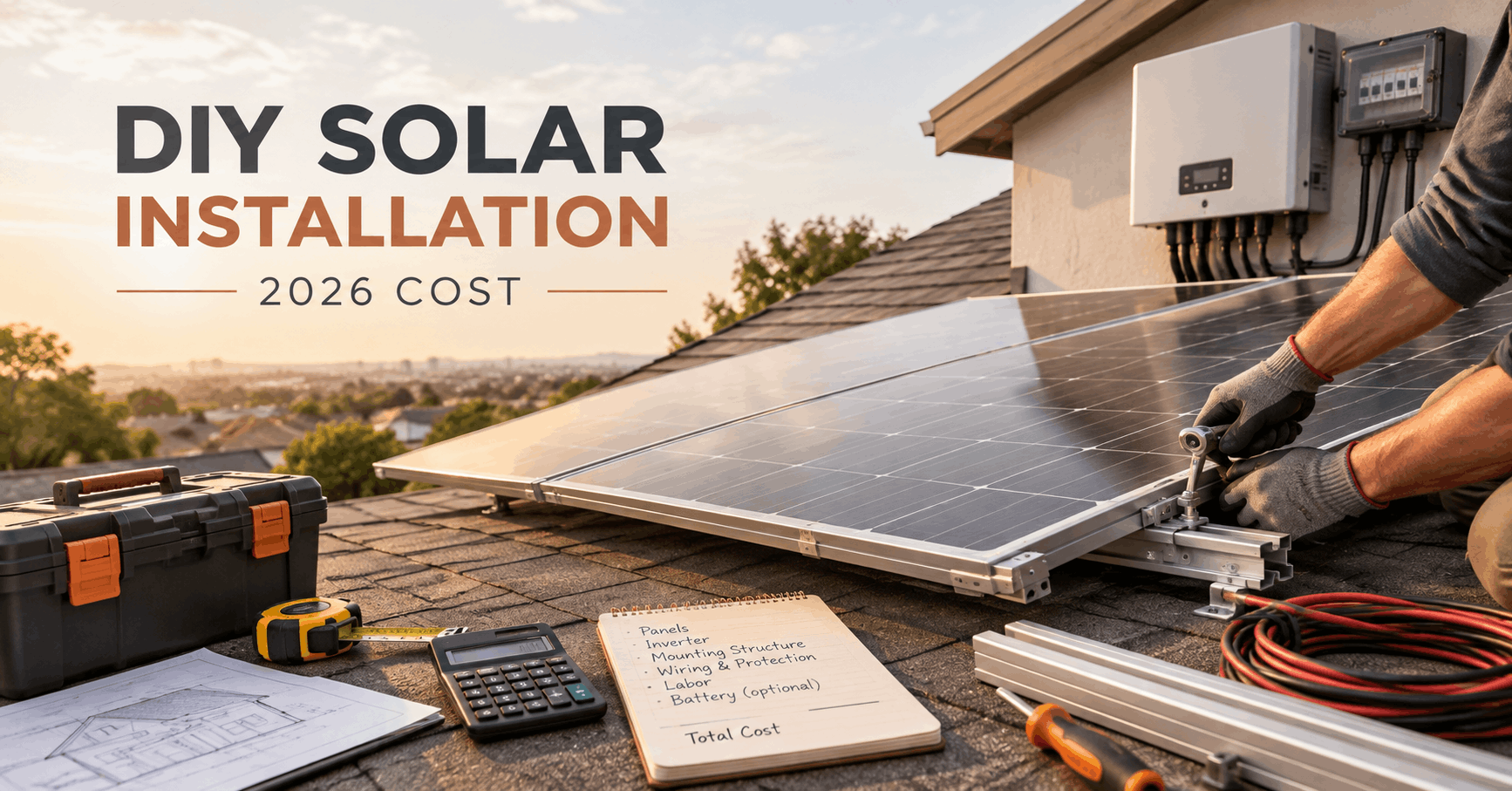
A basic 400 watt panel costs 250 to 400 dollars. A second panel costs another 250 to 400 dollars. An MPPT controller costs 200 to 400 dollars. Wiring, mounting, and breakers add 100 to 200 dollars.
Total investment for reliable 5 hour charging is 800 to 1400 dollars. This is simple system pricing.
You’re getting years of reliable charging for this cost. No fuel. No maintenance. Compare this to a generator running on fuel.
Seasonal Adjustments
Size your system for your worst season. If winter charging matters, design for winter sun. If summer is your use season, summer sizing works.
Most people size for spring and fall conditions. Winter gets slower charging. Summer gets faster charging. This balances out.
Keep a generator backup for critical situations. Charging fails in deep winter clouds. A small generator ensures you always have power.
Practical Steps To Take
- Calculate your actual battery size and voltage. Check the manual for maximum charge rate. Research average daily sun hours in your location for your season.
- Divide watt-hours needed by your available charging hours. Add 40 percent for losses and weather variability. That’s your minimum panel wattage.
- Get quotes for panels, controller, and installation. Consider MPPT versus PWM based on your budget. Install proper wiring and breakers.
- Test your system on cloudy days. Adjust panel angle if needed. Monitor charging times. Make notes on seasonal changes.
Summary
Charging a 12V 100Ah battery in 5 hours requires approximately 320 to 400 watts of solar panel capacity. One quality 400 watt panel works on sunny days, but two panels ensure reliability across weather conditions. Account for 25 percent losses from weather, shade, and efficiency factors. MPPT controllers outperform PWM by 30 percent, reducing panel size requirements. Cable size and length affect actual output significantly. Higher voltage systems charge faster than 12V systems. Lithium batteries charge quicker than lead-acid. Peak sun positioning between 9 AM and 3 PM is critical. Winter requires more capacity than summer. Your battery’s maximum charge rate limits how fast you charge. Expect 5 hour charging in ideal conditions, 8 to 12 hours in marginal conditions. Plan for cloudy days with extra panels or a generator backup. Total system cost runs 800 to 1400 dollars for reliable setup.