Last updated on October 24th, 2026 at 05:01 am
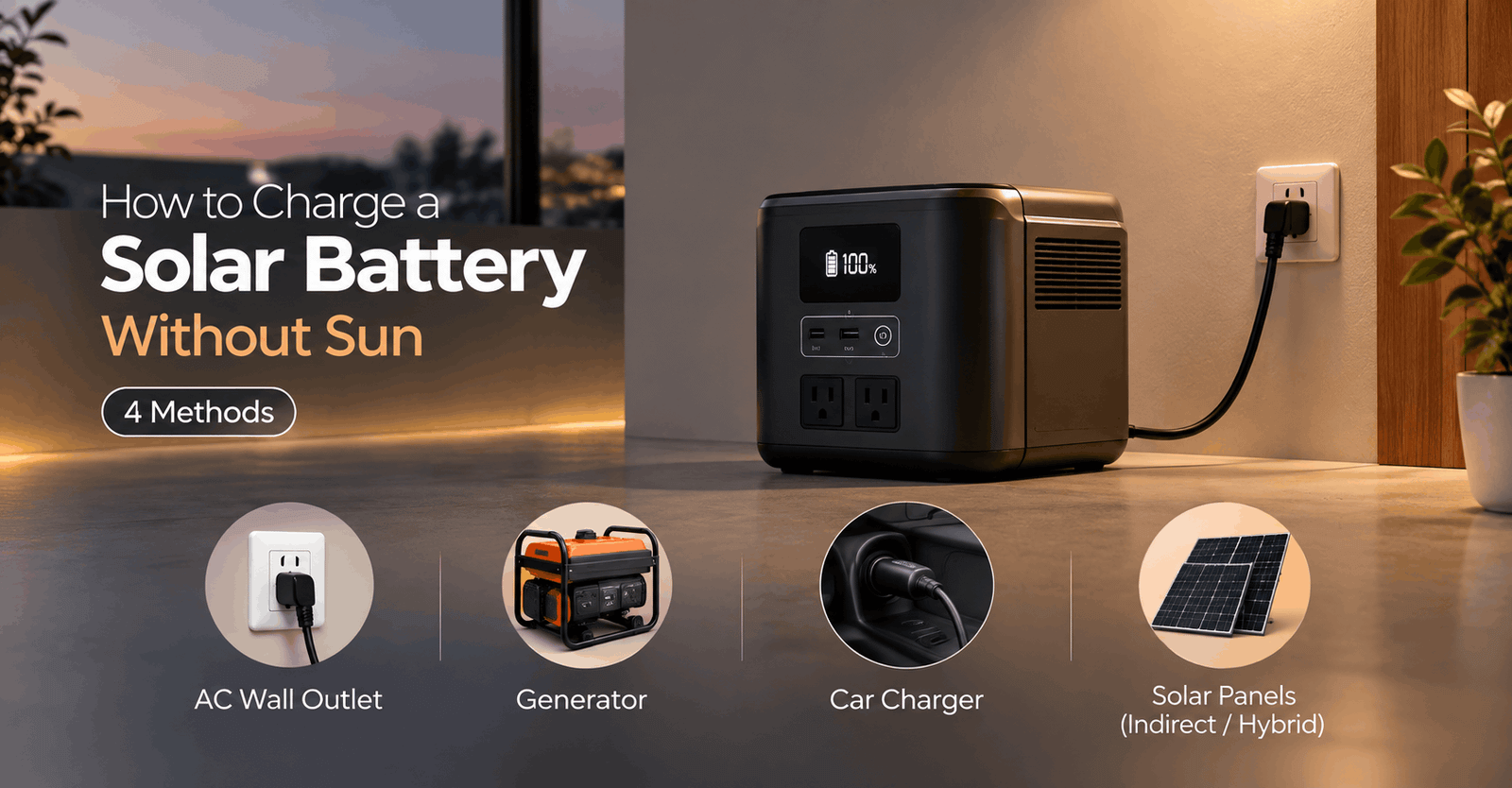
Quick Answer: Yes, you can charge a solar battery without sun. A home battery can charge from the grid if your hybrid inverter allows it, or from a generator through a proper transfer switch. Panels still make a little power on cloudy days but none at night. Small solar lights can charge from a bright window or a USB port. Never charge a lithium (LiFePO4) battery below 0°C (32°F) unless it has built-in heating.
Table of Contents
The myth: “A solar battery only charges when the sun shines.”
The fix: A solar battery stores electricity. It does not care where that electricity comes from. You can charge a solar battery without sun using the grid, a generator, or (for tiny batteries) a lamp or USB cable.
Key Takeaways
- Solar panels still make some power on cloudy days. They make none at night.
- Most hybrid inverters can charge the battery from the grid if you switch that setting on.
- A generator can charge a battery, but only with a proper transfer switch.
- A lamp can charge a small solar light, but it is slow.
First, Which “Solar Battery” Do You Have?
People use the same phrase for very different gear. Your method depends on which one you own.
- Home storage battery (lithium or lead-acid) wired to an inverter.
- Off-grid or RV battery bank (often LiFePO4).
- Portable power station with a solar input.
- Garden solar light with a tiny rechargeable cell inside.
The first two use Methods 1 and 2. The last one uses Methods 3 and 4.
Do Solar Panels Work on Cloudy Days?
Yes, but weakly. Panels generate electricity on cloudy and overcast days, though thicker cloud means less light reaches them. The U.S. Department of Energy also notes that cloudy days can hamper solar panels’ ability to produce electricity.
How weak? Sources disagree. One estimate says panels can still produce 10 to 25% of rated output under low cloud. Another puts the range at 10 to 40 percent of normal output. One guide warns that “cloudy” is not one measurable condition, so any fixed percentage is shaky.
Night is simpler. Panels do not produce energy at night. Moonlight does not help either, since the output is too low to power a home.
So if the sky is just grey, keep the panels clean and let them trickle in a little charge. If it’s dark, or the battery is nearly empty, use the methods below.
Method 1: Charge a Solar Battery From the Grid
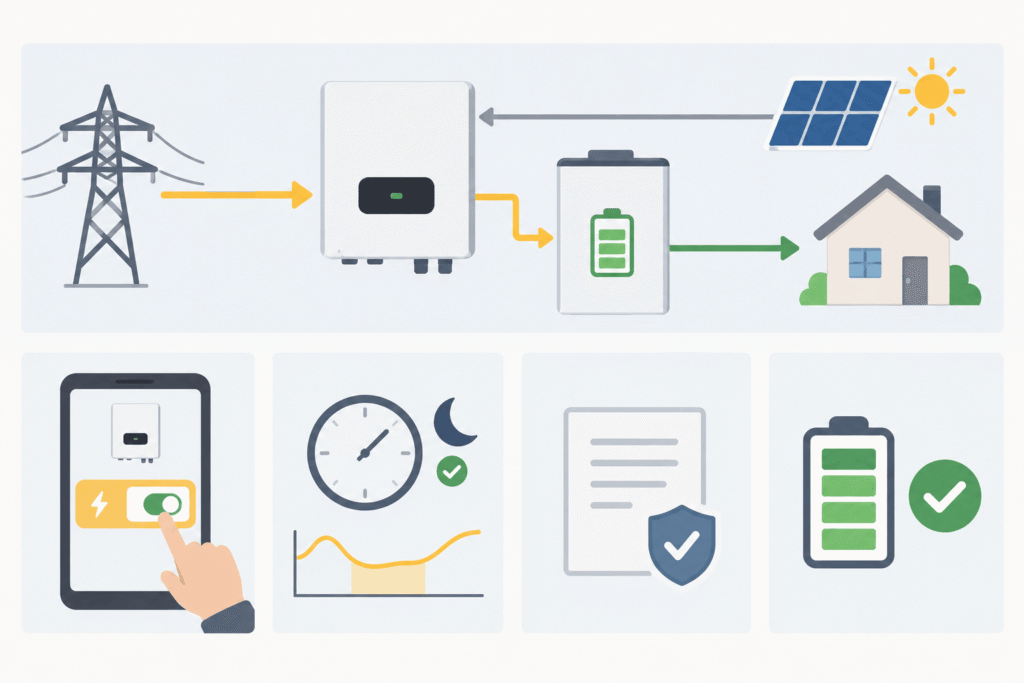
This is the easiest way to charge a solar battery without sun. It also needs the least effort.
Many hybrid inverters have a switch for it. On one Solis model, you enable the “Charge from grid” function, and you can set charging times for lower-tariff periods such as night. SolaX describes the same idea: the option depends on whether you are willing to buy grid electricity to charge the battery. When you turn it on, you can also set the highest state of charge the grid may fill. How to set up self-use and if needed time of use to set charging times on RHI hybrid inverters +2
Menu names differ by brand, so read your own manual. If you cannot find the setting, ask your installer. Installers sometimes lock it.
Before you try it:
- Open your inverter app or settings and look for a “charge from grid” option.
- Check your battery warranty and your utility’s rules. They vary by country and by product.
- Pick cheap hours if your tariff has them.
After a grid top-up, verify the result. Our guide on how to know your solar battery is fully charged shows four ways to check.
Method 2: Charge a Solar Battery With a Generator
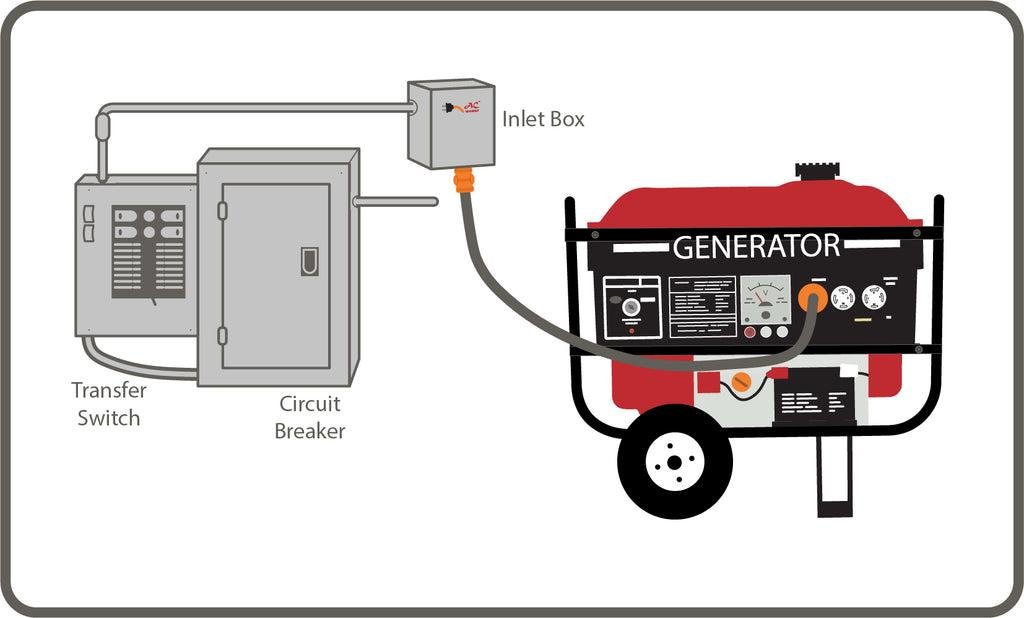
A generator works during long outages. It also needs the most care.
Some inverters accept a generator directly. Sol-Ark’s guide says the “Charge” setting lets the inverter charge the battery from an AC source such as the grid or a generator. Check that your own inverter supports it.
The big danger is backfeed. Plugging a portable generator into a wall outlet can send electricity back through your home and onto the power lines. That can hurt the line crews fixing your outage.
The fix is a transfer switch. The Portable Generator Manufacturers’ Association says a transfer switch or interlock device is the only safe way to power a whole home from a portable generator. In the U.S., Article 702.6 of the National Electrical Code requires a transfer switch to prevent backfeeding. The same source also warns that insurers might not pay claims after an unsafe hookup.
Quick safety checklist:
- Hire a licensed electrician to install the transfer switch.
- Run the generator outdoors, never in a basement or garage.
- Add a battery-powered carbon monoxide alarm nearby.
A simple sizing example (arithmetic only, ignoring losses): a 3 kW charger input fills a 10 kWh battery in roughly 3.3 hours, since 10 ÷ 3 ≈ 3.3. Real charging takes longer, because chargers slow down near full.
Method 3: Charge a Solar Panel With Lamps (Small Setups Only)

Can a bulb replace the sun? Technically yes. Practically, barely.
Here is why. Typical indoor lighting runs 100 to 500 lux, while direct sunlight can exceed 100,000 lux. That is a gap of several hundred times.
One university test shows the result. Two 500-watt incandescent lamps drove a 20-watt panel to a maximum of 5.25 watts, while sunlight produced up to 13.93 watts. In other words, 1,000 watts of lamps delivered about 5 watts of charging power. Your electric bill will notice before your battery does.
Use this trick for phone-sized devices or small lights. Do not use it for a home battery.
Method 4: Charge Garden Solar Lights Without Sun
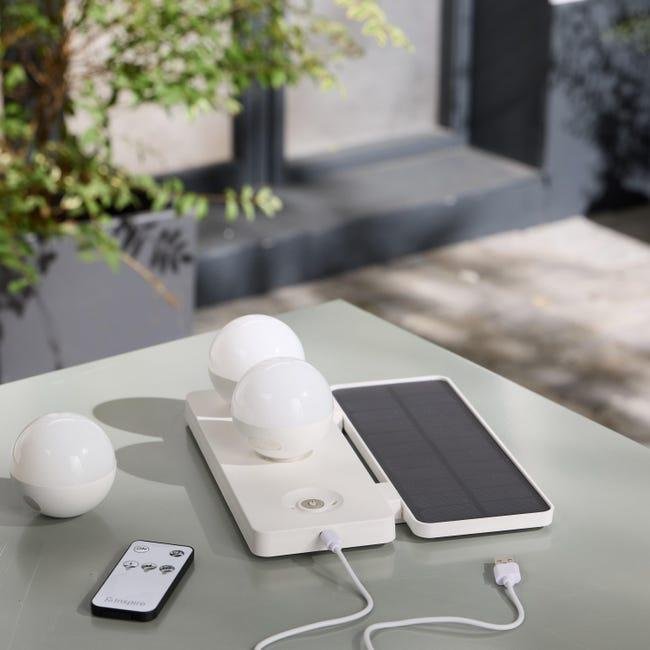
Small lights are the one place where lamps and cables make real sense.
- Bright window: Place the light near a sunlit window, since indirect sunlight can still charge it.
- USB port: Some hybrid lights include USB charging. If yours does, plug it in.
- Reality check: One lighting maker warns that relying on artificial light to power solar lights indoors is not sustainable or cost-effective. Treat a lamp as a rescue, not a routine.
- Replaceable cell: If your manual allows removing the battery, match any external charger to the battery type and voltage printed on it.
The Cold-Weather Rule Most Owners Miss
Lithium iron phosphate (LiFePO4) batteries have one big quirk. They can run in the cold, but they should not charge in it.
Charging below 0°C (32°F) can cause lithium plating, which permanently reduces battery capacity and lifespan. REDARC, a battery equipment maker, adds that the best charging temperature is +5°C to +45°C (41°F to 113°F).
Good news: your battery has a guard. Quality lithium batteries use a Battery Management System that blocks charging in low temperatures. If your battery “refuses” to charge on a frosty morning, it is protecting itself. Wait for temperatures to rise, use a heated lithium battery, or install the battery somewhere warmer.
Which Method Should You Pick?
| Your situation | Best method |
|---|---|
| Home battery, grid is on | Method 1: grid charging |
| Long outage, grid is off | Method 2: generator with transfer switch |
| Small solar light | Method 3 or 4: lamp, window or USB |
| Frozen lithium battery | Wait, or use a heated battery |
Quick Glossary
- BMS (Battery Management System): The battery’s built-in guard. It blocks unsafe charging.
- State of charge (SOC): How full the battery is, shown as a percentage.
- Hybrid inverter: An inverter that works with both panels and a battery. Many can also charge the battery from the grid.
- Transfer switch: A switch that separates your home from the grid before a generator connects.
- Lithium plating: Metal buildup inside a lithium cell caused by cold charging. It cuts capacity for good.
- Lux: A unit of light brightness. Sunlight is far brighter than indoor lamps.
FAQs
Can I charge a solar battery without solar panels?
Often yes, if your inverter lets the grid charge the battery. Check your manual and local rules first.
Does a solar battery charge on cloudy days?
Yes, slowly. Panels still produce some power in cloud, but the amount varies a lot.
Can a generator charge a solar battery?
Yes, through a properly installed transfer switch and an inverter that accepts generator input. Never plug a generator into a wall outlet.
Why won’t my lithium battery charge in winter?
Its BMS likely blocked charging because the battery is below freezing. Warm it up or use a heated model.
Can a normal light bulb charge my solar battery?
Only a tiny one, and slowly. Indoor light is far weaker than sunlight.
Summary
You do not need the sun to charge a solar battery. You need a safe power source, the right equipment, and a little patience. Check your manual first. Then call a licensed electrician before you touch any wiring.
Sources
- U.S. Department of Energy: “5 Ways to Get Sunshine on a Cloudy Day”: https://www.energy.gov/node/4201849
- REDARC Electronics: “Why you should not charge a lithium battery below 0°C or 32°F”: https://us.support.redarcelectronics.com/hc/en-us/articles/13856244101007-Why-you-should-not-charge-a-lithium-battery-below-0-C-or-32-F
- EverExceed: “Why LiFePO4 batteries cannot be charged but can be discharged below 0℃”: https://www.everexceed.com/blog/the-reason-why-lifepo4-batteries-cannot-be-charged-but-can-be-discharged-below-0_b653
- Vizar, Adlie and Amin, Universitas Samudra: “The Effect of Light Radiation on Solar Panels and Lithium-Ion Batteries”: https://ejurnalunsam.id/index.php/jurutera/article/view/12099
- Solis: “How to set up self-use storage mode and time of use on hybrid inverters”: https://solis-service.solisinverters.com/support/solutions/articles/44002386357-how-to-set-up-self-use-storage-mode-and-enable-time-of-use-to-set-charging-times-on-solis-hybrid-inve
- SolaX Knowledge Base: Hybrid inverter charge and discharge settings: https://kb.solaxpower.com/faq/detail/8af1c4b2934c704801935356ac8d0b74
- Sol-Ark: “Time of Use Application Guide”: https://sol-ark.com/wp-content/uploads/2024/06/App-Note-Time-of-Use-Application-Guide-1.pdf
- Portable Generator Manufacturers’ Association, via WDTN: https://digital-release.wdtn.com/news/why-is-backfeeding-generators-is-dangerous/amp/
- MTE (electric cooperative): “Generator safety”: https://mte.com/generator-safety-education
- NoOutage: Generator safety page: https://mail.nooutage.com/Safety.htm
- FutureLight and PAC Lights: indoor and solar-light charging FAQs