Table of Contents
Understanding Solar Panel Risks
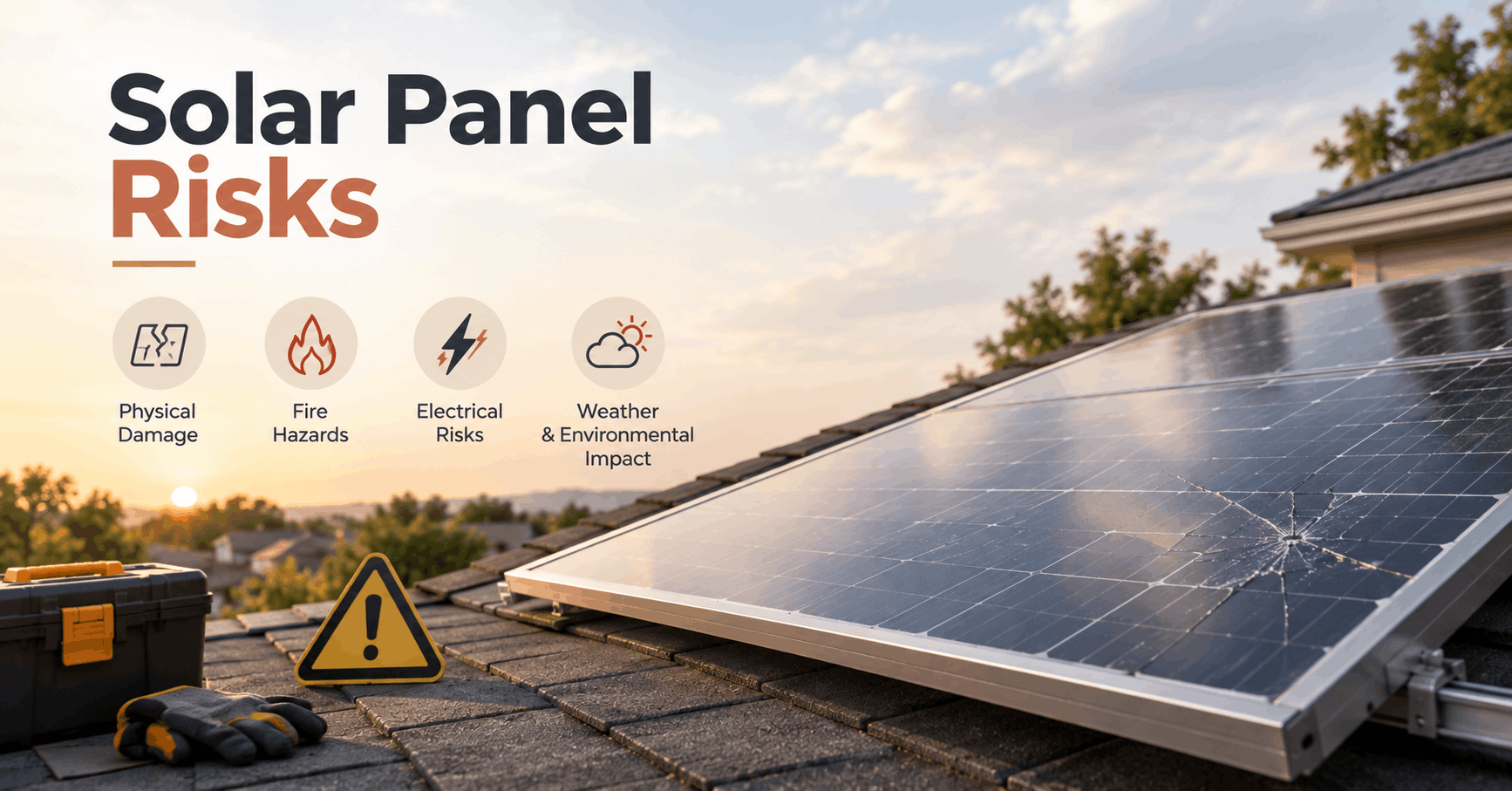
Solar panels are safe for your home. They generate clean electricity from sunlight. But like any equipment, they have risks you should know about. The biggest risk depends on your situation. Some risks matter for your roof. Others affect your wallet. A few affect your safety.
The main risks include roof damage, inverter failure, panel degradation, installation problems, and financial losses. Understanding each one helps you make smart decisions before installing solar. Some risks are serious. Others are minor. You need to know the difference.
Roof Damage Is A Top Concern
When workers install solar panels, they drill holes in your roof. These holes let water inside if not sealed properly. Bad installation causes leaks that damage attics and ceilings. Water damage spreads quickly and costs thousands to fix.
Your roof takes on extra weight from the panels. Heavy panels stress your roof structure. Older roofs or weak structures might collapse under the weight. Engineers inspect roofs before installation to prevent this. But sometimes inspections miss problems.
If your roof is near the end of its life, solar installation accelerates the damage. Installers walk on the roof multiple times. This adds stress to aging materials. Your roof might fail sooner than expected.
Quality matters in roof sealing. Professional installers seal penetrations properly. Budget installers cut corners and skip proper sealing. This leads to leaks years later. Always hire experienced installers with good reviews.
Inverter Failure Stops Everything
Your inverter converts sunlight into electricity your home uses. Without it, your panels produce power but you cannot use it. Inverters fail between year 10 and year 15. A failed inverter means zero electricity from your panels.
Replacement inverters cost 2000 to 5000 dollars depending on system size. This expense comes years after you installed your panels. Many homeowners forget about inverter replacement until it fails. Then they face a big repair bill with no warning.
String inverters serve your whole system. One failure stops everything. Microinverters sit on each panel. One failure affects only one panel. Microinverters cost more upfront but provide better reliability. This is a major consideration when choosing your system type.
Panel Degradation Reduces Output
Solar panels lose about 0.5 percent of power output yearly. After 20 years, panels produce 80 to 85 percent of original power. This decline is gradual and expected. You won’t notice it happening.
But some panels degrade faster than expected. Manufacturing defects cause rapid power loss. Moisture enters the panel and damages internal connections. Delamination occurs when layers separate from each other.
Budget panels degrade faster than premium panels. Cheap materials break down quicker. Poor manufacturing shortcuts reduce lifespan. Saving money upfront costs you electricity production later.
Weather damage accelerates degradation. Hail cracks panels. High winds stress mounting systems. Heavy snow loads press down on frames. Extreme temperature swings weaken connections. Coastal salt air corrodes aluminum frames.
Inverter Warranty Issues
Most inverters come with 10 year warranties. Your panel warranty lasts 25 years. When your inverter fails in year 15, the warranty is expired. You pay the full replacement cost yourself.
Some extended warranties cover inverter replacement. These cost extra money upfront. Calculate whether the extension pays for itself through increased reliability. For some people it does. For others the cost is not worth it.
Installation Problems Hide For Years
Poor installation causes problems that appear later. Electricians might wire your system incorrectly. Wrong wiring reduces efficiency or damages equipment. Finding these mistakes takes professional testing.
Panels mounted improperly shift in wind. Loose connections corrode faster. Improper grounding creates safety hazards. These problems might not show up until water damage spreads or equipment fails.
Poor ventilation under panels allows heat buildup. Hot panels degrade faster. Bad airflow reduces power output. This costs you money every single day. You might not realize it’s happening.
Financial Risks And Hidden Costs
Your solar investment only works if the system produces electricity for years. Reliability directly affects your return on investment. A failed inverter in year 12 means five years of system downtime before the end of warranty.
System failures cost more than just repairs. You lose free electricity production. Your utility bills rise. You stop saving money on electricity. The payback period extends.
Some solar companies go out of business. If your installer disappears, getting warranty service becomes difficult. You might need replacement parts that are no longer available. Choosing established companies with long track records reduces this risk.
Roof Type Compatibility Issues
Some roof types accept solar panels better than others. Flat roofs install panels easily. Pitched roofs work fine too. But old roofs with multiple layers make installation harder. Loose roofing materials complicate the job.
Metal roofs require special mounting. Tile roofs need careful handling to avoid breakage. Tar and gravel roofs might not support panel weight. Your roof type affects installation difficulty and cost.
If your roof type is unusual, solar becomes riskier. Installation becomes complex. Sealing penetrations requires expertise. Costs rise significantly. Some installers refuse to work on difficult roof types.
Shading Problems Reduce Production
Shade from trees or buildings blocks sunlight. Partial shade reduces output far more than you’d expect. A shadow covering one quarter of a panel reduces output by more than one quarter.
Tree growth over time increases shade. Neighbors build additions that shade your panels. These changes happen gradually. You lose electricity production without realizing why.
Moving or trimming trees costs money. Asking neighbors to cut trees creates conflict. You cannot force them to modify their property. Shade risk is real and sometimes uncontrollable.
Performance Monitoring Failures
Many systems send performance data to your phone or computer. If monitoring stops working, you won’t know if your system operates properly. System failures might continue for months before you notice the electricity bill.
Old systems without monitoring give you no feedback. You rely on electricity bills to detect problems. By then, months of lost production already happened. Smart monitoring catches problems early.
Not all monitoring systems work equally. Some are unreliable. Others stop working when the company updates software. Check that monitoring systems provide clear alerts when production drops unexpectedly.
Safety Hazards From Improper Installation
Electrical hazards exist with solar systems. Wrong grounding creates shock risks. Improper wiring causes fires. These dangers are rare with qualified installers but happen with unqualified ones.
Roof work during installation creates fall hazards. Workers need proper safety equipment. Bad companies cut corners on safety. Worker injuries lead to lawsuits against homeowners in some cases.
High voltage in panels and wiring can cause electrocution. Firefighters need to know where high voltage points are. Proper labeling prevents accidents. Poor installation misses these critical safety measures.
This is something we cover in detail in our guide on Dangers of Solar Power
Panel Manufacturing Defects
Some panels have hidden defects from manufacturing. Micro cracks develop during production. Internal solder joints fail. Connections corrode faster than normal. These problems show up years after installation.
Testing during manufacturing catches many defects. Poor quality control misses others. Cheap panels have higher defect rates. You might not discover problems until power output drops.
Warranty claims require proving defects exist. This involves testing your system. Documentation of installation is critical. Poor record keeping makes warranty claims difficult.
Heat Damage Over Time
Solar panels perform worse when hot. Output drops at high temperatures. In very hot climates, this happens constantly. Year after year of heat stress degrades components faster.
Coastal heat combined with salt air accelerates corrosion. Desert heat without ventilation causes internal damage. Tropical humidity allows moisture infiltration. Your climate directly affects panel lifespan.
Panels in cool climates last longer. The trade-off is lower production due to less sunlight. Panels in hot climates produce more power yearly but degrade faster. Choose systems assuming longer degradation periods in hot regions.
Pest and Wildlife Damage
Birds nest under solar panels. Their nests block airflow and reduce cooling. Droppings accumulate and reduce light transmission. Pest control becomes necessary in some areas.
Rodents chew through wiring under panels. This causes system failure. Dead animals under panels create odors. Regular inspection catches problems early.
Squirrels damage mounting hardware. Insects build nests in connections. These animal problems are location dependent. Rural or suburban areas face more wildlife issues.
Pros Of Solar Despite Risks
You get years of free electricity. 25 year panel warranties protect your investment. Modern systems are more reliable than older ones. Quality installers minimize roof damage risks. Microinverter systems provide better reliability. Monitoring catches problems quickly.
Cons Of Solar Risks
Roof damage from poor installation causes water leaks. Inverter failure creates expensive repair costs. Panel degradation reduces output over time. Weather damage accelerates problems. Financial losses occur if systems fail. Installation quality varies widely. Some risks are unavoidable.
Minimizing Your Solar Risks
Choose experienced installers with great reviews. Get multiple quotes and check references. Verify they carry proper insurance. Ensure roof inspection happens before installation. Ask about roof condition and life expectancy.
Select systems with microinverters rather than string inverters. Pay for extended inverter warranties. Choose premium panels instead of budget options. They last longer and degrade slower. Regular maintenance prevents many problems.
Monitor your system daily using apps. Check production against weather conditions. Alert immediately if output drops unexpectedly. Document everything about your system and installation.
Summary
The biggest solar panel risks include roof damage from poor installation, inverter failure in year 10 to 15, gradual panel degradation, weather damage, and financial losses from system failures. Inverter failure is the most common and costly risk, striking years after installation when warranty expires. Quality matters greatly in reducing risks. Professional installers with good reviews minimize roof damage. Microinverter systems are more reliable than string inverters. Premium panels degrade slower than budget panels. Regular monitoring catches problems early. Extended inverter warranties provide protection against expensive repairs. Your climate affects degradation rates. Hot climates accelerate component aging. Panel degradation is expected and normal but varies by quality. Choosing established companies and experienced installers reduces multiple risks. Budget solar systems save money upfront but increase risk and cost later.