Table of Contents
A string light that looks perfect on a patio will let you down on a farm gate. A lantern built for a tent won’t survive a dairy shed. And a light rated for “outdoor use” on the box can still die in its first real rainstorm if nobody checked the IP number before buying it.
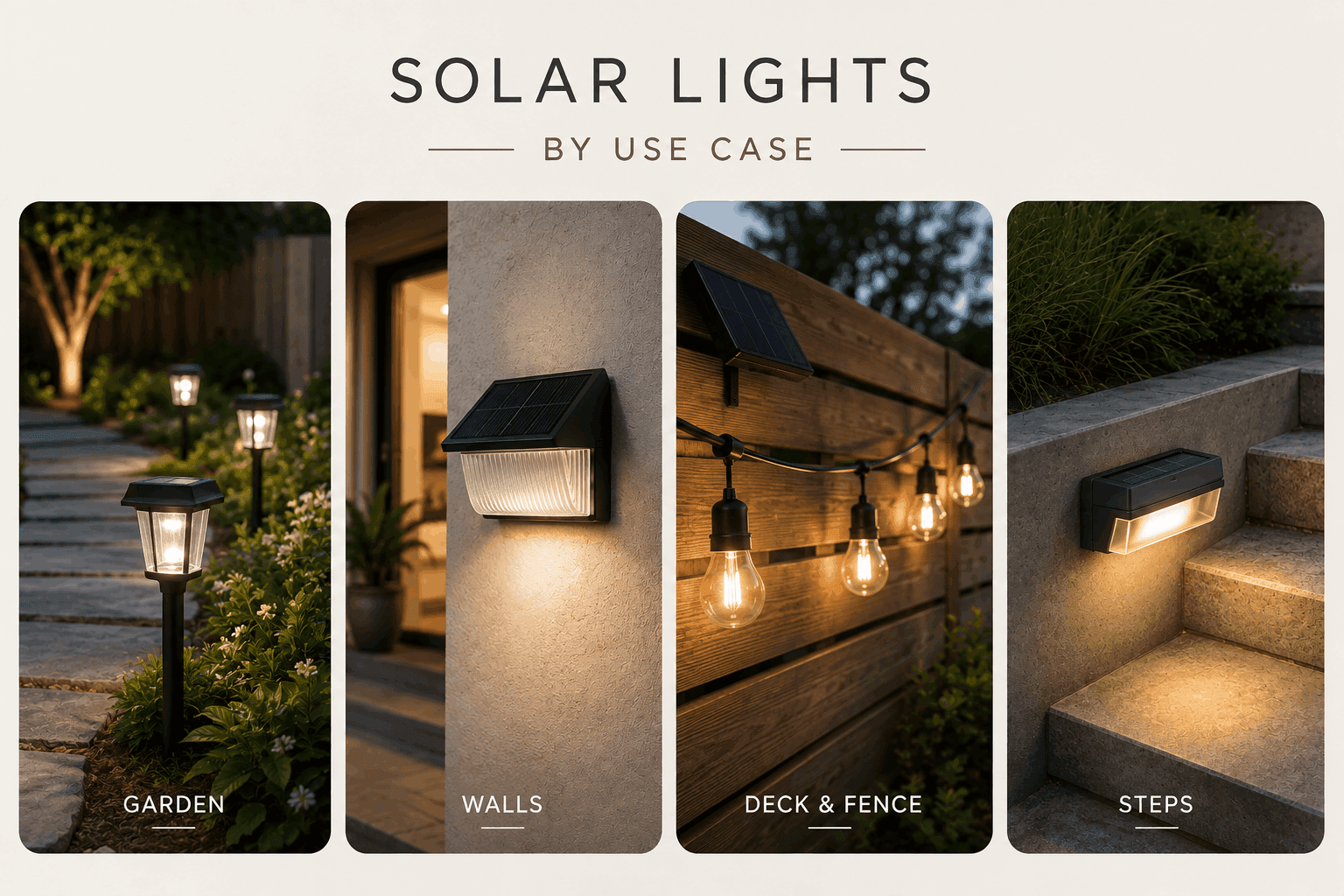
That’s really the problem with most “best solar lights” roundups. They treat every use case like the same use case. It isn’t. A fire pit needs a completely different battery than a bathroom night light. A sports field needs roughly a thousand times the lumens a garden path needs. So instead of one generic list, we’ve split every guide on this site into four groups, based on where the light is actually going and what it actually has to survive. Find your situation, click through, and skip the guesswork.
- Setting up a patio, veranda, or backyard? Go to Outdoor Living Spaces.
- Heading off-grid, camping, or riding out a power cut? Go to Camping, Outdoors & Emergencies.
- Lighting a barn, hotel, or sports field? Go to Commercial & Farm Properties.
- Trying to light a room, or figure out what’s safe near your plants? Go to Indoor & Special Rooms.
Outdoor Living Spaces
This is the category most people land on first, and for good reason, it’s the space you actually sit in after dark. Our own three-year test of outdoor solar lights puts real numbers on what “good” looks like: expect to pay $10 to $80 depending on the fixture, get 6 to 10 hours of light on a full summer charge, and treat IP44 as the bare minimum for anything with no roof over it.
3 Years With Outdoor Solar Lights, What I Learned
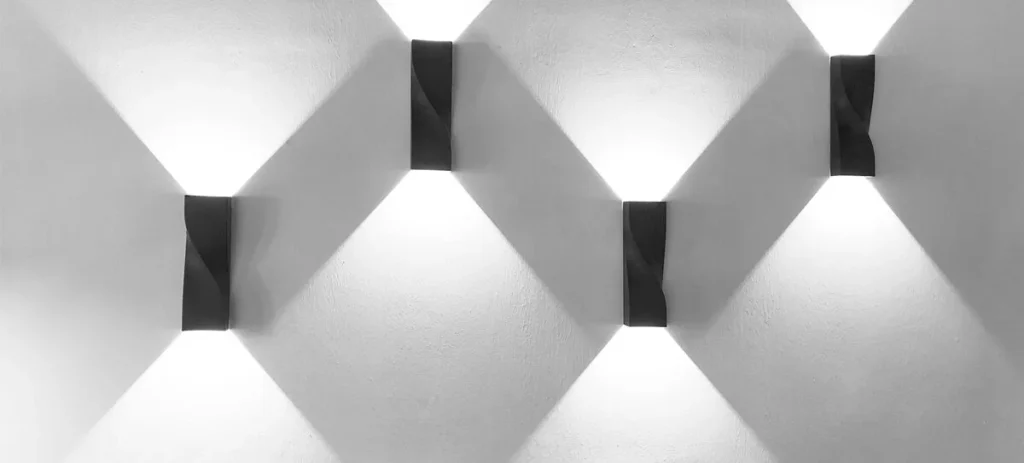
Three summers in, the cheap $25 six-pack of path lights and the $45 hanging string set are both still going, on their second $6 battery swap each. The one thing that actually killed performance wasn’t the product, it was shade. Moving the lights 10 meters clear of a mango tree took them from dying at 11pm to running until sunrise.
Best Solar Lights for Outdoor Veranda
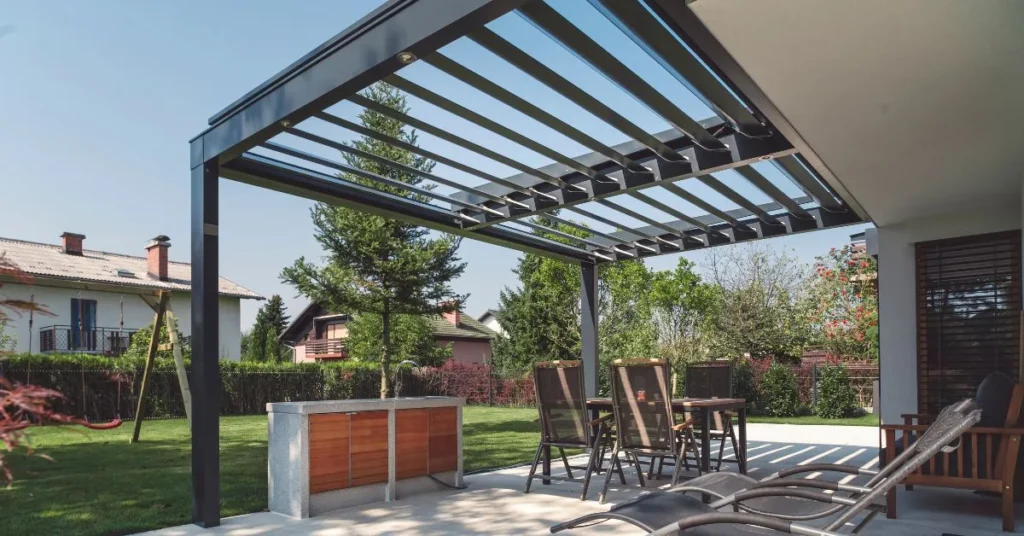
A veranda rarely needs one type of light, it needs a layer of them. String lights for warmth, wall lights near the steps where you actually need to see, a couple of lanterns for texture, maybe a motion-triggered floodlight if security matters too. The panel still needs six hours of unbroken sun regardless of how nice the fixture looks, and IP65 is the number to check before anything else.
Best Solar Lights for Fire Pit Area
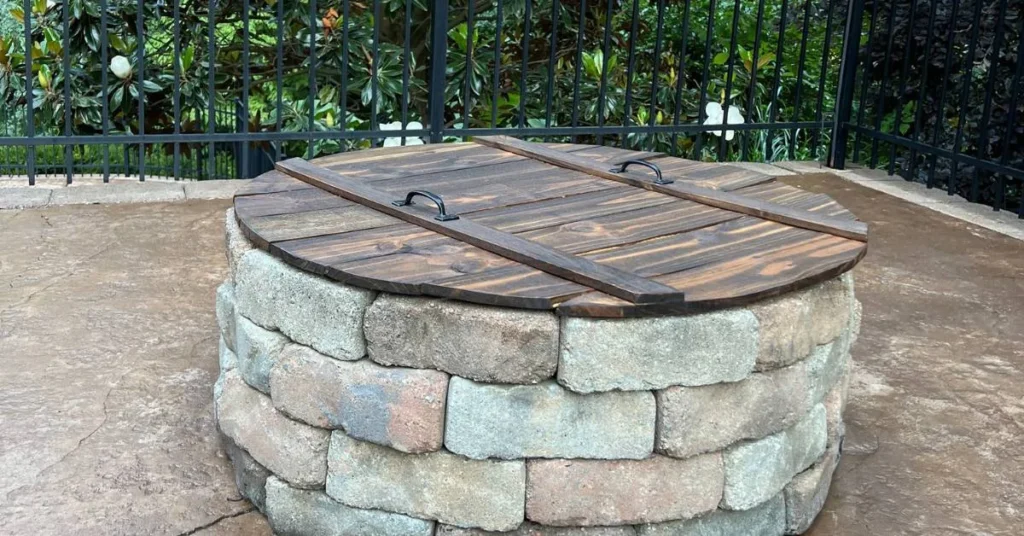
Open flame changes the rules. The National Fire Protection Association recommends a 10-foot clearance between an open fire and anything combustible, and a plastic-housed solar stake light counts. Keep ambient lighting soft (40–100 lumens for string lights) and reserve the brighter 100–200 lumen range for the walkway, not the seating ring. Lithium-ion or LiFePO4 batteries shrug off the heat swings near a fire far better than the NiMH cells in bargain sets.
Patio Umbrella With Solar Lights, Honest Review
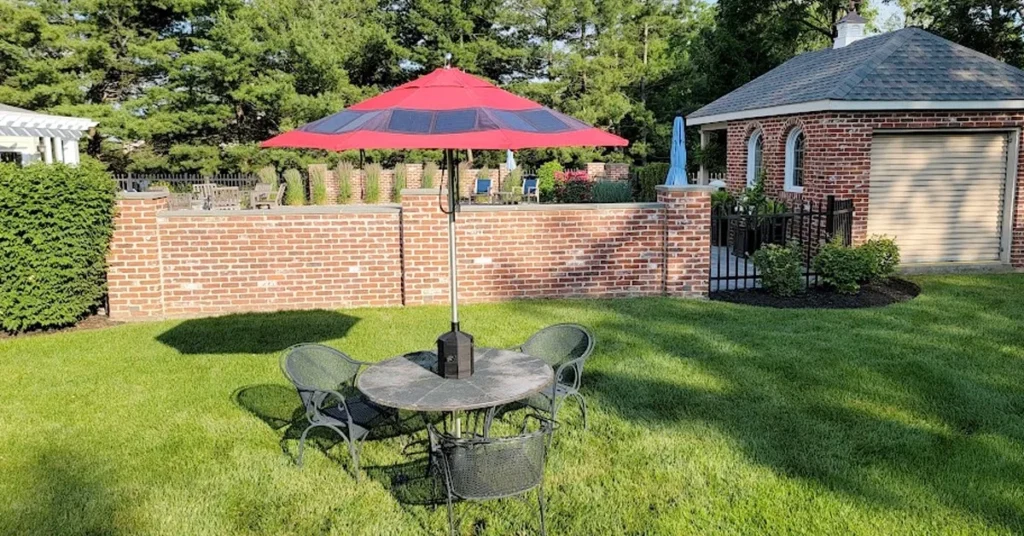
The idea is sound. The execution varies wildly. A decent umbrella charges in 6–8 hours of sun and gives back 4–6 hours of light, brightest right after sunset. The cheap ones ship with NiMH batteries that go from six hours of light in week one to three hours by month three, that’s the actual failure point, not the concept. Aluminum frame, removable battery, IP65 canopy panel: those three things separate a three-season umbrella from a one-season disappointment.
Best Solar Lights for Patio
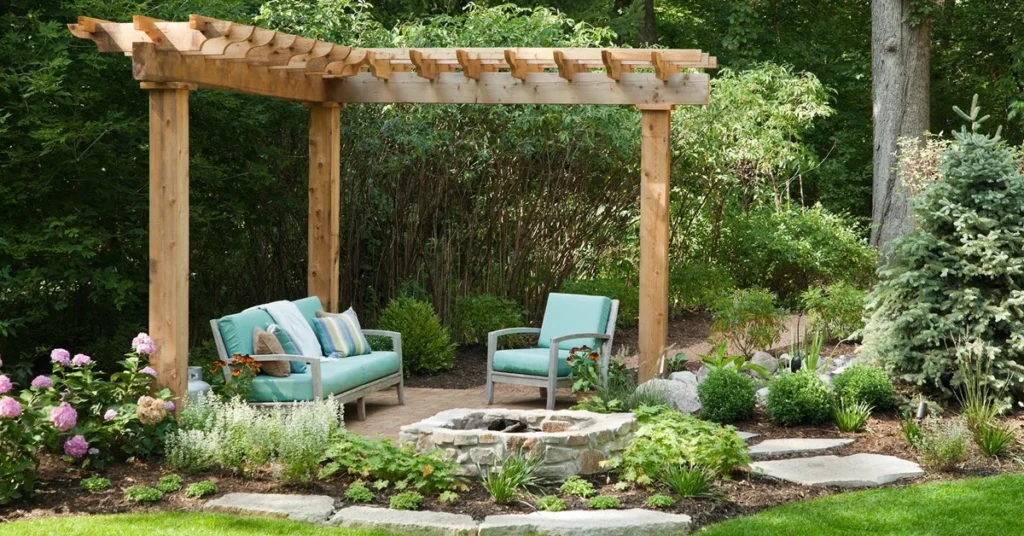
Patios might be the single best-matched use case for solar lighting on this whole list, purely because of timing, the panel spends all day charging and the lights come on right as dinner starts. String lights overhead, wall lights around the edges, lanterns at table height: that layering, not any one fixture, is what makes a patio look designed instead of thrown together.
Best Solar Lights for Pool & Deck Areas
guide in progress. Pools and decks bring their own headaches: splash exposure, glare bouncing off the water, and the need for low-profile fixtures people won’t trip over at the edge. We’re finishing this one now.
Camping, Outdoors & Emergencies
This is where solar lighting stops being decorative and starts being genuinely useful. No fuel, no generator noise, no dead flashlight batteries in the bottom of a bag, the panel recharges itself every single day the sun shows up, whether that’s a desert campsite or your own back porch during a blackout.
Best Solar Lights for Desert Camping
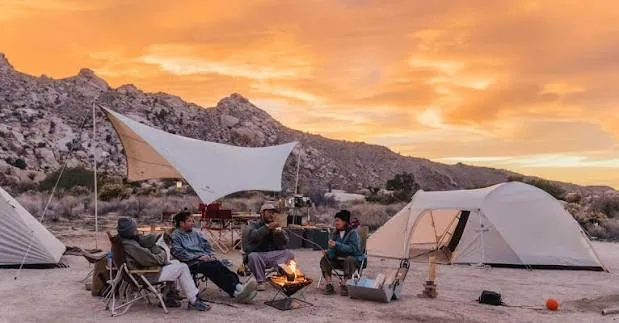
Heat and sand do more damage than darkness ever will. IP65 or higher keeps fine sand out of the seams, lithium-ion batteries handle the swing between scorching days and cold desert nights, and lumens should match the job, 75 lumens is plenty for a tent interior, closer to 400 for a shared cooking area. The LuminAID PackLite, MPOWERD Luci, and Goal Zero Crush Light each trade weight against output differently, so the right pick depends on group size more than brand.
Solar Mosquito Repellent Light
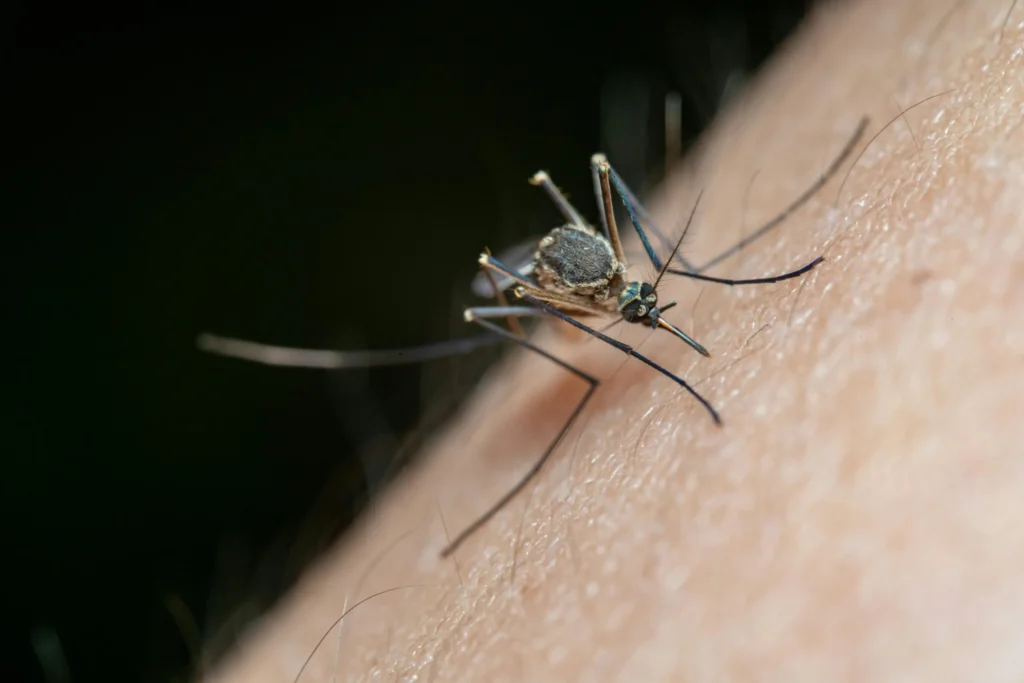
Two jobs, one fixture: light plus insect control, using UV attraction, ultrasonic frequency, or citronella vapor depending on the model. Expect to pay $15–$50 once, then nothing again. A battery under 1200mAh will struggle to make it through a full night, so check that number specifically. Since mosquitoes fly most actively 1–2 meters off the ground, where you mount it matters almost as much as which one you buy.
Solar Lights for Night Fishing
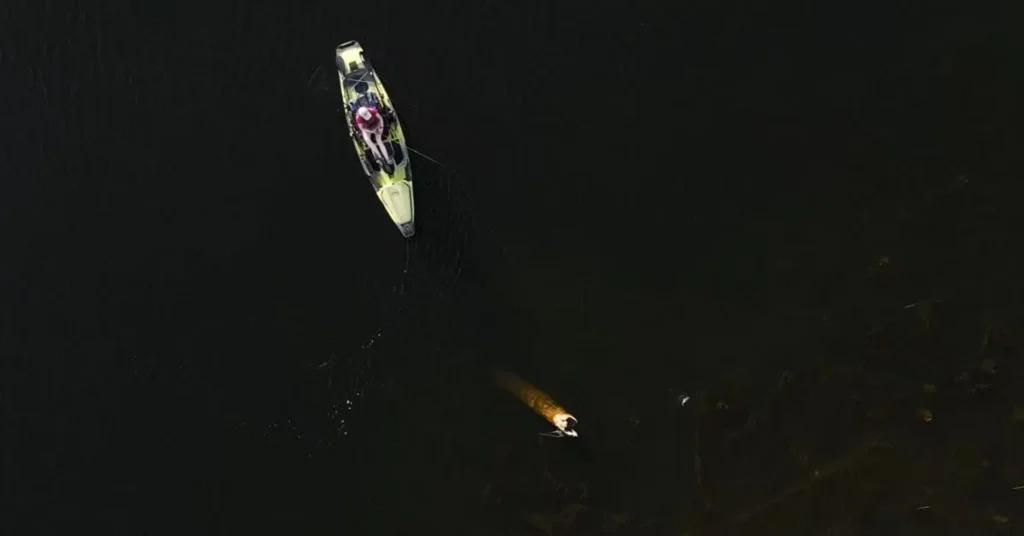
An IP68-rated underwater light, fully submersible, not just splash-resistant, genuinely changes a night on the water. Green and blue wavelengths pull in zooplankton first, which brings in smaller fish, which brings in the ones you’re actually after. A good unit runs 12–13 hours in summer, drops to 8–9 in winter, and pays for itself against a generator inside about a year once you factor in fuel and repairs.
Best Solar Lights for Power Outages
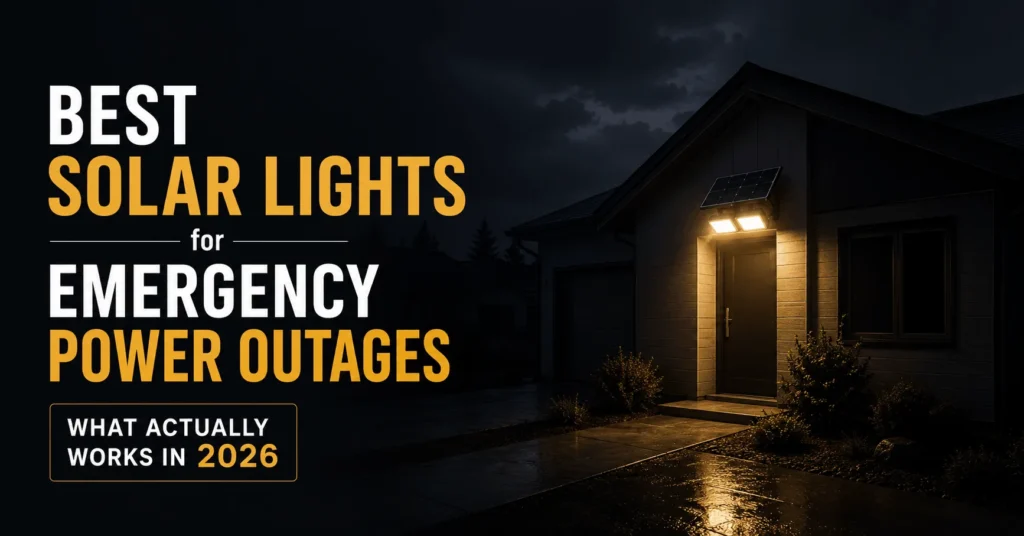
An emergency light is only as good as the one night you actually need it. That means IP65 waterproofing, a 1200mAh+ lithium battery, and, critically, a USB or AA backup option, because a light that only charges from the sun is useless during the exact week of storms that caused the outage in the first place.
Best Solar Lights for Off-Grid Homes
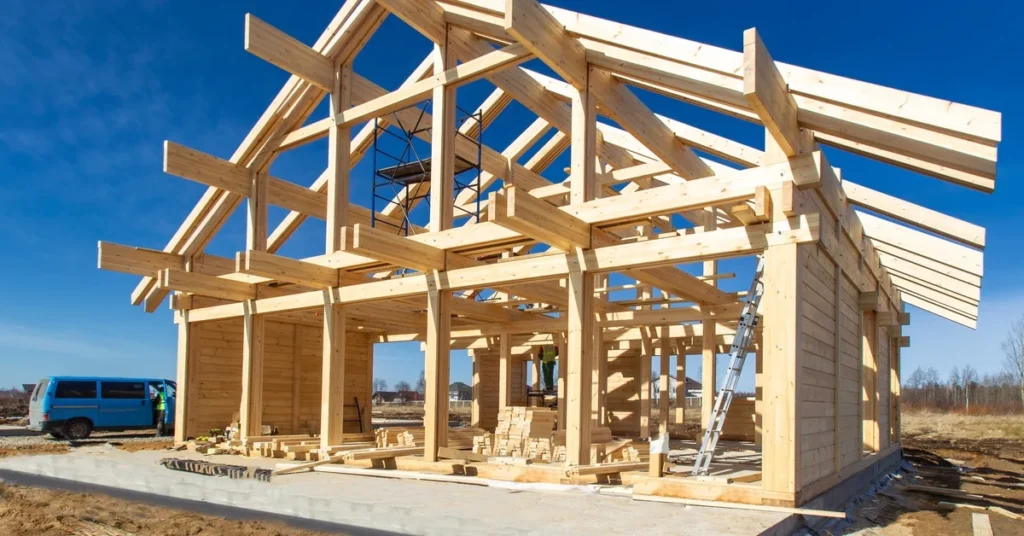
People running fully off-grid cabins in places like Montana and West Virginia aren’t using novelty garden stakes, they’re running systems like BioLite’s SolarHome range on LiFePO4 batteries. The upside is real: no bill, no noise, almost no maintenance. The honest downside is a higher upfront cost and a rough patch through short winter days, which is why most off-gridders keep a portable lantern in reserve.
Best Solar Lights for Camping Tents
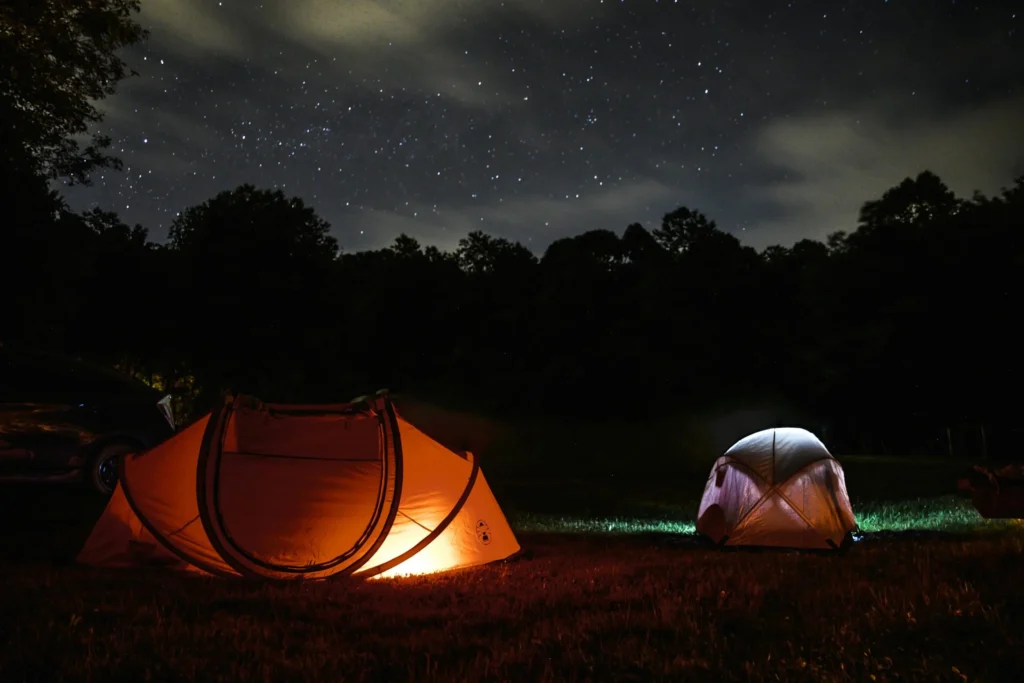
Lanterns like the BioLite Luci, Goal Zero Crush Light, and LuminAID PackLite are built for exactly this and nothing else, reported runtimes land in the 75–110 hour range across a charge depending on brightness, and they all fold flat enough to disappear into a pack.
Best Solar Lanterns for Backpacking
guide in progress. Backpacking adds a weight limit on top of every other requirement a camping lantern already has. Full comparison coming shortly.
Commercial & Farm Properties
The math changes on a farm or a commercial site. It’s less about ambience and more about what a light has to survive, dust, ammonia, humidity, cold, and what it costs to run cable to a building sitting 200 meters from the main panel. Often, an electrician’s quote for that trench costs more than the light itself.
Best Solar Lights for Sheds & Farm Buildings
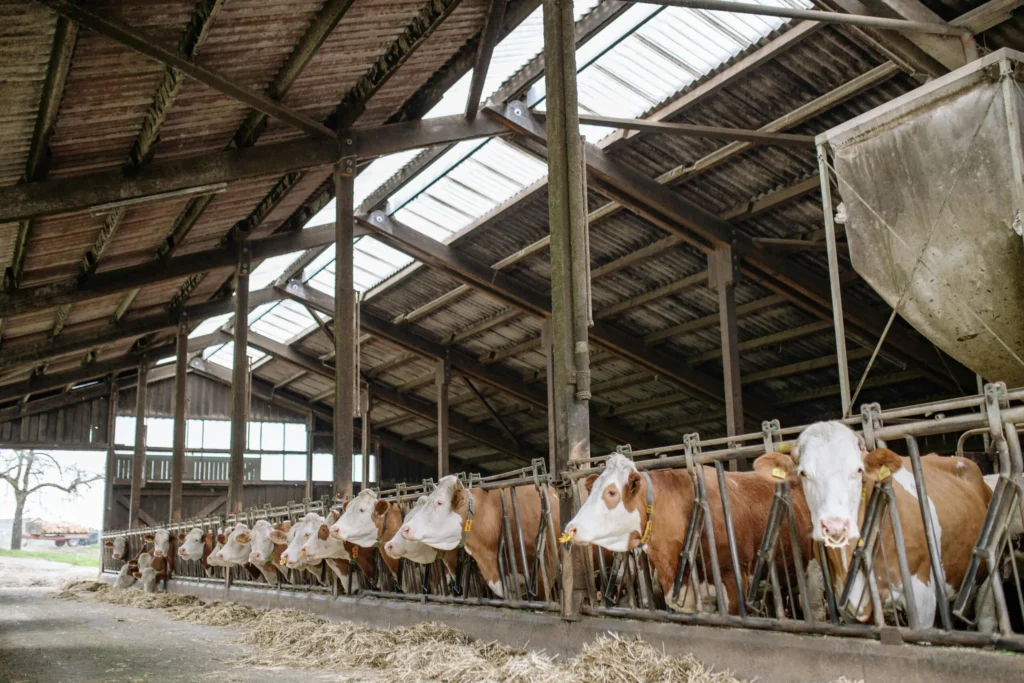
Animal sheds are brutal on electronics: constant dust, ammonia off the livestock, moisture, cold nights. Sealed housings and motion-triggered operation, rather than an all-night steady glow, are what stretch a battery through the darkest months of winter without a January failure.
Solar Exterior Lights for Hotels & Commercial Properties
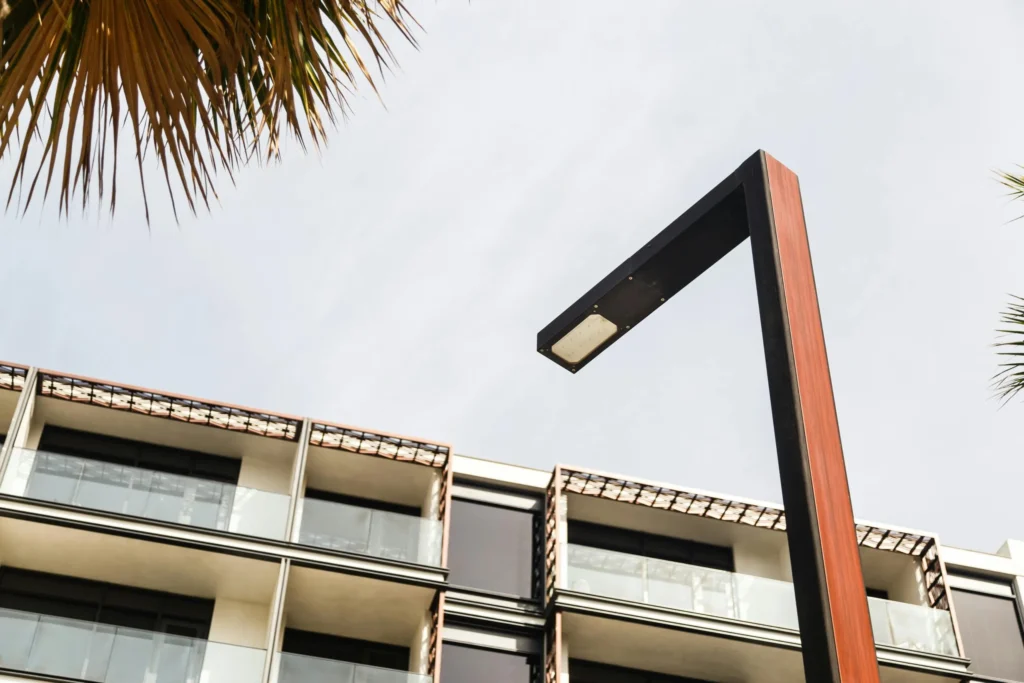
For hospitality and commercial buildings, solar cuts two bills at once, the electrician’s invoice at install, and the utility bill every month after, while giving guests a properly lit entrance and car park from night one, no trenching through finished paving required.
Best Solar Powered Fan Hats
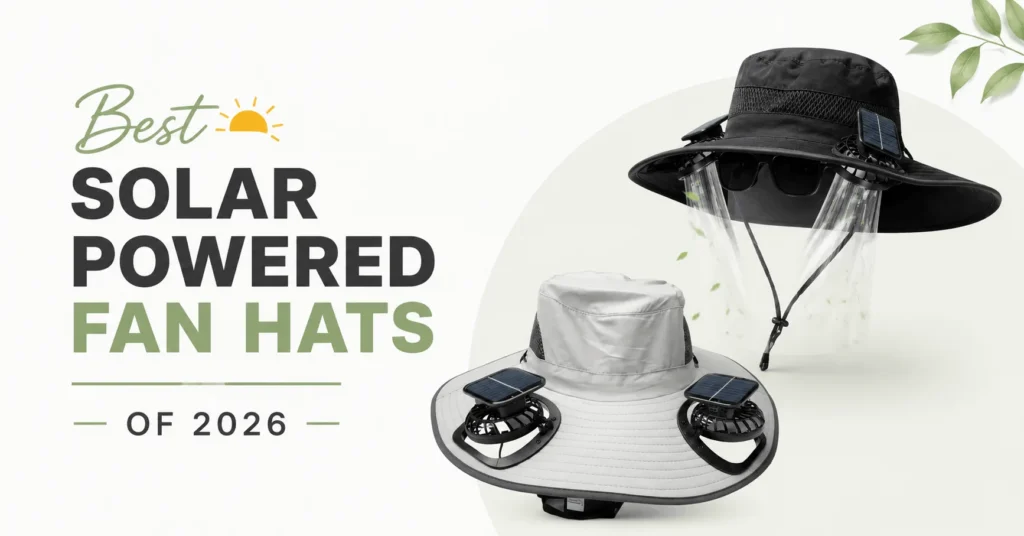
Not a lighting product, but close enough in spirit to belong here: a small brim-mounted panel spins a fan using nothing but sunlight, no plug-in battery required. Output tracks the sun directly, so these earn their keep on a field or job site, not indoors under fluorescent lights.
Solar Guest House Lights for Rental Properties
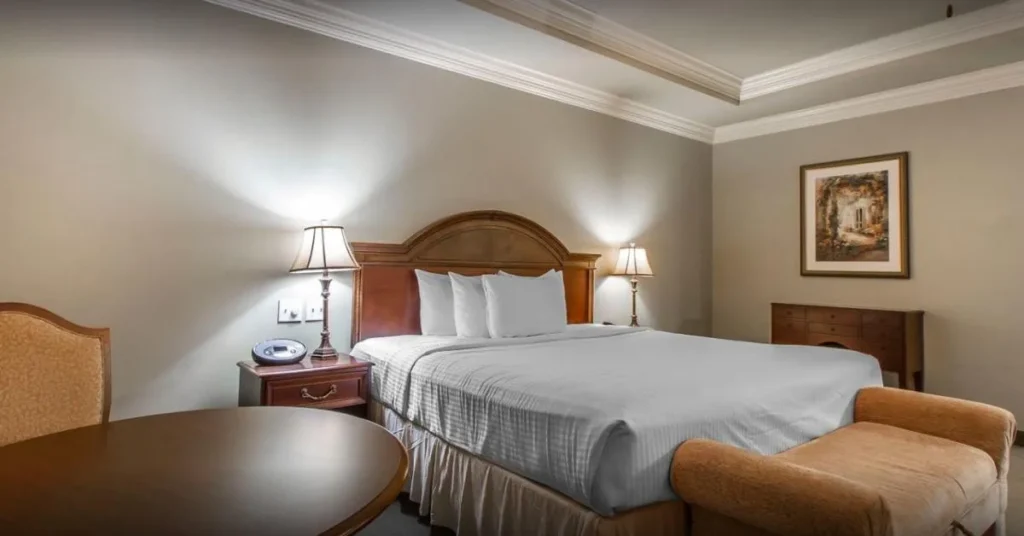
Rental and guest-house owners get a double win here, lower running costs on their side, and better safety ratings from guests who don’t want to hunt for a light switch in an unfamiliar building. Since nothing needs wiring in, exterior lighting can go up without touching the property’s existing electrical system at all.
Best Solar Arena Lights for Sports Fields
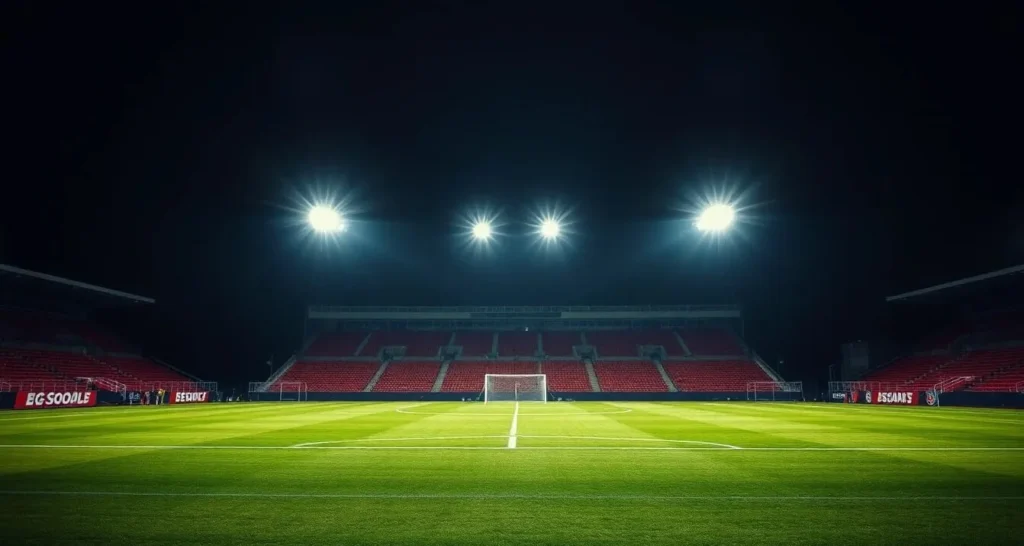
This isn’t garden-light territory. Arena systems scale up toward 50,000 lumens to properly cover a field, and the number has to be matched to the venue’s actual size before buying, overshoot and you’ve paid for light nobody needed, undershoot and players are squinting.
Best Solar-Powered Bird Bath Fountains
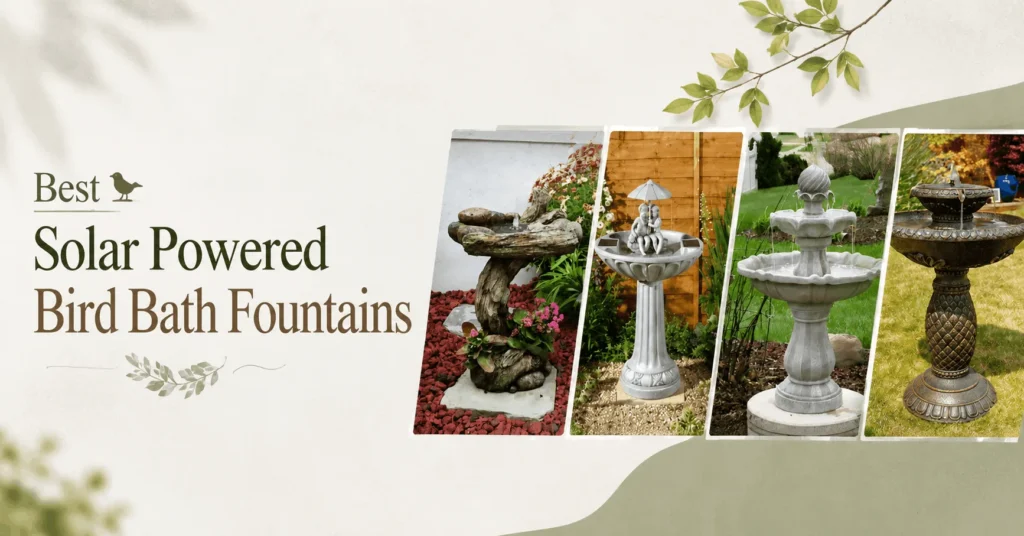
This category is thick with inflated marketing claims, so the numbers that actually matter, real wattage, real battery life, and whether the housing is stainless or cheap plastic, are worth checking before the pump specs on the box.
Best Solar Lights for Parking Lots & RV Parks
guide in progress. Wide coverage, vandal-resistant housings, and enough output to meet basic safety expectations across a large paved area. Full guide coming.
Indoor & Special Rooms
Solar lighting indoors sounds backwards until you realize the trick: the panel lives outside near a window, and only the fixture itself sits in the room. This section also covers the opposite problem, outdoor lighting that’s quietly interfering with plants that need real darkness to do their thing.
Do Solar Lights Help Fruit Plants Grow?
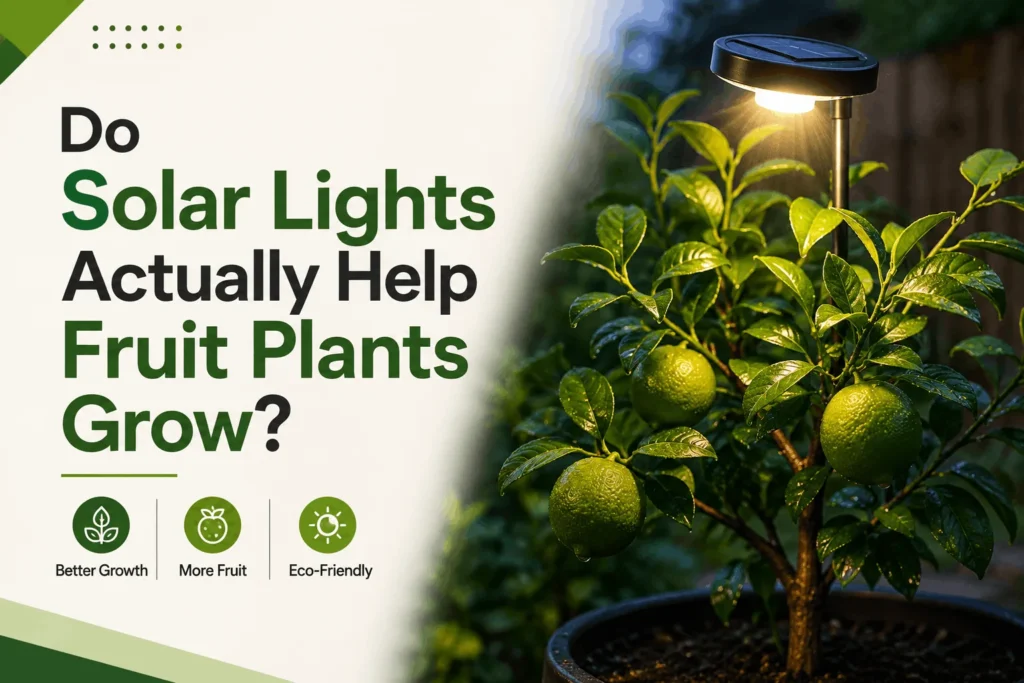
Mostly, no. A decorative solar path or accent light is built for human eyes, not photosynthesis, and won’t meaningfully help fruiting plants. A genuine solar grow light is a different category of product entirely, worth knowing before spending money expecting the wrong fixture to double as the right one.
Solar Lights for Study Room
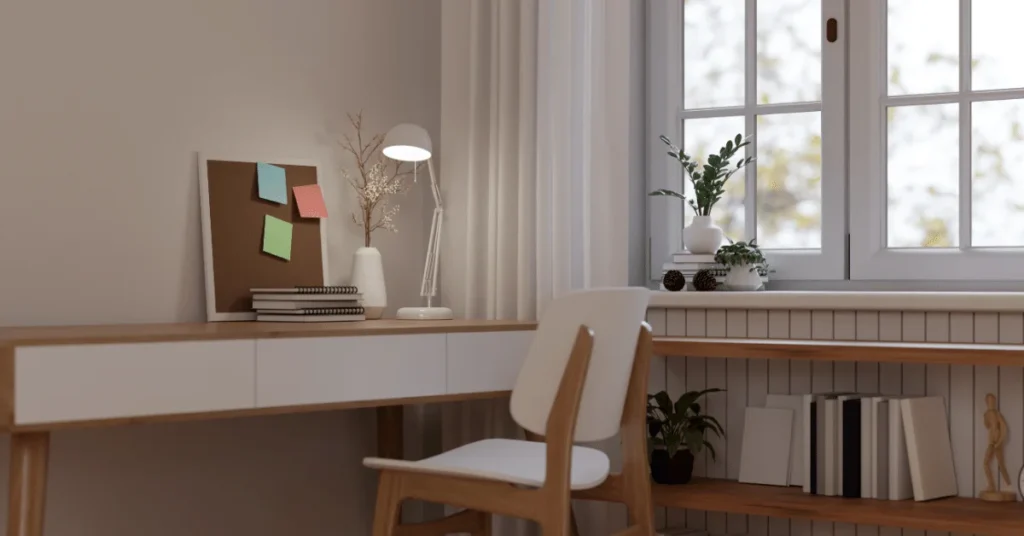
A desk lamp that runs off stored sunlight cuts the electricity cost of a room that’s often lit for hours every evening, and it keeps working through a blackout when homework doesn’t stop just because the power did. The difference between a light that lasts the evening and one that dims by 9pm usually comes down to whether the panel sits near a real window or just somewhere in the room.
Plants That Don’t Like Solar Light (7 Types)
Poinsettias, Christmas cactus, and kalanchoe are among the plants that need genuine, uninterrupted darkness to trigger blooming — and a nearby path light or security fixture running all night can quietly stop that from ever happening. Worth a check before placing new lighting anywhere near a flower bed.
Best Solar Bathroom Night Lights
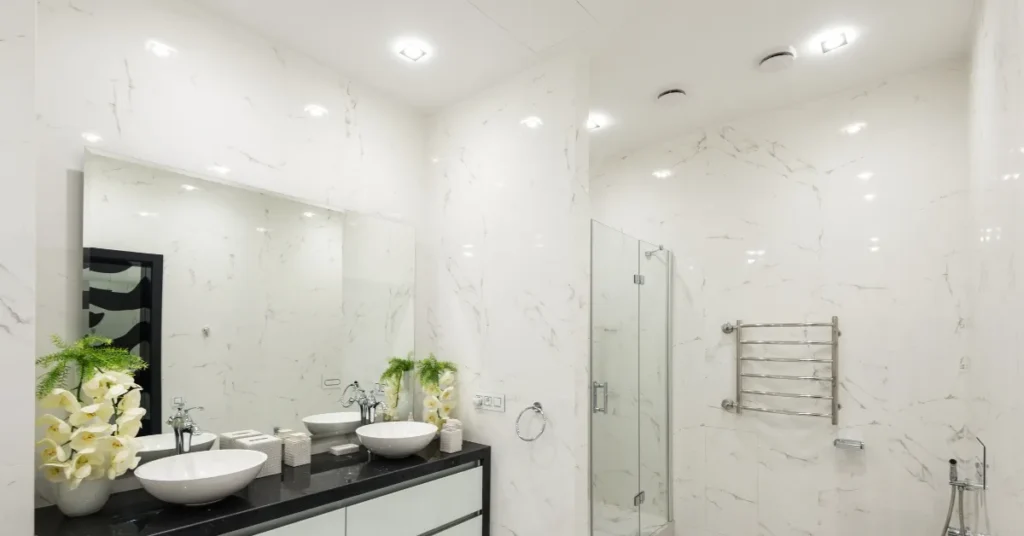
A motion-triggered solar night light solves the specific 2am problem, just enough light to avoid stubbing a toe, not enough to fully wake you up, and because it doesn’t rely on mains wiring, it doubles as a real backup during a power cut instead of sitting there as a novelty.
Can You Use Solar Lights Indoors?
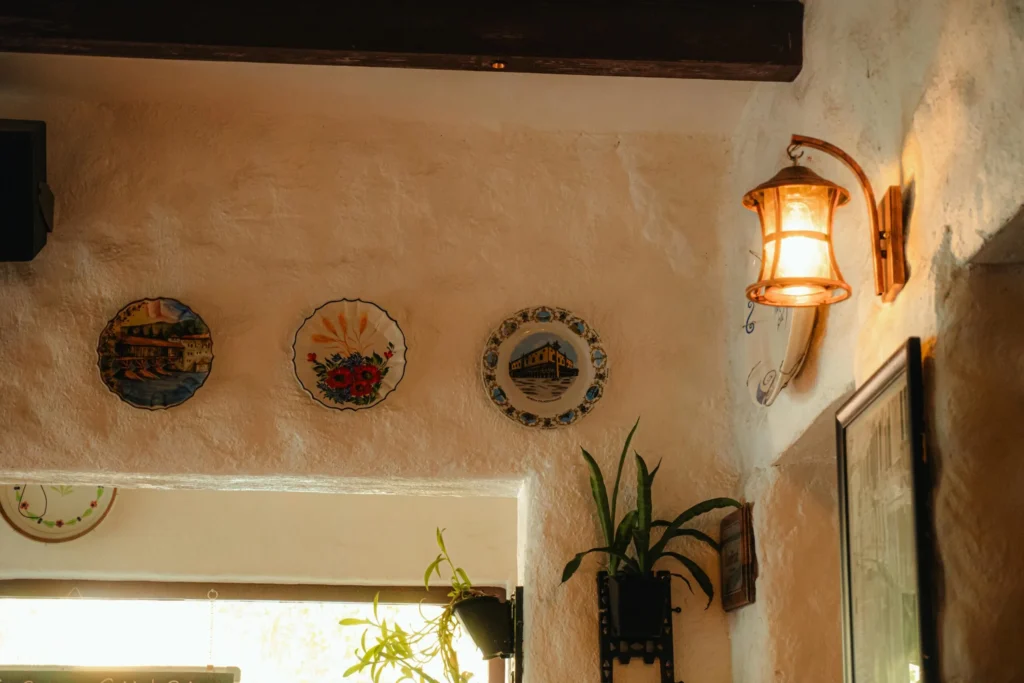
Yes, on one condition: the panel needs actual daylight, not light filtered through a curtain or bounced off a lamp across the room. The setups that work either run a wired lead from an outdoor panel to an indoor fixture, or use a light with a detachable panel that goes outside to charge and comes back in at night.
Solar Grow Lights for Indoor Plants
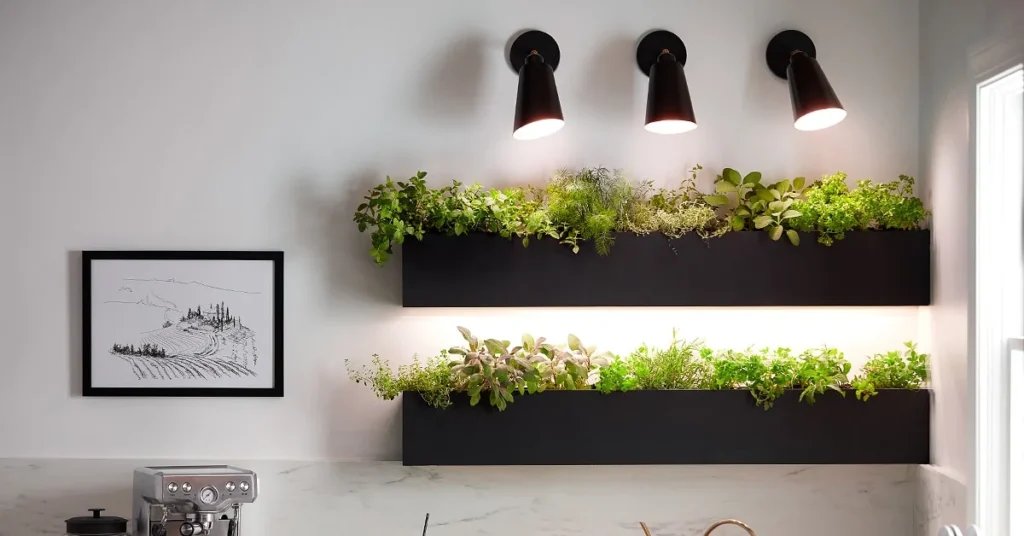
A real solar grow setup uses a full-spectrum LED, not a warm-white decorative bulb, and the outdoor panel has to be sized to the light’s actual power draw. As a rough number: a 50-watt grow light running 14 hours a day needs roughly 700 watt-hours a day, and the panel has to be able to bank that much in the available daylight, not just top up a small battery and hope.
Best Solar Lights for Closets & Storage Sheds
guide in progress. Rooms that rarely see direct sun need a different answer: usually a remote panel placed outside, wired to a motion-triggered light inside. Full guide coming.
FAQs
How long do solar lights actually last on one charge?
Six to ten hours in summer is realistic for a quality fixture. Winter cuts that to four to six hours, simply because the panel gets fewer usable daylight hours to work with.
Do solar lights still charge on cloudy days?
Yes, just slower. A monocrystalline panel noticeably outperforms a polycrystalline one in low light, which is worth checking for anywhere that doesn’t get consistent full sun.
What IP rating actually matters?
IP44 covers a sheltered, covered spot. Anything fully exposed, a patio, a veranda, a farm building, needs IP65 or better. Don’t buy for full outdoor exposure and settle for less.
Can solar lights be used safely indoors?
Yes, as long as the panel itself gets real daylight, either through a window with direct sun or via a detachable panel placed outside.
How many lumens do I need?
Roughly 40–100 for ambience, 100–200 for a path or step, 300+ for security, and into the thousands for something like a sports field.
How long does the battery inside a solar light actually hold up?
NiMH batteries typically last 2–3 years before runtime drops noticeably, and cost a few dollars to replace. Lithium-ion and LiFePO4 cost more upfront but hold their charge longer and tolerate real cold, which matters most for fire pits and farm buildings.
Can I just use regular alkaline batteries instead?
No, solar lights charge and discharge daily, and alkaline cells aren’t built for that cycle. Stick to the rechargeable NiMH, lithium-ion, or LiFePO4 batteries the manufacturer specifies.
Summary
Strip away the branding and every guide on this page comes down to the same three questions: how much real sun will the panel get, what IP rating does the location actually demand, and does the battery chemistry suit your climate. Get those three right, whether you’re lighting a patio, a fire pit, a dairy shed, or a study desk, and a solar fixture will outlast the cheap plug-in version while costing nothing to run afterward. Use the list above to jump to your exact situation, the details differ more than most “best solar lights” articles let on.