Last updated on October 27th, 2026 at 06:50 am
Quick Answer: The best solar lights for a guest house are low, warm-white path lights along the route, step lights at the top and bottom of stairs, and one motion-activated light at the door. Choose lights that list their lumens, battery type, and IP rating (IP44 for sheltered spots, IP65 for exposed ones), and check the sun at each spot first. Where light must never fail, such as stairs for older guests, use wired or hybrid lighting instead.
Table of Contents
Picture it: your guest pulls up at 10 p.m. with a phone torch in one hand and a suitcase in the other, squinting for the front door. The listing photos looked lovely. The walk from the gate looks like a cave.
Solar lights fix that without trenches, cables, or an electrician. They also fail in predictable ways. They dim by midnight, die after one wet season, or glare straight into a bedroom window.
This guide covers what to buy, where each light goes, and what usually goes wrong. It suits a backyard guest house, a B&B, or a rental. It leans on published standards and manufacturer guidance, not our own lab tests, so you won’t find brand rankings here.
What Works Best for a Guest House
Use low, warm-white path lights along the route, step lights where the ground changes level, and one brighter motion-activated light at the door. Add string lights only if guests will sit outside.
The rule of thumb: light the route, not the whole yard. The DarkSky approach to responsible outdoor lighting says to light only where you need it, when you need it, in the amount needed, and no more. That also keeps your battery life and your neighbors happy.
First, Which Kind of Guest House Are You Lighting?

Your setup changes what you prioritize, so start here.
A Backyard Guest House or Cottage
Your guests are usually family and friends who know the property. You can tune the lights over time and fix problems fast. Focus on the path from the house to the cottage and on the cottage door.
A B&B or Small Lodge
Strangers arrive with luggage, often after a long day of travel. The entrance has to be obvious from the road, and the path has to be safe for people carrying bags. Consistency matters more than style here.
A Short-Term Rental or Airbnb
Guests may self-check-in at midnight on ground they have never seen. You also have little time between stays to fix anything. Prioritize reliability and easy maintenance over fancy effects.
What Guests Actually Need from Outdoor Lighting at Night
Guests need to find the door, avoid tripping, and sleep without a glow in the window. Everything else is decoration.
Finding the Entrance After Dark
Give guests one steady, obvious cue: a light at the door, plus a line of lights leading to it. A lone light halfway down the path just confuses people.
Safe Steps and Paths
Falls are the real risk. State health guidance based on CDC information says one in three adults aged 65 and older falls each year, and recommends good lighting along stairs. Your guests may include a grandparent, so plan for that.
Don’t forget the people carrying bags, either. Nobody writes a five-star review that says “lovely cottage, nearly broke my ankle.”
Light That Doesn’t Shine Into Bedrooms
Glare is the most common complaint about cheap lights. DarkSky’s guidance says to shield and aim lights downward so they don’t spill beyond where they’re needed, and to use no more brightness than necessary. Aim path lights away from bedroom windows and keep them low.
Where to Put Solar Lights, Zone by Zone
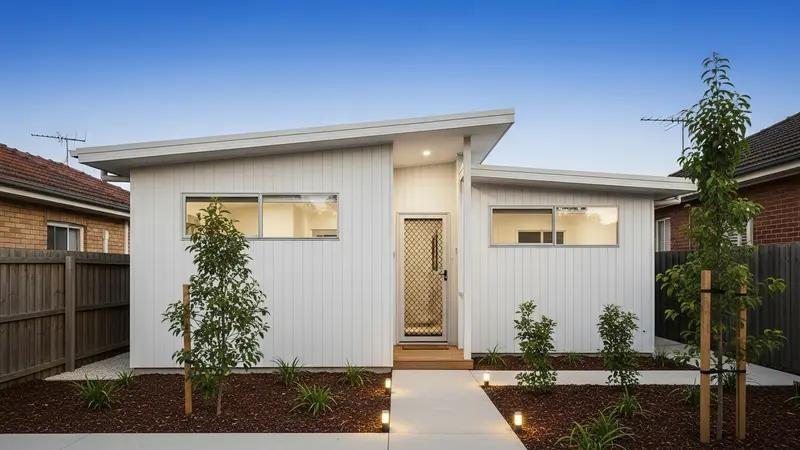
Think in zones, not in “lights per yard.” Each zone needs a different job done.
Arrival Path and Driveway
Put lights along the edge of the walking route, not down the middle. Common retail and lighting-industry guidance suggests about 100 to 200 lumens for path lights. This is industry convention, not a legal standard.
Don’t line the path like an airport runway. A gentle rhythm of light pools does the job.
Stairs and Steps
Light the top and bottom first. A safety paper from Japan’s national occupational safety institute notes that the risk of a misstep is highest within one to three steps of the transition between level walking and stairs. Common guidance for individual step lights runs roughly 12 to 100 lumens each.
Front Door and Entry
Pair a steady low light with a motion-activated one. Lighting-industry guidance for motion-sensor lights often falls in the 300 to 700 lumen range. A California state agency also recommends motion detector lights near stairs and good outdoor lighting on walkways and driveways.
Parking Area
Use a downward-aimed floodlight here. Common guidance puts flood lights at about 700 to 1,300 lumens. If your property has a big lawn, court, or open field, you’re in a different class of lighting. Our guide to solar arena lights for sports fields covers that scale.
Patio or Seating Area
This is the only zone where mood beats function. String lights and lanterns work well here. Warm white keeps it cozy.
If you’re adding a garden feature for guests, a solar bird bath fountain runs on the same sun-and-battery logic as your lights.
Types of Solar Lights for a Guest House
| Light type | Best for |
|---|---|
| Pathway and stake lights | Marking the walking route along a path or driveway edge |
| Step and deck lights | Stairs, decks, and any change in ground level |
| Wall-mounted lights | Door and entry areas where you want a steady fixed light |
| Motion-sensor flood lights | Parking, side entries, and dark corners |
| String lights | Patios and seating areas, where mood matters more than brightness |
Pathway and Stake Lights
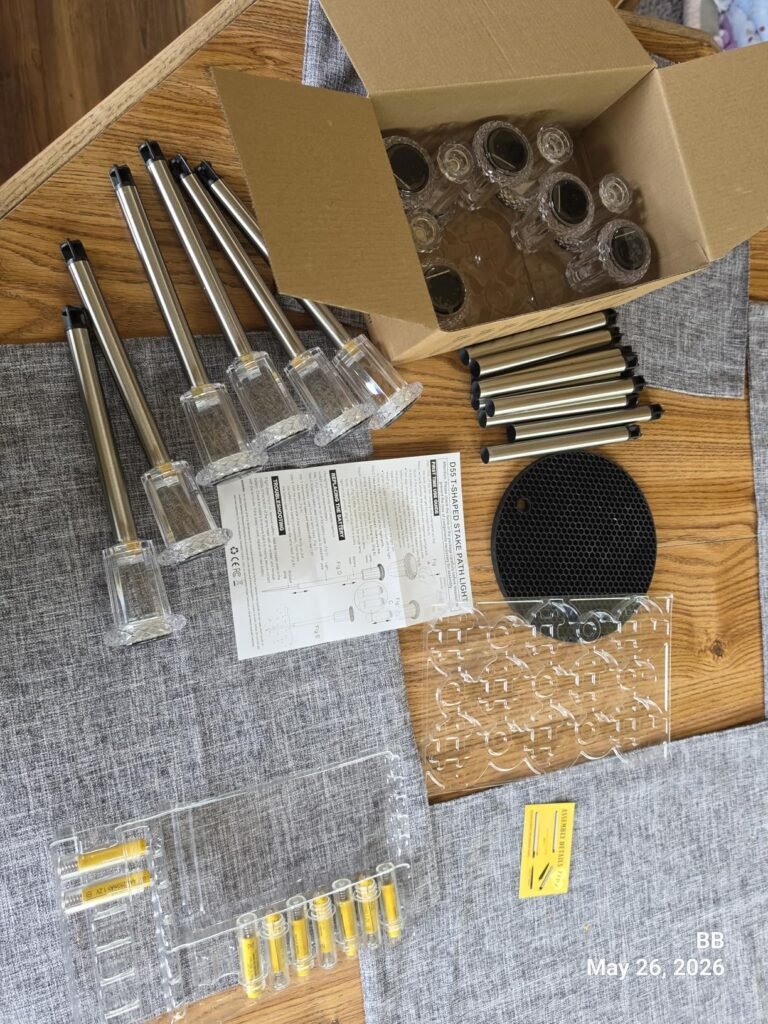
Cheap, easy, and fast to install. They also bend, snap, and tip over, so push them in firmly and check them after storms.
Step and Deck Lights

These sit low and shine across the step surface. Choose ones sealed against weather, since steps get splashed by rain.
Wall-Mounted Lights
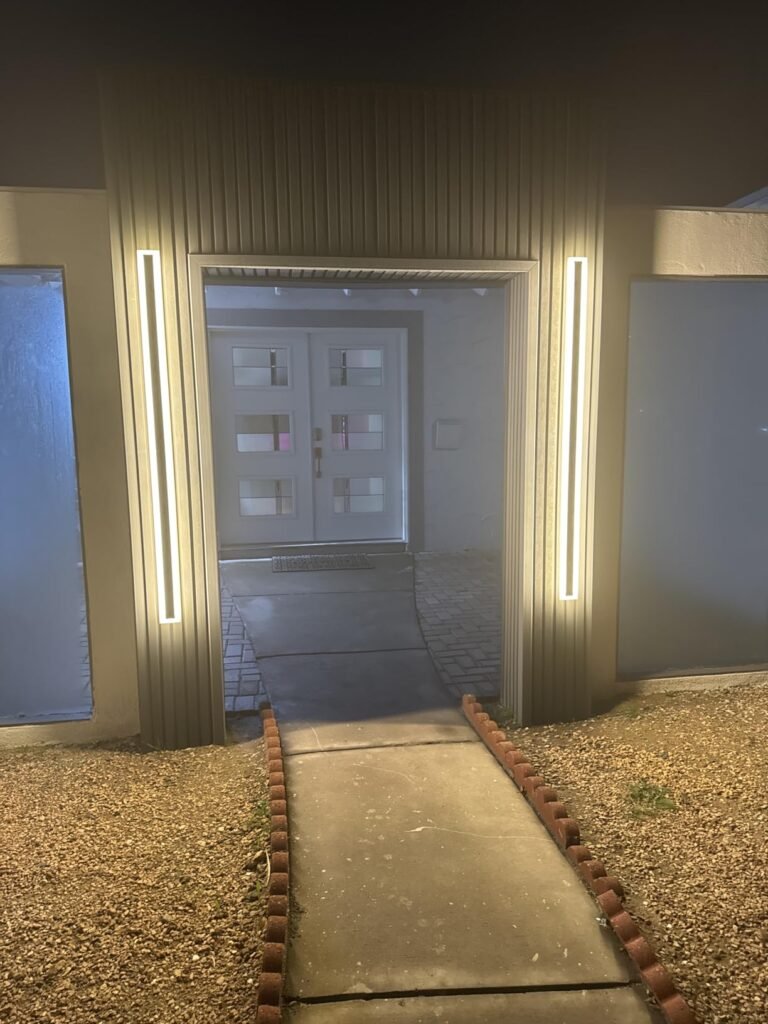
These suit a fixed spot like the entry. A wall bracket stays put better than a stake, which helps in a rental where nobody checks daily.
Motion-Sensor Flood Lights
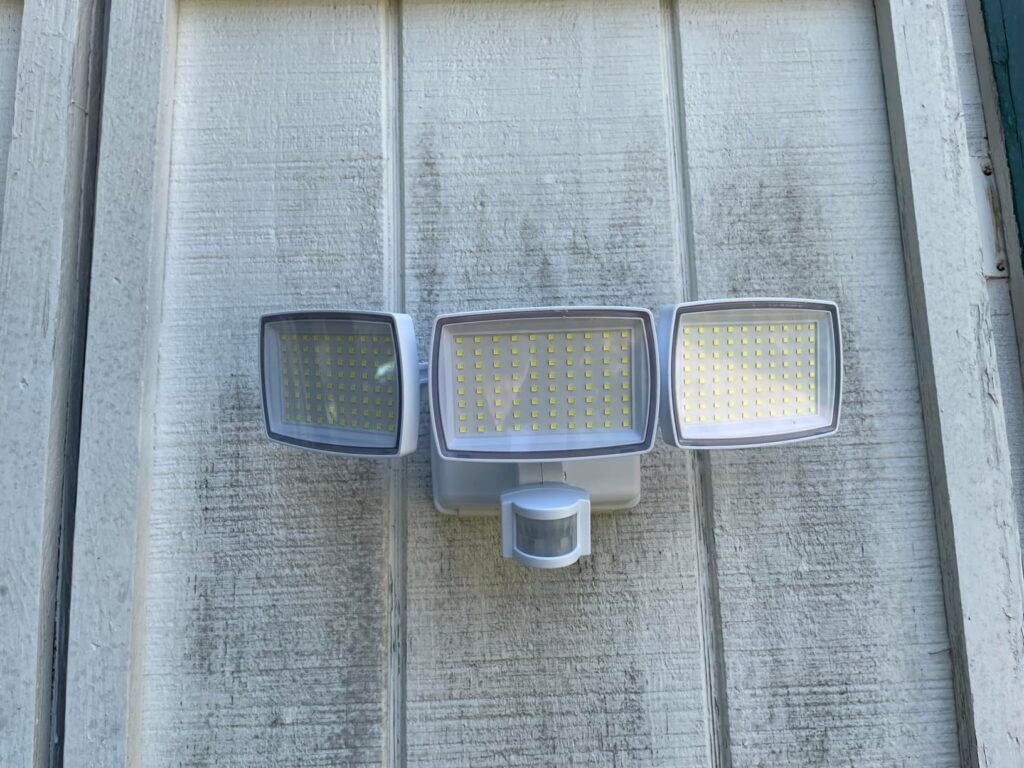
They save battery by staying dim or off until needed. The trade-off is that a light that wakes late startles a guest, so test the sensor range at the real arrival point.
String Lights for Ambiance
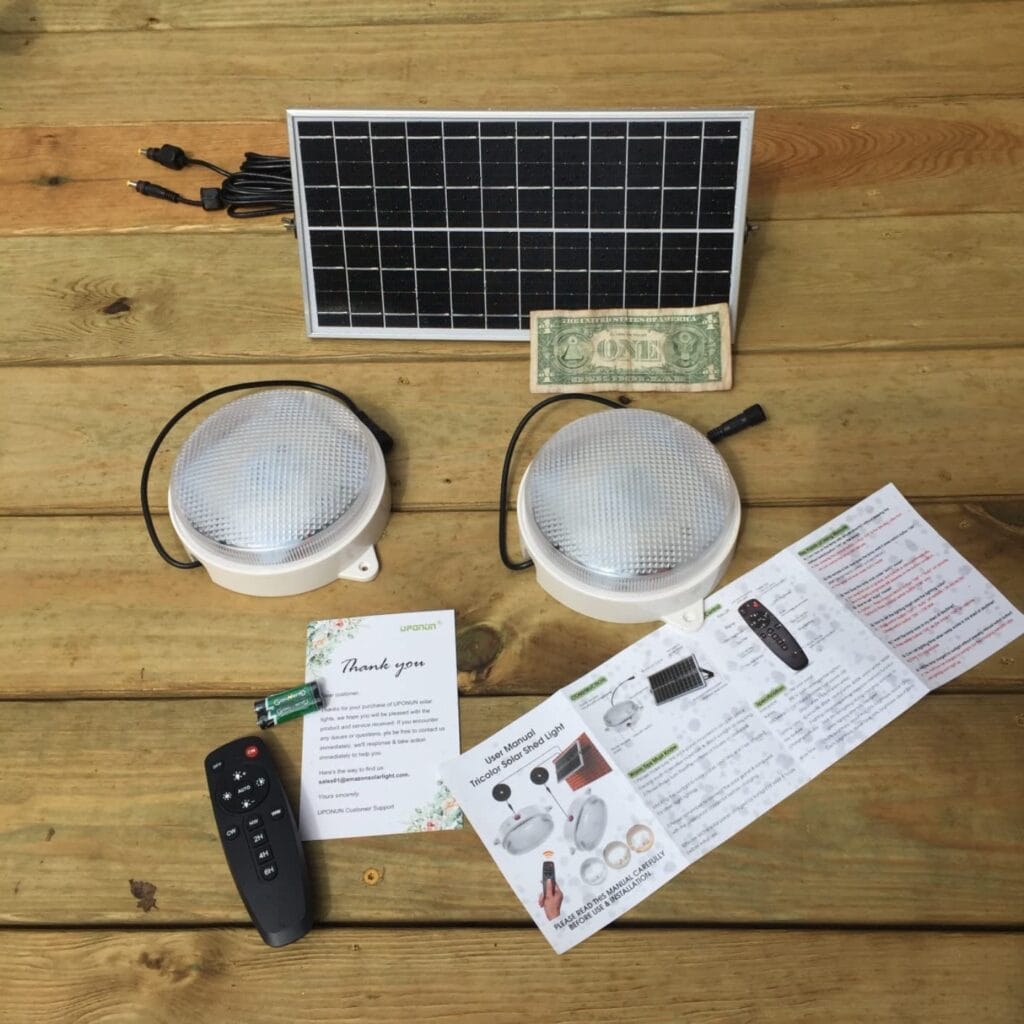
Pure atmosphere, not safety. Don’t rely on them to get a guest from the car to the door.
How to Choose: The Specs That Actually Matter
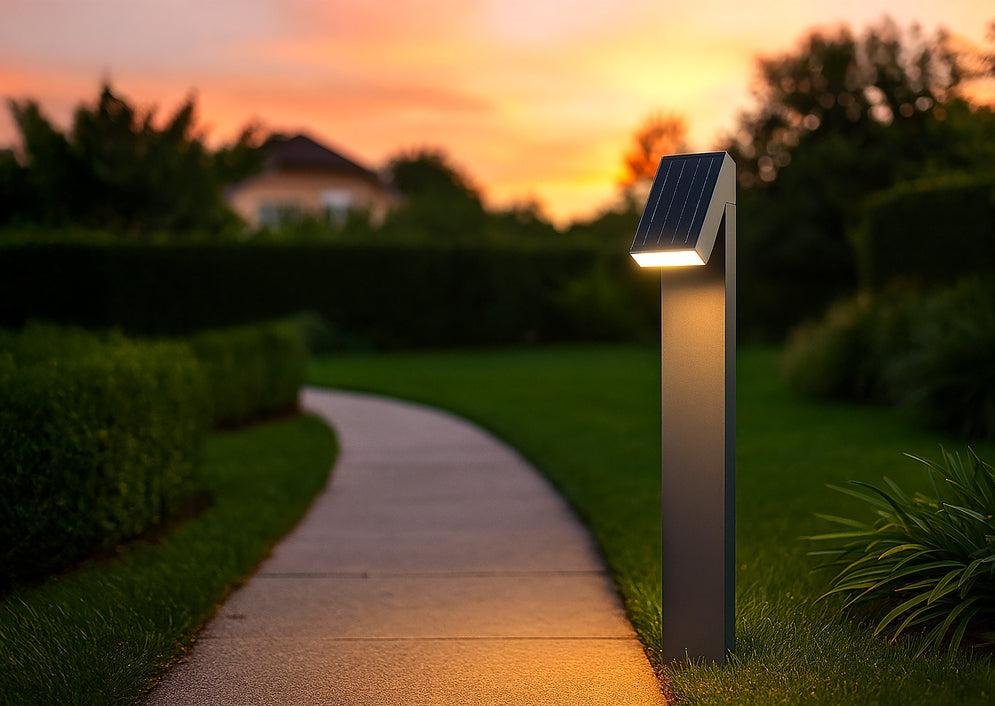
Five numbers on the spec sheet predict almost every disappointment. Ignore the marketing adjectives and read these.
Lumens (How Bright Is Bright Enough?)
Lumens measure the total visible light a source emits. Use the zone ranges above as a starting point. More is not better, because glare ruins night vision.
For a ceiling, DarkSky’s approved residential luminaire category caps output under 1,000 lumens and color temperature at 3000K. That’s a useful limit even if you never seek certification.
Battery Type and Run Time
Most small solar garden lights use rechargeable AA or AAA NiMH batteries, while brighter lights like motion-sensor wall lights may use lithium-ion. Voltage matters when you replace one. NiMH cells are 1.2V, while lithium types are often 3.2V, and a light built for one won’t run properly on the other.
Replacement timing varies by source. One vendor suggests every 18 to 24 months, while another says most owners replace cells every two to three years. A supplier spec for one budget stake light says its small Ni-MH battery may need replacing after 8 to 12 months. Treat all of these as ranges, not promises.
Solar Panel Size and Placement
A bigger panel collects more light, but placement matters more. Some kits solve shade by separating the two. For example, one home lighting kit lists a solar panel on a 5-meter cable, so the panel can sit in the sun while the light stays in shade. Check whether your lights allow that.
IP Rating and Weather Resistance
“Waterproof” on a box means very little. Terms like water resistant and waterproof lack clarity and are easy to misread. Use the IP code instead.
The IP code has two digits. The first digit covers protection against particles, and the second covers protection against water. In plain terms:
- IP44 handles splashed water. That’s a reasonable minimum for covered or sheltered spots.
- IP65 is dust-tight and protected against water jets. That’s the better choice for fully exposed spots.
Warm vs Cool White
Go warm. DarkSky recommends limiting the shorter-wavelength blue-violet light to the least amount needed. Warm light also feels more welcoming at a guest door. Some budget solar kits default to cool white, with one kit listing 6000K. Check the Kelvin number before you buy.
Will Solar Lights Hold Up? Shade, Winter, and Cloudy Weeks
They hold up if you size for the worst week, not the best one. Cloud and short days both cut how much charge the battery gets.
Figures on cloudy-day output vary widely. A Missouri clean-energy agency put the drop for central Missouri rooftop systems at 10 to 40 percent of sunny-day output. Another source cautions that there’s no magic percentage, since every cloud, roof, and solar system differs. Those figures cover rooftop panels, and we found no published numbers specific to small garden lights.
Run time adds to the squeeze. Vendors commonly quote six to eight hours of light from a full charge on a small garden light. In many regions, winter nights run longer than that. So plan for one or two weak days, not for perfect sun.
Installing Solar Lights Without Regrets
Do a sun test, then place lights in overlapping pools of light. Skip either step and you’ll move everything twice.
Do a Sun Test First
Check each spot at several times of day before you push a stake into the ground. A supplier guide for one stake light says to place it in direct sunlight and away from other light sources like street lights, so it switches on at night. A street lamp can confuse the light sensor.
Spacing and Height
Space lights so their glow overlaps the next one. Keep them low, and aim any brighter fixtures down and away from windows. Check the maker’s coverage notes rather than guessing a spacing.
Keeping Them Working Between Guests
A 30-second walk-around does most of the work. Do it when you already check the lockbox or reset the space.
Wipe each panel, since dirt and leaves cut charging. Look for lights that stayed dark or went dim. Replace weak batteries with the right type. Never use disposable alkaline batteries in a solar light, and don’t swap a 1.2V cell for a lithium one. Using a 3.7V lithium cell in a light designed for 1.2V can damage the circuit.
When Solar Is the Wrong Choice
Solar is the wrong tool where light must be guaranteed. That includes heavy shade, long nights with little sun, and any place where a dark light creates real risk.
Think about stairs for elderly guests, a steep path, or a security-critical entry. Wired or hybrid setups make more sense there. A common compromise is wired lights at the stairs and door, and solar everywhere else. The US Department of Energy’s Better Buildings program lists a fact sheet on solar street and area lighting that highlights the circumstances where solar is both a technical and cost-effective option. The point is that solar fits some sites and not others.
Common Mistakes Hosts Make
Buying on looks. A pretty lantern with no listed lumens or IP rating is a gamble.
Skipping the sun test. A light that gets two hours of sun gives you two hours of regret.
Over-lighting. More lumens mean more glare, not more safety.
Forgetting the steps. Hosts light the path and leave the stairs dark. The stairs are where people fall.
Mixing battery types. The wrong voltage can kill a light.
Never checking them. A light that failed three weeks ago helps nobody.
Quick Checklist Before You Buy
- Does the listing state lumens, battery type, and IP rating?
- Is it warm white (ideally 3000K or lower)?
- Will the panel get direct sun at the planned spot?
- Are stairs and the door covered, not just the path?
- Can you replace the battery easily?
- Is each light aimed down and away from bedroom windows?
Quick Glossary
Lumen: a measure of the total visible light a source gives off.
IP rating: a two-digit code for dust and water protection, based on the IEC 60529 standard.
NiMH: nickel-metal hydride, the rechargeable battery chemistry in most small solar garden lights.
Lithium-ion / LiFePO4: higher-capacity battery types often used in brighter solar fixtures.
Kelvin (K): the scale for light color. Lower numbers look warmer.
Dusk-to-dawn sensor: the sensor that switches a light on when daylight fades.
FAQs
Can solar lights replace a proper security light?
For many properties, a motion-activated solar flood light covers it. For anywhere guaranteed light matters, consider wired or hybrid.
Can solar lights annoy neighbors or wildlife?
Yes, if they’re too bright, too cool in color, or aimed up. DarkSky’s principles of useful, targeted, low-level, controlled, and warm-colored light apply to solar lights too.
Will a nearby street lamp stop my lights from coming on?
It can. Light sensors may read the lamp as daylight, so supplier guidance says to place lights away from other light sources.
What IP rating do I need?
IP44 covers splashes, which suits sheltered spots. IP65 covers dust and water jets, which suits exposed ones.
How often should I replace the batteries?
Vendor guidance runs from roughly 8 to 12 months for one budget stake light up to two or three years for typical garden lights. Replace them sooner if a light dims before dawn.
Do solar lights work if the guest house sits under trees?
Direct sun is what charges them, so heavy shade hurts. If the fixture has to sit in shade, look for a kit with a separate panel on a cable so the panel can sit in the sun.
What I’d Do If I Were Lighting One Guest House Tomorrow
I’d start with the stairs and the door, because that’s where people get hurt and where first impressions form. Then I’d run warm-white low path lights along the route, and add one motion-activated light at the entry.
Before buying everything, I’d test one set for a week in the real spot. That tells you more than any spec sheet. Everything else (string lights, fountains, glowing mushrooms) is a bonus.
Sources
- DarkSky International, Five Principles for Responsible Outdoor Lighting: darksky.org/resources/guides-and-how-tos/lighting-principles
- Light Now Blog, DarkSky International Updates Luminaire Certifications: lightnowblog.com/2025/04/darksky-international-updates-luminaire-certifications
- Town of Westport, CT, Five Lighting Principles for Responsible Outdoor Lighting (DarkSky summary): westportct.gov
- Tennessee Department of Health, Healthy Homes: Stairs: tennessee.gov/health/cedep/environmental/healthy-homes/hh/stairs.html
- California Department of Developmental Services, Preventing Falls and Fractures: dds.ca.gov
- Japan NIOSH, paper on stair-related falls (ICFPP15): jniosh.johas.go.jp/en/publication/doc/ICFPP15.pdf
- TR Fastenings, IP Ratings (IEC 60529): trfastenings.com/knowledge-base/fundamentals/ip-ratings
- Canford, IP Protection Classes: canford.co.uk/TechZone/Article/IPProtectionClasses
- Missouri Clean Energy District, solar output article: mced.mo.gov/?p=4894
- US DOE Better Buildings Solution Center, Outdoor Lighting Technical Resources: betterbuildingssolutioncenter.energy.gov
- The Home Depot, How Many Lumens Are Needed for Outdoor Lighting: homedepot.com
- CoolToday, How Many Lumens Do I Need For Outdoor Lighting?: cooltoday.com/blog