The Author
Table of Contents
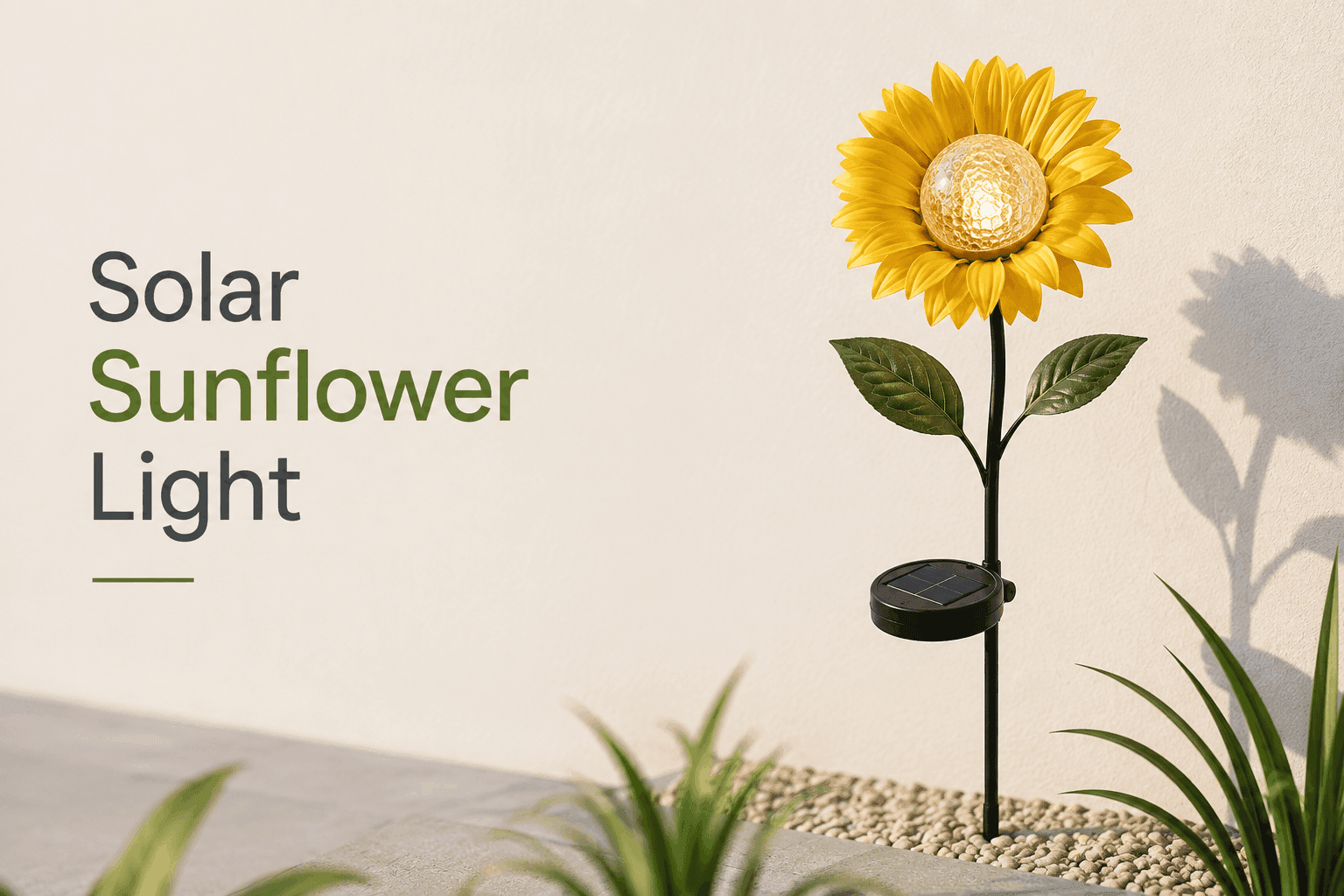
A solar sunflower light sits in your garden bed, soaks up sun all day, then glows a soft yellow after dark. No cords. No battery drawer to raid every few weeks. No electrician bill.
It sounds almost too simple to work well, and for cheap models, it sometimes isn’t. This guide breaks down what matters before you buy one, where to place it so it stays bright, and what to do if yours won’t turn on. Every spec here comes from real product listings and named brands, not guesswork.
The Short Answer: Do Solar Sunflower Lights Work?
Yes, a solar sunflower light works, provided it meets four baseline specs. Skip any of these and you end up with a flower looking great at noon and doing nothing at 9 PM.
- Battery: 600mAh or higher (Ni-MH or lithium-ion)
- Waterproof rating: IP65 or better
- Charge time: 6 to 8 hours of direct sun
- Sun exposure: at least 6 hours a day, unobstructed
Check these four before you check the price. A cheap light with a weak battery burns out by August. One with the right specs lasts several seasons.
What to Check Before You Buy
Every buying guide throws numbers at you. Here is what those numbers mean for how long your sunflower light lasts and how bright it glows.
Battery Capacity and Runtime
Most solar sunflower lights use a 600mAh to 800mAh rechargeable battery, either nickel-metal hydride or lithium-ion. Full charge takes 6 to 8 hours of direct sun. Runtime after a full charge lands between 8 and 14 hours, based on specs published by brands including Gardinea and Letmy.
Bigger mAh numbers do not always mean longer runtime. LED count and brightness setting drain the battery too. A 3-flower stake with bright LEDs empties a bigger battery faster than a single dim bloom with a small one.
Waterproof Rating: Why IP65 Matters
IP65 shows up on almost every listing for a reason. Under the IEC 60529 standard used across the industry, the rating means the unit is fully sealed against dust and stands up to water jets from any direction, which covers rain, sprinklers, and garden hoses.
It does not mean submersion-proof. Leave a sunflower stake sitting in a flooded flower bed for hours and water finds a way into the battery compartment eventually. Pick a spot with drainage, not a low point where water pools after a storm.
LED Count and Real Brightness
A sunflower-shaped fixture hides its solar panel inside a small area, often the flower’s face. Less panel surface caps how much energy it stores each day, so output stays modest. A 50-lumen multi-head model from Gumesh, sold through Walmart, sits near the bright end of what current listings advertise.
These lights work best as accent pieces rather than primary illumination. They mark a flower bed, outline a path edge, or add a warm glow near a patio. Pair one with a dedicated solar spotlight if a space needs enough light to read outside after dark. LED count, typically 12 to 36 across current listings, affects spread more than raw brightness.
Build Material: Silk Petals vs. Metal vs. Mosaic Glass
Budget stakes use silk or polyester fabric petals over a plastic frame. They look realistic from a few feet away and fade faster under direct summer sun.
Mid-range and premium models use stainless steel stems and weather-resistant petals, built to survive several seasons outdoors without fading or snapping in wind. Mosaic glass sunflower lights swap the botanical look for colored glass panels, throwing patterned light at night. If a patterned-glass look appeals to you more than a literal flower shape, our mosaic solar lights guide covers the category in full.
Types of Solar Sunflower Lights
Once the specs make sense, the next decision is shape. Four formats cover almost everything sold under “solar sunflower light.”
Single-Bloom Stake Lights
One flower head sits atop a metal or plastic stake, pushed straight into soil. Height varies by brand, landing anywhere from 15 to 30 inches, similar to the range listed by Gardinea and comparable manufacturers. This is the simplest and usually cheapest format, ideal for scattering several across a flower bed without overwhelming it.
Multi-Head Stake Lights: 3, 6, or 9 Flowers
Several blooms branch off one stake or share a solar panel base. Most multi-head listings advertise 18 to 36 LEDs across the full unit, based on models from SenQWFa and Outdoor Solar Outlet. These work well along a fence line or as a single statement piece near an entrance, rather than scattered individually.
Sunflower String and Garland Lights
A string of small sunflower-shaped LEDs runs along a fence, railing, or patio edge. Listed lengths vary. The BSJJY string light sold on Walmart runs about 6.5 feet, shorter than most fairy-light strings sold for the same purpose.
Waterproof ratings vary more here than with stake lights, so check the listing carefully before hanging one outdoors.
Non-Light Solar Sunflower Decor: Spinners and Stakes
Not every “solar sunflower” is a light. Solar-powered spinners and kinetic stakes use a small solar motor to rotate the flower head during the day, with no LED at all.
If a search led you here looking for one of these, this guide focuses on the lit versions. The mechanics differ enough, and buying advice for one does not carry over to the other.
Where to Place Them for the Best Glow
Sun Exposure: How Many Hours They Need
Six hours of direct, unobstructed sun is the baseline nearly every manufacturer lists. Dappled shade from a tree canopy cuts the charging time down fast, even if the spot looks bright enough to the eye.
South-facing beds get the most consistent exposure across a full day in the Northern Hemisphere. A spot looking sunny during a garden center visit at noon might sit in shadow for half the afternoon once a nearby fence or shed blocks the low-angle sun.
Common Placement Mistakes
The most common mistake is planting the light behind low, young flowers early in spring. Those flowers grow taller through summer, and a bed looking empty in April turns crowded by July. The sunflower light quietly goes dim as neighboring plants block its panel.
Second mistake: placing multiple lights too close together, competing for the same patch of sun instead of spreading exposure across the bed. Space stakes at least a foot apart where possible.
How Long They Last and How to Keep Them Bright
Cleaning the Solar Panel
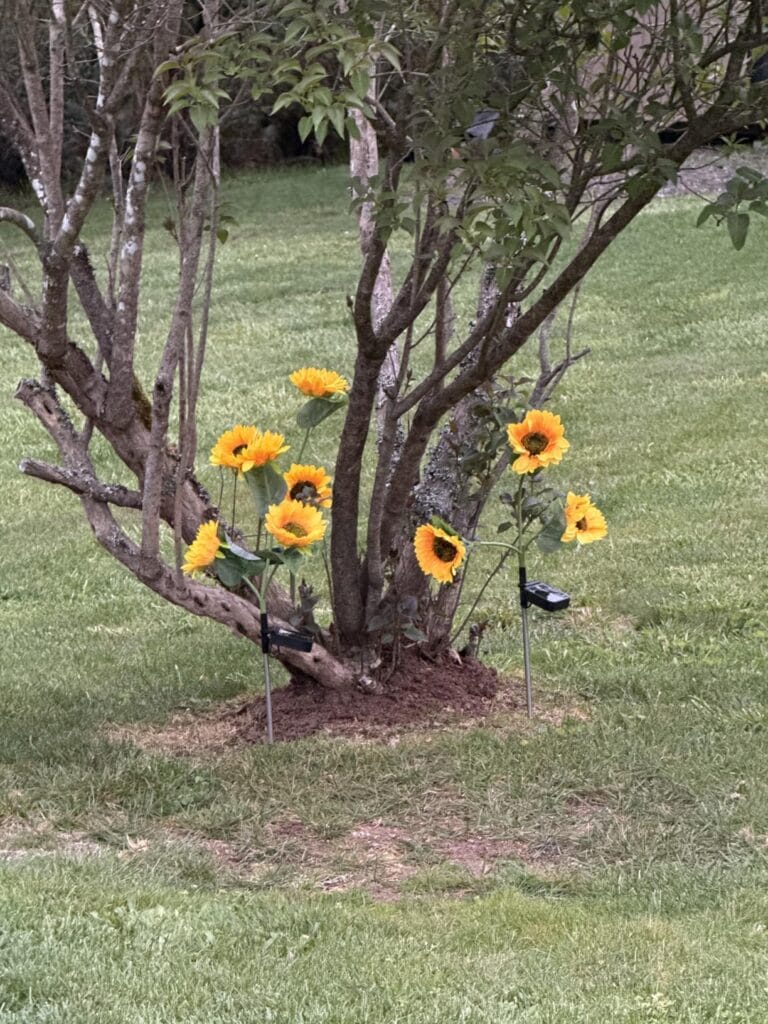
Dust and pollen build up on the panel surface over a season and block a percentage of incoming light. Wipe the panel with a damp cloth every two to three weeks during peak pollen season, more often near trees.
A five-minute wipe-down restores most of the original charge rate. Skipping it for months lets the flower quietly dim, and most owners blame a dying battery when the real problem sits on the surface.
Seasonal Care: Rain, Snow, and Heat
IP65 handles rain fine. Snow sitting on top of the panel for days blocks charging entirely, even though the unit survives the cold without damage.
Brush snow off after a storm if you leave the light out through winter, or pull the stake and store it indoors once temperatures drop consistently below freezing. Extreme summer heat rarely damages the panel itself, though it shortens battery lifespan over several years faster than mild climates do.
When to Replace the Battery
Rechargeable batteries in outdoor solar lights typically hold a full charge for 1 to 2 years before capacity drops noticeably. A light once glowing all night and now fading by 10 PM is showing early battery wear, not a broken unit.
Most stake lights use a standard AA-size Ni-MH battery, replaceable for a few dollars rather than buying a whole new fixture.
Solar Sunflower Light Not Turning On? Quick Fixes
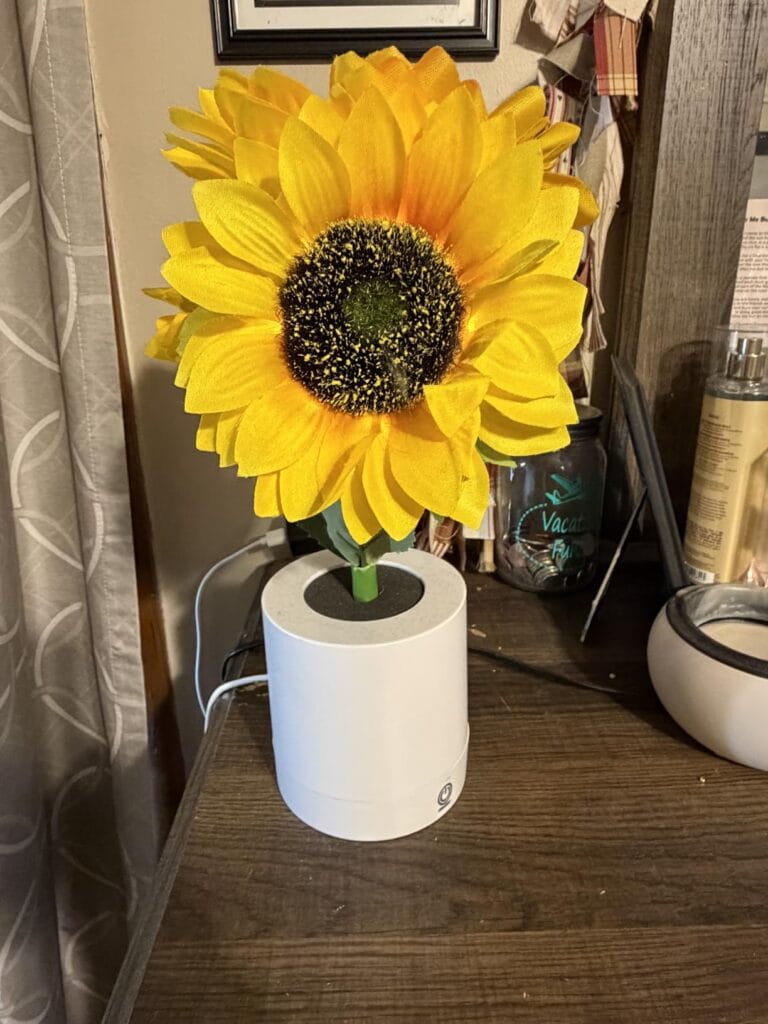
Before assuming the unit is broken, run through these checks in order.
- Confirm the switch sits in the ON position. Manufacturers often ship units switched off.
- Remove the plastic pull-tab covering the battery contact, if the light is new.
- Give the panel a full charge cycle in direct sun before testing again at dusk.
- Wipe the panel clean. Dust blocks enough light to stop a full charge.
- Swap in a fresh battery if the light is older than 18 months.
Solar Sunflower Lights vs. Other Solar Garden Lights
A solar sunflower light prioritizes look over raw output, the same trade-off as most decorative solar fixtures. Solar pathway lights push more lumens for safety and navigation. Solar pillar lights create taller focal points near entrances. Magnetic solar lights skip the stake entirely and attach to metal surfaces like raised beds or railings.
Mixing formats across a yard, rather than relying on one type everywhere, produces a more layered look at night. A sunflower stake near a flower bed, paired with pathway lights along the walk, covers both charm and visibility.
FAQS
How long do solar sunflower lights stay lit at night?
Most models run 8 to 14 hours after a full charge, based on published specs across current listings. A weak or aging battery cuts this closer to 4 to 6 hours.
Do solar sunflower lights work on cloudy days?
Yes, though charging slows down. Solar panels still gather diffused light through clouds at a reduced rate. Expect a shorter runtime the following night rather than no charge at all.
How many hours of sun do they need to charge fully?
Six to eight hours of direct, unobstructed sun covers most models. Partial shade extends this window and often leaves the battery under half-charged by evening.
Are solar sunflower lights waterproof in rain and snow?
An IP65 rating handles rain and snow sitting on the surface. It does not cover submersion, so avoid low spots where water pools after storms.
Why is my solar sunflower light not turning on?
Check the switch position first, then confirm you removed the pull-tab and wiped the panel clean. A battery older than 18 months is the next likely cause.
Do solar sunflower lights work indoors?
Not well. Indoor window glass blocks part of the UV spectrum the panel relies on, and most windows do not provide six-plus hours of direct exposure. Save them for outdoor placement.
How do I clean the solar panel to keep it charging well?
Wipe it with a damp cloth every two to three weeks during pollen season. A five-minute wipe restores most of the lost charge rate.
What is the difference between solar and battery-powered sunflower lights?
A solar version recharges itself daily from sunlight and needs no manual battery swaps beyond an occasional replacement every year or two. A battery-powered version runs on standard disposable or rechargeable batteries you swap by hand every few weeks, with no dependence on sun exposure.
Bottom Line
A solar sunflower light earns its spot in the garden when the specs check out: 600mAh or higher battery, IP65 rating, and a spot with six-plus hours of direct sun. Skip those checks and even a good-looking fixture goes dim by August.
Ready to pick one? Once our full buying breakdown of the best solar sunflower lights on Amazon goes live, link it here for readers ready to shop.
Summary
A practical buying and care guide for solar sunflower lights. Covers the four specs deciding whether one lasts (battery, waterproof rating, charge time, sun exposure), the four common types, where to place them for the best glow, seasonal care, quick fixes if one stops working, and how they compare to other solar garden lights. Written from real product specs across current listings, not guesswork.