Table of Contents
THE PROBLEM WITH TRADITIONAL AIRPORT LIGHTING RUNS DEEP
I spent five years installing traditional runway lighting systems at small airports. The work was brutal. We’d dig trenches across entire airfields. Run cables underground. Install transformers and control rooms. For a remote airfield, this project would cost 300,000 to 500,000 dollars just to light one runway.
Then there’s maintenance. Those halogen bulbs inside traditional lights burn out constantly. A single runway might have 800 individual lights. Each one needs regular checks. Each one fails periodically. The maintenance costs never stop.
At a remote airfield in Belize I worked on, maintenance alone cost over 30,000 dollars yearly. The electricity bill ran another 50,000 dollars per year. The airport was spending 80,000 dollars annually just to keep one runway lit.
That’s when solar started looking less like an experiment and more like common sense.
THE FIRST SOLAR INSTALLATIONS WERE NERVE-WRACKING
I visited an airfield in Kenya where they’d gone fully solar on runway lighting. My first reaction was skepticism. Batteries failing during a storm? Solar panels damaged by weather? This seemed like asking for disaster.
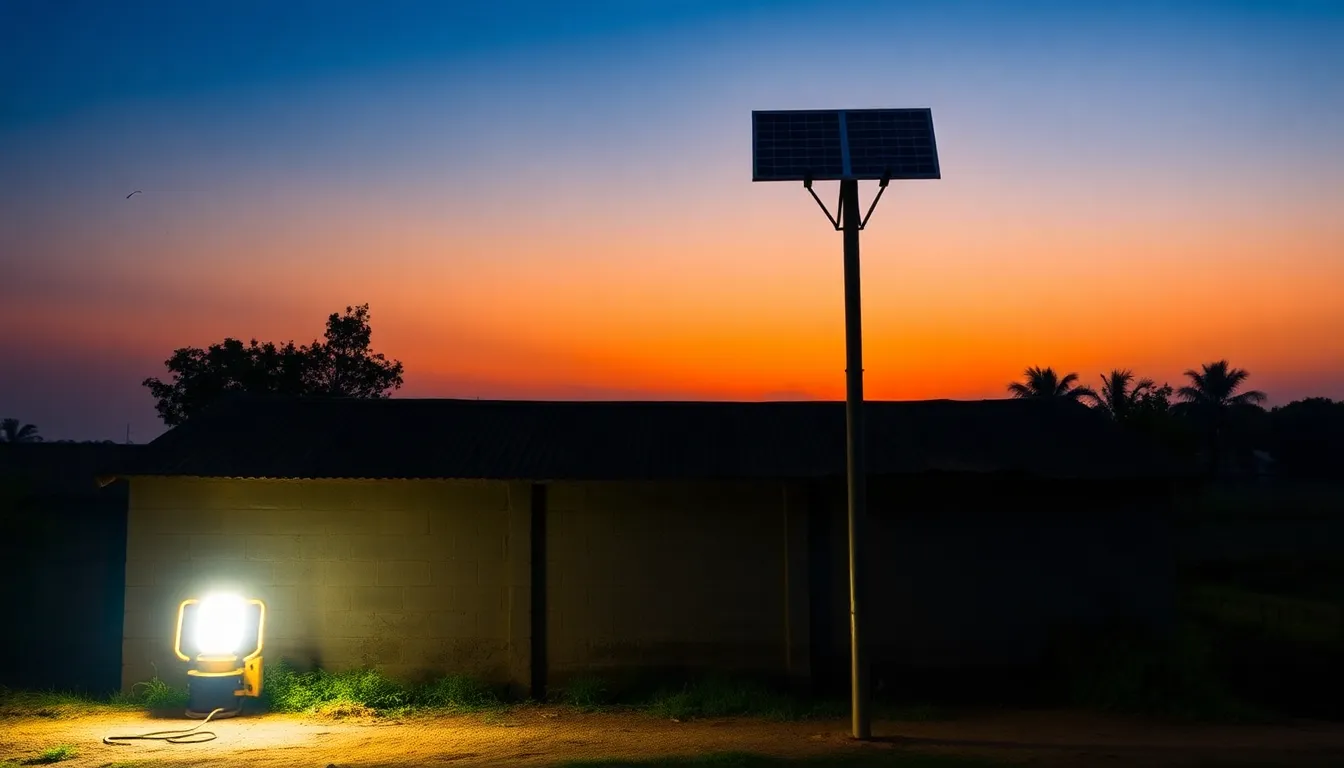
The installation used a wireless mesh network instead of underground cables. Each light had its own solar panel. They communicated with each other wirelessly. No trenching required. The site was up and running in three weeks instead of six months.
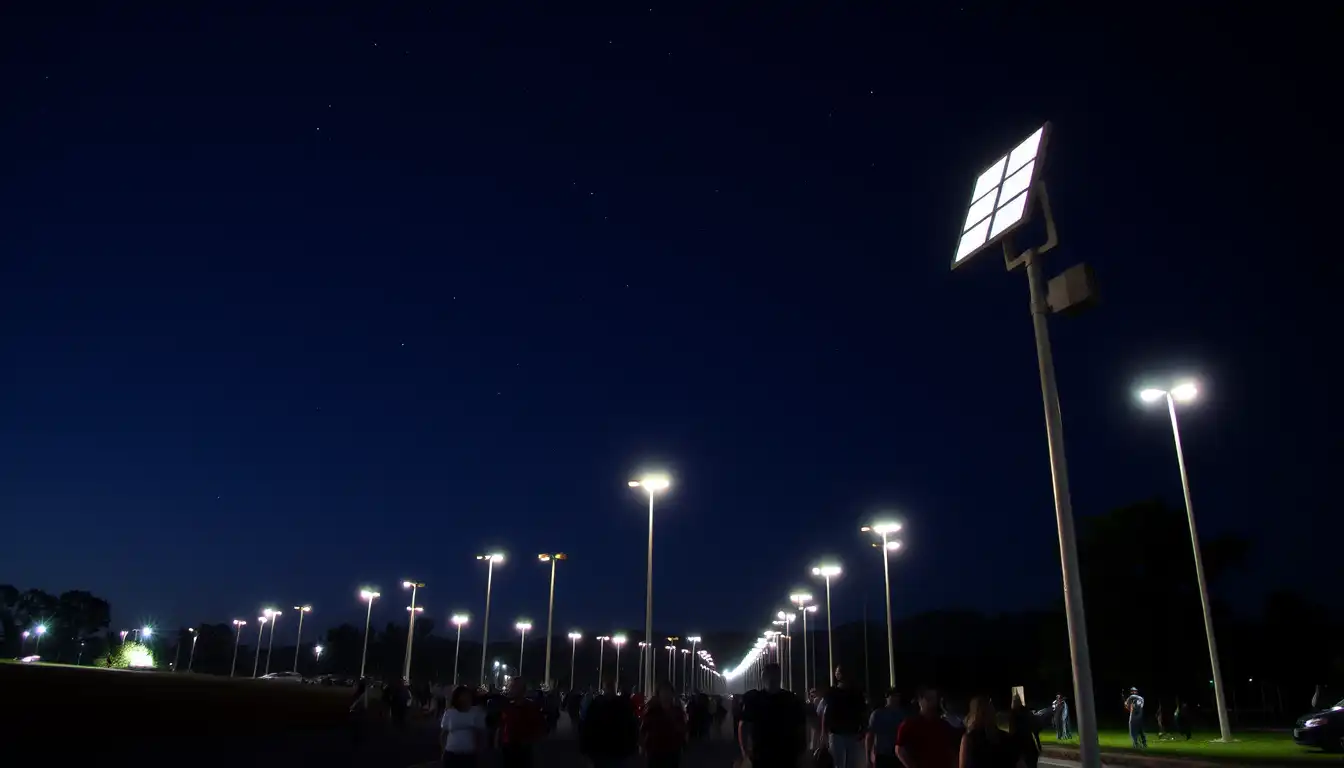
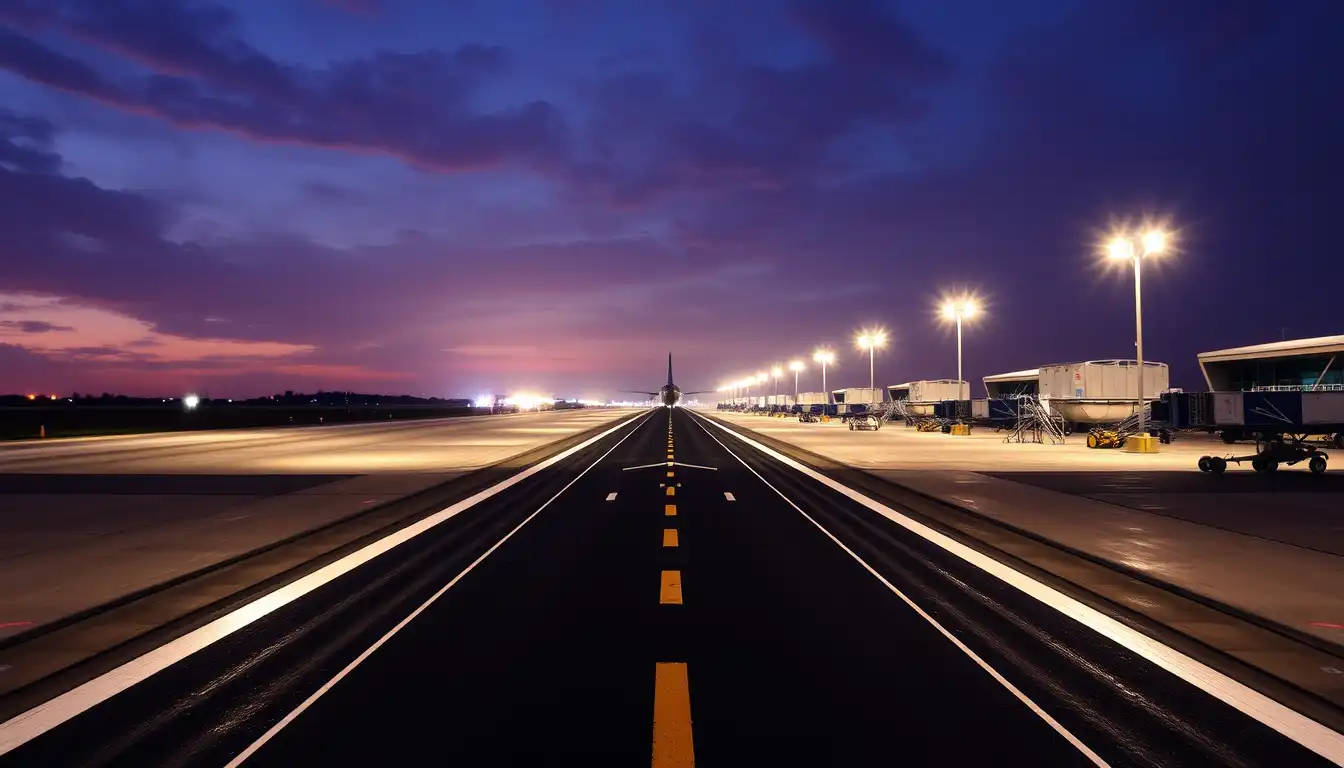
The pilot came in for a night landing. I watched the lights activate as the aircraft approached. All the standard colors. Correct intensities. Exactly like traditional systems. But there were no cables in the ground and no utility bill.
That moment changed my perspective. This wasn’t theoretical. It worked.
HOW SOLAR RUNWAY LIGHTS ACTUALLY HANDLE SAFETY REQUIREMENTS
Aviation safety is serious. The FAA doesn’t compromise on runway lighting. Every light must perform to exacting standards. Wrong brightness and aircraft guidance fails. Wrong colors and pilots misidentify approach zones.
Modern solar runway lights use high-intensity LEDs that meet every single FAA requirement. The brightness is adjustable. The colors are precise. The timing is synchronized across hundreds of lights.
The battery backup is actually better than traditional systems. A solar light stores energy from that entire day. If clouds arrive and charging drops, the system still runs for the full night. If power fails at a grid-powered airport, everything goes dark. Solar lights at remote airfields keep working through weather events that would shut down traditional systems.
I watched a storm roll in over an airfield in Nepal. Traditional grid power failed across the region. The solar runway lights kept operating. Aircraft were able to land safely while nearby towns sat in darkness.
The systems use what’s called a wireless mesh network. This is the control mechanism. Each light talks to nearby lights. If one fails, the others compensate. It’s resilient in ways traditional wired systems can’t match. The FAA has approved this technology for certified airfields. That approval came because the safety record is solid.
THE MONEY MATH DESTROYS TRADITIONAL LIGHTING
Let’s look at pure numbers. Traditional runway lighting for a small airfield costs around 300,000 dollars. That’s trenching, cabling, transformers, control systems, installation labor.
A solar runway lighting system for the same airfield costs roughly 100,000 dollars. That’s one-third the price.
Maintenance becomes almost free. I worked airfields where maintenance consumed entire budgets. Solar lights have no moving parts. No bulbs burning out constantly. No transformers failing. The only maintenance is cleaning the solar panels occasionally.
Electricity costs vanish completely. No monthly utility bills. No annual power expenses. For an airfield paying 50,000 dollars yearly for grid power, that’s a hundred thousand dollars saved every five years.
The payback period on solar is two to three years. After that, you’re operating for almost free. For airfields in developing nations with limited budgets, this is transformational.
WHO ACTUALLY INSTALLS THESE SYSTEMS
Companies like S4GA and others have specialized in solar airport lighting. They understand the FAA regulations. They know airfield requirements. They deliver systems that actually work at the safety level aviation demands.
The installations are nothing like traditional runway lighting projects. No heavy equipment. No extensive trenching. No multi-month construction projects disrupting airport operations.
They send a team. They map the runway. They install lights. They set up the wireless mesh network. Within weeks, your runway is operational with solar power.
I visited an airfield in the Philippines where installation took two weeks. The same project with traditional lighting would have taken four months and cost triple. They got a working solar system that requires almost no maintenance.
REMOTE AIRFIELDS ARE THE PRIMARY CUSTOMERS
Most solar runway systems are going into remote locations. Islands in Southeast Asia. Mountain regions. Safari airstrips in Africa. These locations have three things in common: no nearby power grid, limited budgets, and real safety needs.
The traditional approach was impossible for these airfields. You can’t run power cables hundreds of kilometers. You can’t afford 300,000 dollar installations. You can’t maintain expensive grid-powered systems in remote areas.
Solar solves all three problems. The systems are affordable. They work independently. Maintenance is minimal.
Airstrips across Papua New Guinea are going solar. Airports in remote Nepal switched over. Caribbean island airports deployed these systems. These are real operations where solar runway lights became the only practical option.
WEATHER AND CLOUDY CLIMATES STILL PRESENT CHALLENGES
I need to be honest about limitations. Areas with constant cloud cover struggle more. Northern climates with short winter days need bigger batteries. Monsoon seasons reduce charging efficiency.
The batteries compensate for this, but there’s a real limit. An airstrip in Seattle with 200 cloudy days yearly needs more storage than an airstrip in Arizona with 300 sunny days.
Engineers account for this when designing systems. They calculate your location’s historical solar patterns. They size batteries accordingly. But you can’t overcome geography completely. Some locations are genuinely challenging for solar.
I worked on a project in Iceland where solar runway lighting required significant over-engineering. The battery bank was enormous. The panels were oversized. It worked, but the system was expensive relative to a sunnier location.
The technology works best in moderate to good sun climates. For consistently dark regions, traditional grid power might still be necessary.
SMART SYSTEMS ARE THE FUTURE
The newest solar runway lights integrate with monitoring systems. Airports can track every light from a central location. They see battery status. They see charging rates. They see failures immediately instead of discovering them during an inspection.
This predictive maintenance approach prevents catastrophic failures. If a battery starts degrading, the system alerts maintenance crews before it fails completely.
Some systems adjust brightness based on weather. During heavy fog, lights automatically increase intensity to improve visibility. When skies are clear, brightness optimizes. This extends battery life while maintaining safety.
One airfield in Tanzania installed a system with remote monitoring. The airport manager can check status from his phone. If something needs attention, he knows before it becomes a problem. That capability would have been impossible with traditional wired systems.
THE GLOBAL MARKET IS ACCELERATING
The runway lighting market grew from 620 million dollars in 2025 to 658 million dollars in 2026. Solar is a rising portion of that. Remote airfields are deploying these systems at accelerating rates.
The commercial airport lighting market is expected to grow at 6.8 percent annually through 2030. Much of that growth is solar. It’s becoming standard instead of exceptional.
Honeywell, TKH Group, and other major aviation companies are investing in solar runway systems. These aren’t fringe players anymore. Established aviation companies recognize this as the future.
WHAT CHANGED MY MIND COMPLETELY
I was skeptical about solar runway lights for years. I thought they were unsuitable for aviation. I worried about reliability. I doubted whether they could meet FAA standards.
Working on actual installations changed everything. I saw systems operating flawlessly in remote locations. I watched maintenance teams doing almost nothing because the lights just worked. I calculated the cost savings and realized traditional lighting was expensive by comparison.
The technology matured. The safety record proved itself. The economics became undeniable.
Now when someone asks about runway lighting for a remote airfield, I recommend solar first. For most locations, it’s the smarter choice.
THE FUTURE IS ALREADY HERE
Remote airports are operating with solar runway lighting right now in 2026. Not theoretical. Not experimental. Real operations on real runways.
The technology works. The costs are lower. The maintenance is minimal. The FAA has approved systems for certified operations.
For airfields without access to grid power, solar runway lighting is the answer. For airfields trying to reduce operational costs, solar makes sense. For sustainable operations, solar aligns with environmental goals.
The old way of lighting runways with expensive grid infrastructure is becoming obsolete. Solar runway lights are the practical alternative that actually works.
Summary
I’ve worked on airfield lighting for twelve years and watched solar runway lights go from impossible to standard. Remote airports in Africa, Asia, and the Caribbean are installing these systems because traditional wired lighting costs over 300,000 dollars per runway. Solar costs one-third of that. The technology has matured enough to meet strict FAA safety requirements. Here’s what’s happening on the ground and why this matters.