Table of Contents
Why My Wife Insisted on Star Solar Lights and Now Everyone on Our Block Wants Them
Last spring my wife showed me a picture on her phone. A backyard with little star lights scattered through a flower bed. She said, “This. I want this.” I said, “That’s going to require wiring and an electrician.” She said, “Let me check something.”
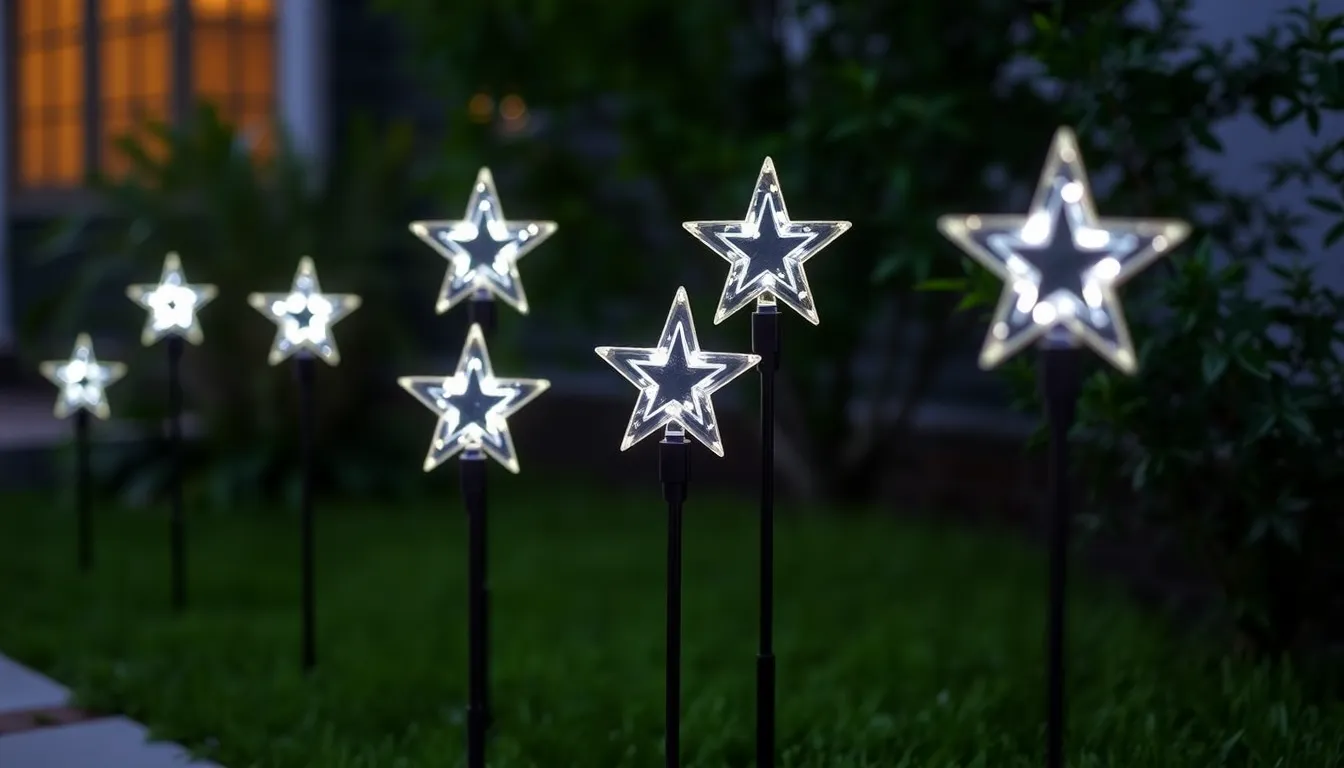
Twenty minutes later she ordered star solar lights online for thirty-two dollars. They arrived three days later. She installed them herself while I watched from the porch skeptically. By evening they were glowing in our garden bed, changing colors on their own. No electrician. No wiring. No bill coming later.
I’ve regretted every doubtful thought since.
That’s the story of star solar lights in a nutshell. Everyone assumes they’re complicated. They’re not. Everyone assumes they’re expensive. They aren’t. Everyone assumes they won’t work. They absolutely do.
What Makes Star Solar Lights Actually Different
Regular garden lights sit there looking like regular garden lights. These look like tiny stars scattered through your yard. The shape matters. The design matters. My neighbor initially said they looked tacky until he saw them at dusk. Now his opinion changed completely.
The star shape creates something psychological. It reads differently than a round ball light or a typical stake light. It looks intentional. It looks magical. It looks like someone with actual taste designed their yard instead of just buying whatever was on sale at the box store.
The best part is the color changing versions. Some glow pure white. Others glow warm amber, which is softer and more pleasant for evening. The color changing models cycle through red, blue, green, purple, and pink automatically. It’s not cheesy. It’s actually elegant if the quality is decent. My wife’s lights change colors slowly. It’s subtle. Not flashing obnoxiously. People genuinely enjoy sitting in our garden now when the sun sets.
That matters more than it sounds. An outdoor space that’s only usable in daylight is basically half useless. These lights fix that.
The Actual Installation Story
I watched my wife do this so I have no excuse for the detailed account. She grabbed the stakes. She pushed them into the garden bed. Done. Seriously. That was it. The solar panel was built into the top. The light itself was the star. No cords. No assembly beyond opening the box.
The only decision was where to put them. She chose scattered placement through the main flower bed. Some people do organized rows. Some create patterns. Some throw them into potted plants on a deck. The stakes pull out if you change your mind. Completely flexible.
She positioned them where they get sun. Not required to be in direct sun all day but they needed decent exposure. Our bed gets morning and afternoon sun. They charge fine. On a sunny day they glow bright for about eight hours. On a cloudy day maybe five or six hours. That’s still plenty for evening use.
The Real Talk About Battery Life and Brightness
The cheap versions dim faster. The decent ones keep decent brightness through the evening. You have to choose based on your expectations.
Path lights and lower-end garden lights typically run between two hundred and six hundred milliamp hours of battery capacity. That translates to rough usage. Get five or six hours of glow on good days. On bad days maybe three. Some people think that’s fine. Others expected more.
Mid-range solar stars usually have nine hundred to fifteen hundred milliamp hours. These run longer. Better quality solar panels charge faster even with cloud cover. These lights genuinely stay bright through a full evening of using your yard. Eight to ten hours of good brightness is realistic.
The high-end versions with two thousand plus milliamp hour batteries glow even longer. Some genuinely shine for twelve hours. The difference costs usually twenty to thirty dollars more per light. For most people the mid-range hits the sweet spot.
Brightness itself varies. Stars produce between fifty and two hundred lumens depending on the number of LEDs inside. That might sound dim compared to floodlights but remember these are accent lights. They’re not meant to light a pathway for safe walking. They’re meant to create atmosphere and soft visibility. They do that incredibly well.
Color Changing Actually Works Better Than I Expected
I was wrong to be skeptical. Color changing didn’t feel gimmicky once installed. It felt intentional. The lights cycle through colors slowly. Not rapid flashing nonsense. Just gradual transitions that create different moods throughout the evening.
Some nights my wife’s lights glow soft blue. Other nights purple and pink. The slow cycling takes maybe ten to fifteen seconds per color. It’s elegant. Not juvenile. People have asked if we’re hosting something special because the yard looks dressed up.
There’s a button that switches between auto color cycling and a single color hold. If you prefer pure white or steady amber, you just lock it there. The choice is yours every evening.
The color change happens because the solar lights contain LEDs in different colors. They flash in sequence creating the rotation. Quality versions have smooth transitions. Budget versions sometimes skip or flash awkwardly. That’s the difference between a thirty-dollar set and a forty-five-dollar set.
Weather Actually Isn’t a Problem
We live in an area with serious weather. Hail. Heavy rain. Snow accumulation. My wife was concerned whether these would survive. They do. Completely.
The top solar stars are rated IP65 or higher. That waterproof standard means they survive rain, snow, and dust. They’re not going to fail in harsh conditions. The metal construction on quality versions is actual metal. Stainless or powder-coated steel. Not plastic pretending to be durable.
Winter is the challenging season. Shorter days means less solar charging. Snow covering the panel obviously stops charging. But even with that, these lights work. You’re not getting twelve hours of glow in December with constant cloud cover. You might get five hours. That’s still useful.
My sister keeps hers in a harsh climate. She brings them inside December through February. She says they last longer that way and she doesn’t mind storing them. I know people who leave theirs out year-round and never touch them. Both approaches work. It depends on how protective you want to be.
The Money Question
A single decent star solar light costs between twenty and forty-five dollars. You stake it. You charge it. It glows. Monthly operating cost: zero. Monthly maintenance: zero.
Compare that to traditional outdoor lighting. You hire an electrician. You bury wiring. You install traditional fixtures. Cost: fifteen hundred to three thousand dollars depending on how many lights and how far the wiring runs. Monthly cost: thirty to eighty dollars depending on how much you run them.
After two years you’ve spent two thousand dollars on traditional lights plus another seven hundred in electricity. A set of ten quality star solar lights costs about three hundred fifty dollars installed by yourself in an afternoon. Monthly cost after purchase: zero forever.
The math is not close. It’s not even interesting math. It’s obviously cheaper to go solar.
Real Situations From Real People
- My neighbor Carol has a small patio where she entertains. She bought six color-changing star lights. Cost about one hundred eighty dollars. She arranged them in the planting beds around the seating area. It looks like a restaurant patio. People comment on how beautiful it is. She spent maybe one hour installing them.
- My cousin lives in an apartment complex. Rented patio space. He wanted ambiance without permanent changes. Star lights are perfect for this. He buys them as decorations that don’t damage the rental. When he moves, he takes them. Can’t do that with buried wiring.
- Derek bought a big house with an overgrown yard. Before renovations he wanted simple lighting. Star lights are temporary and cheap. He used them for a year while planning permanent landscaping. Then he upgraded to more permanent solutions. The stars came with him to his parents’ house where they work perfectly for their garden beds.
- My wife’s friend Rachel had a wedding reception in her backyard. She bought forty star lights. Cost around nine hundred dollars. Created an absolutely magical atmosphere for the party. Guests talked about the lighting for weeks. She kept about half the lights and returned the others. Net cost was basically nothing.
When Star Lights Work Really Well
Flower beds love these lights. The stars pop against green plants and colorful blooms. They create depth and dimension especially with the color changing versions.
Potted plants are perfect. One light per pot or group of pots. Creates an intentional look like you’re running a boutique garden nursery instead of just having pots sitting around.
Decks and patios feel special with scattered stars around the perimeter. Not harsh. Not glaring. Just warm ambient lighting that makes people want to stay outside longer.
Water features look stunning. If you have a small pond or water garden, stars reflected in the water is genuinely beautiful. The reflection doubles the visual impact.
Pathways work okay. They’re not bright enough for serious safety lighting. But for creating a walking path through a garden that looks pretty, they’re great.
Maintenance Is Stupid Simple
Wipe the solar panel occasionally. That’s it. Once every month or two depending on weather. If dust or leaves pile up on the panel charging slows. Wipe it. Done.
Some people bring lights inside for winter. Some don’t. Both approaches work. Bringing them inside extends battery life. Leaving them out sometimes causes battery degradation faster. But the battery replacement cost is basically nothing if needed.
Check for loose connections if a light stops working. Usually the battery just needs repositioning. Almost never an actual failure.
That’s honestly it for maintenance. These aren’t high-maintenance products. They’re set-it-and-forget-it devices.
How to Actually Pick the Right Ones
Think about your yard’s situation. Full sun? Any model works. Partial shade? Go with slightly larger solar panels or mid-range battery capacity. Heavy shade? Solar lights might not work well.
Decide your preference. Pure white? Warm amber? Color changing? Different moods matter. Think about how you want your yard to feel in evening.
Check brightness specs. Most star lights publish lumens. For ambiance, fifty to one hundred lumens is fine. For slightly more visibility one hundred fifty plus is better.
Consider battery capacity. Milliamp hours determine how long they glow. Six hundred to nine hundred mAh runs five to eight hours. Fifteen hundred plus mAh runs eight to twelve hours.
Read actual reviews. Not marketing copy. Real reviews from people in similar climates who have used them for months. That tells you about durability and realistic performance.
Start with a small number. Buy three or four. Test them. See how you like them. Expand if they work well. No point buying twenty lights before trying one.
Why This Actually Matters
Your yard represents a massive chunk of your home. It’s the first thing visitors see. It’s where you relax in evening hours. It’s where your kids play. Making it beautiful and usable matters.
Traditional outdoor lighting forces compromises. It’s expensive. It’s permanent. It requires professionals. It costs money every month. It’s not flexible. It makes you feel locked into decisions.
Star solar lights eliminate those compromises. They’re cheap enough to be experimental. They’re flexible enough to move. They’re automatic enough that you never think about them. They’re beautiful enough that people compliment your taste.
That combination is rare. You don’t often get something this good at this price point with this little hassle.
Next Step
Go look at your yard right now. Imagine it with stars glowing at dusk. Imagine people sitting there because it’s beautiful. Imagine it looking intentional instead of neglected after dark.
That’s completely possible. For about the cost of a single dinner out, you can transform your outdoor space. No electrician. No wiring. No months of work. Just simple, beautiful light that works.
My wife was right. Star lights actually are the move. I should have believed her immediately instead of making her prove it to me first.
Summary
Star solar lights outdoor decorative are changing how people add personality to their yards. These charming fixtures come in color changing options, pure white, or amber glow. Installation takes seconds. They charge in sunlight and automatically glow at night. Most run six to twelve hours per charge depending on battery size. Cost ranges from fifteen to forty-five dollars per light. No wiring needed. No electricity required. They look beautiful, save money, and survive harsh weather when quality matters.