Last updated on November 1st, 2026 at 04:51 pm
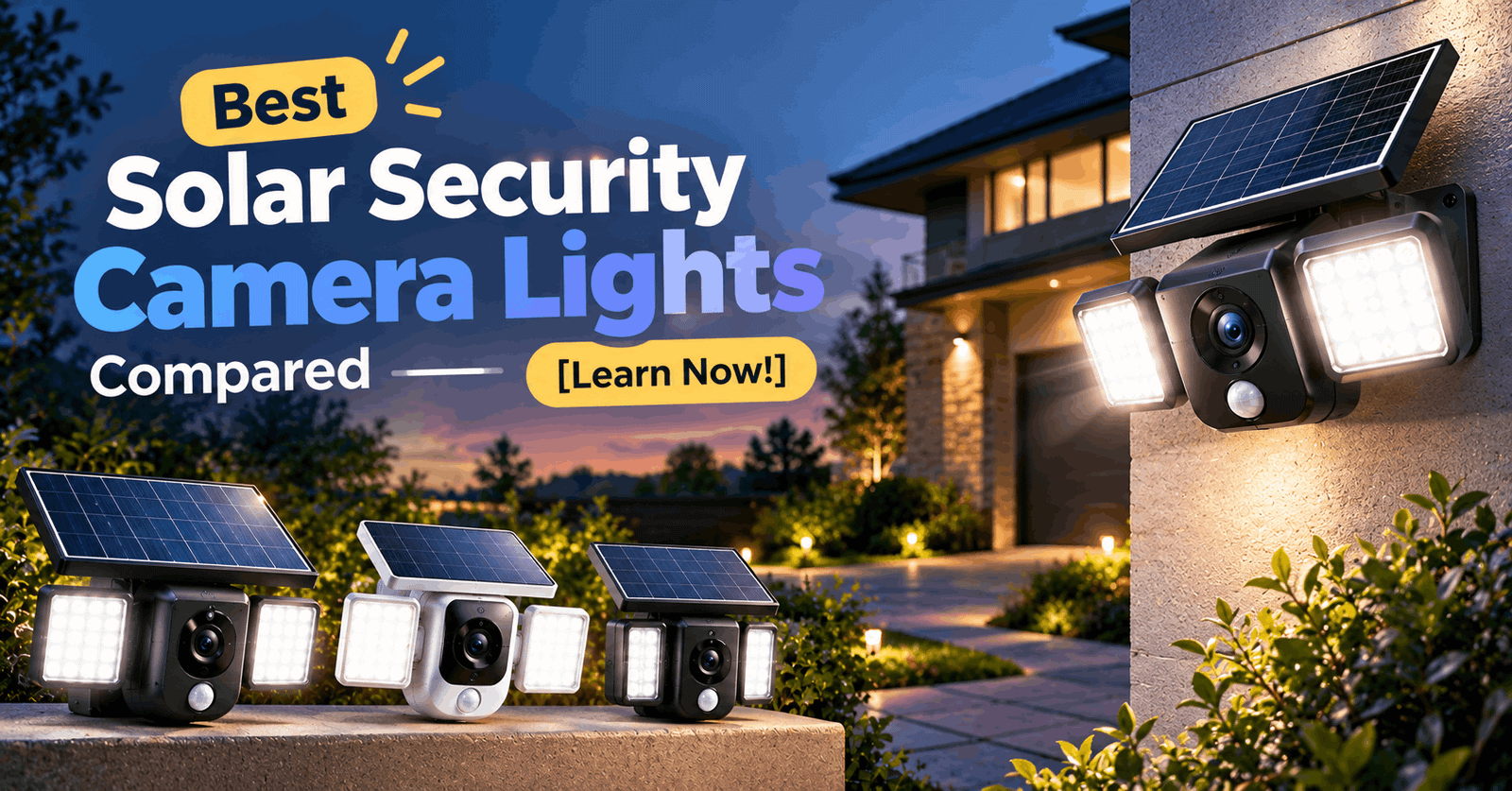
Quick answer: The best waterproof solar LED lights for U.S. yards are the NYMPHY 56 LED (best overall), HGGH (best for heavy rain, IP67), INCX 156 LED (best budget flood light), TECKNET 416 LED and MIHANI 2500LM (best floodlights), Linkind SP6 and Beau Jardin (best pathway lights), and Brightech Ambience Pro (best string lights). Choose IP65 or higher for rain and IP67 for spots that flood, and confirm the rating on the live listing before you buy.
Table of Contents
“Waterproof” on a box is a vibe, not a measurement. That is why plenty of waterproof solar LED lights die after one wet season.
This guide fixes that. You get eight picks with specs, pros, cons and buyer feedback. You also get a plain-English lesson on IP ratings, so you can spot a bluff before you pay for it.
Our verdict in one breath: NYMPHY 56 LED for the best all-round yard set, HGGH for wet climates, and TECKNET 416 LED for security lighting.
Quick Picks: Best Waterproof Solar LED Lights at a Glance
Specs below come from maker listings and published reviews. Prices change daily, so we skip them. Check the live listing before you buy.
| Model | Best for | IP rating (as listed) | Light output (maker claim) | Runtime (maker claim) | Battery |
|---|---|---|---|---|---|
| NYMPHY 56 LED, 4-pack | Best overall | IP68* | Up to 400 lm | 6–20 hrs by mode | 1,200 mAh |
| HGGH 60 LED, 4-pack | Heavy rain | IP67 | Up to 800 lm | Not stated | Not stated |
| INCX 156 LED, 2-pack | Budget flood light | IP65 | 550 lm on spec line; some listings say 3,000 lm | Not stated | Replaceable |
| TECKNET 416 LED | Security | IP66 | Up to 4,200 lm (see review) | 10–12 hrs | Not stated |
| MIHANI 2500LM | Wide coverage | IP65 | Up to 2,500 lm | “All night” | 2,000 mAh (one listing) |
| Linkind SP6 | Smart pathway | IP67* | 60 lm | 12–14 hrs | 1,800 mAh |
| Beau Jardin 8-pack | Classic pathway | IP65 | About 6–10 lm | 8–12 hrs | AA NiMH |
| Brightech Ambience Pro | String lights | Not published | Not stated | Up to 6 hrs | Lithium-ion |
*Ratings differ between listings. We explain each case in the reviews below.
Best Overall: NYMPHY 56 LED Solar Spot Lights
The NYMPHY set tops several published roundups. It gives you stake or wall mounting, three brightness modes and an IP68 listing. Shoppers can find it on Amazon and at Lowe’s.
Best for Heavy Rain and Storm Season: NYMPHY (IP68) and HGGH (IP67)
Both lights carry ratings that cover temporary submersion, so a flooded flower bed will not kill them. Pick NYMPHY for a softer landscape glow. Pick HGGH for a brighter beam.
Best Budget: INCX 156 LED Solar Flood Lights
INCX gives you three adjustable heads and a motion sensor at a low price. It is often discounted on Amazon. Read the review below before you trust its lumen claim.
Best for Pathways and Gardens: NYMPHY 4-Pack, Linkind SP6 and Beau Jardin
NYMPHY works as a rugged all-rounder. Linkind SP6 adds app control and USB-C backup charging. Beau Jardin keeps it classic with stainless steel and glass.
Best Floodlight and Security Light: TECKNET 416 LED and MIHANI 2500LM
TECKNET carries an IP66 rating and a 300° beam. MIHANI covers a wide area and sells in big multipacks.
Best String Lights: Brightech Ambience Pro
Brightech gives you 27 feet of shatterproof Edison-style bulbs on a solar panel. It suits patios and decks.
What “Waterproof” Really Means for Solar Lights
Short on time? Our guide on are solar lights waterproof covers the basics. Here is the buyer’s cut.
Waterproof vs Water-Resistant vs Weatherproof
Those three words are marketing terms. No law defines them for a garden light.
The IP code does. The International Electrotechnical Commission wrote it in IEC 60529 to give buyers more detail than vague words such as “waterproof.”
An IP rating has two digits. The first covers dust. The second covers water.
IP Ratings Explained: IP44, IP65, IP67 and IP68
| Rating | What it means in practice |
|---|---|
| IP44 | Handles splashes from any direction. Fine under cover, weak in open rain. |
| IP65 | Dust-tight. Handles low-pressure water jets from a 6.3 mm nozzle, so heavy rain and sprinklers are fine. |
| IP66 | Dust-tight. Handles powerful jets from a 12.5 mm nozzle. |
| IP67 | Dust-tight. Survives immersion up to 1 meter for 30 minutes. |
| IP68 | Dust-tight. Survives continuous immersion under conditions the maker specifies. |
Here is the catch with IP68. The standard does not fix one depth or duration for it. One maker’s IP68 can mean a very different test than another’s. Ask for the test conditions.
IP67 does not automatically beat IP65 either. They test different threats. Immersion applies steady pressure. Jets apply moving pressure. An IP67 light has not necessarily passed the jet tests.
Why an IP65 Rating Can Still Fail After a Few Seasons
IP tests check a new, sealed unit in a lab. They do not check how a rubber gasket ages after seasons of sun and temperature swings.
That gap explains many “waterproof” lights that fail in year two. Cheap seals harden. Moisture creeps in. The circuit board pays for it.
How Waterproof Solar LED Lights Work
Solar Panel, Battery and LED: What Each Part Does
The panel turns sunlight into electricity during the day. The battery stores it. The LEDs use it at night.
Most makers ask for six to eight hours of direct sun for a full charge. Shade cuts that number fast.
Light Sensor and Auto On/Off
A small sensor reads the daylight level. When it gets dark, the light switches from charging mode to lighting mode. Motion-sensor models add a second sensor that boosts brightness when something moves.
One common gotcha: a nearby porch light can confuse the sensor and keep the unit off.
Why Waterproof Solar LED Lights Make Sense for U.S. Homes
American yards face a wide range of weather. Gulf and Atlantic hurricanes, northern snow, desert heat and humid summers all land on the same product category. Here is why solar lights fit that picture.
They keep working when the grid does not. The U.S. Energy Information Administration reports that the average U.S. electricity customer lost power for about 11 hours in 2024. That is nearly twice the yearly average of the previous decade. Hurricanes Beryl, Helene and Milton drove about 80% of those lost hours. South Carolina customers averaged roughly 53 hours without power.
A solar light runs off its own battery, so your walkway and steps stay lit during an outage. One caveat: the battery still needs daytime sun, so a long run of cloudy days after a storm shortens runtime.
They skip the wiring. Most solar lights need a stake in the ground or two screws in a wall. No trenching. No conduit. No electrician.
They will not slash your bill, and we will not pretend they do. The EIA’s Short-Term Energy Outlook puts the 2026 average residential price at 18.2 cents per kilowatt-hour, up from 17.3 cents in 2025. Prices vary a lot by state. EIA data for January 2026 shows Hawaii near 40 cents and North Dakota near 11 cents. A few LED lights draw so little power that the savings stay small. The real win is avoiding installation cost.
Climate matters when you shop. Operating ranges differ. NYMPHY lists -4°F to 140°F. One independent review lists the Linkind SP6 at 14°F to 104°F. If you live in the northern states or the desert Southwest, check the temperature range before you buy.
How to Choose the Right Waterproof Solar LED Lights
Match the Light to the Job
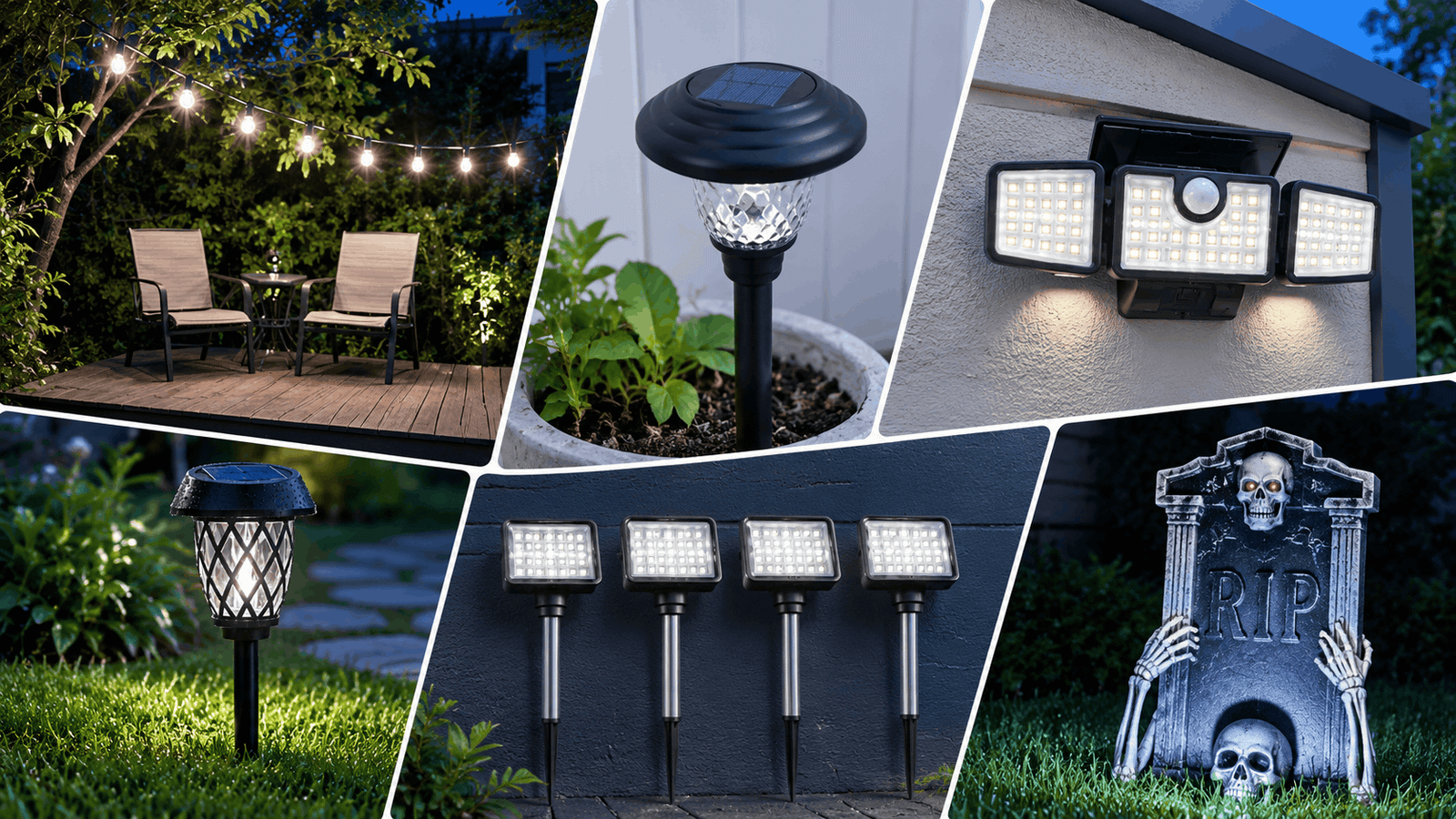
- Path and garden lights: guide your feet and add a glow. They do not light up a yard.
- Spotlights: highlight trees, walls and flower beds.
- Flood and motion lights: cover driveways and side yards, and add security.
- String lights: set the mood on decks and patios.
How Many Lumens Do You Need?
Match lumens to the job. A decorative path light needs a fraction of what a security light needs.
Be skeptical of huge numbers. Even excellent LEDs rarely top about 200 lumens per watt. The INCX listing shows why that matters. One listing claims 3,000 lumens, while its spec line shows an 8-watt unit at 550 lumens. Eight watts cannot produce 3,000 lumens, so trust the lower number.
Battery Type: NiMH, Lithium-ion and What to Know
NiMH batteries are common in budget lights. Typical guidance puts their life at about one to three years. Lithium-ion batteries often last longer and handle temperature extremes better.
The tip that saves money: pick lights with a replaceable battery. A sealed battery turns a dead battery into a dead light.
Panel Type and Charging Time
Makers report panel efficiency in their listings. NYMPHY claims 20%. TECKNET claims 27%. Treat those as maker-reported figures, not lab results.
A bigger panel and a better position matter more than a spec-sheet claim. Plan for six to eight hours of direct sun.
Match the Light to Your Climate
Heavy rain: choose IP67 or higher for low spots. Snow and frost: check the low end of the operating range. Hot summers: check the high end. Humid areas: prioritize good seals and a replaceable battery.
Build Material and UV Resistance
Most budget lights use ABS plastic. That is fine, and UV-stabilized ABS holds up well. Stainless steel and glass look nicer but add weight and cost. Cast aluminum shows up on heavier-duty dock and driveway lights.
Detailed Reviews of the Best Waterproof Solar LED Lights
Want even more detail? Read our complete waterproof solar light outdoor review. Below are the specs and trade-offs for each pick.
NYMPHY 56 LED Solar Spot Lights (4-Pack)

Best for: all-round yard lighting and wet spots.
Specs: 56 LEDs per light, up to 400 lumens, three brightness modes, automatic dusk-to-dawn sensor, 20% panel conversion (maker claim), 1,200 mAh battery, ABS body, -4°F to 140°F, listed IP68, stake or wall mount. Runtime ranges from 6 to 20 hours depending on the mode.
Pros:
- IP68 listing suits low spots that flood
- Two mounting options in one box
- Wide runtime range across three modes
Cons:
- A reviewer found only two ground stakes in the four-pack
- 400 lumens suits landscaping, not security
- Some listings show IP65 for the same product line, so check the rating before you buy
Buyer feedback: Amazon’s review summary says buyers find these bright, easy to push into the ground and good value. Longevity gets mixed reviews. Some owners say the lights last all night after a sunny day. Others say units quit or ran for only a couple of hours.
HGGH IP67 Solar Spot Lights (4-Pack)

Best for: heavy rain and brighter accent lighting.
Specs: 60 LEDs, up to 800 lumens (maker claim), IP67, three modes, auto on/off, two-in-one stake or wall mount, ABS body, cool or warm white.
Pros:
- IP67 handles brief submersion
- Highest brightness claim among the multipacks we reviewed
- Warm and cool white options
Cons:
- 800 lumens is a high-mode peak, and higher modes drain the battery faster
- We found no published battery capacity
- IP67 does not guarantee jet resistance
Buyer feedback: The Amazon listing carries a “Top Reviewed for Reliability” label and shows hundreds of purchases a month. One independent roundup praised its build and brightness but wished the setup instructions were clearer.
INCX 156 LED Solar Flood Lights
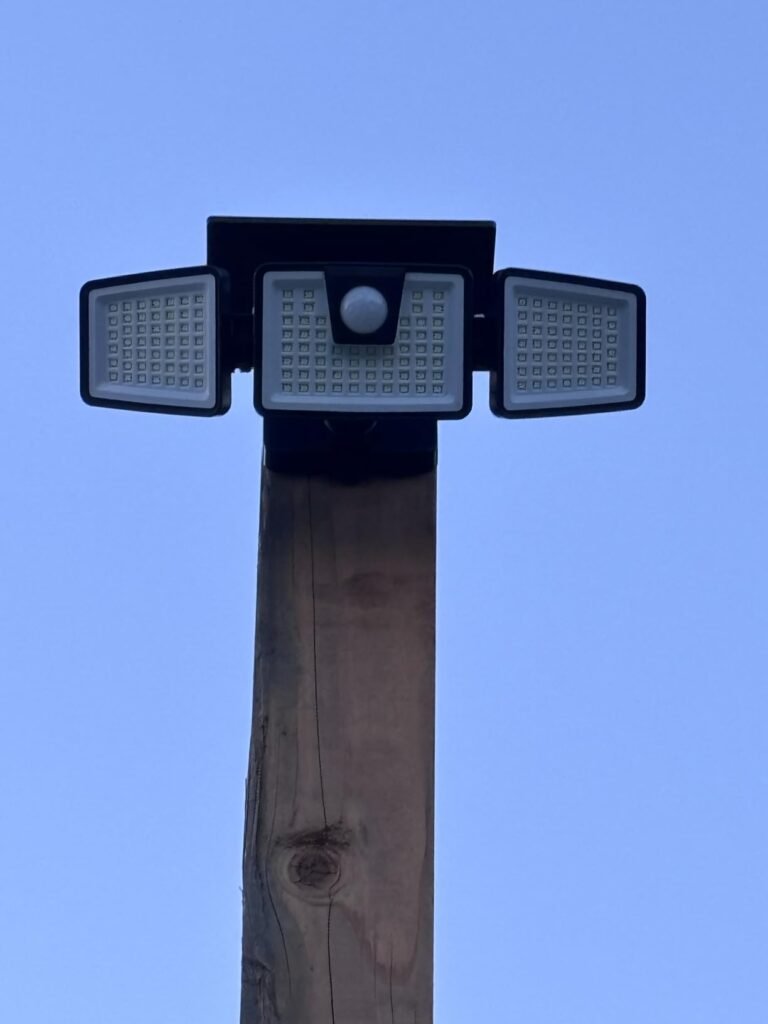
Best for: budget motion-sensor lighting.
Specs: 156 LEDs, three adjustable heads, IP65, 6500K cool white, 120° motion sensor, 30 seconds of light per trigger, 1.8 W panel, off and sensor modes, replaceable battery, mounting hardware included.
Pros:
- Low price, often discounted
- Three heads cover several angles
- Easy wall mounting
Cons:
- Only two modes and a short 30-second on-time
- Lumen claims conflict between listings (3,000 vs 550)
- IP65 does not cover standing water
Buyer feedback: Commenters in a coupon-forum thread reported dead-on-arrival units, failures within a couple of months and leaks near the motion sensor. Those are anecdotes, not data. Test it hard during the return window.
TECKNET 416 LED Solar Lights
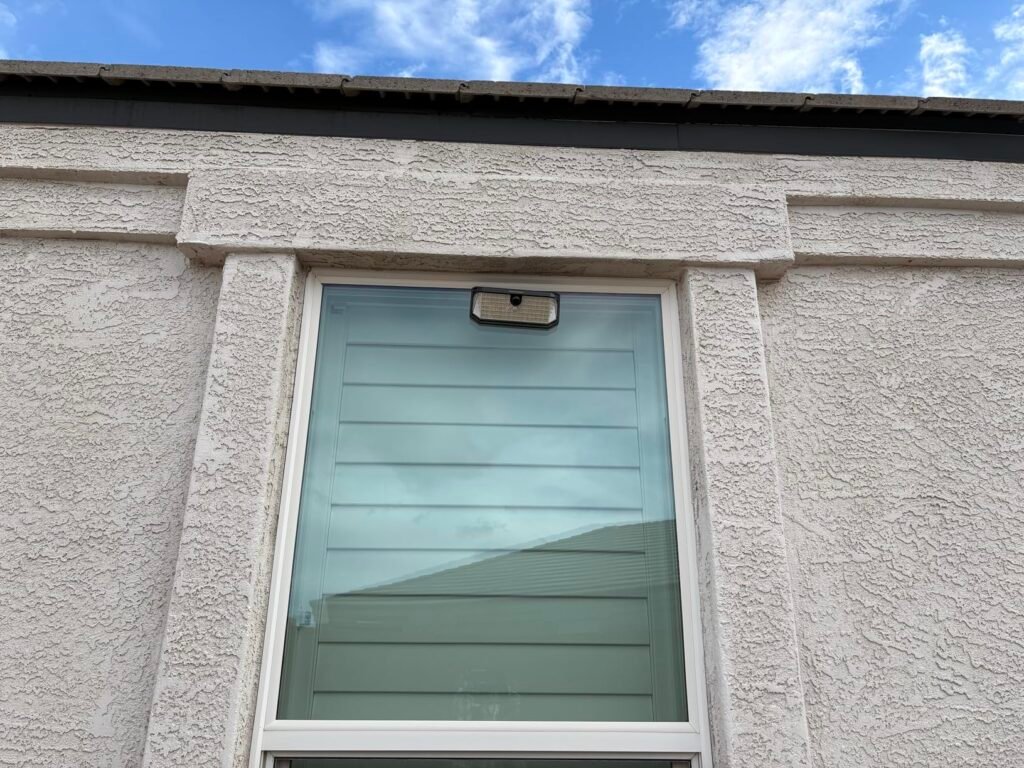
Best for: security and wide yard coverage.
Specs: 416 LEDs, up to 4,200 lumens (maker claim), IP66, 270° to 300° beam depending on the listing, motion sensor with 13–20 feet of range at 120°, 27% panel efficiency (maker claim), 6–8 hours of charging for 10–12 hours of night runtime, ABS body.
Pros:
- IP66 handles powerful jets and heavy storms
- Wide beam angle
- Amazon’s Choice badge on the two-pack
Cons:
- Listings treat the 4,200-lumen figure differently, and one multipack calls it a combined number, so do not expect that from one head
- Sensor range is modest at 13–20 feet
- Not rated for immersion
Buyer feedback: The listing says some customers report more than a year of use. Treat that as seller-reported until you read recent reviews.
MIHANI 2500LM Solar Flood Lights

Best for: wide-area coverage on a budget.
Specs: up to 2,500 lumens (maker claim), 6500K, 270° angle, three adjustable heads, IP65, motion sensor up to 30 feet within 180°, ABS body, tempered glass panel on some models, three modes. LED counts vary by listing (158 to 232), so read the exact model.
Pros:
- Wide coverage claim of up to 1,615 square feet
- Remote-control and non-remote versions
- Hot seller, with thousands of monthly purchases shown on Amazon
Cons:
- IP65 only
- The non-remote version uses a button
- Several near-identical listings make shopping confusing
Buyer feedback: Shoppers quoted in a deal write-up describe easy installation, strong brightness for a solar light and solid charge holding in bad weather.
Linkind SP6 Smart Solar Pathway Lights
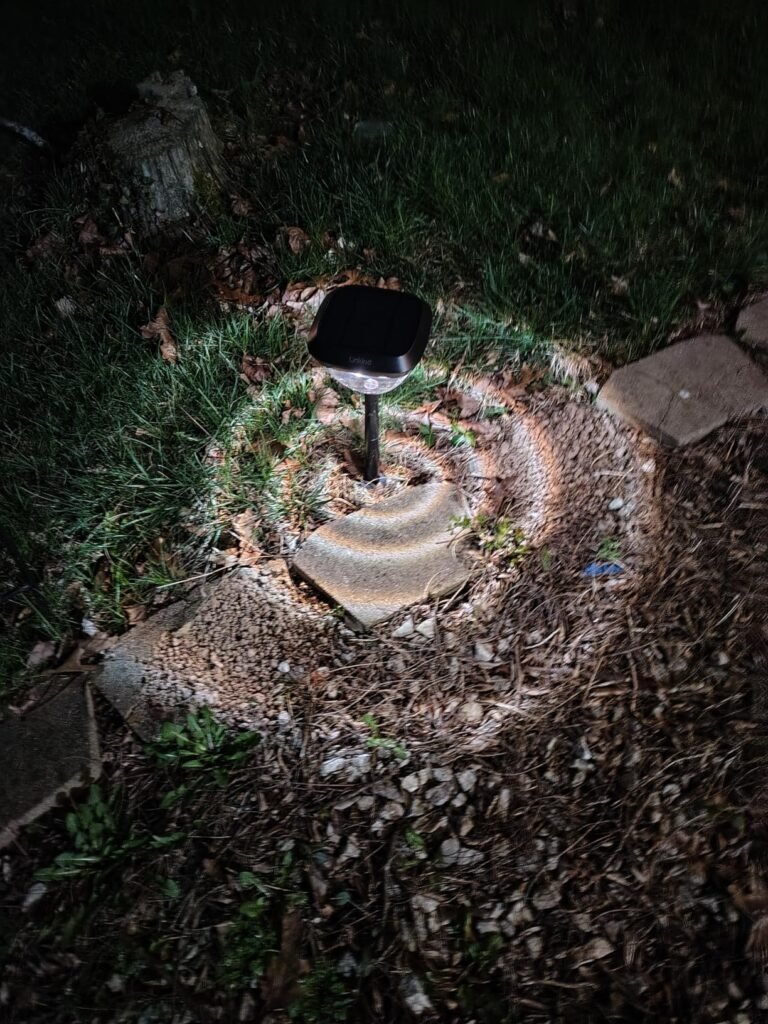
Best for: smart, colorful pathways.
Specs: four LEDs of 60 lumens each (one active at a time), 1.8 W monocrystalline panel, 1,800 mAh battery, solar plus USB-C charging, 12–14 hours of runtime (maker claim), about 14 inches tall, app control, 5 swappable lenses, listed IP67, 14°F to 104°F operating range.
Pros:
- USB-C backup for cloudy stretches
- App control with grouping for up to 32 lights
- Easy stake-in installation
Cons:
- 60 lumens is for ambiance, not security
- Phone control range was about 25 feet through obstructions in one review
- Two reviews list IP44, while the maker and another review say IP67, so confirm before you buy
Buyer feedback: Independent reviewers praise easy setup, self-charging and dramatic lighting effects compared with basic hardware-store lights. They flag the app range.
Beau Jardin Solar Pathway Lights (8-Pack)

Best for: a classic look on walkways.
Specs: stainless steel body with glass shade, IP65, AA NiMH rechargeable battery included, 8–12 hours of runtime (maker claim), roughly 16.5 inches tall, white and color-changing modes. Brightness is listed at roughly 6 to 10 lumens depending on the version.
Pros:
- Standard AA batteries are easy to replace
- Attractive, durable-looking build
- Push-in installation
Cons:
- Very low brightness
- Glass is not shatterproof
- IP65 does not cover standing water
Buyer feedback: Several consumer buying guides have ranked it among their top path-light picks. Check the current Amazon rating and recent reviews before you buy, because older sets may differ from today’s.
Brightech Ambience Pro Solar String Lights
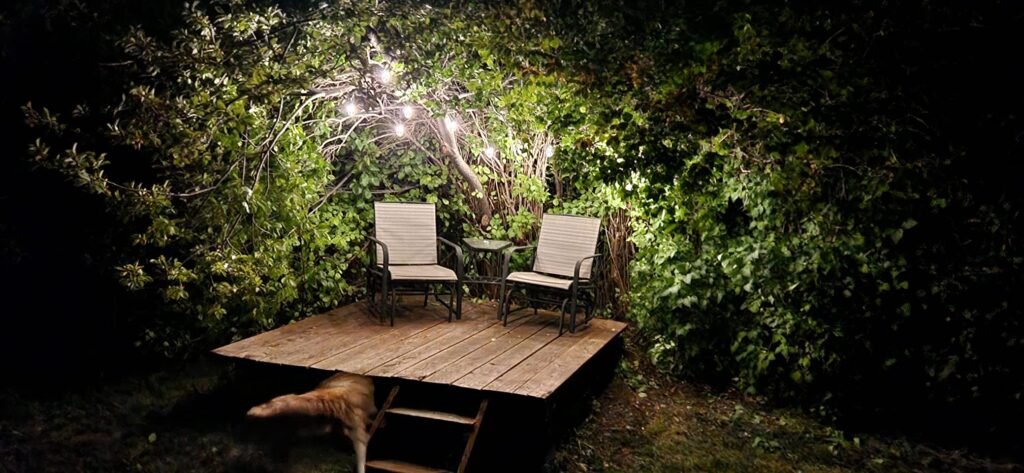
Best for: patios, decks and gazebos.
Specs: 27 feet, 12 shatterproof S14 bulbs, WeatherTite weatherproof cable, detachable solar panel, warm white (about 2700K–3000K), lithium-ion batteries. Panel wattage and lead length vary by version. We found no published IP rating.
Pros:
- Shatterproof bulbs
- Warm, inviting glow
- Detachable panel lets you place it in the sun
Cons:
- No published IP rating, only “waterproof” language
- Some owners report dim light or short runtime
- Reports of a bulb collecting water and of remote-control failures
Buyer feedback: On a major retailer’s listing, the lights hold 4.7 stars from 239 reviews, with 86% of reviewers recommending them. Reviews say they are easy to install and charming, but mixed on brightness and duration. One buyer said the lights kept glowing through a big thunderstorm. One independent review measured up to six hours on a full charge and noted a three-year warranty.
How We Chose These Lights
We did not run lab tests. We built this list from maker specs, retail listings and published independent reviews. We picked products that showed up repeatedly across sources.
Where sources disagree, we say so. NYMPHY shows IP68 and IP65 in different places. Linkind SP6 shows IP67 and IP44. INCX shows 3,000 and 550 lumens.
Ratings, prices and review counts change. Check the live listing before you buy.
Installation Tips for Maximum Charging and Lifespan
Panel Placement and Sun Angle
Put the panel where it gets six to eight hours of direct sun. In most of the U.S., a south-facing spot gets the most light. Watch for shade from trees, fences and eaves. Even partial shade cuts charging.
Keep the sensor away from porch lights and streetlights.
Seals and Mounting Tips
Turn the switch to ON before you mount the light. A switch left on OFF is one of the most common “defects.”
Do not over-tighten screws on the housing. That can crack plastic and break the seal. Avoid spots where water pools unless the light carries an IP67 rating or higher.
Why Do Solar Lights Stop Working? Common Problems and Fixes
Lights Dying After Rain
Water inside the housing is the usual suspect. Dry the fixture fully and check the seal before you replace anything.
Water or Condensation Inside the Fixture
Humidity can cause condensation, and moisture can short the circuit board. Dry the unit, check the gasket and leave it open in a dry spot for a day. If water keeps coming back, replace the light.
Dim Light or Short Runtime
Start with a dirty panel, shade or an aging battery. Wipe the panel, trim nearby branches and test with a fresh battery.
When to Replace the Battery
If your lights worked last year and sputter now, the battery is the likely culprit. NiMH batteries typically wear out in about one to three years. Replace them with the same type and size.
Maintenance: Cleaning and Battery Care
Wipe the panel with a damp cloth every so often. Dust, pollen and bird droppings block charging more than people expect.
Set a phone reminder to check batteries once a year. Do not mix old and new batteries in one set.
FAQs
Why do solar lights stop working after rain?
The usual suspects are water inside the housing from a worn seal or condensation, a dirty or shaded panel, a tired battery, or a switch left off. Dry the fixture, wipe the panel, test the battery and check the seal before you replace the light.
How long do waterproof solar LED lights last?
The LEDs outlast the batteries. Common NiMH batteries wear out in about one to three years, according to typical manufacturer and retailer guidance. Replace the battery and clean the panel, and many lights keep going. Sealed, non-replaceable batteries shorten the life of the whole fixture.
IP65 vs IP67: which is better?
IP65 is tested against water jets. IP67 is tested for immersion up to 1 meter for 30 minutes. They test different threats, so neither automatically wins. Choose IP67 for spots where water pools. Choose IP65 or IP66 for areas that get sprayed.
What does IP65 mean for solar lights?
IP65 means dust-tight and protected against low-pressure water jets from any direction, tested with a 6.3 mm nozzle. That covers heavy rain and sprinklers. It does not cover sitting in standing water. For low spots that flood, look for IP67 or higher.
Do waterproof solar LED lights work in the rain?
Yes. The sealed housing keeps water out, and the panel still charges under cloud, just more slowly. Expect shorter runtime after several gray days. Lights with USB backup charging, such as the Linkind SP6, give you a fallback when the sun stays hidden.
Final Verdict
For most U.S. yards, start with the NYMPHY 56 LED set and confirm the IP rating on the listing. Choose HGGH if your yard floods. Choose TECKNET or MIHANI if you want motion-activated security. Choose Linkind SP6 if you want smart pathways and can live with low brightness. Choose INCX if the budget rules, and test it fast.
The pattern across every pick is the same. A real IP rating, a replaceable battery and good sun placement matter more than any lumen number on the box.
Sources and References
- U.S. Energy Information Administration, Electric Power Annual 2024 and Today in Energy reporting on 2024 outages
- U.S. Energy Information Administration, Short-Term Energy Outlook, residential electricity prices
- U.S. Energy Information Administration, state residential electricity price data, January 2026
- International Electrotechnical Commission, IEC 60529 (IP code)
- Manufacturer and retail listings for NYMPHY, HGGH, INCX, TECKNET, MIHANI, Linkind, Beau Jardin and Brightech
- Independent hands-on reviews of the Linkind SP6 and published roundups of outdoor solar lights