Table of Contents
A lot of waterproof solar lights that get returned or thrown out after one season aren’t actually broken, they were just never rated for the spot they got installed in. The word “waterproof” on a package doesn’t tell you much on its own. What tells you something is the rating behind it, the battery inside it, and whether it was installed the way it’s meant to be installed. This guide walks through all three, plus the parts most buying guides skip: how these lights actually work, when solar isn’t even the right choice, and what it costs you over time to buy cheap versus buying right.
“Waterproof” Isn’t a Rating, IP Codes Are
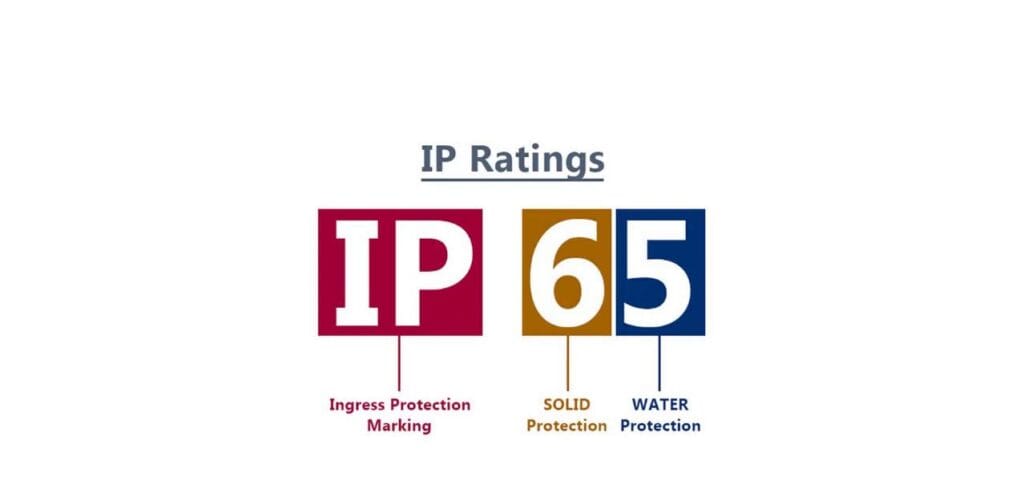
There’s no regulated definition of the word “waterproof” in consumer electronics. A manufacturer can print it on a box that only survives light drizzle, and technically nothing about that is illegal. What is standardized is IEC 60529, the international test that produces Ingress Protection (IP) ratings, the “IP65,” “IP66,” “IP67” codes you’ll see stamped on better products.
The code always has two digits. The first (0–6) rates protection against dust and solid particles. The second (0–9) rates protection against water. A rating from one brand means the same thing as that rating from another brand, because it’s tested against a fixed standard rather than a marketing team’s judgment call.
So the practical shopping rule is simple: ignore the word “waterproof” entirely and look for the IP code on the spec sheet or the box. If a listing doesn’t mention one, that’s worth treating as a red flag rather than an oversight.
IP65 vs IP66 vs IP67 vs IP68: What Each One Actually Survives
| Rating | Survives | Doesn’t survive | Typical use |
|---|---|---|---|
| IP44 | Splashes, light rain under cover | Direct storms, standing water | Covered porches, sheltered eaves |
| IP65 | Low-pressure water jets from any direction, steady rain | Submersion, pooling water | Wall-mounted lights, fence lights, string lights hung above ground |
| IP66 | High-pressure water jets | Extended submersion | Coastal homes, spots that get hosed or pressure-washed |
| IP67 | Submersion up to about 1 meter for 30 minutes | Permanent submersion, deep flooding | Ground-level path lights, low spots where water pools after rain |
| IP68 | Continuous submersion beyond 1 meter (depth/time varies by manufacturer) | — | Pond lights, fully submerged garden features |
Matching the Rating to Where the Light Actually Lives
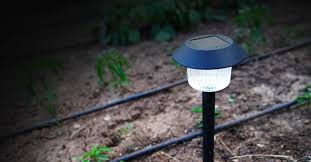
The mistake isn’t usually buying a low-rated light, it’s buying the wrong rating for the location. A light mounted on a wall or fence post is protected by gravity; water runs off it. That’s a fair fight for IP65. A light sitting flat in a garden bed at the bottom of a slope is a different problem entirely, because after a storm it isn’t just getting rained on, it’s sitting in a puddle. That situation calls for IP67, and IP65 will eventually let water in through a seam it was never tested against.
A useful gut check: if you can picture the light in a puddle, not just in rain, size up to IP67 or higher.
How Solar Lights Actually Work (and Why It Matters for Buying)
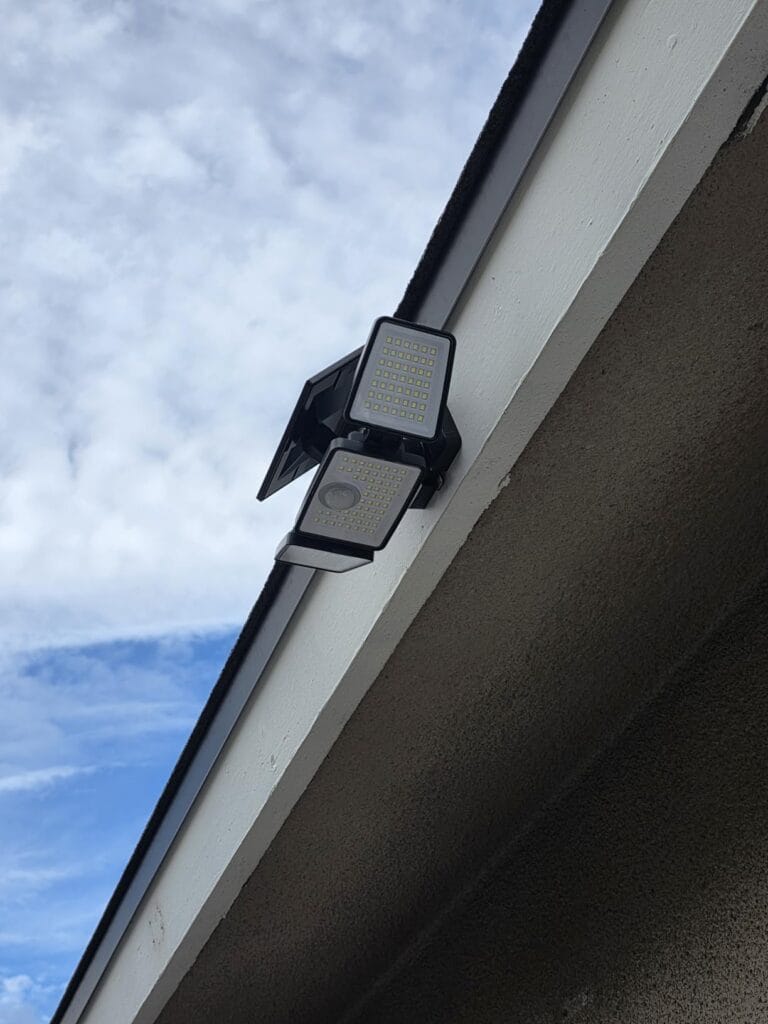
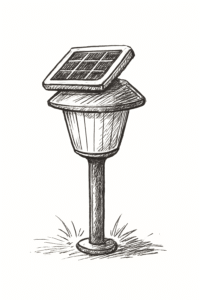
Every solar light is really three components working together, and knowing what each one does makes the rest of this guide click into place:
- The solar panel collects sunlight during the day and charges the battery. Panel efficiency depends on the cell type (more on this below) and how much direct sun it actually gets.
- The battery stores that charge and powers the LED at night. It’s the single most common point of failure, more on that in the next section.
- The light sensor and circuit detect darkness and switch the LED on automatically, usually a simple photoresistor rather than anything more sophisticated.
Monocrystalline vs Polycrystalline Panels
This is a detail almost no buying guide mentions, but it affects real-world performance more than people expect.
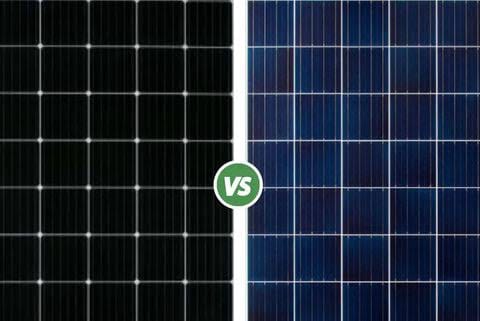
- Monocrystalline panels are made from a single silicon crystal, look uniformly dark (often near-black), and convert light to energy more efficiently, typically in the high teens to low-20s percent range. They perform noticeably better in low light, like overcast days or partial shade.
- Polycrystalline panels are made from multiple silicon fragments melted together, have a visible blue, speckled look, and are cheaper to produce but convert light less efficiently, generally in the mid-teens percent range.
For a light that gets full, unobstructed sun most of the day, the difference is marginal. For a spot that gets dappled shade for part of the afternoon — under a tree, near a fence, a monocrystalline panel will noticeably outcharge a polycrystalline one in the same location.
Batteries Are the Part That Actually Fails First
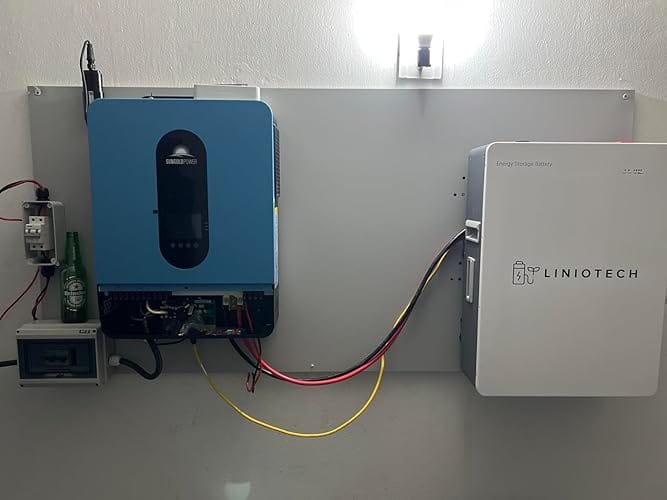
The housing gets all the attention because it’s what “waterproof” refers to, but in practice, the battery is what determines whether a light survives to see a second year.
| Battery type | Cold-weather performance | Typical lifespan | Cost |
|---|---|---|---|
| NiMH (standard AA/AAA) | Loses a large portion of capacity below freezing | Roughly 1–2 years of daily cycles before noticeable decline | Lowest |
| Lithium-ion | Handles cold better than NiMH, moderate capacity retention | Several years | Mid-range |
| LiFePO4 (lithium iron phosphate) | Retains most capacity even well below freezing | Often the longest-lasting of the three, in charge cycles | Highest |
If you live somewhere winters are mild, this distinction barely matters, any of the three will get through the season fine. If you’re dealing with real freezes, a NiMH-powered light can visibly dim or fail to hold a charge through the night, while a LiFePO4 unit in the same spot keeps working close to normal. The extra cost up front is basically prepaying for fewer battery replacements later.
A genuine warning if you’re replacing a battery yourself: match the voltage and chemistry exactly. Swapping in a battery type the circuit wasn’t designed for can overload the charging circuit, and the failure that follows often isn’t limited to the battery, it can take out the whole fixture.
Brightness: Matching Lumens to the Actual Job
Lumens measure total light output; watts measure power draw. Older habits from incandescent bulbs still trip people into shopping by watts, but for LED solar lights, lumens are the number that actually tells you how bright the light will be.
| Use case | Lumen range | Example |
|---|---|---|
| Decorative garden accents | 5–50 | Marking the edge of a flower bed, string lights along a fence |
| Pathways and walkways | 50–200 | Lighting a stepping-stone path so you don’t miss a step at night |
| Patios and decks | 300–700 | Enough ambient light for an evening dinner outside |
| Driveways and entrances | 700–1,000 | Visibility for parking or walking to the door after dark |
| Security and motion-activated | 700+, sometimes into the thousands | A floodlight covering a side yard or gate |
A 1,000-lumen fixture on a quiet garden path isn’t just overkill for the look you’re going for, it also drains the battery faster, since brighter LEDs draw more power per activation. Undersized lights have the opposite problem: a 20-lumen light at a driveway entrance won’t do the one job you bought it for. Matching the number to the use case isn’t about restraint for its own sake; it directly affects how often the light actually turns on when you need it.
Solar vs. Wired Outdoor Lighting: When Solar Isn’t the Right Call
Solar lighting gets recommended by default in a lot of buying guides, but it isn’t always the better choice.
Solar makes sense when:
- The install spot gets consistent direct sun for at least several hours a day
- Running an electrical line to the location is impractical or expensive
- You want flexibility to move or reposition lights without rewiring
Wired (low-voltage) lighting makes more sense when:
- The area is shaded most of the day, a solar panel there will underperform no matter how good the battery is
- You need consistent, reliable brightness every single night, including cloudy stretches
- The lighting is doing a security job, where an unreliable charge isn’t acceptable
A common real-world case: a shaded side path under mature trees is a poor fit for solar no matter what fixture you buy, because the panel simply won’t get enough sun to charge properly, a low-voltage wired line will outperform any solar light there.
Installation Habits That Undermine a Good IP Rating
An IP67 light installed badly will fail faster than an IP65 light installed well. A few things actually matter:
- Give the panel real sun exposure, ideally six to eight hours of direct light. Shade from a fence, a tree branch, or even an eave a few feet away quietly cuts output more than people expect, and a light that doesn’t charge fully every day starts fading in the evening well before the housing seal ever fails.
- Mount at the right angle. Panels angled flat against the ground catch less light over the course of a day than ones tilted slightly toward the sun’s typical path.
- Think about drainage, not just rain. A ground light set into a spot where water naturally collects after a storm is being asked to survive conditions its rating may not cover, even if the rain itself was nothing unusual.
- Clean the panel every few weeks. Dust and pollen block absorption faster than most people realize, especially in spring.
- Check seals once a season, particularly around the battery compartment, that’s where most leaks actually start, not the main housing.
A Simple Seasonal Maintenance Checklist
- Spring: Wipe down panels after pollen season; check for winter seal damage
- Summer: Confirm panels still get full sun as tree canopies fill in
- Fall: Clear fallen leaves that shade panels or block light sensors
- Winter: In freezing climates, check the manufacturer’s guidance, some recommend removing batteries during the harshest stretch, since repeated freeze cycles can permanently reduce capacity, not just temporarily reduce it
Troubleshooting: It’s Not Always the Waterproofing
If a light is dimming, flickering, or not turning on, the housing is often completely fine, the issue is almost always the battery or the panel, not a seal failure:
- Light doesn’t turn on at all: Check the sensor isn’t blocked by dirt, and confirm the battery still holds a charge
- Light works but is dimmer than before: Usually battery age, especially with NiMH cells past the one-to-two-year mark
- Light turns on during the day: Sensor may be dirty or shaded, causing it to misread daylight
- Light lasts only a few hours after sunset: Panel likely isn’t getting enough sun during the day to fully charge the battery
What Cheap vs. Durable Actually Costs You Over Time
A $10 light with a NiMH battery and no listed IP rating might need replacing within a year or two, especially somewhere with real winters. A $30–40 light with a verified IP66 or IP67 rating and a LiFePO4 battery can realistically last several years with basic seasonal care. Over a three-year span, the “cheap” option often ends up costing more once you factor in two or three replacement purchases, before even counting the hassle of buying and installing them again.
This doesn’t mean the most expensive option is automatically the smartest one. A budget NiMH light in a mild, sheltered climate can genuinely last for years without issue. The math only tips toward spending more when the conditions, cold winters, exposed placement, standing water, are actually demanding enough to punish a cheaper battery or a lower IP rating.
FAQs
Do I need a professional to install solar lights?
No. Almost all consumer solar lights are designed for tool-free installation — stake it in the ground, mount it with included screws, or stick it with adhesive backing. The only real installation skill involved is picking a spot with good sun exposure and proper drainage.
Can solar lights work at all in a mostly shaded yard?
They’ll work, but expect reduced brightness and shorter runtime. Monocrystalline panels handle partial shade better than polycrystalline ones, but no solar panel performs well with less than a few hours of usable light per day. In heavily shaded yards, wired lighting is usually the more reliable choice.
Is a higher IP rating always worth paying extra for?
Not necessarily. IP68 protection on a covered porch light with no exposure to rain is money spent on protection you’ll never use. Match the rating to the actual conditions rather than defaulting to the highest number available.
How long do solar lights typically last before needing replacement?
The battery is usually the limiting factor, not the housing. NiMH-powered lights often show noticeable decline within one to two years of daily use; LiFePO4-powered lights commonly last several years longer under the same conditions.
Can I replace just the battery instead of buying a new light?
Often, yes, and it’s usually the more economical option if the housing and panel are still functioning. The key requirement is matching the replacement battery’s voltage and chemistry exactly to what the light was designed for.
Why does my solar light work fine in summer but barely last an hour in winter?
This is almost always a battery issue, particularly with NiMH cells, which lose a significant portion of their capacity in freezing temperatures. It’s rarely related to the IP rating or housing at all.
Are solar lights bad for the environment when the batteries die?
Batteries, especially NiMH and lithium-based cells, shouldn’t go in household trash. Most areas have battery recycling drop-off points at hardware stores or municipal recycling centers. Solar lighting itself has a lower ongoing environmental footprint than wired lighting since it doesn’t draw from the grid, but proper battery disposal is worth doing right.
What’s the difference between IP65 and “weatherproof” or “weather-resistant” labeling?
Weather-resistant” and similar phrases aren’t governed by any testing standard, so they can mean almost anything a manufacturer wants. IP65 refers to a specific, standardized test under IEC 60529. When a listing uses vague weather language instead of an IP code, that’s usually a sign the product hasn’t been tested to any particular standard.
Summary
Three things decide whether a solar light survives your yard: an IP rating that actually matches where it’s installed, a battery suited to your climate, and a lumen output sized to the job rather than the biggest number on the shelf. Get those right, and the difference shows up exactly when it matters — the first real storm of the season, not the return line at the store.