
Last updated on November 3rd, 2026 at 04:18 pm
Quick Answer: Choose a 100W panel if your power station holds about 500Wh or less. The Bluetti PV120 gives the best output, and the Anker SOLIX PS100 includes cables. Choose a 200W panel for bigger stations or roughly twice the daily charge. The Renogy 200W Portable is best for most people, and the Jackery SolarSaga 200W is the premium pick. Check your station’s maximum solar input first.
Table of Contents
This guide covers sizing, real-world output, and six panels worth a look. You can use it to pick the right size in about ten minutes.
Key Takeaways
- 100W panels are lighter and cheaper, and they suit small stations.
- 200W panels charge about twice as fast, but weigh more and cost more.
- Rated watts are a lab number. Real output is lower.
Quick Answer: Which Size Should You Choose?
| Choose this | If you… |
|---|---|
| 100W | Own a station of ~500Wh or less, hike or kayak, or want the lightest setup |
| 200W | Own a ~500Wh+ station, camp for several days, or want faster recharges |
| Neither yet | Haven’t checked your station’s max solar input (do that first) |
The 500Wh line is a rule of thumb, not a law. Your station’s manual has the final word.
100W vs 200W: Side-by-Side Comparison
| 100W class | 200W class | |
|---|---|---|
| Real output in clear midday sun | ~85–92% of rated | ~85% of rated |
| Weight | ~10–11 lbs | ~14–16 lbs |
| Typical U.S. price | ~$210–$280 | ~$220–$700 |
| Daily energy at 4.5 sun hours* | ~340Wh | ~675Wh |
| Best for | Small stations, light packing | Mid-size stations, longer trips |
*Planning math: panel watts × 4.5 peak sun hours × 0.75 real-world factor. Your location changes this.
Rated Watts vs Real-World Output
Panel labels use lab conditions: bright, direct sun at a cool 77°F. Your campsite is not a lab.
Independent testing shows the gap. A hands-on gear test measured 171 watts from a Jackery SolarSaga 200, about 86% of its claimed 200 watts. Another outdoor-gear test found the Bluetti PV120 delivered 110 watts in full sun, 92% of its claimed 120 watts.
The U.S. National Renewable Energy Laboratory’s solar model assumes 14% system losses by default for things like wiring and dust. Heat, angle, haze and cables take their cut too. Plan on roughly 75% of the label.
Why This Matters for U.S. Buyers
Americans face a specific problem: outages are getting longer, and sunshine varies wildly by state.
The U.S. Energy Information Administration reports that the average U.S. customer lost power for 11 hours in 2024, nearly double the prior decade’s yearly average. Major weather events caused about 80% of outage time, and South Carolina customers averaged nearly 53 hours.
Sun matters just as much. NREL-based data puts Arizona at about 6.5 peak sun hours a day and Alaska at about 3.2. The same 200W panel makes roughly 980Wh a day in Arizona and about 475Wh in Alaska, using our 75% rule.
So the “right” size depends on your state, not just your gear. These picks also sell through major U.S. retailers in dollars, with U.S. warranties, which makes returns and support simpler.
Best 100W Solar Panels: Brand Comparison
Bluetti PV120 (Best Overall 100W-Class)

Best for: Bluetti owners and anyone who wants top measured output.
| Spec | Detail |
|---|---|
| Rated power | 120W, up to 23.4% cell efficiency |
| Weight | 11.13 lbs |
| Connector | MC4 only, no USB ports |
| Approx. price | ~$279 at one U.S. retailer |
Pros: Strong measured output (92% in testing), solid build, compatible with most MC4 stations.
Cons: No USB, and some Bluetti listings carry only short warranties.
Amazon experience: The listing shows about 4.5 stars across 1,000+ reviews. Buyers describe set-it-and-forget-it charging that matches the label in full sun.
Anker SOLIX PS100 (Best Value / Easy Alignment)
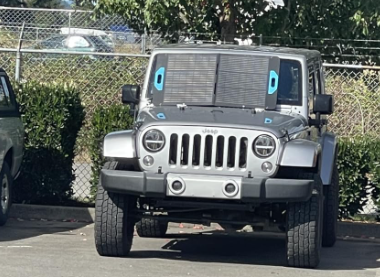
Best for: Anker station owners and quick setups.
| Spec | Detail |
|---|---|
| Rated power | 100W, ~23% efficiency, IP67 |
| Weight | About 10 lbs (listings range from 9.7 lbs to 10.9 lbs) |
| Connectors | MC4, with two 3m cables and adapter cables included |
| Kickstand | Four tilt angles: 30°, 40°, 50°, 80° |
| Approx. price | $269 list, often lower on sale |
Pros: Cables in the box, light, easy to angle.
Cons: Testers found the kickstand legs fiddly and output a bit below the PV120.
Amazon experience: About 4.4 stars from roughly 600 ratings. Most reviewers like the build and portability. A few report quality-control slips, such as a missing connector, and one buyer’s defective panel was replaced by support.
Head-to-Head: 100W Class
| Bluetti PV120 | Anker SOLIX PS100 | |
|---|---|---|
| Measured output | ~110W (92%) | Slightly lower than PV120 in testing |
| Weight | ~11.1 lbs | ~10 lbs |
| Efficiency | Up to 23.4% | ~23% |
| Connectors | MC4 only | MC4 + adapters + cables |
| Kickstand | Adjustable | 4 angles |
| Price | ~$279 | ~$210–$269 |
Which One Should You Buy?
Pick the PV120 for the best output, or if you own a Bluetti. Pick the PS100 if you want cables in the box and a lighter carry.
Best 200W Solar Panels: Brand Comparison
Renogy 200W Portable (Best for Most People)
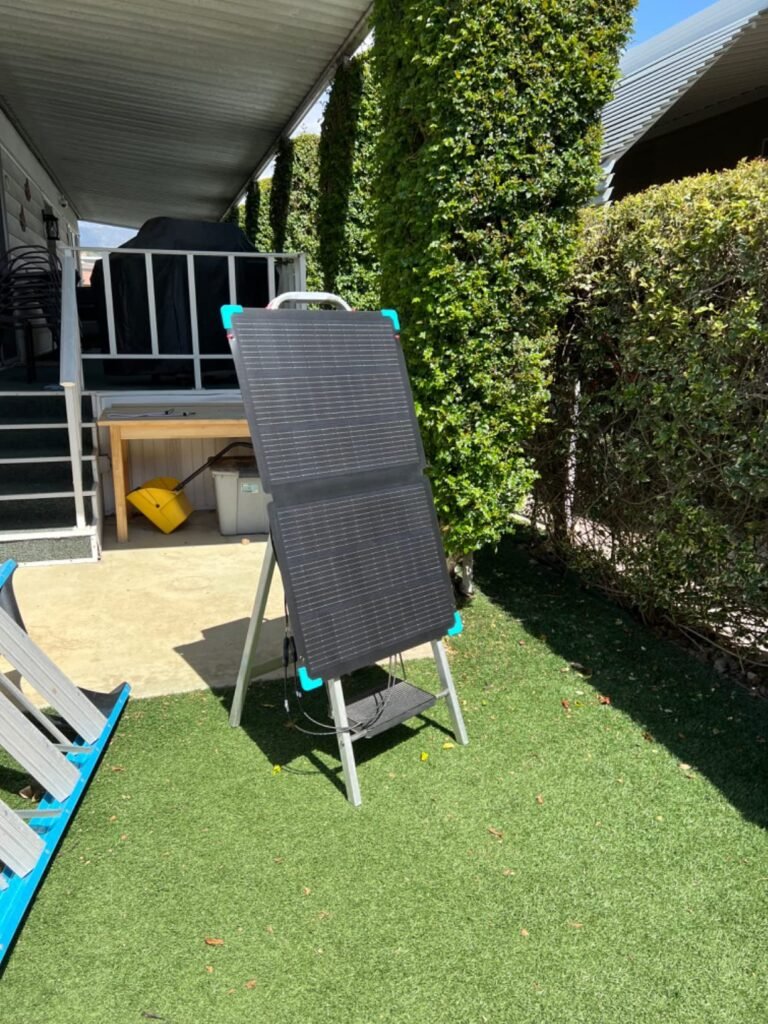
Best for: First-time buyers who want strong output at a fair price.
| Spec | Detail |
|---|---|
| Rated power | 200W, 25% efficiency, 13.89 lbs, MC4 + USB |
| Protection | IP65 |
| Approx. price | $219.99 on Amazon at last check; $250 list |
Pros: Independent testers called it efficient and easy to use, and it costs less than most 200W rivals.
Cons: Not the lightest, kickstand legs adjust less easily, and its waterproof rating isn’t the highest. Some buyers note no cables are included.
Amazon experience: About 4.5 stars from roughly 700 reviews. Buyers praise easy setup and steady charging, with one mentioning decent output on partly cloudy days. A few say the kickstand adjuster can slip.
Jackery SolarSaga 200W (Best for Jackery Owners / Premium)

Best for: Jackery station owners who want a rugged, high-efficiency panel.
| Spec | Detail |
|---|---|
| Rated power | 200W, measured 171W (86%) |
| Protection | IP68 per the maker (some retailers list IP67) |
| Warranty | 3 years, plus 2 more when registered |
| Weight | 14.2 lbs measured; the maker lists about 17.6 lbs |
| Approx. price | $699 list, often discounted |
Pros: Strong measured efficiency, rugged build, plays well with Jackery stations, can daisy-chain.
Cons: The priciest option here, and one reviewer noted it blows over easily.
Amazon experience: One Amazon-sourced listing shows about 4.4 stars on 83 ratings, a small sample. Retail ratings vary a lot by store, so check the current page.
Head-to-Head: 200W Class
| Renogy 200W Portable | Jackery SolarSaga 200 | |
|---|---|---|
| Measured / tested output | Top power-efficiency score in testing | ~171W (86%) |
| Weight | ~13.9 lbs | ~14.2–17.6 lbs |
| Efficiency | 25% | Up to ~26.7% (maker claim) |
| Waterproof | IP65 | IP68 |
| Ports | MC4, USB | DC8020, USB-A, USB-C |
| Price | ~$220–$250 | ~$699 list |
Which One Should You Buy?
Most people should buy the Renogy. The Jackery makes sense if you already own a Jackery station and want the tougher build and longer warranty.
Also Consider
- Bluetti PV200 (Value pick in one outdoor-gear test). 23.4% efficiency, 16.1 lbs, IP65, 2-year warranty, about $399–$449. Bluetti says one PV200 charges the EB70 station in about 4.7 to 5.2 hours. Check current Amazon reviews, since I couldn’t verify a rating.
- BougeRV Arch 200W Flexible (RV roofs). A fixed-mount flexible panel, not a folding portable. Its Amazon listing shows about 4.3 stars on 133 ratings and 23% efficiency. It suits curved camper roofs.
100W Solar Panel: Pros, Cons and Best Uses
Pros: Lighter, cheaper, easy to stash.
Cons: Slow for large batteries, and cloudy days stretch charging into multiple days.
Best uses: Phones, laptops, lights, small stations, backpacking.
200W Solar Panel: Pros, Cons and Best Uses
Pros: Twice the energy per sunny day, fewer days to refill.
Cons: Heavier, pricier, and some stations can’t use all of it.
Best uses: Mid-size stations, multi-day camping, RV and van life, outage backup.
Panels also get far bigger than 200W for homes.
Watts, Volts, Amps and Wh Explained Simply
Watts vs. watt-hours. Watts measure speed. Watt-hours measure the tank. A 200W panel running one hour adds up to 200Wh, before losses.
Peak sun hours. This is not daylight. It counts hours of full-strength sun. A cloudy winter day might have 9 hours of light but only about one peak sun hour.
Voc, Vmp, Imp. Voc is the panel’s no-load voltage. Vmp and Imp are the working voltage and current. Examples: the PV200 lists 26.1V Voc and 9.7A Imp, and the SolarSaga 200 lists 23.2V Voc. Your station’s manual lists the range it accepts.
How Long Does It Take to Charge Your Power Station?
Using our planning math (4.5 sun hours, 75% factor), before battery charging losses:
| Station size | 100W panel | 200W panel |
|---|---|---|
| 300Wh | ~0.9 sunny day | ~0.4 sunny day |
| 500Wh | ~1.5 sunny days | ~0.7 sunny day |
| 1,000Wh | ~3 sunny days | ~1.5 sunny days |
Manufacturer-reported figures for the Bluetti EB55 agree with the trend. One PV120 charges it in about 5.7 to 6.2 hours, while one PV200 does it in about 3.5 to 4 hours. These are lab-reference numbers, so expect longer outdoors.
Cloudy Day and Winter Output
Clouds cut output, and heavy overcast can roughly halve it. Winter also brings low sun angles and short days. If you camp in the cold months or live in the northern states, size up.
Will It Work With Your Power Station? (Voltage and Input Limits)
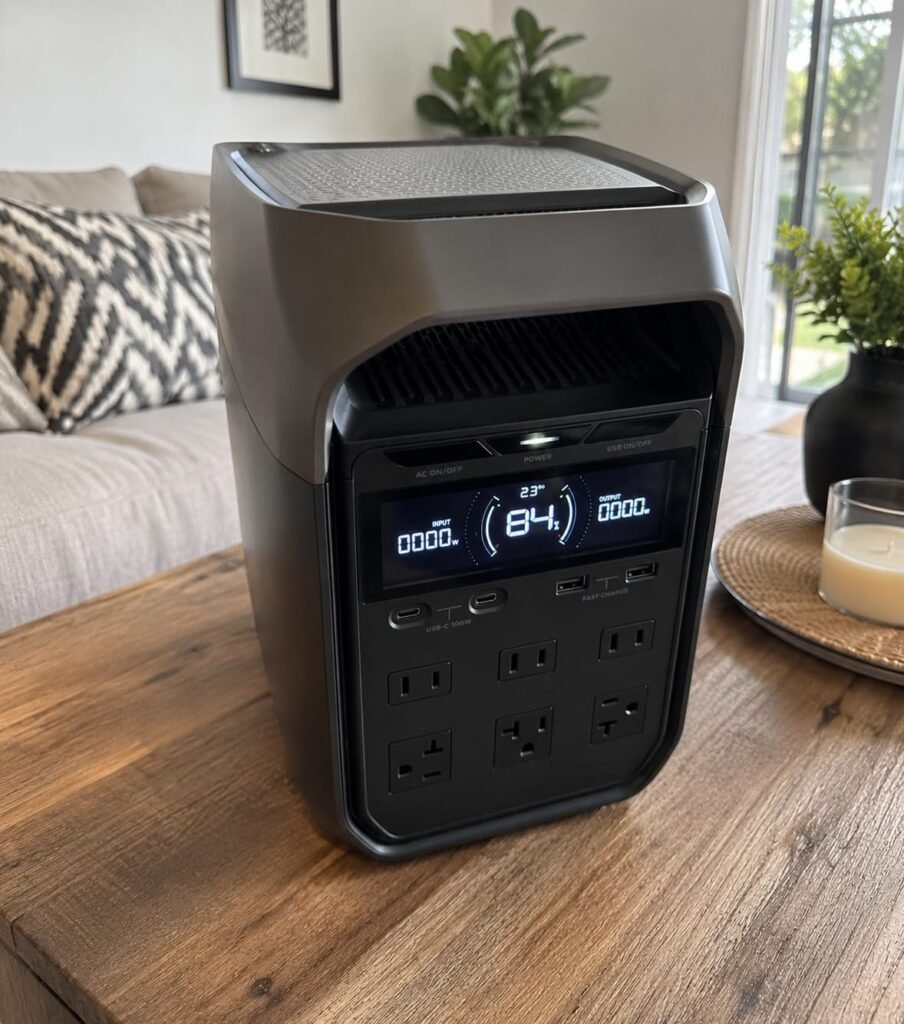
This is where buyers get burned.
Your station has a maximum solar input in watts, a voltage window, and a current limit. A 200W panel on a station capped at 100W simply wastes half its power. Some stations also need higher voltage to hit their top charge speed.
Check three things in your manual:
- Maximum solar input (watts)
- Accepted voltage range
- Connector type (MC4, DC7909, DC8020, XT60)
Adapters fix connector mismatches, not power limits. And don’t mix panel types. One manufacturer’s FAQ says panels should be the same type and rating from one brand.
Which Panel Is Best for Your Use Case?
Camping and backpacking. 100W. Every pound counts, and you probably carry a small station.
RV and camper van. 200W. You have time and space, and you want enough power to refill daily.
Home backup. One 200W panel adds roughly 675Wh on a decent day. That runs phones, a router and LED lights. A fridge that uses about 1kWh a day will outpace it. For whole-home loads, portable panels won’t cut it. A home-sized estimate needs a different tool, such as this solar calculator for whole-home systems.
Cabin or shed. 200W, and consider a fixed-mount panel if it stays put.
Do You Need an MPPT Charge Controller?
Usually not with a portable power station. Most have a solar charge controller built in, so you just plug in. You need a separate controller when charging a standalone 12V battery, as in many RV setups. Some panel kits include one.
Common Mistakes When Choosing Panel Wattage
- Ignoring the station’s max solar input
- Trusting the label instead of the 75% rule
- Buying 200W, then leaving it home because it’s heavy
- Forgetting cables and adapters
- Pointing the panel at the sun once, then walking away for six hours (the sun moves)
Our Research Method
We did not run our own bench tests. We compared independent hands-on testing from outdoor-gear reviewers, manufacturer spec sheets, retailer and Amazon rating pages, U.S. Energy Information Administration outage data, and NREL solar modeling. Ratings and prices were checked on November 3, 2026 and change often. Verify before you buy.
FAQs
Do panels work on cloudy days?
Yes, at lower output. Heavy overcast can cut it roughly in half.
Is 100W enough to charge a power station?
Yes, for small ones, just slowly. A 100W-class panel took about 6 hours to fill a 500Wh-class Bluetti station in the maker’s reference test.
Can I mix 100W and 200W panels?
Avoid it. Mismatched panels can limit each other, and brands advise matching type and rating.
Is one 200W panel better than two 100W panels?
On paper they produce the same power. One panel means fewer cables. Two are easier to carry and give you a backup if one fails. Check your station’s voltage limits before wiring two together.
Final Verdict: How to Decide
- Does your station hold 500Wh or less, or do you pack light? → 100W.
- Is your station 500Wh+ or do you camp several days? → 200W.
- Does your station cap solar input below 200W? → 100W, no matter what.
- Budget tight? → Renogy 200W or Anker 100W.
- Own a Jackery or Bluetti? → Match the brand for easy compatibility.