The Author
Table of Contents
Rain doesn’t stop solar panels. It never has. Your system keeps making electricity through a downpour, a drizzle, a full-on storm, just less of it than on a clear afternoon. If you’ve been putting off going solar because you live somewhere it rains more than it doesn’t, you can stop worrying about that specific thing. There’s more nuance below, and some of it is worth knowing before you sign anything, but the core question is settled.
How Much Do Solar Panels Lose in Output During Rain?
Light Rain vs. Heavy Rain vs. Storms
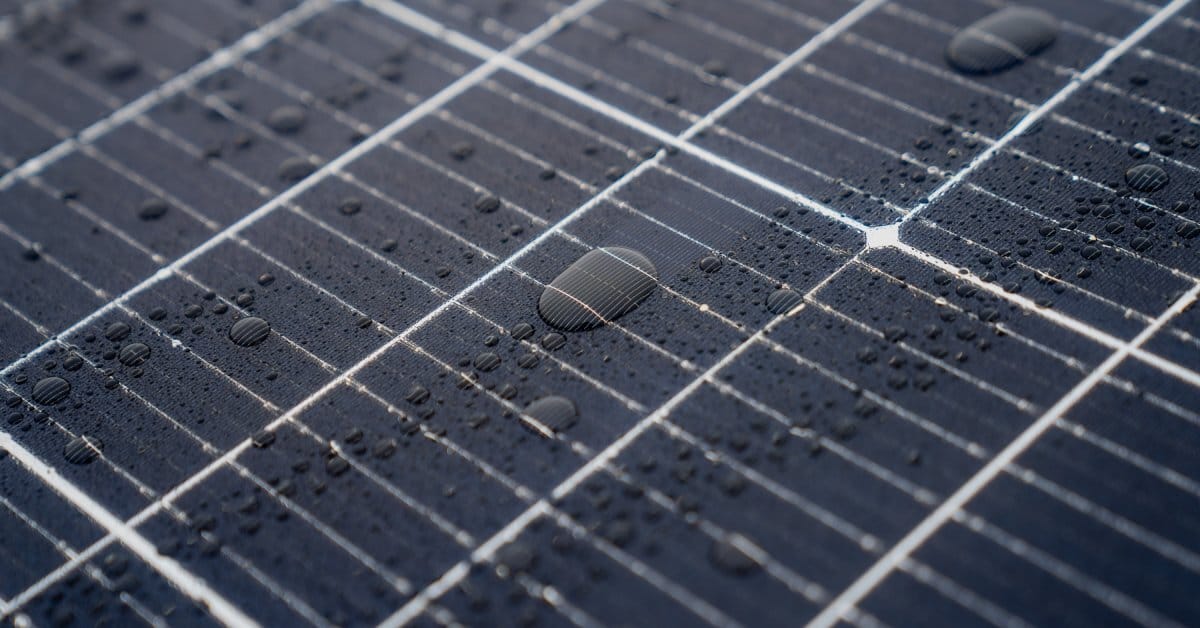
The number people actually want is a percentage, so here it is: light rain with decent runoff costs you somewhere around 4–5% of output. Heavy rain that pools on the glass instead of sliding off can cost 7–9%. Thick, dark overcast skies, the kind that make you turn your headlights on at 2pm, can knock output down by as much as half.
Notice that none of those numbers are about the rain itself. They’re about the clouds that came with it. That distinction matters more than it sounds like it should.
Rain vs. Cloud Cover, Why They’re Not the Same Thing
Rain is water falling out of the sky. Clouds are what block the sun. You can absolutely have one without the other, plenty of storms roll through with a strip of blue sky trailing right behind the rain band, and your panels will pick right back up the moment that light hits them. Meanwhile a flat, grey, bone-dry day in January can drag your output down further than a five-minute cloudburst in June. If you only remember one thing from this section, make it that: the enemy is the cloud cover, not the water.
Why Solar Panels Still Generate Power in Wet Weather
Direct Light vs. Diffuse Light, Explained Simply
Solar cells don’t need a laser-focused beam of sunlight pointed directly at them. They need photons, and clouds scatter photons rather than deleting them.
There’s a name for this: diffuse light. It’s sunlight that’s bounced around inside a cloud layer or a raindrop before reaching your roof, arriving from a dozen directions instead of one clean angle. It’s less efficient than direct sunlight, nothing beats a cloudless sky, but it still knocks electrons loose inside the cell, and that’s the entire mechanism electricity generation depends on. This is why “the sky is grey” was never a good enough reason to write solar off.
Does Rain Damage Solar Panels?
How Waterproofing Actually Works
No. And this isn’t a hopeful guess, it’s the entire premise the industry is built on. A panel installed today is expected to sit outside, uncovered, doing its job for 25 to 30 years. If ordinary rain broke them, nobody would sell them with a 25-year warranty attached.
Here’s what’s actually keeping the water out. Tempered glass covers the front the same way a windshield does. Underneath that, the solar cells are sealed inside a laminate (usually EVA), basically a waterproof envelope wrapped around the delicate part. A polymer sheet finishes the back, and the frame and junction box are sealed too, so moisture never gets near the wiring. Most panels sold today carry testing certifications like UL 61730 or IEC 61215, which specifically simulate decades of wind, hail, snow, and rain exposure before a panel is ever allowed on a roof.
When Rain Can Cause Problems
So where does damage actually come from, when it does happen? Almost never the rain itself. It’s a bad install, a seal that’s cracked from age or a physical knock, or condensation building up inside a panel that’s already compromised somewhere else. That’s exactly what the two-tier warranty system exists for, an equipment warranty (usually 10–12 years) for defects, and a longer production warranty (often 25 years) guaranteeing output. Lightning is a separate story worth a quick mention: a strike near your home, not even on it, can send a voltage spike through the system, and the inverter usually takes the hit first. Grounding and surge protection handle that risk, same as they do for the rest of your house’s wiring.
Does Rain Clean Solar Panels?
Sort of, yes, and this is the claim you’ll see repeated everywhere, usually without the second half.
When Rain Helps, Washing Away Dust and Pollen
The first half is true: dust, pollen, and general roof grime build up on panels over months, and rain rinses a good chunk of it off. Panels often look, and perform, noticeably better the week after a solid downpour than the week before it.
When Rain Doesn’t Help, Residue, Streaking, and Why Manual Cleaning Still Matters
The second half, the part that gets skipped: as that rainwater evaporates off the glass, it doesn’t always take everything with it. In areas with hard water or heavy airborne dust, it can leave behind a thin mineral film instead, which builds up slowly over multiple rain cycles rather than washing away. Tilt angle plays into this too, a steeply angled panel sheds water (and whatever’s floating in it) much faster than one installed nearly flat. If you’re somewhere dry and dusty with only occasional rain, don’t assume the sky is handling cleaning duty for you. Check every so often and give them a manual rinse if they’re looking dull.
Can You Use Rain-X on Solar Panels?
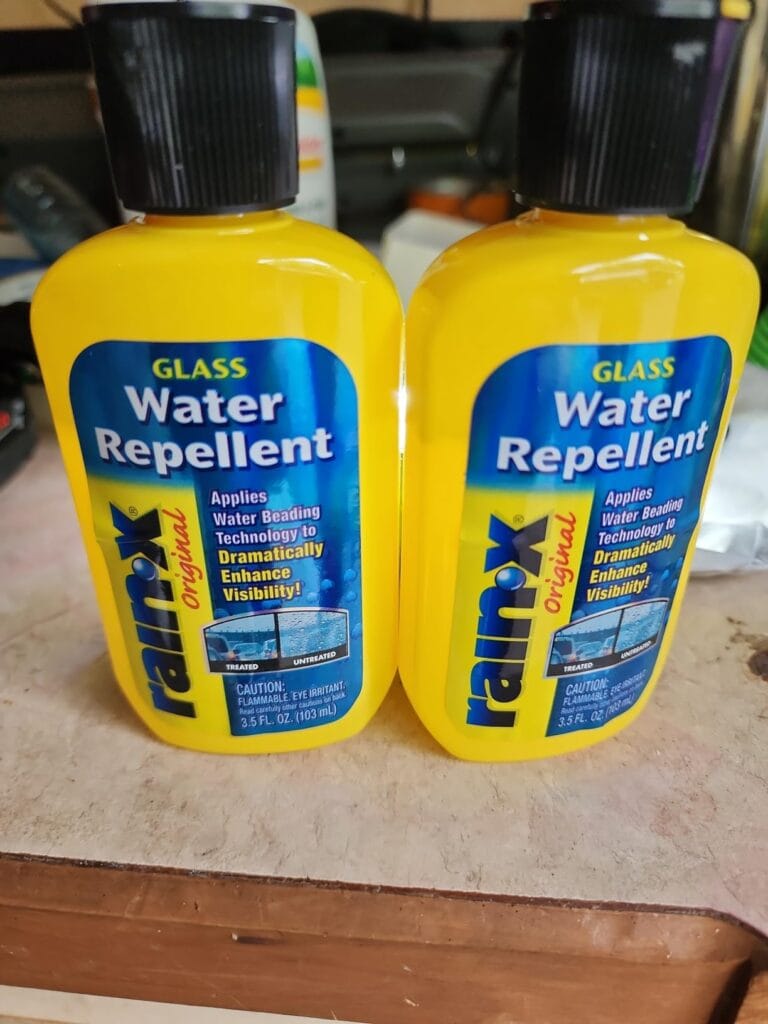
Don’t. And you don’t have to take a random blog’s word for it, Rain-X’s own FAQ says its Original Glass Treatment isn’t recommended for solar panels, full stop.
The reasoning holds up: Rain-X hasn’t been tested against the specific sealants used around a panel’s edges, so there’s no guarantee it won’t degrade that seal over time, and that seal is the entire thing keeping moisture out of the electronics. There’s also barely a payoff to chase even if it worked perfectly, you’d be applying a hydrophobic coating to speed up water beading off, on a surface where the actual electricity loss during rain comes from the clouds overhead, not from droplets sitting on the glass for an extra few seconds. If the goal is just keeping panels visibly clean, a normal soft-cloth rinse gets you there without gambling on the seal.
Can Solar Panels Be Installed in the Rain?
Technically, sure. In practice, most crews won’t do it, and it’s got nothing to do with the panels themselves.
What Installers Actually Do on Wet-Weather Job Days
A wet, sloped roof is slippery, and that’s the actual hazard, a person, not a product. Good installers reschedule around rain forecasts to keep their crew safe and to make sure every electrical connection gets made properly instead of rushed to beat the weather. If your install date got pushed because of rain in the forecast, that’s your installer being careful, not a red flag.
Does Wet-Weather Installation Affect Your Warranty?
And no, a rain-delayed install doesn’t put your warranty at risk, the manufacturer’s coverage protects the panel and its output regardless of what day it went up. What actually voids things is sloppy workmanship: a loose connection, a poorly sealed mount, the kind of shortcuts a rushed, wet-weather install would tempt someone into taking. Which is precisely why a good installer just waits for a dry window instead.
Solar Panels During Rainy Season, What to Expect
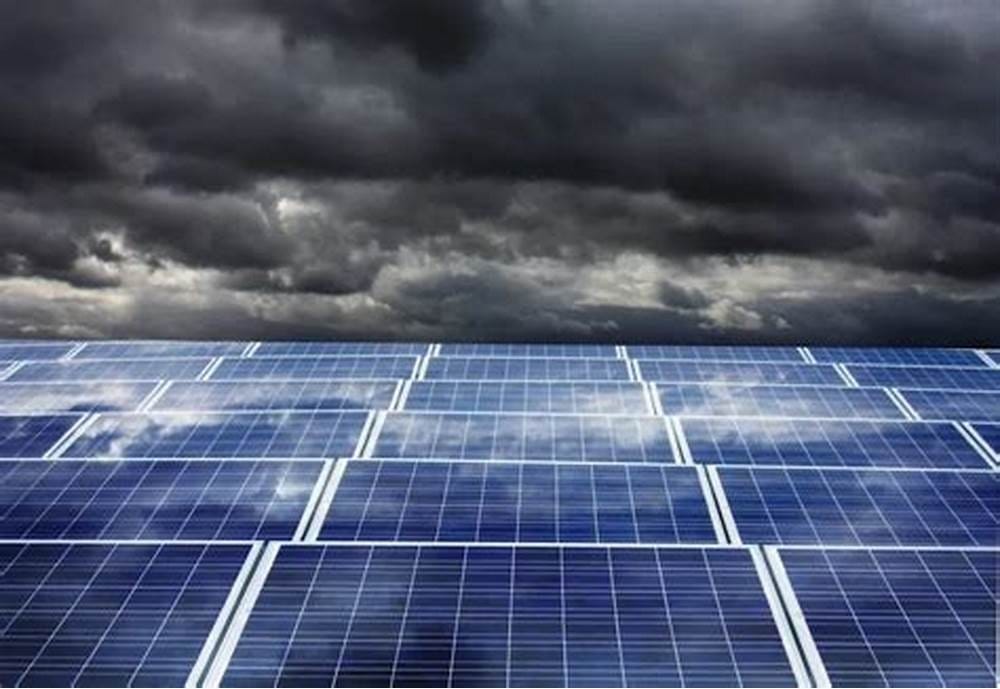
If you live somewhere with an actual rainy season rather than the occasional shower, the conversation shifts from “does solar work” to “how do we design around the dip.”
How to Size Your System If You Live in a High-Rainfall Area
The standard fix is to size the array slightly larger than you’d need on a purely sunny-day basis, so the lower-output months still cover your usage. Tilt matters more here too, steeper angles shed water and grime faster, which keeps performance more consistent through the wetter stretch of the year rather than dipping sharply and recovering slowly.
Regional Example: Planning for a Rainy Climate (UK) vs. a Sunny One
Compare a home in the UK, where overcast, drizzly stretches and short winter daylight are just part of the deal, to a home in Arizona pulling 300-plus sunny days a year. The UK system will show far more month-to-month swing in its output graph. That doesn’t make solar a bad call there, it just means the sizing has to be built around the average day, not the best one, and net metering or export tariffs end up doing more of the heavy lifting to balance things out over a full year.
What Happens to Stored Solar Energy on Rainy Days?
If you’ve got a battery, this is exactly the situation it was bought for.
On a sunny day, panels usually make more power than the house is using at that moment, and the surplus goes into the battery instead of nowhere. That reserve becomes your buffer through the next grey stretch, running the essentials without pulling from the grid. One rainy day, handled easily. The part that trips people up is a run of several grey days back to back, if the battery starts each morning only partially topped up and the panels can’t fully refill it under heavy cloud, the reserve shrinks a little more each day. Anyone sizing a battery for a genuinely rainy climate should be planning around a multi-day stretch, not a single afternoon shower.
Rain vs. Snow vs. Flooding
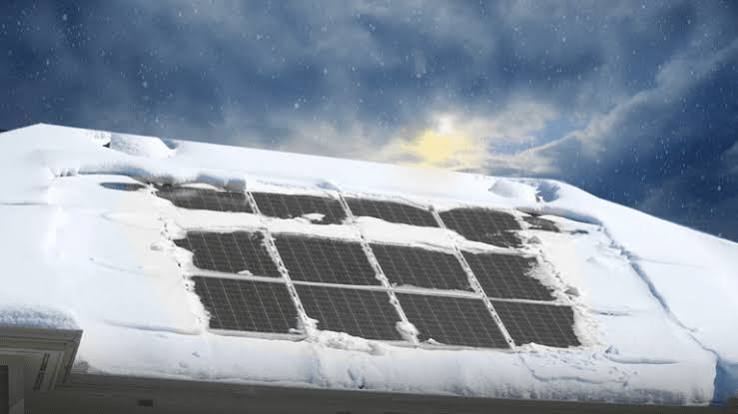
People lump these together as “bad weather for solar,” but they’re not really the same problem wearing different coats.
Rain reduces the light reaching the cells; it doesn’t physically sit there blocking anything, assuming the water runs off reasonably well. Snow is the opposite issue entirely, a heavy enough layer can bury a panel completely and stop production until it melts or someone clears it off, though a light dusting usually slides away on its own once the sun comes back out. Flooding is its own case again, and it’s rarely a threat to the panels sitting on your roof, the real risk is water reaching ground-level gear like inverters or breaker boxes. A rooftop array on a house that never floods up to the roofline will typically keep quietly generating power right through a flood event happening down at street level.
FAQs
Do solar panels stop working when it rains?
No, output dips because of the clouds that usually come with rain, not the rain itself, and generation continues throughout.
How much less energy do solar panels produce on a rainy day?
Roughly 4–9% in typical rain with decent runoff, up to around 50% under heavy, dark overcast conditions.
Can solar panels be installed in the rain?
Physically possible, but most installers reschedule for crew safety on wet roofs and to avoid rushing electrical connections.
Does rain damage solar panels?
Not under normal circumstances, issues usually trace back to a poor install or an aging, cracked seal rather than the rain.
Can you use Rain-X on solar panels to keep them clean?
No — Rain-X itself doesn’t recommend it, since it hasn’t been tested against panel sealants and offers little real benefit.
Do solar panels work better after rain?
Often, since rain rinses off dust and pollen, though a manual clean is still worth doing occasionally in dusty or hard-water areas.
What happens to solar batteries during a rainy season?
A single rainy day barely registers; several grey days in a row is what actually drains stored reserves.
Do solar-powered garden lights charge on cloudy or rainy days?
Yes, at reduced capacity, a higher-capacity battery helps them coast through a few dim days without dimming.
How should homeowners in rainy climates size their solar system?
Slightly oversize the array, favor a steeper tilt for runoff, and design around average output rather than best-case sun.
Do solar panels need extra maintenance in rainy climates?
Not much beyond the occasional seal, wiring, and mount check, plus a manual clean if rain alone isn’t doing the job.
The whole picture, once you strip away the myths on both sides: rain isn’t the villain half the internet makes it out to be, and it isn’t the free maintenance service the other half claims either. It’s just weather your panels were built to sit through, doing a bit less work on the day, then getting back to full speed the moment the sky clears.