Table of Contents
A patio umbrella with solar lights costs 80to80to300 depending on size and features
I bought mine last spring. A 9 foot cantilever umbrella with LED lights built into the ribs. Paid $160. My sister bought a smaller one. 7.5 feet. No crank. Just a push button tilt. She paid $90. Her lights still work. Mine still work. We both use them every evening from May to September.
The price jumps when you add features. Solar lights add $30 to $50 over a regular umbrella. A crank lift adds another $20. Tilt mechanism adds $15. A wind vent on top adds $10. A cantilever pole that stands to the side instead of the middle adds $100. You pick what matters to you.
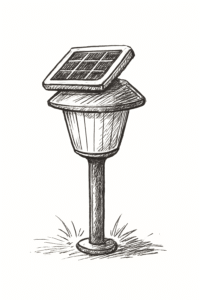
The solar panel sits on top of the umbrella hidden under the finial
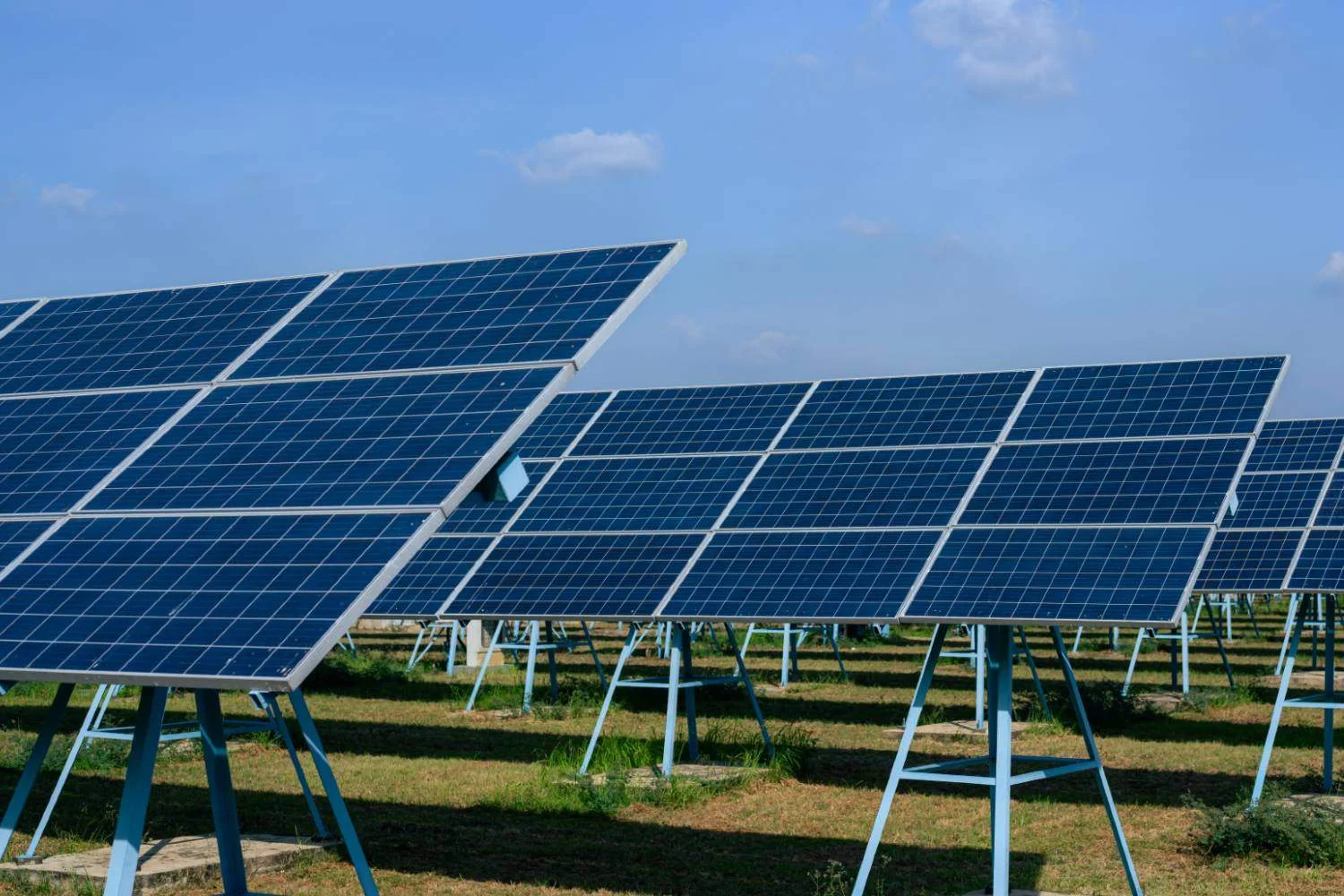
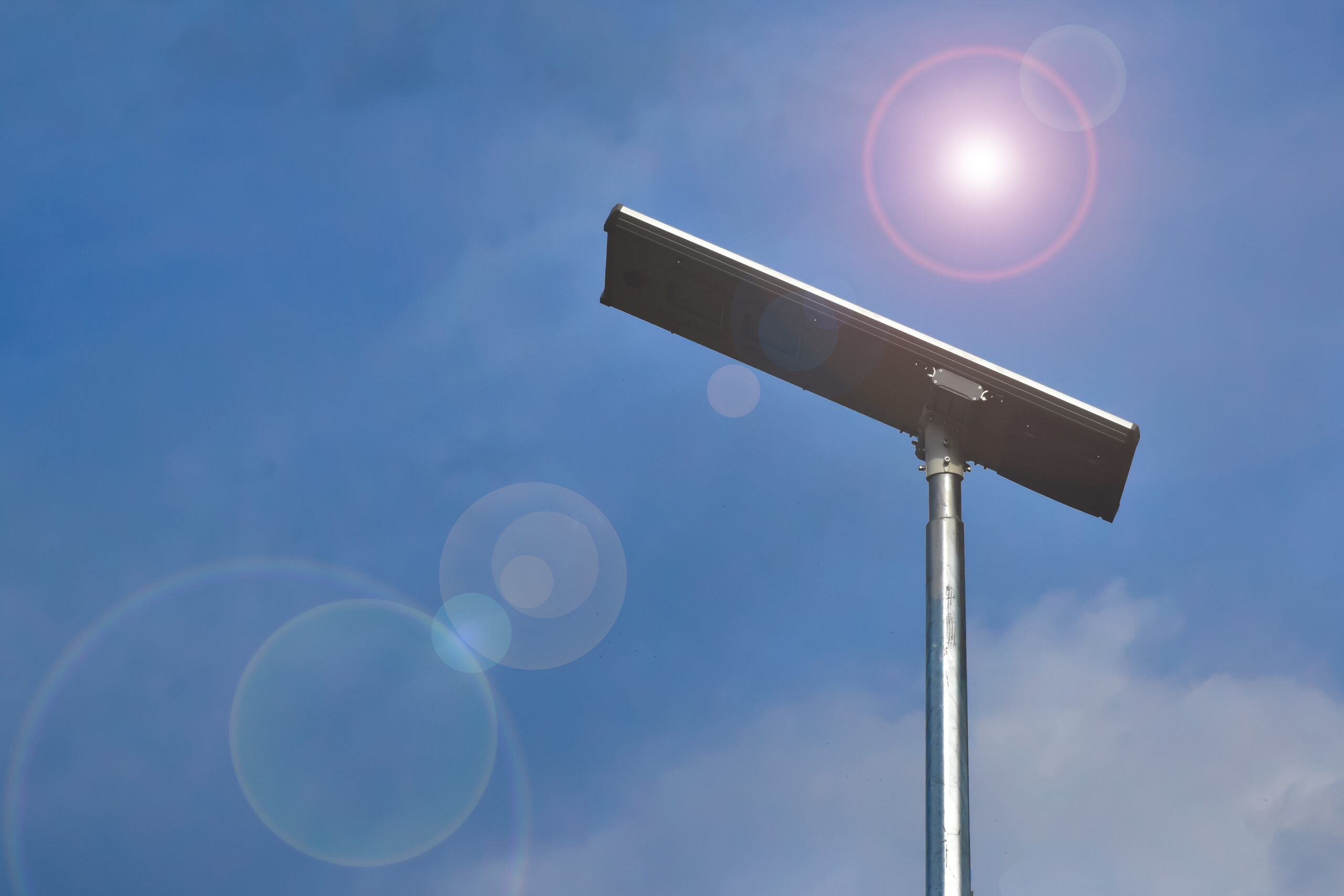
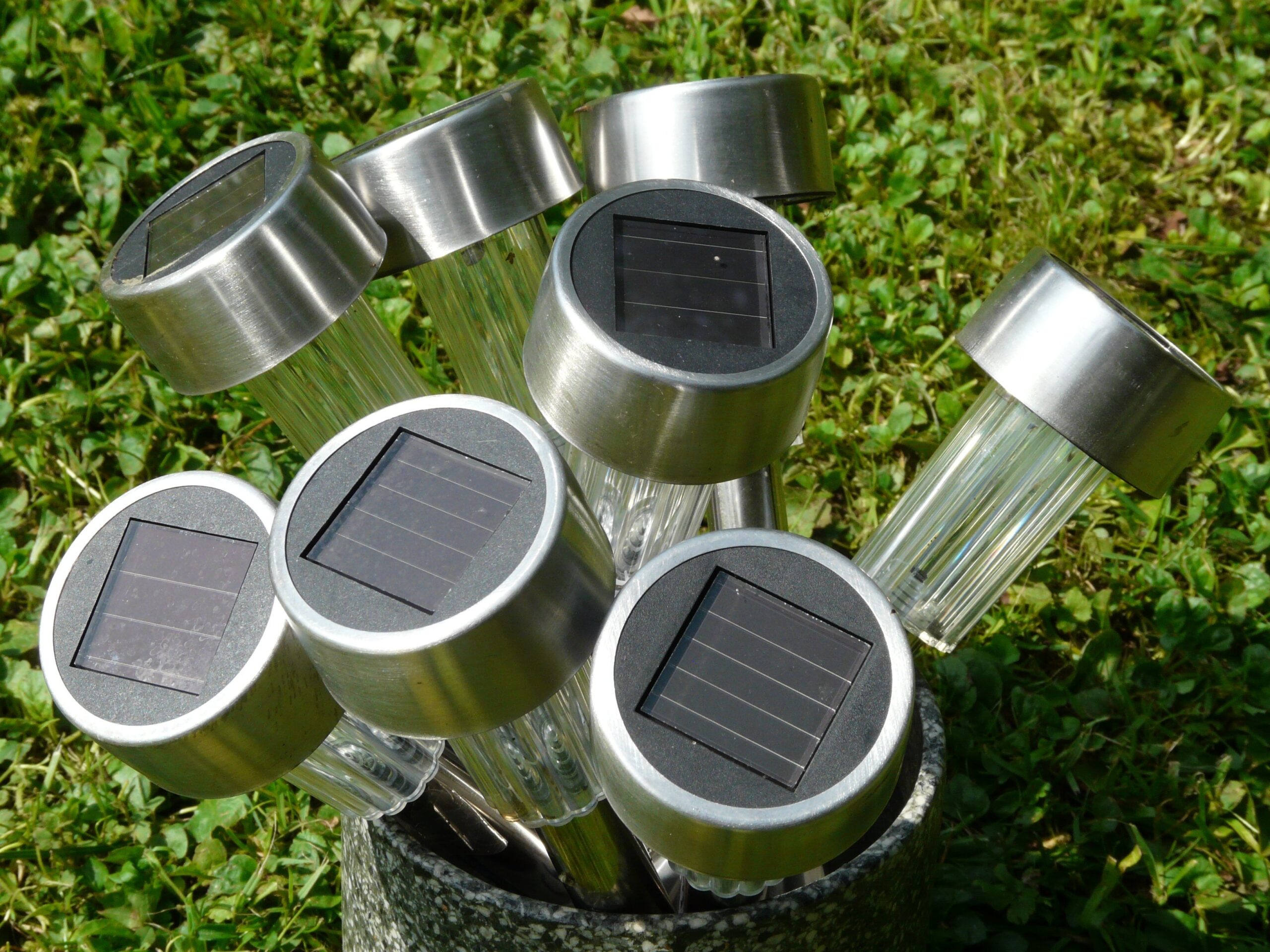
Look at the very top of the umbrella. That small pointed cap is called the finial. On a solar umbrella, the finial has a solar panel built into it. Tiny black squares. Maybe two inches across. You do not notice it from far away. From underneath, you see nothing. The design hides the tech.
The battery sits inside the finial too. Small rechargeable battery. Some models use AA size. Some use a flat lithium pack. When the battery dies after two or three years, you replace it. Open a small screw cap on the finial. Swap the battery. Close it back up.
Find the on off switch before you set up the umbrella. It hides on the finial or on the pole near the top. Flip it to ON once. Leave it there. The light sensor does the rest. Dusk turns the lights on. Dawn turns them off.
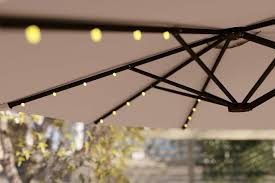
The LED lights run along the ribs and shine down on your table
Open the umbrella. Look at the eight ribs. The metal or fiberglass arms that hold the fabric. Each rib has small LED lights built into the underside. Sometimes the lights are embedded in the fabric seam. Sometimes they are clipped onto the rib. Either way, they point down at your table.
The light color is warm white. Not blue. Not harsh. Like a string of patio lights you hang across a backyard. Soft. Inviting. You see your food. You see your drink. You see the people across from you. But the light does not blind anyone.
One person I know bought a model with color changing LEDs. Red. Green. Blue. Purple. She used the color mode once for a party. Then never again. She leaves it on warm white. She said the colors look like a nightclub. Not a backyard dinner.
The lights run 6 to 8 hours on a full charge
I tested mine on a sunny July day. The umbrella got direct sun from 11am to 6pm. Seven hours of charging. The lights turned on at 8pm. Stayed lit until 3am. Seven hours of light. That matched what the box promised.
Cloudy days change everything. If the umbrella gets only four hours of weak sun through clouds, the lights last maybe four hours. They turn off at midnight. You sit in darkness. The solution is simple but annoying. Close the umbrella on cloudy days. Lay it flat on the ground facing the sun. The panel charges faster when it points straight up instead of at an angle.
The battery needs full direct sun not dappled shade
Do not put your patio umbrella with solar lights under a tree. The leaves block sunlight. The panel gets dappled light. Spots of sun moving around. This does not charge the battery fully. You get three hours of light at night. Then darkness.
I made this mistake. I put my umbrella under a large oak tree. Thought the shade would keep me cool during the day. The lights died at 10pm every night. I moved the umbrella to the middle of my lawn. No trees. Full sun from 10am to 5pm. The lights ran until 4am after that. Lesson learned. The umbrella shades you. Not the other way around.
The battery lasts 2 to 3 years before needing replacement
Nothing lasts forever. Small rechargeable batteries lose capacity over time. After two summers, my lights lasted only 4 hours per night. After three summers, 2 hours. I opened the finial. Pulled out the old AA sized rechargeable battery. Bought two new ones from a battery store. Cost me $8. Put one in. Kept the other as a spare. The lights went back to 7 hours the next night.
Do not throw away the whole umbrella when the battery dies. That is wasteful and expensive. A $8 battery fixes the problem. Keep the umbrella for five or six years. Replace the battery twice. Still cheaper than buying a new umbrella every two years.
The crank and tilt work separately from the lights
The solar lights have nothing to do with the crank mechanism. You crank the umbrella open. The lights work. You crank it closed. The lights turn off because the sensor sees darkness inside the folded fabric. But when you open it again the next evening, the lights remember their setting. They turn on automatically.
The tilt mechanism works the same way. You push a button or pull a lever. The umbrella top angles to block the setting sun. The lights do not care. They stay on. They stay warm. They keep shining down on your angled table.
Some models have a remote control for the lights
Fancy umbrellas include a small remote. The size of a car key fob. Buttons for on off. Buttons for brightness levels. Low, medium, high. Some remotes have a timer button. Set the lights to run for 2 hours then shut off automatically.
I do not have the remote model. My sister does. She lost the remote after three weeks. The umbrella still works. The lights turn on at dusk and off at dawn. She cannot change the brightness anymore. But she does not need to. The default setting works fine.
If you buy the remote model, tape the remote to the umbrella pole with clear packing tape. You will not lose it. Or put it in a drawer by your back door. Same spot every time.
The fabric color affects how hot the umbrella gets
Dark fabric gets hot. Light fabric stays cooler. A dark blue or black umbrella absorbs sunlight. The heat transfers to the metal ribs. The ribs get warm. Not hot enough to burn you. But warm enough to notice.
Light fabric like cream or beige reflects sunlight. The ribs stay cooler. The solar panel on top still gets full sun. The panel does not care about fabric color. It sits above the fabric. It sees the sky. Not the umbrella.
Pick whatever color you like for your backyard. I have cream. My sister has navy blue. Her ribs get warmer than mine. Both umbrellas work fine.
The wind vent stops your umbrella from flying away
Look at the top of the umbrella fabric. Near the pole. Some umbrellas have a double layer of fabric with an opening between them. That is a wind vent. Wind blows into the opening and goes out the top instead of pushing against the umbrella like a sail.
My umbrella has no wind vent. I learned why that matters. A gust of wind lifted my umbrella out of the stand. It flew across my yard. Hit the fence. Bent one rib. The lights still work but the rib looks ugly.
Buy an umbrella with a wind vent. Spend the extra $10. Close the umbrella when wind speeds go above 15 miles per hour. Store it lying down on the ground if a storm is coming. Do not leave it open and unattended.
The base weight matters more than you think
A patio umbrella with solar lights needs a heavy base. The umbrella itself weighs maybe 15 pounds. The base needs to hold it down. A cantilever umbrella needs an even heavier base because the umbrella hangs off to the side.
My base uses four plastic tiles that you fill with sand. Each tile holds 20 pounds of sand. Total base weight 80 pounds. My umbrella never tips over. My sister uses a cast iron base. 50 pounds. Her umbrella stays put too.
Do not use a lightweight resin base filled with water. Water freezes in winter. The plastic cracks. Your umbrella falls over. Use sand or concrete or cast iron.
The lights make evening dinners possible without extra lamps
Before I bought this umbrella, I used a separate solar lamp on my table. It took up space. It cast light in one direction. Shadows fell across half the table. My guests ate in dim light on one side.
Now the lights come from above. Eight points of light around the entire circle. No shadows. No lamp taking up table space. Everyone sees their plate. Everyone sees each other. We eat dinner outside until 10pm some nights.
My final take after one summer of use
Buy a patio umbrella with solar lights if you eat outside. Do not buy it for brightness. Buy it for convenience. The lights are not floodlights. They are accent lights. Enough to see your food. Not enough to read a book.
Buy the biggest umbrella your space allows. A 9 foot umbrella covers a 48 inch round table with room to spare. A 7.5 foot umbrella barely covers a 42 inch table. Measure your table before you buy.
Check the battery every spring. Charge the umbrella in full sun for two days before your first evening use. Replace the battery every two to three years. Clean the solar panel with a damp cloth once a month.
I will buy another one when this one breaks. My sister already bought a second one for her front porch. We both like them. No extension cords. No outdoor outlets. No bugs attracted to a bright lamp. Just soft light from above powered by the sun.
Summary
A patio umbrella with solar lights costs 80to300. The LED lights run 6 to 8 hours on a full charge. The solar panel hides in the top finial. The battery lasts 2 to 3 years then needs replacement. Place the umbrella in full direct sun away from trees. A wind vent prevents tipping. Use a heavy 50 to 80 pound base. Best for evening dinners. Not bright enough for reading.