Table of Contents
Are solar lights safe? Honestly, this question comes up more than you would think. Someone buys a pack of garden lights, sticks them along the pathway, and then two days later starts wondering whether they should have done a bit more research first. If that sounds familiar, you are in the right place.
The short answer is yes. Solar lights are safe. But like most things in life, the full answer has a few layers to it, and those layers are worth understanding before you go buying twenty of them for your backyard.
How Solar Lights Work and Why That Matters for Safety
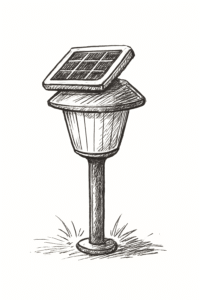
A solar light works in the simplest way imaginable. During the day, a small panel on top of the light absorbs sunlight and stores that energy in a battery inside the housing. When night falls, the battery kicks in and powers a small LED bulb. That is the whole system.
What makes this important from a safety standpoint is the voltage involved. Solar garden lights run on very low voltage, nothing like a standard wall socket. There are no live mains wires buried in your garden, no risk of digging something up and getting a nasty shock. For most families, this is exactly why solar lights are one of the better outdoor lighting options to go for.
Are Solar Lights Safe Around Kids and Pets?
This is genuinely the first thing parents and pet owners want to know. The good news is that a quality solar light with a properly sealed casing is not going to hurt a child who touches it. The voltage running through the system is too low to cause harm through the outer housing.
That said, cables are a different story. Some solar setups, especially portable ones with a panel connected by a wire to the light, leave cords trailing across the ground. A toddler can trip over that. A dog will absolutely chew through it given half a chance. So while the light itself is fine, the installation needs a bit of thought.
A few things that actually help here:
- Place lights on flat, stable ground where they cannot topple easily.
- Clip cables flat against fences or walls so nothing is trailing loose.
- Keep portable solar panels away from areas where children or animals play.
- With older kids, take five minutes to explain what the panel does and why it is not a toy.
None of this is complicated. It is just the kind of thing worth doing once properly rather than fixing after something goes wrong.
The Part Most People Skip: Battery Safety
Here is where things get genuinely interesting, and where most of the real safety concerns actually sit. Solar lights use rechargeable batteries, and the type of battery inside your light tells you a lot about how safe it will be over time.
Lithium-ion batteries are the most common type in modern solar garden lights. They hold charge well and last a decent amount of time, but they do not handle heat or physical damage particularly well. A cracked casing, a swollen battery pack, or a light that has been sitting in waterlogged soil for six months with a low-grade battery inside, these are the situations where problems start.
There was a real-world example of this that made headlines. Cooper Lighting recalled more than 360,000 solar-powered outdoor LED fixtures because the batteries were overheating and melting the plastic housing. Property damage was reported. The products were sold under well-known brand names. The issue was the battery pack, not the concept of solar lighting itself.
The takeaway is straightforward. Battery quality is everything. Here is what to check before buying any solar light:
- Look for UL, CE, or ETL certification on the box.
- Make sure the battery compartment is fully sealed and weatherproof.
- If the battery looks swollen or discolored straight out of the box, return it.
- Where you have a choice, go for lithium-iron-phosphate (LiFePO4) batteries. They are more stable and less prone to overheating than standard lithium-ion options.
IP Ratings Explained Simply
Most solar lights have a code on the packaging that looks something like IP65 or IP67. This is called an Ingress Protection rating, and it tells you how well the light is protected against dust and water getting inside.
Think of the two numbers like a score out of ten for dust and water separately. For outdoor solar lights, the water number is the one that matters most to you.
- IP44 handles rain splashes. Suitable for a covered porch or sheltered area.
- IP65 handles direct jets of water. Good for an open garden in most climates.
- IP67 can survive being briefly submerged. Ideal for areas near pools or anywhere that floods after heavy rain.
Buying a light with a lower IP rating than your environment needs is one of the most common mistakes people make. Water gets inside, the battery corrodes, and within a season the light either stops working or starts behaving erratically. Match the rating to where you actually live.
Extreme Weather and What It Does to Solar Lights
Solar lights are outdoor products, built for it. But they do have real limits when the weather turns extreme. In freezing temperatures, rechargeable batteries lose a significant portion of their ability to hold a charge. A light that runs for eight hours on a summer night might only manage four hours in the middle of January. That is not a fault, that is just how batteries behave in the cold.
The bigger concerns are prolonged freezing conditions, heavy snow sitting on the solar panel blocking all charge, and strong winds repeatedly knocking fixtures over. If you live somewhere with genuinely harsh winters, pulling your solar lights in during the worst months is worth doing. It protects the battery and keeps the fixture in good shape for when spring arrives.
Are Solar Lights Safe to Use Indoors?
Not really, and not because they are dangerous indoors specifically, but because they simply do not work well there. Solar lights need real, direct sunlight to charge properly. A windowsill does not give them nearly enough exposure. A battery that never gets a full charge and sits in a warm indoor room cycling poorly is not great for battery longevity either. These lights belong outside where they were designed to operate.
How to Pick a Safe Solar Light in 2026
The solar light market has grown at a serious pace. Walk into any hardware store or scroll through any online marketplace and the choice is overwhelming. Quality varies just as dramatically as the price does. Here is what separates a decent product from one you will be throwing away in three months:
- A recognized safety certification: UL, CE, or ETL on the packaging.
- An IP rating that matches your outdoor environment.
- Genuine customer reviews, not a handful of five-star ratings with no detail.
- Clear product documentation with the battery type listed.
- LiFePO4 batteries where possible for better long-term safety.
If a solar light has no certifications, no IP rating listed, and costs next to nothing, that tells you something. Walk away.
Looking After Your Solar Lights Properly
Buying the right product is one half of the equation. Looking after it is the other half. Wipe the solar panel down with a soft cloth every few weeks so dust does not block the charge. Check the battery compartment every couple of months for any sign of moisture, swelling, or heat. A battery that feels warm when the light has not been in use for hours is one that needs replacing straight away.
A solar light that gets basic care lasts three to five years without any real issues. One that gets ignored, left sitting in standing water, or run on a damaged battery, that is when things go wrong.
Solar lights, chosen well and looked after properly, are one of the safest and most practical outdoor lighting options available in 2026. Low voltage, no mains wiring, and a design built for the outdoors. The risks that exist are manageable, and most of them come down to battery quality and common-sense installation.
Summary
Solar lights are safe for home use when you buy certified products and look after them. They run on low voltage with no mains wiring, which makes them a genuinely low-risk outdoor lighting option. Check for IP65 or higher ratings, verified battery certifications, and keep cables tidy around children and pets. Replace any swollen or damaged battery straight away. With the right product and occasional maintenance, solar lights work safely and reliably for years.