The Author
Table of Contents
Solar lights get warm. They don’t get dangerously hot. That’s the short version, and if you only remember one thing from this article, make it that.
Compared to a traditional incandescent or halogen fixture, a solar light barely registers on a heat scale. But “barely warm” isn’t the same as “never a concern,” and the real answer depends on which part of the light you’re touching, what it’s made of, and how hot your summer actually gets. Let’s get into it properly.
Do Solar Lights Get Hot? The Short Answer
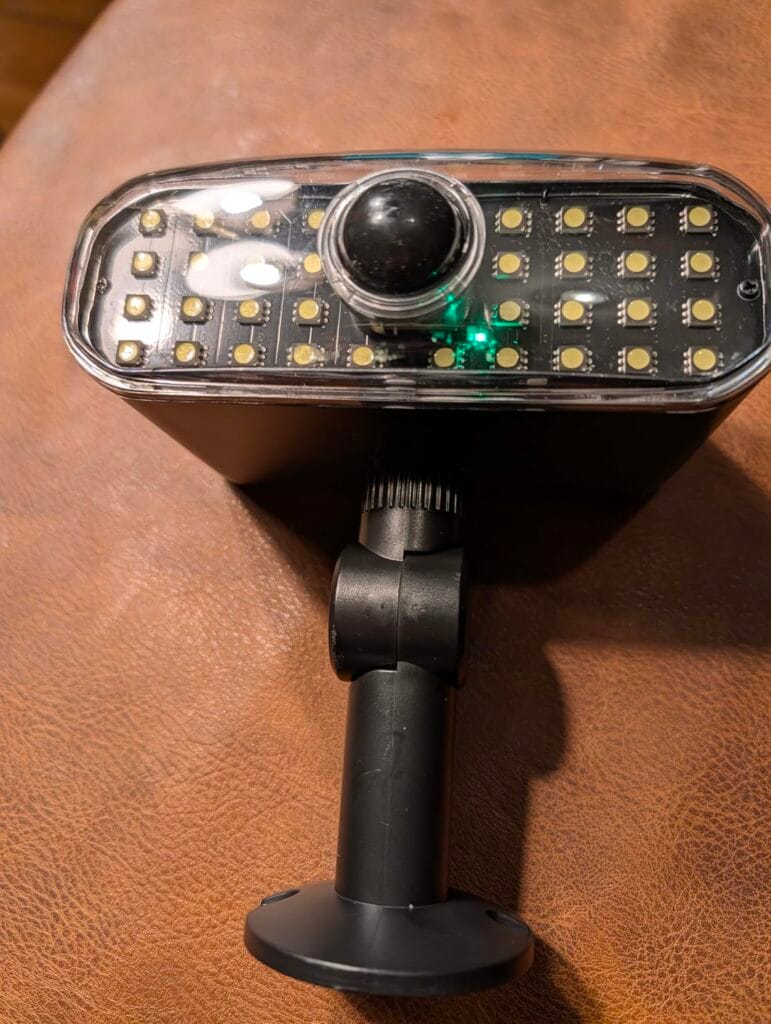
A typical solar-powered LED light reaches a surface temperature of around 30–35°C (86–95°F) during normal operation, barely warmer than a sunny sidewalk. For comparison, a 60-watt incandescent bulb can hit 200°C (392°F), and a halogen landscape light can climb past 300°C (572°F).
That gap isn’t a rounding error. It’s the whole reason solar lighting is considered one of the safer outdoor lighting options on the market. You could hold a solar light in your hand right after sunset and feel almost nothing. Try that with a halogen spotlight and you’ll regret it.
So why does the question keep coming up? Because “get hot” and “produce heat” aren’t quite the same thing, and most articles online blur the two.
How Solar Lights Work (Quick Refresher)
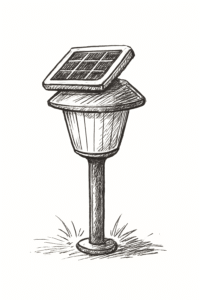
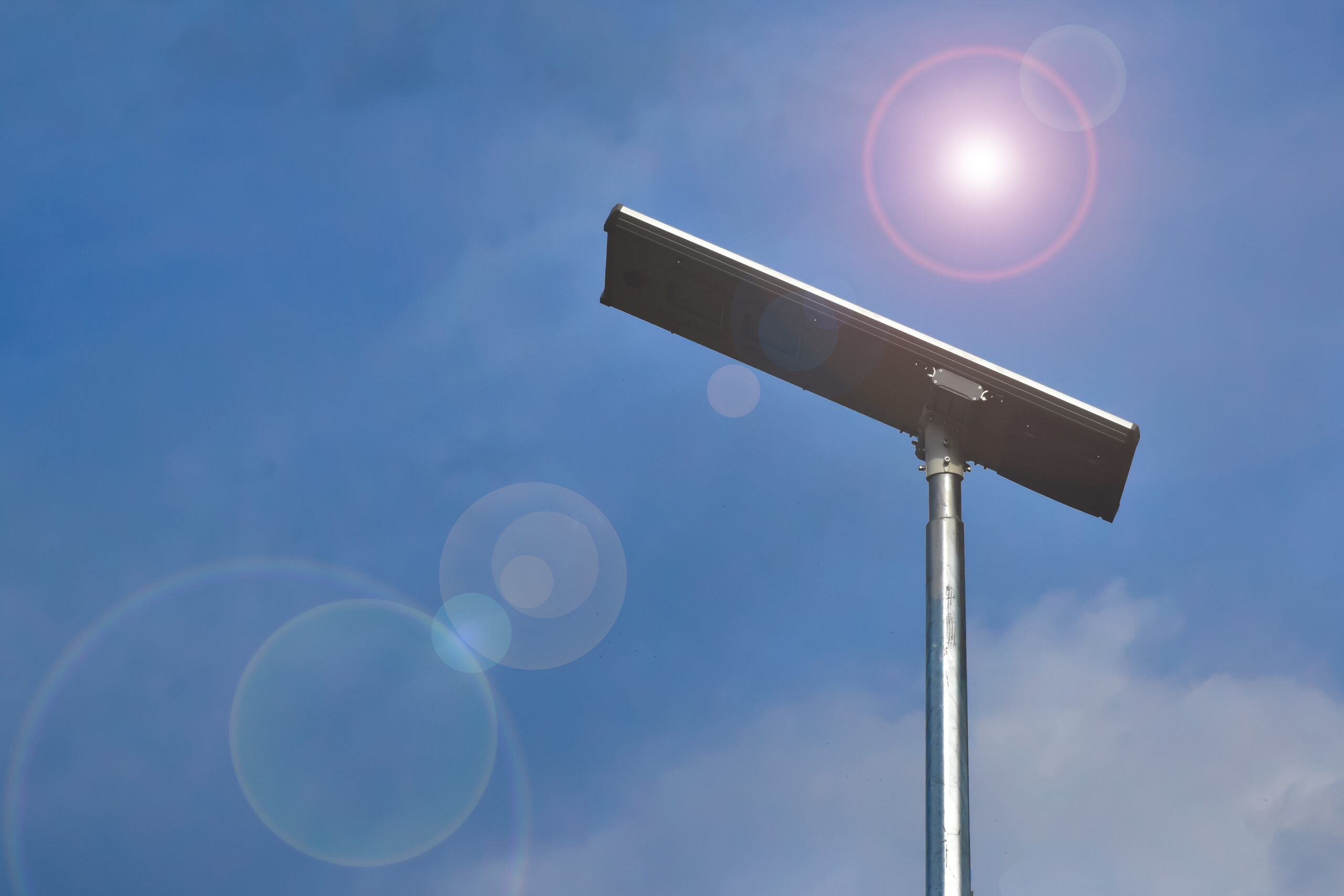
Every solar light runs on the same three-part system: a solar panel that collects sunlight, a rechargeable battery that stores it, and an LED that turns stored energy into light after dark.
The Three Parts That Matter for Heat, Panel, Battery, LED
Each of these three components handles heat differently, and lumping them together is where most “do solar lights get hot” articles go wrong. So let’s separate them.
Solar Panel Heat vs. LED Heat vs. Battery Heat
Solar Panel, Warm From Absorbing Sunlight, Not From Producing Light
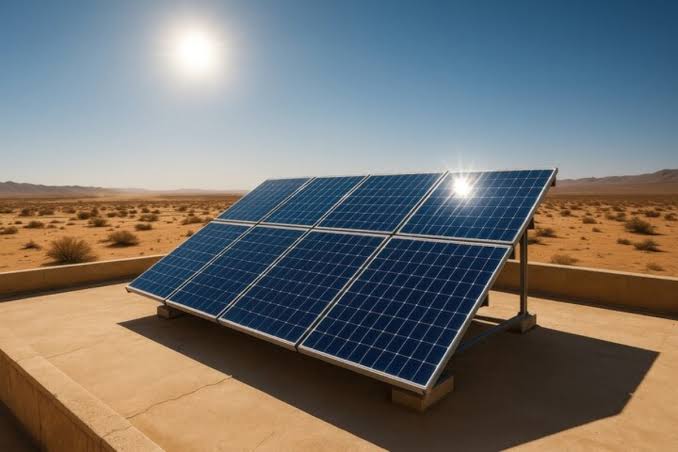
The panel doesn’t heat up because it’s “working hard.” It heats up the same way any dark surface does when it sits in direct sun all day, through simple absorption. Solar panels are tested and rated at a standard 25°C (77°F), and for every degree above that, efficiency drops by roughly 0.05%.So a panel running at 35°C loses about half a percent of its rated output, noticeable to an engineer, invisible to you.
LED Heat, Small, But Not Zero
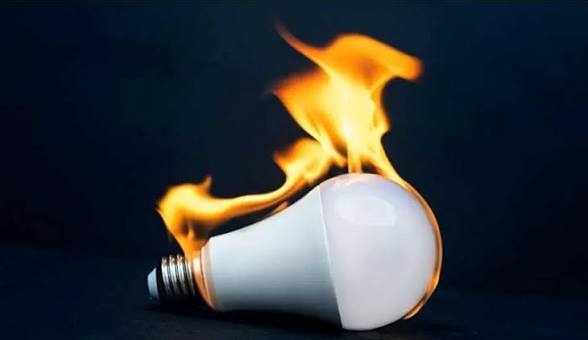
LEDs are famous for being far more efficient than old-style bulbs, and that’s true, but “efficient” doesn’t mean “heat-free.” A small amount of heat concentrates right at the diode, which is why many solar LEDs include a tiny heat sink to pull that warmth away and protect the bulb’s lifespan. You’ll feel this as gentle warmth on the housing, never as anything close to “hot.”
Battery Heat, The One Actually Worth Watching
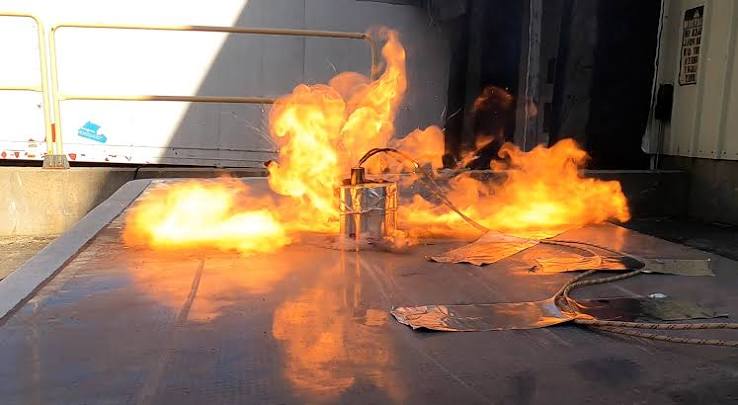
Here’s the part that gets skipped in most articles, and it’s the one that actually matters. Batteries generate heat internally as a normal side effect of charging and discharging, and that heat behaves very differently depending on the chemistry inside. We’ll get into specifics in a minute, because this is where “warm” can occasionally tip into “worth paying attention to.”
How Hot Do Solar Lights Actually Get? (Real Numbers)
Numbers beat vague reassurance every time, so here’s a side-by-side comparison.
| Light Type | Typical Surface Temperature |
|---|---|
| Solar LED light | 30–35°C (86–95°F) |
| Incandescent bulb (60W) | ~200°C (392°F) |
| Halogen landscape light | 300°C+ (572°F) |
Put plainly: you cannot start a fire by touching a solar light’s surface temperature. You absolutely can with a halogen fixture pressed against dry mulch. This is the single biggest reason solar lighting is considered a low fire-risk option for yards, decks, and pathways.
Does Warmth Affect How Solar Lights Charge or Perform?
Here’s where it gets interesting, and where a lot of guides quietly get it backward. Heat doesn’t make solar lights charge faster or shine brighter. If anything, the opposite is closer to true.
Do Solar Lights Work Better in Summer?
Kind of, but not because of the heat itself. Summer days are longer and the sun sits higher in the sky, which means more total sunlight hours hit the panel. That’s what boosts performance, not the temperature. In fact, extreme heat works against you a little: panel efficiency dips slightly above 25°C, and battery charge acceptance drops as things get hotter, which we’ll cover next. So yes, your lights probably perform better in July than in December, just credit the extra daylight, not the heat.
When Heat Starts to Hurt Performance
This is where the numbers actually matter. Lithium-ion batteries, common in mid-range and premium solar lights — see charge acceptance fall sharply as temperatures climb: at 45°C (113°F), a battery can only accept about 70% of a full charge, and at 60°C (140°F) that drops to roughly 45% .
Long-term degradation follows the same pattern. Real-world data modeled on NREL’s battery-aging research shows lithium-ion cells kept at 45°C degrade more than twice as fast as ones kept at 25°C, after 200 charge cycles, that’s roughly 6.7% capacity loss at the higher temperature versus 3.3% at room temperature. Translation: a solar light baking on a black rooftop in Phoenix will likely need a battery replacement sooner than the identical light in a shadier, milder yard.
Can Solar Lights Start a Fire?
Short answer: essentially no, and here’s why that’s not just marketing spin.
The Real Fire Risk (Rare and Almost Always Battery-Related)

Solar lights run on low-voltage systems, typically 1.2–3.7V, with no connection to household wiring. That alone rules out the electrical fire risks that come with damaged insulation or overloaded circuits in wired outdoor lighting . The documented fire incidents that do exist trace back to one specific cause.
What Actually Causes the Rare Cases
Lithium-ion cells can, under specific abuse conditions, enter a state called thermal runaway, a rapid, self-sustaining heat reaction. Research on this shows it typically requires a combination of factors: high charging current, high state of charge, and a battery with no protection circuitry (PMC / Nanjing Tech University study). In consumer solar lights, this shows up almost exclusively in ultra-cheap, unbranded products with no battery management system, not in reputable, certified fixtures. If you buy from a brand that publishes real specs, this risk is close to theoretical.
Battery Type and Heat Tolerance: Li-ion vs. NiMH
This is the comparison nobody covers well, and it directly answers “which battery should I look for if I live somewhere hot?”
Lithium-ion (Li-ion): Higher energy density, longer runtime, but performance and lifespan both take a real hit above 45°C, as shown above. Needs a protection circuit to stay safe under heavy heat stress.
NiMH (Nickel-Metal Hydride): Lower energy density, but tolerates temperature swings without a protection circuit and holds up well in sustained heat, which is exactly why manufacturers still favor NiMH for solar streetlights and garden lamps meant to sit outdoors in high-temperature climates year-round.
LiFePO4 (Lithium Iron Phosphate): The newer option, and arguably the best of both, wider temperature tolerance (roughly -20°C to 60°C) and more charge cycles than standard Li-ion, though usually at a higher price (Linkind).
If you’re shopping specifically for a hot climate, NiMH or LiFePO4 will outlast a standard Li-ion battery under sustained heat stress.
Signs Your Solar Light Is Overheating (and What To Do)
Normal warmth is nothing to act on. These signs are different, they mean something’s actually wrong, not just warm:
- Discolored or warped plastic housing: stop using it and check the battery compartment
- A swollen or bulging battery: remove and dispose of it safely; don’t attempt to recharge it
- Sudden dimming or flickering after months of steady performance: usually a battery nearing end-of-life, not a heat emergency, but worth replacing
- A casing that’s genuinely hot to hold, not just warm: unplug it from sun exposure and inspect for cracked panels or water intrusion
None of these are common. But knowing what “actually wrong” looks like versus “normal operating warmth” is the whole point of this section.
Common Myths About Solar Lights and Heat

“They Don’t Work Well in Hot Climates”, Myth
Solar panels run on light, not heat, so intense sun is still a net positive for charging. The slight efficiency dip from high panel temperature is real but small, you’re not losing meaningful performance by living somewhere sunny and hot.
“Hotter = More Power”, Myth
This is the flip-side myth, and it’s just as wrong. More sunlight hours means more charging time. Higher temperature on its own does not boost output, if anything, it very slightly reduces panel efficiency and definitely stresses lithium batteries over time, as the data above shows.
“If It Feels Warm, Something’s Wrong”, Myth
Every solar light generates a small, normal amount of warmth from its LED and battery. Warm is the baseline, not a warning sign. Save your concern for the specific signs listed above.
What to Look For If You’re in a Hot Climate
If you’re shopping with a hot climate in mind, a few features matter more than brand names or lumens:
- Housing material: metal or aluminum dissipates heat faster than plastic and holds up better under years of direct sun
- Ventilation design: small vents or gaps around the LED and battery compartment prevent heat from pooling inside the housing
- Battery chemistry: NiMH or LiFePO4 over standard Li-ion, for the reasons covered above
Key Takeaways
- Solar lights typically run at 30–35°C (86–95°F), far below incandescent or halogen fixtures
- The panel, LED, and battery each generate heat differently; the battery is the only one worth monitoring closely
- Heat doesn’t improve charging, more daylight hours does, and extreme heat can quietly shorten battery life
- Real fire risk is rare and almost always tied to cheap, uncertified lithium batteries without protection circuitry
- For hot climates, look for NiMH or LiFePO4 batteries, metal housing, and ventilated designs
FAQs
Do solar lights get hot to the touch?
They get mildly warm, typically 30–35°C (86–95°F), noticeably warmer than air temperature, but never hot enough to burn skin on contact.
Can solar lights catch fire in extreme heat?
It’s extremely rare, and almost exclusively linked to cheap lithium batteries without a protection circuit, not to ambient heat alone.
Does hot weather damage solar light batteries?
Yes, over time. Lithium-ion batteries lose charge capacity roughly twice as fast at 45°C compared to 25°C, based on NREL-modeled research.
Do solar lights work better in summer than winter?
Mostly yes, but it’s the longer daylight hours doing the work, not the heat itself.
Is warmth good or bad for solar panel charging?
Neutral to slightly negative. Panels are rated at 25°C and lose about 0.05% efficiency per degree above that, a small effect, not a meaningful one.
Can you leave solar lights out in 100°F+ heat?
Yes, most solar lights are designed for outdoor exposure and handle this fine. Battery lifespan may shorten slightly faster than in milder climates.
Why do solar lights sometimes feel warm at night?
That’s residual heat from the battery discharging to power the LED, completely normal.
Do solar lights get too hot for pets or kids to touch?
No. Surface temperatures stay well below burn thresholds under normal use.
Li-ion or NiMH, which battery handles heat better?
NiMH tolerates sustained heat more reliably without a protection circuit; Li-ion offers more power but needs one to stay safe under heavy heat stress.
How do I know if my solar light is overheating vs. just warm?
Warm housing is normal. Warped plastic, a swollen battery, or a casing too hot to hold comfortably are the actual warning signs.