Table of Contents
Okay so the solar hot air balloon light trend is real and honestly it makes sense. These things look genuinely good in a garden at night. Not in a “I tried to make my yard look nice” way but in a way where people walking past actually slow down. The problem is half the ones you find online are borderline garbage and the other half nobody talks about properly. So here’s what you actually need to know before you spend anything.
They All Look the Same in Photos and That’s the Whole Problem
Spend ten minutes on any shopping site and you’ll notice something. Every solar hot air balloon light listing uses almost identical photos. Bright colors, perfect lighting, a blurred garden background. You cannot tell from those photos whether you’re looking at something that’ll last two seasons or something that’ll fade, crack, and stop charging by September.
The ones that fail fast usually fail in the same ways. The balloon fabric bleaches out from UV exposure within one summer. The wire frame bends the first time wind catches it properly. The solar panel is undersized and never gives the battery a real full charge even on a sunny day. And the battery itself is so small the light runs maybe three hours before dimming to almost nothing.
None of that shows up in the product photo. It shows up in the one star reviews six months after purchase, buried under the paid five star ones at the top. That’s where the real information lives. Go read those before you buy anything.
The Fabric Question Nobody Thinks to Ask
Most solar hot air balloon lights use either nylon, polyester fabric, or rigid plastic for the balloon itself. This matters more than people realize because it affects both how the light looks at night and how long it survives outside.
Fabric and nylon versions glow softer and warmer from the inside. The light diffuses through the material and gives that proper glowing lantern effect that makes these lights worth buying in the first place. Rigid plastic versions are tougher in rain and wind but often look harsher when lit. The glow doesn’t diffuse the same way and you can sometimes see the LED point source through the plastic instead of a smooth even glow across the whole balloon shape.
The issue with fabric versions is UV degradation. A balloon that starts as deep red and vivid yellow in May looks washed out and pale by late August if the material has no UV protection. Good quality ones treat the fabric with UV stabilizers. Budget ones skip that step entirely because it costs more. You find out the hard way after one season. Check whether the listing mentions UV resistant fabric specifically. If it doesn’t mention it, assume it isn’t.
Where You Put the Stake Changes Everything
This is the thing people get wrong most often and it drives the most disappointment with these lights. You find the perfect spot in your garden. Maybe it’s tucked under a rose bush, or in the corner of a shaded bed, or hanging from a branch covered by a canopy of leaves. It looks perfect in the daytime. At night the glow looks beautiful in your head.
Then the light barely works because the solar panel spent the whole day in shade.
The panel needs proper direct sun. Not filtered through leaves, not partially shaded by a fence for half the day. Solid direct sunlight from roughly mid morning through mid afternoon. That’s when the panel does the heavy lifting on charging the battery. Lose those hours to shade and you lose runtime at night. It’s a straight trade. A light that could run seven hours on a full charge might run two hours on a partial charge from a shaded panel position.
Before you commit to a placement, stand in that spot at noon and look up. If there’s anything blocking the sky above the panel position, move it. Even shifting the stake three feet to the left sometimes makes the difference between a light that works properly and one that frustrates you every evening.
Brightness Expectations for a Decorative Light
Let’s be straight about something. A solar hot air balloon light is not a security light. It’s not lighting your path so you don’t trip. It’s decoration. It’s atmosphere. The job is to glow warmly and look good from a distance, not to illuminate anything functionally.
That said there’s a real difference between a light that glows properly and one that’s barely visible past arm’s length. The LED inside the balloon determines this. Warm white LEDs give the most natural, flattering glow for garden settings. The light looks like candlelight from a distance and it works with plant colors and natural textures without clashing. Multicolor LEDs that cycle through red, green, blue sequences look more festive and can work well for certain setups but they can also feel a bit cheap depending on the rest of your garden.
Some models include a flicker mode that mimics a candle flame. That mode draws less power which means longer runtime, and it also looks more organic and interesting than a flat steady glow. If you’re deciding between two similar lights and one has flicker mode and one doesn’t, the one with flicker mode is usually worth it.
Runtime and What the Battery Numbers Mean
Battery capacity on small solar garden lights gets listed in mAh, milliamp hours. Think of it like a fuel tank. Bigger number, more fuel, longer the light runs before emptying out.
For a solar hot air balloon light you want at least 1200mAh to get through a full evening reliably. Better options sit at 1800mAh to 2500mAh and those will run six to eight hours on a proper charge. Anything listed below 800mAh is going to give you maybe three hours on a good day and considerably less when the weather is cold or the panel had a partially cloudy charging day.
The battery type matters in colder months. Standard lithium cells work fine through summer. When temperatures drop they lose efficiency noticeably. LiFePO4 chemistry handles cold far better and maintains more consistent runtime through autumn and into winter. Budget lights never use LiFePO4 because it costs more. If you want a light that keeps working properly through October and November, it’s worth spending a little more to get it.
Hanging These vs. Staking Them
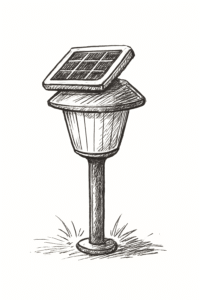
Stake versions sit in the ground with the balloon hovering a foot or so above the soil. They’re stable, easy to move, work well along paths and in beds. Hanging versions go on a shepherd’s hook or from a pergola beam and look more like actual hot air balloons mid flight which is honestly a better visual.
The catch with hanging versions in a windy garden is that the balloon swings around. If the solar panel is on a stake separate from the hanging balloon, wind won’t affect charging. If the panel is integrated into the hanging unit itself, it might end up facing the wrong direction after a breezy night and charge poorly the next day.
Sets of four to six lights almost always look better than a single light by itself. One balloon in a garden looks a bit random. Four of them along a border or clustered near a seating area creates an actual moment. The price per light is usually lower in sets too, so it’s genuinely the better deal in most cases.
Summary
Solar hot air balloon lights work well when you pick the right one and place it properly. UV resistant fabric, a solar panel in real direct sun, and a battery above 1200mAh are the three things that separate lights worth buying from ones that disappoint. Warm white LEDs look better in most gardens than multicolor cycling options. Hanging versions create more visual impact but need a sheltered spot in windy gardens. Buy in sets of four to six for the best effect and always read the one star reviews before ordering.