Table of Contents
I bought my first LuminAID solar light because my neighbor showed up at my door during a blackout holding one, and the thing was glowing like a little moon in his hand. I asked where he got it. He said he’d been carrying it in his hiking bag for two years. That was enough for me.
But I want to give you a real picture here. Not the product page version. The actual one, including the parts that are annoying.
What LuminAID Actually Is
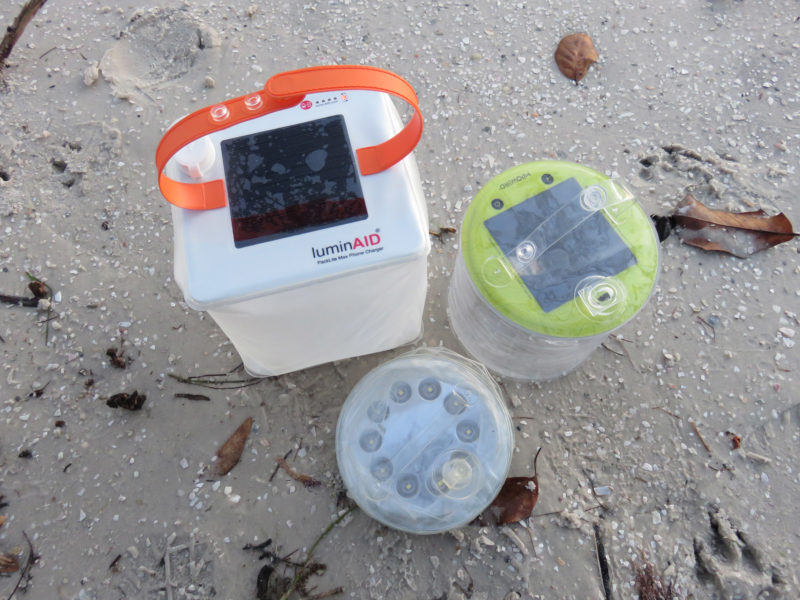
Most people hear “solar lantern” and picture one of those cheap plastic garden lights that die after two weeks. LuminAID is not that. The whole design is built around one idea — make something that packs completely flat, inflates when you need it, and runs on sunlight with no batteries to replace ever.
Two architects, Anna Stork and Andrea Sreshta, invented it in 2010 after the Haiti earthquake. They needed a light that aid workers and displaced people could carry in bulk, charge with nothing but sun, and use in the roughest conditions. That origin shows in the build. This was not designed in a marketing meeting. It was designed for a real problem, and that is why it still holds up years later. The company is based in Chicago and was acquired by Adventure Ready Brands in 2021, but the product DNA did not change.
How You Use It — And Why the Inflation Part Is Easier Than You Think
Okay so the inflation thing sounds strange. A lantern you inflate. I get why people hesitate on that. But it takes literally two or three breaths. Some newer models like the PackLite Titan use a twist mechanism so you do not even blow into it at all — you grip the top, grip the bottom, twist, and it opens up into a cube shape. Done in five seconds. The inflated body is what diffuses the LED light inside and makes it spread softly in all directions. Without that air pocket, the light would just beam straight out like a torch. The inflation is not a gimmick. It is the whole reason the glow feels warm and spread out instead of harsh.
The solar panel sits on the top face. Leave it in direct sunlight, face up, and it charges. Simple. The Nova model takes about 10 to 12 hours of real sun for a full charge, or one to two hours by USB cable if you have a power bank nearby.
The Models and What Each One Is Actually For
There are a few options and the differences between them are not just about price.
The PackLite Nova is $25 and produces 75 lumens at full brightness. It runs for up to 24 hours on low mode. For a camping lantern or an emergency kit light, that runtime is genuinely impressive. It weighs almost nothing, packs to under one inch flat, and has a battery indicator so you are not guessing how much charge is left. This is the starter model and it does its job well.
The PackLite Max 2-in-1 gets you 200 lumens and 50 hours of runtime. It also charges your phone. That phone charging feature is where the “2-in-1” name comes from. If you are doing multi-day trips or sitting through a three-day power outage, this one makes more sense than the Nova.
The PackLite Titan 2-in-1 is the top of the range. 300 lumens, which is significantly brighter than most competing solar lanterns that max out around 65 to 90 lumens. It covers around 300 square feet of soft light, has both white and red light modes, and holds enough battery for two to three full phone charges. After two years of testing by outdoor gear reviewers, it is still considered the best solar camping lantern in its category. It weighs 12.5 ounces and collapses to one inch thick. All models carry an IP67 waterproof rating, meaning they survive full submersion in a meter of water and they float.
The Red Light Feature Is More Useful Than It Sounds
Titan owners get a red light mode and I want to explain why that matters. White light blows out your night vision completely. Walk out of a bright tent and into darkness and you are blind for a minute while your eyes readjust. Red light does not do that. Relief workers in the field know this well. Campers who want to walk around a dark site without stumbling benefit from it too. It is a small feature that shows real thought went into the design.
Where LuminAID Solar Light Falls Short
Here is the part that most reviews skip over or mention politely and then move on from. The solar panel on the Nova model is slow. Real-world testing showed it taking over an hour of direct sunlight just to build enough charge to turn on. Once it got going it lasted a long time, but the early charge behavior is frustrating if you are impatient or working with limited sun hours.
The light color on the Nova has also been described as a harsh white, similar to fluorescent office lighting. For people going camping specifically to get away from that kind of light, it is an odd choice. The Titan handles this better, but the entry-level model could improve on warmth.
The Titan still uses micro-USB, not USB-C. In 2026, when everything else in your bag runs USB-C, carrying a separate micro-USB cable is genuinely annoying. The glue on the handle has also been reported to soften at higher temperatures. And long-term phone charging via the solar models eventually degrades, which is a known issue across all solar-powered charger lanterns, not just LuminAID.
Who Should Buy This and Who Should Not
Buy a LuminAID solar light if you camp more than twice a year, if your emergency kit currently has nothing or just candles in it, or if you go anywhere remote where a power outlet is not an option. The flat-pack format saves real space, the runtime beats most competitors, and the waterproofing is serious.
Do not buy it expecting a headlamp or a directional torch. The diffused glow lights up a tent, a table, a small room. It does not cut through distance or focus on a specific point. It is a lantern, not a flashlight, and using it like a flashlight will leave you disappointed.
Also, leave it face-up outdoors when charging. If it is in the shade or behind a window, the charge rate drops off sharply. Wind is a factor too — the inflated cube shape catches air easily and will blow off a surface if not hung or secured.
Why People Keep Coming Back to This Brand
LuminAID now has over 10,000 five-star reviews. Campers mention buying second and third units. People give them as gifts. Disaster relief nonprofits have distributed them across more than 100 countries. Mark Cuban backed it on Shark Tank in 2015 and sales hit two million dollars in the nine months after. That kind of staying power does not come from marketing. It comes from a product that does what it says in conditions where light actually matters.
The design is not perfect. No product is. But the core idea — a flat, solar-powered, waterproof light that you inflate in seconds and hang above your head — is genuinely one of the better ideas in portable lighting. And at $25 for the Nova, the entry cost is low enough that there is not much reason to wait.
Summary
LuminAID solar lantern is a flat-pack, inflatable solar light built for camping, power outages, and emergency kits. Models range from the $25 Nova at 75 lumens to the Titan at 300 lumens with phone charging. Runtime goes up to 50 hours on low. All models are IP67 waterproof and charge via solar or USB. The solar panel charges slowly in weak sun, and the Titan still uses micro-USB, but overall it outperforms most solar lanterns in its price range.