
Table of Contents
Okay so this confused me for longer than I want to admit. Two batteries, both labeled 200Ah, both 12V, both sitting on the same shelf at roughly the same price. One says 10Hr. The other says 20Hr. And nobody at the store could explain what that actually meant in plain English.
Turns out the answer is not complicated once someone breaks it down right. And it changes how you should be picking batteries for a solar system.
The “Hr” number is about the test, not the battery
That 10Hr or 20Hr printed next to the amp-hours is not a feature the battery has. It is telling you how fast the manufacturer drained it when they measured the capacity. That is it. Nothing more dramatic than that.
A 200Ah 20Hr battery got measured by pulling 10 amps out of it continuously for 20 hours until it hit the cutoff voltage. Ten amps times 20 hours equals 200Ah. Simple math. A 200Ah 10Hr battery got tested by pulling 20 amps for 10 hours. Twenty amps times 10 hours is also 200Ah. Same number on the label, very different story inside.
Here is where it gets important. Lead acid batteries — AGM, gel, flooded, tubular, all of them — do not behave the same way at every speed. Drain one slowly and it gives you close to everything it has. Drain it fast and something weird happens inside and you get less out of it than the label says you should. Way less sometimes.
The Peukert effect this is the thing nobody explains properly
A German scientist named Wilhelm Peukert figured this out back in 1897, which means this has been known for over a hundred years and battery sellers still do not put it on the box in plain language. Here is what he found: the harder you push a lead acid battery, the less total energy it actually delivers before it dies.
The reason is chemistry. When you pull current out fast, the reactive material inside the battery cannot move and respond quickly enough to keep the voltage up. The voltage drops. It hits the cutoff level early. The battery looks dead even though there is still charge sitting inside that just could not get out in time. Take the load off, wait a few minutes, and the voltage bounces back a bit. The energy was there. The internal process just choked under pressure.
A 100Ah lead acid battery pushed hard under a heavy load can sometimes only deliver 50 to 60 usable Ah before the voltage collapses. Not because it ran out. Because the chemistry hit a wall. For solar users running an inverter or heavy appliances off battery storage, this matters enormously and most people find out the hard way.
So when you compare 200Ah 10Hr versus 200Ah 20Hr, which one is actually bigger
This is the bit that surprises people. If you have a battery claiming 200Ah at the 10Hr rate, that battery is physically stronger than one claiming 200Ah at the 20Hr rate. Here is why.
The slower you test a lead acid battery, the more generous the reading. Go slow enough and you get the maximum possible number out of it. So a battery that needs a slow 20-hour drain to reach 200Ah would give you something noticeably less than 200Ah if you tested it at the faster 10-hour rate. To hit 200Ah at the tougher 10Hr rate, the battery needs more actual internal capacity than a 200Ah 20Hr battery does.
One expert put it this way: a C10 rating is worth roughly 10 to 20 percent more real capacity than the same number at C20. A C10 150Ah battery might actually rate C20 at around 172Ah. More lead inside. More actual storage.
So why do some manufacturers rate at 10Hr instead of 20Hr? Because 200Ah sounds better than 165Ah and most buyers have no idea there is a difference. A battery that only delivers 165Ah at the industry-standard C20 test can still print 200Ah on the box if it hits that number at C10. Totally legal. Totally misleading if you do not know what you are looking at.
C20 is the standard you should trust for solar
For solar energy storage, deep cycle batteries, home backup systems — the accepted standard is C20. When a solar installer sizes your battery bank, when a charge controller datasheet talks about capacity, when any solar calculator asks how many amp-hours you have, they are almost always assuming C20. If your battery was rated at C10 and you plug the number into a solar calculation tool, you will overestimate your real storage and your system will underperform.
The 20Hr rate is the honest, conservative number that reflects how most home solar systems actually use their batteries — slow overnight discharge, LED lighting, a fan, a television, a refrigerator running through the night. Nobody on a normal home solar setup is dumping their full battery bank in 10 hours flat. The loads are steady and moderate and the C20 rating is what lines up with that reality.
What about lithium batteries do they have this problem
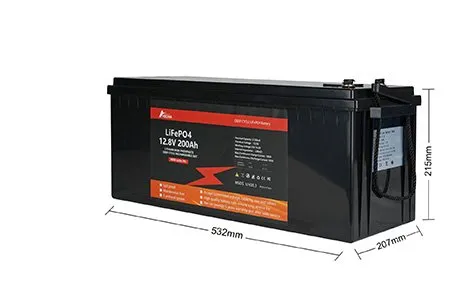
No. Not really. Lithium iron phosphate batteries, LiFePO4, have what is called a very low Peukert exponent — basically close to 1.0, which means the capacity barely changes between slow and fast discharge. A 200Ah LiFePO4 battery delivers close to 200Ah whether you drain it slowly over 20 hours or push it hard over 2 hours. The chemistry handles it.
This is one of the underappreciated real-world advantages of lithium over lead acid in solar storage. It is not just cycle life or weight. It is that a lithium battery actually delivers what the label says across a wide range of loads. A 200Ah lithium and a 200Ah AGM are genuinely different amounts of usable storage when you are running real household loads.
What to actually check before buying
Look for a battery datasheet that shows capacity at both C10 and C20. A quality manufacturer publishes both. If a battery only lists C10 capacity and nothing else, that is a red flag. It means they chose the more flattering number and are not showing you what it delivers under the slower standard test.
Also check which rate the seller is quoting if they gave you a verbal figure. Anyone selling solar batteries in the US should be quoting C20. If they quote C10 and frame it as the full capacity for your solar system, you will size everything wrong and wonder why your power runs out earlier than the math said it would.
The whole C10 vs C20 thing is genuinely one of those details that catches people off guard. Two batteries, same label, meaningfully different real-world performance. Now you know what to look for before you hand over the money.
This is something we cover in detail in our guide on Exide vs Luminous Solar Batteries
Summary
200Ah 10Hr and 200Ah 20Hr refer to the speed at which the battery was tested, not a feature difference. A 20Hr rating means 10 amps drawn over 20 hours. A 10Hr rating means 20 amps over 10 hours. Lead acid batteries lose capacity under faster discharge due to the Peukert effect. C20 is the industry standard for solar storage. A battery rated 200Ah at C10 actually holds more capacity than one rated 200Ah at C20. Lithium batteries barely experience this problem and deliver close to full rated capacity at any discharge rate.