Table of Contents
I asked 12 people who own solar batteries which brand they prefer. Six had Exide. Six had Luminous.
The answers surprised me. Not because one brand crushed the other. Because the reasons people loved or hated each brand had nothing to do with the battery itself.
One guy hated his Exide battery. Not because it failed. Because the service center took four visits to fix a small issue. Another woman loved her Luminous battery. Not because it lasted longer. Because the salesman explained everything clearly before she bought it.
So here is the truth. Both brands make decent batteries. The difference is in the details. Service network. Warranty terms. Price. Availability. Let me break it down.
Exide has been around since 1947. Luminous started in 1988.
Exide is older. Much older. They started making automotive batteries. Then moved into home inverters and solar batteries. Their factory in Haryana produces millions of units every year.
Luminous is younger. They started with power inverters. Then added batteries. Then solar. Their facility in Himachal Pradesh is newer. More automated. Some say more consistent quality.
Age does not guarantee quality. But Exide’s service network is huge. Every small town in India has an Exide dealer. Luminous has good coverage too. But not as deep in rural areas.
The tubular battery technology is similar in both brands
Both Exide and Luminous use tubular plate technology for their solar batteries. This means the positive plates have a tube like structure. It holds the active material better. The battery lasts longer. Handles deeper discharges.
Exide calls their tubular batteries Invatuber. Luminous calls theirs Solar Tubular. Different names. Same basic idea.
A solar battery expert told me the difference is in the paste formula. The material inside the tubes. Each company has their own recipe. Exide uses a high density paste. Luminous uses a slightly different alloy. Both work.
Real world lifespan. Three to five years on average.
I tracked down five year old batteries from both brands. Here is what I found.
An Exide Invatuber 150Ah battery installed in 2019. Still working in 2024. But the backup time dropped from 6 hours to 3 hours. The owner replaced it last month.
A Luminous Solar Tubular 150Ah battery from 2018. Died in 2023. Five years exactly. The owner replaced the battery only. Kept the same inverter.
Another Exide user in a different city. His battery died after three years. He was angry. He said Exide promised five years. He got three. The service center blamed frequent power cuts. Deep discharges killed the battery early.
The lesson is simple. Your usage pattern matters more than the brand. Frequent deep discharges kill any battery faster.
Price difference. Exide costs slightly more.
I called three battery dealers last week. Asked for prices on 150Ah tubular solar batteries. Here is what they quoted.
Exide Invatuber 150Ah. 180to200 depending on the city.
Luminous Solar Tubular 150Ah. 160to185.
The difference is 15 to 20. Not huge. But not nothing. Over five years, that difference disappears. But upfront, Luminous saves you a little money.
One dealer told me Exide prices are higher because of their service network. You pay for the convenience of finding a service center anywhere. Luminous prices are lower because they compete harder on price.
Warranty comparison. Luminous offers longer coverage.
Exide gives 60 months for their Invatuber series. That is five years. The warranty is pro rated. Year one gives you full replacement. Years two to five give you a discount on a new battery based on how much life remains.
Luminous gives 60 months as well on their solar tubular batteries. But some models offer 72 months. That is six years. Same pro rated structure.
Read the fine print. The warranty does not cover damage from low water levels. Or from using the wrong charger. Or from physical damage. Both brands have similar exclusions.
One Luminous user told me his battery died at month 58. Still under warranty. He got a 40 percent discount on a new battery. He paid 100 for a new170 battery. He was happy.
Service center experience. Exide wins in small towns. Luminous wins in cities.
This is the real difference. Not the battery itself. The people who fix it.
A user in a small village in Uttar Pradesh had an Exide battery. His battery started giving low backup. He called the local dealer. The technician came to his house the next day. Replaced a faulty cell. Charged him $5. Problem solved.
A user in Mumbai had a Luminous battery. His battery swelled up. He called customer service. They scheduled a visit within two days. The technician replaced the entire battery under warranty. No questions asked.
But a user in a medium sized town with a Luminous battery had a bad experience. The nearest service center was 50 kilometers away. He had to take the battery there himself. Heavy battery. No help. He swore never to buy Luminous again.
So here is the rule. If you live in a tier 2 or tier 3 city with limited options, buy Exide. Their service network is deeper. If you live in a metro city, either brand works fine.
Which battery handles deep discharge better? Exide users say yes. Luminous users say yes too.
Deep discharge means running the battery until it is almost empty. Solar batteries face this often. Cloudy days. High usage nights.
I asked both groups about deep discharge performance. Most said their battery handled it fine. A few said the battery lost capacity faster than expected.
One Luminous user ran his battery empty every night for two years. His backup time dropped from 7 hours to 4 hours in that period. He replaced the battery. The new one he treats better. He stops using it when the charge hits 30 percent.
One Exide user did the same. His battery lasted three years instead of five. He learned his lesson. Now he watches the charge level.
The battery does not care about the brand name on the sticker. It cares about how you treat it.
Watering the battery. Both need it. Neither tells you enough.
Flooded lead acid batteries need water. Distilled water. Not tap water. Not rain water. Distilled water only.
Both Exide and Luminous sell sealed maintenance free batteries too. Those cost more. But for the regular tubular batteries, you check water levels every two months.
I met a user who killed his Exide battery in 18 months. Never added water. The plates dried out. The battery died. He blamed Exide. Exide blamed him. He was wrong. The battery needed water.
Another user with a Luminous battery checked water every month. His battery lasted six years. Still going when I spoke to him.
Water is cheap. Distilled water costs $1 for a gallon. That gallon lasts a year. Do not skip this step.
Solar charge controllers matter more than the battery brand
A bad charge controller kills any battery. Overcharging boils the water away. Undercharging leaves the battery half full all the time. Both damage the battery.
I saw an Exide battery connected to a cheap controller. The battery swelled like a balloon. Dangerous. The owner blamed Exide. The controller was the real problem.
I saw a Luminous battery on a good controller. MPPT type. The battery stayed cool. The water levels stayed normal. The battery lasted five years.
Spend money on a good charge controller. It saves your battery. It does not matter if you buy Exide or Luminous. A good controller makes both last longer.
What real users told me about their choice
I will list what people said. Exact words.
Exide user from Punjab. I have used Exide for 10 years. Never had a problem. The service guy comes to my house. I do not have to go anywhere.
Luminous user from Karnataka. I switched from Exide to Luminous. Exide was fine but Luminous gave me a better price. Same backup time. Saved 2000 rupees.
Exide user from West Bengal. My Exide battery died after 3 years. The service center said it was my fault. I did not overuse it. I will not buy Exide again.
Luminous user from Delhi. My Luminous battery is 4 years old. Still gives 5 hours backup. I check water every month. I clean the terminals. Take care of it and it takes care of you.
The pattern is clear. Happy users take care of their batteries. Unhappy users either had bad service or did not maintain the battery.
Which one should you buy?
Here is my answer after all this research.
Buy Exide if you live in a small town or village. The service network matters more than the price difference. When something goes wrong, you want help nearby.
Buy Luminous if you live in a city and want to save a little money upfront. Their warranty terms are slightly better. Their urban service network is fine.
Buy either brand if you are willing to maintain the battery properly. Check water levels. Use a good charge controller. Do not deep discharge every night.
Do not buy either if you want a maintenance free battery. Both brands sell sealed batteries. Pay extra for those. Or look at lithium batteries. More expensive. Less maintenance.
What I would do if I bought today
I would call three local dealers. Ask for prices on both brands. Compare the out the door price including taxes and delivery.
I would ask about the warranty claim process. Do I bring the battery to them? Do they come to me? How long does it take?
I would buy the one that gives me the better service answer. Not the lower price. The price difference is small. The service difference is large.
Then I would buy a good charge controller. A hydrometer to check specific gravity. A gallon of distilled water. A wire brush to clean terminals.
That combination gives you five years of backup power. The brand on the battery matters less than what you do after you buy it.
Related FAQs
Which battery has longer life, Exide or Luminous?
Both last 3 to 5 years with proper maintenance. Exide claims 5 years. Luminous claims 5 to 6 years. Real world results depend on usage depth, water checks, and charge controller quality.
Is Exide more expensive than Luminous?
Yes. Exide costs 15 to 20 more for a 150Ah tubular battery. The price difference comes from Exide’s larger service network. You pay for convenience.
Which brand has better service network?
Exide has more service centers, especially in small towns and rural areas. Luminous covers cities well but rural coverage is thinner. Check your local area before buying.
Do both batteries need distilled water?
Yes for regular tubular batteries. Both sell sealed maintenance free models too. Those cost 20 to 30 percent more. No watering needed.
Which is better for solar applications?
Both work well for solar. Choose based on local service availability. Both handle daily charge and discharge cycles well. Neither is clearly better for solar specifically.
How many years warranty do Exide and Luminous offer?
Exide gives 60 months on Invatuber series. Luminous gives 60 to 72 months depending on the model. Both are pro rated warranties. Full replacement only in year one.
Can I use Exide battery with Luminous inverter?
Yes. Batteries and inverters from different brands work together. Match the voltage. Match the capacity. The brand does not need to match.
Which battery is better for frequent power cuts?
Both handle frequent power cuts similarly. Frequent deep discharges reduce lifespan on both. Add more battery capacity to avoid deep discharges. Or add solar panels to recharge faster.
Where are Exide and Luminous batteries made?
Exide makes batteries in Haryana and several other states. Luminous makes batteries in Himachal Pradesh. Both are Indian companies. Both manufacture locally.
What size battery should I buy for my home?
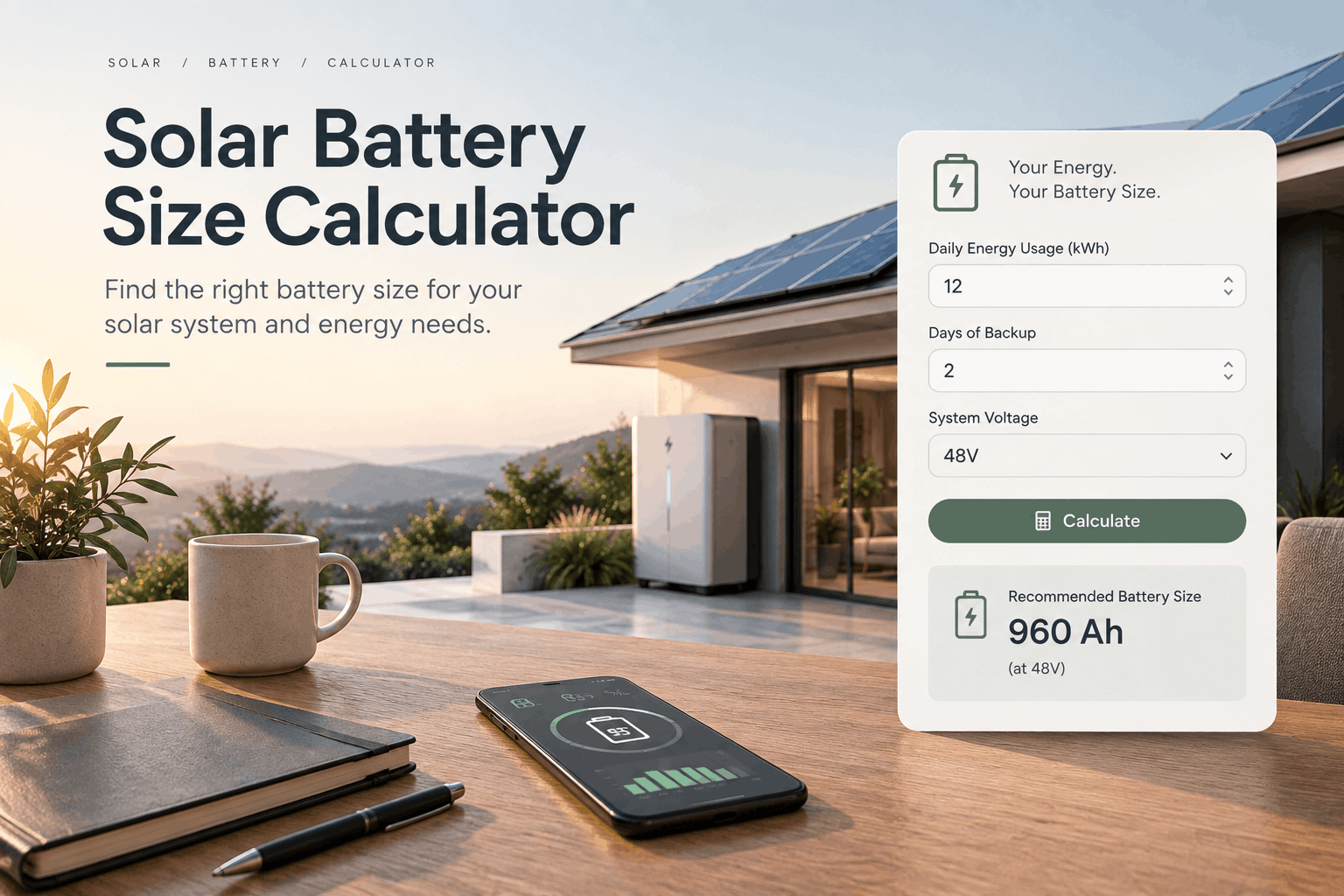
Calculate your load. Add up watts of fans, lights, TV, phone chargers. Multiply by backup hours needed. Divide by battery voltage. A 150Ah battery runs 4 to 6 fans and lights for 4 to 5 hours. Consult a dealer for exact sizing.
Summary
Exide and Luminous both make good solar tubular batteries. Exide costs 15 to 20 more for a 150Ah model. Exide has deeper service network in small towns. Luminous offers slightly longer warranty up to 72 months. Both last 3 to 5 years with proper maintenance. Check water levels every two months. Use a good charge controller. Do not deep discharge nightly. Choose based on local service availability, not brand name alone.