Table of Contents
The answer depends on your AC unit’s real wattage, your daily run time, and your location’s peak sunlight hours. Here is the full step-by-step breakdown.
Step 1: Know Your AC Unit’s Real Wattage
A 12,000 BTU mini split or window AC unit draws between 1,000 and 1,500 watts during operation. Tests show the wattage temporarily doubles when the compressor first starts. This surge power affects your inverter selection.
The most accurate way to find your unit’s real draw is to check the nameplate label on the unit or use a Kill-A-Watt meter. BTU ratings measure cooling capacity, not electrical consumption.
Step 2: Calculate Your Daily Energy Consumption
Use this formula: Watts x Hours per Day = Daily Watt-Hours
Example using 1,500 watts running for 8 hours per day:
1,500 x 8 = 12,000 watt-hours, or 12 kWh per day (source: TopBull Solar, 2024).
Step 3: Find Your Peak Sunlight Hours
Peak sunlight hours vary by location. Here are standard regional averages used in solar sizing calculations:
- United States: 4.5 hours per day
- India: 5.5 hours per day
- Africa: up to 6.5 hours per day
- Europe: 3 to 4 hours per day
(source: HBOWA Solar, 2025; RenewableWise, 2024)
Divide your daily energy need by your peak sunlight hours to get your required solar output.
12 kWh divided by 4.5 hours = 2.67 kW of solar capacity needed.
Step 4: Choose Your Panel Size
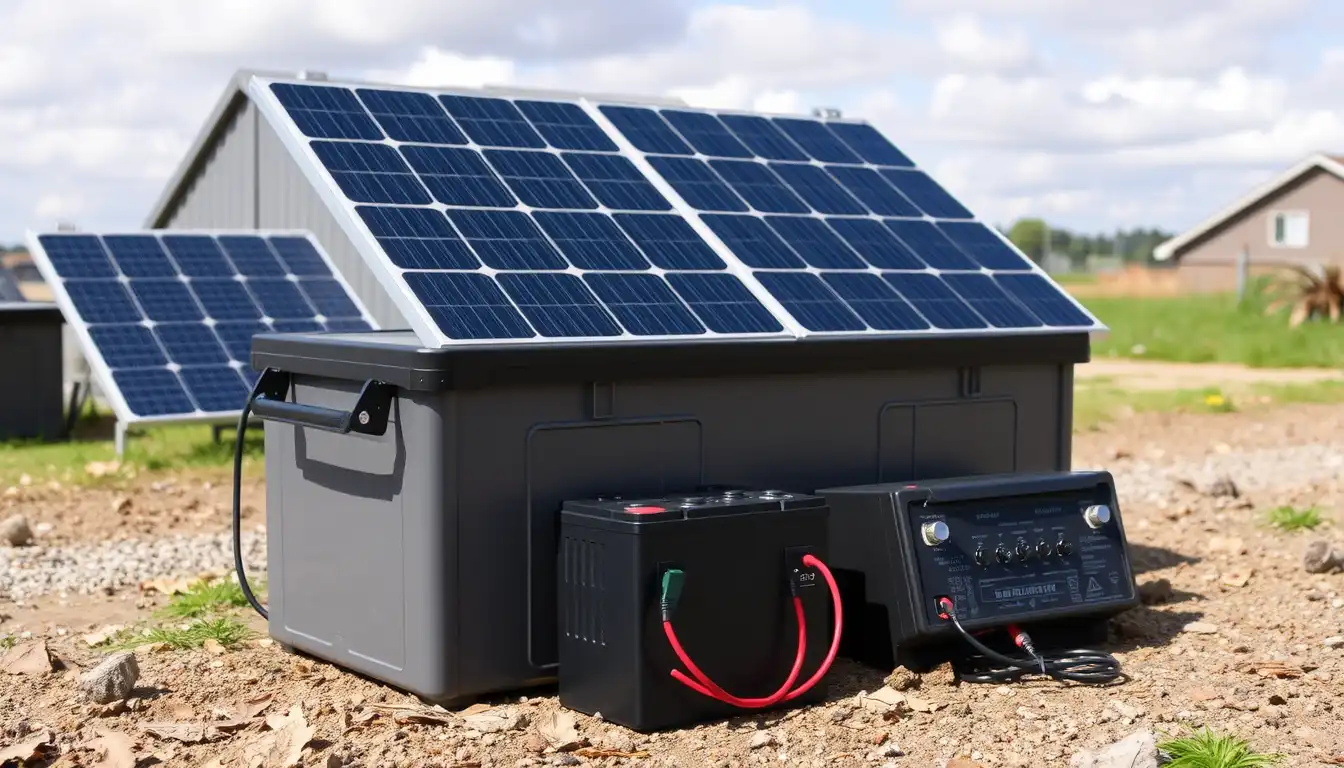
550-Watt TOPCon Panels
A 12,000 BTU AC running at 1,500 watts needs 4 to 5 panels at 550 watts each, calculated with a 0.75 real-world efficiency factor.
460-Watt Panels
Each 460-watt panel produces roughly 2.07 kWh per day at 4.5 peak sunlight hours. You need 6 panels to cover 12 kWh of daily AC demand (source: PowMr, 2024).
300-Watt Panels
Using 300-watt panels with 5 peak sunlight hours per day, you need around 8 panels. Adding panels for system inefficiencies brings the total to 10 to 12 panels.
Panel Count Summary
- 550-watt TOPCon panels: 4 to 5 panels (source: HBOWA Solar, 2025)
- 460-watt panels: approximately 6 panels (source: PowMr, 2024)
- 300-watt panels: 10 to 12 panels (source: Gecko Solar Energy, 2025)
Step 5: Size Your Inverter Correctly
Air conditioners draw as much as 6 times their running wattage at startup. Your inverter’s surge power rating must exceed this startup draw.
Use a Pure Sine Wave inverter. A Modified Sine Wave inverter damages motor-driven appliances over time. A low-frequency inverter handles surge power more reliably because it supports up to 3 times its rated surge capacity.
Step 6: Plan for Battery Storage
You need batteries only if you run the AC at night.
For nighttime operation, plan for a battery bank rated at 100 amp-hours for each ton of AC cooling capacity required per hour.
For a 12,000 BTU unit running overnight at 1,800 watts for 16 hours:
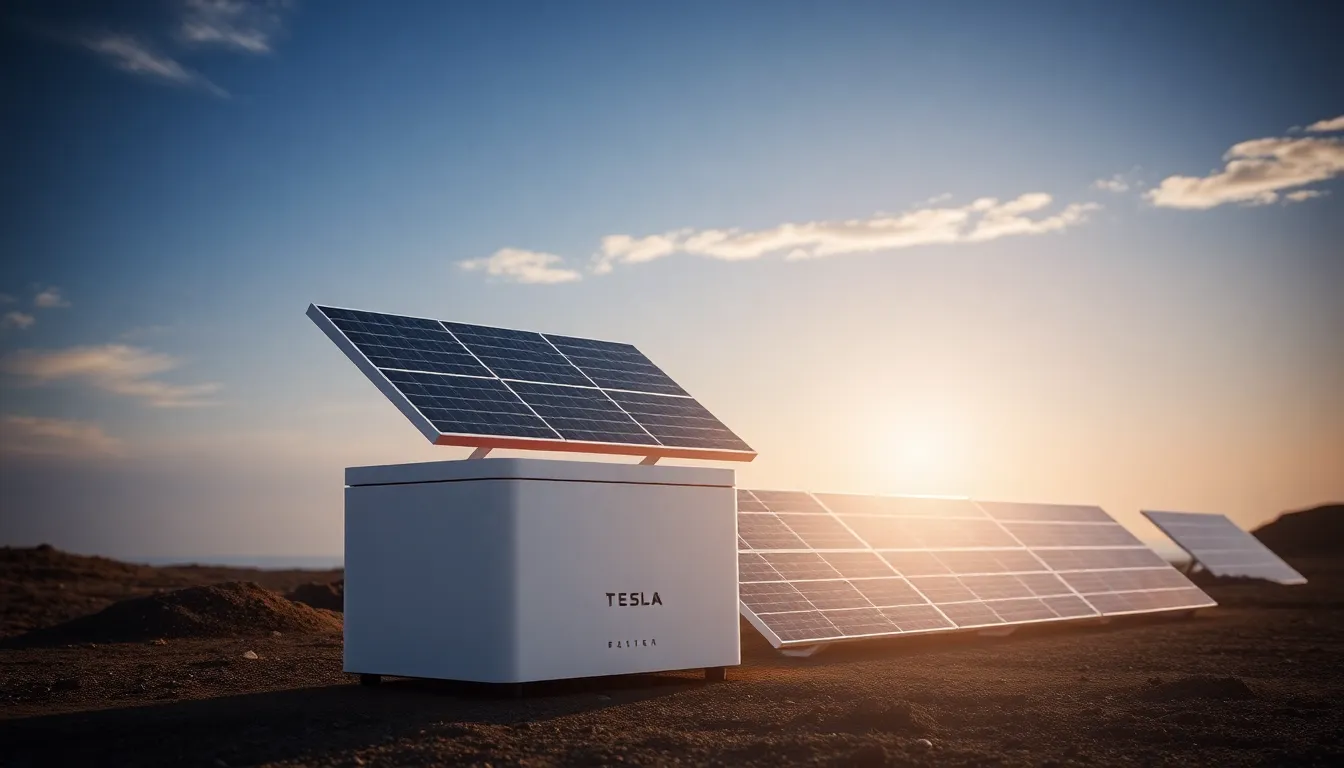
1,800 watts x 16 hours = 28,800 watt-hours, or 28.8 kWh of storage needed. With lead-acid batteries at a 50% duty cycle, you need around 36 batteries. One Tesla Powerwall stores 13.5 kWh, so you need at least 3 Powerwalls for full overnight coverage.
Factors That Change Your Panel Count
- SEER rating: A higher SEER rating means fewer watts drawn per BTU of cooling
- Run time: Every extra hour per day at 1,500 watts adds 1.5 kWh to your daily demand
- Location: Each additional peak sunlight hour reduces your panel count proportionally
- Panel age: Panels lose 0.5% to 1% of output per year (source: NREL, 2023)
- Shading and tilt: Suboptimal placement reduces real-world output by 10% to 25%
Before buying panels, check your AC unit’s nameplate wattage and measure actual draw with a Kill-A-Watt meter. That single figure changes your panel count more than any other variable in this calculation.