
Last updated on October 27th, 2026 at 07:24 am
Quick Answer: Yes, solar lights need cleaning. Dirt, pollen, and bird droppings block sunlight, so the battery charges less and the light runs dimmer and shorter. Check monthly and wipe the panel with a soft, damp cloth and mild soap every 1–3 months, or sooner after storms. If the light stays dim, check the battery, switch, and sunlight next.
Table of Contents
Myth: “Solar lights are set it and forget it.”
Reality: They’re set it and forget it until a bird decorates the panel. Then your path light goes from “cozy glow” to “sad candle.”
A solar light only shines as long as it charges. A dirty panel charges less. Here is how to fix that, how often to do it, and what to try when cleaning doesn’t help.
Key Takeaways
- Dirt on the panel cuts charging, which means dimmer light and shorter runtime.
- Most yards need a wipe-down every 1–3 months. Dusty, coastal, and tree-covered yards need it more often.
- Soft cloth, water, and mild soap do the job. Skip abrasives and pressure washers.
- Still dim after cleaning? Look at the battery, the on/off switch, and how much sun the light gets.
Quick-Answer Table: How Often to Clean Solar Lights
This is a practical guideline based on how dirt builds up, not a lab-tested rule. Adjust it to your yard.
| Your situation | Clean about every | Why |
|---|---|---|
| Clean yard with regular rain | 2–3 months | Slow dust buildup |
| Under or near trees | 1–2 months | Pollen, sap, leaves, droppings |
| Dusty, dry, or near construction | Monthly | Dust settles fast |
| Coastal area | Monthly (rinse) | Salt film builds up |
| After a storm or dust event | Right away | Mud and debris stick |
| Winter, with snow or frost | After each snowfall | Snow blocks the panel |
Why Dirty Solar Panels Make Lights Dim
A solar light is a simple chain: panel → battery → LED. The panel turns sunlight into electricity. The battery stores it. At night, the LED uses that stored power.
Block the panel, and the chain weakens at step one. Less charge goes in, so less light comes out.
Here’s a fun twist: the LED is rarely the problem. LEDs usually outlast the rechargeable battery by a wide margin. Dirt is the cheap fix. A dead battery is the pricier one.
Why Garden Light Panels Get Dirtier Than Rooftop Panels
Google tested this on its own solar panels. The company compared flat carport panels with tilted rooftop panels. Rain did a good job on the tilted rooftop panels, and cleaning them made little difference. The flat carport panels were another story. According to the company’s findings, output doubled after the first cleaning in 15 months, and rose 36% after a second cleaning eight months later.
Why does this matter for you? Rain rinses dirt off tilted surfaces. Many garden light panels sit flat on top of a stake, low to the ground, and they’re tiny. Water can sit there, dry, and leave a film behind.
That’s my reasoning, not a lab result for garden lights. But it explains why a “rain will clean it” shrug works less often here than with a rooftop system.
The Light Sensor (Photocell) Matters Too
Most solar lights have a small sensor that tells the light when it’s dark. If dirt covers it, the light can get confused. It may turn on late, turn on early, or act strangely. Wipe the sensor every time you wipe the panel.
How Often Should You Clean Solar Lights?
Use the table above as your starting point. Then let the lights tell you.
Clean Sooner After Storms, Pollen Season, or Dust Events
Storms splash mud on low lights. Spring pollen coats everything in a yellow layer. Dust events do the same. After any of these, give your lights a quick wipe instead of waiting for the next schedule.
Quick Test: Do Your Lights Need Cleaning?
Look for these signs:
- You see a visible film, spots, or droppings on the panel
- Your finger leaves a clear mark when you swipe it
- The light runs for fewer hours than it used to
- The light looks dimmer than the one next to it
If you want to confirm the light itself is working, this guide on how to tell if a solar light is working walks through simple checks anyone can do.
How to Clean Solar Lights Step by Step
This takes about two minutes per light.
- Pick the right time. Go in the morning or evening. Panels can get hot in direct midday sun.
- Brush off loose debris. Remove leaves, dirt, and cobwebs with a dry, soft brush or cloth.
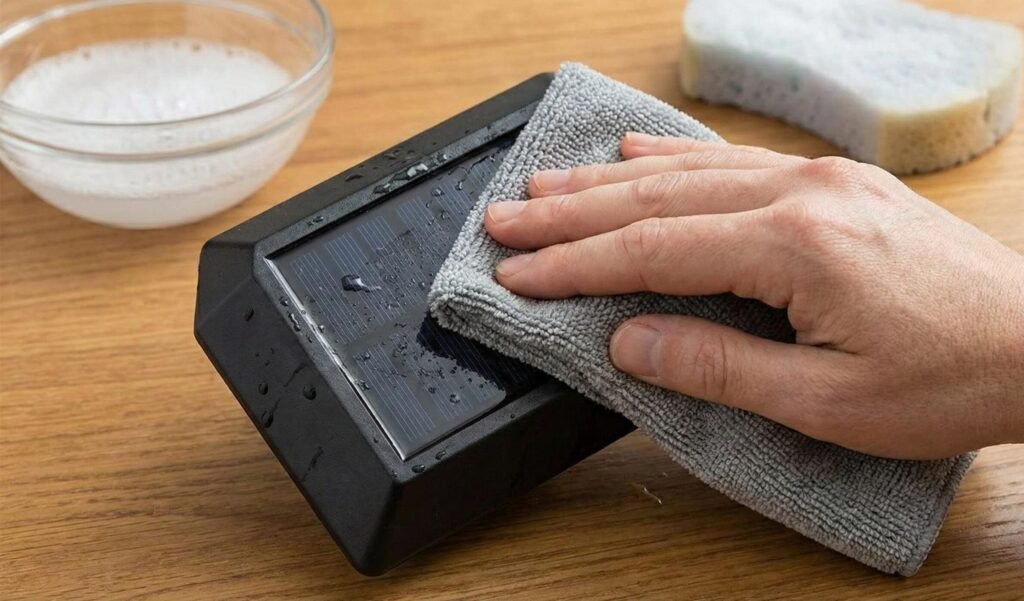
- Mix your cleaner. Add a few drops of mild dish soap to a bowl of lukewarm water.
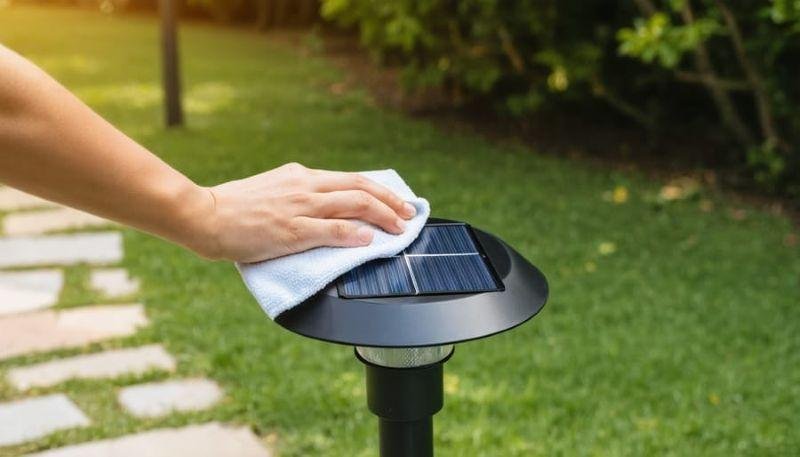
- Wipe the panel. Use a soft, damp cloth. Use gentle circles.
- Clean the lens and sensor. Wipe the cover and the small light sensor.
- Wipe the body. Clean the stake or housing so dirt doesn’t wash back onto the panel.
- Rinse and dry. Use a clean, damp cloth to remove soap, then dry with a soft towel.
What You’ll Need
- A soft cloth (microfiber works well)
- Mild dish soap
- Lukewarm water
- A soft brush for stubborn spots
Drying and Putting Back
Dry the panel fully. Leftover water can leave spots, which brings the problem right back. Set the light back in a sunny spot, and make sure nothing blocks it.
What to Use and What to Avoid
Safe to use:
- Water
- Mild dish soap
- Microfiber cloth
- Soft-bristle brush
Avoid:
- Abrasive pads or scrub brushes. They scratch the surface, and scratches scatter light.
- Pressure washers. Most garden lights handle rain, not a high-pressure jet. Water can get inside.
- Harsh chemicals. Strong solvents can cloud or damage the plastic.
Got hard-water spots? Many lighting guides suggest a diluted vinegar solution for mineral deposits. Check your manual first, then rinse and dry.
Cloudy or Yellowed Panels
Start with soap and water. If the panel still looks hazy, the plastic may have aged from years of sun. Cleaning can’t reverse that. At that point, a replacement is usually cheaper than a long fight.
Cleaning Different Types of Solar Lights
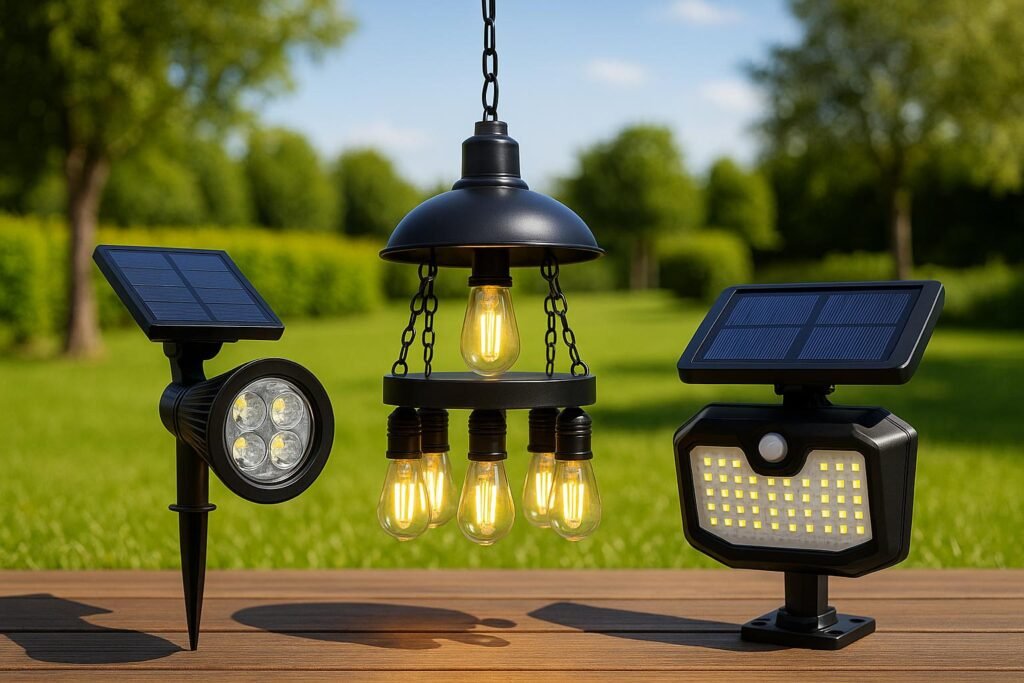
Path and Stake Lights
These sit low, so they catch mud, grass clippings, and sprinkler spray. Wipe the panel and the lens. Trim grass around the base.
String Lights
Start with the bulbs, using a dry cloth. Bulbs are the most fragile part. Then clean the panel on the separate solar unit.
Flood and Motion-Sensor Lights
Clean the panel and the sensor window. A dirty motion sensor window can make the light react poorly, so don’t skip it.
Wall and Fence Lights
Spiders love these. Clear webs from the panel and the lens. Use a stable step stool, not a wobbly chair.
Seasonal and Weather Tips
Winter, Frost, and Snow
Shorter days and low sun already mean less charging. Don’t add a snow-covered panel on top of that. Brush snow off gently with a soft brush. Skip scraping, which can scratch the panel.
Rainy Season, Dust, and Pollen
Rain helps only if the panel can shed water. Check for spots and film after the rain dries. In spring, pollen needs a quick wipe-down. In dry, dusty weather, plan on monthly cleaning.
Trees and Plants Blocking Light
Cleaning won’t help if a bush blocks the sun. Most lights need several hours of direct sun a day, and manuals commonly say 6 to 8 hours. Trim plants back, or move the light to a sunnier spot.
Cleaned Them and They Still Don’t Work? Troubleshooting
Work down this list in order:
- Check the on/off switch. Many lights ship with it set to off.
- Look for the protective film. New panels often come with a plastic film that blocks charging.
- Check the sunlight. Is the light in the shade? Move it somewhere sunnier for a few days.
- Look inside for moisture. Water inside the housing can stop the light from working.
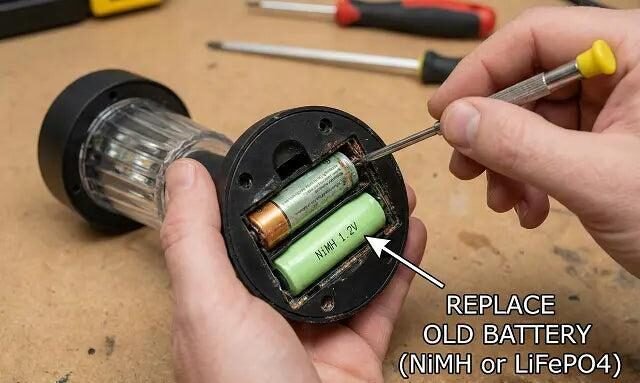
- Check the battery contacts. Corrosion on the contacts can block charging.
- Think about battery age. If the light runs far shorter than it used to, the battery is the usual culprit.
Not sure whether the light is actually working? These simple checks for solar lights can help you narrow it down.
When to Replace Instead of Clean
Replace the light when the housing is cracked, water keeps getting in, the panel is badly yellowed, or the light fails even with a fresh battery in good sun.
How to Replace the Battery
Most small garden lights use rechargeable AA or AAA NiMH batteries, though some use NiCd or lithium-ion. Match the voltage, size, and type to the original, and check the manual before switching chemistry. Garden light batteries often last about 1–3 years, though quality varies. Never use regular disposable batteries in a solar light.
Try This 2-Week Test at Home
Want proof instead of taking our word for it? Try this.
- Pick two identical lights in similar sun.
- Clean one. Leave the other alone.
- Charge both for a sunny day.
- At dusk, note when each light turns on, then note when each goes out.
- Repeat for a week or two and compare the times.
The cleaner light should hold up better, especially if the other one is dusty. Your yard, your results.
Solar Light Maintenance Checklist
Monthly
- Look at each panel
- Wipe off visible dirt
- Clear leaves and webs
Seasonal
- Deep clean panel, lens, and sensor
- Trim plants that shade lights
- Check for moisture and corrosion
Yearly
- Test run times
- Replace tired batteries
- Replace any cracked lights
FAQs
What if my lights are still dim after cleaning?
Check the switch, the protective film, how much sun the light gets, moisture, and battery age.
How long do solar lights last?
The LED often outlasts the rest of the light. The rechargeable battery is the usual weak spot, and small garden lights often need a new one after about 1–3 years.
Can I use a pressure washer?
No. Most garden lights handle rain, not a high-pressure jet. A damp cloth is safer.
Can I use vinegar or dish soap?
Mild dish soap is the safe default. Diluted vinegar can help with hard-water spots, but check your manual first and rinse well.
Does rain clean solar lights?
Sometimes, but not reliably. Google’s study found that rain cleaned tilted panels well, but not flat ones. Garden light panels often sit flat, so dust and spots can stay behind.
Summary
A two-minute wipe often brings a tired solar light back to life. Start with the panel and the sensor, use soft tools, and keep plants from stealing the sun.
Sources and References
- Google Green Blog, “Should you spring clean your solar panels?” (2009)
- Manufacturer care instructions for your specific solar light
- Battery supplier and lighting guides on NiMH battery type and lifespan