Table of Contents
Let’s skip the sales pitch and get straight to the number you actually came here for.
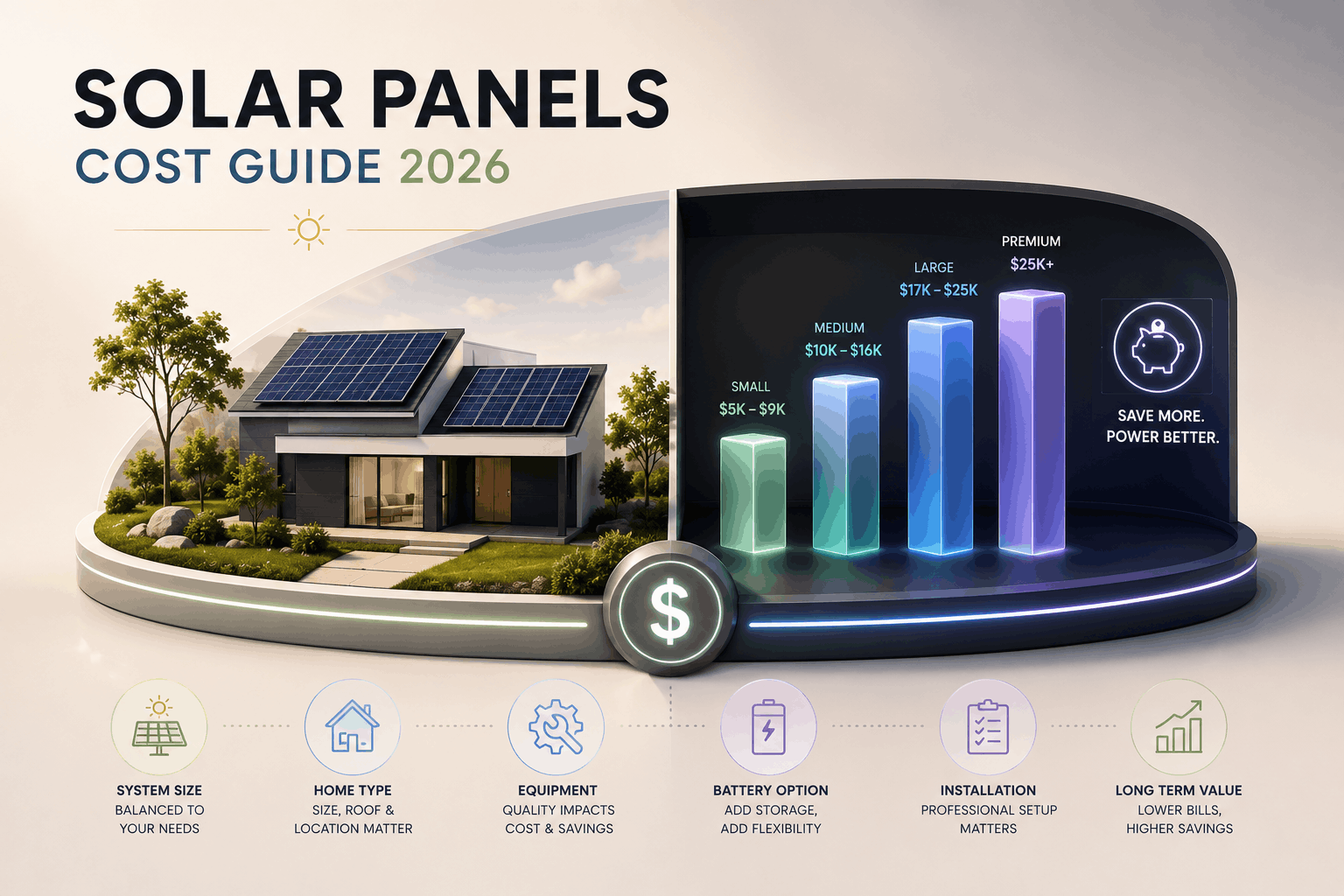
In 2026, solar panels cost between $2.50 and $3.50 per watt installed. For a typical 8 kW home system, that works out to roughly $18,000 to $28,000 before any incentives. Larger 12 kW systems, which cover a full-size home’s electricity use, tend to land closer to $30,000.
Here’s the part most solar websites won’t tell you upfront: the federal 30% tax credit for homeowners (Section 25D) expired on December 31, 2025. If you buy or finance a system outright in 2026, that 30% discount is gone. It’s not coming back for individual homeowners.
That doesn’t mean solar stopped making sense. It means the math changed, and this guide walks you through the real 2026 numbers instead of the outdated ones still floating around the internet.
Key takeaways:
- Average cost: $2.50–$3.50 per watt, or $18,000–$28,000 for a typical 8 kW system
- The federal 25D tax credit for homeowners expired December 31, 2025
- Most homeowners still save $30,000 to $150,000+ over 25 years, depending on their state and electricity rates
- Payback period now runs 6 to 12 years, up from the 5 to 8 years homeowners saw with the old tax credit
| System Size | Estimated Cost (before incentives) |
|---|---|
| 4 kW | $10,000 – $14,000 |
| 6 kW | $15,000 – $21,000 |
| 8 kW | $20,000 – $28,000 |
| 10 kW | $25,000 – $35,000 |
| 12 kW | $30,000 – $42,000 |
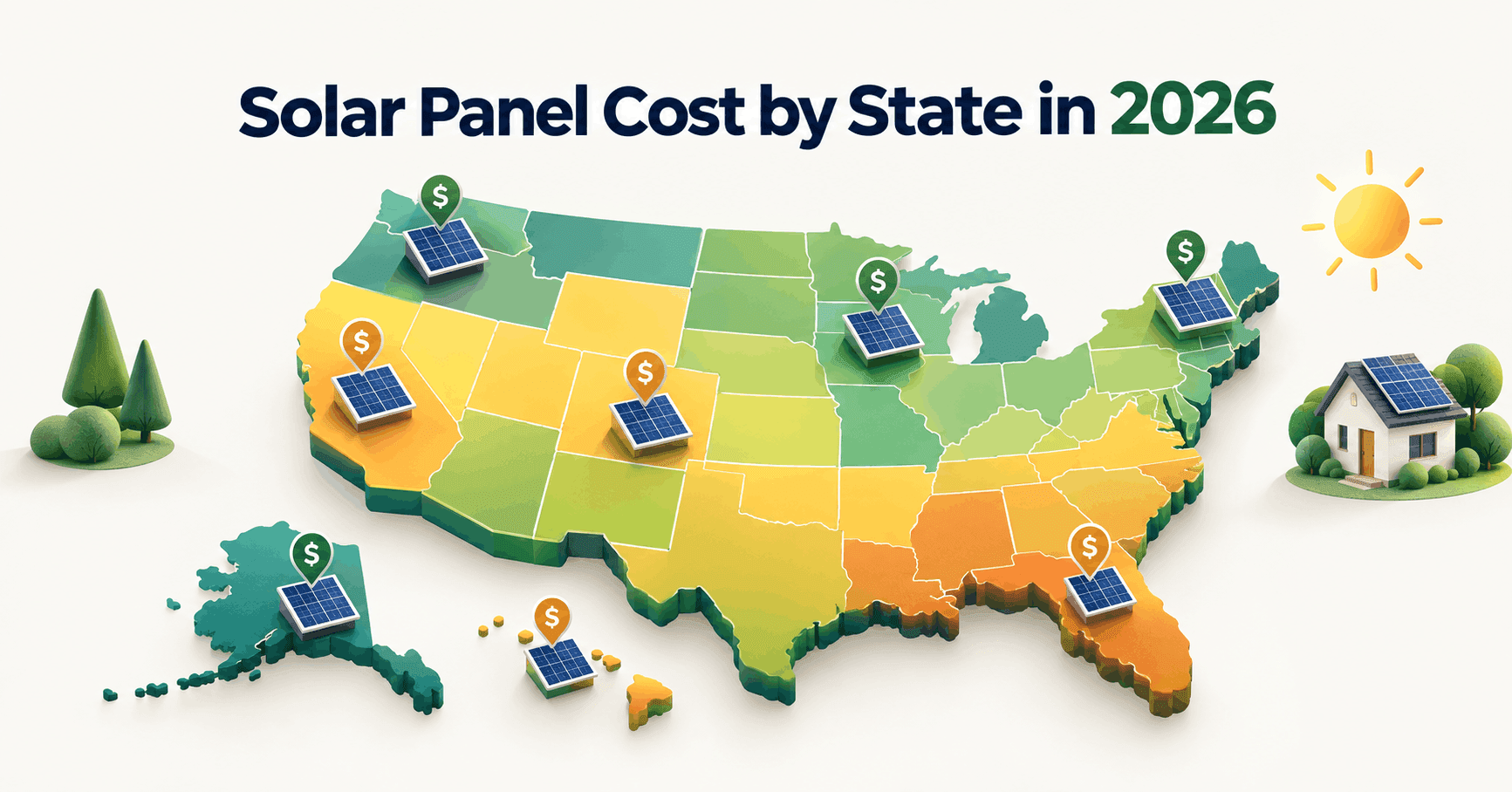
How Much Do Solar Panels Cost in Your State?
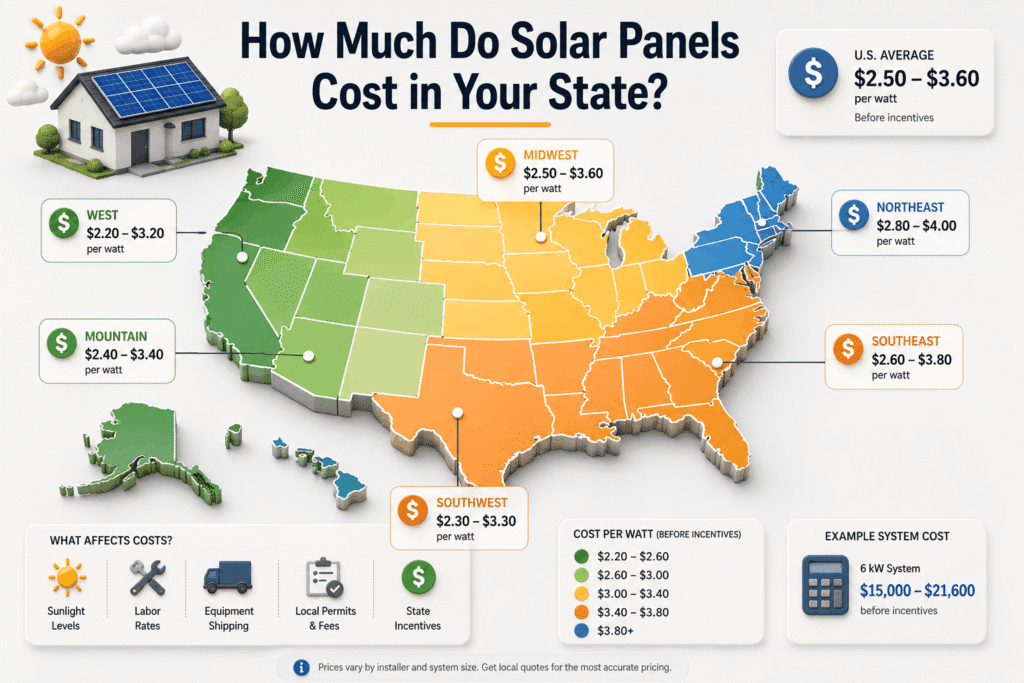
Sunlight is free everywhere. Solar panel cost is not, and the gap between states is bigger than most people expect.
Installed prices can swing by a dollar or more per watt depending on where you live. Arizona, Texas, and Florida tend to land on the cheaper end, mostly thanks to lower labor costs and faster permitting, not because they get more sun than everyone else. California, New York, and Massachusetts often run higher, driven by stricter permitting requirements and pricier local labor.
This is exactly where state-level incentives matter more than ever now that the federal credit is gone. Some states still offer their own tax credits, rebates, or property tax exemptions, and in places like Maryland, New York, and Massachusetts, those programs can meaningfully soften the upfront cost. If you want the exact numbers for where you live, our state-by-state solar cost breakdown covers all 50 states side by side, including which ones still have incentives worth chasing.
What Determines Your Solar Panel Cost?
Solar panels themselves are actually the cheapest part of the whole system. Panels alone typically make up only about 12% of your total bill. The rest covers everything that turns those panels into a working power system: inverters, wiring, racking, permits, and the installer’s labor and overhead.
Cost by System Size
Bigger systems cost more in total, but they usually cost less per watt. It works a bit like buying in bulk: your overall bill goes up, but your unit price goes down as installers spread their fixed costs across more panels.
Most U.S. households land somewhere between 6 kW and 10 kW, which typically matches a monthly electric bill of $120 to $180. A smaller condo might get away with 4 kW. A larger home running central AC, an EV charger, and a pool pump might need 10 kW or more.
Here’s what sales reps sometimes gloss over: a lower total quote doesn’t automatically mean a better deal. It can just mean a smaller system that won’t fully cover your usage. Compare the price per watt across quotes, not just the total number on the page, or you’ll end up comparing apples to oranges.
What Pushes the Price Up or Down
A few factors do most of the work in determining your final number.
Roof complexity is a big one. A simple, south-facing asphalt roof is the cheapest install. Steep pitches, multiple roof planes, or tile and metal roofing all add labor time and cost.
Equipment tier matters too. Premium monocrystalline panels and high-end inverters cost more upfront than standard options, but they often pay for themselves through better efficiency and longer warranties.
Labor and permitting quietly do the most damage to your budget. Two identical systems can cost thousands of dollars apart just because one state processes permits faster or has cheaper electricians than another.
Installer competition also plays a role. Areas with more solar companies fighting for your business tend to have tighter, more competitive pricing.
None of these factors are fixed, which is exactly why getting three quotes matters more than picking whichever installer calls you back first.
Is DIY Solar Panel Installation Actually Cheaper?
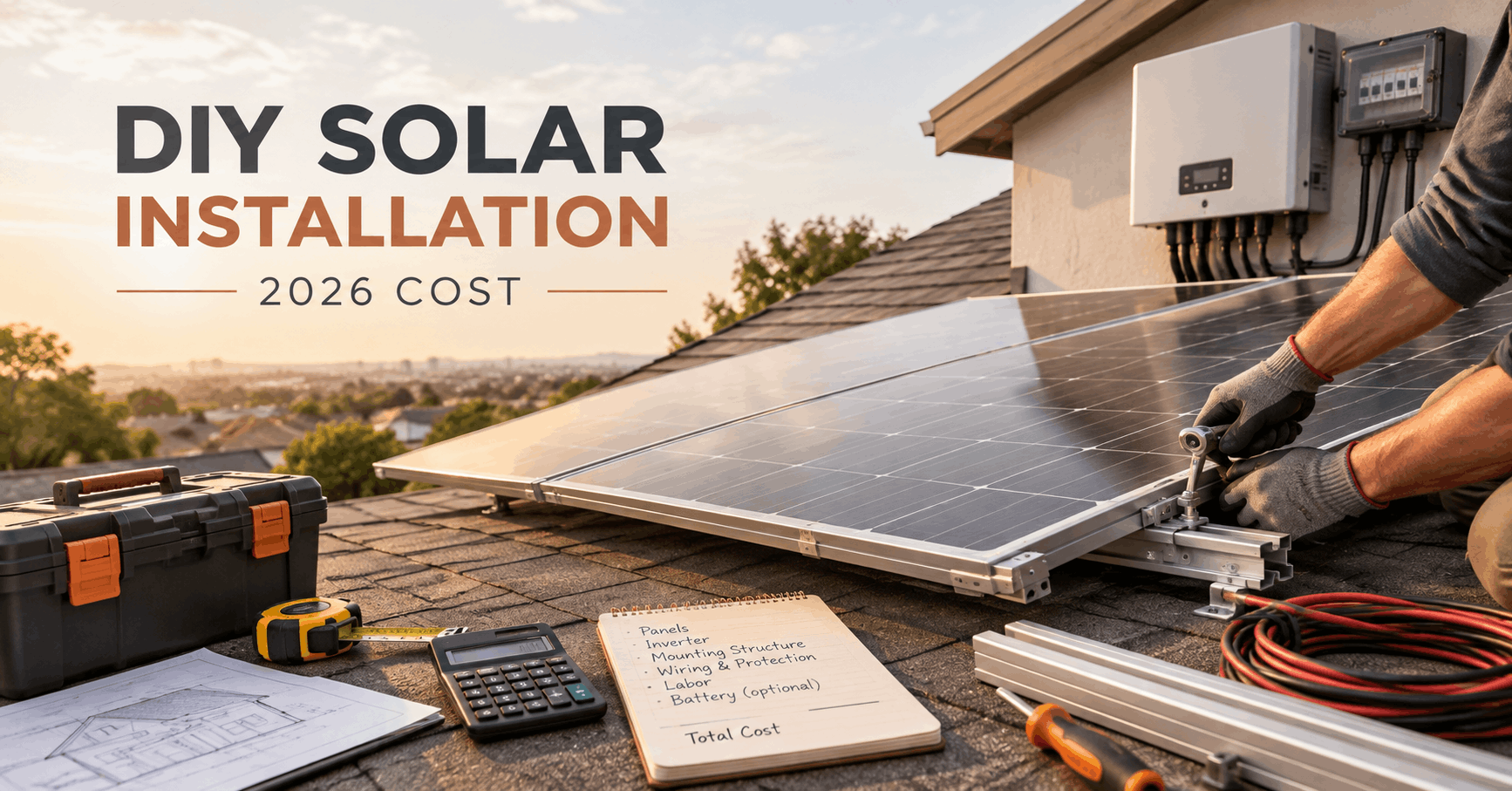
If you’re handy and want to cut costs further, DIY installation looks tempting on paper. Labor makes up roughly half to two-thirds of your total system cost, so skipping the install crew sounds like an easy win.
In practice, it’s more complicated. You’ll still need permits, electrical inspections, and utility interconnection approval, and mistakes at any of those steps can delay your system or void your equipment warranty. DIY can absolutely save real money for the right homeowner with the right skills. It’s just not the shortcut it looks like from the outside, and our full DIY solar installation cost breakdown walks through exactly where those savings hold up and where they quietly disappear.
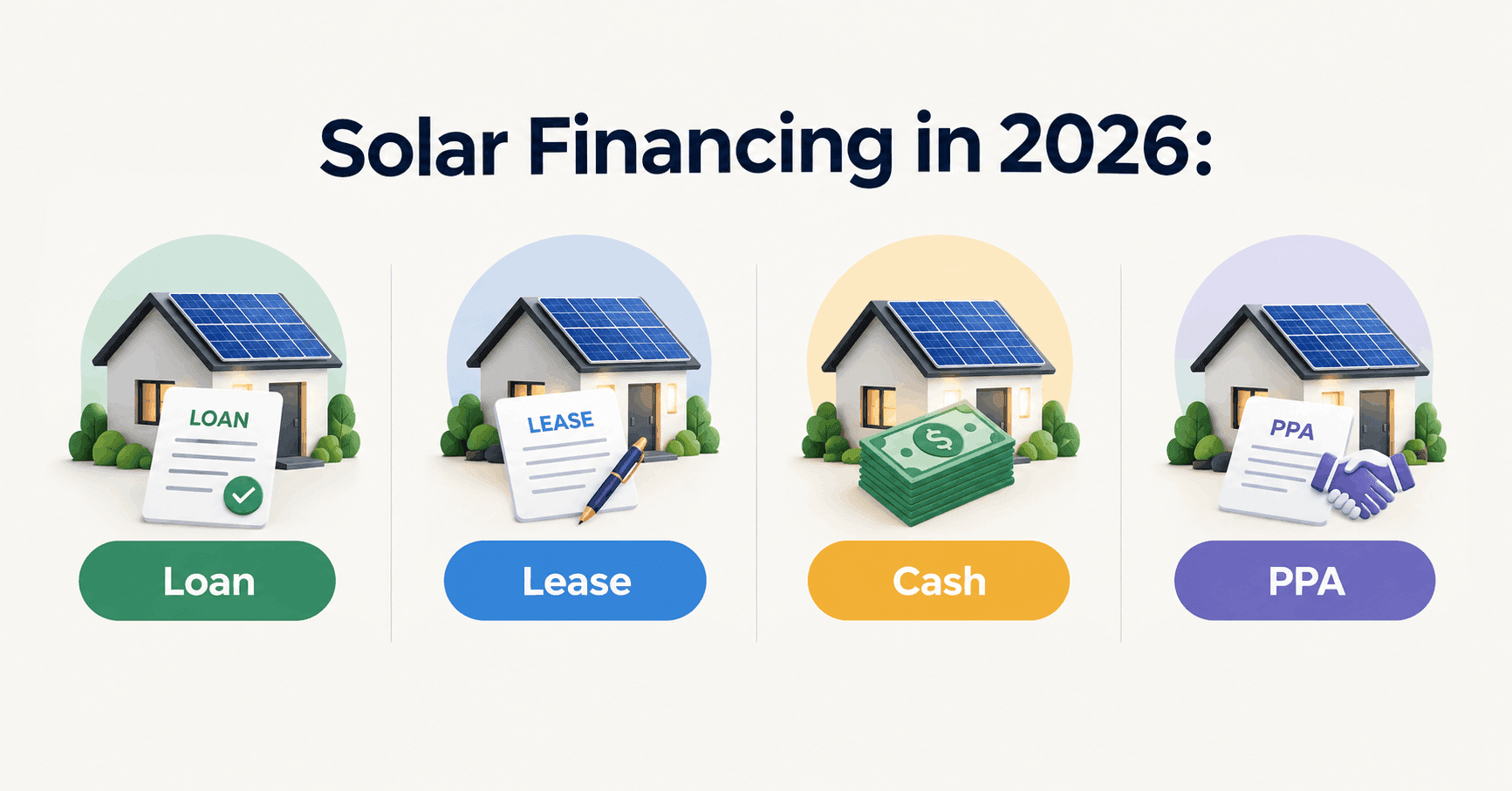
How Do You Pay for Solar Panels?
With the federal tax credit gone for homeowners, how you pay for your system now matters more than it used to. This single decision can swing your total cost by 20% to nearly 50% compared to paying cash.
That’s not a typo. Financing isn’t free money, and some options quietly add far more to your total bill than homeowners realize going in.
Cash purchases cost the least over time but require the biggest upfront check. Loans spread the cost out but add interest, and some carry hidden dealer fees of 15% to 30% baked into the total before a single interest payment even applies. Leases and Power Purchase Agreements, or PPAs, require little to no money down, but you don’t own the system, and your long-term savings are usually smaller.
Here’s the twist worth knowing: leases and PPAs are typically owned by a third party, like the solar company or an investor. That third party can still claim a business federal credit (Section 48E) that individual homeowners can no longer access, and a competitive provider often passes some of that savings down to you through a lower monthly rate. Our loan vs. lease vs. cash vs. PPA comparison breaks down the real 25-year cost of each option side by side, which is worth reading before you sign anything.
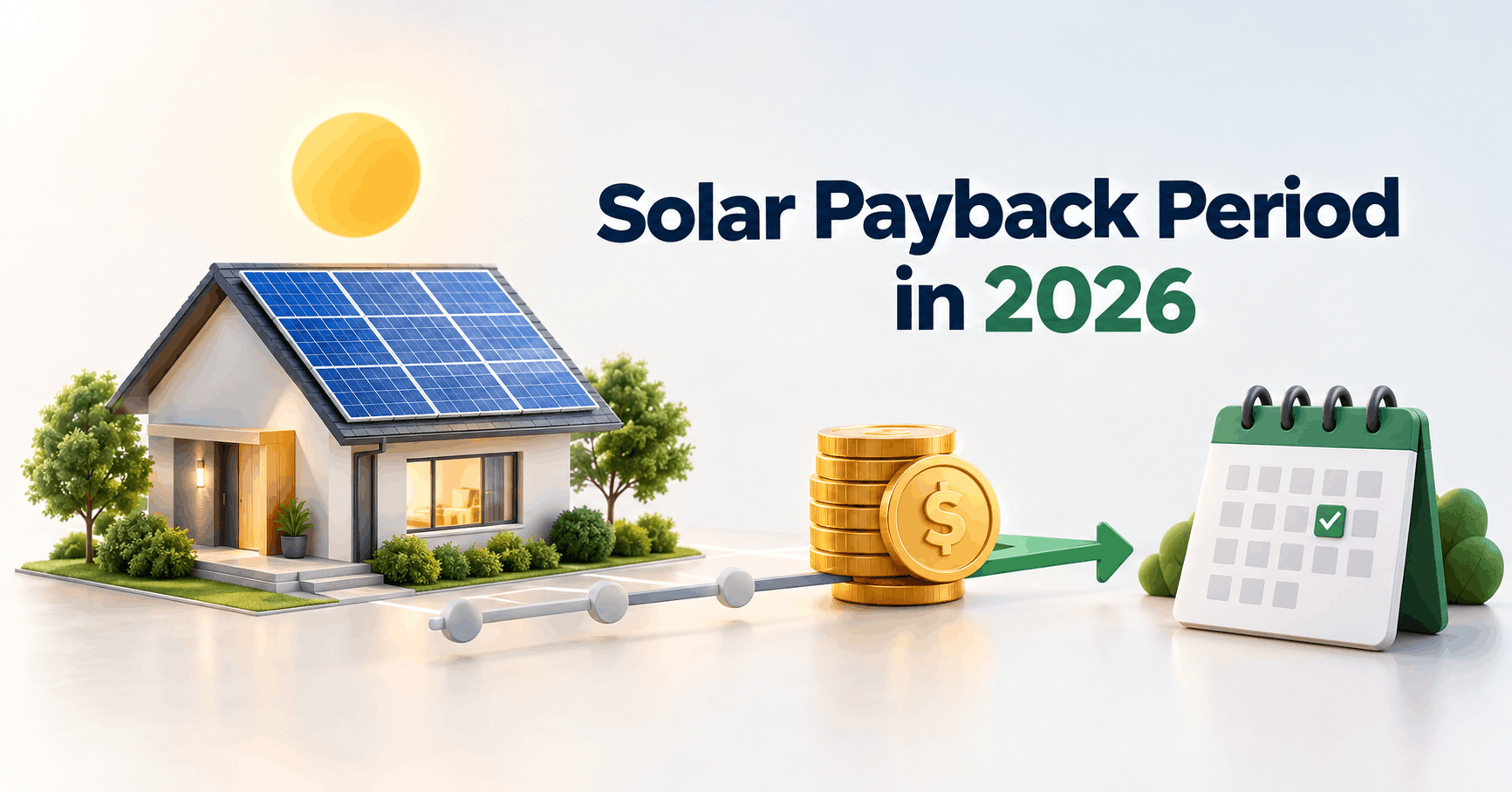
How Long Until Solar Panels Pay for Themselves?
This is the number that actually tells you whether solar is worth it for your home: how long until the system pays for itself.
In 2026, without the federal tax credit, payback periods typically run 6 to 12 years. Where you land in that range depends on three things: your local electricity rates, your financing method, and how much sun your roof actually gets. Homeowners in states with high electricity rates and strong sun exposure tend to break even faster, and cash buyers break even faster than loan or lease customers since financing costs eat into monthly savings.
Once you hit your breakeven point, the math flips in your favor for the rest of the system’s 25-plus year lifespan. That’s when solar stops being an expense and starts being close to free electricity. If you want to run your own numbers instead of taking an installer’s word for it, our solar payback period calculator guide shows exactly how to calculate your personal breakeven using your own bill and quote.
Is Solar Worth It in 2026?
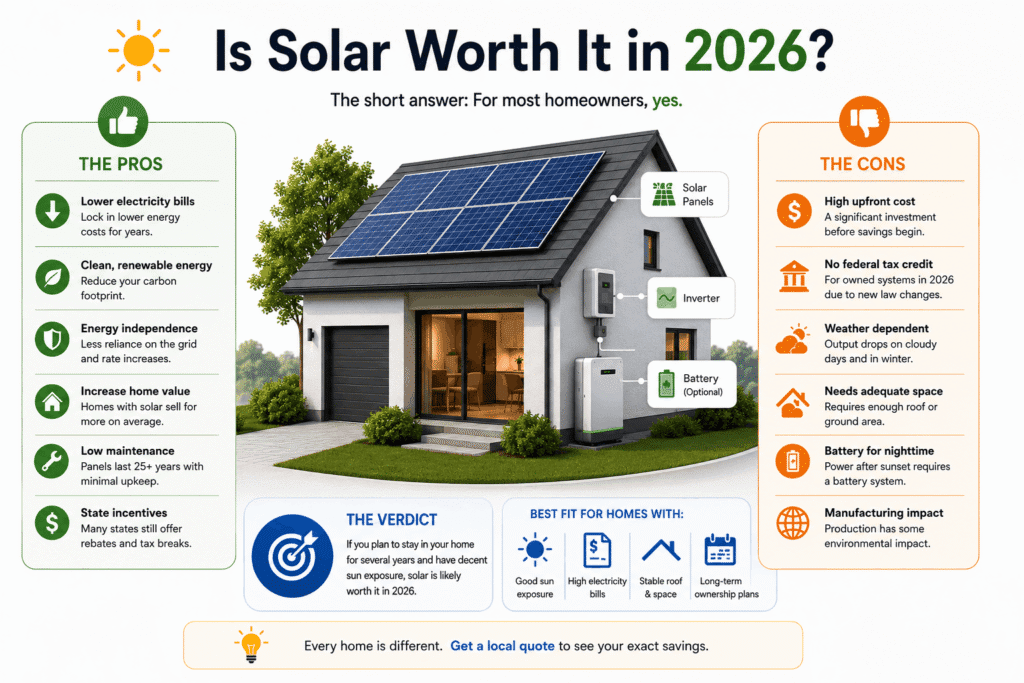
Solar in 2026 costs more out of pocket than it did a couple of years ago, and pretending otherwise wouldn’t do you any favors. The federal credit for individual homeowners is gone, and that’s a real change to the math.
But the fundamentals haven’t disappeared. Electricity prices keep climbing nationwide, panels keep getting cheaper to manufacture, and homeowners who go solar still save real money over the life of their system, often tens of thousands of dollars even after financing costs.
Most homeowners recoup their investment within 10 years and then enjoy close to two more decades of dramatically reduced electricity bills. State incentives, your local electricity rate, and your financing choice all shift that outcome, so the honest answer is: solar is still worth it for most people, but it takes a bit more homework in 2026 than it used to. Get multiple quotes, compare financing options carefully, and base your decision on your actual electricity usage instead of a sales rep’s estimate.
Will Solar Lower Your Electric Bill?
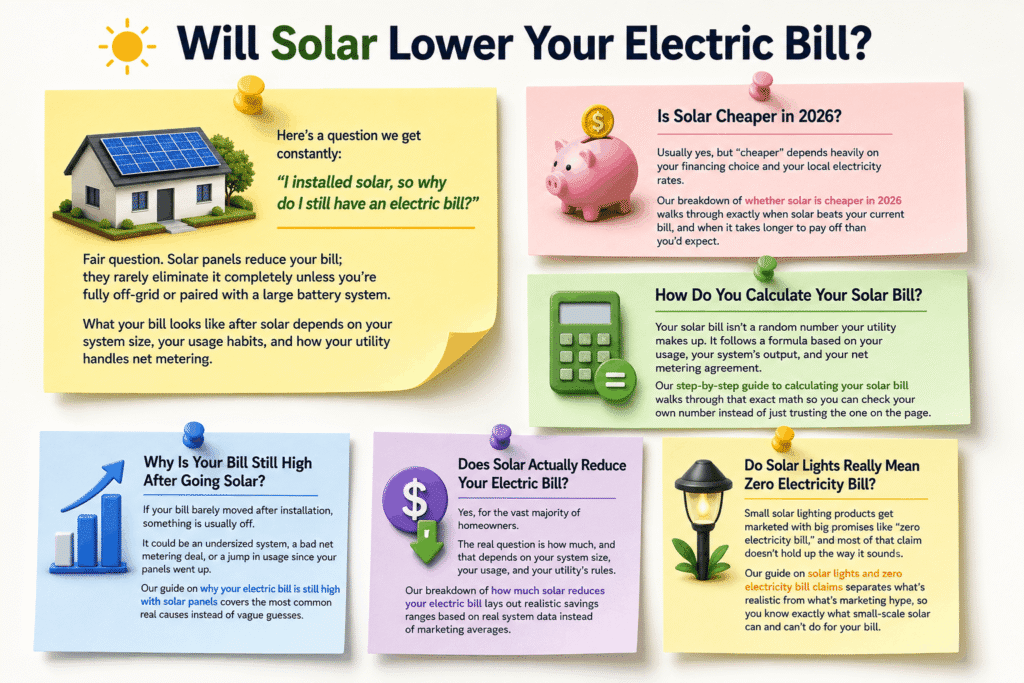
Here’s a question we get constantly: “I installed solar, so why do I still have an electric bill?”
Fair question. Solar panels reduce your bill; they rarely eliminate it completely unless you’re fully off-grid or paired with a large battery system. What your bill looks like after solar depends on your system size, your usage habits, and how your utility handles net metering.
Is Solar Cheaper in 2026?
Usually yes, but “cheaper” depends heavily on your financing choice and your local electricity rates. Our breakdown of whether solar is cheaper in 2026 walks through exactly when solar beats your current bill, and when it takes longer to pay off than you’d expect.
How Do You Calculate Your Solar Bill?
Your solar bill isn’t a random number your utility makes up. It follows a formula based on your usage, your system’s output, and your net metering agreement, and our step-by-step guide to calculating your solar bill walks through that exact math so you can check your own number instead of just trusting the one on the page.
Why Is Your Bill Still High After Going Solar?
If your bill barely moved after installation, something is usually off. It could be an undersized system, a bad net metering deal, or a jump in usage since your panels went up, and our guide on why your electric bill is still high with solar panels covers the most common real causes instead of vague guesses.
Does Solar Actually Reduce Your Electric Bill?
Yes, for the vast majority of homeowners. The real question is how much, and that depends on your system size, your usage, and your utility’s rules. Our breakdown of how much solar reduces your electric bill lays out realistic savings ranges based on real system data instead of marketing averages.
Do Solar Lights Really Mean Zero Electricity Bill?
Small solar lighting products get marketed with big promises like “zero electricity bill,” and most of that claim doesn’t hold up the way it sounds. Our guide on solar lights and zero electricity bill claims separates what’s realistic from what’s marketing hype, so you know exactly what small-scale solar can and can’t do for your bill.
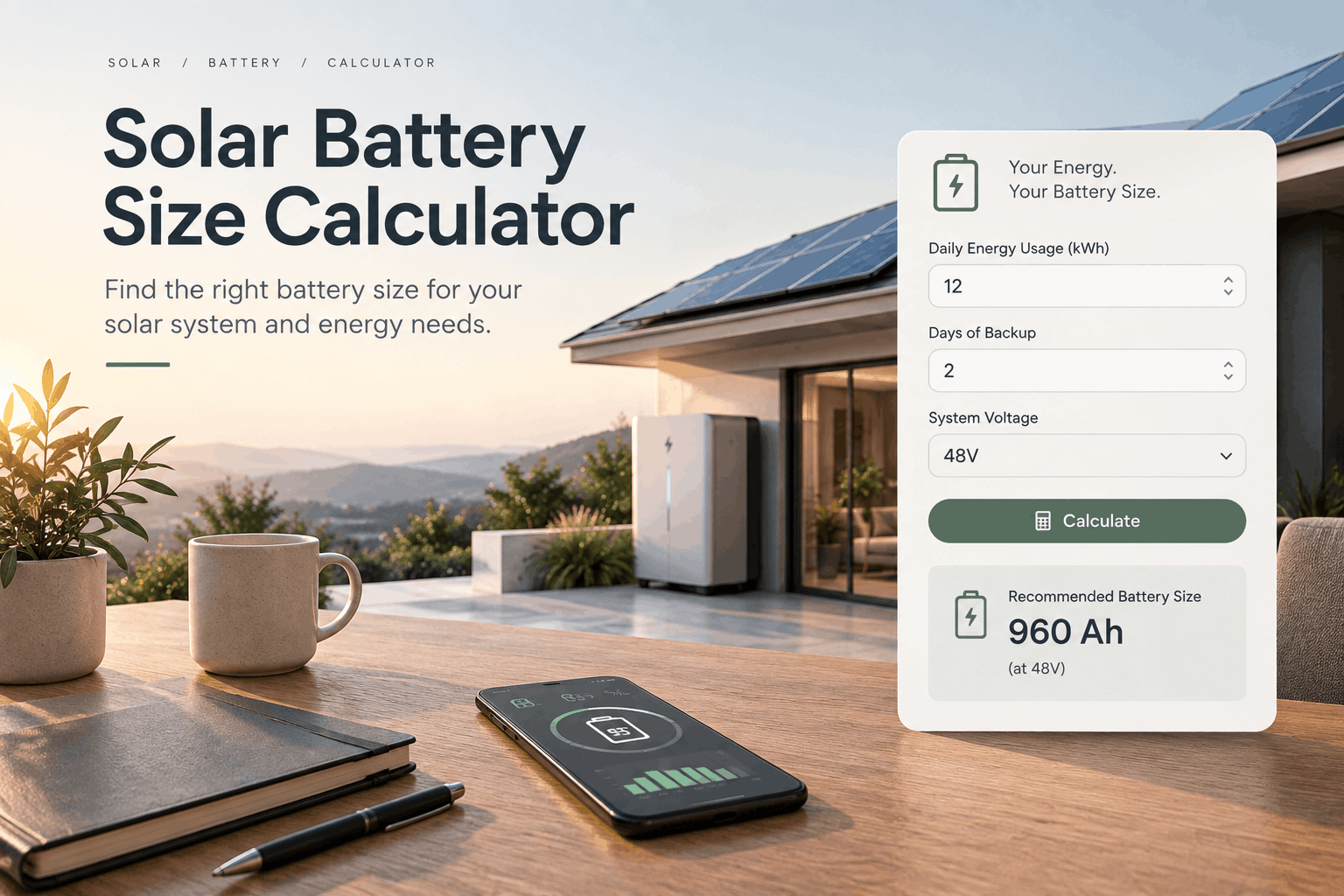
Should You Add a Solar Battery?
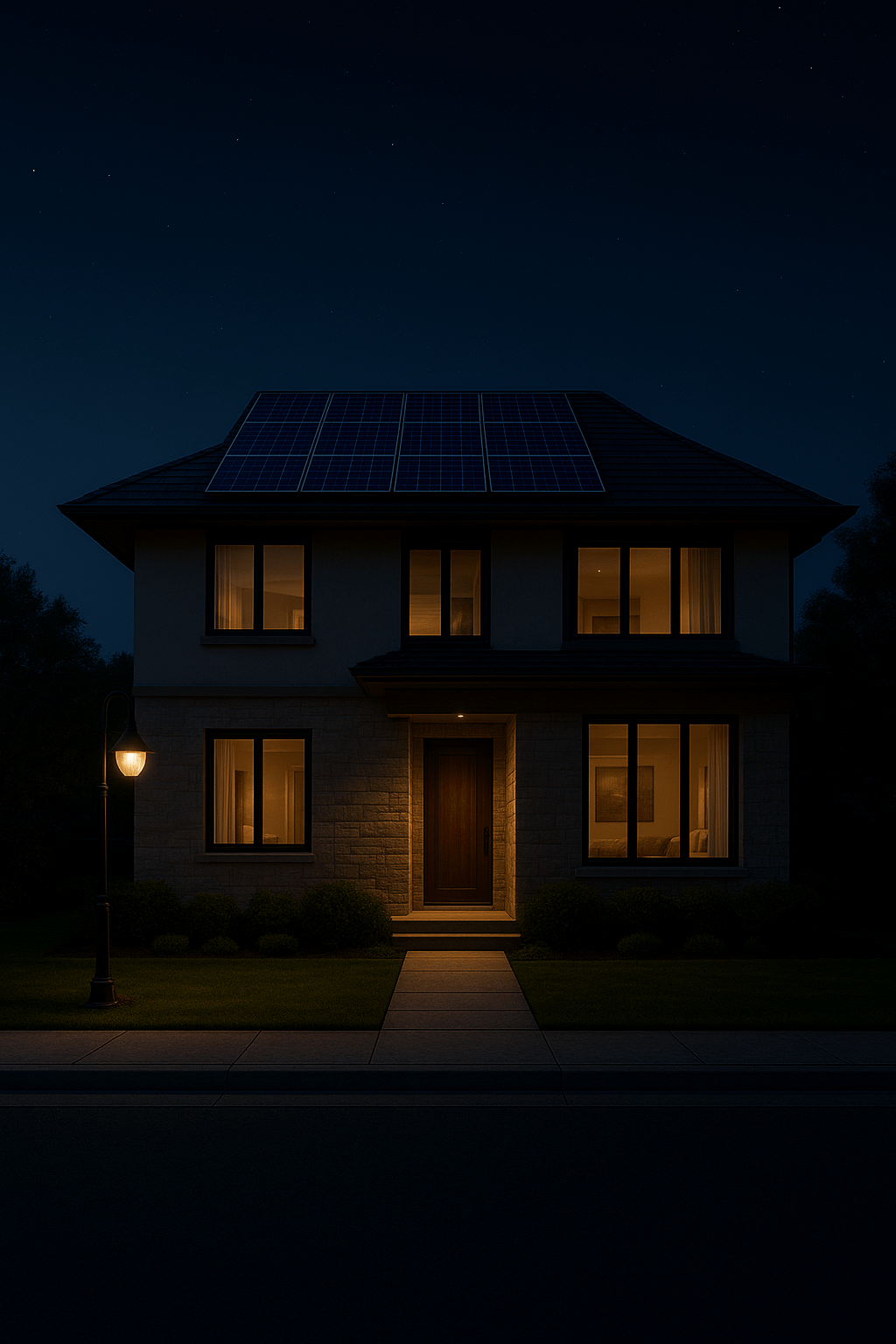
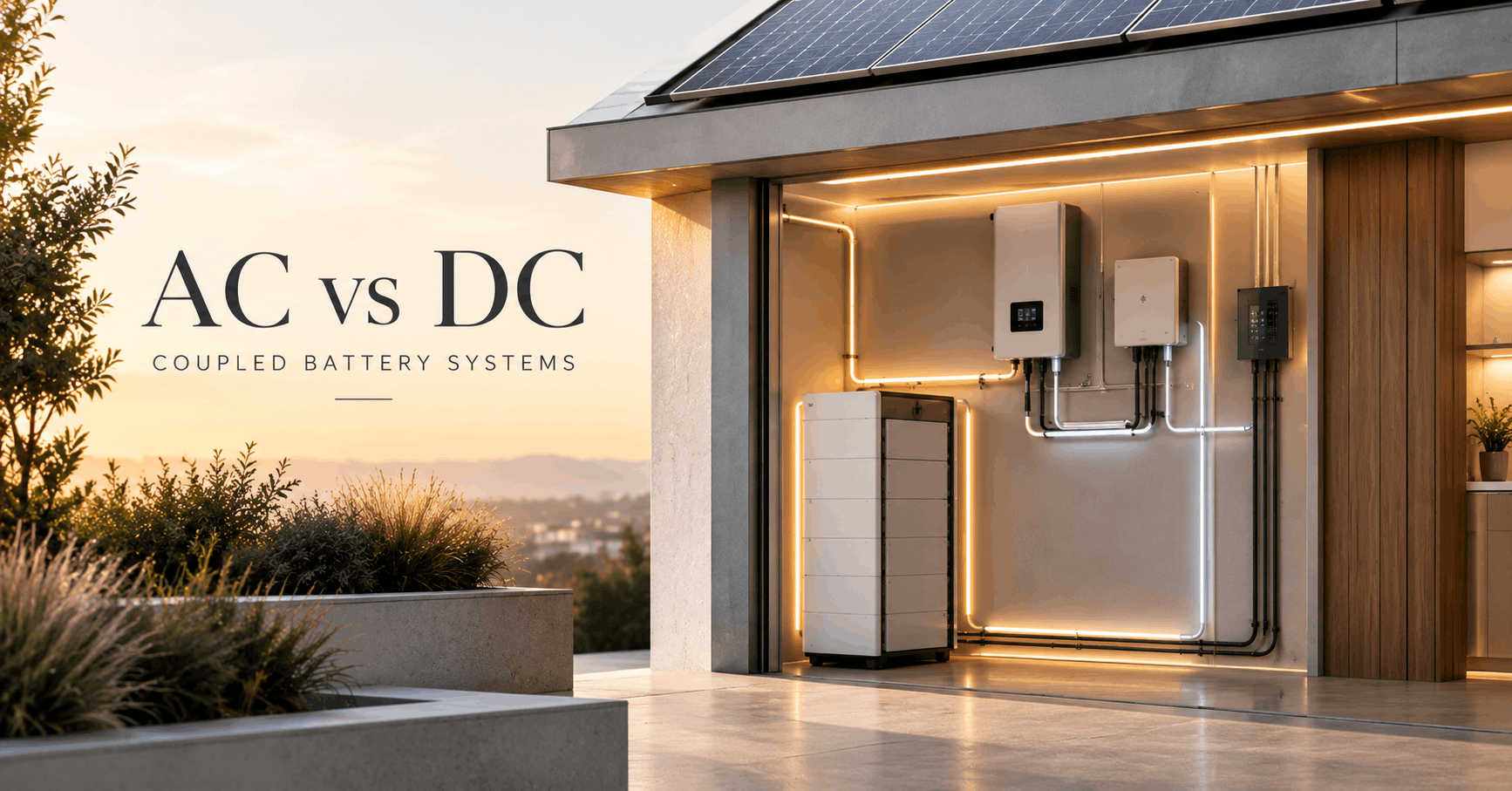
If you’re thinking about pairing your solar system with a battery so you’re covered during outages or after dark, expect to add roughly $6,000 to $12,000 to your total cost, depending on battery capacity and brand.
Battery storage is its own decision with its own math, separate from your core solar system cost. Our full solar battery storage cost guide breaks down which battery sizes actually make sense for different households, so you’re not paying for backup capacity you’ll never use.