Table of Contents
A neighbor of mine spent a summer installing his own solar panels. He saved close to nine grand. He also spent three weekends on a ladder, failed his first inspection over a wiring detail he’d never heard of, and now jokes that he became an unpaid electrician for a season. Both things are true, and that’s really the whole story of DIY solar in one sentence.
Yes, you can legally install your own solar panels in most parts of the U.S. Whether you should is a different question, and it depends more on your patience for paperwork than on your skill with a drill.
Here’s what actually happens when a homeowner skips the installer, with real 2026 numbers, not the recycled stats that show up on half the solar blogs out there.
Is DIY Solar Even Legal?

Generally, yes. California allows it under an owner-builder exemption (Business and Professions Code § 7044), and most other states have some version of the same thing. But “legal” doesn’t mean “unsupervised.” You’ll still need:
- A building permit and a separate electrical permit
- An inspection against the National Electrical Code
- Sign-off from your utility company before you’re allowed to connect to the grid
That last part trips people up. NEC Article 690 governs solar PV systems, and Section 690.4(C) says installation “shall be performed only by qualified persons”, wording that plenty of local inspectors read as requiring a licensed electrician for at least the final grid tie-in, even if a homeowner does everything else.
One recent exception worth knowing about: Utah passed a plug-in solar law in 2025 that lets homeowners install small systems, up to 1,200 watts, that connect straight into a wall outlet with no permit or electrician required. It’s not going to power your whole house, but it’s a sign the rules are loosening in some places.
Check with your local building department before you buy anything. Permitting rules change city by city, not just state by state, and that’s not a detail worth guessing about.
The Technology Doesn’t Change, Only Who Installs It Does
Photovoltaic cells absorb sunlight and produce direct current electricity. An inverter converts that into the alternating current your home actually runs on. That’s true whether Tesla’s install team does the work or you do it yourself on a Saturday.
What changes with DIY is who designs the system, who pulls the permits, and who’s on the hook if something goes wrong. Same hardware, very different level of personal liability.
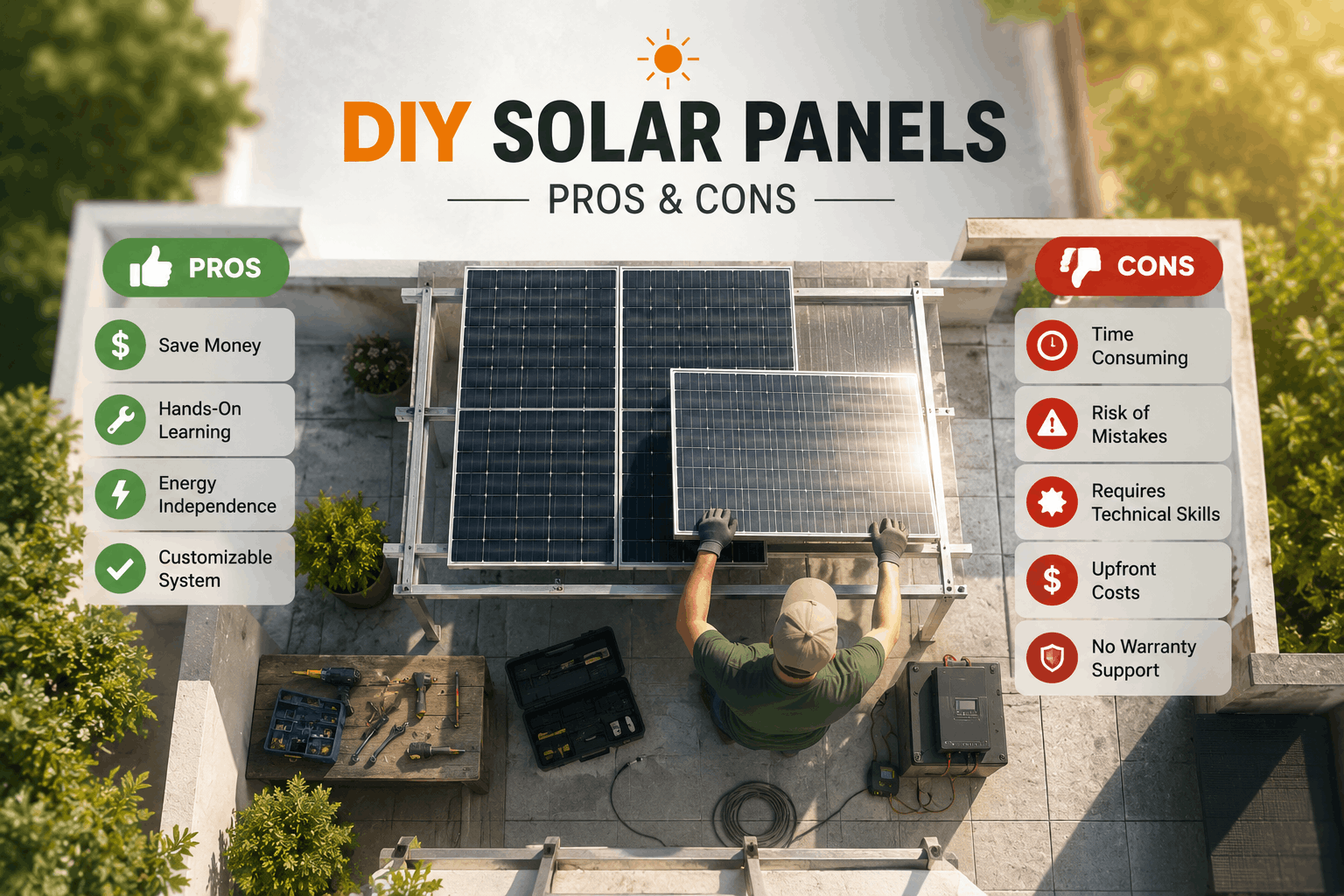
Pros and Cons, Side by Side
| Factor | DIY | Professional |
|---|---|---|
| Cost per watt | $0.80–$1.50 | $2.50–$3.50 |
| Federal tax credit (2026) | Not available | Not available |
| Warranty | Often voided | Manufacturer + workmanship |
| Who handles permits | You | Installer |
| Grid connection | Usually needs a licensed electrician anyway | Included |
| Timeline | Depends on you and permit wait times | Typically 6–12 weeks |
| Works best for | Off-grid, cabins, ground mounts | Full home, roof-mounted, grid-tied |
Where DIY Actually Wins
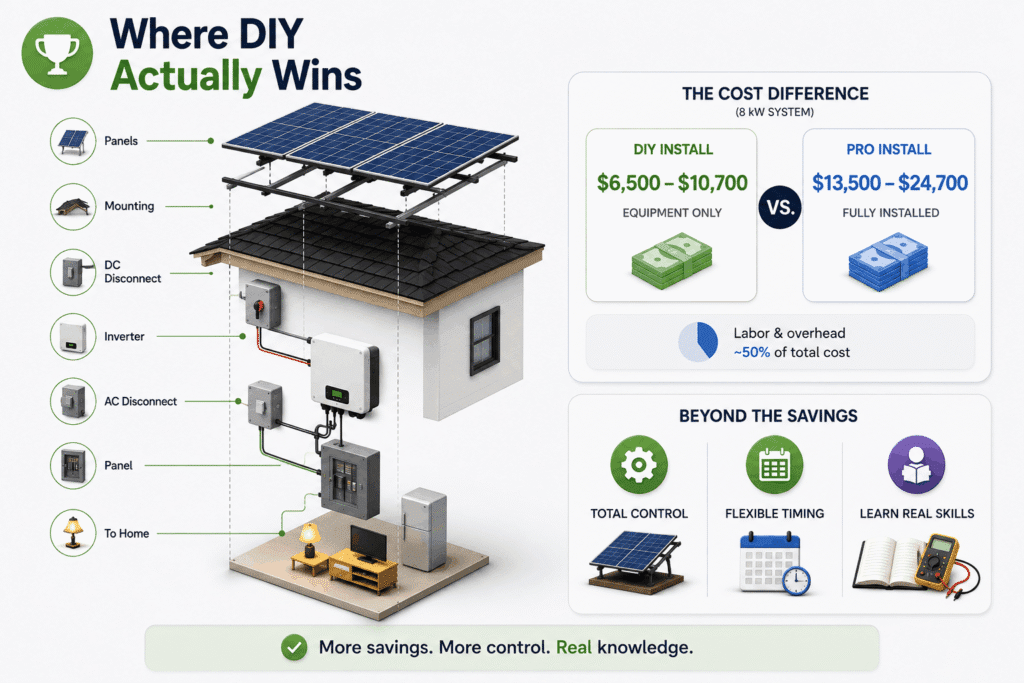
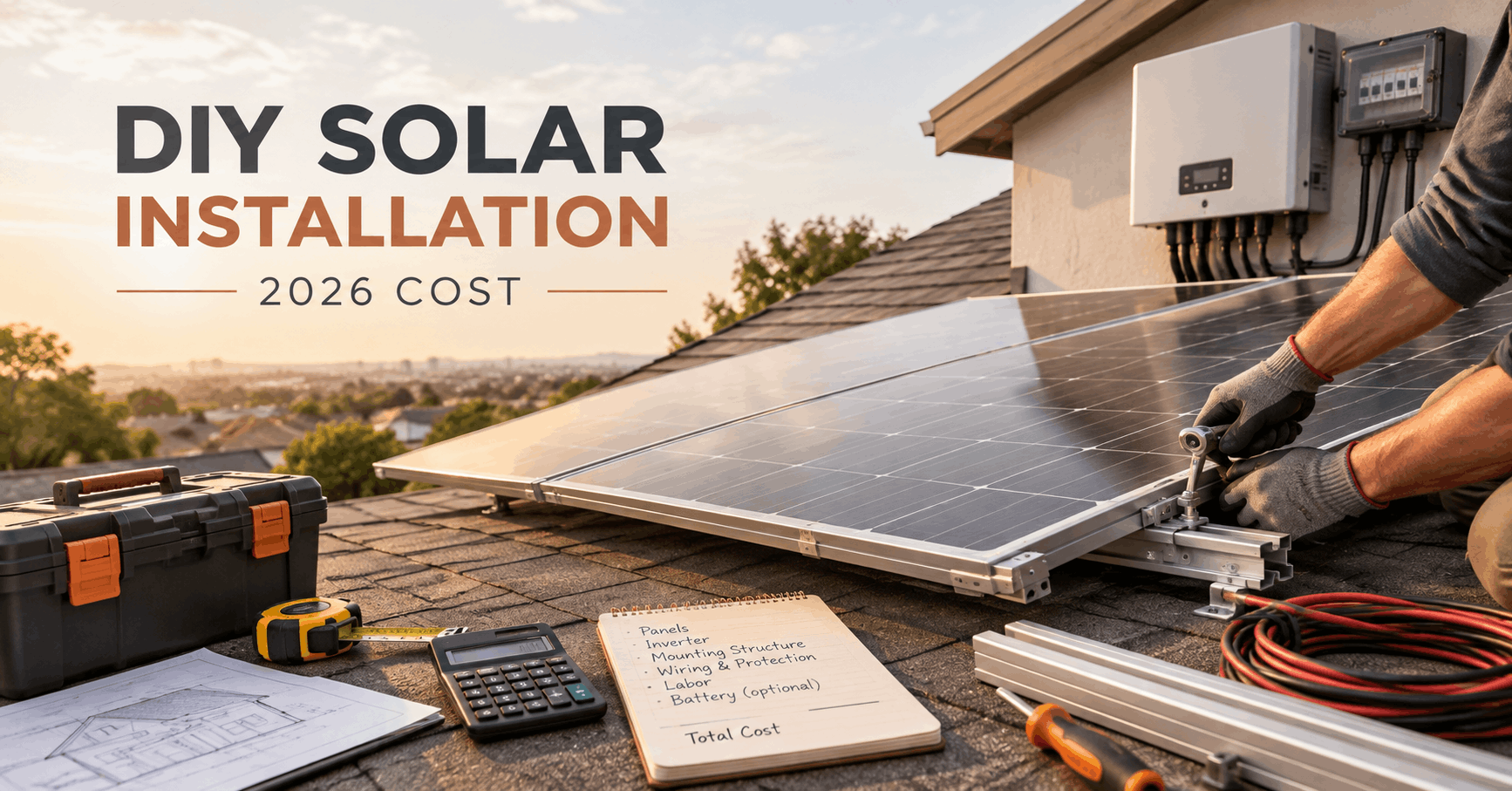
The savings aren’t exaggerated. An 8 kW system costs roughly $6,500–$10,700 in equipment if you install it yourself. The same system through a professional installer runs $13,500–$24,700, mostly because labor and installer overhead eat up close to half the bill. That’s a real difference, not a rounding error.
Beyond money, DIY gives you control that a standard installer package doesn’t. Want a specific panel brand or an unusual mounting angle? Nobody’s going to talk you out of it. And there’s a timing advantage too, professional crews are often booked weeks out, while a DIY project moves whenever you have a free Saturday.
There’s also a less tangible upside. Wiring your own system teaches you real electrical fundamentals, and for some people that’s worth something on its own, separate from the dollar savings.
Where DIY Gets Expensive in Ways That Don’t Show Up on a Price Tag
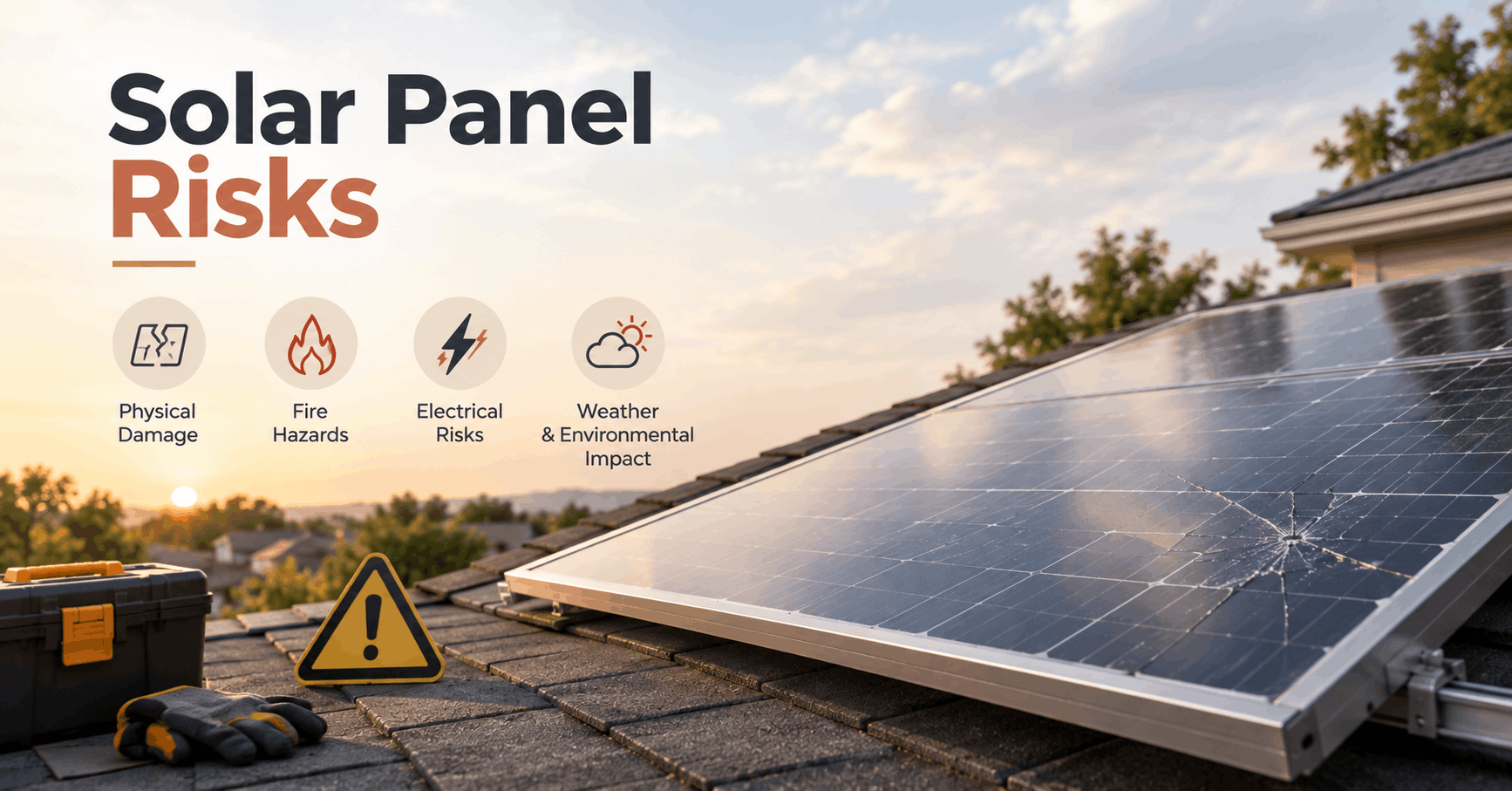
Roof work plus electrical work is already a dangerous combination before you factor in code. The 2023 NEC rapid-shutdown rule (Section 690.12) requires PV circuits to drop to 30 volts or less within 30 seconds, a standard that’s genuinely easy to get wrong without training, and getting it wrong isn’t a small mistake.
Warranties are the part most DIY guides gloss over. A lot of manufacturers only honor their product warranty when a licensed professional does the install. Void that, and a failed panel becomes your bill to pay, even years later. Roofing warranties are even less forgiving, most roofing companies require certified installers for any penetration, solar or otherwise.
Insurance is the quiet risk nobody thinks about until it matters. Homeowners policies frequently exclude unpermitted electrical work. If a DIY system causes a fire and the install wasn’t permitted and inspected, that claim can get denied outright.
And then there’s the tax credit question, which catches a lot of people off guard: the 30% federal Residential Clean Energy Credit (Section 25D) expired for good on December 31, 2025, under the One Big Beautiful Bill Act. Anyone installing solar in 2026, DIY or professional, gets zero federal credit. If you’re working off an older article’s savings math, throw it out; the numbers changed.
Permitting itself is its own kind of tedious. Expect to pay $200–$800 and submit technical plans, engineering calcs, and schedule more than one inspection. A professional folds all of that into their fee. DIY means you’re the project manager.
What an 8 kW System Actually Costs, Line by Line
| Line Item | DIY | Professional |
|---|---|---|
| Solar panels | $4,000–$5,200 | $4,000–$5,200 |
| Inverter(s) | $1,200–$3,000 | $1,200–$3,000 |
| Racking & mounting | $800–$1,400 | $800–$1,400 |
| Wiring & components | $300–$600 | $300–$600 |
| Permits & interconnection | $200–$500 | Included |
| Labor | Your time | $4,000–$8,000 |
| Overhead & margin | $0 | $3,000–$6,000 |
| Total before incentives | $6,500–$10,700 | $13,500–$24,700 |
| Per watt | $0.81–$1.34 | $1.69–$3.09 |
These are national ranges. Your actual quote will move based on region, roof complexity, and equipment brand, so treat this as a starting point for comparison, not a promise.
So Who Should Actually Do This Themselves?
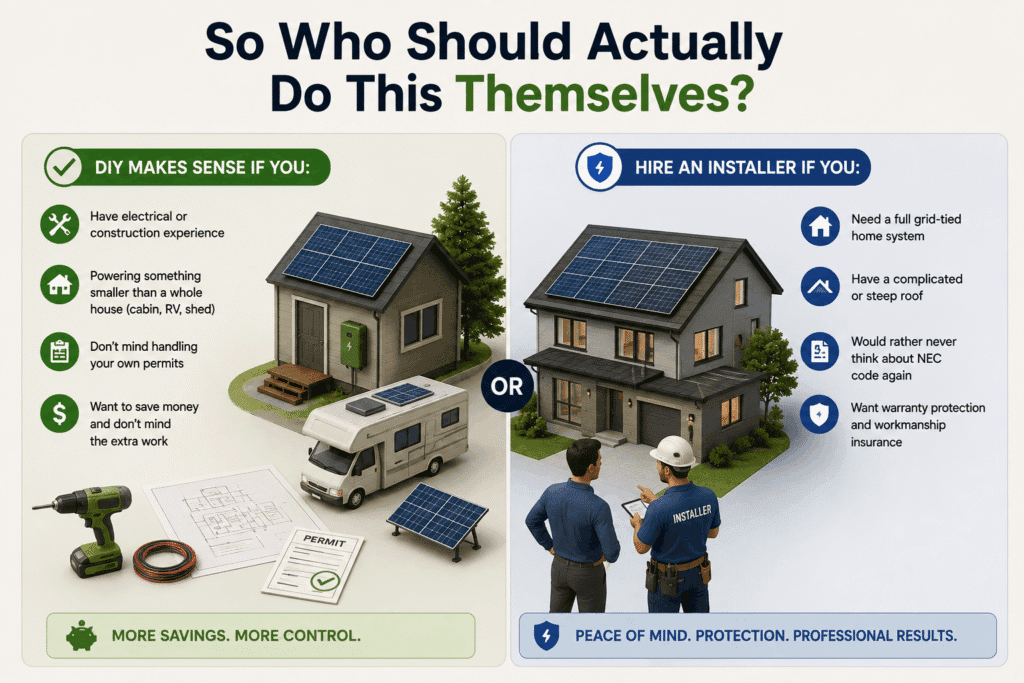
If you’ve got real electrical or construction background, you’re powering something smaller than a whole house, a cabin, an RV, a shed, and you don’t mind handling your own permits, DIY probably makes sense for you. The savings are worth the hassle.
If you need a full grid-tied home system, have a complicated or steep roof, or would simply rather never think about NEC code again, pay the installer. The warranty protection and workmanship insurance you’re buying is worth more than it looks on paper.
Most homeowners land somewhere in between, which is honestly the more common outcome than either extreme.
FAQs
Is it legal to install your own solar panels?
In most states, yes, with an owner-builder permit, but you’ll still need inspections and utility approval before you can legally connect to the grid.
Does DIY solar still qualify for the federal tax credit?
No. The credit expired for all new residential systems installed after December 31, 2025, regardless of who installs them.
Will it void my warranty?
Often. Many manufacturers, and most roofing companies, require licensed installation to keep coverage valid.
How much can you realistically save?
Based on current 2026 pricing, expect $8,000–$15,000 in savings on an average 8 kW system, mostly from cutting out labor and overhead.
Do you need an electrician at all if you’re going DIY?
Almost certainly for the final grid tie-in. Most local codes require it even when a homeowner handles everything else.
Worth It or Not?
DIY solar isn’t a gimmick and it isn’t a shortcut. It’s a genuine trade: real money saved against real risk taken on, in the form of safety, warranty coverage, and paperwork you’d otherwise pay someone else to handle. For a small off-grid setup, that trade tends to make sense. For a full home system, the protection a licensed installer brings usually outweighs what you’d save.
Either way, get an actual quote for your roof before deciding anything. National averages are a starting point. They’re not your answer.