Table of Contents
I have both types on my property Solar path lights, Electric floodlights Each serves a different purpose.
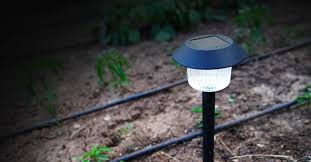
The solar path lights cost me $25 for a pack of six. I pay zero dollars to run them. They turn on at dusk. They turn off at dawn. I have not touched them in three years except to wipe dust off the panels.
The electric floodlight cost me 40forthefixture.Ipayabout3 per month to run it. That is $36 per year. It lights up my entire backyard like a stadium.
So which is better? The answer depends on what you need. Let me walk you through the real differences.
Electric lights are much brighter. There is no contest.
A solar path light gives you 10 to 30 lumens. That is enough to see the edge of a walkway. Not enough to read a book. Not enough to scare a thief.
An electric LED bulb gives you 800 to 1500 lumens. A floodlight gives you 3000 to 5000 lumens. A street light gives you 10,000 lumens or more.
The difference is massive. Solar lights shine like a candle. Electric lights shine like the sun. If you need bright light for security or working outside, solar will disappoint you.
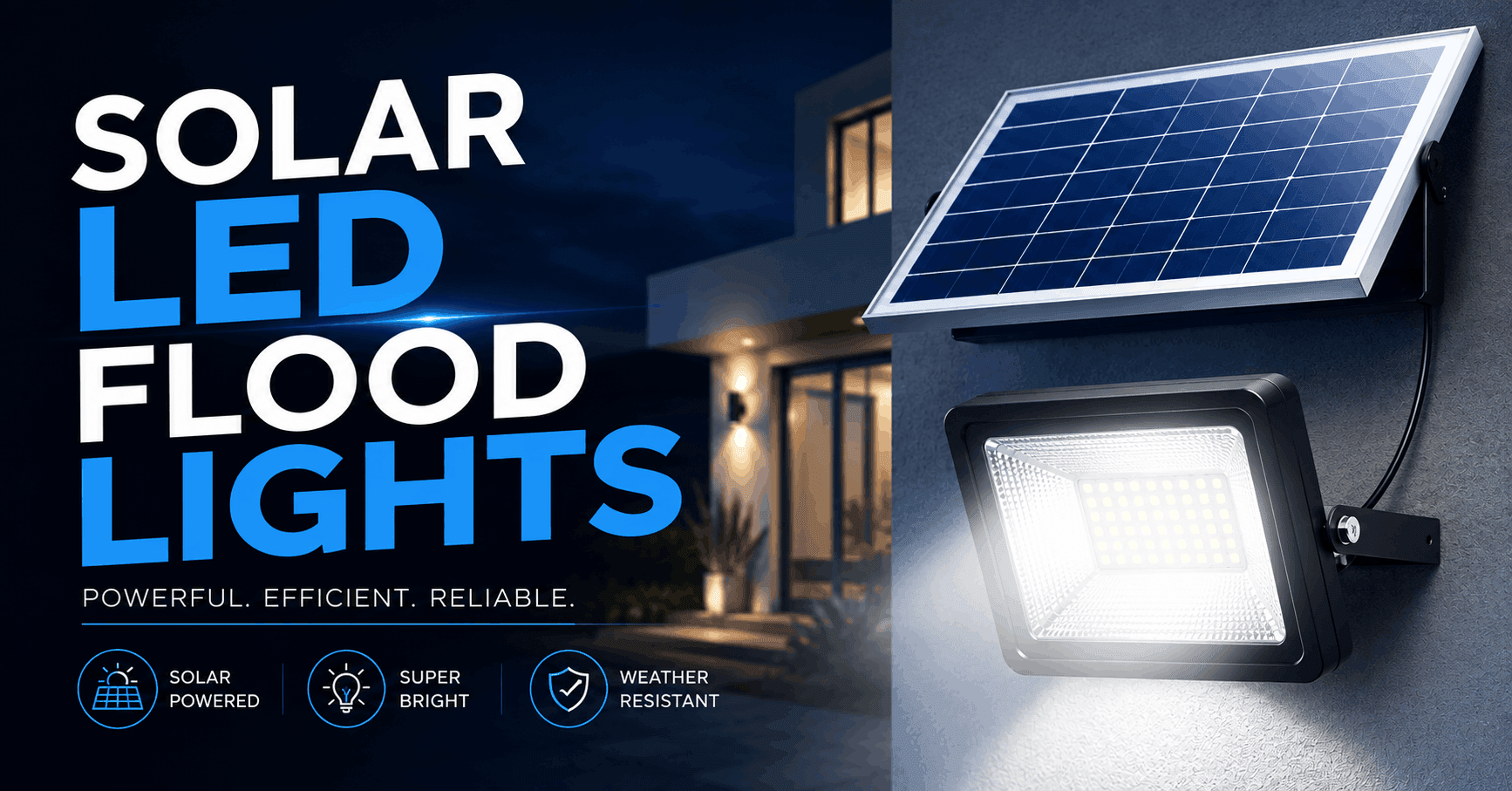
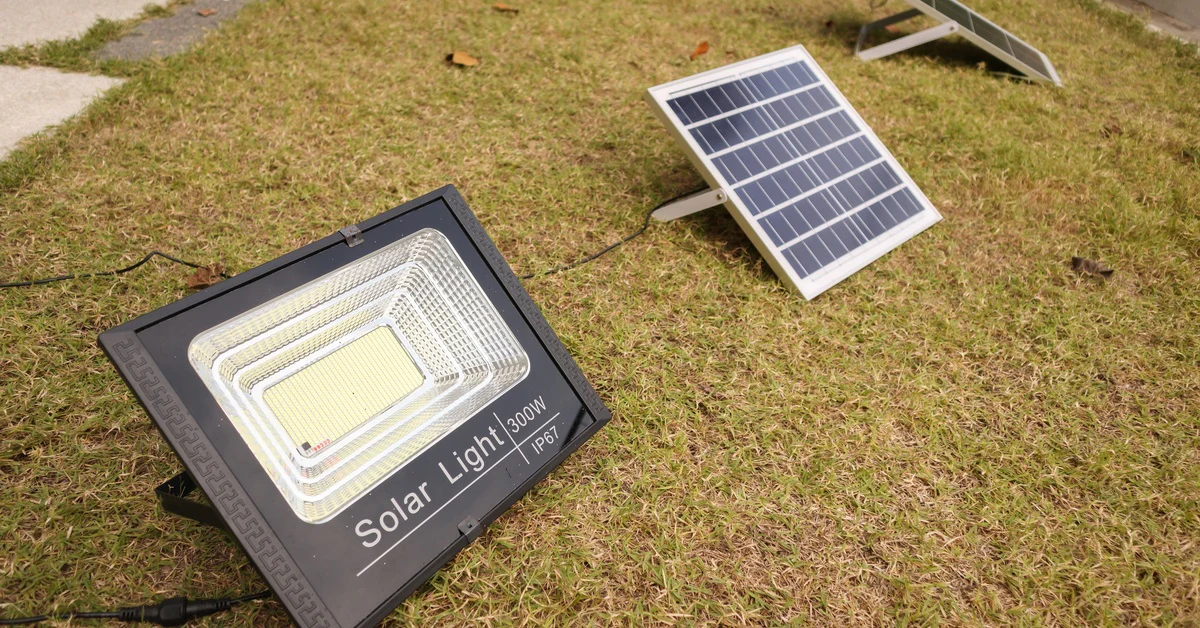
I learned this the hard way. I bought a solar floodlight for my back door. It claimed 2000 lumens. In reality, it gave maybe 500 lumens on a good night. After three hours, it dropped to 200 lumens. I returned it and bought an electric floodlight.
Solar lights cost nothing to run. Electric lights add to your bill.
This is the main reason people buy solar. No monthly cost. No meter. No surprise bill.
A single 10 watt electric LED running 8 hours per night costs about $0.30 per month. That sounds tiny. But multiply by 10 lights around your house. That is $3 per month. $36 per year. $360 over ten years.
Solar lights cost $0 per month. Forever. The math changes when you have many lights or when electricity is expensive in your area.
A friend of mine in a village pays high electricity rates. He replaced 15 electric path lights with solar. He saved $15 per month. The solar lights paid for themselves in 4 months. Now everything after that is pure saving.
Installation Solar wins by a mile.
Electric lights need wiring. You run cables from your breaker box to each light. You dig trenches if the lights are far from the house. You hire an electrician. You pull permits in some areas.
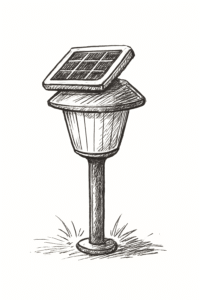
Solar lights need nothing. You push a stake into the ground. You hang a lantern on a hook. You screw a wall light into a bracket. Done.
I installed my six solar path lights in 15 minutes. No tools except my hands. No wires. No measuring. No drilling.
My electric floodlight took two hours. I ran wire through my attic. I drilled a hole in the wall. I connected the wires to a switch. I patched the drywall. I cleaned up the mess.
If you rent your home, solar lights are your only choice. You cannot drill holes or run wires in a rental. Solar lights stick into the ground. When you move, you pull them out and take them with you.
Reliability Electric lights work every night, Solar lights depend on weather.
Electric lights get power from the grid. They work the same on sunny days, cloudy days, rainy days, snowy days. Always.
Solar lights need sun. Three cloudy days in a row means three dim nights. Your light turns off at 10pm instead of 5am. You sit in darkness.
I live in an area with four distinct seasons. Summer is great. My solar lights run all night. Winter is terrible. The sun sets at 4pm. Clouds hang around for weeks. My solar lights die by 9pm.
My neighbor solved this by buying solar lights with larger batteries. He spent 50perlightinsteadof10. His lights run 8 hours even on cloudy days. He says the extra cost was worth it.
Maintenance, Electric lights need bulb changes, Solar lights need battery changes.
Electric lights are simple. The bulb burns out after 5 to 10 years. You screw in a new one. Done.
Solar lights have more parts. The battery dies after 2 to 3 years. You open the compartment. You replace the AA or AAA rechargeable battery. You close it. Done. Then the solar panel degrades after 5 to 7 years. The light gets dimmer. Eventually you replace the whole light.
I have replaced batteries in six solar lights over three years. Total cost $12. Total time 30 minutes. Not a big deal.
My electric floodlight still has the same bulb after 4 years. I expect it to last 5 more years. Then I spend $5 on a new bulb.
Safety, Both are safe. But solar has no shock risk.
Electric lights carry shock risk if you touch exposed wires. Improper installation can cause fires. Water getting into outdoor electric fixtures is dangerous.
Solar lights run on low voltage DC. 1.2V to 12V. You cannot feel a shock from 12V. You can submerge a solar light in water and touch the wires. Nothing happens.
This matters if you have young kids or pets. They cannot hurt themselves with solar lights. They can poke the wires. They can break the glass. No shock.
I have a toddler. He pulls my solar path lights out of the ground. He waves them around. He drops them in puddles. I do not worry. An electric light would scare me.
Which one saves more money? Solar wins after 1 to 3 years.
Let me do the math for a single path light.
Solar path light. $8 upfront. $0 per month to run. Replace battery after 2 years. $2. Total cost over 5 years. $10.
Electric path light. $5 for the fixture. $0.30 per month for electricity. $18 over 5 years. Replace bulb after 5 years. $2. Total cost over 5 years. $25.
Solar saves you $15 over 5 years per light. For 10 lights, that is $150. Not life changing. But not nothing.
For a floodlight, the math changes.
Solar floodlight. $60 up front. $0 per month. Battery replacement after 2 years. $10. Total over 5 years. $80.
Electric floodlight. $40 upfront. $3 per month for electricity. $180 over 5 years. Bulb lasts 10 years. Total over 5 years. $220.
Solar saves you $140 over 5 years on a floodlight. That is real money.
Environmental impact. Solar wins clearly.
Solar lights produce zero carbon emissions after manufacturing. They run on free energy from the sun. No power plant. No burning coal or gas. No transmission losses.
Electric lights get power from the grid. In many places, that grid runs on coal or natural gas. Even with renewable energy, transmission losses waste 5 to 10 percent of the power.
If you care about your carbon footprint, solar lights are the obvious choice. Every solar light replaces an electric light. Every electric light not used saves coal from being burned.
A friend of mine switched his entire property to solar lights. 22 lights total. He estimates he saves 300 kWh per year. That is 150 kg of CO2. The equivalent of planting 2 trees every year.
Which one should you choose? Here is my rule.
Use electric lights when you need bright, reliable light for security or tasks. Your back door. Your garage. Your driveway. Your workshop. Places where darkness means danger or inconvenience.
Use solar lights when you want ambient light for decoration or path marking. Your garden. Your walkway. Your flower beds. Your patio. Places where dim light is good enough.
Use both. That is what I do. Electric floodlight at my back door for security. Solar path lights along my walkway for ambiance. Solar lanterns on my patio for dinners. Electric spotlights on my trees for drama.
Each has a job. Each does that job well. Neither does the other’s job.
What I have learned after 4 years of using both
I started with all electric lights. My electric bill was $15 higher every month. Not huge. But annoying.
Then I switched my garden lights to solar. My bill dropped. My garden looked the same. Nobody noticed the difference except me.
Then I tried to replace my security lights with solar. That failed. The solar floodlights were too dim. I went back to electric for security.
Now I have a hybrid setup. Electric for safety. Solar for savings. I am happy with both.
My advice to you. Start with one solar light. Put it in a sunny spot. See if it gives enough light for your need. If yes, buy more. If no, stick with electric for that spot.
Do not throw away your electric lights. Use them where solar cannot reach. Add solar lights where electric is overkill.
The best lighting setup is not all solar or all electric. It is the right mix for your property and your needs.
Related FAQs
Are solar lights bright enough for security?
No. Most solar floodlights give 500 to 2000 lumens. Wired electric floodlights give 3000 to 5000 lumens. For real security, use electric. Solar only works for very small areas like a door step.
How long do solar lights last compared to electric?
Solar lights last 3 to 5 years before needing battery replacement. The LED itself lasts 10 years. Electric lights last 10 to 20 years with bulb changes every 5 to 10 years.
Do solar lights work in winter?
Yes but with shorter run times. Winter sun is weaker. Days are shorter. Your solar lights may run 3 to 5 hours instead of 8 to 10 hours. Electric lights work the same all year.
Can I replace electric lights with solar lights completely?
Only if you do not need bright light. Solar lights cannot match the brightness of electric lights. For pathways and decoration, yes. For security and workspaces, no.
Which is cheaper to install, solar or electric?
Solar is much cheaper. No electrician. No wires. No permits. You push solar lights into the ground or hang them on hooks. Installation takes minutes. Zero cost.
Do solar lights save money on electric bills?
Yes. Every solar light replaces an electric light. Each electric light costs 0.30to3 per month to run depending on wattage and hours. Solar lights cost nothing to run.
Are solar lights more environmentally friendly than electric lights?
Yes. Solar lights produce zero emissions during operation. Electric lights get power from the grid, which often burns fossil fuels. Solar panels have manufacturing emissions but offset them within 1 to 2 years.
Can solar lights work on cloudy days?
Yes but with reduced performance. A fully charged battery runs 1 to 2 nights on stored power. After 3 cloudy days, the battery drains. The light turns off early or stays dim.
What happens to solar lights when the battery dies?
You replace the battery. Most solar lights use AA or AAA rechargeable batteries. Open the compartment. Remove the old battery. Insert a new one. Cost is 1to2 per battery.
Should I buy solar or electric lights for my new home?
Buy both. Use electric for security, garage, driveway, and workspaces. Use solar for garden, walkway, patio, and decoration. This gives you reliability where you need it and savings where you do not.
Summary
Solar lights cost nothing to run but produce 10 to 30 lumens per path light. Electric lights cost 0.30 to 3 per month per light but produce 800 to 5000 lumens. Solar wins on installation ease and environmental impact. Electric wins on brightness and reliability. Use electric for security and tasks. Use solar for paths and decoration. A hybrid setup gives you the best of both. Solar lights pay for themselves in 1 to 3 years compared to electric lights.