Last updated on October 27th, 2026 at 07:16 am
Quick answer: The best solar pillar light for most gate and fence pillars in 2026 is the Kemeco ST4311AQ: cast aluminum, IP65 and a warm 160-lumen glow. Need more brightness for large square pillars? The MVBT 12×12 is listed at 350 lumens. Whatever you pick, measure your pillar and give the panel direct sun.
Table of Contents
| Best for | Pick | Key specs (as listed) |
|---|---|---|
| Best overall | Kemeco ST4311AQ | 160 lumens, 3000K warm white, IP65, cast aluminum |
| Brightest, large pillars | MVBT Large Solar Pillar Light 12×12 | 350 lumens, 4400 mAh lithium battery, remote, IP54 |
| Best budget | Greluna Solar Post Light | 60 lumens, IP65 |
| Best premium build | BUINNE Solar Pillar Light | 304 stainless steel, 5200 mAh battery, 9W monocrystalline panel |
Specs come from manufacturer and retailer listings, and listings change. Check the current product page before you buy.
What Are Solar Pillar Lights?
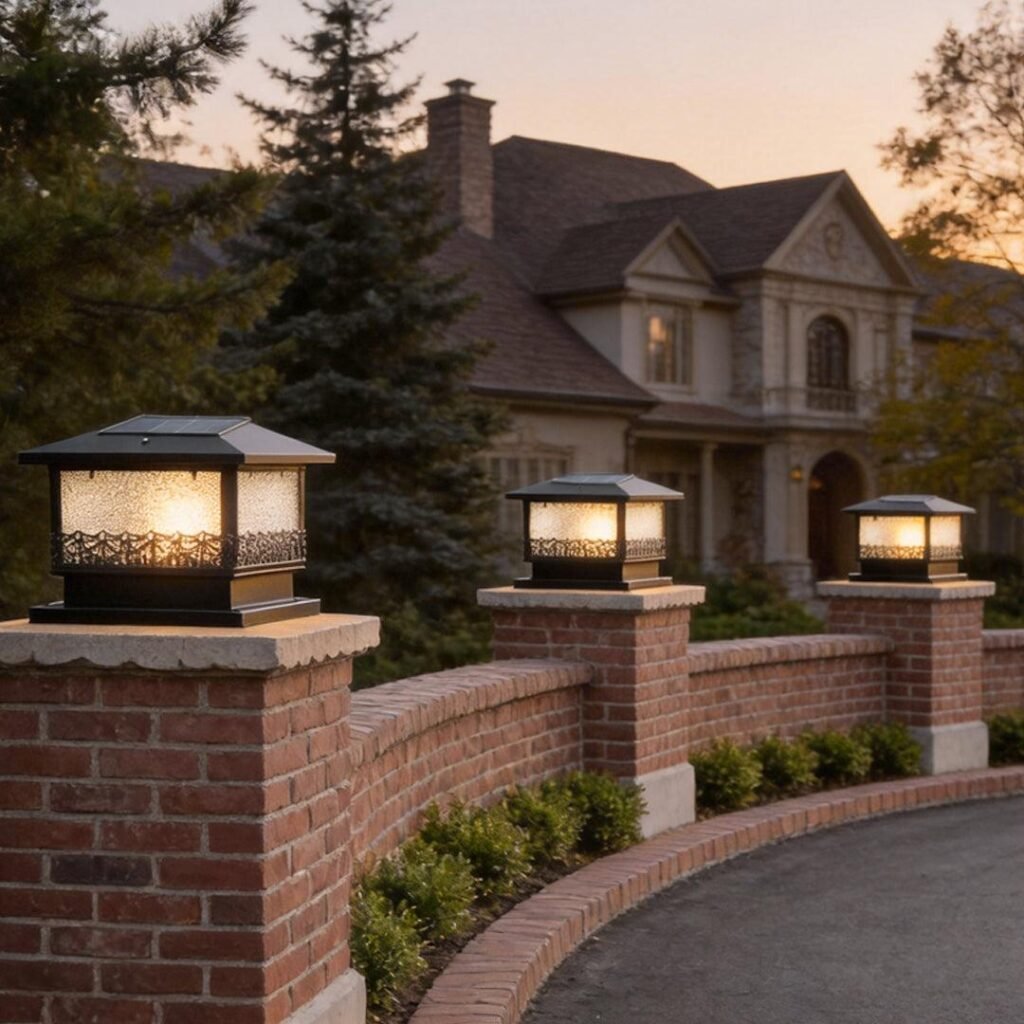
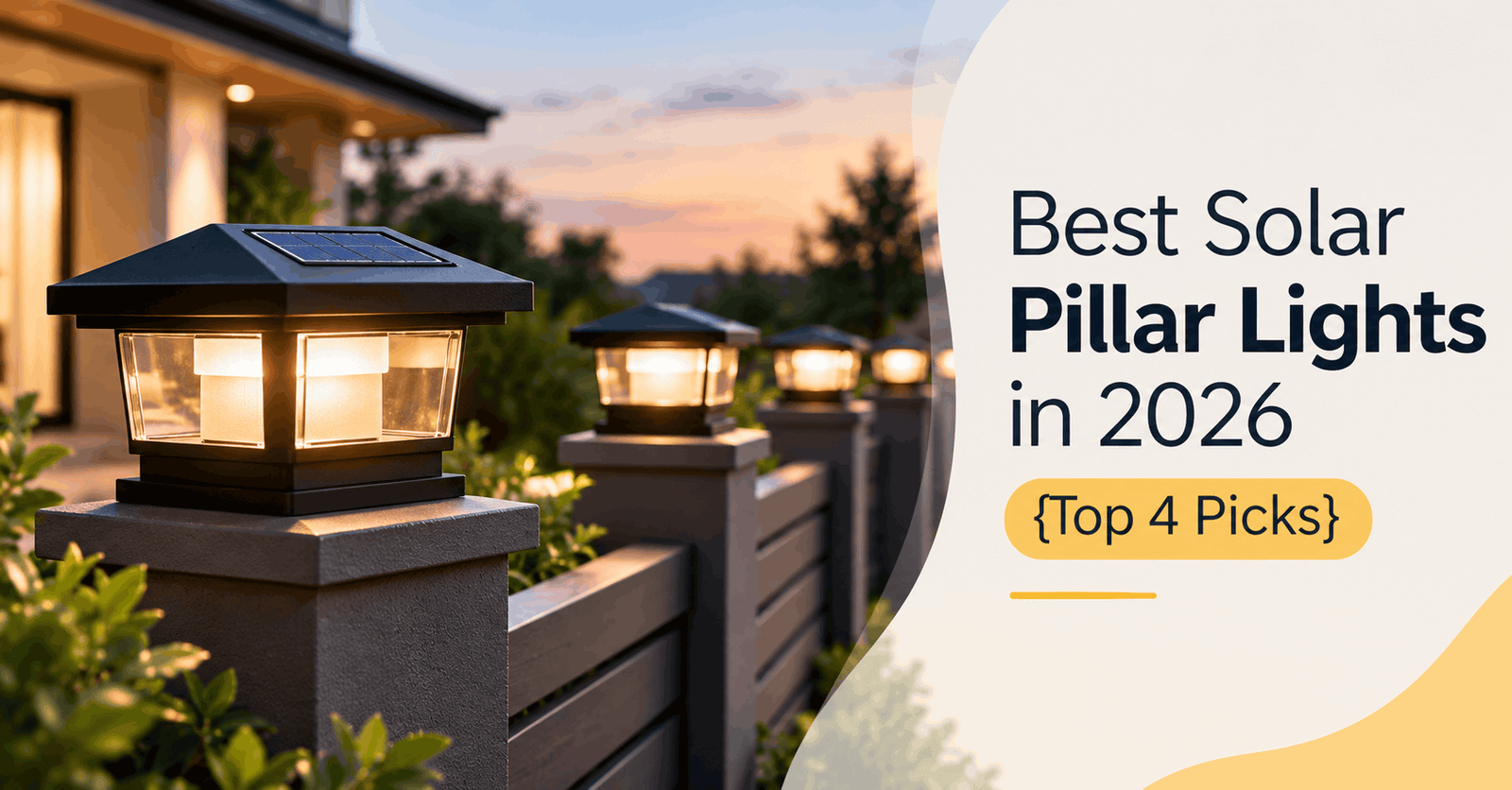
A solar pillar light sits on top of a gate pillar, brick column or fence pier. The solar panel, battery and LEDs live inside one fixture. There is no wiring, no trench and no call to an electrician.
The idea is simple. The sun charges the battery by day, and the light switches on by itself at dusk.
How they differ from post cap, pathway and bollard lights
The names get mixed up a lot, so here is the quick sort.
Post cap lights are slim, low-profile lights that sit on wooden or vinyl posts. If that is what you need, our guide to solar post cap lights for deck railing is a better starting point.
Pillar lights are larger, lamp-style fixtures. They usually come with a flat pier mount base for masonry or a fitter for a 3-inch post.
Pathway lights are stakes you push into the ground. Bollards are short, freestanding posts. Neither one belongs on top of a gate pillar.
Where they work best
Pillar lights do their best work in a few spots:
- Driveway gate pillars
- Brick or stone fence piers
- Patio and porch columns
- Either side of a front entry
They suit places where you want a welcoming glow, not a floodlight.
How Solar Pillar Lights Work
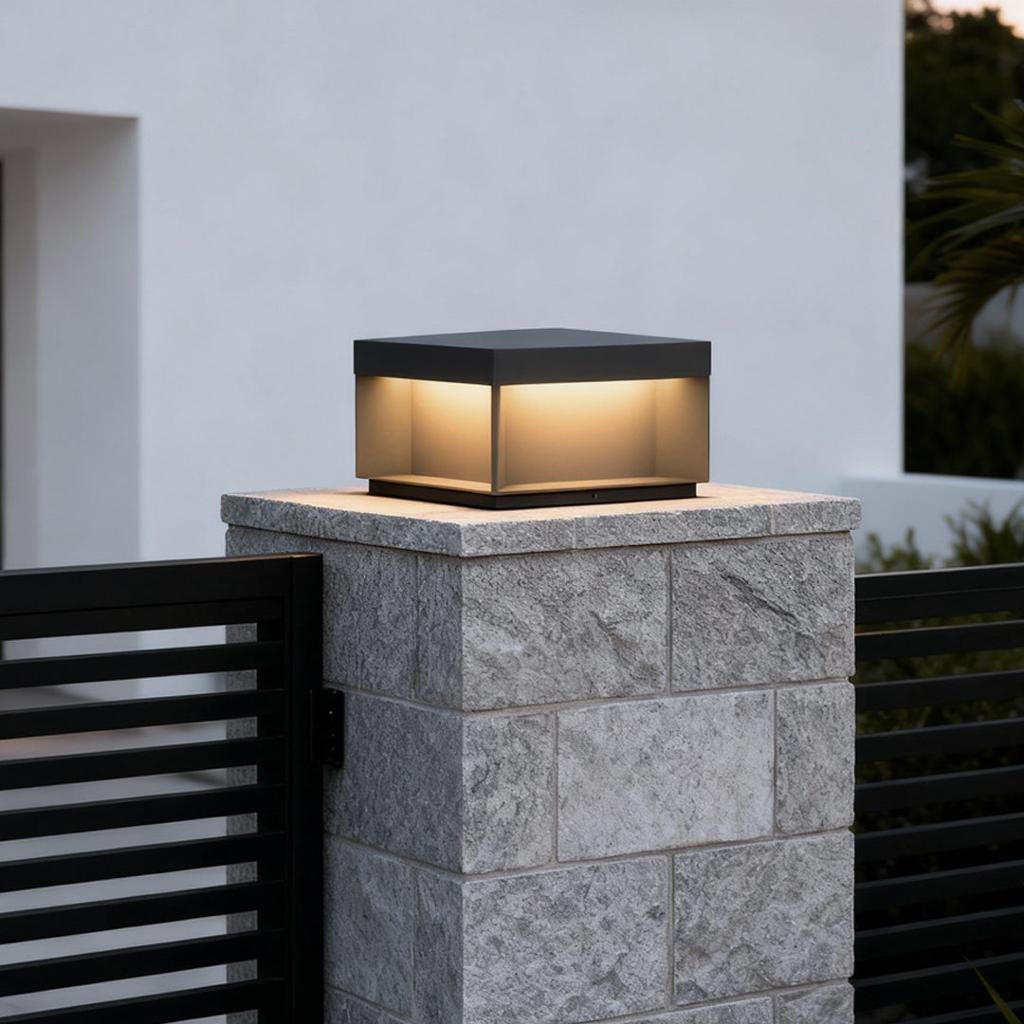
The U.S. Department of Energy explains that outdoor solar lighting systems use solar cells to convert sunlight into electricity. Everything else in the fixture exists to store that power and use it well.
Panel, battery and LED in one unit
There are four parts to know:
- Solar panel: collects sunlight during the day.
- Battery: stores the energy until night.
- LED: turns the stored energy into light.
- Light sensor: keeps the LED off in daylight and switches it on at dusk.
Most pillar lights pack all four into one body. You mount it, and it works on its own.
Why charging time and sunlight matter
This is where most solar lights succeed or fail. The Department of Energy notes that the nightly run times printed on solar lights assume specific sunlight conditions. Less sun means fewer hours of light.
It also warns that shade from trees and buildings affects battery charging and performance. Insufficient charging can even shorten the life of the battery.
The Kemeco ST4311AQ is a good example. Its published specs list about 6 to 7 hours of charging for about 8 to 10 hours of light. Those hours depend on a sunny pillar. A pillar under a big oak is a different story.
How to Choose the Best Solar Pillar Lights
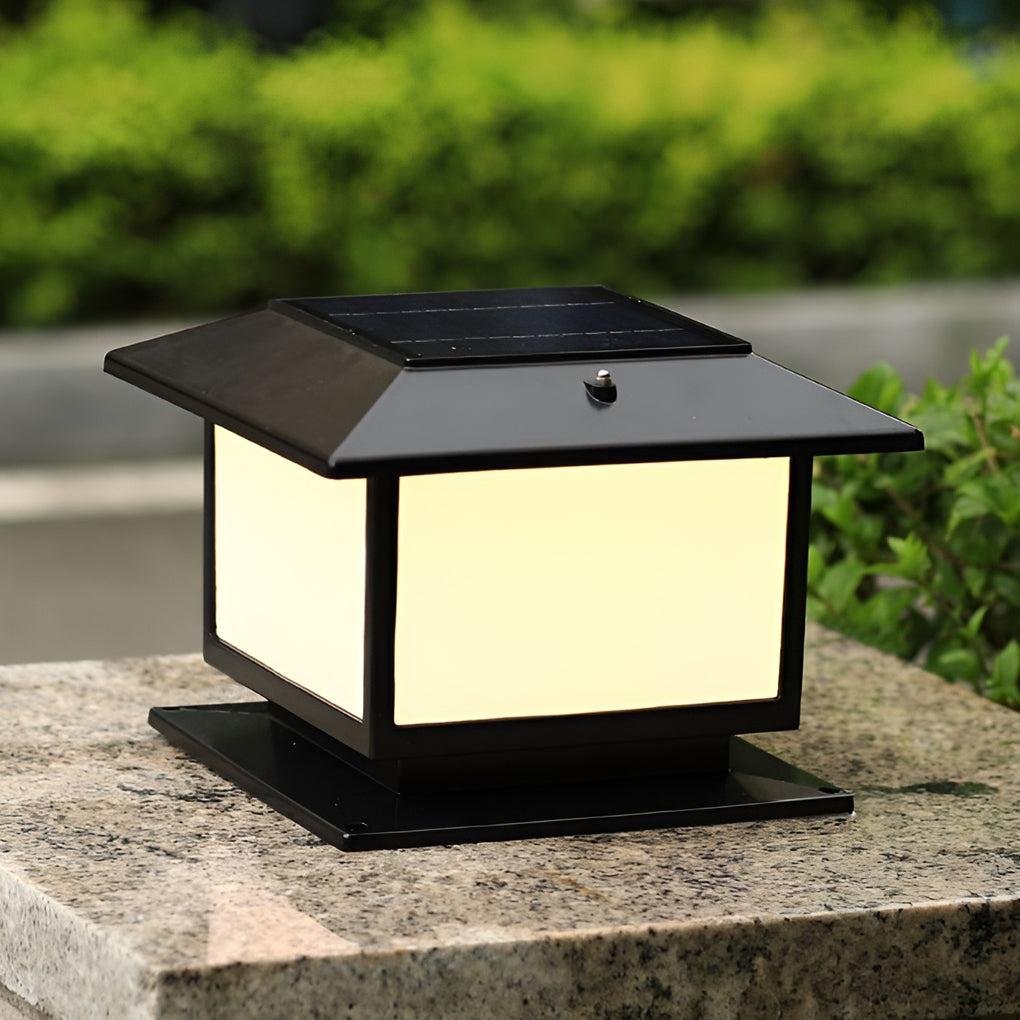
A good pillar light comes down to six checks. Skip one and you may end up with a fancy lamp that dies by 9 p.m.
Measure your pillar first
Start with a tape measure. Check the width and depth of the flat top of your pillar. Then compare it with the base of the light.
Some lights mount on a 3-inch post, like the Kemeco ST4311AQ. Others sit on a flat pier mount base. Large models are sized for big pillars. The MVBT is sold as a 12×12 unit, for example.
A 12×12 light on a narrow pillar looks like a hat three sizes too big. Measure twice, buy once.
How many lumens do you need?
Lumens measure total light output. More lumens means a brighter light.
The pillar lights in this guide range from 60 to 350 lumens. A lower number gives a soft glow that marks an entrance. A higher number lights more of the driveway.
Compare like with like. Some lights list a higher number for a motion-triggered boost mode, not for their normal all-night setting. Read the fine print.
Battery type and capacity
Listings use two main battery types: nickel-metal hydride (NiMH) and lithium-ion. Capacity shows in milliamp-hours (mAh).
Here is a quick way to compare. Watt-hours equal volts times amp-hours. A 3.7V, 4400 mAh battery holds about 16 Wh (3.7 × 4.4 = 16.3). Two batteries with the same mAh but different voltages do not store the same energy.
The Department of Energy also tells buyers to ask whether replacement batteries are available. Batteries age. A light with a replaceable battery can keep going when a sealed one ends up in the bin.
Solar panel quality and placement
Panel size and type both matter. Monocrystalline panels generally convert sunlight more efficiently than polycrystalline ones. That helps on short winter days.
Placement matters even more. The best panel in the world cannot charge in the shade. Check how much direct sun the top of your pillar gets before you buy.
Weather rating: IP65 and materials
IP stands for Ingress Protection. The rating comes from the international standard IEC 60529. The first digit covers solids like dust. The second covers water.
- IP65: dust-tight, and protected against low-pressure water jets from any direction (tested with a 6.3 mm nozzle).
- IP54: dust-protected (not fully dust-tight), and protected against splashing water.
For a light that sits in the rain all year, IP65 gives more headroom. IP54 can still work in covered or sheltered spots.
Material counts too. Cast aluminum and stainless steel resist weather better than thin plastic. Stainless steel is also a strong choice near the coast, where salt air eats cheap metal.
Warm vs. cool light, and sensor options
Color temperature is measured in kelvins (K). Around 3000K gives a warm, golden glow that suits brick and traditional homes. Around 6000K gives a cool, bluish-white light that looks more modern.
Some lights add extras. A remote can dim the light or set a timer. A motion sensor can switch the light to full brightness when someone walks by. Handy features, but each one also uses battery.
Best Solar Pillar Lights in 2026
We did not bench-test these lights. We compared published specs, checked them against more than one listing where possible, and read what owners report. When a spec came from a single listing, the text says “listed” so you know to double-check it.
Best Overall: Kemeco ST4311AQ
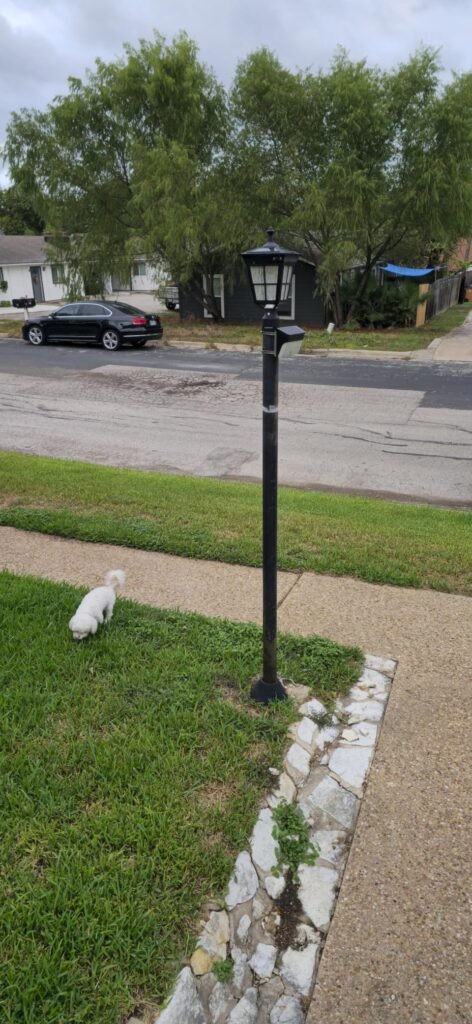
Best for: driveway gate pillars and classic homes that want a dependable, no-fuss light.
Spec block (as listed):
- Output: 160 lumens
- Color: 3000K warm white
- Weather rating: IP65
- Body: cast aluminum with glass
- Power: four solar panels and a 3.6V battery
- Listed runtime: about 8 to 10 hours after 6 to 7 hours of charging
- Mounting: 3-inch post or the included base
This is the pick that asks the fewest questions. The build is heavy, the rating is IP65 and the light is warm. Owners describe the output as similar to a porch light, which is about right for a gate pillar.
It also uses batteries owners say they can replace. That matters a lot in year three.
Pros:
- Metal and glass build feels solid
- IP65 protection for year-round weather
- Warm 3000K light looks natural on brick
- Works on a 3-inch post or a flat base
Cons:
- 160 lumens is ambient light, not security lighting
- Needs a sunny pillar to hit the listed runtime. One reviewer expects around five hours under overhanging trees
Not ideal for: deeply shaded entrances, or anyone who wants floodlight brightness.
Brightest and Best for Large Pillars: MVBT Large Solar Pillar Light 12×12
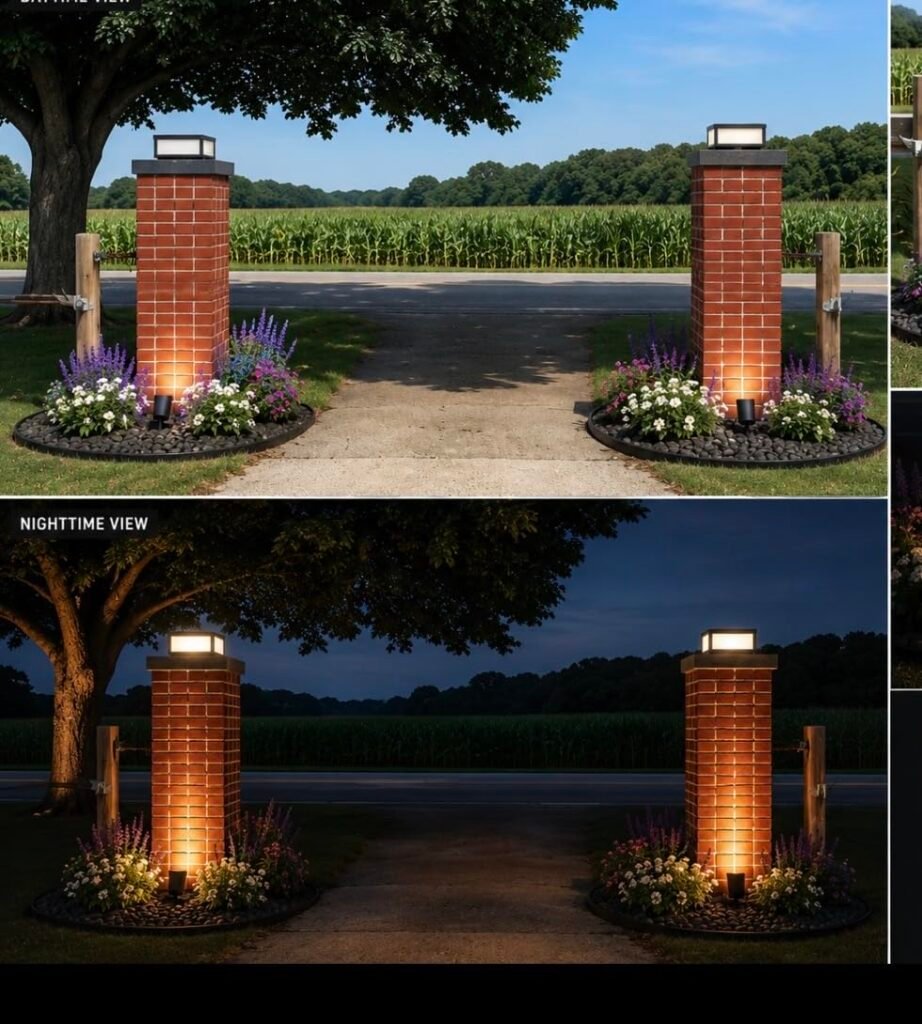
Best for: big square pillars and wide driveway entrances.
Spec block (as listed):
- Output: 350 lumens, warm white
- Battery: 4400 mAh lithium
- Control: remote with brightness and timer settings
- Weather rating: IP54
- Size: 12×12
This one is the loud member of the group. At 350 lumens it is the brightest light in this guide. The remote lets you dim it or set a timer, which helps stretch the battery on gloomy weeks.
The trade-off is the IP54 rating. That is fine for a sheltered pillar, but it gives less protection against heavy rain than IP65 does. Also, as with any bright light, the battery has more work to do.
Pros:
- Highest light output in this guide
- Remote adds brightness and timer control
- Sized for large square pillars
Cons:
- IP54 gives less rain protection than IP65
- Needs strong, daily sun to keep up with the brightness
- Too large for small pillars
Not ideal for: narrow pillars, or very wet and exposed spots.
Best Budget: Greluna Solar Post Light
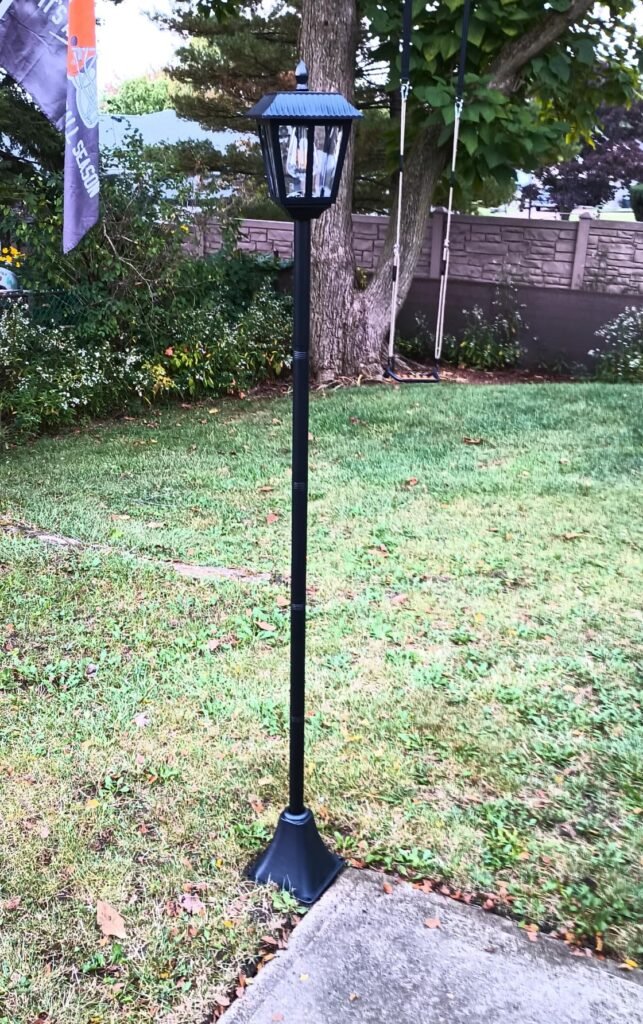
Best for: a simple replacement on one pillar without spending much.
Spec block (as listed):
- Output: 60 lumens
- Weather rating: IP65
- Type: dusk-to-dawn solar post light
The Greluna keeps things simple. It gives a soft glow, and it carries the same IP65 rating as pricier options. Think of it as a polite night-light for your pillar.
Sixty lumens will not light a driveway. It will mark an entrance and help visitors find the gate.
Pros:
- IP65 rating at a budget tier
- Easy way to replace one broken light
- Simple, modern look
Cons:
- Low output, so it is for ambiance only
- Less premium feel than cast aluminum models
Not ideal for: anyone who needs bright, visible light at night.
Best Premium Build: BUINNE Solar Pillar Light
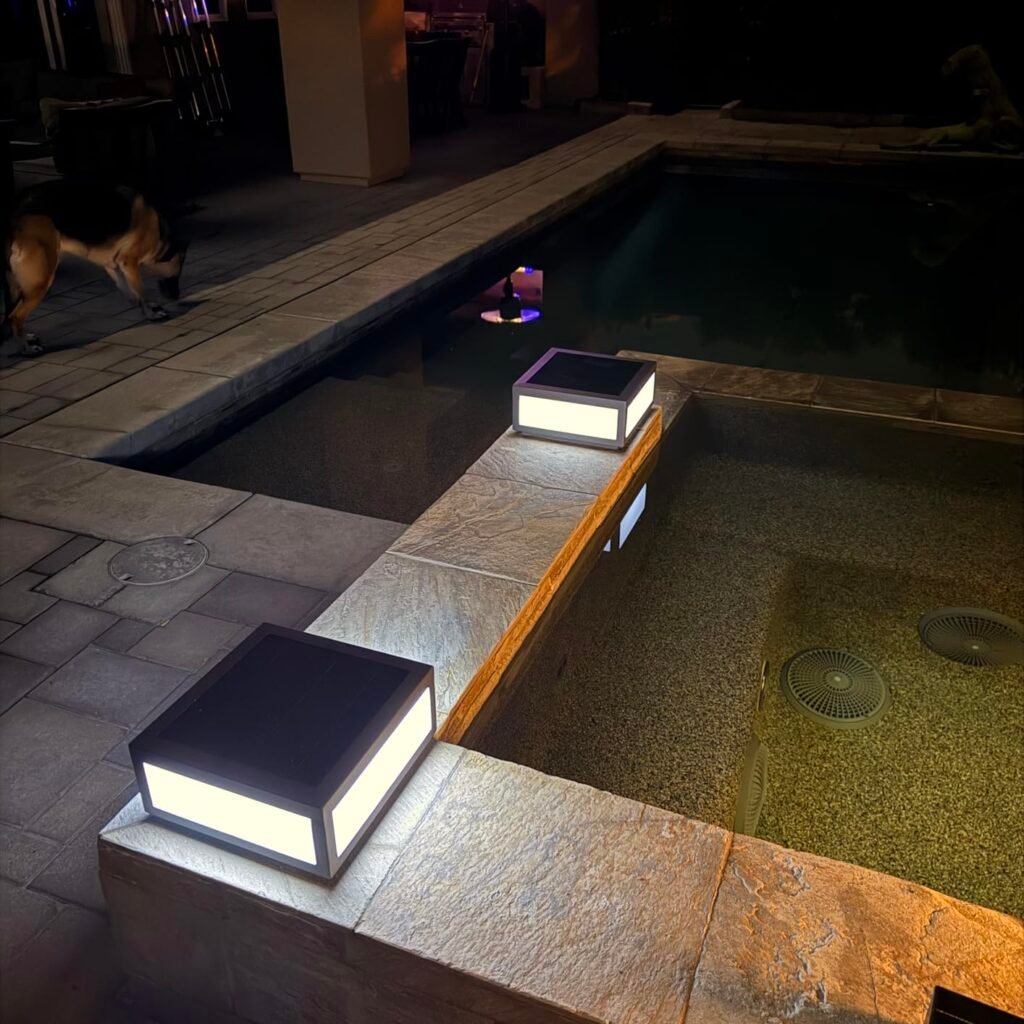
Best for: coastal homes, harsh winters and anyone who hates replacing things.
Spec block (as listed):
- Body: 304 stainless steel
- Battery: 5200 mAh
- Solar panel: 9W monocrystalline
- Control: remote with three color temperature settings
- Smart dimming: full brightness for the first 20 minutes after dusk, then a gradual drop to a lower level
Stainless steel resists rust well, which is why it works so nicely near salt air. The large battery and big panel are built for long nights.
The smart dimming is the clever part. The light starts bright, then eases down to save power for the rest of the night. It trades peak brightness for a longer, steadier glow.
Pros:
- 304 stainless steel body
- Large battery and panel for the category
- Dimming curve stretches runtime
Cons:
- Premium materials cost more
- Built for ambiance, not task lighting
- Mounting on masonry means drilling
Not ideal for: renters, or anyone who wants a quick, no-tools install.
Style Ideas for Your Gate or Fence Pillars
Good lighting should match the house, not argue with it.
- Classic lantern look: glass and cast aluminum, like the Kemeco, suit brick, stone and traditional gates.
- Modern square: clean, boxy designs suit rendered walls and contemporary fences.
- Matching metals: pick a finish that echoes your gate hardware or house numbers.
- Matched pairs: use the same model and color temperature on both pillars. One warm and one cool light looks like a mistake.
One small tip. Black finishes hide dust and look sharp against light pillars. Stainless steel looks best on darker walls.
How to Install Solar Pillar Lights
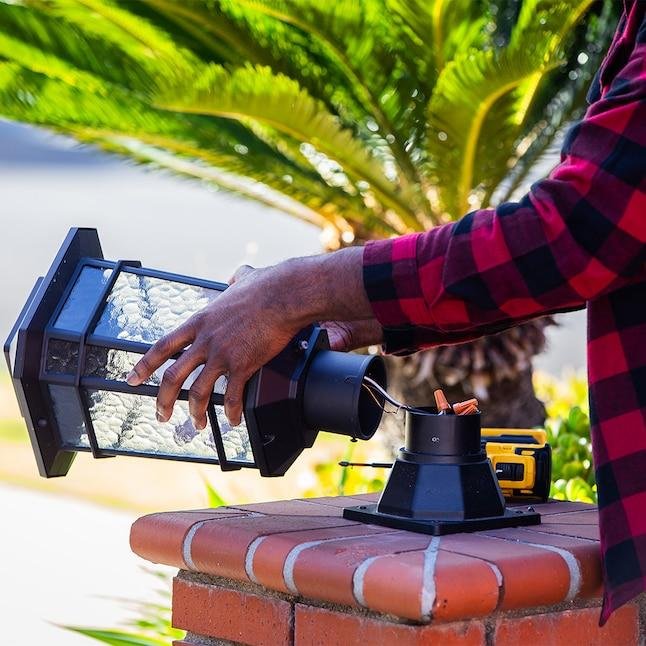
Installing a solar pillar light takes about as long as a cup of tea. There are no wires to connect.
Adhesive vs. screw mounting
Most pillar lights ship with a pier mount base. You fix the base to the top of the pillar, then attach the light to the base.
Screws or masonry anchors give the strongest hold, especially for heavier cast aluminum fixtures. Adhesive can work on a flat, clean cap for lighter lights, but check what the manufacturer recommends. Heavy lights, wind and wet weather are tough on glue.
Follow the manual for your specific light. The base size and screw type differ between models.
Best placement for maximum charging
Put the light where the panel sees the most direct sun. Then check the spot at different times of day. A pillar that looks sunny at noon can sit in a wall’s shadow by 3 p.m.
Before the first night, follow the maker’s first-use advice. For its ST4224 post light, Kemeco recommends charging in direct sunlight with the switch off for at least 24 hours. It also suggests 6 to 8 hours of sun per day. You can test the sensor by covering the panel to mimic darkness.
Maintenance and Common Problems
The Department of Energy calls outdoor solar lights virtually maintenance free. “Virtually” is doing some work in that sentence, so here is what to watch.
Lights too dim or short runtime
Start with the sun. Shade, a dirty panel or a run of cloudy days will cut the hours. The Department of Energy says nightly run time also changes with how clear the sky is.
Wipe the panel with a soft, damp cloth. Then check for new shade, like a tree that grew or a fence that went up.
Not charging after cloudy days
Clouds reduce charging, so the light runs for fewer hours. That is normal. If the light has no output at all after several sunny days, the battery or the panel may be at fault.
If your light has a remote or dimming mode, drop the brightness for a few days. It gives the battery time to recover.
Condensation and water damage
A little fogging inside the glass can happen when temperatures swing. Heavy water inside points to a weak seal or a low IP rating.
This is one reason IP65 is worth paying for. It is also why you should check the rating on the actual listing, not just the title.
When to replace the battery
Signs include shorter runtimes, dimming earlier in the night and a light that struggles even in full sun. Batteries wear out. That is normal.
If the battery is replaceable, buy the exact voltage, size and chemistry named in the manual. If it is sealed, the whole light may be at the end of its life.
When Solar Pillar Lights Are Not the Right Choice
Solar is not a magic fix. Skip it, or change the plan, in these cases.
- Deep shade: a pillar under trees or beside a tall wall will not charge well. In that case, look at solar lights with a separate panel. The panel sits in the sun and the light sits where you need it.
- Security lighting: most pillar lights are ambient. If you need bright, reliable coverage, a hardwired fixture or a dedicated floodlight is a better fit.
- Very wet exposure: if the pillar takes direct rain and spray, avoid IP54 and choose IP65.
Being honest about this saves you a return.
FAQs
Motion sensor or dusk-to-dawn?
Dusk-to-dawn gives steady ambient light all night. A motion sensor saves power and adds a security feel, but it can switch on often if cars or animals pass. For most gate pillars, steady light is the simpler choice.
Can I use regular AA batteries in a solar pillar light?
Only if the manual says so, and only the type it names. Solar lights recharge their batteries every day, and standard alkaline batteries are not made for that. Match the voltage and chemistry in the manual, such as NiMH, to avoid leaks and poor performance.
How many lumens are enough?
The lights in this guide range from 60 to 350 lumens. Sixty to 160 lumens gives an entrance glow. A higher figure lights more space, but it asks more of the battery.
Do solar pillar lights work in winter or on cloudy days?
Yes, but expect shorter run times. Short days and weak sun mean less charging. The Department of Energy notes that nightly run times vary with how clear the sky is. A bigger battery and a dimming mode help.
How long do solar pillar lights last?
There is no single honest number. The Department of Energy says run time depends on how well the light charges, the age of the fixture and the age and condition of the battery. A well-built fixture with a replaceable battery can last longer than a sealed budget unit.
Summary
For most homes, the Kemeco ST4311AQ is the pick. It is solid, warm and IP65-rated, and owners say the battery is replaceable. Choose the MVBT 12×12 if you have large pillars and want more brightness. Go for the Greluna if you need a cheap, simple light, or the BUINNE if you want stainless steel that shrugs off weather.
Whatever you choose, give the panel a sunny spot. That one decision matters more than any spec on the box.
Sources
- U.S. Department of Energy, Energy Saver: guidance on outdoor solar lighting
- IEC 60529: Degrees of protection provided by enclosures (IP Code)
- Manufacturer and retailer product listings for Kemeco, Greluna, MVBT and BUINNE, reviewed October 2026
- Kemeco first-use guidance for its ST4224 post light