Table of Contents
Start with a good plan
I have watched crews show up to install solar street lamps with nothing but a pickup truck and good intentions. Three hours later, they are driving back to town for a wrench they forgot. Then again for a level. Then again for a drill bit.
Do not be that crew.
Knowing what tools are needed to install solar street lamps saves time, money, and frustration. This list comes from watching installers work. Some learned the hard way. You do not have to.
Hand tools you reach for first
These are the tools you hold in your hands all day. Buy good ones. Cheap tools break.
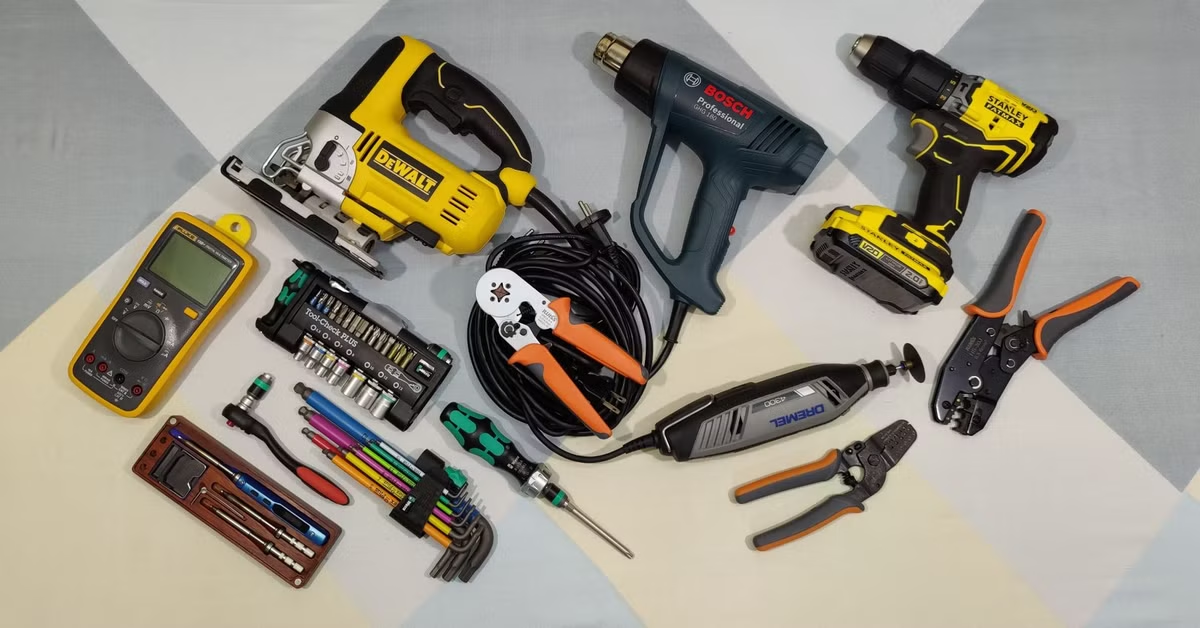
Wrenches
Solar poles use three common bolt sizes. M6, M8, and M10. Each needs a different wrench. An adjustable wrench works in a pinch but a full set fits better. You will tighten bolts at the base. You will tighten bolts at the solar panel bracket. You will tighten bolts inside the lamp head. Keep wrenches close.
Screwdrivers
Two kinds. Flathead and Phillips. The controller box has small screws. The battery compartment has medium screws. The junction box has everything in between. Bring multiple sizes.
Pliers
Wires need gripping. Wires need twisting. Wires need cutting. A solid pair of pliers does all three. Needle nose pliers help with tight spaces inside the pole.
Allen wrenches
Some manufacturers use hex bolts instead of regular ones. No allen wrench means no installation. Get a set with both metric and standard sizes.
Hammer
Not for hitting the pole. Never hit the pole. A hammer drives ground rods and stakes. It also breaks up old concrete if you replace an existing pole.
Socket wrench
This saves your wrists. Tightening twenty bolts with a regular wrench wears you out. A socket wrench with a ratchet does the same work in half the time.
Power tools save your back
Hand tools work. But power tools make the job faster and easier.
Drill
You drill holes in concrete bases for anchor bolts. You drill holes in metal brackets for wire passes. You drill pilot holes for small screws. A cordless drill with two batteries keeps you moving.
Impact driver
This drives long screws into wood or metal without stripping the head. Good for attaching the solar panel bracket to the pole.
Angle grinder
Sometimes bolt holes do not line up. Sometimes old metal needs trimming. Sometimes wires get stuck inside a sharp edge. An angle grinder fixes these problems.
Concrete vibrator
Air bubbles hide in wet concrete. Air bubbles weaken the foundation. A concrete vibrator shakes them out. Skip this tool and your pole might lean after one winter.
Safety gear keeps you working
Outdoor electrical work has real dangers. Falling poles. Live wires. Bright sun in your eyes. Wear protection.
Insulated gloves
Electricity travels through wet hands quickly. Insulated gloves stop that. Even low voltage solar systems can shock you on a damp morning.
Hard hat
Poles weigh over 200 pounds. One slip during lifting and that pole comes down fast. A hard hat gives you a fighting chance.
Safety glasses
Dust from drilling gets everywhere. Metal shavings from grinding fly straight at your face. Safety glasses stop both.
Rubber boots
Wet ground conducts electricity. Wet ground also gets muddy and slippery. Rubber boots keep you dry, safe, and standing.
High visibility vest
You work near roads. Drivers do not always see you. A bright vest makes you visible from half a mile away.
Measuring tools for doing it right
Guessing leads to crooked poles and weak batteries. Measure everything.
Tape measure
Pole height matters. Spacing between lamps matters. Distance from the road matters. A 25 foot tape measure handles all of it.
Level
A pole that leans looks bad and works poorly. Solar panels need a level mounting surface. Put a level on every surface before tightening bolts.
Digital angle finder
Solar panels need the correct tilt. Too flat and the panel collects dust instead of sun. Too steep and winter sun misses the surface. A digital angle finder gives you the exact number.
Compass
Which way does the sun travel? In the northern half of the world, face panels south. In the southern half, face north. A compass tells you direction. Your phone compass works fine.
Light meter
Some spots get more sun than others. A light meter measures sunlight at different locations. Pick the spot with the highest number. Then install there.
Electrical tools for safe wiring
Solar street lamps run on low voltage DC power. But mistakes still cause fires and failures.
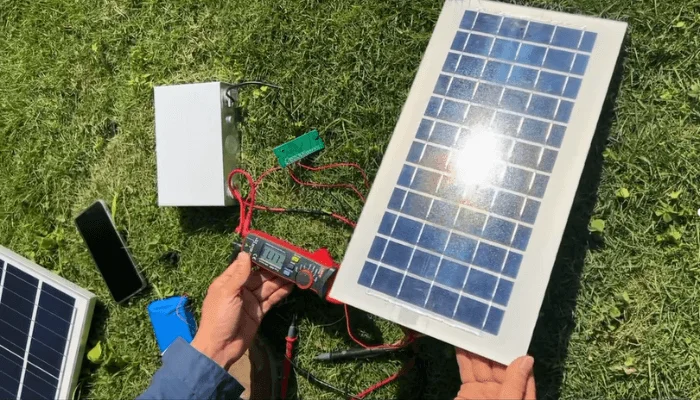
Multimeter
This tool measures voltage, current, and resistance. Before connecting wires, test for power. After connecting wires, test again. A multimeter tells you if the system works or not.
Wire stripper
Removing insulation without cutting copper takes practice. A wire stripper does it perfectly every time. Clean wires make strong connections.
Nylon cable ties
Wires inside the pole flap in the wind. Flapping wires rub against metal. Rubbing wears through insulation. Cable ties hold wires tight against the pole wall.
Weatherproof tape
Outdoor connections get wet. Wet connections rust. Rusted connections fail. Wrap every wire join with weatherproof tape. Then wrap it again.
Heavy equipment for big lifts
You do not lift a 400 pound pole by hand. You use machines.
Crane or lift truck
The crane lifts the pole. The crew guides it onto the anchor bolts. One person runs the crane. Two people guide the pole. No one stands underneath.
Soft sling rope
Metal chains scratch the pole finish. Soft rope slings protect the surface. Wrap the rope around the pole at the balance point. Lift slowly.
Excavator or backhoe
The concrete foundation needs a hole. Digging a four foot deep hole by hand takes all day. An excavator does it in ten minutes.
Concrete mixer
Mixing concrete in a wheelbarrow works for one hole. For ten holes, you need a mixer. A small electric mixer handles ten bags at once.
Wheelbarrow
You still need to move concrete from the mixer to the hole. A wheelbarrow does this job. Get one with a hard rubber tire.
Materials you should have on hand
Tools without materials finish nothing. Bring these supplies.
Anchor bolts
These stick out of the concrete base. The pole flange sits over them. Nuts tighten down on top. Use the size specified in your plans.
Rebar
Concrete without rebar cracks. Cracked foundations shift. Shifted foundations lean. Cut rebar to length and tie it together before pouring concrete.
Weatherproof connector boxes
Wire joins belong inside a box. The box keeps water out. The box keeps rodents away. The box stops accidental pulls.
Anti theft bolts
Solar street lamps get stolen. People unbolt the panel and walk away. Anti theft bolts need special tools to remove. Use them in high traffic areas.
Quick list of everything
Here is the complete answer to what tools are needed to install solar street lamps:
- Wrenches
- Screwdrivers
- Pliers
- Allen wrenches
- Hammer
- Socket wrench
- Drill
- Impact driver
- Angle grinder
- Concrete vibrator
- Insulated gloves
- Hard hat
- Safety glasses
- Rubber boots
- High visibility vest
- Tape measure
- Level
- Digital angle finder
- Compass
- Light meter
- Multimeter
- Wire stripper
- Nylon cable ties
- Weatherproof tape
- Crane or lift truck
- Soft sling rope
- Excavator or backhoe
- Concrete mixer
- Wheelbarrow
- Anchor bolts
- Rebar
- Weatherproof connector boxes
- Anti theft bolts
FAQs
1. Can I install a solar street lamp without a crane?
Yes, but only for small poles under 15 feet. For those, two strong people can tip the pole up into the base. For taller poles, use a crane. A falling 25 foot pole kills someone.
2. Do I need a concrete mixer for one lamp?
No. For one lamp, mix concrete in a wheelbarrow with a shovel. For more than three lamps, rent a mixer. Your back will thank you.
3. What happens if I skip the digital angle finder?
You guess the angle. You guess wrong. The panel produces 30% less power. The battery stays half full. The lamp turns off at 2 AM. A fifty dollar tool prevents a thousand dollar mistake.
4. How do I know if my electrical connections are waterproof?
Pour water on them. Seriously. Finish a connection. Pour a cup of water over it. Then test with your multimeter. If the connection still works, you did it right. If not, redo it with more tape.
5. What is the one tool first time installers always forget?
A compass. People drive two hours to the job site. They level the pole. They tighten every bolt. Then they realize the panel faces east. The sun sets in the west. The lamp charges for four hours instead of eight. Always bring a compass.
Summary
Installing solar street lamps takes specific tools. You need wrenches, drills, levels, and safety gear. Heavy equipment like cranes and concrete mixers help with big jobs. Measuring tools ensure correct angles and placement. Electrical testers prevent wiring mistakes. This article lists everything you need. Five FAQs answer common questions from real installation crews. Read this before you start your first solar lighting project.