The Author
Table of Contents
Every Grant, Scheme and Incentive Explained
Government solar investment in Britain for 2026 splits into two different pots. One is money the government invests nationally, in schools, hospitals and energy infrastructure. The other is support you personally apply for as a homeowner. Most people searching for this only care about the second pot, so let’s start there.
Here’s the short version. Every homeowner in England, Scotland and Wales pays 0% VAT on solar panels and batteries until March 2027, saving up to £2,000 on a combined system. The Smart Export Guarantee pays you for electricity you send back to the grid. Low-income and vulnerable households often qualify for fully funded solar through ECO4 or the Warm Homes: Local Grant. And at the national level, Great British Energy has committed £8.3 billion over this parliament to clean energy, with an early £200 million going straight into solar on schools and hospitals.
This guide breaks down every route, tells you honestly who qualifies for what, and clears up the myths circulating about government solar money in Britain right now.
At a Glance: What’s Live in 2026
- 0% VAT on solar panels and batteries, England, Scotland and Wales, until March 2027
- Smart Export Guarantee payments for exported electricity, available UK-wide
- ECO4 fully funded solar for low-income households, running until December 2026
- Warm Homes: Local Grant, up to £30,000 per household in England
- Great British Energy, £8.3 billion in national clean energy investment through 2029
- Warm Homes Plan interest-free loans, announced but not yet launched
Why Solar Demand Is Surging in Britain Right Now

Solar demand isn’t rising by accident. Since conflict broke out in Iran in early 2026, UK solar enquiries have jumped sharply. One renewable energy data provider recorded a 182% year-on-year jump in demand, and installers report a pattern nearly identical to the spike they saw during the 2022 Ukraine energy crisis.
Government figures back this up. Britain passed 2 million total solar installations for the first time in March 2026, with installers completing more than 27,000 in this single month, the highest monthly total since 2012. Nine of the ten strongest months for solar deployment on record happened within the past year. Rooftop solar now saves the average family up to £480 a year, and installation costs have dropped by up to 9%.
Put simply, energy security worries and rising government support are pushing solar into the mainstream at the same time. This combination is why 2026 looks like the right year to look into what’s on offer.
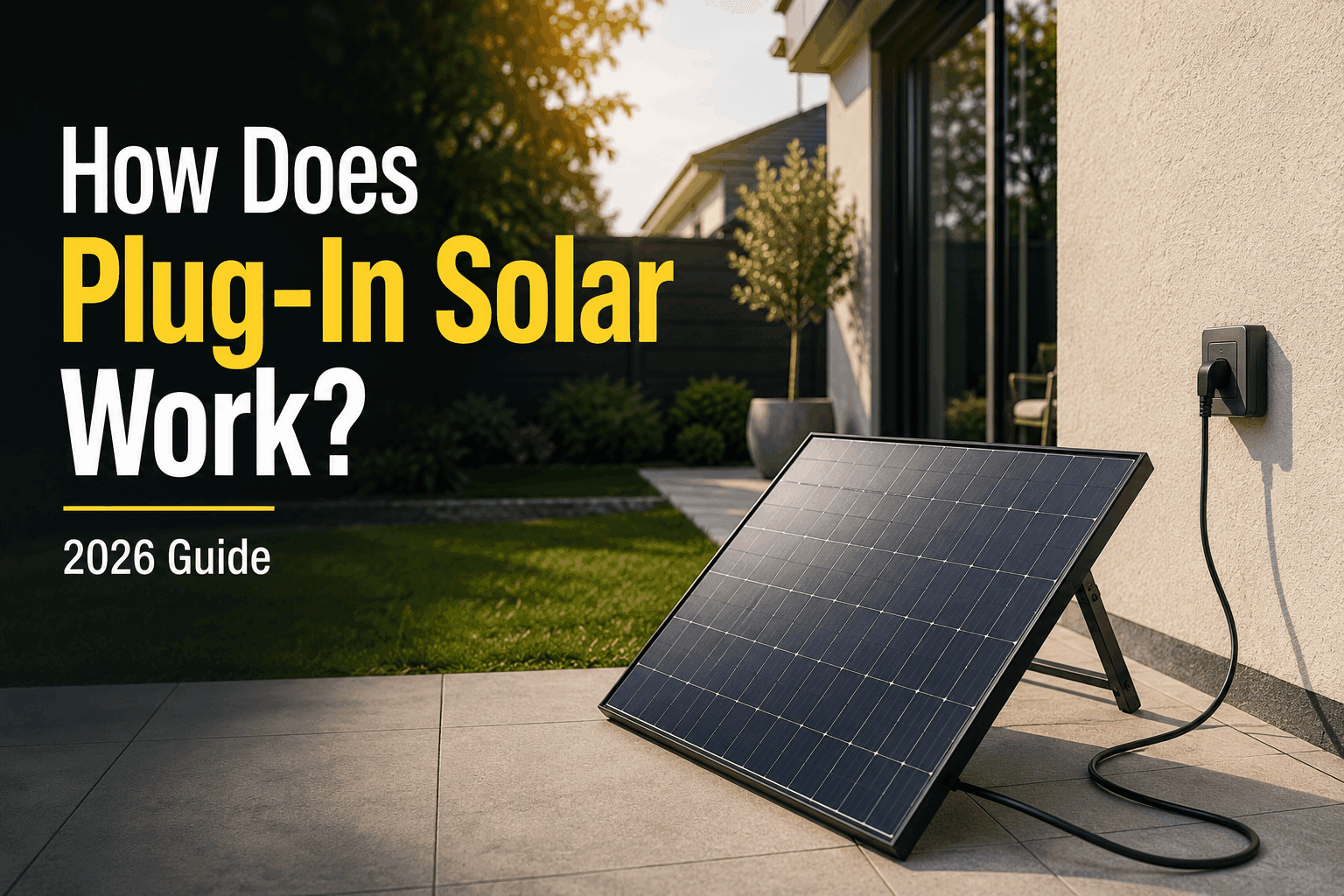
Worth knowing, too: the government is rolling out low-cost “plug-in” balcony solar panels, designed for renters and flat owners without roof access, with plans to stock them in shops within months. Not everyone owns a roof, and it’s good to see policy catching up with this reality.
Solar Grants You Could Actually Qualify For
Grants are the smallest slice of government solar investment in Britain, but they’re the most valuable if you qualify. Eligibility depends mainly on your income, your home’s energy rating and where in the UK you live. If you landed here searching for solar panel grants UK 2026, this section is the one to read closely.
ECO4 (Energy Company Obligation)
Ofgem runs ECO4. The UK’s largest energy suppliers fund it, not the government’s own budget directly. It targets low-income and vulnerable households living in poorly insulated homes, generally those with an EPC rating of D or below. Solar panels aren’t guaranteed. Installers usually add solar as part of a wider package alongside insulation or a heat pump, and only when an assessor decides solar suits your property. The scheme runs until December 2026, though funding rounds close early once budgets run out, so apply well before the deadline if you think you qualify.
Warm Homes: Local Grant (England)
This scheme replaced the old Home Upgrade Grant and offers up to £30,000 per household, split into two pots: £15,000 for efficiency measures like insulation and solar, and £15,000 for low-carbon heating. To qualify, your household income needs to sit under £36,000 a year, or someone in your home needs to receive a means-tested benefit, and your EPC rating needs to fall between D and G. Local councils deliver it, so not every area offers solar as part of the package. Check with your local authority before assuming you’re covered.
Warm Homes Nest Scheme (Wales)
Wales runs its own version through the Welsh Government. The Nest scheme provides free energy-efficient home improvements, including solar panels, to eligible households, along with energy-saving advice. Eligibility follows similar lines to England’s scheme: low income, poor home efficiency, or a qualifying health condition.
Home Energy Scotland Grant and Loan
Scotland’s support works differently. Home Energy Scotland offers an interest-free loan of up to £6,000 for energy improvements, including solar. You repay loans under £5,000 over five years, and larger amounts stretch to ten. Scotland closed its standalone solar-only grant to new applicants, so most households now access solar funding as part of a wider package, often paired with a heat pump.
Northern Ireland: What’s On Offer
Northern Ireland doesn’t run a dedicated national solar grant in 2026. The main benefit for homeowners here is the same 0% VAT rate available across the rest of the UK, plus whatever local council schemes occasionally appear. Check with your council directly, since availability shifts through the year.
Incentives Every Homeowner Can Use (No Income Limit)
0% VAT on Solar Panels and Batteries
Every homeowner in England, Scotland and Wales pays 0% VAT on solar panel and battery installations until 31 March 2027. On a typical system, this saves between £1,000 and £1,500. Combine solar with a battery, and the saving often reaches £2,000. You don’t apply for this. Your installer applies the reduced rate automatically at the point of sale.
Smart Export Guarantee (SEG)
The Smart Export Guarantee pays you for electricity your panels send back to the grid, replacing the older Feed-in Tariff, which closed to new applicants in 2019. Large energy suppliers must offer SEG rates, though rates vary between providers, so it’s worth comparing before you sign up. According to the Energy Saving Trust, households home during the day and signed up to SEG save between roughly £540 a year in Stirling and £650 a year in London, on top of the money saved by using their own power.
The Warm Homes Plan: What’s Coming Next
The Warm Homes Plan is the umbrella under which most of Britain’s household solar support sits. Launched in January 2026, it’s worth up to £15 billion and aims to upgrade up to 5 million homes by 2030, making it the largest energy efficiency programme in British history.
The headline addition still to launch is a new low-interest and 0% interest loan scheme, open to homeowners regardless of income, covering solar panels, batteries and heat pumps. The government hasn’t confirmed a firm launch date at the time of writing. Some reporting points to 2027. If you’re weighing whether to wait for this loan or go ahead now, remember the 0% VAT relief and SEG payments are already live, while the loan scheme still needs full details.
Government Investment in Solar Beyond Your Home
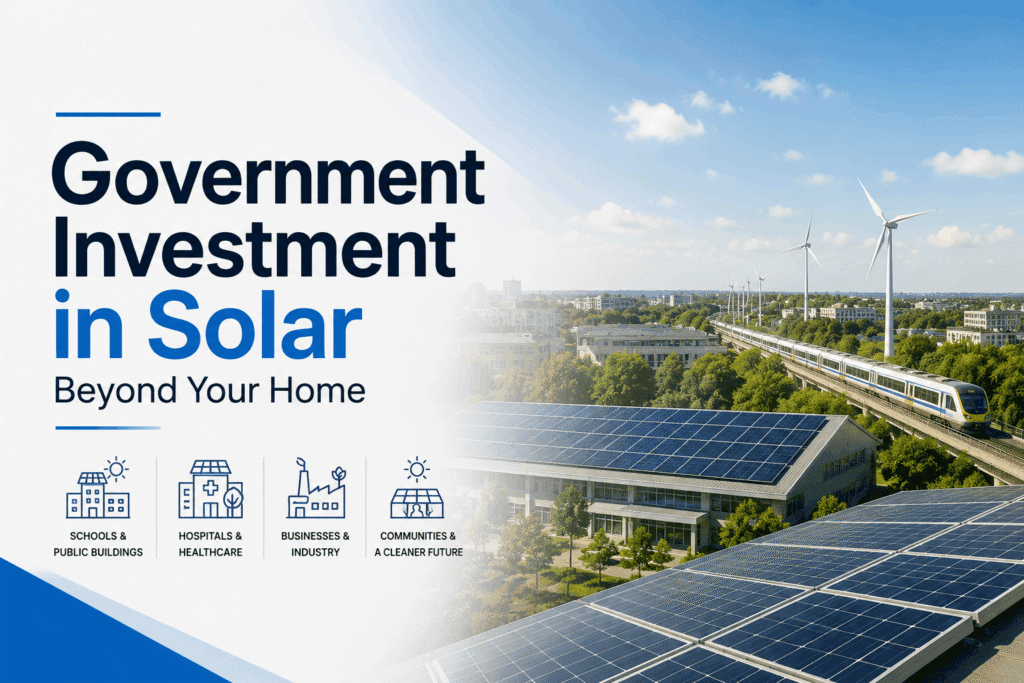
This is where the word “investment” in Britain’s 2026 solar story earns its place. Away from household grants, the government is putting billions into national solar capacity directly.
Great British Energy and the Local Power Plan
Great British Energy is the government’s publicly owned energy company, backed with £8.3 billion over this parliament, running from 2024 to 2029. Its Local Power Plan alone commits £1 billion to locally owned clean energy, and its first major spend put £200 million into rooftop solar on public buildings. Alongside this, an extra £5 million landed in the Great British Energy Community Fund in early 2026, supporting community-led solar projects on village halls, community centres and sports clubs.
Solar on Schools and Hospitals
Roughly 200 schools and 200 hospitals are receiving rooftop solar through Great British Energy’s rollout. Individual schools save an estimated £25,000 a year on energy bills, while NHS sites save up to £45,000 a year, and estimates put lifetime savings across the programme at up to £400 million over 30 years. Mid Cheshire Hospitals NHS Foundation Trust, for example, expects to cut its bills by around £9,500 a year after installing rooftop solar. Money saved goes back into patient care and school budgets rather than energy bills, which is about as close to a genuine win-win as government spending gets.
Business and Landlord Solar Incentives
Full Expensing and the Annual Investment Allowance
Businesses installing solar get access to two tax reliefs. Full Expensing lets companies write off 100% of solar system costs against taxable profits in the first year, with no upper limit, though this relief runs only until March 2026 under current rules, so confirm current status before budgeting around it. The Annual Investment Allowance offers tax relief on qualifying assets, including solar, up to £1 million a year.
Landlords and Tenants: Who Applies?
Private tenants often qualify for grants like ECO4, but they need written permission from their landlord before work starts. Landlords themselves sometimes benefit indirectly, since energy-efficient rentals become easier to let and increasingly face minimum efficiency standards. Social housing tenants should contact their housing association directly. Most already run dedicated retrofit budgets separate from the schemes we’ve covered here.
Key 2026 Deadlines to Know Before You Apply
Scheme deadlines shift as budgets run out, so treat these as a starting point, not a guarantee. Confirm live dates directly with Ofgem or GOV.UK before you commit.
| Scheme | Deadline | Region |
|---|---|---|
| ECO4 | December 2026 (funding sometimes closes earlier) | England, Scotland, Wales |
| 0% VAT on solar and batteries | 31 March 2027 | England, Scotland, Wales |
| Warm Homes: Local Grant | Rolling, council-dependent | England |
| Full Expensing (business) | March 2026, verify current status | UK-wide |
| Warm Homes Plan loans | Not yet launched | UK-wide |
Common Myths About Government Solar Funding
A few myths keep circulating about government solar money in Britain, and they’re worth clearing up directly.
Myth one: Great British Energy gives homeowners free solar panels. It doesn’t. Great British Energy invests in national infrastructure, schools, hospitals and community projects, not individual homes. If an advert claims otherwise, treat it as a red flag.
Myth two: everyone qualifies for a free solar grant. Most grant routes are means-tested and depend on your EPC rating. Universal support in 2026 comes through 0% VAT and SEG payments, not free installations.
Myth three: a “government approved” installer badge guarantees a grant. Marketing materials use this phrase loosely. Always check MCS certification and confirm any grant claim directly with the scheme provider before signing anything.
How to Check What You Qualify For
Before you contact an installer, work through these four checks.
Check your EPC rating. Most grants require a D rating or below. You’ll find this on the government’s EPC register if your home already has a rating.
Check your household income and benefits. Thresholds usually sit between £31,000 and £36,000, or hinge on receiving a qualifying benefit.
Check your region. England, Scotland, Wales and Northern Ireland each run different schemes, so what your neighbour in Cardiff gets might not exist in Belfast.
Check your tenancy status. Homeowners have the most options. Tenants need landlord permission. Social housing residents go through their housing association.
How Britain’s Solar Support Compares to the US, Australia and Canada
Britain isn’t operating in isolation, and the comparison is a useful reality check if you’re weighing solar decisions across borders.
In the United States, the federal 30% Residential Clean Energy Credit ended for homeowner-owned systems installed after December 31, 2025, after new legislation cut it short. Homeowners buying or financing solar with a loan in 2026 no longer get the federal credit, though leased and third-party owned systems still qualify.
Australia takes a different route entirely. Its Small-scale Renewable Energy Scheme issues tradeable certificates, called STCs, rather than a direct rebate, and the value shrinks slightly every year as the scheme winds down toward its scheduled end in 2030. Battery storage joined the scheme in mid-2025.
Canada’s federal support has thinned out considerably. The original $5,000 Greener Homes Grant closed in 2024, and its replacement loan programme closed in October 2025. The new Canada Greener Homes Affordability Program targets only low-to-median income households, rolling out province by province, and doesn’t guarantee solar makes the eligible list in every region.
Set against this backdrop, Britain’s mix of universal VAT relief, export payments and targeted grants looks reasonably generous, even with the confusion around exactly who qualifies for what.
FAQs
Does the government still give away free solar panels in Britain?
Rarely, and only through means-tested routes like ECO4 or the Warm Homes: Local Grant. Most homeowners save money through 0% VAT and SEG payments instead, not a free installation.
Is Great British Energy giving out solar grants to homeowners?
No. Great British Energy funds national infrastructure, schools, hospitals and community energy projects. It doesn’t provide grants to individual households.
When does ECO4 end?
ECO4 runs until December 2026 under current plans, though funding rounds sometimes close earlier once budgets run out. Confirm current status with Ofgem before applying.
How much does 0% VAT save me?
Around £1,000 to £1,500 on solar panels alone, or up to £2,000 on a combined solar and battery system, based on Uswitch estimates.
What if I rent my home?
Private tenants often qualify for grants like ECO4, but you need written permission from your landlord first. Social housing tenants should go through their housing association directly.
Is solar still worth installing without a grant?
Yes, for most households. Between 0% VAT, SEG payments and falling installation costs, down up to 9% according to government figures, solar often pays for itself through bill savings alone.
Summary
Britain’s government has committed billions to solar in 2026, but not all of it reaches homeowners directly. This guide breaks down every real route to savings, from 0% VAT and the Smart Export Guarantee to means-tested grants like ECO4 and the Warm Homes: Local Grant. It also covers the £8.3 billion Great British Energy is investing nationally, key 2026 deadlines, common scam myths, and how Britain’s solar support compares to the US, Australia and Canada