The Author
Table of Contents
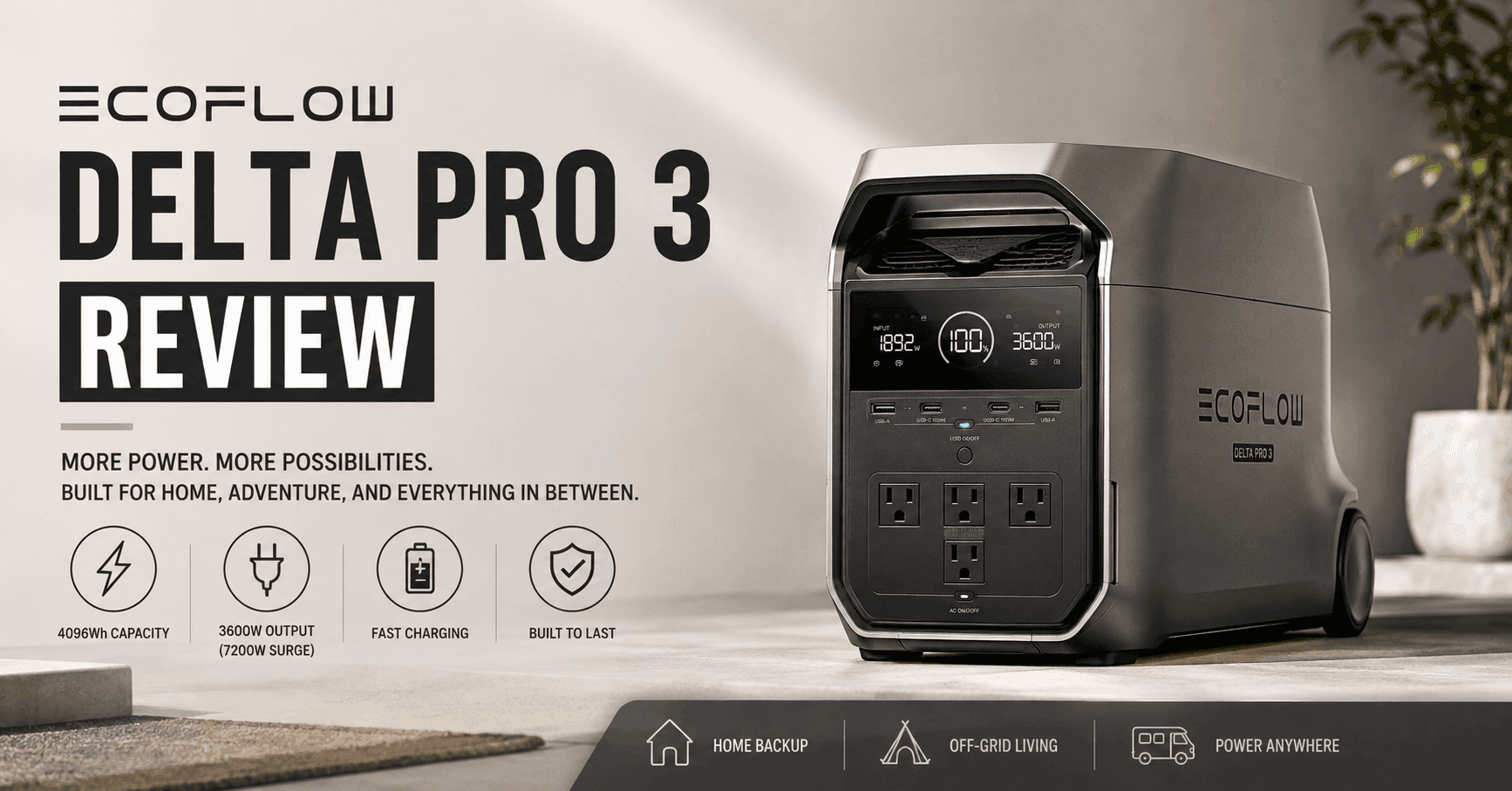
The EcoFlow Delta Pro 3 is a 4,096Wh portable power station built for home backup, RV trips, and off-grid living. It delivers 4,000W of continuous output, with a 6,000W boost for heavier loads, and runs on a battery rated for 4,000 charge cycles.
US pricing ranges from $1,999 to $3,699 depending on current sales. UK, Australian, and Canadian pricing sits further down this page.
Short answer: if you need dependable backup power for a house, cabin, or RV and don’t mind the 113-pound weight, the Delta Pro 3 earns its price tag. If you only need to keep a phone charged on a weekend hike, this unit does far more than you need.
This review pulls together verified specs, price data across four countries, and findings from independent testers who have pushed the Delta Pro 3 through real loads, so you get a straight answer before you spend real money.
Quick Verdict: Is the EcoFlow Delta Pro 3 Worth It?
Buy the Delta Pro 3 if you want one unit to back up most of a home during an outage, run tools on a job site, or power an RV without a generator’s noise and fumes.
Skip it if you need something to carry on a hike, or your budget tops out under $1,000. Smaller units in EcoFlow’s own lineup cover it for less money.
What stands out:
- 4,096Wh capacity, expandable to 48kWh with add-on batteries
- Dual 120V/240V output from a single unit
- Fast charging when you combine AC and solar input
What holds it back:
- 113 pounds, so moving it takes real effort
- No built-in 12V car socket
- Price still lands well above budget power stations
Verdict: a strong buy for home backup and off-grid use, less sensible for light travel or casual camping.
EcoFlow Delta Pro 3 Specs at a Glance
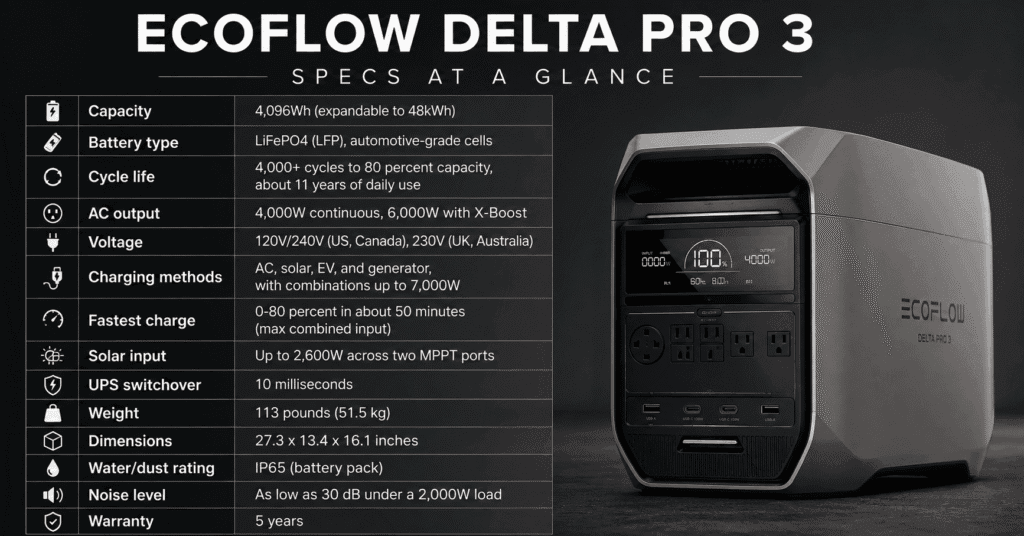
Here’s what EcoFlow lists for the Delta Pro 3, confirmed across the brand’s US, UK, and Australian product pages.
| Spec | Detail |
|---|---|
| Capacity | 4,096Wh (expandable to 48kWh) |
| Battery type | LiFePO4 (LFP), automotive-grade cells |
| Cycle life | 4,000+ cycles to 80 percent capacity, about 11 years of daily use |
| AC output | 4,000W continuous, 6,000W with X-Boost |
| Voltage | 120V/240V (US, Canada), 230V (UK, Australia) |
| Charging methods | AC, solar, EV, and generator, with combinations up to 7,000W |
| Fastest charge | 0-80 percent in about 50 minutes (max combined input) |
| Solar input | Up to 2,600W across two MPPT ports |
| UPS switchover | 10 milliseconds |
| Weight | 113 pounds (51.5 kg) |
| Dimensions | 27.3 x 13.4 x 16.1 inches |
| Water/dust rating | IP65 (battery pack) |
| Noise level | As low as 30 dB under a 2,000W load |
| Warranty | 5 years |
These numbers hold steady across every current retailer listing. The next section covers how they perform under real use.
What Can the EcoFlow Delta Pro 3 Power? (Real Numbers)
Specs alone don’t tell the full story. Here’s what the 4,096Wh battery translates to with common appliances, based on typical wattage draw and the unit’s rated efficiency. Your results will vary with your specific gear and conditions.
| Appliance | Typical draw | Estimated runtime |
|---|---|---|
| Refrigerator | ~150W average | ~23 hours |
| CPAP machine | ~40W | ~3.5 days |
| Laptop | ~65W | ~53 hours |
| Window AC unit | ~900W | ~3.9 hours |
| Circular saw | ~1,400W | ~2.5 hours |
| Space heater | ~1,500W | ~2.3 hours |
These figures assume roughly 85 percent inverter efficiency, standard for this class of power station. Add one expansion battery and every number on this list roughly doubles.
What Other Testers Found in Real-World Use
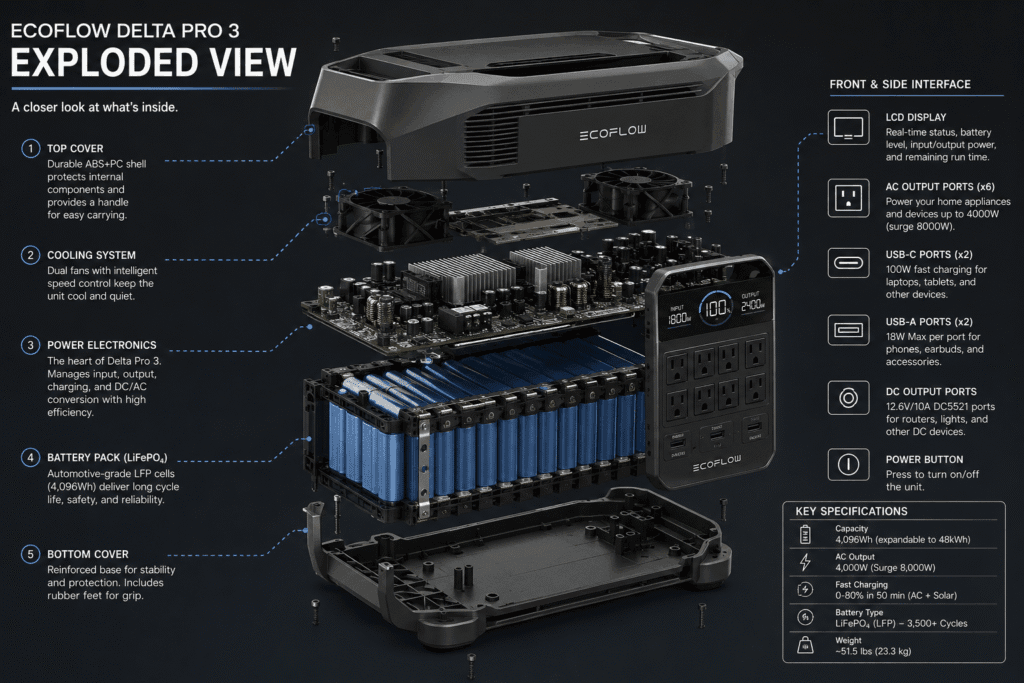
EcoFlow’s own numbers are one part of the picture. Independent outlets, including TechRadar and The Solar Lab, have run the Delta Pro 3 through real loads, and their findings round out what the spec sheet won’t tell you.
Noise stays low under light loads, close to EcoFlow’s 30 dB claim, but climbs once you push past 2,000W. Some testers also picked up a faint clicking sound while the unit charges from AC power. Not a defect, more a quirk worth expecting.
Charging through a standard 120V wall outlet takes closer to three hours than the fifty-minute figure EcoFlow advertises. The fifty-minute figure applies only when you combine AC and solar input at the same time. Plan around wall-outlet charging times if solar isn’t part of your setup.
One notable gap: no built-in 12V car socket, which earlier EcoFlow units included. If you run 12V accessories, plan on an adapter.
On the plus side, pass-through charging works as advertised. You run devices and recharge the battery at the same time without a drop in output, useful during a storm with solar panels attached.
Charging Speed and Methods Explained
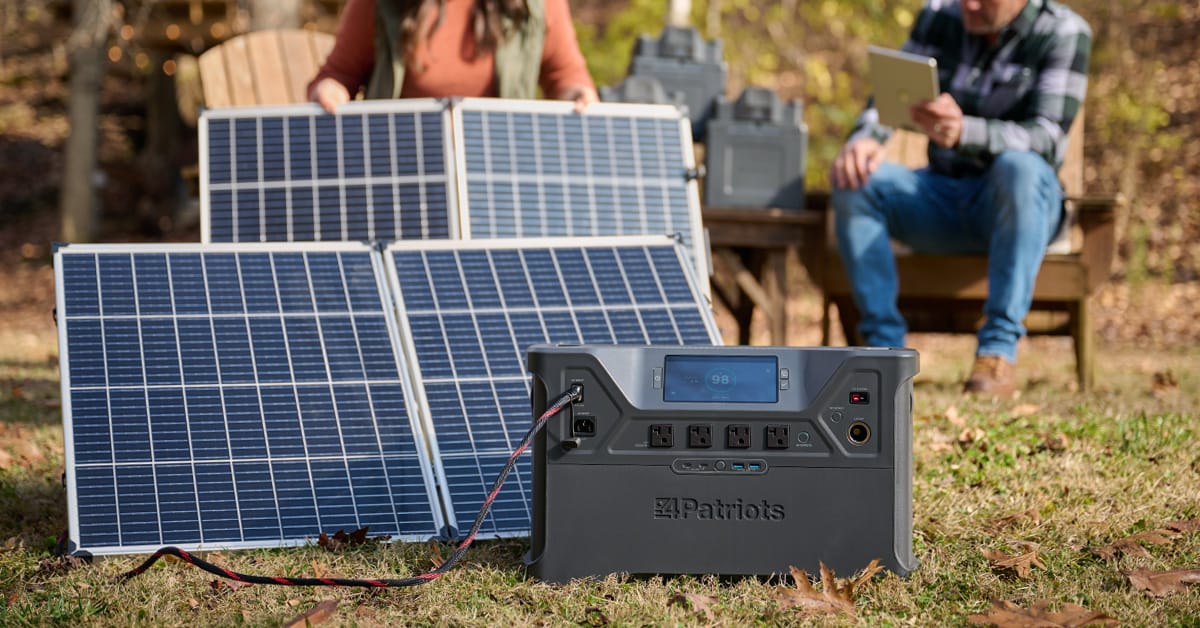
The Delta Pro 3 charges from seven separate power sources, and EcoFlow lets you combine several at once for faster results.
AC wall power alone charges the unit from empty to 80 percent in a few hours, depending on your outlet’s capacity. Add solar input at the same time and the charge time drops toward the advertised 50-minute mark, though your panels need enough combined wattage to reach it.
Solar charging accepts up to 2,600W across two separate input ports, split between high and low voltage panels. This setup covers more solar configurations than most competitors, but it also means checking your panel voltage against EcoFlow’s input specs before buying panels.
EV charging works through a dedicated adapter, letting you top off the Delta Pro 3 at a public EV station in a pinch.
Generator charging rounds out the list, useful if you’re off-grid for days and solar alone won’t keep up.
For most home backup buyers, a standard wall outlet covers daily use. Solar and generator charging matter more for full off-grid setups or multi-day outages.
Battery Life and Long-Term Reliability
The Delta Pro 3 runs on LiFePO4 (LFP) battery cells, the same chemistry used in EVs and most current-generation power stations. LFP batteries handle more charge cycles and run cooler than the lithium-ion cells found in older power stations.
EcoFlow rates the battery for 4,000 cycles to 80 percent capacity. Charge it once a day and the math works out to roughly 11 years before the battery noticeably degrades. Most home backup users cycle it far less often, since it mostly sits fully charged waiting for an outage.
The battery pack carries an IP65 rating, handling dust and water exposure without issue, useful if you store it in a garage or shed rather than a climate-controlled space.
A 5-year warranty backs the unit, in line with what Anker and other major brands offer on their flagship power stations.
EcoFlow Delta Pro 3 vs the Competition
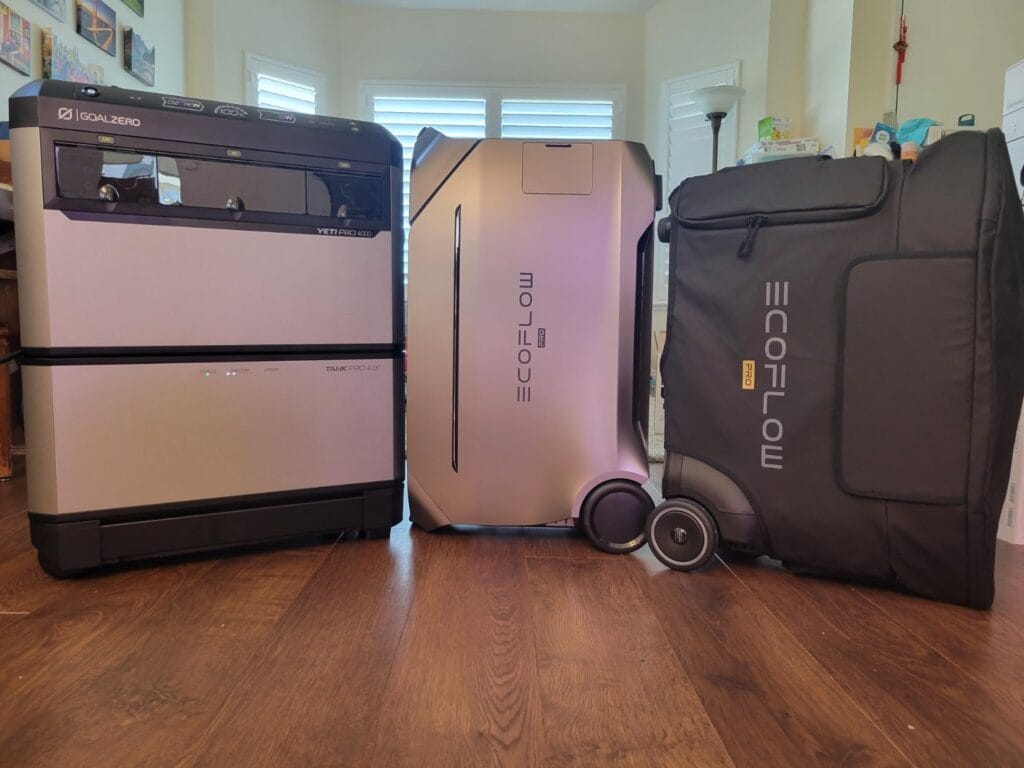
EcoFlow Delta Pro 3 vs Delta Pro (Original): What Changed
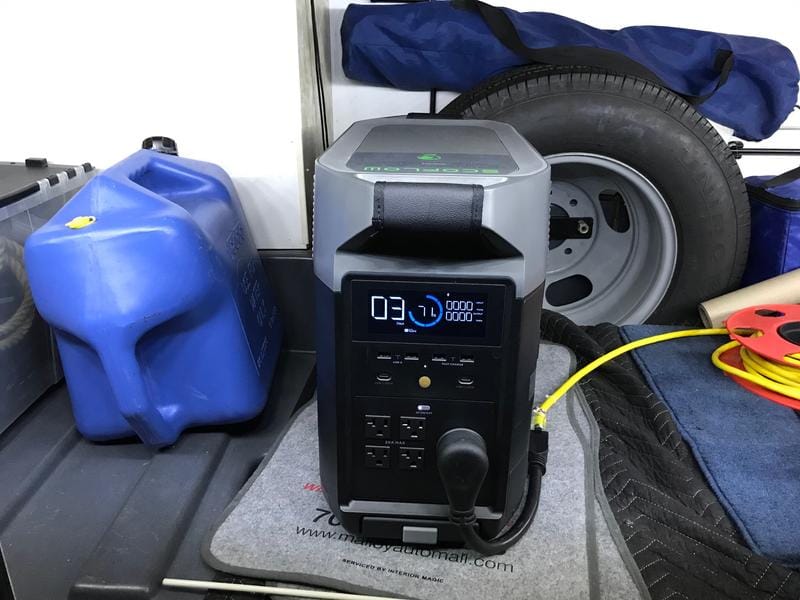
The original Delta Pro launched in 2021 and still sells today at a lower price point.
| Spec | Delta Pro (Original) | Delta Pro 3 |
|---|---|---|
| Capacity | 3,600Wh | 4,096Wh |
| AC output | 3,600W | 4,000W (6,000W X-Boost) |
| Voltage | 120V or 240V, not both from one unit | 120V and 240V from one unit |
| Typical price | Around $1,599 | $1,999 to $3,699 |
The Delta Pro 3 outperforms the original on nearly every spec, and dual-voltage output alone justifies the upgrade for anyone running mixed 120V and 240V appliances. Owners of the original whose needs are already met don’t gain much by upgrading. Buyers starting fresh get more value from the Delta Pro 3.
EcoFlow Delta Pro 3 vs Delta Pro Ultra: Which One You Actually Need
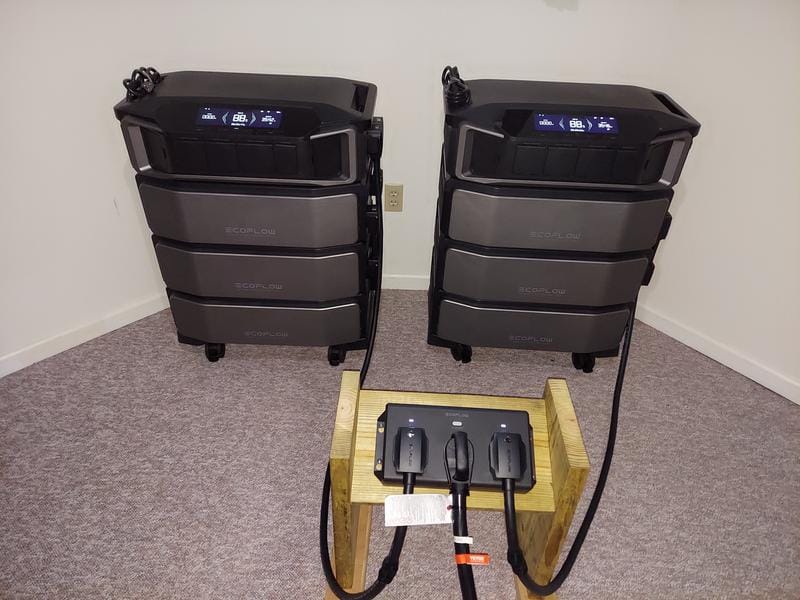
The Delta Pro Ultra sits above the Delta Pro 3 as EcoFlow’s whole-home flagship.
| Spec | Delta Pro 3 | Delta Pro Ultra |
|---|---|---|
| Capacity | 4,096Wh (up to 48kWh) | 6,000Wh (up to 90kWh) |
| Output | 4,000W (6,000W X-Boost) | 7,200W |
| Setup | Fully portable, 113 lbs | Heavier, typically needs Smart Home Panel 2 and a licensed electrician for whole-home mode |
| Typical price | $1,999 to $3,699 | Around $4,099 for the base unit alone |
The Delta Pro Ultra targets permanent, whole-home backup, not portability. It costs meaningfully more and typically needs professional installation to reach its full potential. Pick the Delta Pro 3 for a unit you move between the house, a job site, and an RV. Pick the Delta Pro Ultra for a semi-permanent, whole-home backup system where portability isn’t a priority.
EcoFlow Delta Pro 3 vs Anker Solix F3800: How It Stacks Up
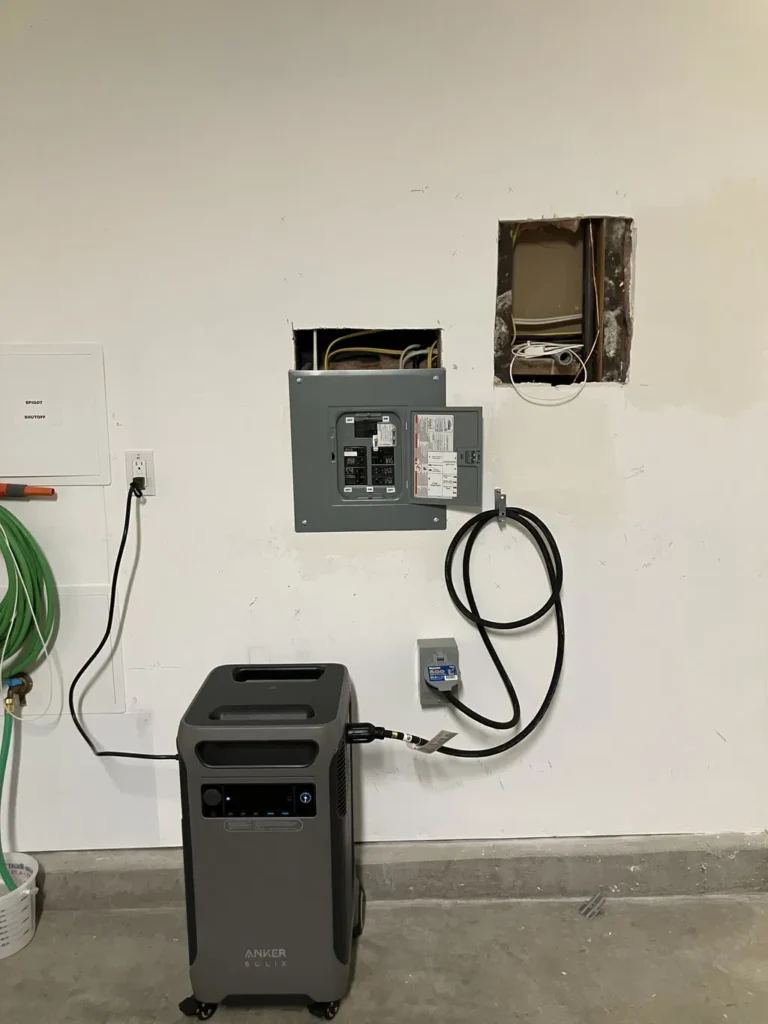
Anker’s closest answer to the Delta Pro 3 is the Solix F3800, its own flagship portable unit.
| Spec | Delta Pro 3 | Anker Solix F3800 |
|---|---|---|
| Capacity | 4,096Wh | 3,840Wh |
| AC output | 4,000W (6,000W X-Boost) | 6,000W continuous |
| Weight | 113 lbs | 132 lbs |
| Typical price | $1,999 to $3,699 | Around $2,399 (MSRP $3,999) |
These two compete head-to-head more than anything else on this list. The Anker wins on raw continuous output and matches EcoFlow’s dual-voltage support. The Delta Pro 3 wins on weight and edges out the Anker on base capacity, though the gap stays small and shouldn’t decide your purchase alone. Loads regularly above 4,000W favor the Anker’s higher continuous output.
Price and Where to Buy (US, UK, Australia, Canada)
EcoFlow prices this unit differently by region and by season. Here’s where things stand right now.
United States: MSRP sits at $3,699, though frequent EcoFlow sales bring the street price down to between $1,999 and $2,999 for most of the year. Flash sales on EcoFlow’s own site and Amazon tend to track closely together.
United Kingdom: EcoFlow UK lists the Delta Pro 3 around £2,799, with periodic discounts through EcoFlow’s own site.
Australia: EcoFlow launched the Delta Pro 3 in Australia at AUD $6,699, with an introductory price of AUD $4,099. Australian pricing runs higher than US pricing due to import costs, so check EcoFlow’s Australian site directly for the current rate.
Canada: EcoFlow Canada lists the Delta Pro Series starting around CAD $3,799, with regular promotional pricing through the year.
Prices move often across every region. Check the retailer directly before buying, since a sale drops hundreds off the listed price within days.
Who Should Buy the Delta Pro 3 (and Who Shouldn’t)
Buy it if:
- You want whole-home backup power for outages lasting hours, not days
- You run a job site or RV and need real 120V/240V output from one unit
- You already use EcoFlow’s ecosystem and want backward compatibility with older batteries
Skip it if:
- You only need to charge phones, laptops, and small electronics
- Weight and portability matter more than raw capacity
- Your budget sits under $1,500, where smaller EcoFlow and competitor units cover most needs
The Delta Pro 3 sits in an in-between spot for some buyers. It carries a serious price tag without fully replacing a whole-home battery system like the Delta Pro Ultra. Know which category fits your situation before spending the money.
FAQs
Is the EcoFlow Delta Pro 3 worth the price?
For home backup, RV use, or off-grid power, yes. The capacity, dual-voltage output, and fast charging justify the cost for buyers who need real backup power. Light or occasional use fits better with smaller, cheaper units.
How long does the EcoFlow Delta Pro 3 battery last?
EcoFlow rates the battery for 4,000 cycles to 80 percent capacity, working out to roughly 11 years at one charge cycle per day. Most home backup users see the battery outlast this estimate, since it rarely cycles daily.
Does the Delta Pro 3 power a whole house?
It covers essential circuits, such as a refrigerator, lights, Wi-Fi, and a few outlets, for several hours to a couple of days depending on load. True whole-home coverage during extended outages needs additional expansion batteries or a step up to the Delta Pro Ultra.
How heavy is the EcoFlow Delta Pro 3?
It weighs 113 pounds. Built-in wheels and a telescoping handle make moving it easier, though loading it into a vehicle or up stairs still takes real effort.
Does the Delta Pro 3 work with solar panels?
Yes. It accepts up to 2,600W of solar input across two ports, though the high and low voltage inputs need separate wiring setups.
What warranty comes with the EcoFlow Delta Pro 3?
EcoFlow backs the Delta Pro 3 with a 5-year warranty, matching what Anker and other major competitors offer on their flagship units.
Final Verdict
The EcoFlow Delta Pro 3 delivers on its core promise: dependable backup power with enough capacity and output to matter during a real outage. The 113-pound weight and price tag are real trade-offs, and the missing 12V socket is a genuine annoyance for some buyers.
For homeowners, RV owners, and off-grid users who need dependable power rather than a backup for weekend camping, the Delta Pro 3 earns its spot on the shortlist. Compare current prices across US, UK, Australian, and Canadian retailers before buying, since timing your purchase around a sale saves hundreds.
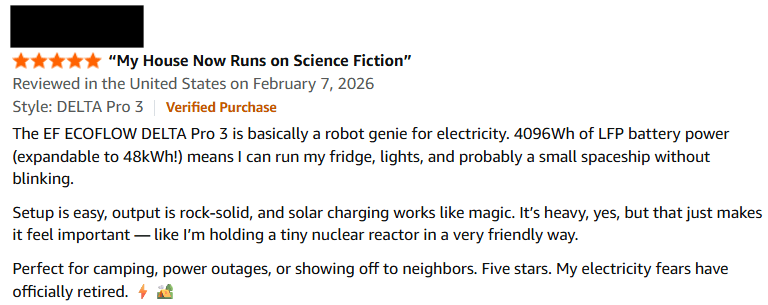
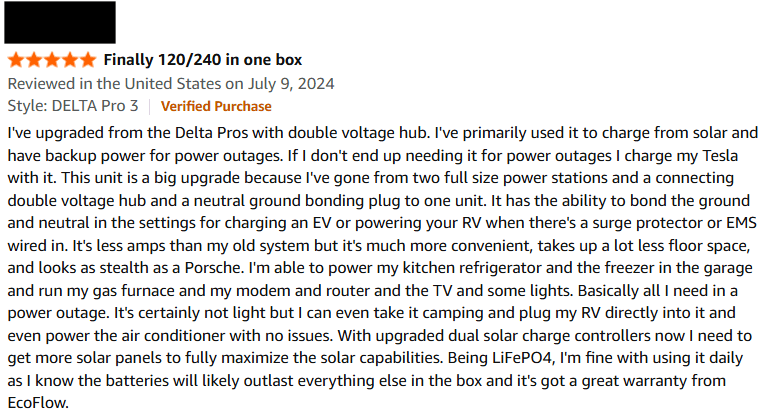
USER REVIEWS, SCREEN SHOTS