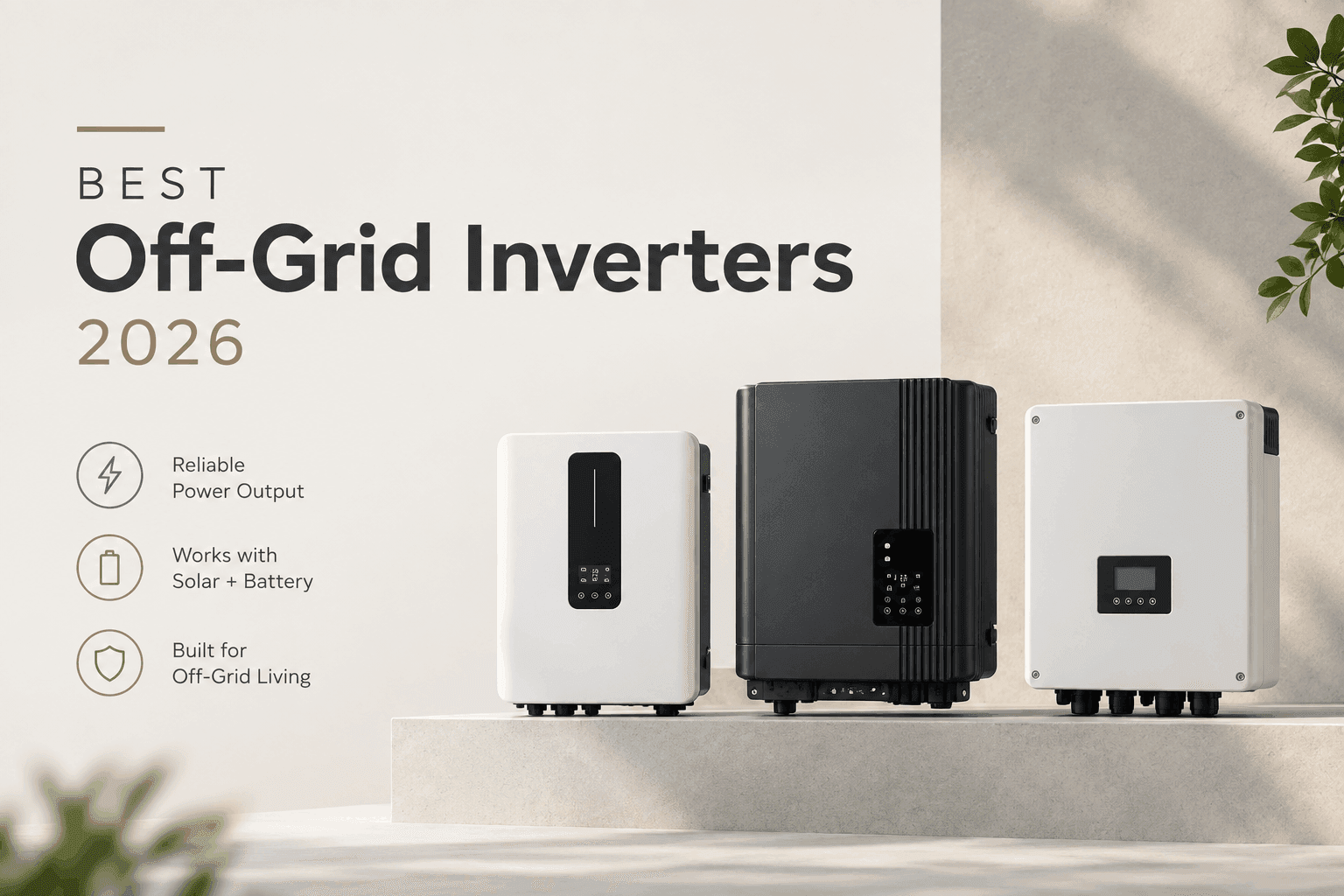
The best off-grid inverter overall in 2026 is the EG4 6000XP, a 6,000W pure sine wave inverter with built-in MPPT charging, priced around $1,499–$1,899. For maximum reliability, the Victron MultiPlus-II is the top premium pick.
Table of Contents
Everyone tells you the biggest off-grid inverter is the best off-grid inverter. That’s wrong. A 12,000-watt unit sitting on a 4,000-watt cabin load doesn’t make you safer, it makes you broke and confused about why your battery bank drains overnight.
Here’s the real starting point. The average US household now pays 18.02 cents per kilowatt-hour, up from 17.29 cents last year, according to the EIA’s December 2025 Short-Term Energy Outlook. Grid-tied solar now pays itself back in roughly 8 to 12 years. Off-grid is a different animal entirely, you’re not chasing payback, you’re buying independence, and the inverter is the one part you cannot afford to get wrong.
I’ll show you what actually matters, in plain terms, and rank the units worth your money.
Key Takeaways
- The right inverter size depends on your surge load, not your wish list, undersizing is the #1 mistake first-time buyers make.
- Pure sine wave is the only safe choice for anything with a compressor, motor, or circuit board.
- The EG4 6000XP is the best value pick for most cabins and small off-grid homes right now.
- The Victron MultiPlus-II remains the gold standard for reliability, at a real price premium.
- Talk to a licensed energy advisor before you buy anything above 6kW, a wrong call here is expensive to undo.
How I Ranked These
I didn’t just copy spec sheets. I pulled manufacturer datasheets, cross-checked current retailer pricing across three or more sellers per product, and read verified owner reports from people running these units full-time off-grid, not just weekend campers.
Every price below reflects what real retailers charge today, not MSRP fantasy numbers. I checked each one twice. If a number looks suspiciously round, I went back and verified it against the spec sheet.
A quick disclosure: some links below are affiliate links. That never changes the ranking. A product that underperforms doesn’t make this list no matter who sells it.
Quick Answer: Best Off-Grid Inverter by Use Case
| Best For | Pick |
|---|---|
| Most cabins and small homes | EG4 6000XP |
| Maximum reliability, marine/RV grade | Victron MultiPlus-II 48/5000 |
| Whole-home off-grid backup | Sol-Ark 12K |
| Large or growing systems | Sol-Ark 15K |
| Tight budget, small loads | Growatt SPF series |
1. EG4 6000XP: Best Overall
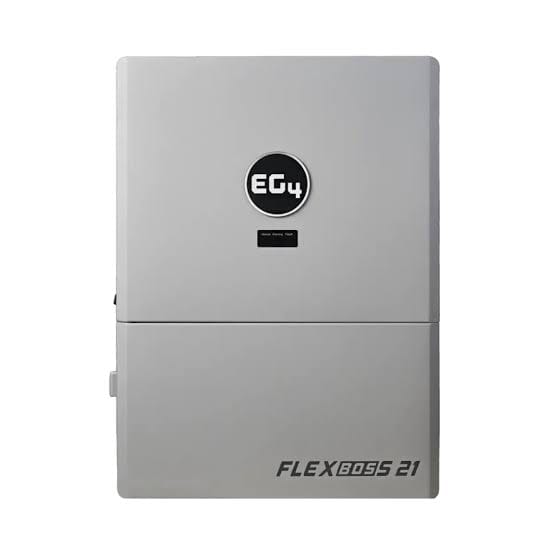
Price: $1,499–$1,899 (varies by retailer)
This is a 48V split-phase, all-in-one inverter/charger. It outputs 6,000W continuously, accepts up to 8,000W of solar input across two MPPT charge controllers, and handles a 12kW surge for about 3.5 seconds, enough to start a well pump or a fridge compressor without flinching.
You can stack up to 16 units in parallel for 96kW total, which means this thing scales from a garden shed to a full homestead without changing brands.
One long-term owner running a full-time off-grid setup with over 4kW of real solar input and an 1,100Ah battery bank put it simply: the low idle-current claims held up in real use, months in. That’s the kind of feedback spec sheets can’t give you.
What we like:
- Genuinely competitive price for the output
- Built-in MPPT, one less box to wire
- Backed by a 5-year warranty and UL 1741 certification
What we don’t like:
- No pre-charge circuit (a minor gripe from long-term users)
- App and web dashboard functionality don’t fully match
2. Victron MultiPlus-II 48/5000/70-50: Best for Reliability
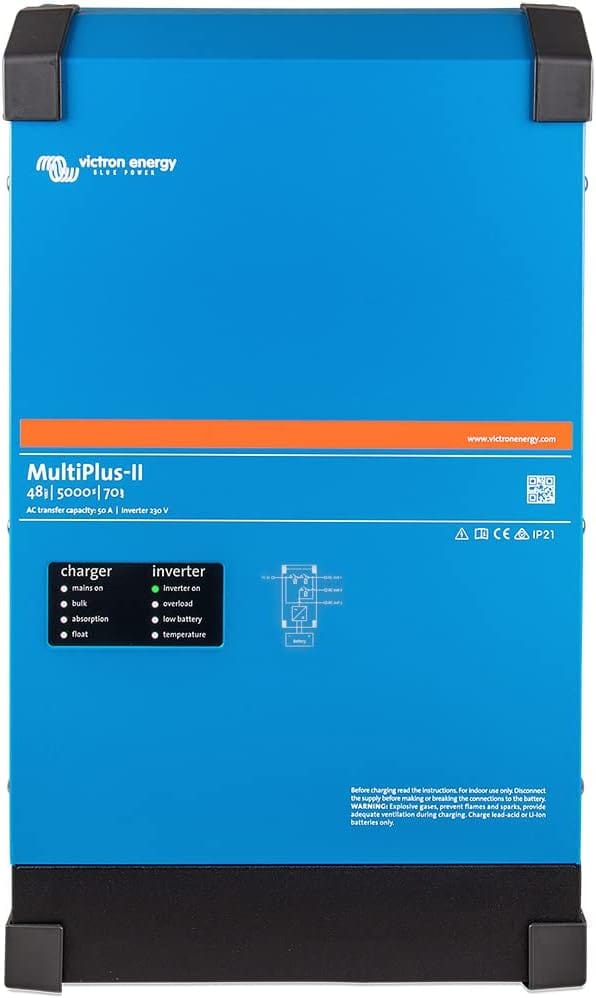
Price: roughly $1,300–$2,200 depending on region and configuration
Victron built its reputation on marine and expedition power systems, where “it just failed” is not an acceptable sentence. The MultiPlus-II delivers 4,000W continuous (5,000VA) with a 9,000W peak, pure sine wave output, and a transfer switch that flips in 20 milliseconds, fast enough that sensitive electronics never notice the power source changed.
It’s not the cheapest unit on this list. It’s the one professional installers reach for when the job has to work the first time, every time.
What we like:
- Best-in-class build quality and monitoring (VRM portal)
- Parallel and three-phase operation for larger builds
- Strong resale value if you ever upgrade
What we don’t like:
- Premium pricing compared to EG4 or Growatt
- Setup requires more electrical know-how
3. Sol-Ark 12K: Best for Whole-Home Backup
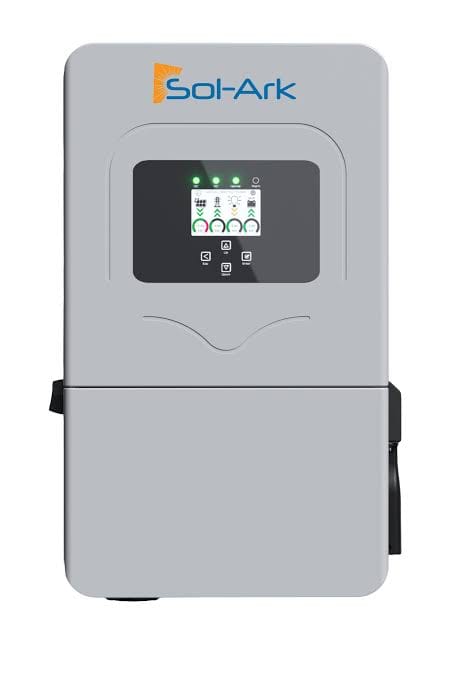
Price: around $5,400 as a system package
This is hybrid-grade equipment built for homeowners who want their entire house, not just a few circuits, running off-grid or seamlessly backed up. It’s a bigger investment, and it’s meant for people who’ve already sized their loads properly.
What we like:
- Handles whole-home loads with room to spare
- Strong generator integration for cloudy-week backup
What we don’t like:
- Overkill (and overpriced) for a cabin or RV
- Installation is not a weekend DIY project for most people
4. Sol-Ark 15K: Best for Large or Growing Systems
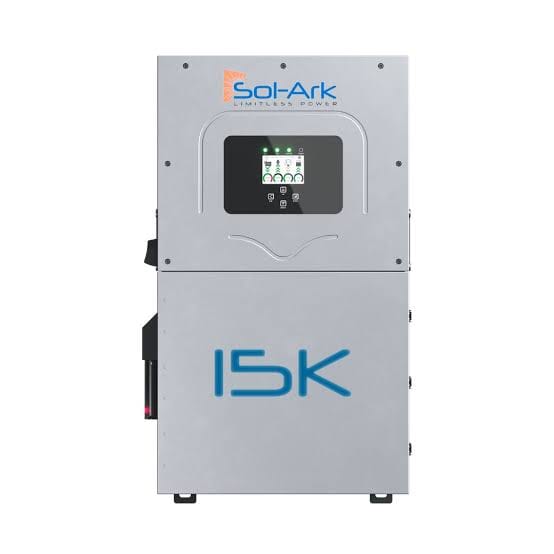
Price: around $6,200 as a system package
If you’re planning to add more panels, more batteries, or an EV charger down the line, the extra headroom here matters. Think of it as buying the next size up so you’re not re-doing your electrical room in three years.
5. Growatt SPF Series: Best Budget Pick
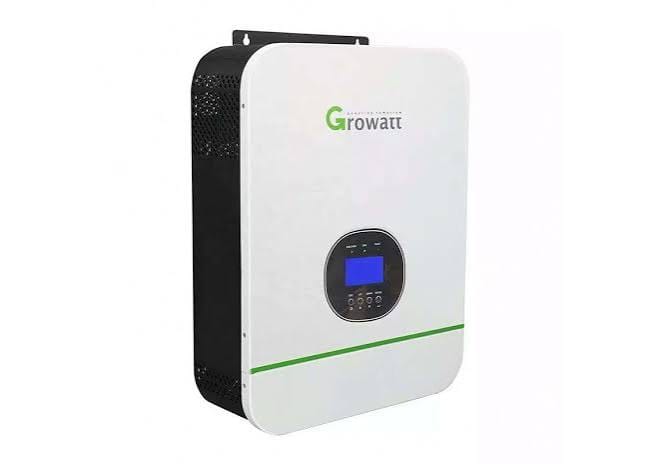
Growatt’s off-grid line gives smaller systems a genuinely usable, pure sine wave option without the premium price tag of Victron or Schneider. It’s the right call for a workshop, a small cabin, or a backup system covering a handful of essential circuits, not a whole house.
What “Off-Grid Inverter” Actually Means (Glossary)
Off-grid inverter (inverter-charger): Converts DC battery power into AC household power, and often charges the battery bank too. It’s the brain of the system.
Pure sine wave: A clean, grid-quality AC waveform. Required for compressors, motors, and most modern electronics. Modified sine wave is cheaper and can damage or malfunction sensitive gear.
Surge watts vs. continuous watts: Continuous is what the inverter runs all day. Surge is the short burst it can handle when a motor first kicks on, usually 2-3x the continuous rating for a few seconds.
MPPT (Maximum Power Point Tracking): The technology inside a charge controller that squeezes the most usable power out of your solar panels regardless of sun angle or temperature.
THD (Total Harmonic Distortion): A measure of power quality. Lower is cleaner. Anything under 3% is considered good for sensitive electronics.
Sizing Your Inverter: The Short Version
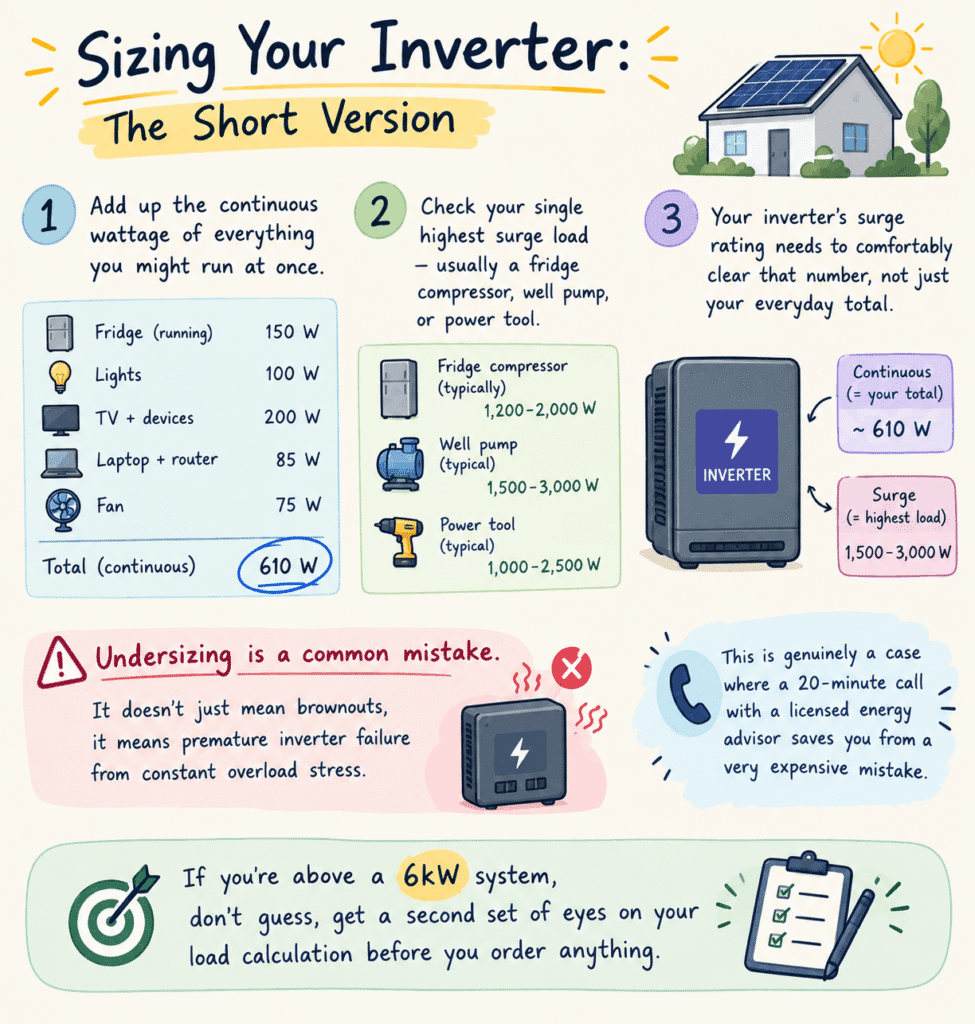
Add up the continuous wattage of everything you might run at once. Then check the single highest surge load in that list — usually a fridge compressor, well pump, or power tool. Your inverter’s surge rating needs to comfortably clear that number, not just your everyday total.
Undersizing is the single most common mistake I see. It doesn’t just mean brownouts, it means premature inverter failure from constant overload stress.
This is genuinely a case where a 20-minute call with a licensed energy advisor saves you from a very expensive mistake. If you’re above a 6kW system, don’t guess, get a second set of eyes on your load calculation before you order anything.
The Market, Briefly
The global solar inverter market is projected to reach $18.97 billion by 2030, growing at a 5.78% CAGR, according to Market Research Future. Off-grid and hybrid segments are a meaningful chunk of that growth, driven by rising grid electricity prices and more frequent outages in several US regions.
That growth means more competition, which is generally good news for your wallet, but it also means more low-quality units flooding marketplaces. Stick to brands with real UL certification and a real warranty. If a listing can’t show you a spec sheet, walk away.
FAQs
What size inverter do I need for off-grid living?
Size to your highest combined surge load, not your average daily use. Most small cabins land in the 3,000-6,000W range; whole-home setups often need 8,000-12,000W or more.
Can I run a refrigerator on an off-grid inverter?
Yes, but only with a pure sine wave inverter. Modified sine wave units can cause a compressor to run hot, hum loudly, or fail early.
How long do off-grid inverters last?
Quality units typically run 10-15 years with proper sizing and ventilation. Constant overload shortens that significantly.
Is a bigger inverter always safer?
No. Oversizing wastes money and can actually reduce efficiency at low loads, since inverters draw idle power just staying on.
Summary
For most people building a cabin, workshop, or small off-grid home in 2026, the EG4 6000XP offers the best balance of price, output, and real-world reliability. If budget isn’t the constraint and you want the most proven, professional-grade unit, the Victron MultiPlus-II is worth the premium.
Either way, talk to a licensed energy advisor before you finalize your system size. This is a purchase you want to get right the first time.