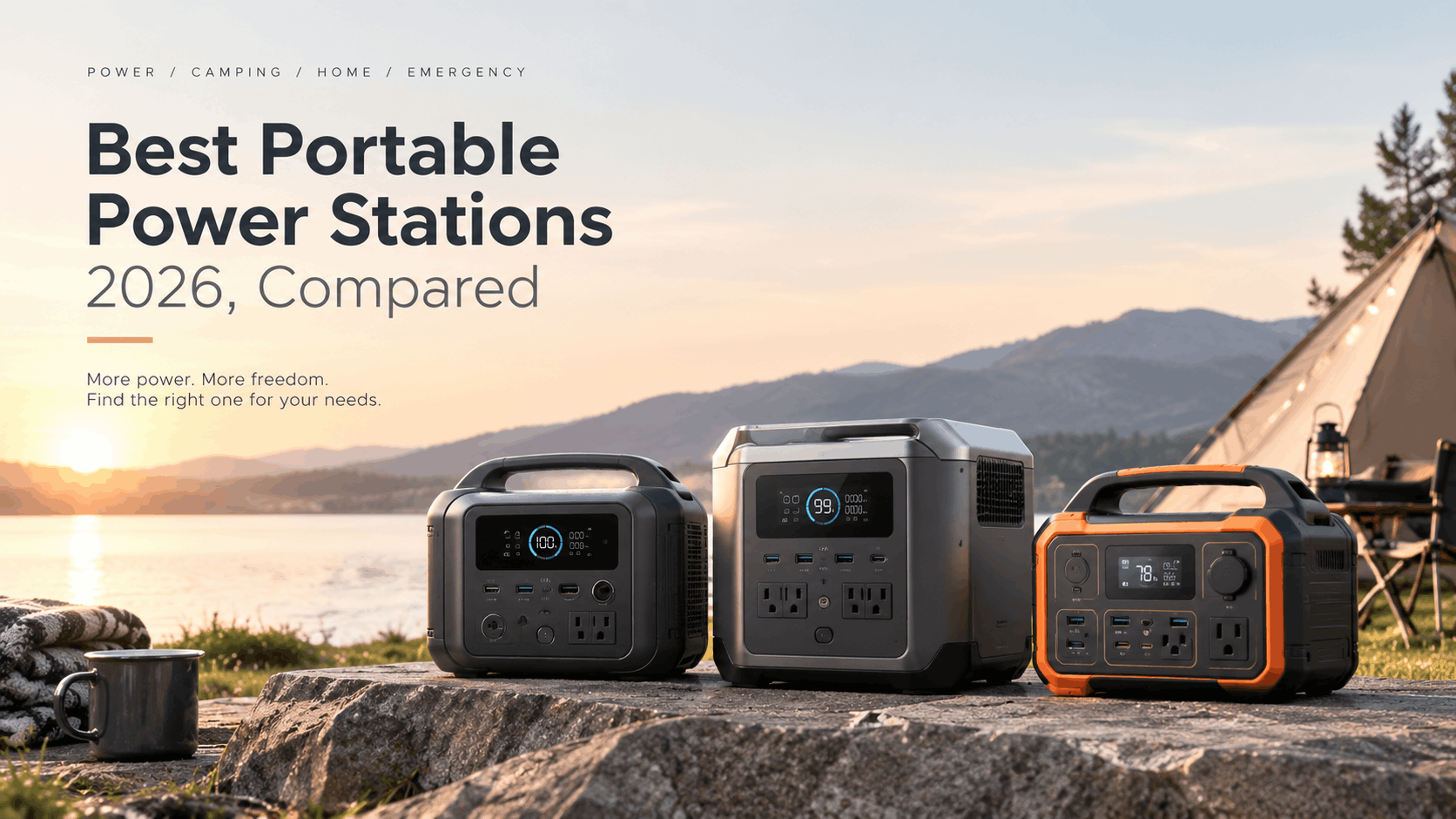
Quick Answer: The best portable power station for most people in 2026 is the EcoFlow Delta 3 Plus (1,024Wh, 2,400W output), offering the best balance of capacity, fast recharging, and price. For budget or lightweight use, the Jackery Explorer 300 Plus is the top pick, while the Bluetti Elite 200 V2 and Goal Zero Yeti Pro 4000 lead for home backup and whole-house needs. With U.S. power outages averaging 11 hours a year and electricity costs at 18.34¢/kWh, a portable power station offers reliable, fuel-free backup power.
Table of Contents
A Blackout Myth That’s Costing People Money
Most people think a power outage means candles, a flashlight, and waiting it out. That’s outdated thinking.
The average U.S. household now loses power for about 11 hours a year, the highest figure the Energy Information Administration (EIA) has recorded in over a decade, driven mostly by hurricanes and extreme weather. Meanwhile, residential electricity now costs around 18.34 cents per kWh, up 5% year-over-year.
Put those two numbers together, and a “just wait it out” mindset gets expensive fast. Spoiled groceries, a dead CPAP machine, a laptop you needed for work, none of that waits politely for the grid to come back.
A portable power station fixes that gap. No gas, no fumes, no pull cord. You charge it, you store it, and it works the second the lights go out.
Key Takeaway: The U.S. now averages 11 hours of power interruptions per year, nearly double the previous decade’s average. A portable power station is the quiet backup that doesn’t need fuel or maintenance to work when you need it.
This guide compares the portable power stations actually worth buying in 2026, ranked by real specs, not marketing copy.
How I Ranked These
I didn’t rank these on brand reputation or price alone. Every unit on this list was scored against the same four criteria:
- Usable capacity: how much of the rated watt-hours you actually get in real use
- Continuous and surge output: what it can realistically power, not just plug into
- Recharge speed: from wall power and from solar input
- Battery chemistry and cycle life: how long it lasts before it’s junk
Specs below are pulled from manufacturer datasheets and cross-checked against independent third-party testing. Prices shift often, treat listed prices as a ballpark and confirm current pricing before buying.
If you’re sizing a system for whole-home backup rather than a weekend trip, this is where I’d stop guessing and talk to an actual energy advisor. Whole-home setups involve panel compatibility and load calculations that a spec sheet won’t tell you.
Quick Comparison Table
| Model | Best For | Capacity | Output | Weight |
|---|---|---|---|---|
| EcoFlow Delta 3 Plus | Best Overall | 1,024 Wh | 2,400 W | ~27 lbs |
| Jackery Explorer 300 Plus | Best Budget | 288–293 Wh | 300 W | ~7.1 lbs |
| Anker SOLIX C300 | Best Ultraportable | 288 Wh | 300 W | ~7 lbs |
| Bluetti Elite 200 V2 | Best for Home Backup | 2,073.6 Wh | 2,600 W (3,900 W boost) | ~53 lbs |
| Jackery Explorer 1000 v2 | Best for Camping & Off-Grid | 1,070 Wh | 1,500 W | ~22 lbs |
| Goal Zero Yeti Pro 4000 | Best Whole-Home / Premium | 3,994 Wh (expandable) | 3,600 W (7,200 W surge) | ~116 lbs |
Our Top Picks
Best Overall: EcoFlow Delta 3 Plus
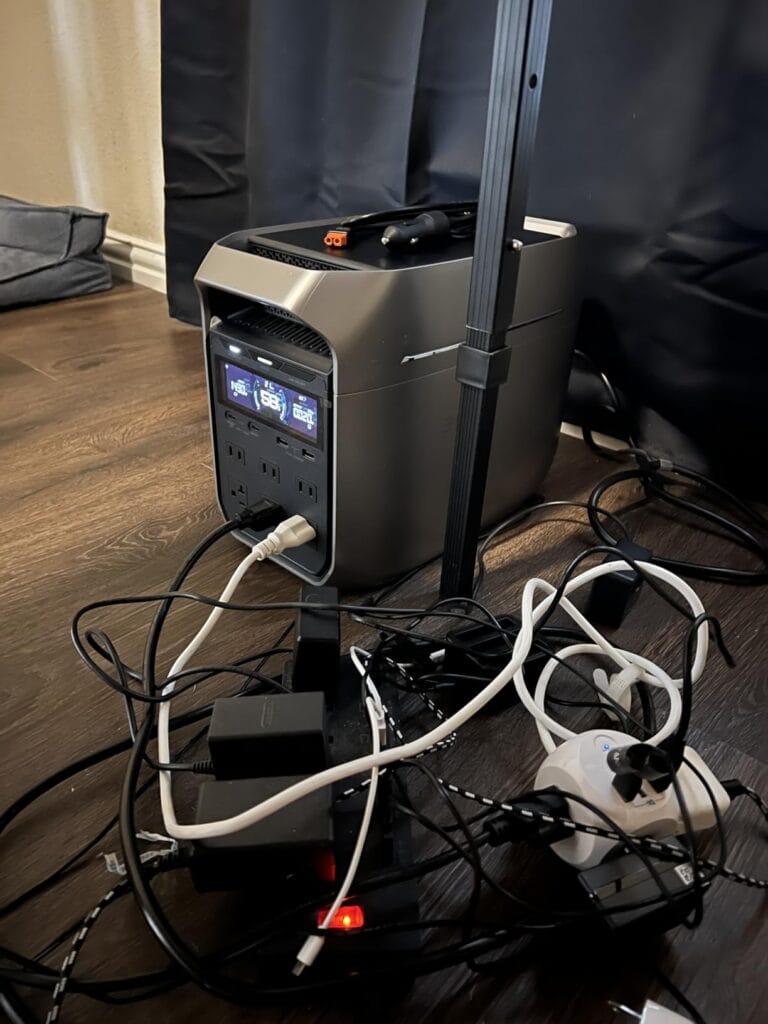
Specs: 1,024 Wh capacity · 2,400 W continuous output · 1,000 W solar input · 10-millisecond UPS switchover
The Delta 3 Plus earns “best overall” because it doesn’t force a trade-off. It’s compact enough to move around the house, powerful enough to run a fridge and a few small appliances at once, and it recharges fast from either a wall outlet or solar panels.
The 10-millisecond UPS switchover is worth calling out, that’s fast enough that most electronics won’t even register a blip when the grid drops and the unit kicks in.
Pros:
- Fast AC and solar recharging
- Genuinely quiet in operation
- Expandable with extra battery packs
Cons:
- Pricier than basic camping units
- Overkill if you only need phone/laptop charging
Best Budget: Jackery Explorer 300 Plus
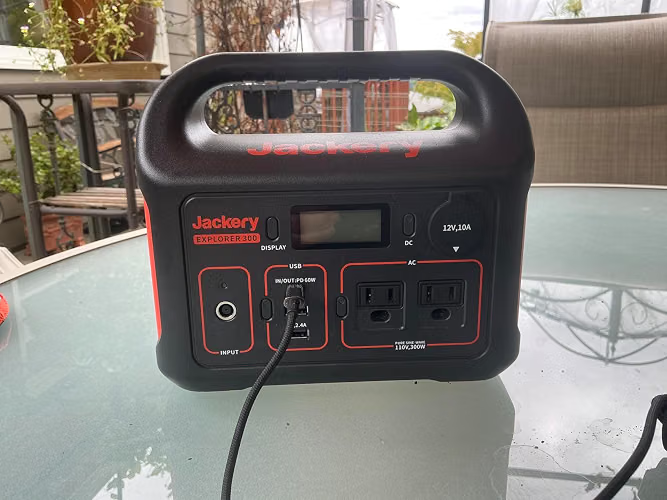
Specs: ~293 Wh capacity · 300 W output · ~7.1 lbs
Grade-8 reading level version of this pick: it’s small, it’s cheap, and it does exactly what it says. This isn’t going to run your fridge. It’ll keep your phone, a laptop, and a few USB devices alive through a multi-hour outage or a weekend camping trip.
Pros:
- Low price point for LiFePO4 chemistry
- Genuinely portable, fits in a backpack
- Simple to use, no learning curve
Cons:
- Not enough output for large appliances
- Short runtime under heavier loads
Best Ultraportable: Anker SOLIX C300
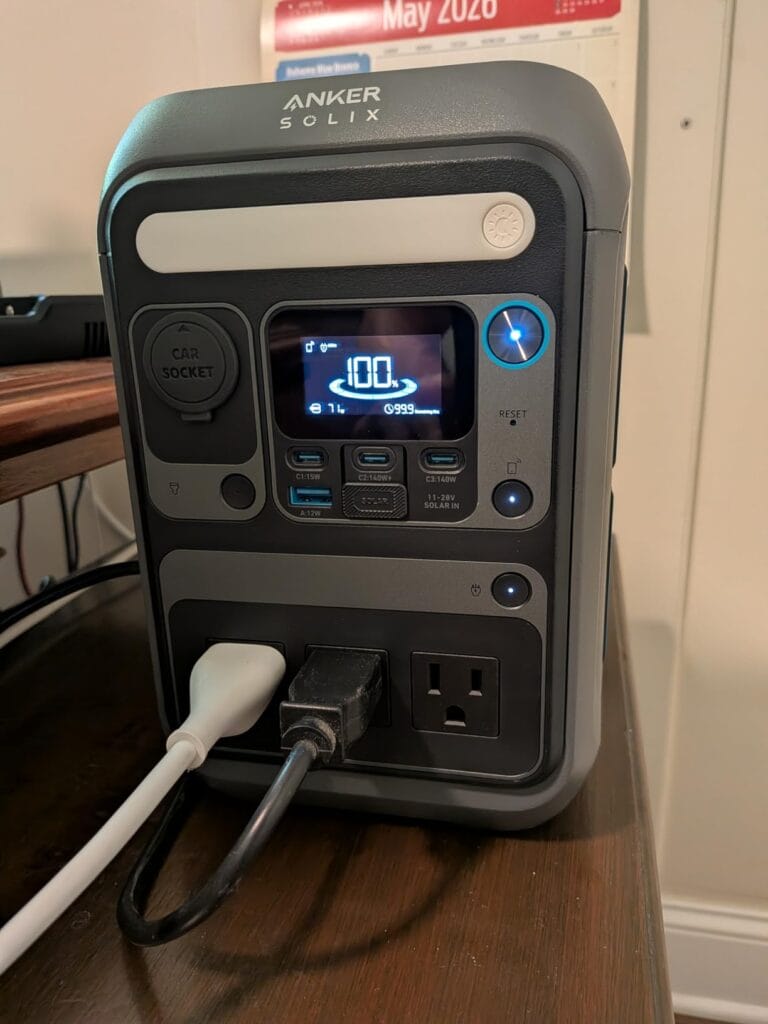
Specs: 288 Wh capacity · 300 W output · ~7 lbs
This one wins on form factor. Its vertical design is unusual for the category, and reviewers have consistently rated it highly for everyday usability rather than pure specs. If you want something you’ll actually grab and take with you, not something that lives in a closet, this is the pick.
Pros:
- Compact vertical design, easy to grab-and-go
- Strong customer satisfaction ratings
- Reasonably priced for the category
Cons:
- Limited to small electronics and light-duty use
- Not a home-backup solution
Best for Home Backup: Bluetti Elite 200 V2
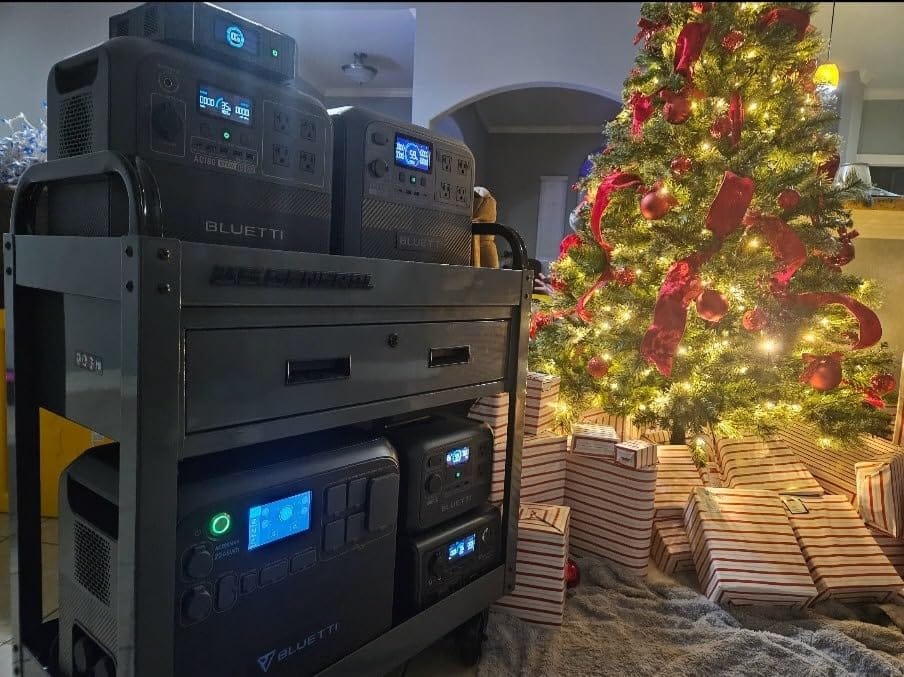
Specs: 2,073.6 Wh capacity · 2,600 W output (3,900 W in boost mode) · automotive-grade LiFePO4 cells rated for roughly 6,000 charge cycles
This is the “I don’t want to think about this again for a decade” pick. The battery chemistry is rated to retain a meaningful share of capacity even after thousands of cycles, which matters if you’re buying this to sit in a closet for years and only get used during outages.
Pros:
- High output ceiling with boost mode
- Long-rated cycle life
- Can pair with solar panels for extended outages
Cons:
- Heavy, this isn’t a grab-and-go unit
- Higher upfront cost
Best for Camping & Off-Grid: Jackery Explorer 1000 v2
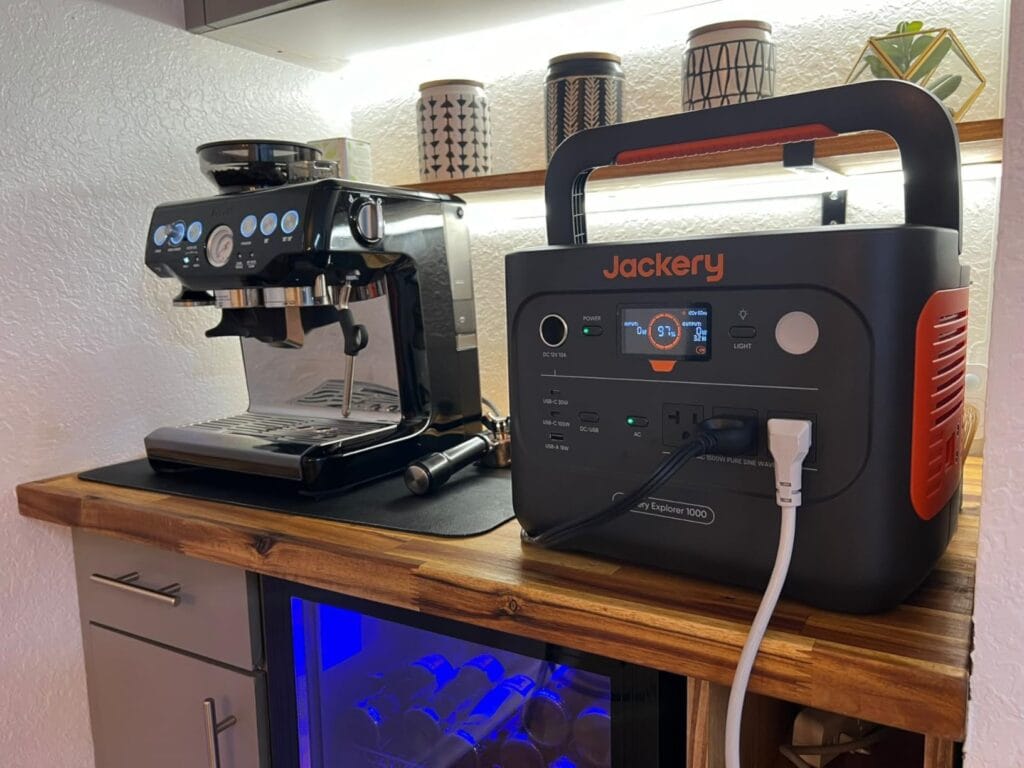
Specs: 1,070 Wh capacity · 1,500 W output · solar-ready
This is the middle-ground pick for people who camp, van-live, or just want a genuinely capable unit without home-backup-level weight and price. It’s been repeatedly flagged by outdoor gear reviewers as the easiest high-capacity unit to actually operate.
Pros:
- Good balance of capacity and portability
- Straightforward controls
- Reliable solar charging support
Cons:
- Not powerful enough for major home appliances
- Mid-range price, not a budget pick
Best Whole-Home / Premium: Goal Zero Yeti Pro 4000
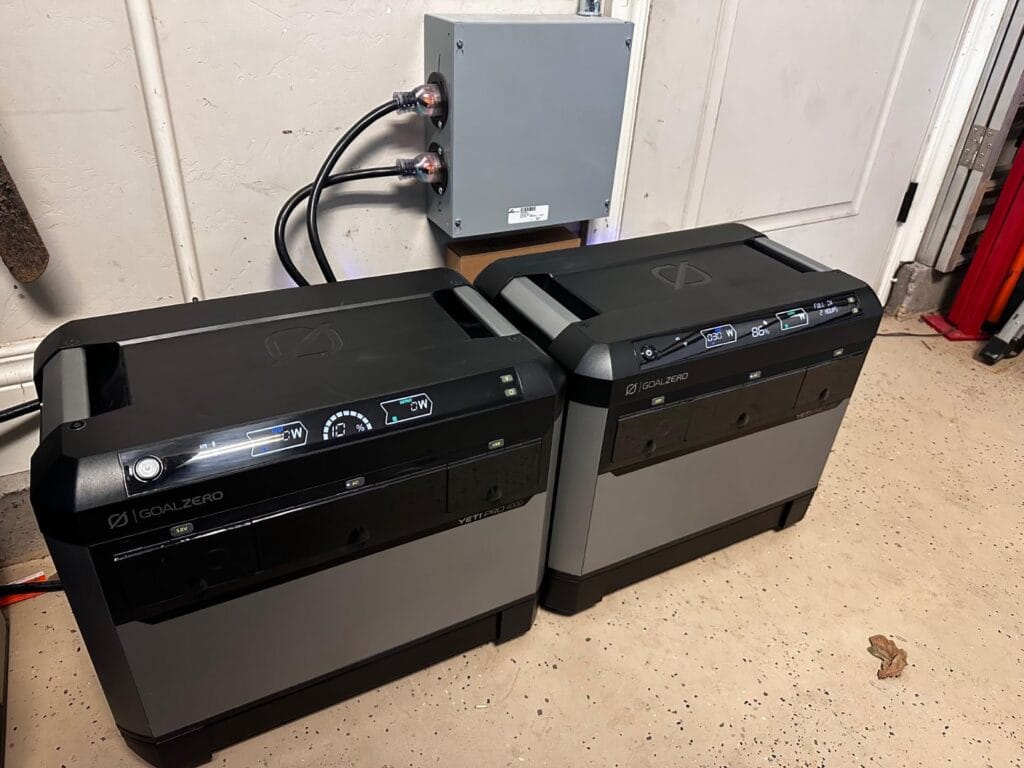
Specs: 3,994 Wh capacity (expandable up to 20 kWh) · 3,600 W continuous output, 7,200 W surge · ~116 lbs
This is the closest a portable unit gets to a real home-backup system without a professional electrician. It’s not something you carry, it’s something you wheel into place and leave there. If your goal is running a fridge, some lighting, and a few circuits through a multi-day outage, this is the category to look at.
Pros:
- Massive output and surge headroom
- Expandable capacity for long outages
- Built for repeated heavy use
Cons:
- Very heavy, not portable in the practical sense
- Requires real planning around what it’ll power
This is exactly the kind of purchase worth a quick conversation with an energy advisor first. Expandable, whole-home-adjacent systems involve decisions, what circuits to prioritize, how much runtime you actually need, that are easy to get wrong from a spec sheet alone.
Why This Market Is Growing So Fast
This isn’t a niche category anymore. Grand View Research values the global portable power station market at roughly $4.8 billion in 2026, projected to reach $19.9 billion by 2033, a 22.4% compound annual growth rate. North America accounts for the largest regional share, at just over 40%.
Analysts point to the same drivers this article opened with: rising electricity costs, more frequent severe weather, and growing demand for off-grid and outdoor recreational power.
How to Choose the Right Capacity
Here’s the logic, stripped of jargon:
- Under 300 Wh: phones, laptops, small electronics. Weekend trips, short outages.
- 1,000–1,100 Wh: small appliances, short fridge runs, multi-device charging.
- 2,000+ Wh: extended fridge use, multiple devices, several-day resilience.
- 4,000 Wh and expandable: home-backup territory. Multiple circuits, multi-day outages.
A rough rule: add up the wattage of what you want to run, multiply by the hours you want to run it, and that’s your target watt-hour figure, with some buffer, because rated capacity and usable capacity aren’t identical.
If that math gets complicated once you start adding a fridge, a sump pump, and medical equipment to the list, that’s the point where talking to a human advisor beats guessing.
Glossary
Wh (Watt-hour): The unit that measures total stored energy. Higher Wh = longer runtime.
W (Watt): The rate of power draw or output. A device’s wattage tells you what a power station can run at once.
Surge watts: The brief burst of power a device needs to start up (motors, compressors), often higher than its running wattage.
LiFePO4: Lithium iron phosphate, a battery chemistry known for longer cycle life and better safety margins than standard lithium-ion.
MPPT (Maximum Power Point Tracking): Technology that optimizes solar charging efficiency as sunlight conditions change.
UPS switchover: The time it takes a power station to kick in after grid power drops. Faster switchover means less disruption to connected electronics.
Pass-through charging: The ability to charge a device from the power station while the station itself is also being recharged.
FAQs
How long does a portable power station last before it needs replacing?
LiFePO4 units are commonly rated for several thousand charge cycles, often translating to 8–10+ years of typical use before capacity noticeably degrades.
Can a portable power station run a refrigerator?
Yes, for units in the 1,000 Wh+ range with sufficient continuous wattage, though runtime depends on the fridge’s compressor draw and how often the door opens.
Are portable power stations safe to use indoors?
Yes. Unlike gas generators, they produce no fumes and don’t require ventilation, which is one of their biggest advantages over traditional backup generators.
Is a portable power station worth it if outages are rare where I live?
If outages average around 11 hours a year nationally, most households will use one eventually, and the same unit doubles as camping, travel, or work-site power the rest of the year.
Summary
For most households, the EcoFlow Delta 3 Plus hits the sweet spot of capacity, speed, and price. Tight budget or just need phone-and-laptop backup? The Jackery Explorer 300 Plus does the job without overspending. Planning around real home-backup needs? Start with the Bluetti Elite 200 V2, and if you’re eyeing something in the Goal Zero Yeti Pro 4000 range, loop in an energy advisor before you buy.