Table of Contents
Power cuts out, the inverter kicks in, and somewhere around year three you start eyeing it suspiciously. Fair. Here’s the number you actually came for: the inverter unit itself runs 8–10 years, sometimes longer. The battery inside it gives up much sooner,3–4 years for a flat plate battery, 4–6 for tubular, up to 10 for lithium. Different components, different clocks.
That’s the whole answer. The rest of this is about why those ranges swing so much, because “up to 6 years” and “barely lasted 2” can both be true stories about the same battery model, and the difference usually comes down to a handful of things you can actually control.
Inverter or Battery, Which One Are You Actually Asking About?
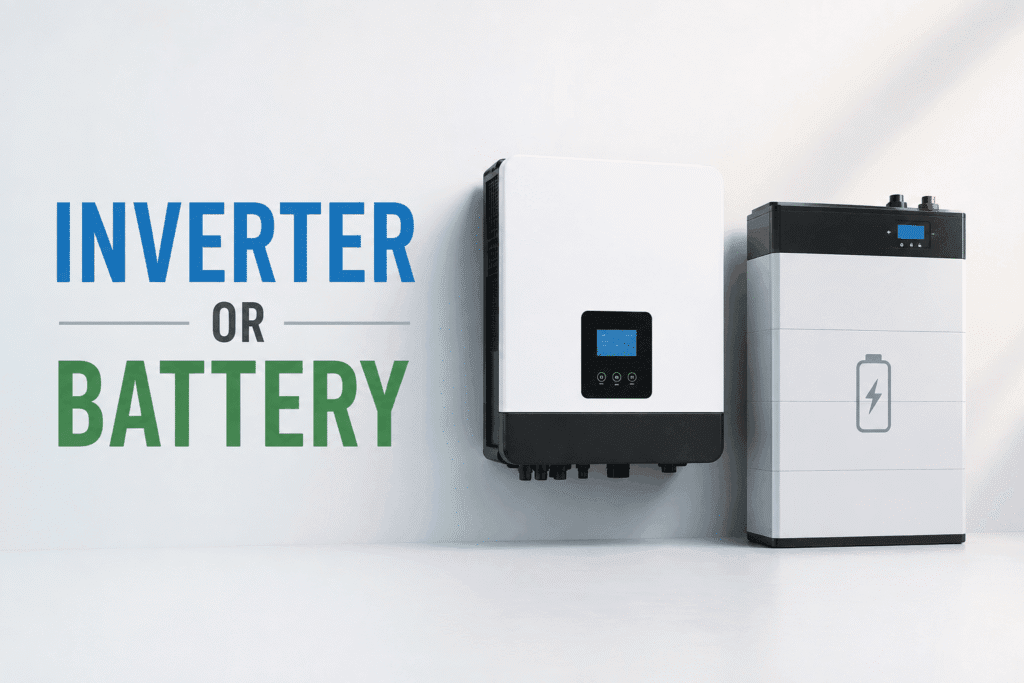
People say “my inverter died” constantly, and about 90% of the time what actually died was the battery sitting next to it. Understandable mix-up, from the outside it’s one box, one power cut, one problem.
But they’re different animals. The inverter is electronics: a circuit board, a charger, a switching mechanism that decides when to pull from the battery. It doesn’t degrade from use the way a battery does. It fails from age, from a fault, sometimes from heat, but not from simply being used, the way a battery does.
The battery is chemistry, and chemistry has an expiration date built in. Every charge-discharge cycle uses up a small amount of what the battery has to give. That’s not a defect. That’s just how batteries work, Luminous or otherwise. So when the backup time starts shrinking a couple years in, that’s almost always the battery aging, not the inverter failing.
Average Lifespan by Battery Type
| Battery Type | Typical Lifespan | Typical Warranty | Best For |
|---|---|---|---|
| Flat Plate | 3–4 years | Shorter, entry-level warranty | Light or occasional power cuts |
| Tubular (e.g. Life Max, Inverlast) | 4–6 years | Up to 5 years on premium models | Frequent or long power cuts |
| Lithium-ion (Li-On) | Up to 10 years | 5 years full + 3 years additional | Long-term, low-maintenance backup |
Tubular is the default choice for most Indian and Pakistani households, and for good reason, it splits the difference between price and durability. Lithium sits at the expensive end, but it’s basically maintenance-free, which is worth something if you’ve ever forgotten to top up battery water for six months straight (no judgment, it happens).
Flat Plate Batteries
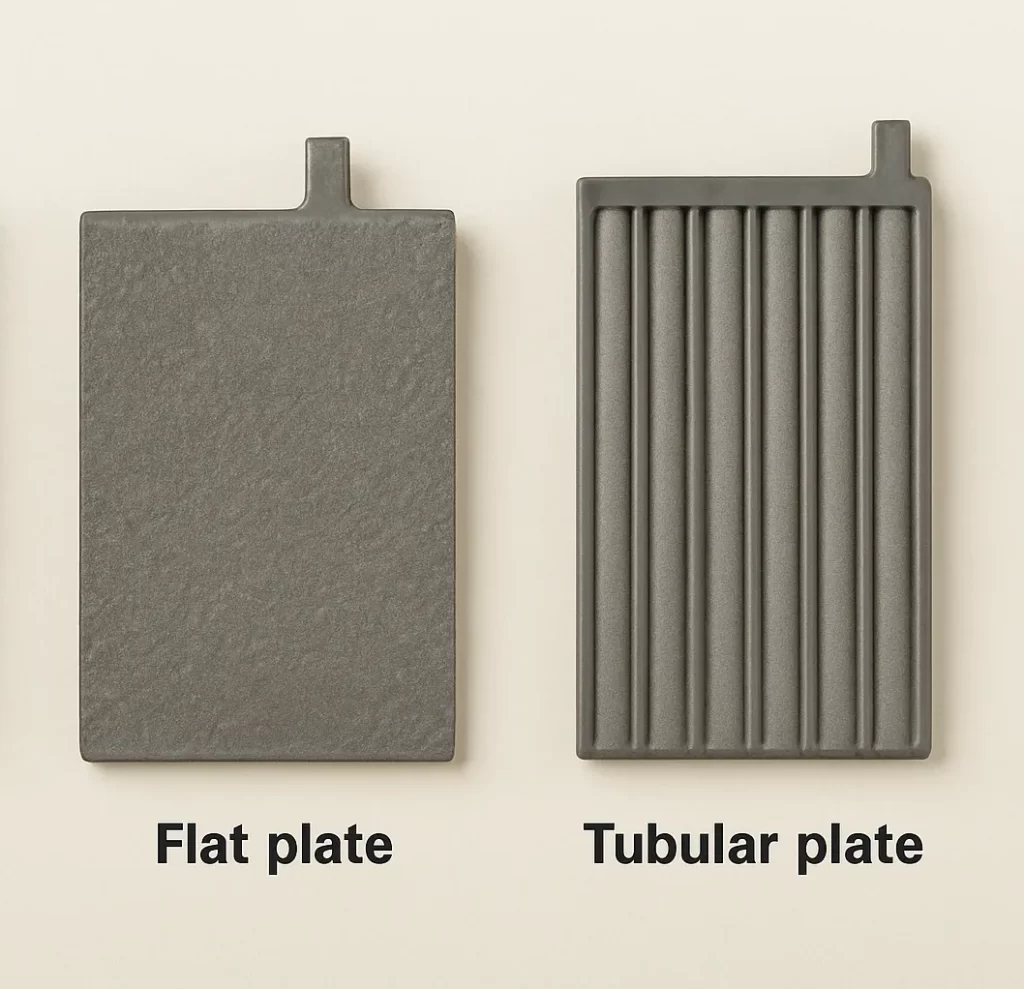
The budget option. Shorter life, lower price, and honestly fine if your area gets the occasional short cut rather than a daily four-hour blackout.
Tubular Batteries
This is the one most people end up with. It handles deep, repeated discharges, the kind you get from a genuinely bad power situation — better than flat plate does. Luminous backs its higher-end tubular models, like the Life Max range, with warranties running up to 5 years, which tells you something about how confident they are in the build.
Lithium-ion (Li-On) Batteries
No water top-ups. No corrosion checks. No monthly maintenance ritual. Luminous covers its Li-On line with a 5-year full warranty plus 3 additional years, and to their credit, they’re upfront that you can expect roughly a 20% drop in backup capacity by year five — that’s disclosed, not hidden in a footnote, which is more than some competitors bother to do.
What Determines How Long Your Luminous Inverter or Battery Actually Lasts
Same battery, same brand, two completely different lifespans depending on how it’s treated. Here’s what actually moves the needle.
Frequency and Depth of Power Cuts
A battery drained to empty every single day works a lot harder than one that occasionally covers a 20-minute blip. Deep, frequent discharges age a battery faster — this is basic battery chemistry, nothing specific to Luminous.
Load Size and Overloading
Push more appliances through the inverter than it’s rated for, and both the inverter and the battery pay for it. This is one of the fastest ways to shave years off either component, and one of the easiest to avoid, just check the rated capacity before plugging in the AC unit.
Maintenance and Water Levels
If you’re running a lead-acid battery (flat plate or tubular), the electrolyte water level needs checking every few months. Skip it, and the internal plates corrode faster than they should. This one’s genuinely low-effort, five minutes, a bottle of distilled water, done.
Ambient Heat and Ventilation
Batteries hate heat. An inverter jammed into a sealed cupboard with no airflow is going to age faster than one sitting somewhere it can actually breathe.
Charging Cycles
Every full charge-and-discharge cycle eats into total battery life, unavoidable, it’s how the chemistry works. What you can control is the pattern: steady, moderate charging tends to be gentler than constant deep drains followed by rapid recharges.
Signs Your Inverter or Battery Is Nearing the End of Its Life
- Backup time has visibly dropped from what it used to be
- Charging takes noticeably longer than it did when the unit was new
- Unusual sounds or a burning smell near the inverter
- Swollen, cracked, or leaking battery casing
- Slower switchover when the power actually cuts
If it’s just backup time shrinking, that’s the battery aging, normal, expected, not an emergency. If it’s noise, smell, or anything electrical acting strange, that’s the inverter unit, and that’s worth getting looked at soon rather than waiting it out.
How to Extend Your Luminous Inverter and Battery Lifespan
- Don’t drain the battery to empty as a habit
- Top up water levels on lead-acid batteries every few months
- Keep the unit somewhere cool and ventilated, not sealed away
- Stay within the inverter’s rated load capacity
- Wipe down dust from the exterior and vents periodically
- Get a professional check-up once it passes the 3–4 year mark
Most of this is just consistency. None of it requires special tools or a technician on speed dial.
Warranty vs. Real-World Lifespan: What Luminous Actually Guarantees
Standard Luminous inverter units carry a 2-year warranty. Premium tubular batteries, the Life Max range, for instance — go up to 5 years, often structured as free replacement months followed by a pro-rata period. The Li-On lithium line runs 5 years full plus 3 additional years on both inverter and battery, with that expected 20% backup drop by year five excluded from coverage since it’s normal aging, not a fault.
Worth remembering: warranty length isn’t the same thing as how long the unit will actually last. It’s closer to a floor than a ceiling. Take care of a tubular battery and it can outlive its warranty by a couple years. Neglect it and it might not even make it that far.
Does Solar Charging Extend Battery Life?
If there’s solar in the mix, a steady solar charge tends to be gentler on a battery than repeated fast grid-charging, mostly because the load gets spread out over the day instead of hitting all at once.
That said, be skeptical of any page claiming solar charging “doubles” your battery life. That’s a marketing number, and it varies wildly by setup, battery type, and how the household actually uses power. We’re not repeating it here as fact. The underlying principle (gentler charging = less stress) holds up; the specific multiplier doesn’t.
FAQs
My battery is only 2 years old and backup time already feels weaker. Is that normal?
Not really, 2 years is early for noticeable decline, even on a flat plate battery. Worth checking water levels first (if it’s lead-acid) and load size second, before assuming the battery itself is faulty.
Can I replace just the battery and keep using the same inverter?
Yes, and that’s actually the normal replacement pattern. Since the inverter unit outlasts the battery in most cases, replacing only the battery every few years while the inverter stays put is standard, not an exception.
Does turning the inverter off when not needed help it last longer?
It reduces unnecessary cycling on the battery, so yes, marginally, though the bigger factor is still how deep and how often the discharges are, not whether it’s switched off during quiet periods.
Is it worth paying extra for lithium over tubular?
Depends on how much you value not doing maintenance. Lithium costs more upfront but skips the water top-ups and generally lasts longer. If your area has frequent cuts and you don’t want a recurring chore, it can pay for itself in convenience even before the extra years of life factor in.
What actually kills an inverter battery early, is it one big thing or lots of small things?
Almost always small things stacking up: skipped maintenance, occasional overloading, a hot storage spot. Rarely one dramatic event. That’s actually good news, since it means the fixes are small too.