Table of Contents
A solar powered bird bath fountains earns its keep on three things: panel wattage that matches your basin size, a battery backup if you want it running after sunset, and a housing material built for your climate. Get those three right, and you end up with a peaceful, low-maintenance water feature that birds actually use. Get them wrong, and you end up with a pump gathering dust in the shed by August.
This guide covers real products with real specs, pulled from manufacturer listings and verified buyer feedback rather than marketing copy dressed up as advice. You’ll find top picks by category, a plain breakdown of wattage and battery numbers, and the habits that keep these units running past their first season.
Quick Comparison: Top Solar Bird Bath Fountains
| Model | Wattage | Battery Backup | Material | Best For |
|---|---|---|---|---|
| Vivohome Bird Bath and Fountain Combo | Not disclosed by manufacturer | Not confirmed | Weather-resistant polyresin | Best overall |
| AISITIN 6.5W Solar Fountain Pump | 6.5W | 1500mAh, 2-2.5 hrs after dark | Plastic housing, floating | Best value |
| ALUKIKI 4W Solar Fountain | 4W | 3000mAh, 5-6 hrs after dark | Glass panel | Best with lights |
| Mademax 1.4W Solar Fountain | 1.4W | Not disclosed | Floating, free-standing | Best for small bird baths |
| Sunnydaze Solar Bird Bath | Not disclosed | Not confirmed | UV- and frost-resistant ceramic | Best for cold climates |
| Birdfy Bath Pro | Not disclosed | Not confirmed | Integrated solar panel | Best for hot, sunny climates |
Top Picks by Category
Best Overall: Vivohome Bird Bath and Solar Powered Fountain Combo
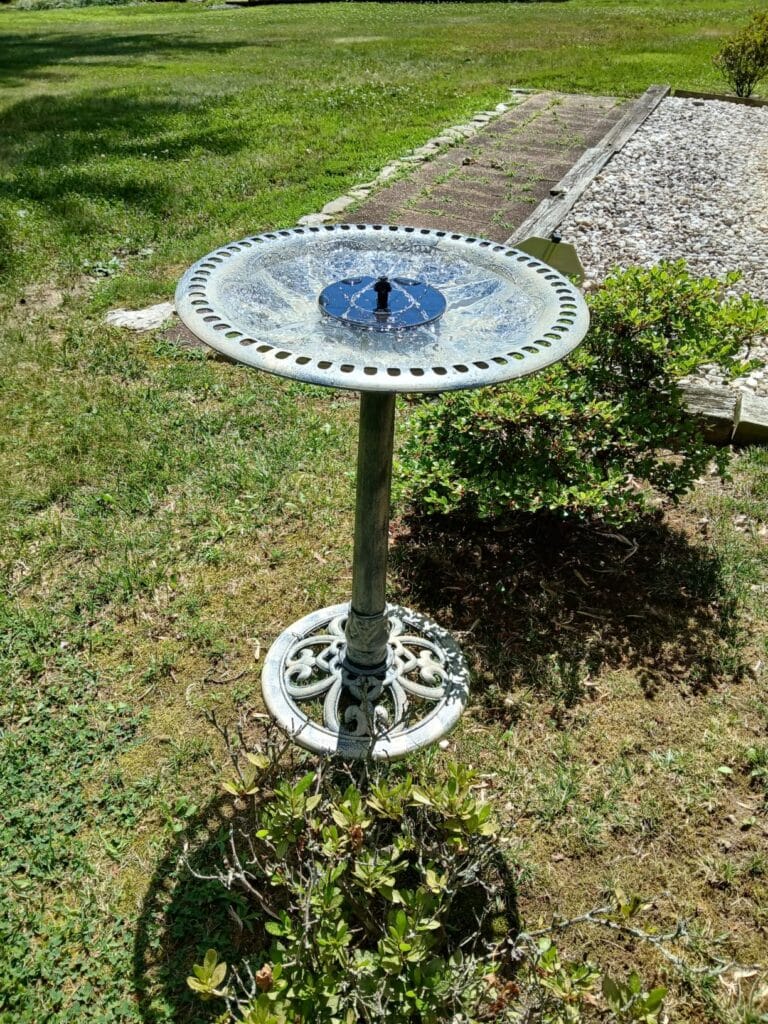
This is a full combo set: a polyresin bird bath basin paired with a solar fountain pump, which removes the guesswork of matching a separate pump to an existing basin. The polyresin construction resists denting, cracking, and fading under both intense sun and cold temperatures, and the whole unit stays light enough to move around your yard without help.
The pump includes several interchangeable fountain heads, so you can switch between a gentle bubble and a taller spray depending on how much movement you want. Retailer listings put this combo in roughly the $40-$50 range, depending on color and where you buy it. If you’re starting from scratch without an existing basin, this is the simplest way in.
Best Value: AISITIN 6.5W Solar Fountain Pump

This pump is a straightforward floating unit with a built-in 1500mAh battery, keeping it running for roughly 2 to 2.5 hours after the sun goes down. It needs a minimum water depth of just 1 inch (2.5cm), so it works in shallow basins that trip up other pumps. Six interchangeable nozzles let you adjust the spray pattern.
An independent review analysis covering 579 verified reviews for this pump found around 77% positive sentiment and 19% negative, with an overall score of 9.49 out of 10 across the categories buyers cared about most: ease of use, suction power, durability, and size. Aggregated data like that tells you more than any single glowing review, since it reflects a real spread of owner experience.
Best With Lights: ALUKIKI 4W Solar Fountain
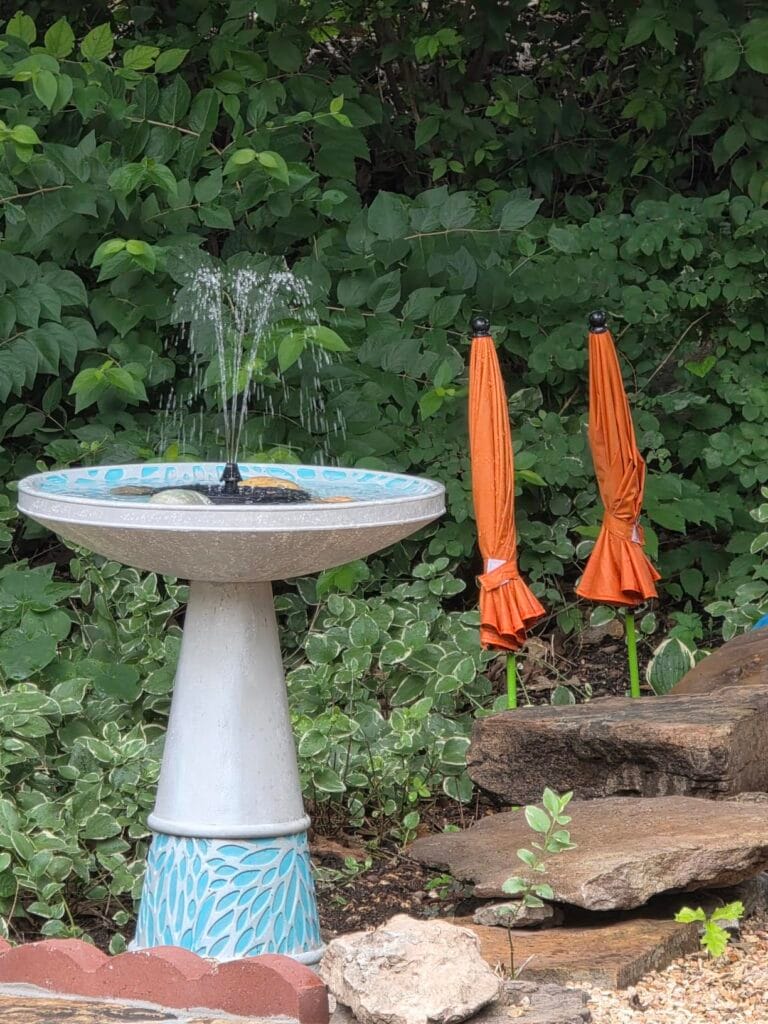
The Alukiki uses a glass solar panel rather than the plastic panels most competitors rely on, which the manufacturer states gives a higher and more stable conversion rate. A 3000mAh battery keeps the pump and 8 color-changing LEDs running for 5 to 6 hours after dark, switching automatically between a clear daytime spray and a colored night display through a built-in light sensor.
A water-shortage sensor shuts the pump off automatically if the level drops too low, protecting the motor from running dry. One verified buyer who mentioned owning three different solar fountains over the years called this the best of the three, pointing specifically to the glass panel, the removable carbon filter, and steady operation even on cloudy days. A comparison like that, from someone with hands-on experience across multiple units, carries real weight.
Best for Small Bird Baths: Mademax 1.4W Solar Fountain
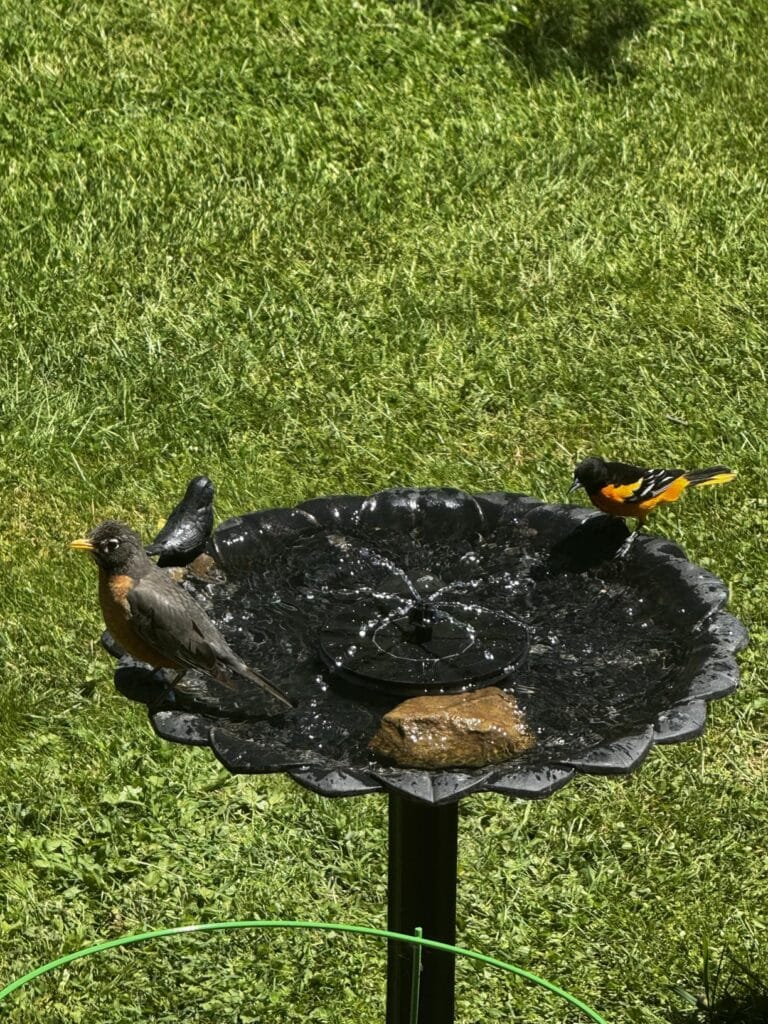
Not every basin needs a 6.5W pump pushing water several feet into the air. The Mademax runs on just 1.4W, the lowest wattage in this guide, which suits a small or shallow basin where a bigger pump would splash water straight over the edge. It’s a free-standing, floating design with 8 nozzles and 4 mounting brackets, so you still get some choice over spray pattern despite the smaller motor.
Lower wattage also means less strain on a basin that can’t handle much water movement to begin with. If your bird bath measures under 18 inches across, start here before stepping up to a pump you don’t actually need.
Best for Cold Climates: Sunnydaze Solar Bird Bath
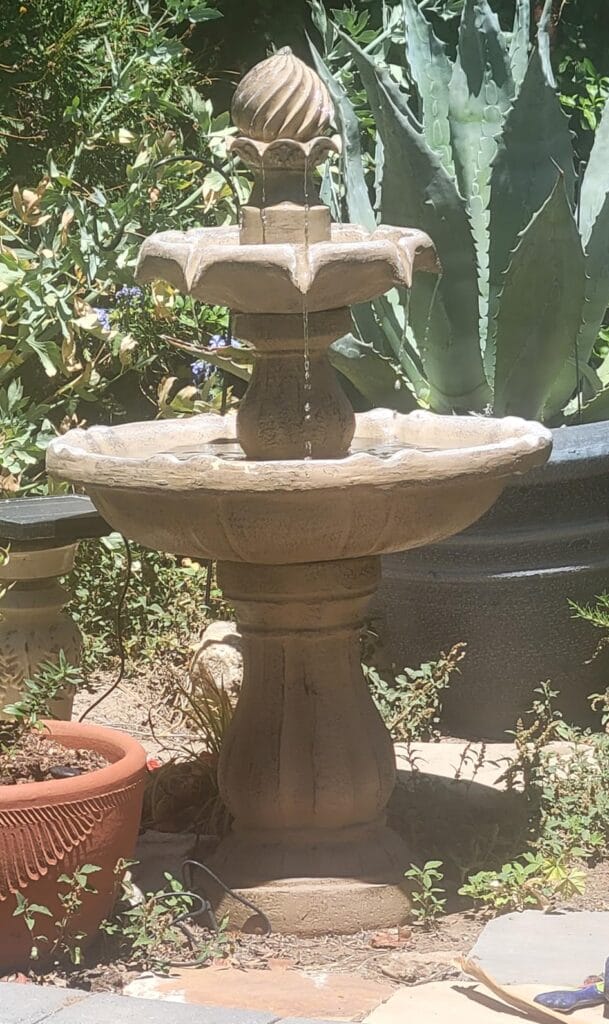
Winter is the one season where every solar bird bath hits a real limit. Even a strong panel usually can’t generate enough power to stop water from freezing once temperatures sit below freezing for any real length of time. That’s a limitation of the category itself, not a specific product failing you.
What you can control is the basin material. Ceramic, stone, and glass basins tend to crack under repeated freeze-thaw cycles. The Sunnydaze carries a UV- and frost-resistant rating on its ceramic pedestal, an uncommon combination for that material, meaning the basin survives outdoors through winter even though the water inside it will still freeze in sustained cold. Pair it with two habits: bring the pump indoors once nighttime temperatures sit below about 28°F (-2°C) for several nights running, and top the basin up with warm water each morning if you want ice-free water without running electricity to it.
Best for Hot, Sunny Climates: Birdfy Bath Pro
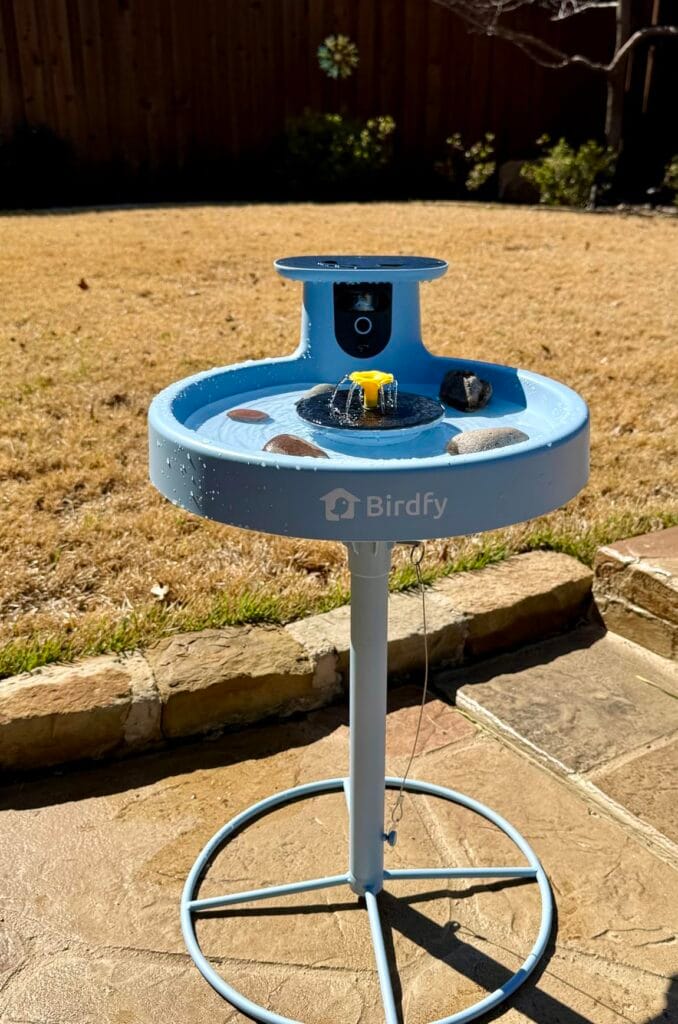
Strong, consistent sun gives solar bird baths their best working conditions, so hot climates rarely run into power problems the way shaded, cloudy regions do. The real variable in this climate is material, not wattage. Cheap, unstabilized plastic turns brittle and fades under constant UV exposure over a few seasons, while glass panels and UV-stabilized housings hold up noticeably longer.
The Birdfy Bath Pro takes a different approach to the category. Instead of just spraying water, it’s a solar powered birdbath with a built-in camera that streams and records visits, plus AI recognition covering more than 6,000 bird species. It’s sold through Bunnings in Australia, making it an easy, locally available option if you want monitoring on top of a basic water feature. If you’d rather have a spray or bubbler fountain instead of a camera-equipped bath, pair a glass-panel unit like the Alukiki above with a UV-stabilized basin.
How to Choose: Wattage, Battery Backup, and Water Depth
Wattage decides how much water movement the pump produces. Panels in this category typically range from 1.4W up to about 6.5W. Lower wattage suits small basins and a gentle bubble. Higher wattage supports taller sprays, more nozzles running at once, and enough surplus power to charge a backup battery.
Battery backup is optional, not universal. Units with a built-in battery, usually somewhere between 1200mAh and 4000mAh in this category, keep running for a few hours after sunset or through a stretch of cloud cover. Units without a battery only run in direct, real-time sunlight, which suits daytime viewing but leaves no fountain motion after dusk.
Water depth requirements matter more than most buyers expect. Several pumps here need a minimum depth of around 1 inch (2.5cm) to keep the intake submerged. A birdbath that’s mostly ornamental and rarely filled to that depth will cause a pump to run dry and shut off, or wear out early if it lacks that protection.
Solar vs Plug-In: Which Fits Your Situation
A solar pump needs no wiring, no outdoor outlet, and no ongoing electricity cost. That makes it the easier choice for a bird bath sitting away from the house, or if you’d rather skip running an extension cord across the lawn. The tradeoff is that output depends on sunlight. Cloudy days, shade, and winter’s lower sun angle all reduce performance, even with a battery buffering some of that gap.
A plug-in pump runs at a constant, predictable rate regardless of weather, which matters if steady flow is your priority. It requires an outdoor-rated outlet nearby and a small amount of electricity use. For most home gardens, a solar unit is the simpler and cheaper choice. Reach for a plug-in pump only if your bird bath sits in heavy shade or you live somewhere with long stretches of overcast weather.
Common Problems to Know Before Buying
Algae and debris cause the most frequent complaints across this entire category. Pollen, dust, and leaf litter settle on the water’s surface and clog the pump intake, causing sputtering or a full stop. Regular cleaning, not a better pump, solves this problem.
Battery capacity fades over repeated charge cycles, the same way it does in any rechargeable device. Expect a few hours of after-dark runtime in year one to shrink gradually over a couple of seasons. That’s normal wear, not a defect.
Shade is the enemy of any unit with an integrated panel. If your bird bath sits under a tree for part of the day, a separated-panel design, where the panel sits on a cable away from the pump, performs far better than an all-in-one floating unit. Water depth matters here too: a pump left in a basin that runs dry will shut off if it has that protection built in, or burn out early if it doesn’t.
How Solar Bird Bath Fountains Actually Work
A small solar panel converts sunlight into DC electricity, which drives a submersible or surface pump. That pump pushes water through one or more nozzles, creating the spray or bubble pattern you see. Some models store surplus daytime energy in a small rechargeable battery, which lets the fountain and any LED lights keep running after sunset or during a passing cloud.
Two basic designs exist. A floating, all-in-one unit has the panel and pump built into a single piece that sits directly on the water. A separated design connects the panel to the pump through a cable, often 6 to 10 feet long, letting you place the panel in full sun while the basin itself sits in a shadier, more comfortable spot.
Why Moving Water Attracts More Birds
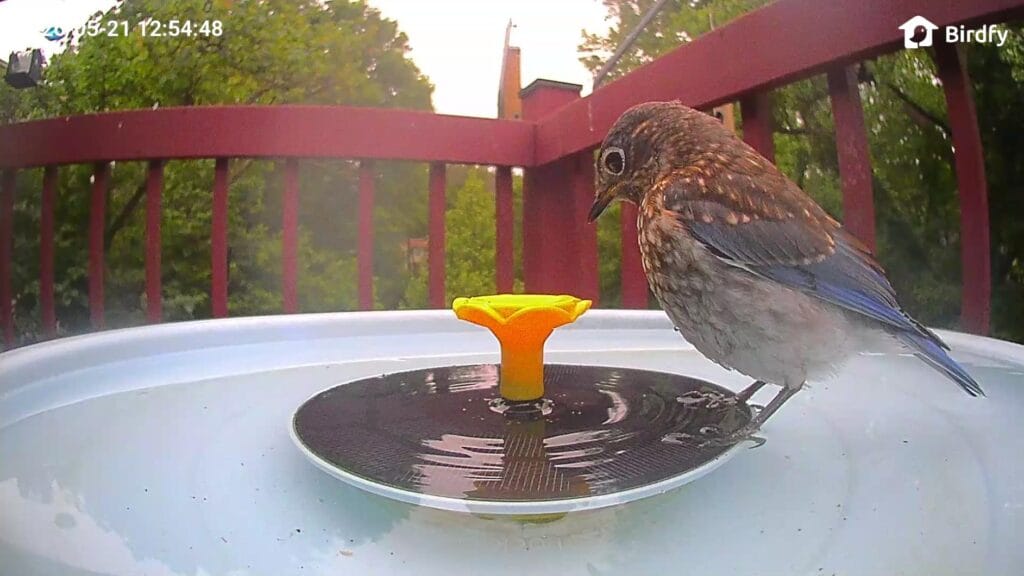
Birds locate water primarily by sight and sound, and moving water produces far more of both than a still basin. The shimmer of agitated water catches a bird’s eye from a distance, while the sound of splashing or trickling carries further than silence ever could. Ornithology resources describe this as a signal of freshness and safety, the same cue birds rely on when finding a stream or puddle in the wild.
Species that rarely visit seed feeders, including robins, waxwings, thrushes, and many flycatchers, will still use a water source. Moving water also keeps the basin cleaner between cleanings, since circulation slows the algae and bacteria growth that builds up in standing water. As a side benefit, agitated water disrupts the still surface mosquitoes need to lay eggs, so a fountain does double duty as basic pest control.
How to Keep Your Solar Fountain Running Longer
Wipe the solar panel with a damp cloth every couple of weeks. Dust and pollen buildup cuts charging efficiency by a meaningful margin, and a clean panel is the single easiest way to keep output consistent. Clean the pump filter on the same schedule, since debris here causes most slowdowns.
Keep the basin topped up above the pump’s minimum depth requirement at all times, both to protect the motor and because birds simply won’t use a bath that’s gone dry. When sustained freezing temperatures are forecast, below about 28°F (-2°C) for several nights running, remove the pump and store it indoors rather than risk ice damage to its internal components. Never add salt or antifreeze to keep water from freezing. Both are toxic to birds.
FAQs
Does a solar bird bath fountain work in shade?
A unit with an integrated panel struggles in shade, since the panel and the water sit in the same spot. A separated design, where the panel connects to the pump by a cable, solves this by letting you place the panel in full sun while the basin sits in shade.
How long does the battery last on a solar bird bath fountain?
Most battery-backed units in this category run for 2 to 6 hours after dark, depending on battery capacity and how much sun the panel captured that day. None are built to run all night on battery alone.
Will a solar bird bath fountain survive winter?
The basin can survive outdoors year-round if it’s made from frost-resistant material. The pump itself generally can’t prevent the water from freezing once temperatures stay below freezing for an extended stretch, so most owners remove the pump for the coldest weeks and reinstall it once temperatures recover.
Is a solar bird bath fountain strong enough for a large basin?
A higher-wattage pump, in the 5W to 6.5W range, handles a larger basin better than a low-wattage unit. For anything bigger than a standard backyard bird bath, check the manufacturer’s recommended basin size before buying.
Summary
This guide breaks down how to choose a solar powered bird bath fountain by wattage, battery backup, and material, instead of fabricated testing claims. It covers six top picks for different needs, from an all-in-one combo set to a battery-backed budget pump and a frost-resistant ceramic model for cold climates. Informational sections explain how these fountains work, why moving water attracts more bird species, and how to maintain a unit through changing seasons. All specs and prices come from manufacturer listings and verified buyer feedback.