Table of Contents
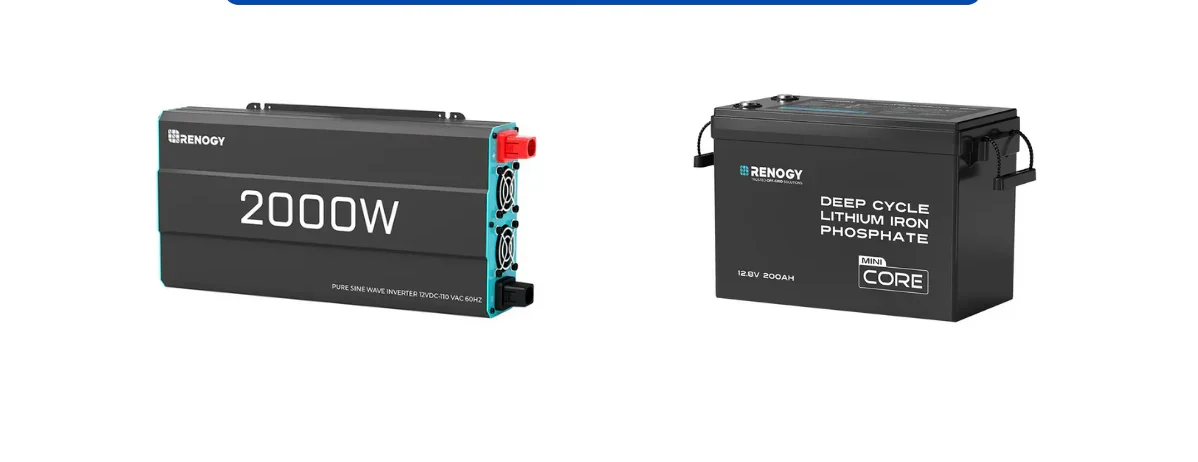
Run a 2000W inverter off a 12V 200Ah battery at full blast, and you’ll get less time than most people expect. Here’s the exact math behind how long will a 12V 200Ah battery last with a 2000W inverter, no inflated numbers, no guesswork.
QUICK ANSWER
Lead-acid: about 30 minutes. Lithium: close to an hour. Those are the numbers at full 2000W load, once you factor in depth of discharge and the heat an inverter burns off during conversion. Drop the load, and the picture changes fast. At 500W, you’re looking at hours, not minutes. The 2,400 watt-hours printed on a 200Ah battery’s spec sheet is a ceiling, not a promise.
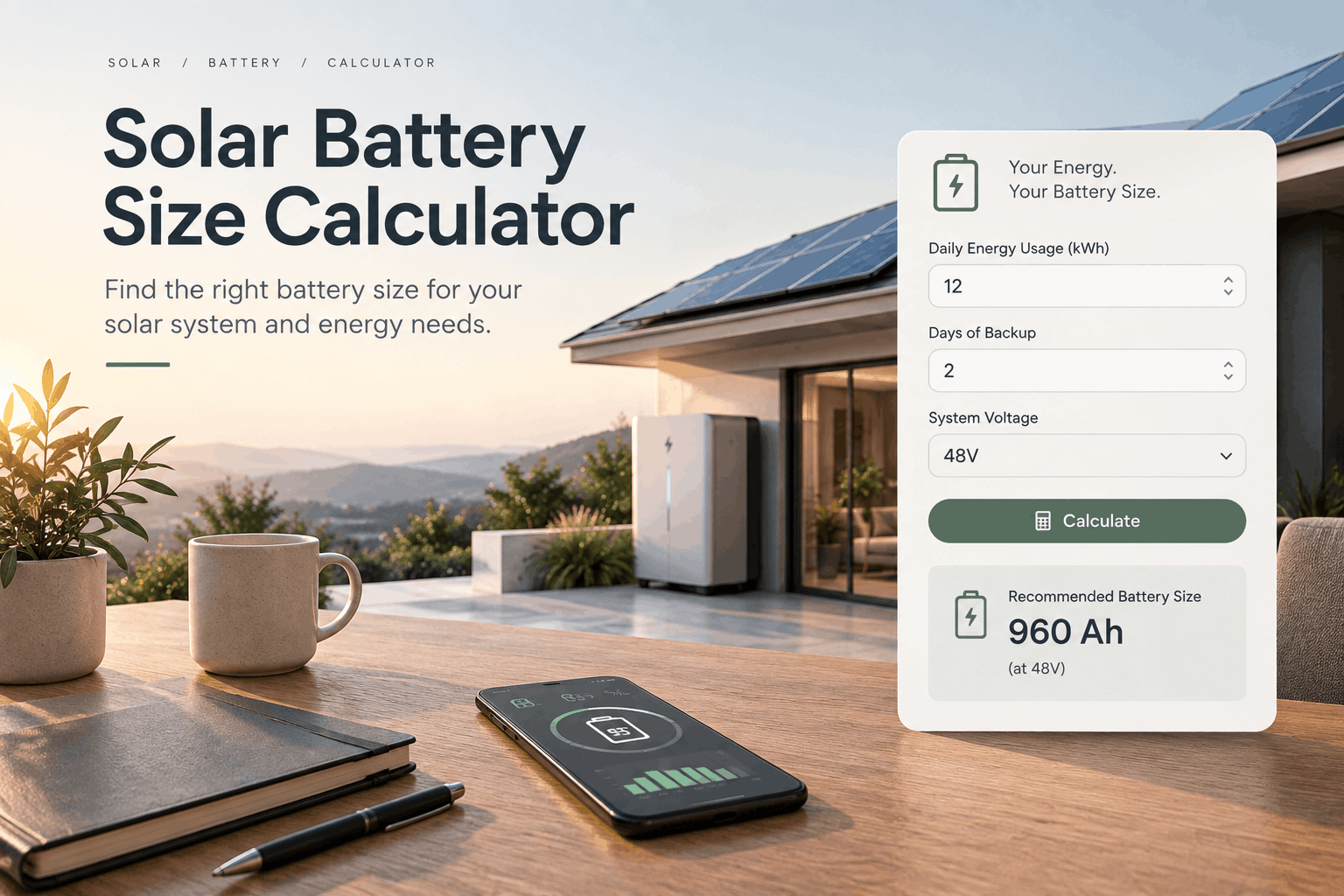
12V 200AH + 2000W INVERTER RUNTIME CALCULATOR
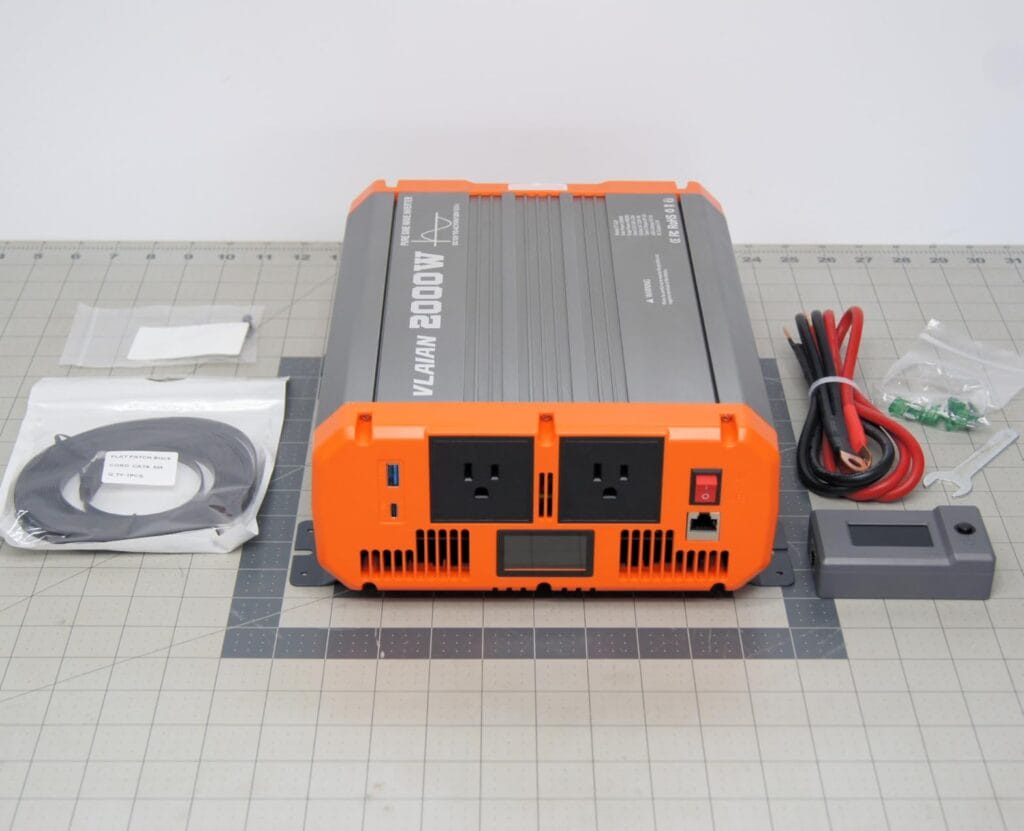
Every setup drifts a little from the textbook numbers. An older battery, a hot garage, a cheaper inverter, each shaves a bit off runtime. Punch your own battery capacity, voltage, and inverter load into the calculator below for an estimate built on your actual setup, not an average one.
THE BASICS YOU NEED FIRST
What Amp-Hours, Volts, and Watt-Hours Actually Mean
Amp-hours measure current over time. Volts measure the push behind that current. Multiply them, and you land on watt-hours, the real energy total. A 12V 200Ah battery works out to 2,400Wh (200 x 12). Picture a water tank: amp-hours are the tank size, volts are the pressure, and watt-hours are how much water actually comes out the other end.
Why 12V Matters for This Specific Setup
12V won. Not because it’s the most efficient option on paper, but because it’s cheap, simple to wire, and easy to find parts for. RVs, small solar setups, and backup kits default to it. Step up to 24V or 48V and you move more power through thinner cable, useful for bigger systems, overkill for a single 200Ah battery like this one.
How Load (Watts) Relates to Runtime
More watts, less time. A 2000W inverter running flat out empties a battery four times faster than the same inverter set to 500W. It’s an inverse relationship, plain and simple.
200AH VS 2000AH: DON’T CONFUSE THESE
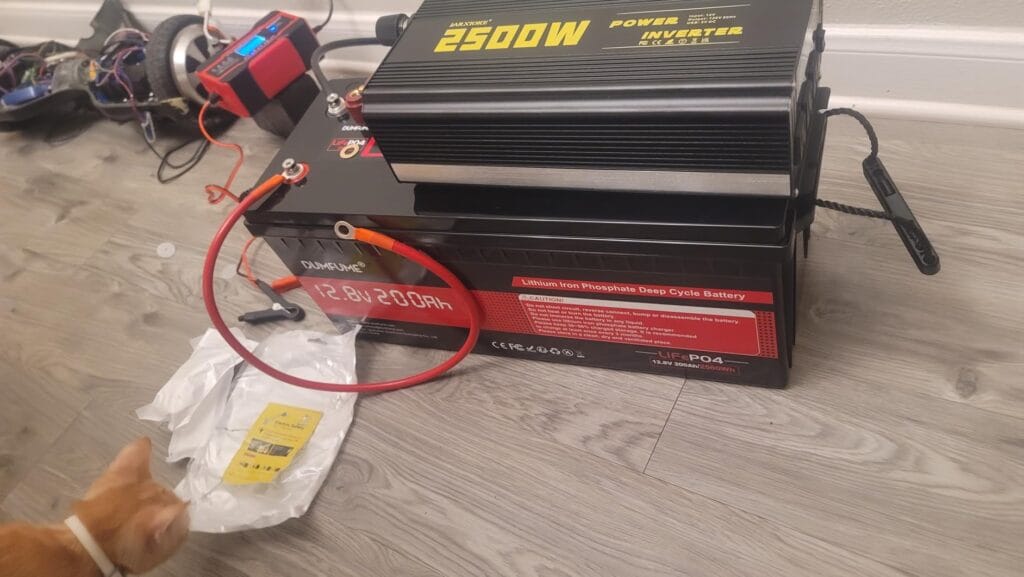
One extra zero changes everything. A 200Ah battery is a single unit, the kind sitting in an RV, a car, or a small solar setup. A 2000Ah bank is ten of those, wired together for whole-home backup or serious off-grid living. Searching “2000Ah battery” while picturing a small portable setup usually means you actually want the 200Ah battery covered here.
HOW TO CALCULATE YOUR RUNTIME, STEP BY STEP
Step 1: Find Total Battery Energy (Wh)
Amp-hours times voltage. A 12V 200Ah battery gives you 2,400Wh on paper, the full tank before anything gets subtracted.
Step 2: Apply Usable Capacity (Depth of Discharge)
Not all of it is usable. Push a battery to zero often enough, and lead-acid loses lifespan fast, sometimes damage outright. The safe zone sits around 50% depth of discharge for lead-acid, and 80 to 100% for lithium (LiFePO4). Run the math: 50% of 2,400Wh leaves 1,200Wh for lead-acid. 90% leaves 2,160Wh for lithium.
Step 3: Factor in Inverter Efficiency
Inverters lose energy converting DC to AC, usually 10 to 15% of it, gone as heat. Multiply the usable energy by roughly 0.85. Lead-acid drops to about 1,020Wh. Lithium drops to about 1,836Wh.
Step 4: Divide by Your Real Load
Now divide by the watts you’re actually pulling. At full 2000W, lead-acid clocks in around 30 minutes, lithium around 55. Pull the load back to 500W instead, and lead-acid stretches past 2 hours while lithium creeps toward 3 hours 40 minutes.
Why Naive Calculators Get This Wrong
A lot of calculators online skip depth of discharge and inverter losses completely. Divide 2,400Wh by 2000W, and you get a tidy 1.2 hours. Real-world losses cut it closer to 30 minutes. The gap between those two numbers is the difference between math built for a spreadsheet and math built for a battery that actually has to perform.
WHAT AFFECTS RUNTIME THE MOST
Depth of Discharge & Battery Chemistry
Chemistry decides how deep you’re allowed to go. Lithium tolerates near-full discharge without losing capacity down the road. Lead-acid does not forgive the same treatment, punishing repeated deep cycles with a shorter lifespan.
Inverter Efficiency Losses
A cheap inverter wastes more power as heat than a good one does. Pure sine wave units typically run in the high 80s to low 90s percent efficient. Modified sine wave units often fall short, shaving a few extra minutes off runtime before the load even enters the equation.
Size and Type of Load
Not every 2000W looks the same in practice. An air conditioner or power tool pulls a heavy, constant draw. A laptop charger or a string of LED lights barely registers by comparison, and the runtime difference between the two is enormous.
REAL-WORLD RUNTIME EXAMPLES
Numbers land differently depending on what’s actually plugged in. Here’s the same battery, three different loads:
| Load | Lead-Acid Runtime | Lithium Runtime | Typical Use |
|---|---|---|---|
| ~100W | ~10 hours | ~18 hours | LED lighting, laptop charging |
| ~400W | ~2.5 hours | ~4.5 hours | Fridge, TV, small devices |
| ~2000W | ~30 minutes | ~55 minutes | Power tools, AC, space heater |
Light Loads (Electronics, Lighting)
Nothing dramatic happens here. LED lighting, laptop chargers, and small electronics barely dent a 200Ah battery, which is why this is the load level most emergency kits are actually built around.
Medium Loads (Fridge, TV, RV Setup)
This is the RV sweet spot: a fridge humming along, a TV running in the evening, a couple of phones charging. It’s enough draw to matter, but not enough to worry about.
Heavy Loads (Near 2000W: Power Tools, Appliances)
Run something in the neighborhood of 2000W, like a power tool, a space heater, or a full-size air conditioner, and the battery empties fast. Nothing at this wattage runs long on a single 200Ah battery, regardless of chemistry.
What These Examples Tell You About Your Own Setup
Add up your actual load before you buy anything. A setup built around 100W behaves nothing like one built around 2000W, and the battery doesn’t care which one you assumed you’d be running.
MATCHING RUNTIME TO YOUR USE CASE
Backup Power for Emergencies
Nobody runs everything during an outage. Lights, a router, a fan, a phone charger, that’s the realistic list, and a 200Ah battery covers all of it comfortably as long as the total stays well under 2000W.
Off-Grid or Solar Systems
Solar changes the math entirely. Pair the battery with panels, and it stops being your only source of power, becoming a buffer that recharges every day instead of a fixed budget you’re spending down.
RV / Mobile Power
Most RV trips run a handful of small appliances, not one big one. A 200Ah battery handles a weekend like that without complaint. Switch on the AC for an afternoon, though, and the same battery taps out inside an hour.
Which Scenario Fits You
Add up your real, combined wattage first. Emergency backup, off-grid living, and RV trips ask completely different things from the same battery, and matching the setup to the actual use case matters more than the battery size itself.
SCALING YOUR SETUP: BATTERIES AND INVERTER SIZING
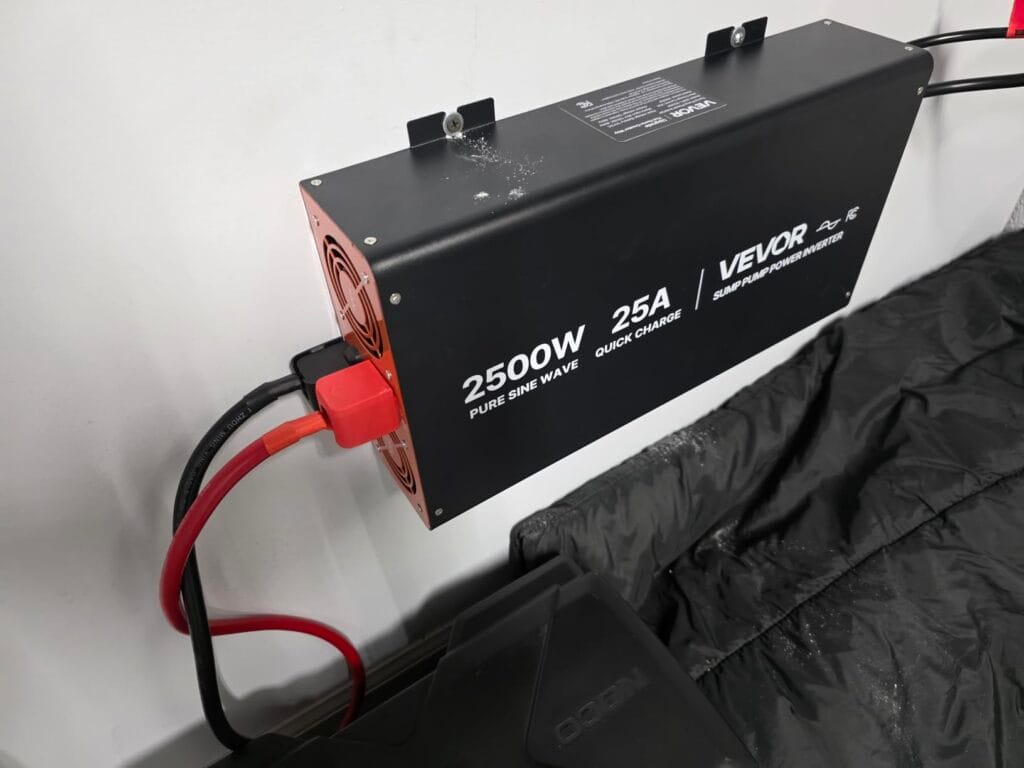
How Many 200Ah Batteries Do You Need for a 2000W Inverter?
One battery buys you minutes at 2000W. Two, wired in parallel, roughly double the runtime. Three or four start looking like the whole-home backup builds people actually want when they’re running a 2000W load for real stretches of time.
Choosing the Right Inverter Size for a 200Ah Battery
A 2000W inverter is built for short, heavy bursts, not all-day use, on a single 200Ah battery. If your daily use leans toward lighter, steady loads instead, a smaller inverter, 1000W or under, gets a lot more mileage out of the same battery.
HOW TO GET MORE RUNTIME FROM THIS SETUP
Add a second battery. Switch to lithium if lead-acid is what’s currently installed. Cut the number of devices running at once. Or pair the system with solar, so the battery starts each day full instead of picking up where it left off.
FAQs
How long will a 200Ah battery last with a 2000W inverter?
About 30 minutes for lead-acid, close to an hour for lithium, at full load.
How many hours does a 200Ah battery last on average?
Depends entirely on the load. Light use stretches past 10 hours. A full 2000W load cuts it to under an hour.
What’s the difference between a 200Ah and a 2000Ah battery?
A 200Ah battery is one unit. A 2000Ah setup is a bank of several batteries wired together for much larger power needs.
Does a lithium 200Ah battery last longer than lead-acid at 2000W?
Yes, close to double, since lithium tolerates a much deeper discharge safely.
Will a 200Ah battery run a refrigerator? For how long?
Yes, for several hours, longer with lithium than lead-acid.
Will a 200Ah battery run an air conditioner?
For a short stretch, yes. Most ACs pull enough wattage to drain a 200Ah battery inside an hour.
How many 200Ah batteries do I need to run a 2000W inverter all day?
Several, wired in parallel, plus solar to recharge them during the day. One battery alone isn’t built for a load like that running all day.
Does a smaller inverter get you more runtime from the same battery?
Yes. Match the inverter size to your actual load, and the same battery stretches noticeably further.
Summary
This guide breaks down exactly how long a 12V 200Ah battery lasts with a 2000W inverter, using real depth-of-discharge and inverter efficiency numbers instead of rough guesses. It covers the full calculation method, lead-acid versus lithium runtime, a real-world runtime table across light, medium, and heavy loads, and how many batteries you’d need to scale up. A built-in calculator lets readers plug in their own numbers, and the FAQ answers every common version of this question in one plac