Table of Contents
You see solar lights everywhere now. Walk down any street after dark. Little glowing dots line the driveways. Strings of lights hang on fences. Bright floods light up garages.
But most people buy the wrong ones.
They grab the cheapest box from the store. Then they wonder why the light dies after two hours. Or why it stays dim all night.
Here is the truth. Solar lights come in four types. Each type does one job well. Mix them up and you waste money.
Let me show you the difference.
Path Lights
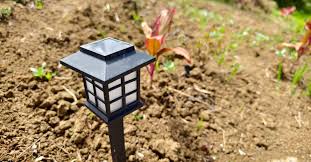
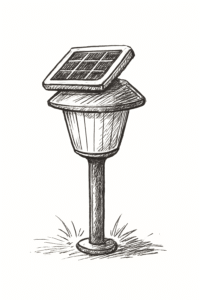
These are the short ones on stakes. You push them into the dirt next to your walkway. A small solar panel sits on top. During the day, the panel soaks up sun. At night, a tiny bulb glows.
What they do well:
- Mark edges so you do not trip
- Look pretty along garden beds
- Run for 6 to 8 hours on a full charge
What they do poorly:
- Light up large spaces
- Scare away intruders
- Work under thick trees
A set of four costs 20to60. Spend closer to $60. Cheap ones use non replaceable batteries. Once the battery dies, the whole light becomes trash. That takes about one year.
I learned this the hard way. Bought a $15 set from a discount store. Six months later, three of them stopped working. Opened the bottom. No battery door. Just sealed plastic. Straight to the landfill.
Look for lights with a screw open battery compartment. Replace the batteries every two years. Your lights will last a decade.
Motion Sensor Lights
These stay dark most of the night. Then something moves. A person walks by. A car pulls in. A raccoon sniffs around. The light explodes on. Full brightness. Twenty to sixty seconds later, it shuts off again.
Best spots for these:
- Front door
- Back door
- Side gate
- Garage entrance
Motion lights save battery because they are not running constantly. One sunny day charges them for three to five nights. Depends on how many times something triggers them.
Brightness runs from 200 to 800 lumens. A hundred lumens equals an old flashlight. So 800 lumens is serious light. It will blind you for a second if you look directly at it.
Price runs 25to90 per light. The 90oneshavewiderdetection.Theyseemovementfrom50feetaway.The25 ones see maybe 20 feet. Pick based on your yard size.
One warning. Place the sensor away from trees. Moving branches will set it off all night. Your battery will die by morning. I aimed mine at a bush once. Big mistake. The wind blew. The light flashed. Woke up to a dead unit.
String Lights
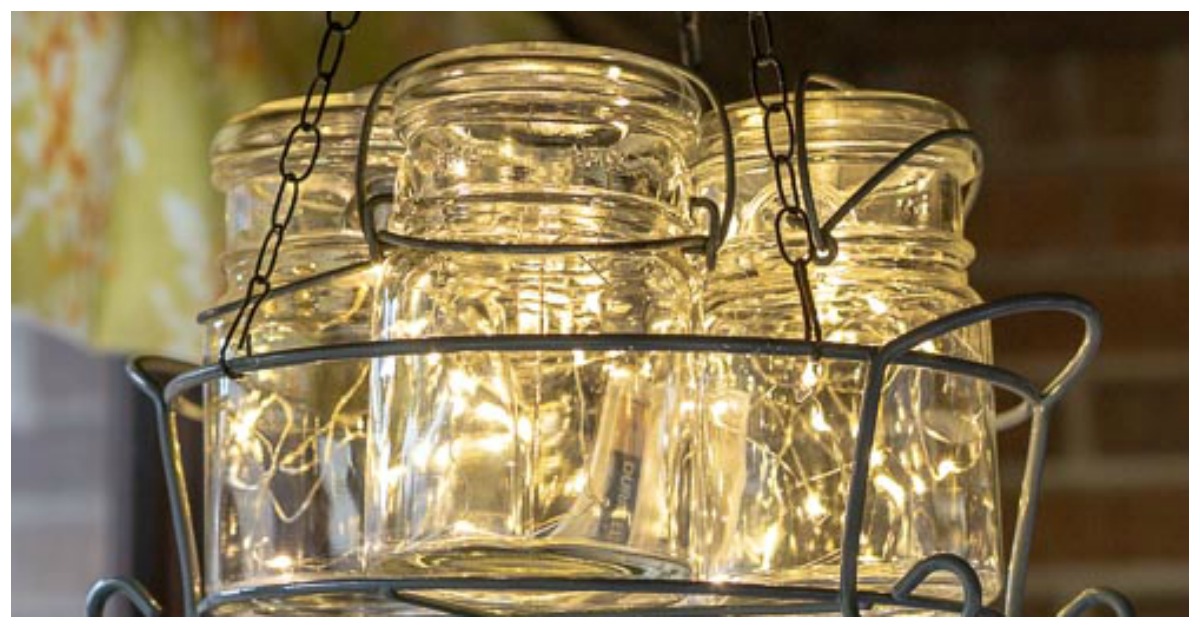
People buy these for parties. Then they leave them up year round. Small bulbs on a wire. A solar panel on a stake connects to one end. Stick the panel in sun. Hang the wire on your fence or patio.
Where people hang them:
- Across patios
- Along fence tops
- Around tree trunks
- Under umbrella edges
These produce very little light. Maybe 5 to 20 lumens per bulb. Enough to see your drink. Not enough to find your keys.
Runtime varies wildly. Cheap sets last 3 to 4 hours. Good sets last 8 to 10 hours. Check the box before buying. Many brands lie. They say “up to 10 hours” but mean on a cloudy day in July. Real world runtime is usually half what the box claims.
Price runs 15to50. Pay attention to waterproof rating. Look for IP44 on the label. That means rain won’t kill them. No rating means they die the first time it sprinkles.
I left a cheap set outside once. No IP rating. First rainstorm came. The control box filled with water. Lights never turned on again.
Floodlights
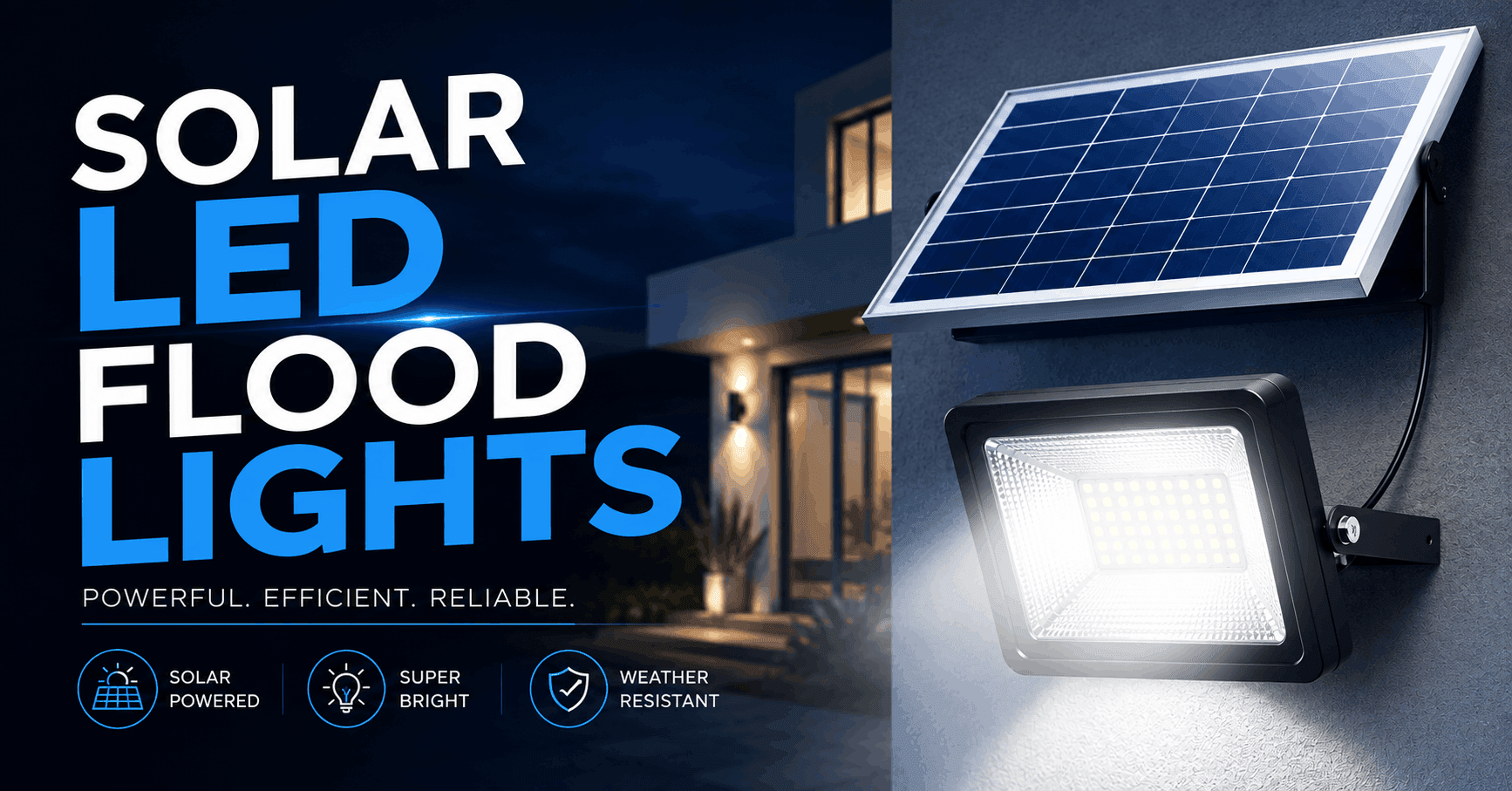
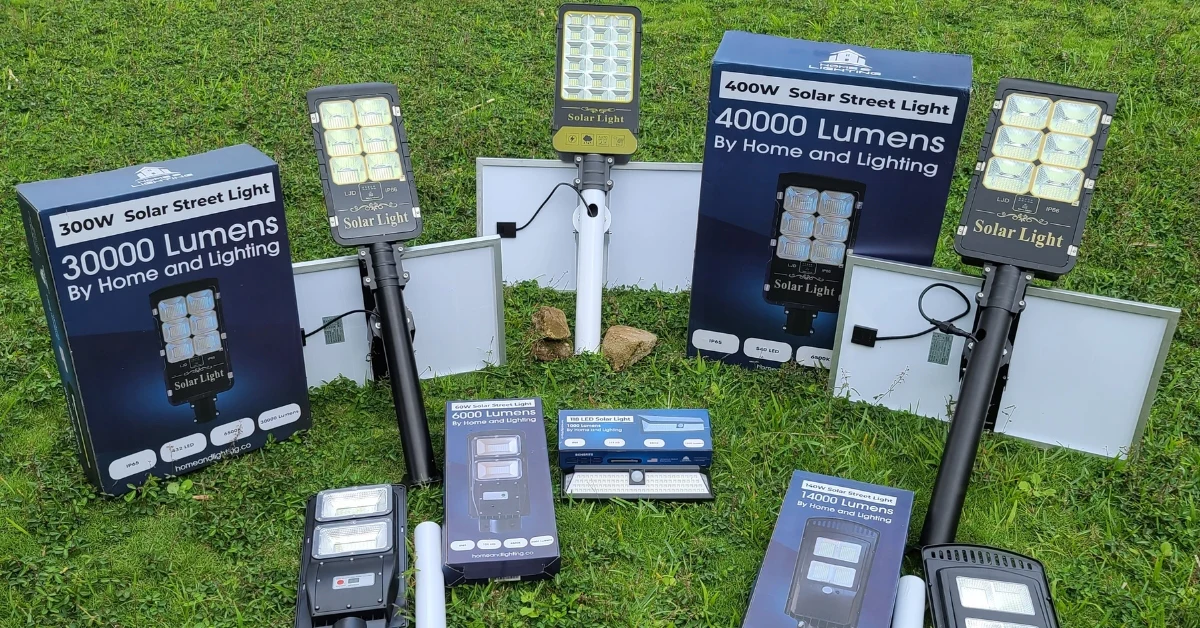
These are the big guns. Wide beam. Bright as a car headlight. They stay on all night from dusk to dawn. No motion sensor. No off time. Just continuous light.
Use them for:
- Large backyards
- Long driveways
- Pool areas
- Barns or sheds
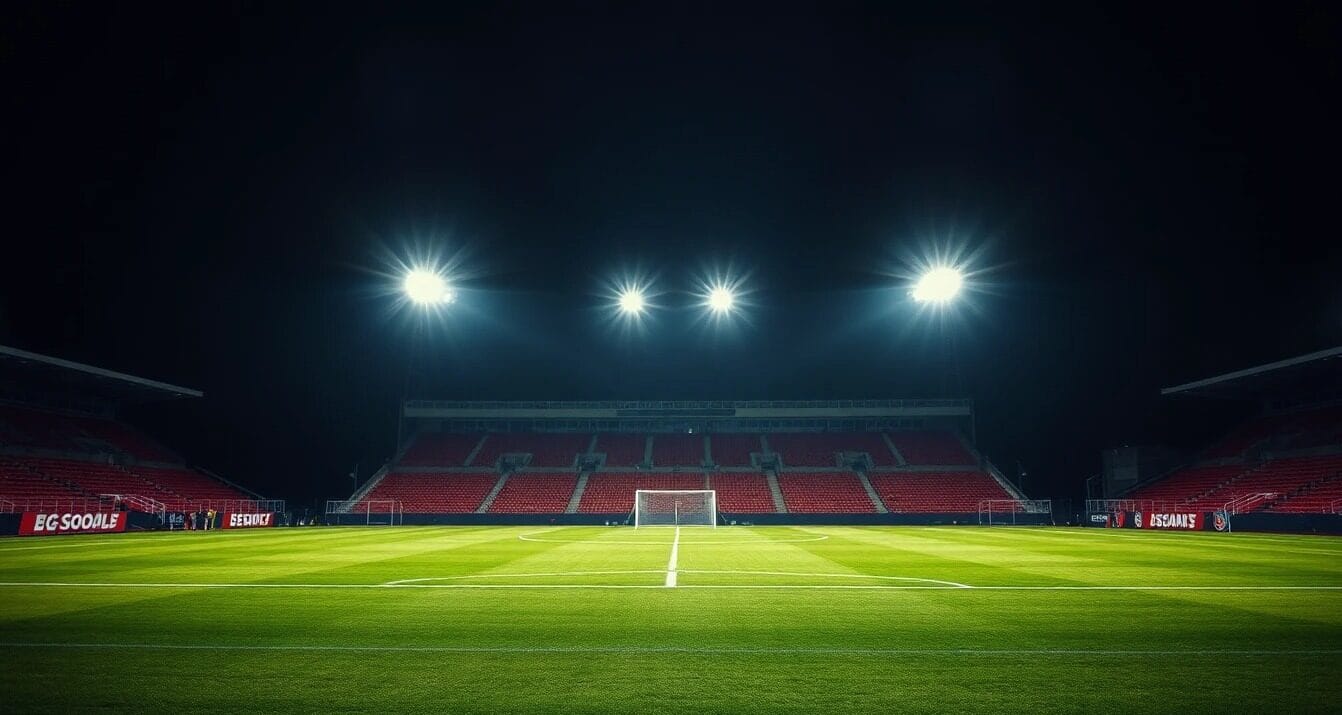
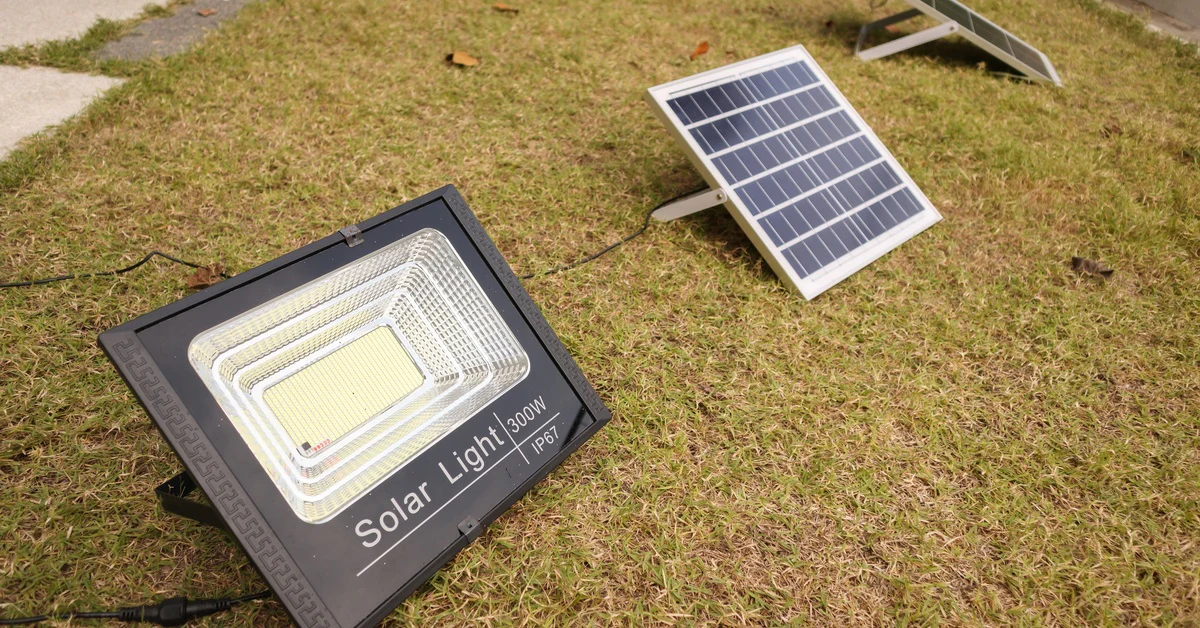
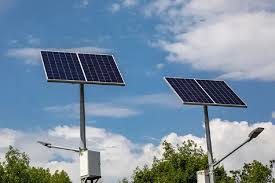
Floodlights need serious hardware. The solar panel is large. Sometimes two feet wide. The battery is heavy. A good floodlight produces 1000 to 2000 lumens. That lights up a whole football end zone.
Installation takes work. You mount the panel on a roof or pole. You mount the light on a wall. A wire connects them. Some models include a remote control to adjust brightness.
Price runs 70to150. Do not buy cheaper ones. They do not exist. If you see a $40 floodlight, run away. The battery will fail in two months. I tested three cheap ones from online sellers. Every single one died before summer ended.
One drawback. Floodlights drain batteries fast. After three cloudy days, they stop working by midnight. Newer 2026 models fix this with dimming sensors. The light runs at 100% for four hours. Then drops to 30% until dawn. That stretches battery life.
Quick Comparison
| Type | Brightness | Runtime | Price |
|---|---|---|---|
| Path lights | 10 to 50 lumens | 6 to 8 hours | 20to60 for 4 |
| Motion sensor | 200 to 800 lumens | Variable | 25to90 each |
| String lights | 5 to 20 lumens per bulb | 4 to 10 hours | 15to50 per set |
| Floodlights | 1000 to 2000 lumens | All night | 70to150 each |
How to Choose
Ask yourself three questions.
First, what do you need? Safety or decoration? Path lights and string lights are decoration. Motion sensors and floodlights are safety.
Second, where is your sun? South facing yards get good sun. North facing get poor sun. No direct sun means no solar lights. You need at least six hours of direct light on the panel.
Third, what is your budget? Thirty dollars buys path lights. Eighty dollars buys one motion sensor. One hundred fifty dollars buys one floodlight.
Mix and match. Put path lights on the walkway. Add a motion sensor at the front door. Hang string lights on the patio. Use a floodlight for the backyard.
Four Mistakes People Make
Mistake one: Putting panels in shade. Even one hour of shade kills battery life. I see this all the time. Someone mounts a panel under a tree. Then complains the light is dim.
Mistake two: Buying the cheapest option. A $20 floodlight does not exist. If a listing shows one, the seller is lying. The battery will die. The panel will crack. You will throw it away.
Mistake three: Forgetting the ON switch. Many solar lights have a tiny switch inside the battery compartment. People never flip it. Then they return the light saying it is broken.
Mistake four: Expecting path lights to act like floodlights. Path lights produce a soft glow. That is their job. Do not buy them to light up your whole yard.
Battery Care
Most solar lights use lithium ion or NiMH batteries. They last two to three years. Replace them when the light runs less than four hours on a full summer day.
Three tips to extend battery life:
- Clean the solar panel once a month. Dust blocks sun. Use a damp cloth. No soap.
- Bring lights inside during freezing weather. Cold kills lithium batteries.
- Replace all batteries at the same time. Do not mix old and new.
Some 2026 models use LiFePO4 batteries. These last five to seven years. They handle cold better. Pay extra for them if you live in a northern state.
FAQs
Q1: Do solar lights work on cloudy days?
Yes but less. On a fully cloudy day, the panel collects 10% to 25% of normal sun. Your lights will run 2 to 4 hours instead of 8.
Q2: How long do they stay on at night?
Path lights give 6 to 8 hours. Floodlights run all night but dim after midnight. String lights give 4 to 10 hours. Motion sensors stay off until something moves.
Q3: Can I leave them outside in winter?
Yes but watch the temperature. Lithium batteries stop working below 14°F (-10°C). Bring them inside if your area gets that cold.
Q4: Do I need to clean solar panels?
Yes. Once a month. A dirty panel loses 50% of its charging power.
Q5: Why do my lights turn off after two hours?
Old battery. Dirty panel. Or you bought a cheap model. Replace the battery first. That fixes most problems.
Q6: Can I replace the battery in any solar light?
No. Cheap models glue the compartment shut. Look for a screw open door before buying.
Q7: How many lumens for a driveway?
Short driveway (20 feet): 400 lumens. Long driveway: 1000+ lumens from a floodlight.
Q8: Do solar lights attract bugs?
Less than old bulbs. LED bulbs run cool. Bugs hate cool light. Yellow tinted bulbs attract the fewest bugs.
Summary
You have four choices for residential solar lighting. Path lights for walkways. Motion sensors for doors. String lights for patios. Floodlights for large yards.
Pick based on your sun, your budget, and your need. Clean the panels. Replace the batteries. Avoid the cheapest options.
Solar lighting works. It saves money. No electrician. No wires. No monthly bill. Just free sun energy.