Table of Contents
First Impressions Happen Before Anyone Opens the Door
A guest pulling into a hotel at night forms an opinion before they park the car. The entrance lighting, the pathway from the car park, the facade of the building itself. If any of those are dim, patchy, or visually uninspiring, the property already has a problem that no amount of good service inside fully fixes.
Hotel exterior lighting is not decorative in the way people sometimes treat it. It is part of the brand. A well-lit facade says the property is well-managed, welcoming, and worth what it charges per night. A dark car park and an unlit entrance sign say the opposite.
Solar exterior lights for hotels solve this problem in a way that traditional wired lighting cannot match on cost or flexibility. No trenching through car parks. No expensive electrical work across large grounds. No ongoing electricity bill for every floodlight and pathway light across the entire property. The lights go where they are needed, they charge during the day, and they handle themselves from the moment the sun goes down.
Why Hotels Are Moving to Solar Exterior Lighting in 2026
The hospitality industry has specific reasons for this shift that go beyond simply saving on electricity.
ESG reporting is now a serious business requirement for hotels operating at any meaningful scale. Environmental performance metrics get scrutinised by investors, booking platforms, and corporate clients booking conference stays. Solar exterior lighting reduces a measurable chunk of a property’s grid energy consumption and feeds directly into sustainability reporting without requiring major operational changes.
Then there is the installation cost difference. Running wired lighting across hotel grounds, through car parks, along garden pathways, and around building perimeters involves trenching, certified electrical work, and serious disruption to the grounds. A solar exterior lighting setup for the same areas involves none of that. The fixtures go in within hours. No pavement gets torn up. The garden stays intact.
The other factor driving adoption in 2026 is simple product improvement. Commercial-grade solar exterior lights are genuinely different from the residential solar lights most people picture. High-lumen output. Industrial IP ratings. Battery systems that hold charge for multiple nights, not just one. Monocrystalline panels with 20 to 22 percent conversion efficiency. These are not garden path lights with a solar panel on top. They are proper commercial fixtures that compete directly with wired alternatives on performance.
The Types of Solar Lights That Work for Hotel Exteriors
A hotel exterior has multiple zones, and each one has different lighting requirements. Getting this right matters because a single type of solar light does not cover every situation.
Solar Facade Uplights and Floodlights
The building itself deserves to be seen at night. Wall washing and uplighting techniques use high-lumen solar floodlights to illuminate the hotel facade, entrance columns, architectural details, and signage. This is what turns a building from invisible at 9pm to genuinely impressive.
For this application, lumen output matters significantly. You need fixtures producing 2,000 lumens or more for effective facade illumination on anything larger than a small guesthouse. Color Rendering Index, or CRI, matters here too. A CRI above 80, ideally above 90, means the colors of your building’s exterior, the stone, the brickwork, the paint, appear accurately under the light rather than looking washed out or discolored. Low-quality LEDs make a beautiful stone facade look grey and flat. High-CRI LEDs show it the way it actually looks.
Solar Bollard Lights for Pathways and Car Parks
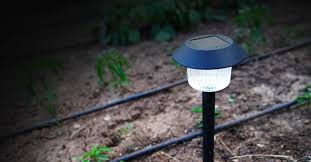
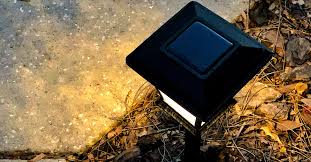
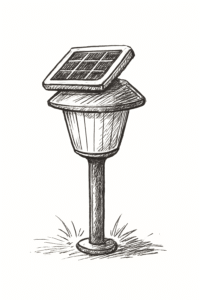
Pathways from car parks to entrances, garden walkways, and perimeter paths need consistent ground-level lighting. Solar bollards are the standard solution for this in commercial hotel settings. They sit at waist height, spread light downward across the path surface, and require zero electrical connection.
In 2026, commercial solar bollards use LiFePO4 lithium batteries rather than older NiMH cells. This matters because LiFePO4 batteries hold capacity through temperature extremes, last significantly longer before degrading, and keep the light running through 3 to 5 consecutive cloudy days without losing performance. For a hotel property in a region with variable weather, this reliability difference is the whole ballgame.
Solar Wall Lights at Entrances and Room Exteriors
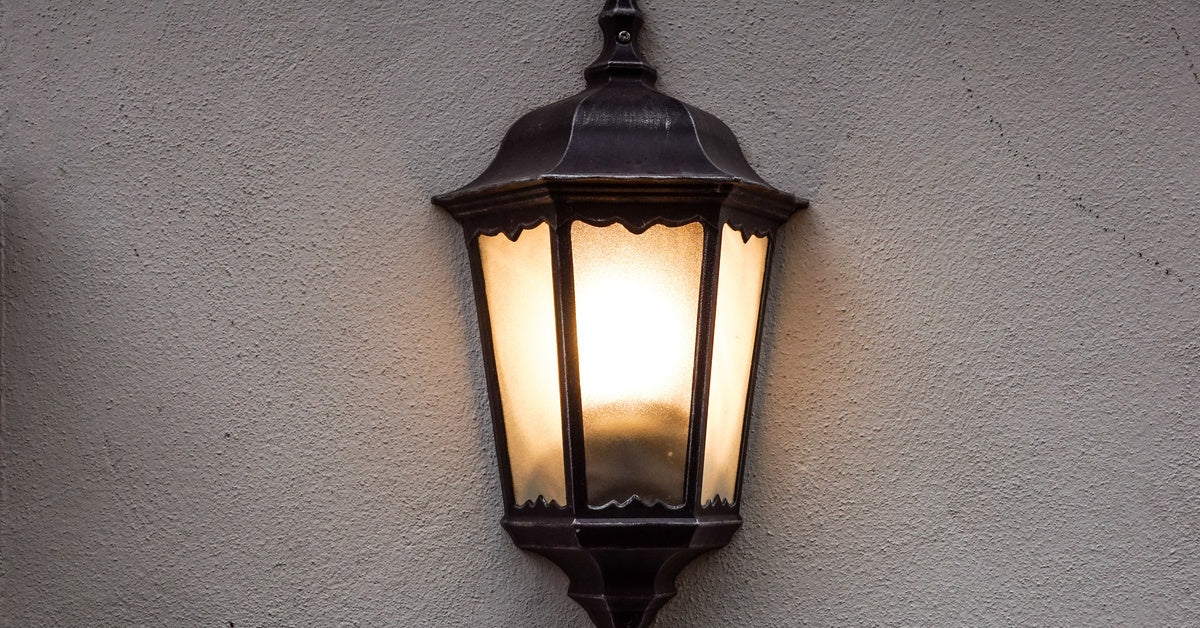
For hotels with exterior room corridors, ground-floor room entrances, or covered walkways between buildings, solar wall lights handle the job cleanly. Mounted at 7 to 8 feet on the wall, they light the immediate zone around doors and corridors without requiring wiring through the building structure.
The design finish matters at a hotel in a way it does not at a residential property. Guests notice whether fixtures look right. Matte black, dark bronze, and architectural grey are the finishes working well across commercial hotel exteriors in 2026. They photograph well, they complement most building materials, and they do not look cheap from 10 feet away the way some residential-grade fixtures do.
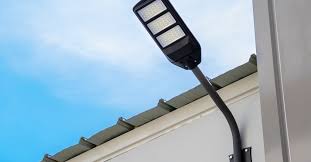
Solar Security Floodlights for Car Parks and Perimeters
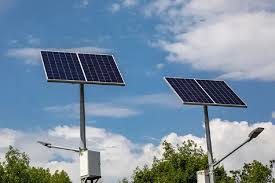
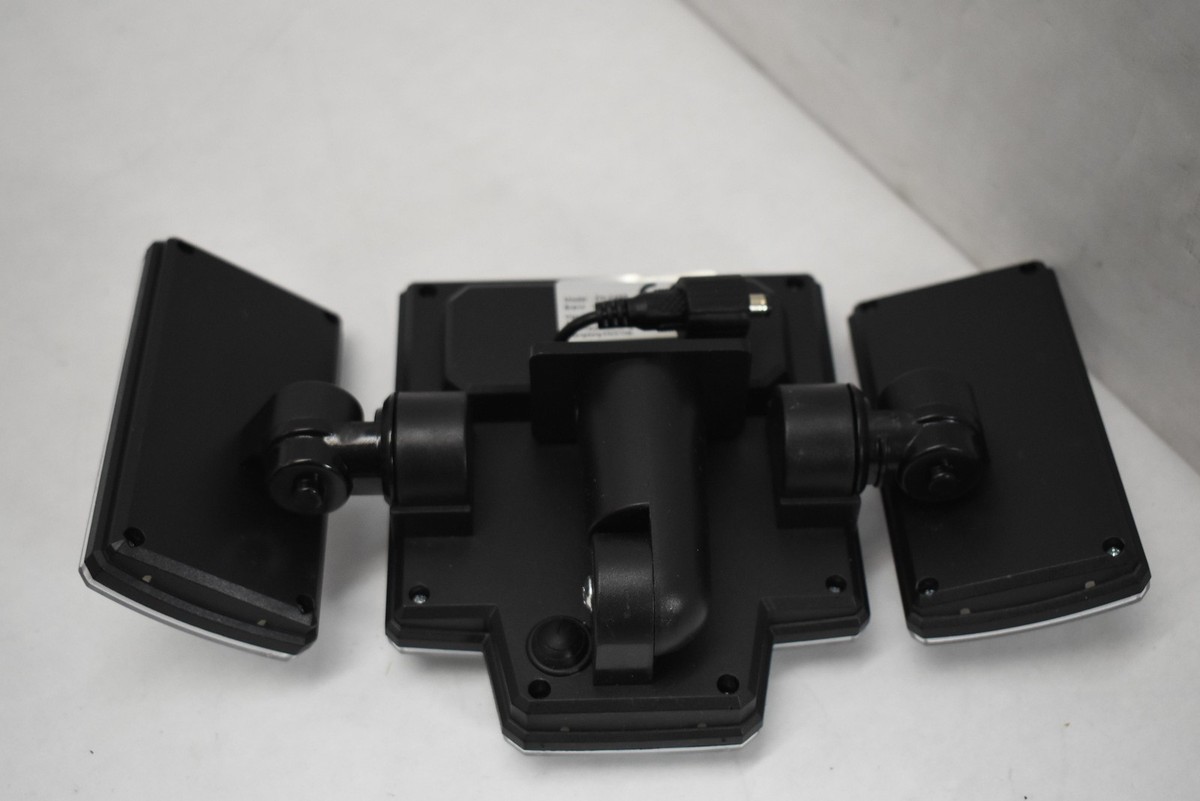
Car park security and perimeter coverage is a genuine liability issue for hotel operators, not just a comfort feature. A poorly lit car park exposes the property to incidents and the complaints that follow. Solar security floodlights on poles or walls throughout a car park provide consistent, high-lumen coverage without the cost of running electrical cables across tarmac.
Motion-activated models make practical sense in car parks because they conserve battery during quiet periods and jump to full brightness when vehicles or people approach. For a car park that sees traffic throughout the night, a combination of permanent low-level ambient light with motion-triggered full brightness is the setup most hotel facilities managers are using in 2026.
The Shade Problem on Hotel Grounds
This is the thing nobody warns hotel property managers about before they invest in solar exterior lighting, and it is the single most common reason installations underperform.
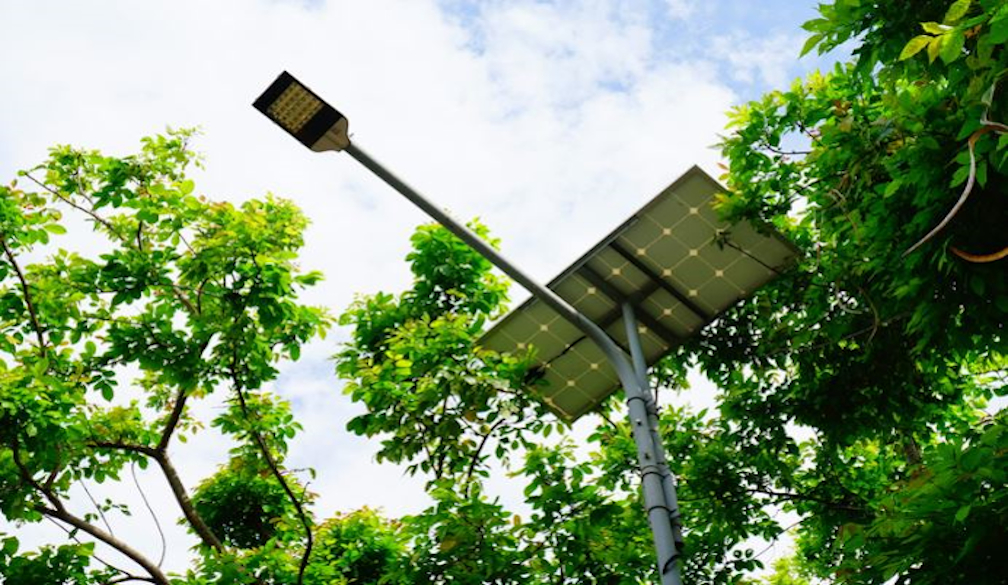
Hotel grounds typically have mature trees, pergolas, covered walkways, and overhangs. These are the things that make a hotel exterior look good during the day. They are also the things that shade solar panels and kill charge performance.
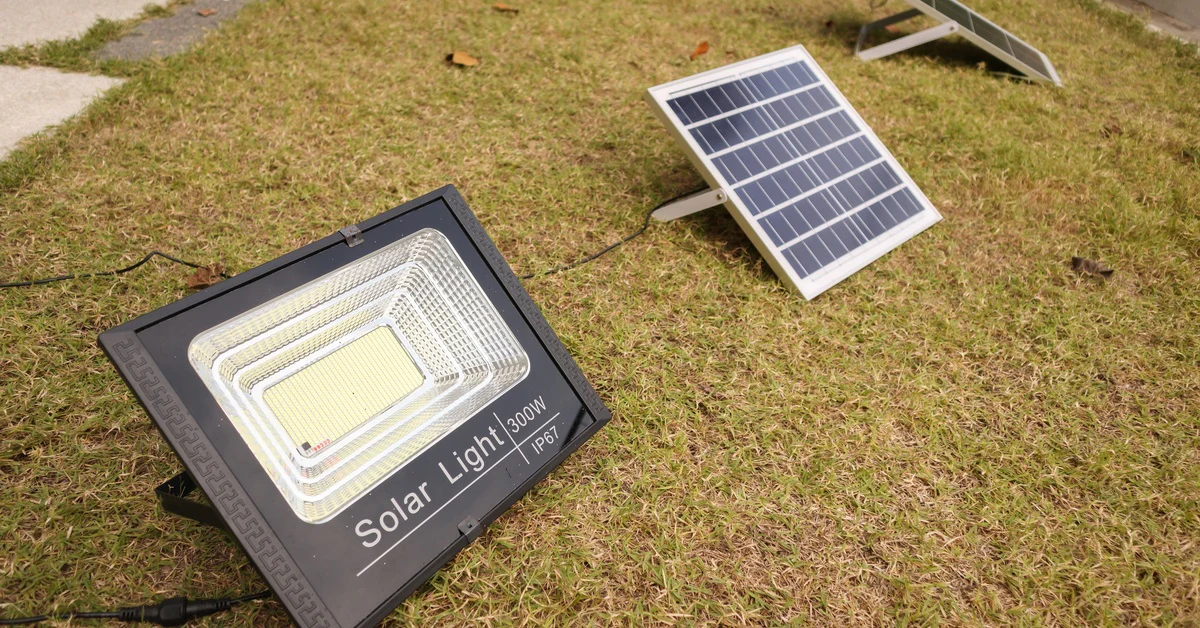
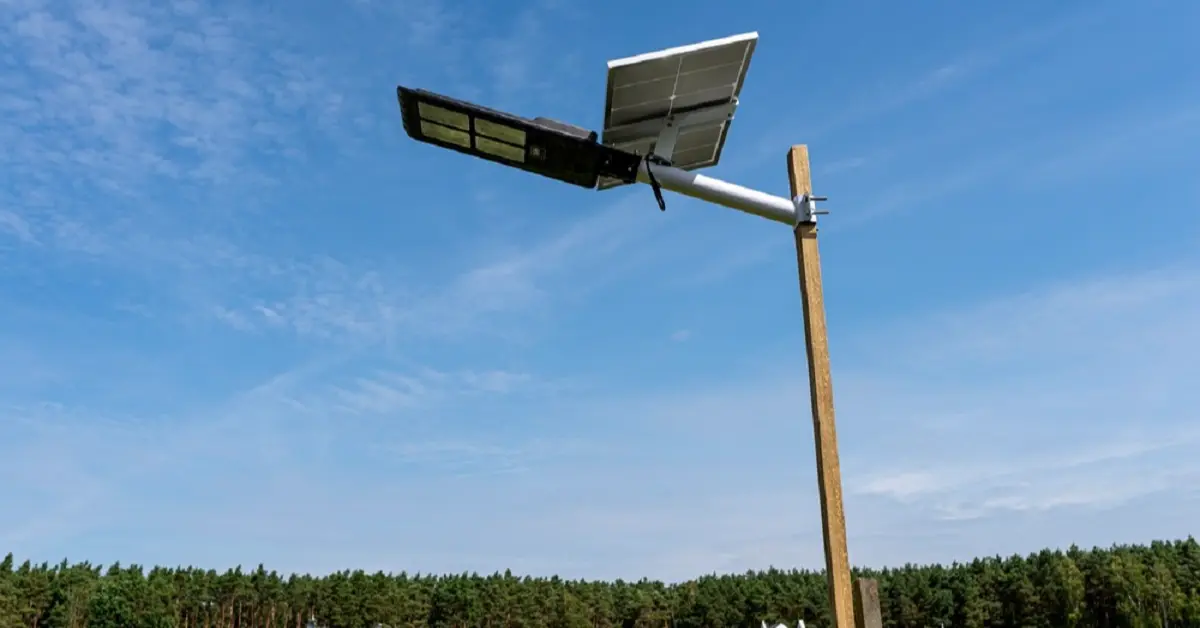
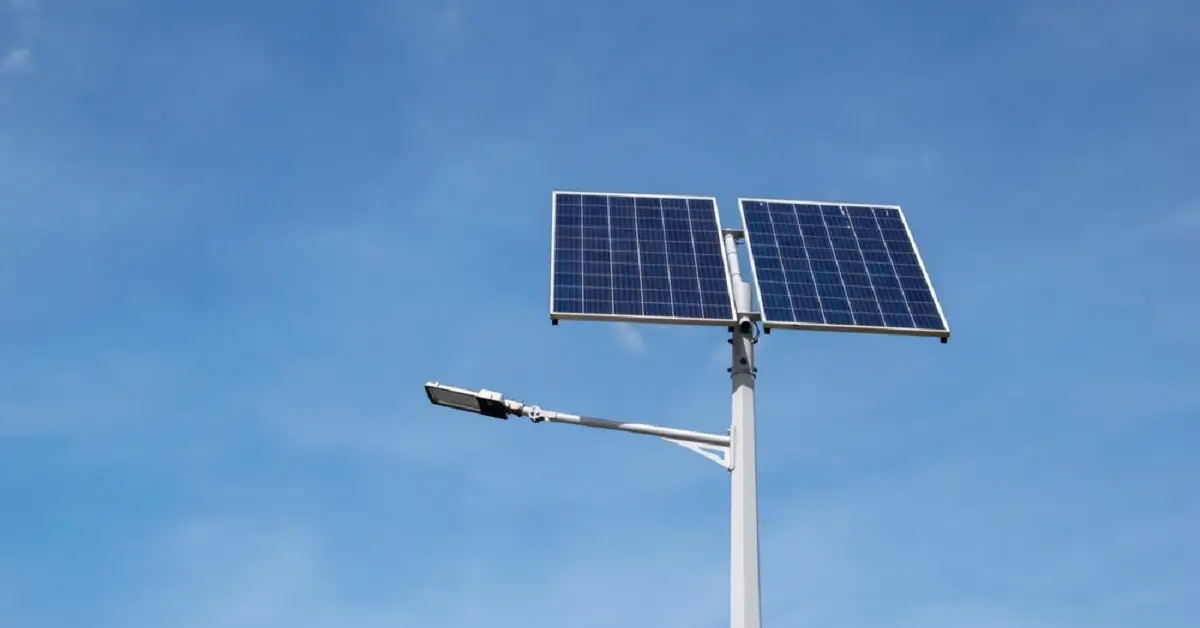
An all-in-one solar light placed under a tree canopy gets a fraction of the sunlight it needs. By 10pm it is dimming. By midnight it is off. The solution is split-design commercial solar fixtures, where the solar panel sits separately from the light head, connected by a cable up to 5 meters long. The panel mounts in the open sun, on a pole above tree cover or in a clear patch of roof. The light fixture goes exactly where the lighting effect needs to happen, even under dense canopy.
This split-panel approach is now standard in quality commercial solar lighting for exactly this reason. Any installer or supplier not discussing this option for a hotel exterior project with mature landscaping is missing something important.
What Specs Actually Matter at Hotel Scale
Residential solar light specs do not translate directly to commercial hotel applications. Here is what matters when specifying solar exterior lights for a hotel property.
- Lumen Output: Facade uplights and car park security need 2,000 lumens and above. Pathway bollards work well between 400 and 800 lumens. Entrance wall lights need 300 to 600 lumens depending on coverage area.
- IP Rating: IP65 is the minimum for any exposed outdoor hotel fixture. IP67 or IP68 for anything in a ground-level position where flooding or standing water is a possibility. Commercial grades frequently spec IP68 across the board for reliability.
- Battery Type: LiFePO4 over NiMH or standard lithium-ion for commercial applications. Longer lifespan, better temperature tolerance, more consistent output toward the end of charge.
- CRI: Above 80 for all visible lighting on the building exterior and guest areas. Above 90 for facade lighting where color accuracy affects the visual quality of the property.
- Color Temperature: 2700K to 3000K warm white for guest-facing areas, entrances, and garden paths. Warmer tones feel hospitality-appropriate. 4000K neutral white is acceptable for car parks where visibility is the priority over atmosphere.
- Autonomy Days: Commercial solar fixtures for hotels should specify autonomy of at least 3 to 5 days. This means the battery holds enough charge to run the light for 3 to 5 consecutive nights with no solar input at all. For a hotel that cannot have exterior lights failing during a cloudy stretch, this spec is non-negotiable.
Installation Realities for Hotel Properties
Solar exterior lighting for hotels installs faster than wired systems by a significant margin. But a few things affect how smoothly the project goes.
Panel placement needs to be mapped before any fixtures are ordered. Walk the property at midday and identify where unobstructed sun falls. Those are your panel locations. Then work backward to where light is needed and confirm the cable length on split-design fixtures covers the distance.
Pole-mounted solar lights for car parks need ground assessment before installation. Concrete footings are the right approach for permanent commercial installations, not ground stakes designed for garden use. A fixture that wobbles on a stake in a hotel car park looks wrong and fails faster.
Maintenance schedules need to be built into the property management plan. Commercial solar lights are low-maintenance but not zero-maintenance. Panel cleaning twice a year. Battery capacity checks annually. Sensor testing at the start of each season. These tasks take minimal time and keep the system performing at full specification for years.
What the ROI Actually Looks Like
Hotel operators who make this comparison properly consistently find the same thing. The upfront cost of commercial solar exterior lighting is higher per fixture than basic wired lighting. The total project cost, including installation labor, electrical work, trenching, and ongoing electricity, runs the other way entirely.
A typical hotel car park wired lighting project involves significant groundwork costs before a single fixture goes up. A solar equivalent for the same car park involves pole installation and fixture mounting. No groundwork. No electrician days. No utility connection fees.
The ongoing electricity saving across a full hotel exterior, including facade lighting, pathway lighting, car park coverage, and perimeter security, adds up to a meaningful annual figure. Across a 5 to 10 year horizon, commercial solar exterior lighting for hotels delivers genuine financial return on top of the sustainability and branding benefits that come with it.
Summary
A hotel’s exterior is the first thing a guest sees and the last thing they remember. Solar exterior lights for hotels solve two problems at once. They cut the electricity and installation costs that traditional wired lighting brings, and they make the property look genuinely impressive at night without a single trench being dug. This guide covers what types work for commercial hotel exteriors, what specs matter at this scale, and the mistakes that cost hotel owners serious money.