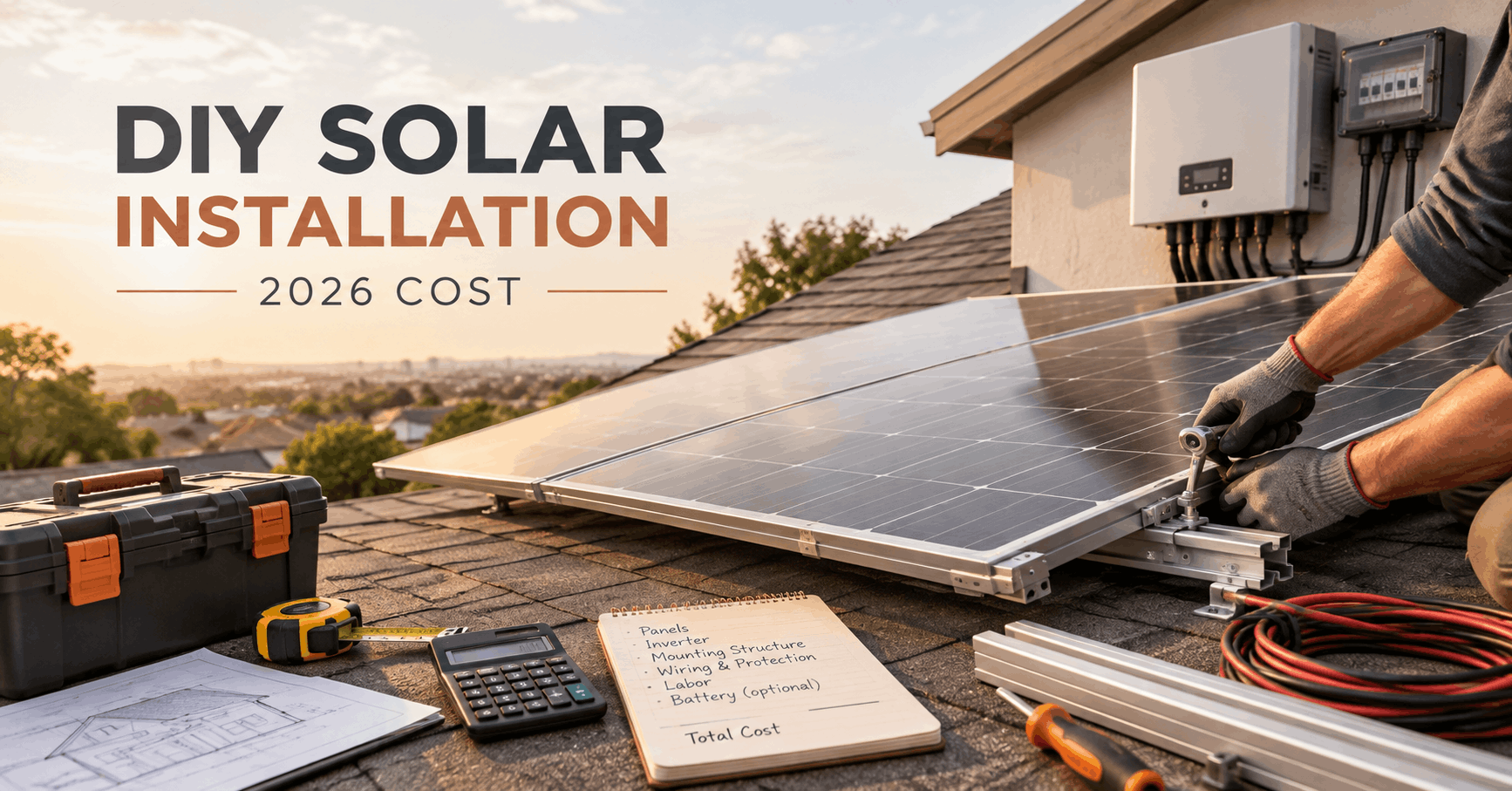
Quick Answer: DIY solar panel installation typically costs $3,000 to $9,000 for a grid-tied system without a battery, about 60–70% less than professional installation, which runs $2.30 to $3.60 per watt. Adding battery backup can push the total to $12,000 or more.
Table of Contents
Most people think solar panels are the expensive part of going solar. They’re not even close.
The panels themselves usually make up somewhere between 12% and 30% of what a professional installer charges you. The rest goes to inverters, wiring, permits, labor, and company overhead. That single fact is the whole reason DIY solar exists as an option — and it’s why a DIY install can cost a fraction of a professional one.
Here’s what it actually costs to do it yourself in 2026, what changed with the federal tax credit, and where people quietly overspend.
Key Takeaways
- A DIY grid-tied solar system without a battery typically runs $3,000 to $9,000 for a common residential size, before any state or local incentives.
- Add a battery, and total cost can climb to $12,000 or more, since batteries alone often cost $2,000 to $12,000.
- Professional installation for the same system usually costs $2.30 to $3.60 per watt all-in — roughly two to three times the equipment-only cost of a DIY kit.
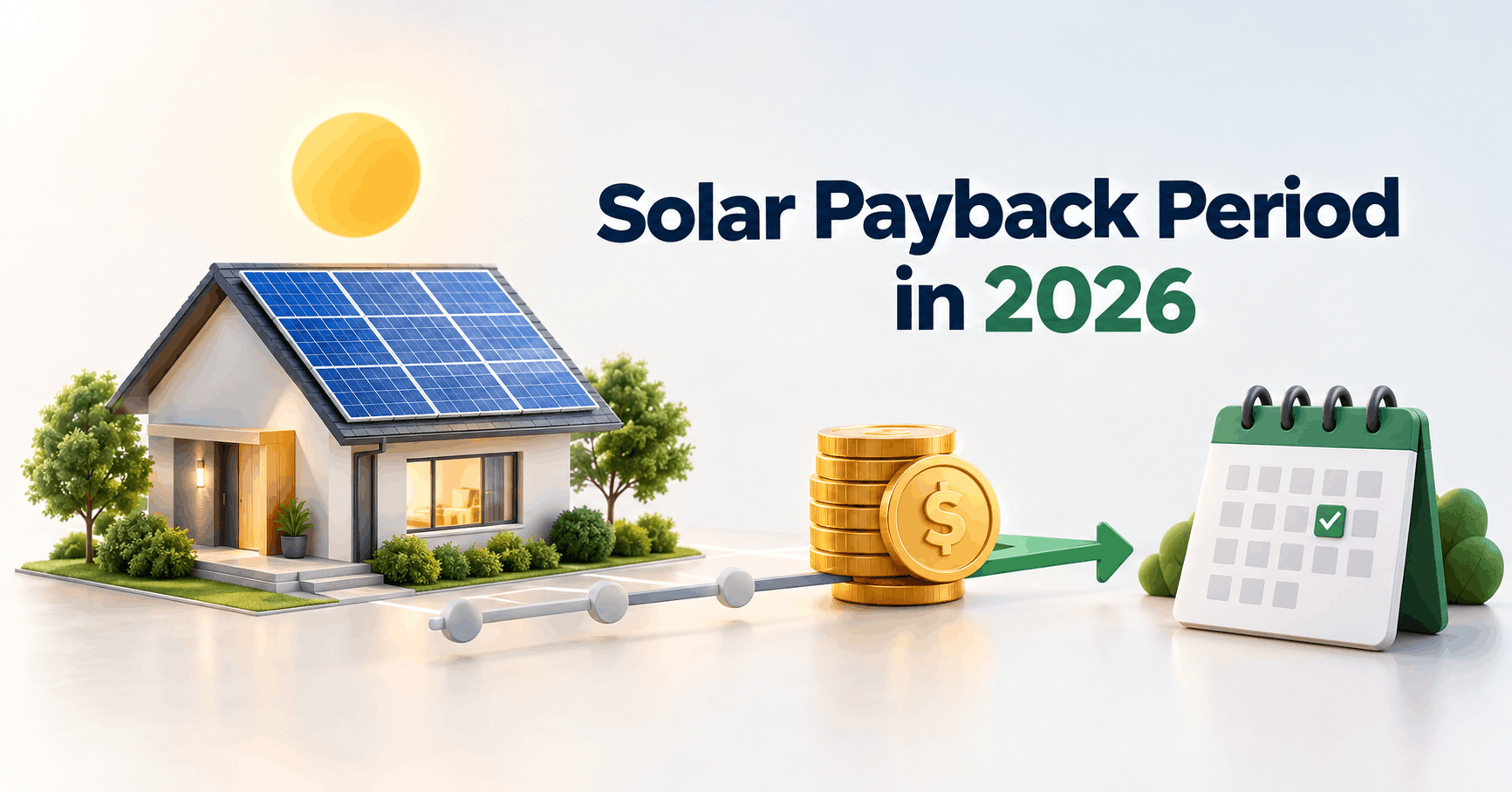
- The federal 30% residential solar tax credit expired for any system placed in service after December 31, 2025. If your panels aren’t already up, that credit is gone.
- State, utility, and local incentives can still apply, but you have to check your own state, because the rules aren’t consistent.
How Much Does DIY Solar Cost on Average?
Short answer: it depends almost entirely on two things, how big your system is, and whether you’re adding battery storage.
For a straightforward grid-tied system with no battery, most DIY builders land somewhere in the $3,000 to $9,000 range for equipment and materials. That number covers panels, an inverter, mounting hardware, wiring, and basic permit fees. It does not cover a professional electrician if you decide to hire one for the final hookup, and it doesn’t cover any roof repairs you might need first.
| System size | DIY cost (no battery) | Professional cost | Typical savings |
|---|---|---|---|
| 4 kW | $2,500 – $4,500 | $9,200 – $14,400 | 60–70% |
| 6 kW | $3,800 – $6,800 | $13,800 – $21,600 | 60–70% |
| 8 kW | $5,000 – $9,000 | $18,400 – $28,800 | 60–70% |
| 10 kW | $6,200 – $11,000 | $23,000 – $36,000 | 60–70% |
These are national ranges pulled from current solar equipment pricing and government-modeled installation benchmarks, not a single quote, your real number depends on your state, your roof, and which brand of panel you buy.
One thing worth saying plainly: a “DIY solar kit” price you see advertised almost never includes permit fees, and it definitely doesn’t include your time. Budget for both.
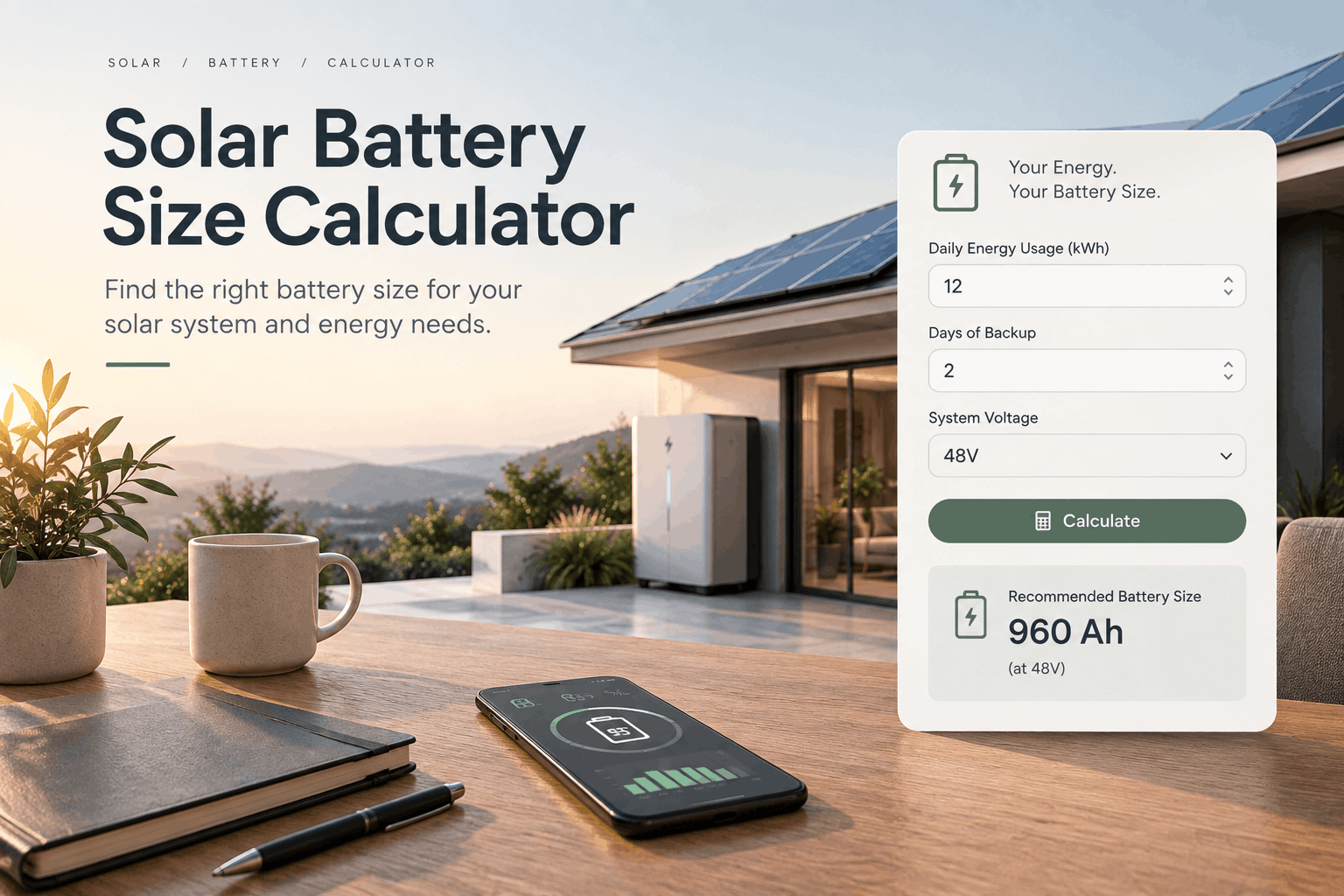
DIY Solar Cost Calculator
[Interactive tool: enter your system size, roof type, and whether you want battery backup to get a personalized estimate. No email required.]
A calculator like this can only get you in the right neighborhood. It can’t see your roof, your local permit office, or your electrical panel. Treat the number as a starting point for planning, not a quote.
Cost Breakdown by Component
Here’s where the money actually goes on a DIY build.
| Component | Low | Average | High | Notes |
|---|---|---|---|---|
| Solar panels | $0.55/W | $0.75/W | $1.20/W | Monocrystalline is the common residential choice |
| Inverter | $500 | $1,000 | $2,000 | String inverters cost less than microinverters |
| Racking & mounting | $300 | $800 | $2,000 | Roof-mount vs. ground-mount changes this a lot |
| Wiring & electrical parts | $100 | $350 | $800 | Conduit, breakers, disconnects |
| Permits & inspection | $50 | $350 | $800 | Set by your city or county, not by you |
| Battery storage (optional) | $2,000 | $6,000 | $12,000 | Depends heavily on how many hours of backup you want |
A quick note on inverters, since this trips people up: a string inverter handles your whole array as one unit and is the cheapest option. Microinverters attach to each individual panel, cost more, but keep producing at full output even if one panel gets shaded. If your roof has any shade at all during the day, the extra cost is usually worth it.
Quick Glossary
- String inverter: one inverter for the whole panel array; cheapest option, weak point if any panel is shaded.
- Microinverter: a small inverter on each panel; more expensive, more resilient to partial shading.
- AHJ (Authority Having Jurisdiction): the local building or electrical department that issues your permit and signs off on your install.
- NEC: the National Electrical Code; the rulebook your wiring has to follow to pass inspection.
- Interconnection agreement: the paperwork your utility requires before they’ll let your system connect to the grid.
- Net metering: the billing arrangement where your utility credits you for excess power your system sends back to the grid.
DIY vs. Professional Installation: Full Cost Comparison
| Factor | DIY | Professional |
|---|---|---|
| Equipment cost | Retail price | Often lower, due to bulk purchasing |
| Labor cost | Your own time | Included, typically 7–15% of total quote |
| Overhead & profit margin | None | Often 20–30% of total quote |
| Workmanship warranty | None | Usually included |
| Manufacturer warranty | Still applies to equipment | Still applies to equipment |
| Tax credit eligibility (pre-2026) | Often partial | Usually full |
| Time to complete | Days to weeks, part-time | 1–3 days |
Here’s the part most DIY guides skip: professional installers buy panels and inverters at wholesale prices you can’t access as an individual buyer. That doesn’t erase the DIY savings, labor and overhead are still the biggest line items on any solar quote, but it does mean the real gap between DIY and professional is usually a bit smaller than a simple “labor-only” comparison suggests.
What Happened to the Federal Solar Tax Credit in 2026?
This is the part of the DIY solar conversation that changed the most recently, and a lot of older articles still get it wrong.
The residential federal solar tax credit, officially the Residential Clean Energy Credit, Section 25D, used to let homeowners claim 30% of their solar costs back on their taxes, with no dollar cap. Under the original law, it was scheduled to run at full strength through 2032.
That changed with the One Big Beautiful Bill Act, signed into law in July 2025. It moved up the credit’s end date by several years. Any residential solar system placed in service after December 31, 2025, is no longer eligible for the federal credit, full stop, no phase-out period.
If your DIY system went live before that date, the 30% credit still applies to your 2025 tax return. If it goes live in 2026 or later, the federal credit is not available to you, regardless of how the project is structured.
That doesn’t mean incentives are gone entirely. State tax credits, utility rebates, and Solar Renewable Energy Certificates (SRECs) still exist in many states, and some of them are generous. But they vary enormously by location, so check your own state’s program before you assume any number applies to you.
Hidden Costs Most Guides Don’t Mention
A few expenses tend to surprise first-time DIY solar builders:
- Electrical panel upgrades. Older homes with 100-amp service sometimes need an upgrade to 200 amps before a larger system can connect safely. That’s a separate electrician job, often $1,500–$4,000.
- Failed-inspection re-visits. If your wiring doesn’t pass the first inspection, you’ll often pay a re-inspection fee and lose time.
- Tools. Crimpers, conduit benders, a multimeter, and fall-protection gear add up if you don’t already own them.
- Insurance notification. Some homeowner’s insurance policies require you to disclose a new solar installation. Skipping this step can complicate a future claim.
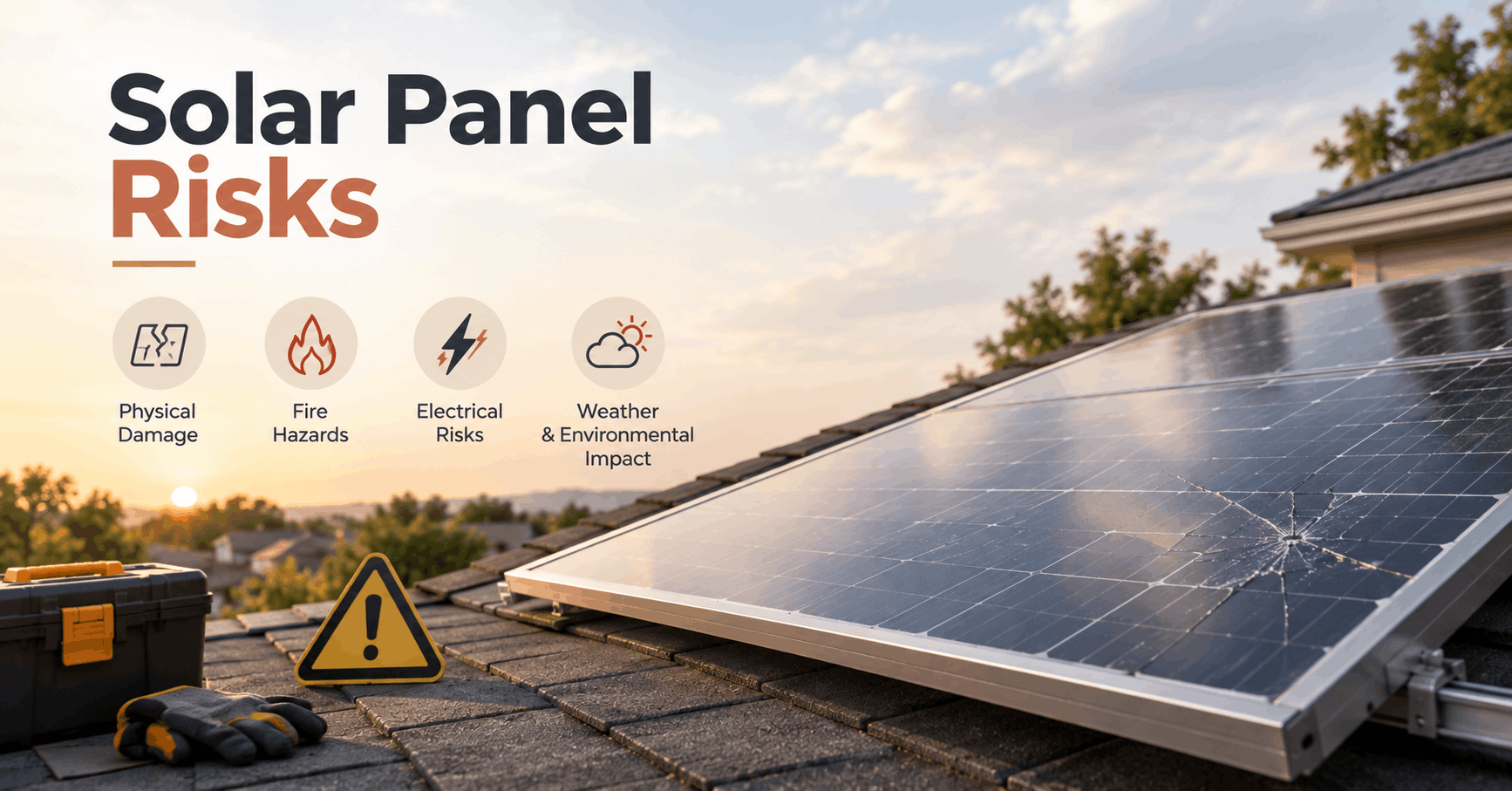
- The cost of getting it wrong. If a DIY mistake damages a panel, an inverter, or your roof, there’s no installer warranty to fall back on.
None of these are dealbreakers. They’re just easy to forget when you’re only looking at the kit price.
Is DIY Solar Legal Where You Live?
This varies more than most people expect, and it’s worth checking before you buy anything.
In most U.S. states, you can legally install your own solar panels, but you’ll still need a permit from your local Authority Having Jurisdiction, and in many places a licensed electrician has to inspect or sign off on the final electrical connection before your utility will approve interconnection. Some municipalities require the entire job to be done by a licensed installer, particularly for anything larger than a small off-grid setup.
If you’re outside the U.S., the rules look different:
- In the UK, DIY solar is broadly legal, and most residential roof arrays don’t need planning permission. But if you want to sell excess power back through the Smart Export Guarantee, your installation needs MCS certification, which usually means a certified installer has to be involved somewhere in the process.
- In Australia, DIY installation of a grid-connected system is heavily restricted. Anyone doing the electrical connection work needs Clean Energy Council accreditation, which effectively rules out a true do-it-yourself grid-tied install for most homeowners.
Always check your specific state, county, or national rules before you buy equipment. A cheap DIY kit isn’t a bargain if it can’t legally be connected to your grid.
Step-by-Step: What the Process Actually Costs at Each Stage
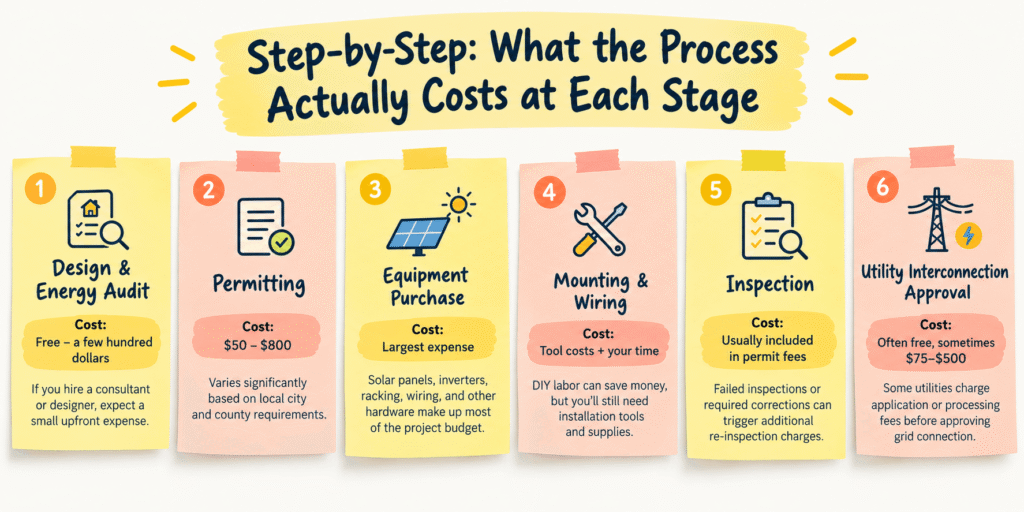
- Design and energy audit, free to a few hundred dollars if you hire help
- Permitting, $50 to $800, depending on your city
- Equipment purchase, the bulk of your budget, per the tables above
- Mounting and wiring, mostly your time, plus tool costs
- Inspection, usually included in the permit fee, but re-inspections cost extra
- Utility interconnection approval, often free, sometimes $75–$500 depending on your utility
When DIY Solar Isn’t Worth It
DIY solar makes the most sense for small to mid-size systems on a simple roof, installed by someone reasonably comfortable with tools and willing to learn some basic electrical work.
It makes less sense when:
- Your system needs to be 10 kW or larger, the risk and time investment stop scaling well with the savings.
- Your roof is steep, has multiple angles, or needs repair first.
- Your electrical panel needs an upgrade anyway, at that point, you’re already paying an electrician.
- Your HOA or your insurance policy has restrictions you haven’t checked.
- You’re not comfortable working with electricity, and you don’t have an electrician willing to handle that part.
There’s no shame in that last one. Working around a live electrical panel is not the place to learn on the fly.
FAQs
Is DIY solar cheaper than professional installation?
Usually, yes, often by 60% or more on equipment cost alone. But professional installers get equipment at wholesale prices you can’t access, so the real-world gap is smaller than a pure labor comparison suggests.
Do I need a permit to install solar panels myself?
In almost every U.S. jurisdiction, yes. Check with your local building department before you start.
Is the federal solar tax credit still available in 2026?
No. The 30% federal residential credit ended for any system placed in service after December 31, 2025.
How many solar panels do I need for my house?
It depends on your electricity usage. A rough starting point: divide your annual kWh usage by roughly 1,200 to estimate the system size in kilowatts you’ll need.
Can I install solar panels myself and still sell power back to the grid?
Often yes, but your utility has to approve the interconnection first, and some utilities require a licensed electrician’s sign-off before they will.
Does DIY solar void my homeowner’s insurance?
Not automatically, but many policies require you to disclose the installation. Check with your insurer before you start.
Summary
DIY solar can genuinely cut your costs by more than half compared to hiring a professional installer, and the equipment itself is more reliable than it’s ever been. But the savings come with real trade-offs: no workmanship warranty, more of your own time, and, as of 2026, no federal tax credit to soften the bill.
If you’re comfortable with a weekend project that involves a roof and some electrical work, and your system is a modest size, DIY solar is a legitimate way to go solar for a lot less money. If your project is large, your roof is complicated, or you’re not confident around electrical panels, the math often favors hiring a professional, even after accounting for their markup.
Sources
- U.S. Department of Energy / National Renewable Energy Laboratory, Solar Photovoltaic System Cost Benchmarks
- Internal Revenue Service, guidance on energy credit changes under the One Big Beautiful Bill Act, Section 25D Residential Clean Energy Credit
- Solar Energy Industries Association (SEIA), Residential Consumer Guide to Solar Energy
- Database of State Incentives for Renewables & Efficiency (DSIRE), state and utility incentive listings