Table of Contents
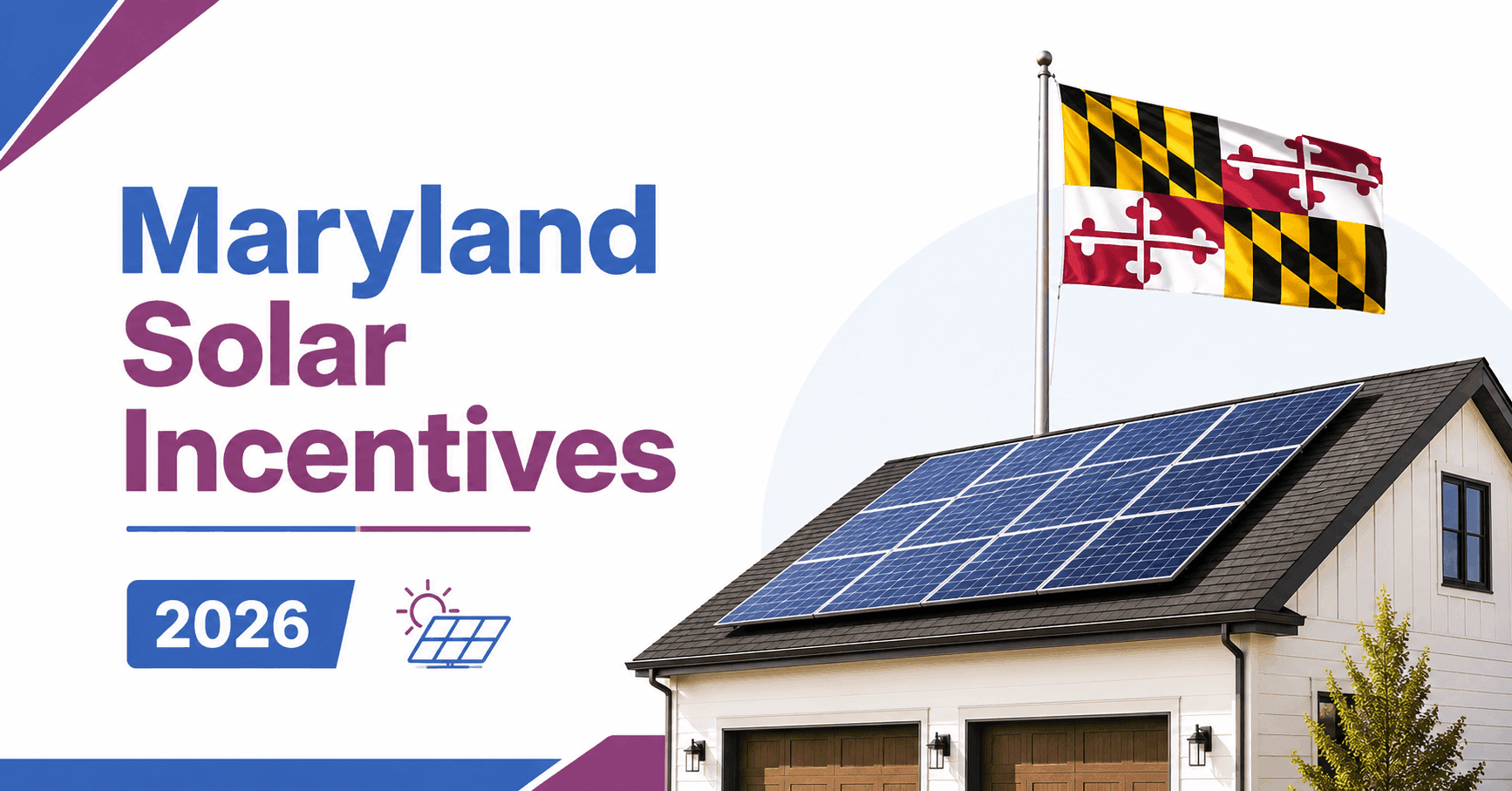
Here’s the short version: Maryland still gives homeowners real money for going solar in 2026 — a state grant, a battery storage grant, a permanent sales tax exemption, and a property tax exemption that never expires. What’s missing is the federal 30% tax credit, which ended for homeowners on December 31, 2025. Below, you’ll find exactly how to apply for what’s left, how much you can realistically save, and what changed this year so you’re not planning around a program that no longer exists.
How to Claim Your Maryland Solar Incentives (Step-by-Step)

Most homeowners don’t get stuck on “what incentives exist.” They get stuck on “how do I actually get the money.” So let’s start there.
Step 1: Confirm Your Eligibility Before You Apply
Not every incentive requires an application. The sales tax exemption and property tax exemption apply automatically, you don’t fill out a form for either one. The Maryland Solar Access Program (MSAP) and the Residential and Commercial Energy Storage (RCES) grant are different. Both are income-qualified or first-come-first-served, and both have hard budget caps. Check your household income against MSAP’s limits before you spend time on paperwork.
Step 2: Required Forms and Documentation
For MSAP, you’ll need a signed contract with a participating solar contractor and proof of household income. For RCES, you’ll need a signed installation agreement for your battery system, and if a third party owns the equipment, a notarized letter from the property owner. Neither program lets you install first and apply later, both require an approved reservation before a single panel goes on the roof.
Step 3: Where and When to File Each Incentive
State grants go through the MyMEA online portal, run by the Maryland Energy Administration (MEA). The sales tax exemption is applied automatically at the point of purchase by your installer. The property tax exemption is handled by the Maryland Department of Assessments and Taxation and also doesn’t require you to lift a finger, your assessment simply excludes the value your solar system adds.
Step 4: Timeline: When the Money Actually Arrives
Grant reservations get approved first, then you install, then you submit proof of completion for final payout. MSAP gives you 180 days from your reservation date to finish installation. Tax exemptions apply immediately and every year going forward, no renewal, no re-application, no expiration date.
Common Application Mistakes That Delay or Void Your Claim
The number one mistake: installing before your reservation is approved. Both MSAP and RCES will not backdate or reimburse a system you started before getting the green light. The second mistake: using a contractor who isn’t on MEA’s approved list, for MSAP, that alone disqualifies your application, no matter how good the installer is. The third: submitting a name on your paperwork that doesn’t match your government ID. It sounds trivial, and it delays payouts for weeks anyway.
Current status (as of July 2026): Both MSAP and RCES are closed to new applications. MSAP’s FY26 budget of $12 million was fully requested by April 17, 2026, and RCES’s $2 million budget closed by its June 5, 2026 deadline. MEA has announced it plans to open FY27 versions of both programs in summer 2026, so if you’re planning ahead, this is the window to watch, not the window you missed.
Maryland Solar Tax Credits Explained (2026 Update)
Federal vs. State Solar Tax Credit, What’s the Difference?
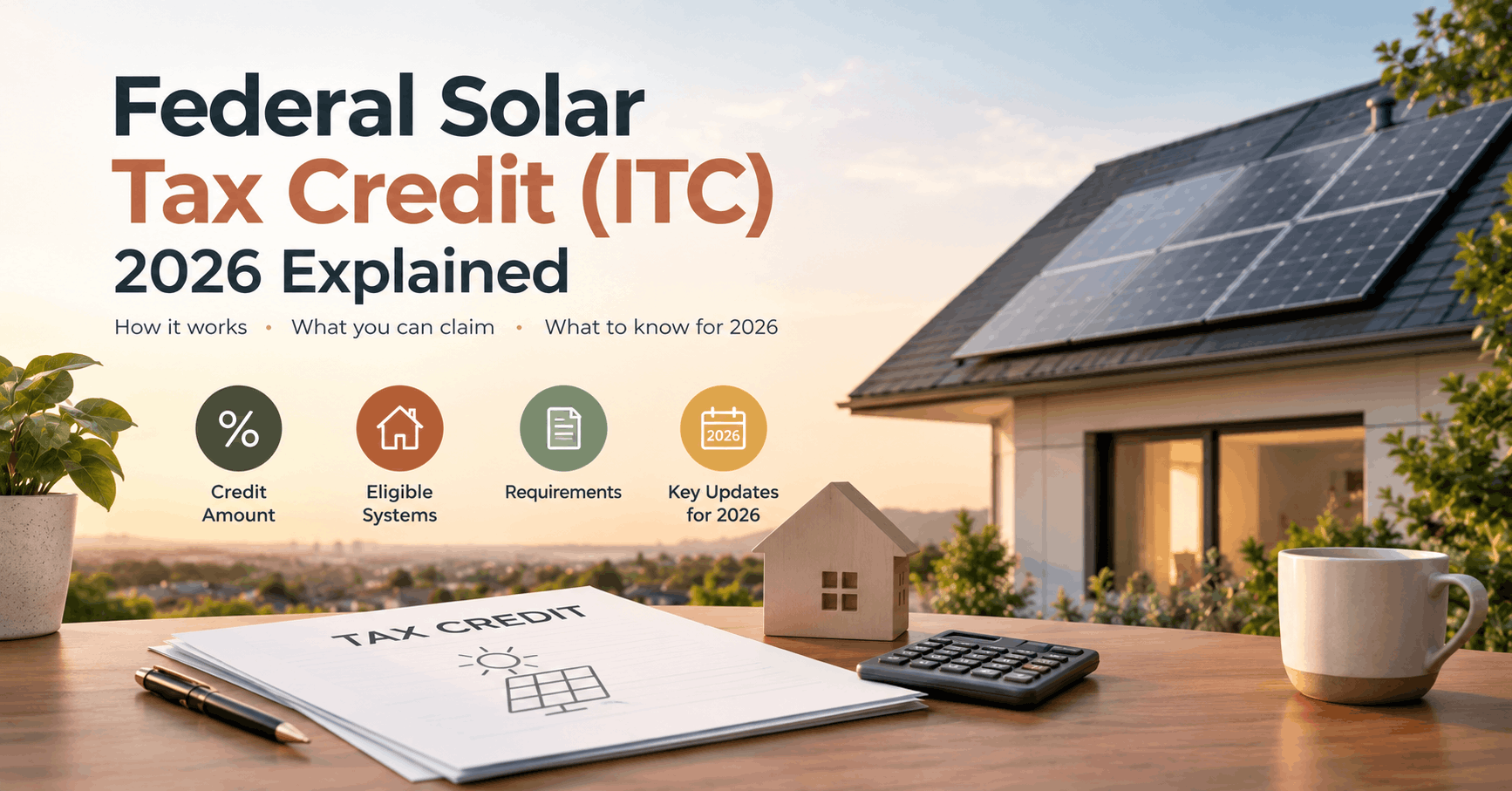
Here’s the thing everyone gets tangled up on: the 30% credit people talk about was never a Maryland program. It was federal, under Section 25D of the tax code, and the One Big Beautiful Bill Act ended it for any system placed in service after December 31, 2025. If your system went live in 2025 or earlier, you can still claim it on that year’s return. If it goes live in 2026, the federal credit is simply gone, no phase-down, no grace period.
Is There a Maryland-Specific Solar Tax Credit, or Only the Federal ITC?
Maryland never ran a standalone income tax credit for solar panels themselves. What Maryland offers instead is a grant (MSAP), plus two permanent tax exemptions. It’s a different mechanism, but the savings are real and, unlike the old federal credit, they don’t depend on your tax liability being high enough to use them.
Sales & Property Tax Exemptions for Solar Installations
Maryland exempts solar equipment from the state’s 6% sales tax, on a typical system, that’s somewhere between $1,800 and $2,200 you simply don’t pay. Separately, the state exempts the added value of a solar system from property tax reassessment entirely. Your home is worth more with solar panels on it, but your property tax bill doesn’t know that, and it never will for as long as the system is installed.
Maryland Solar Rebates and Grants (Full 2026 List)
Maryland Solar Energy Grant Program (MSAP), Eligibility & How to Apply
MSAP pays $750 per kilowatt of installed capacity, capped at $7,500, to income-qualified homeowners. Eligibility depends on household size, a single applicant can earn up to $136,785 a year and still qualify, and the ceiling rises with each additional household member, up to $257,910 for a household of eight. It’s genuinely one of the more generous state solar grants in the country, which is exactly why it runs out of funding every year.
Net Metering Through Your Utility (BGE, Pepco, Delmarva, SMECO)
This isn’t a rebate, but it functions like free money every month. Maryland requires its major utilities to credit solar owners at the full retail electricity rate for any excess power sent back to the grid. Unused credits roll forward month to month, and Maryland doesn’t force an annual reset the way some states do — your spring surplus can quietly cover your August air-conditioning bill.
Low-to-Moderate Income and Battery Storage Options
If your income doesn’t qualify for MSAP but you’re adding a battery, look at the RCES grant instead — it pays 30% of your installed battery cost, up to $5,000 for a home system. Montgomery County residents also have access to a Green Bank–backed solar loan with 0% interest for the first ten years in designated Equity Emphasis Areas, which is worth checking even if you don’t live in one, since standard county rates are still below typical market financing.
How Much Can You Actually Save? (Stacking Your Incentives)

A Simple Example: Buying an 8kW System in 2026
Say your system costs around $22,000 before any incentive. Take off the 6% sales tax exemption (roughly $1,300), and you’re not paying that at checkout. If you qualify for MSAP, subtract up to $6,000 more (8kW × $750/kW). Add in Solar Renewable Energy Certificate (SREC) income, which Maryland’s market has recently traded in the rough range of $60–$90 per credit, and a typical system earns several hundred dollars a year just for existing. None of this includes the electric bill savings from net metering, which is where most of the long-term payoff actually comes from.
What a Real Maryland Homeowner’s Claim Looks Like
A Baltimore County homeowner installing a mid-size system in 2026 would skip the federal credit entirely, apply for MSAP if income-eligible, get the sales tax knocked off automatically, and see their property tax bill stay exactly where it was before the panels went up. Add county-level credits where they exist, Anne Arundel County, for instance, offers a one-time credit up to $2,500, and the math starts looking a lot more like the “old” federal-credit era than most homeowners expect.
How Net Metering Adds to Your Long-Term Savings
Without the federal credit, net metering carries more of the payback burden than it used to. Because Maryland credits exports at the full retail rate rather than a discounted wholesale rate, a well-sized system can offset close to 100% of a household’s annual electricity use. Oversizing your system past your actual usage isn’t as efficient anymore, since any true-up on unused annual credits gets paid out at a lower avoided-cost rate, not the full retail rate you’d get from monthly offsetting.
Are You Eligible? (By Property Type)
Single-Family Homeowners
This is the group Maryland’s incentive stack is built for. If you own your home outright or with a mortgage, you’re eligible for every program listed here, assuming you meet MSAP’s income limits where relevant.
Condo and HOA Properties
Maryland’s solar access laws prevent HOAs from banning solar outright, though they can set reasonable placement and aesthetic rules. Ownership of your unit’s roof space (or lack of it) is the real determining factor, check your condo association’s governing documents before assuming you’re covered.
Renters,What’s Actually Available to You
Honestly, not much directly. Grants and tax exemptions are tied to property ownership. Renters interested in solar’s benefits without the paperwork usually look at community solar subscriptions, which let you buy into a share of a local solar project and get a credit on your electric bill without installing anything on a roof you don’t own.
Maryland Solar Incentives: 2026 vs. 2025, What Changed
New or Expired Programs This Year
The biggest change isn’t a Maryland program at all — it’s the disappearance of the federal 25D credit, which quietly reshaped the math for every solar shopper in the state. On the Maryland side, the old Energy Storage Income Tax Credit ended in December 2024 and was replaced by the RCES grant, a cleaner but differently structured benefit. MSAP’s FY26 round also ran into its funding cap faster than in prior years, a sign that demand for the state grant is climbing.
Why You Should Apply Sooner Rather Than Later
Both MSAP and RCES close as soon as their budgets are spoken for, not on a fixed calendar date. FY27 versions are expected to open sometime this summer. If you’re income-eligible or planning a battery install, getting your paperwork ready now — contractor selected, documentation gathered, puts you first in line the moment applications reopen, instead of racing a queue that fills in weeks.
Local Incentives by County

A handful of Maryland counties layer extra property tax credits on top of the statewide exemption, and the amounts genuinely differ by county. If you’re in Montgomery County, Howard County, or Baltimore County, it’s worth checking the county-specific breakdown before you file anything, since local programs change eligibility and funding year to year.
- Montgomery County solar incentives → see our full county guide
- Howard County solar incentives → see our full county guide
- Baltimore County solar tax credit → see our full county guide
FAQs
1. What is the Maryland solar tax credit for 2026?
aryland doesn’t run a standalone state income tax credit for solar panels. Instead, homeowners can access the MSAP grant, the sales tax exemption, and the property tax exemption, plus, if eligible, the RCES battery storage grant.
2. Does Maryland have a state solar tax credit, or just the federal one?
Neither, technically, in the traditional sense, the federal credit (25D) expired at the end of 2025, and Maryland’s benefits come as grants and tax exemptions rather than a credit against state income tax.
3. How do I apply for the Maryland Solar Energy Grant Program?
Through the MyMEA online portal, using a contractor from MEA’s approved participant list, after confirming your household income falls within the program’s limits. Applications are currently closed pending the FY27 relaunch.
4. Are solar panels exempt from property tax in Maryland?
Yes. The added value from a solar installation is excluded from your property tax assessment for as long as the system remains installed, statewide, with no application required.
5. How much money can I save with Maryland solar incentives?
It depends on system size and eligibility, but a typical homeowner can reasonably expect a few thousand dollars in combined sales tax savings and MSAP grant funding, plus ongoing SREC income and monthly electric bill offsets from net metering.
6. What’s the difference between a solar rebate and a solar tax credit?
A rebate (like MSAP) pays you money directly, regardless of your tax situation. A tax credit reduces what you owe the IRS or state, which only helps if you owe enough taxes to use it, part of why the loss of the federal credit hits some households harder than others.
7. Do Maryland solar incentives change year to year?
Yes, and 2026 is a clear example, the federal credit disappeared, the storage tax credit was replaced by RCES, and MSAP’s funding ran out faster than in past years. Checking current status before you commit is worth the ten minutes it takes.
8. Can renters or condo owners get Maryland solar incentives?
Renters generally can’t access ownership-based incentives directly, though community solar programs offer a workaround. Condo owners can pursue solar if their association’s rules and their unit’s roof access allow it.
9. How long does it take to receive a Maryland solar rebate or credit?
MSAP requires installation within 180 days of your reservation approval, followed by a final verification step before payout. Tax exemptions apply immediately and continue automatically every year after that.
10. What documents do I need to claim Maryland solar incentives?
A signed contract with an MEA-approved contractor, proof of household income for MSAP, and — for battery storage — a signed installation agreement and, if applicable, written permission from the property owner.