Table of Contents
Somebody’s extension cord meets somebody’s sprinkler every single October, and that’s usually the moment a Halloween setup turns into a minor electrical incident. Solar lights skip that whole problem by not needing a cord in the first place.
So which kind do you actually need? It comes down to where it’s going. A driveway or front walk wants solar pathway lights, staked every 3 to 6 feet. A porch railing or fence wants solar string lights, draped rather than pulled tight. A spooky centerpiece wants solar pumpkin lights, same glow, no open flame, no wax dripping onto the porch boards. And a tombstone prop or a bare tree wants a solar torch or spotlight, aimed up for that uplit, slightly haunted look.
That’s the short version. The rest of this guide gets into the reasoning, the specs that actually matter, and how to keep these things working past Halloween night.
Types of Halloween Solar Lights
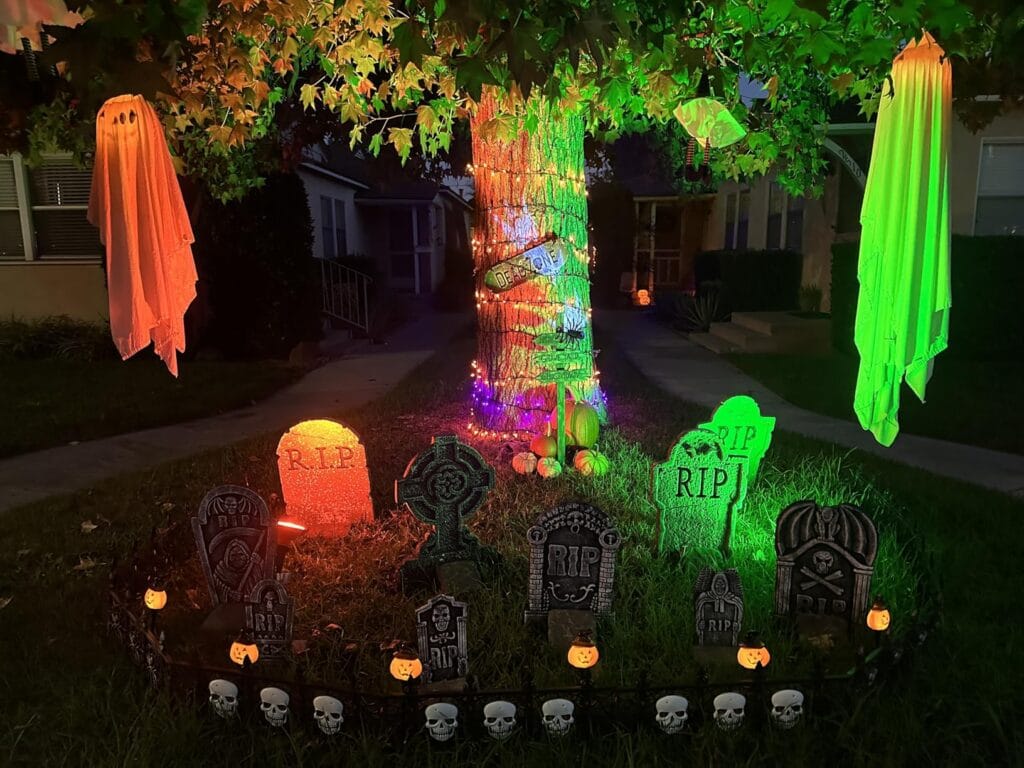
| Type | Price Range | Runtime (full charge) | Waterproof Rating | Best For |
|---|---|---|---|---|
| Pathway lights | $15–$40 (set of 6–10) | 6–10 hours | IP44–IP65 | Walkways, driveways, garden borders |
| String lights | $12–$30 | 6–8 hours | IP44–IP65 | Porches, fences, railings, bushes |
| Pumpkin lights | $10–$25 | 8–10 hours | IP44 (covered areas) | Porch steps, entryways, window sills |
| Torch/spotlight lights | $20–$50 | 6–8 hours | IP65 | Tombstone props, trees, garage doors |
These are ranges, not guarantees. Battery size, LED efficiency, and how much actual sun your yard sees will shift the real numbers up or down.
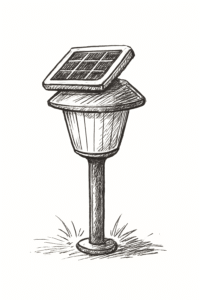
Pathway lights are the reliable, slightly boring workhorse of the category, and that’s a compliment — stake them once and they turn on by themselves every night at dusk. Halloween versions usually swap the standard white LED for orange or purple, or wrap the whole housing in a tiny pumpkin shell.
String lights go where a stake can’t: around a railing, through a shrub, over an arbor. Halloween sets often mold little bats or skulls around each bulb, which reads as charming on some porches and mildly cursed on others, depending on how many strands you commit to.
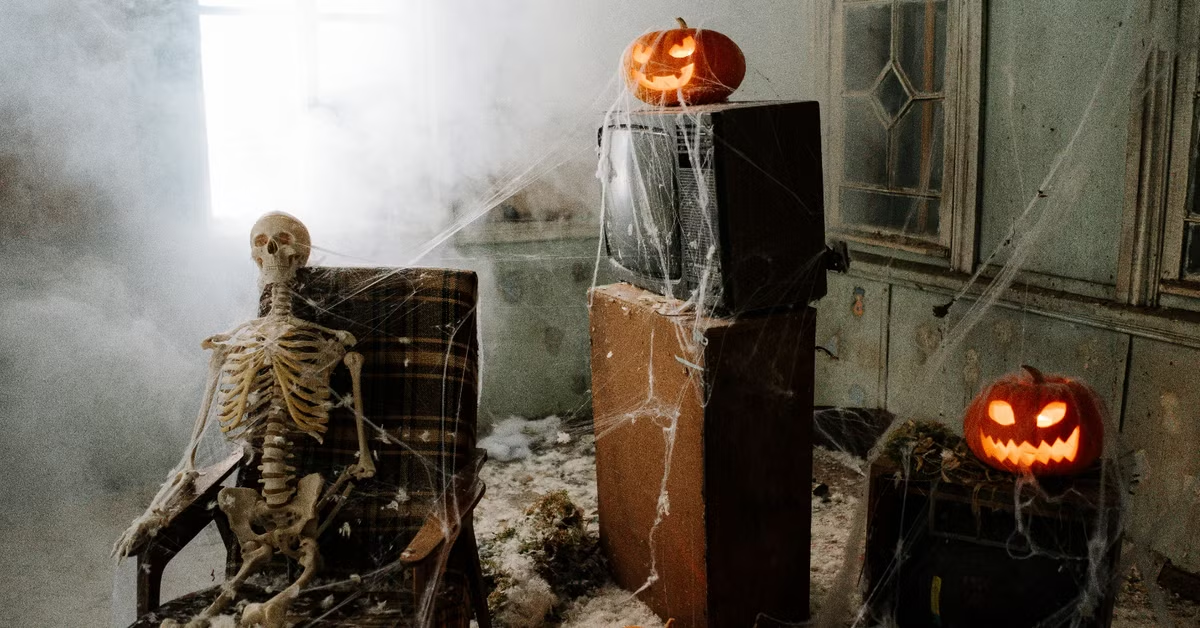
Pumpkin lights are decoration first and function a distant second, so they belong on steps and window ledges rather than open lawn. Torch and spotlight styles point outward instead of down, which makes them the right call for uplighting a skeleton prop or the base of a bare tree, the visual equivalent of a flashlight held under someone’s chin at a campfire.
Lumens, mAh, and IP Ratings, What the Specs Actually Mean
Product listings throw a lot of numbers at shoppers. Here’s the plain-English translation.
Lumens measure brightness, and most Halloween solar lights sit in the 5-to-40-lumen range, enough for mood lighting and pathway visibility, not enough to read a paperback by. Anyone chasing bright, security-style output is shopping in the wrong aisle; that’s a different product category entirely.
mAh, or milliamp-hours, measures battery capacity. More mAh generally means longer runtime, though it’s not the whole picture, LED efficiency plays a role too, and a modest battery paired with an efficient chip can outlast a bigger battery wired to a wasteful one.
Charge time and runtime work as a trade-off. Most units need 6 to 8 hours of direct sun to charge fully, in exchange for 6 to 10 hours of glow after dark. A run of cloudy days shrinks both numbers, so the figures printed on the box assume better weather than most Octobers actually deliver.
IP rating is the one shoppers skip past most often, which is a mistake. “IP” stands for Ingress Protection, defined by the international standard IEC 60529, and it’s read as two digits, the first for dust and solid particles, the second for water. IP44 covers splash resistance and suits a covered porch; IP65 is dust-tight and shrugs off direct water jets, which makes it the safer pick for anything staked out in an open, exposed yard. A listing that skips the IP rating entirely usually wasn’t tested for real outdoor weather, so treat it as a “keep it under the porch roof” light rather than one that can handle an open lawn during a downpour.
How Many Solar Lights You Actually Need
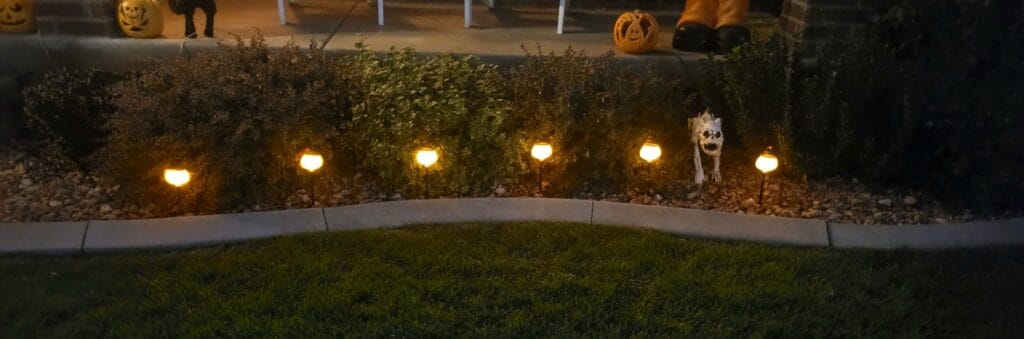
There’s no single correct number, but there’s a workable formula.
Pathway lights want 3 to 6 feet of spacing per stake, on both sides of the walk. A typical 20-foot path lined on both sides lands around 8 to 12 stakes total, round up if the path curves, since bends eat spacing faster than straight runs.
String lights come down to simple measurement: check the length of railing or fencing being covered, then match it against the listed string length, which usually runs 10 to 20 feet per set. Buy a little extra rather than exactly enough, a string pulled taut to make the length work looks stretched, while one with a bit of slack looks intentional.
Pumpkin and torch accents don’t scale by measurement at all; they scale by focal point. One per porch step, one on either side of the door, and one or two near the main display is usually plenty before the yard starts looking like an airport runway.
Getting the Best Charge and the Brightest Glow
Placement decides more than most people expect from a stake in the ground.
South-facing spots collect the most consistent sun across the day in the Northern Hemisphere, so a pathway running east-west benefits from tilting the panels south rather than leaving them flat. Shade is the real enemy here, not “less good,” just less charged, full stop, since a shaded panel doesn’t average out to a decent result over the course of a day.
Dust, pollen, and fallen leaves block sunlight the same way a tree branch does, and late October is peak leaf-litter season, so a quick wipe of the panel surface once a week keeps output steady. The sun also sits lower on the horizon in October than it did in July, which means a panel mounted flat for summer might actually charge better tilted toward the afternoon light this time of year.
Troubleshooting: Common Problems and Fixes
A light that won’t turn on at all is often not actually broken, check for the plastic pull-tab over the battery contacts that most units ship with to prevent drain on the shelf. Forgetting to remove it is the single most common “defective” light that isn’t defective.
A dim or flickering glow usually points to a weak charge from cloudy weather or panel shading, or to an aging battery. The NiMH cells used in most budget solar lights are typically rated for 500 to 1,000 full charge cycles before capacity drops below 80% of original, which at one charge per night works out to roughly a year and a half to two and a half years before performance visibly declines.
A light that shuts off randomly overnight often has a loose battery connector or moisture inside the housing, which shows up more in lower-IP-rated units left fully exposed to rain. And a short runtime despite a full day of sun usually traces back to the battery rather than the panel, compare its age and spec against the manufacturer’s numbers before assuming the whole unit is failing.
Storing and Reusing Solar Lights After Halloween
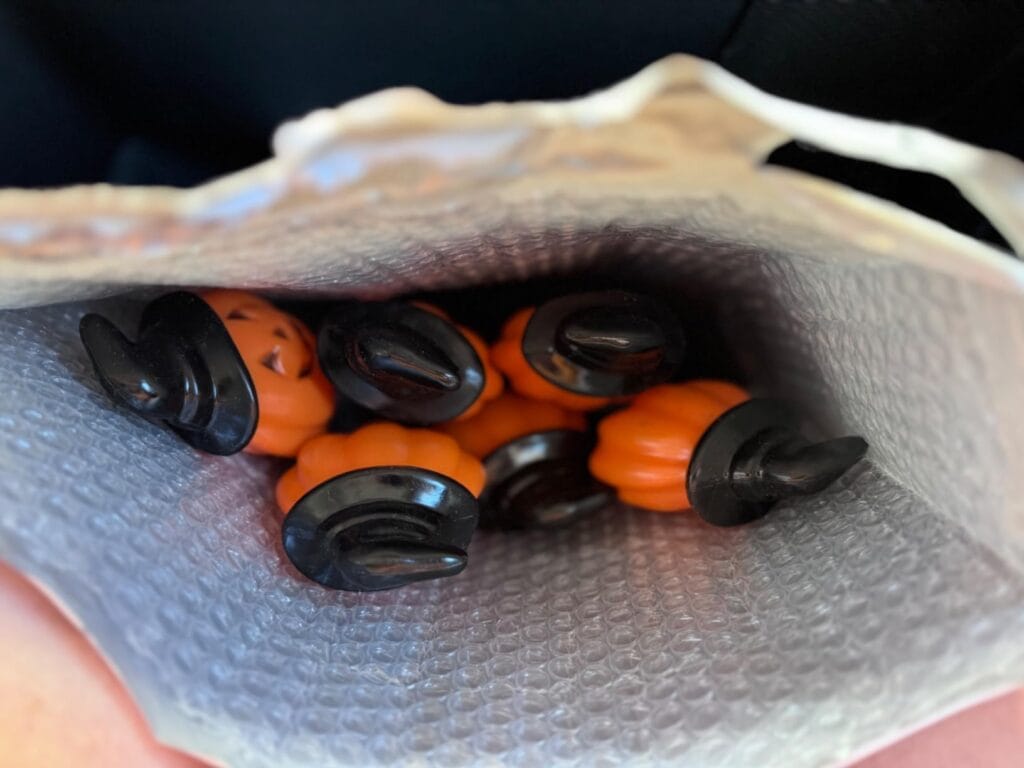
A decent set of solar lights is worth holding onto, since a well-kept one can last several Halloween seasons before the battery needs replacing.
Wipe down panels and housings before boxing them up; leftover dirt degrades seals over time even in storage. Some manufacturers recommend pulling batteries out for long-term storage, since NiMH cells lose some capacity sitting unused regardless of whether they’re being cycled. Keep the box somewhere dry and temperature-stable, a garage shelf beats a damp basement or an attic that swings between freezing and sweltering across the year.
Label the box by type, pathway, string, pumpkin, torch, so next year’s setup takes ten minutes instead of an archaeological dig through a bin of tangled cords and loose stakes.
Best Picks by Category
Prices and stock shift often, so treat these as solid starting points and always check the live listing before buying.
Pathway lights: Sets like the 6-Pack Solar Halloween Pathway Lights (Jack-O-Lantern pumpkins and ghost stakes, 8 lighting modes, IP65 rated) run on a 600mAh NiMH battery, charging in 6–8 hours for roughly 8–12 hours of glow. It’s a good match for a straightforward walkway lined in orange and purple.
String lights: The DYTesa Halloween Solar String Lights (21.3 ft, 30 LED purple bat design, IP65 waterproof) work well draped along a railing or fence line, and the length covers most standard porch spans without needing a second set.
Pumpkin lights: Stake-style pumpkin lanterns, the 6-Pack Solar Jack-O-Lantern Stake String Lights is a common pick, use IP65-rated housings and an auto light sensor, so they’re a safer bet for open porches than lower-rated indoor-leaning pumpkin decor.
Torch/spotlight lights: The Toodour Solar Torch Lights (6-pack, 12 LED per torch, flickering-flame effect, 400mAh NiMH battery) run 8–10 hours after a full charge and give tombstone props or bare trees that uplit, dancing-flame look without any real fire involved.
These are named as reference points based on currently listed products, not paid placements, search the exact name on Amazon or your preferred retailer to confirm current price, stock, and review scores before publishing a “buy now” link.
FAQs
Do solar Halloween lights work without direct sunlight?
They’ll still charge in indirect or diffused light, just more slowly and to a lower capacity than in direct sun.
Are solar lights bright enough to replace regular Halloween lighting?
For mood and pathway guidance, yes. For bright, functional lighting, not really — they’re built for atmosphere, not for floodlighting a driveway.
Can solar lights survive rain and frost?
Rain resistance comes down to the IP rating, with IP65 handling it well. Frost is more about the battery than the housing, since cold temperatures temporarily reduce output in most rechargeable batteries.
How long do solar Halloween lights last overall?
With reasonable care, most sets last two to three Halloween seasons before the battery noticeably declines, even if the housing and LEDs still look new.
Is a higher lumen count always better?
Not necessarily. More lumens means more visibility but less of the soft, atmospheric glow Halloween decor usually aims for. Match the lumen count to the mood, not to the biggest number on the box.