
Table of Contents
Searching for the best roofing and solar companies in the US in 2026 puts you in a strange spot. The tax credit that used to make this decision simple disappeared at the end of 2025. Homeowners now weigh leases against loans, one contractor against two, and bolted-on panels against roof-integrated systems. This guide breaks down what changed, why roofing and solar companies are starting to look like the same industry, and how to vet a provider before any contract gets signed.
Best Roofing and Solar Companies in the US: The Quick Answer
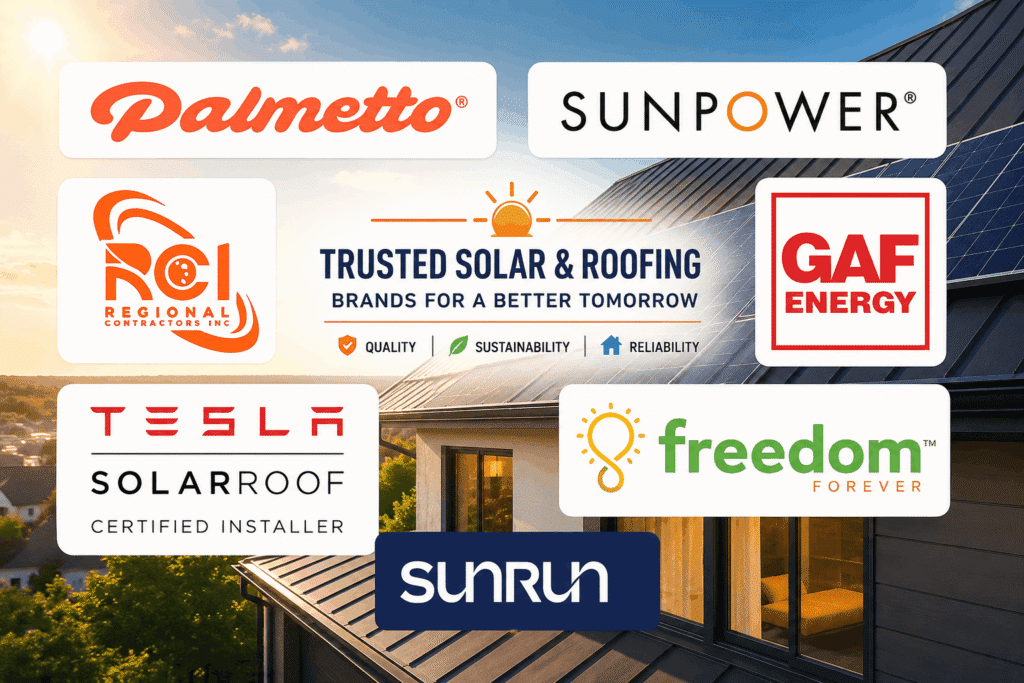
If you want names first, here they are, based on public reviews and industry reporting rather than sponsored placement.
- Best for financing flexibility: Palmetto Solar, backed by over $1.2 billion in funding according to Mercom Capital Group
- Best for warranty length: SunPower, with a combined 25-year product and labor warranty and a guaranteed 92% output after 25 years
- Best for combined roofing and solar service: regional dual-licensed contractors, a category growing fast across the country
- Best roof-integrated system: GAF Energy’s Timberline Solar and Tesla’s Solar Roof
- Best for national scale: Sunrun and Freedom Forever, two of the largest installers by volume in ConsumerAffairs’ 2026 rankings
- Best for battery storage bundling: Sunrun’s Brightbox and Palmetto’s storage packages, built for homeowners who want backup power along with the panels
None of these fit every homeowner. Your roof’s age, your state’s incentives, and whether you want to own or lease the system change the math completely.
What “Best Roofing and Solar Company” Actually Means
The phrase hides three different searches in one, and knowing which one applies to you saves real time before you call anyone.
Combined roofing + solar contractors
Some homeowners want a single contractor who handles the roof and the solar array under one contract, one crew, and one warranty. This group is growing fastest. It removes the coordination problem between two separate crews entirely.
Solar-only companies that also handle roof work
Others already have a solid roof and need a solar installer who understands roofing well enough not to void the manufacturer’s warranty while drilling mounts into it. These installers often subcontract minor roof repairs but stop short of a full reroof.
Solar shingle / roof-integrated systems
A smaller group wants roof-integrated solar, shingles or tiles that generate electricity instead of panels bolted onto a standard roof. This replaces the roofing material itself rather than adding to it.
What Changed in 2026: Financing and Buyer Motivation
Why the 30% tax credit no longer applies to purchased systems
The federal Residential Clean Energy Credit, known as Section 25D, expired on December 31, 2025. Homeowners who buy a system outright or through a loan no longer get the 30% credit that shaped the industry for over a decade. That single change reset how most companies pitch their offers.
Why leases and PPAs are now the dominant path
The credit’s expiration pushed buyers toward third-party ownership, meaning leases and power purchase agreements. Under these deals, a company owns the system and sells the homeowner the power it produces, and that company still qualifies for a separate commercial tax credit through 2027. Industry analysts now expect third-party ownership to cover close to 69% of residential installations in 2026, up from about 45% the year before.
Why homeowners are still going solar anyway
Reliability sells harder than savings now. Grid outages, rising utility rates, and electric vehicle charging drive more conversations than the payback period used to. If a company still leads with “save money on your electric bill” and nothing else, ask what else the system offers.
Why Roofing Companies Are Adding Solar in 2026 (and Vice Versa)
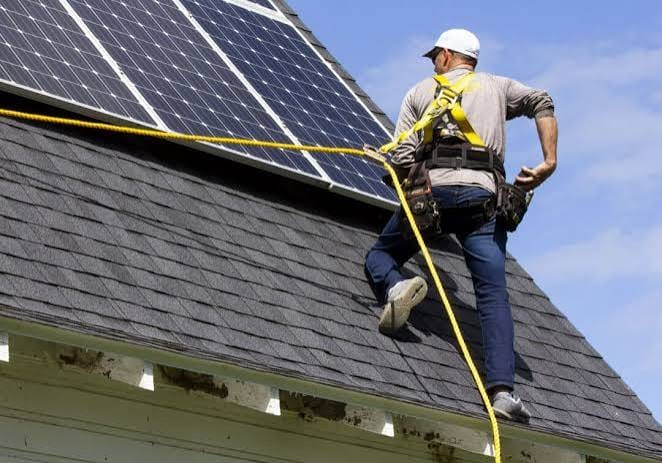
What’s driving the shift
Roofing contractors are adding licensed solar crews, and solar installers are picking up roofing licenses, because one combined job pays more than two separate ones ever did. Industry analysts point to this kind of diversification as one of the clearer trends shaping installer business models this year.
What it means for you as the customer
More dual-licensed options on the market means more competition for the combined-service homeowner, which tends to push pricing and service quality in your favor. It also means checking credentials matters more. A roofing company advertising “solar installation” doesn’t always run the electrical work in-house.
One Company or Two Contractors? Making the Right Call
The case for one combined contractor
A single, dual-licensed contractor removes the coordination gap entirely. One team designs the roof and the array together, so flashing, penetrations, and expected lifespan line up from day one instead of getting patched together by two crews working from two different plans.
The case for two specialists
Two specialists still make sense in some cases, particularly when the roof is only a few years old and doesn’t need touching. A dedicated solar installer may also carry deeper equipment expertise than a roofer who added solar as a side offering.
Who’s liable when something goes wrong
Here’s the actual problem with splitting the job. Your roofer won’t honor a warranty if a different company’s solar crew punches new holes in your roof later. Your solar installer, in turn, won’t take responsibility for a leak that started somewhere else. Ask a roofer whose fault a leak is and ask a solar installer the same question, and you’ll get two confident, completely different answers. If you go the two-contractor route, get both companies on a call together before either one starts work. It costs an hour. It saves an unpleasant argument in year eight.
Should You Replace Your Roof Before Going Solar?
Roof age vs. panel lifespan
Solar panels typically carry a 25-year performance warranty. If the roof has less service life left than that, most roofing industry guidance points toward replacing it first. A mismatch here almost always turns into a disruptive project later, once the panels are already in place.
Cost of removing and reinstalling panels later
Pulling a working solar array off a roof to redo the roofing underneath adds labor cost that a homeowner would not pay if the sequence had been planned correctly from the start. Getting a roof inspection before signing a solar contract is a small step that prevents a much bigger one later.
How to Vet a Roofing or Solar Company Before You Sign
A good sales pitch and a good contractor are not the same thing. Before signing anything, work through this list.
License verification
Confirm the license number through your state’s licensing board directly, not through a number printed on the company’s own website.
Review and BBB checks
Check Better Business Bureau accreditation and read the negative reviews first, because that’s where real patterns show up rather than in the curated testimonials on a company’s homepage.
Warranty red flags
Ask directly how the warranty works if the roof and the solar array end up serviced by different companies down the line, and get the answer in writing rather than a verbal promise.
Local vs. national
A national brand brings scale and standardized processes. A local contractor often brings faster response times and more accountability. Their reputation in your specific area matters more to them than it does to a national call center. Neither option is automatically better, so weigh it against what matters most to you.
Full Comparison: Roofing and Solar Companies Side by Side
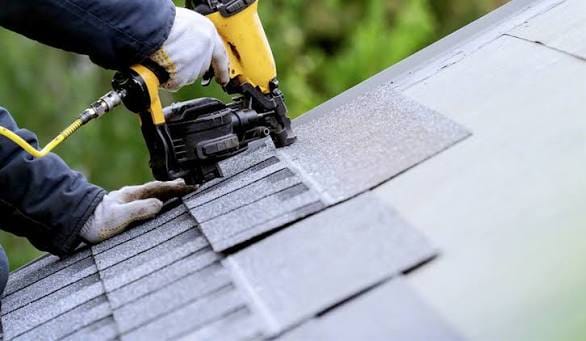
Solar-only national providers
Sunrun and Freedom Forever both operate at national scale, with ConsumerAffairs citing recent review volume, pricing, and buying flexibility as reasons both show up near the top of most 2026 rankings. Freedom Forever backs installations with a 25-year production guarantee, though some reviewers note inconsistent customer service depending on the local crew. SunPower continues to lead on warranty length, with a combined 25-year product and labor guarantee and a guaranteed 92% output at year 25.
Dual-licensed roofing + solar providers
This category is less standardized than the national solar brands. Most dual-licensed contractors operate regionally rather than nationally, which makes direct comparison harder. The best way to identify a strong one is checking whether the roofing license and the electrical or solar license are both active and held by the same company, not subcontracted out under a different name.
Storage-bundling leaders
Sunrun markets its Brightbox battery packages alongside its solar systems, and Palmetto offers storage as an add-on to its standard installs. Solar-plus-storage now accounts for over 30% of new residential installations in leading states, driven largely by demand for backup power during outages.
Where demand is growing fastest in 2026
Texas, the Midwest, and the Southeast are seeing the biggest new investment in solar and storage this year. California, Florida, and Illinois led residential installed capacity rankings in the first quarter of 2026, keeping their position as the largest established markets.
Cost comparison: bundled vs. separate contractors
Bundling roofing and solar under one contractor typically reduces total setup cost. One mobilization and one permit process replace two, cutting overhead on both sides of the job. Hiring separate specialists sometimes costs less on the roofing side alone, particularly if the roof needs only minor repair rather than a full replacement.
FAQs
Do roofing companies also install solar panels?
Some do. It’s a fast-growing niche, with roofing contractors adding licensed solar crews instead of handing the job to a separate installer.
Is it cheaper to bundle roofing and solar with one company?
Often, yes. One mobilization, one permit process, and one crew cut the setup costs that come with hiring two separate contractors.
Does solar still qualify for a federal tax credit in 2026?
Only for company-owned systems under a lease or power purchase agreement, through the commercial credit. The homeowner-owned credit expired at the end of 2025.
Should I replace my roof before installing solar panels?
If the roof has less life left than the solar system’s expected lifespan, roofing industry guidance points toward replacing the roof first, to avoid removing and reinstalling panels later.
What’s the difference between a solar company and a solar roofing company?
A solar company installs panels on an existing roof. A solar roofing company installs shingles or tiles that generate electricity as part of the roof itself, replacing the roofing material rather than adding to it.
Picking a roofing and solar company in 2026 comes down to matching the provider to your actual situation, not chasing whichever name ranks highest on a review site. Check the license, read the warranty fine print, and decide early whether you want one contractor or two. That one decision prevents most of the headaches homeowners run into after the crews leave.
Summary
The 2026 solar landscape shifted after the federal tax credit expired, pushing more buyers toward leases and pairing roofing with solar under one contractor. This guide covers what changed, how to vet a roofing or solar company, and which providers stand out for financing, warranty, and roof-integrated systems.