
Table of Contents
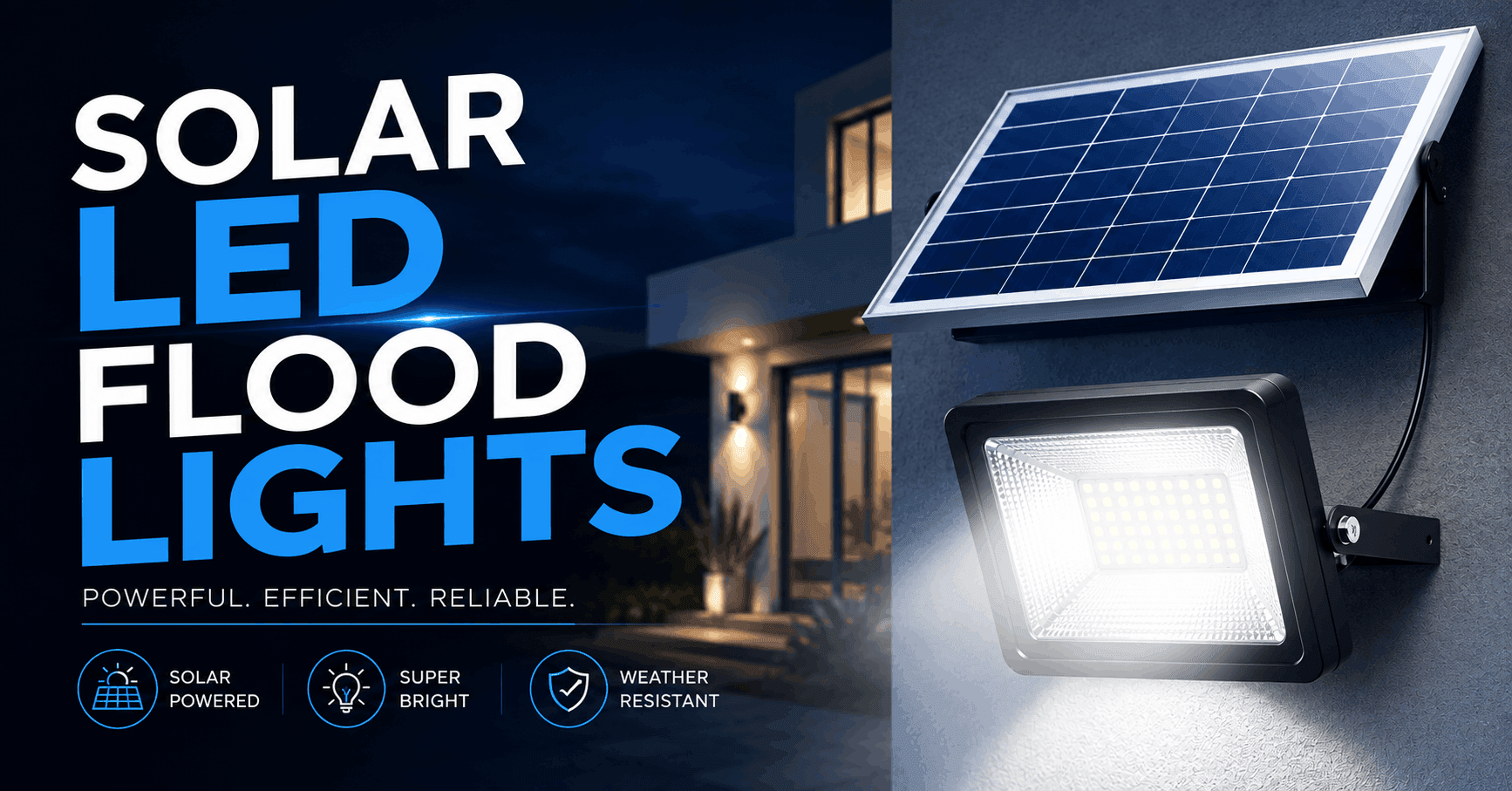
A customer sent me a photo last week. He had installed a LITOM solar floodlight inside his covered porch. The light sat under a solid roof. No sun reached it at any time of day.
He asked me why the light only worked for an hour at night.
I asked him where he thought the energy came from. He pointed to the ceiling. He said the light in the room should be enough.
I explained that indoor light does not charge solar panels. He moved the light outside. It now runs all night.
Do solar lights need sun or just light to work? The short answer is sun. Direct sunlight. A cloudy day outside produces more charging power than a bright room inside. A shaded spot under a tree produces more than a garage with the lights on.
Let me walk you through what I learned from testing solar panels under different light conditions. The results surprised me.
The science behind solar charging
Solar panels convert light into electricity. But not all light is equal. The amount of energy in light varies wildly.
Direct sunlight delivers about 100,000 lux of illumination. Lux measures light intensity. A solar panel in direct sun produces its rated power. A 5 watt panel produces 5 watts.
Cloudy daylight delivers 10,000 to 25,000 lux. A solar panel produces 10 to 25 percent of its rated power. A 5 watt panel produces 0.5 to 1.25 watts.
Shade under a tree delivers 1,000 to 5,000 lux. A solar panel produces 1 to 5 percent of its rated power. A 5 watt panel produces 0.05 to 0.25 watts.
Bright indoor room delivers 400 to 500 lux. A solar panel produces 0.4 to 0.5 percent of its rated power. A 5 watt panel produces 0.02 to 0.025 watts. That is 0.02 watts. The light needs 5 watts to charge properly.
Dim indoor room delivers 50 to 100 lux. A solar panel produces effectively zero power.
I tested this with a small solar panel and a multimeter. In direct sun, the panel produced 5.2 watts. Under a bright LED ceiling light 12 inches away, the same panel produced 0.03 watts. The indoor light was 170 times weaker than the sun.
The customer with the porch light thought his ceiling light would charge the panel. The ceiling light produced 500 lux. The sun outside produced 100,000 lux. He was trying to charge his light with 0.5 percent of the energy it needed.
Why a cloudy day beats a bright room
People assume that if a room looks bright to their eyes, it should charge a solar panel. That assumption is wrong.
Human eyes adapt to low light. A room that feels bright to you might only have 500 lux of illumination. Your eyes adjust. Your brain tells you the room is bright. A solar panel does not adjust. It responds to the actual light intensity.
Real world test: I placed a LITOM solar light in three locations on the same day. A south facing window sill got direct sun for 4 hours. The battery reached 100 percent charge by 2 PM. An overcast spot in the yard got 8 hours of cloudy daylight. The battery reached 85 percent charge by sunset. A bright room with a skylight got 12 hours of ambient indoor light. The battery reached 12 percent charge and died by 9 PM.
The window sill worked best. The cloudy yard worked fine. The bright room failed.
Another test: I put an URPOWER path light in a room with a 100 watt equivalent LED bulb shining directly on the panel from 6 inches away. The bulb produced 1,600 lumens. The panel produced 0.1 watts. The light needed 1 watt to charge properly. The bulb would need to be 10 times brighter to fully charge the panel. That bulb does not exist for a standard light socket.
How much sun do solar lights need
Most solar lights need 4 to 8 hours of direct sun per day to fully charge. The exact amount depends on the panel size, the battery capacity, and the light’s power consumption.
Small path lights need 4 to 6 hours of direct sun. A LITOM path light with a 2 watt panel and a 2,000 mAh battery charges fully in 5 hours of good sun. It runs for 8 to 10 hours at night.
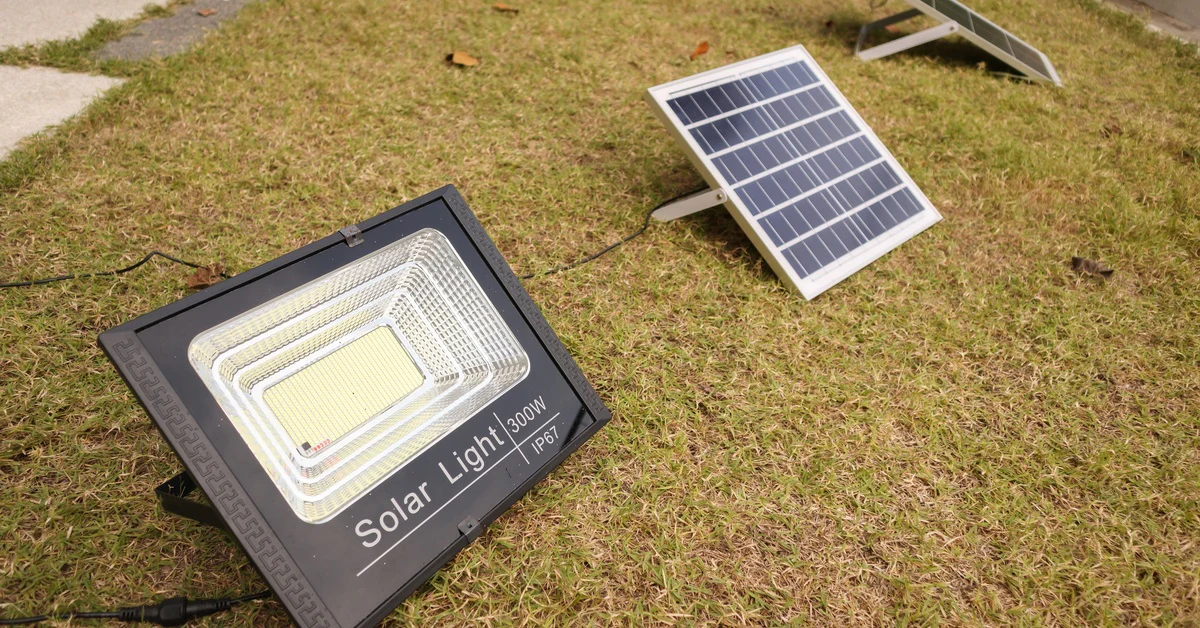
Floodlights need 6 to 8 hours of direct sun. A LITOM floodlight with a 5 watt panel and a 4,400 mAh LiFePO4 battery charges fully in 6 hours. It runs for 6 to 8 hours depending on brightness settings.
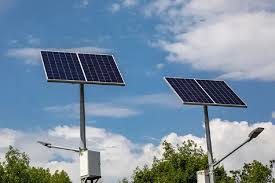
Street lights need 8 hours of direct sun. A Greenshine commercial light with a 200 watt panel and a 1,000 watt hour battery charges fully on a sunny day. It runs for 12 hours at reduced brightness.
What happens with less sun: The battery charges partially. The light runs for fewer hours. A light that needs 6 hours of sun but only gets 3 hours will run for 4 to 5 hours instead of 8 to 10.
The customer with the porch light got zero hours of sun. His battery never charged. The light ran on whatever residual charge remained from the factory. That lasted one hour.
Can artificial light charge solar lights
The short answer is yes, but you will not like the results.
A solar panel can convert any light into electricity. Sunlight works best because it contains the full spectrum of visible and invisible light. Artificial light contains less of the spectrum that solar panels use.
Incandescent bulbs produce light in the red and infrared spectrum. Solar panels prefer blue and ultraviolet. An incandescent bulb will charge a solar panel slowly. A 100 watt incandescent bulb 12 inches away produces about 10 percent of the power of direct sun.
LED bulbs produce light in a narrow spectrum. A warm white LED produces mostly yellow and red light. A cool white LED produces more blue light. Solar panels respond better to cool white LEDs. A 10 watt cool white LED 12 inches away produces about 5 percent of the power of direct sun.
Fluorescent bulbs produce more UV light than LEDs. They charge solar panels better than LEDs or incandescent bulbs. A 20 watt fluorescent tube 12 inches away produces about 8 percent of the power of direct sun.
The practical problem: To fully charge a solar light with artificial light, you would need to place the light inches from a very bright bulb for 24 hours. That defeats the purpose of a solar light. You might as well plug it into the wall.
I tested charging a LITOM floodlight under a 40 watt cool white LED shop light. The panel sat 6 inches from the light. After 24 hours, the battery reached 15 percent charge. The same panel reached 100 percent charge in 4 hours of direct sun.
The shade problem no one talks about
Partial shade kills solar light performance more than most people realize.
A solar panel consists of many small cells wired in series. If one cell sits in shade, it reduces the output of the entire panel. A panel with 10 percent shade can lose 50 percent of its output.
Real world example: A LITOM floodlight with a 5 watt panel sat under a tree. The tree cast dappled shade on the panel. The panel got 80 percent direct sun and 20 percent shade. The output measured 2.5 watts instead of 5 watts. Half the panel’s power disappeared from a small amount of shade.
What to do: Trim branches that shade the panel during the middle of the day. Morning shade matters less than noon shade. The sun sits highest at noon. That is when the panel produces the most power. Shade at noon hurts more than shade at 8 AM.
The customer with the porch light had 100 percent shade. His panel produced effectively zero watts. Moving the light to an unshaded spot solved his problem.
Seasonal changes affect sun exposure
The sun changes position throughout the year. A spot that gets full sun in June may sit in shade in December.
Winter sun sits lower in the sky. A panel mounted flat on a roof gets less winter sun. A panel tilted to 45 degrees gets more winter sun. The difference can be 50 percent or more.
Trees without leaves in winter let more sun through. A spot that looks shady in summer might get good sun in winter. Plan your light placement based on winter sun if you need year round performance.
Cloudy days reduce sun by 50 to 90 percent. A string of cloudy days drains the battery. The light runs for fewer hours. When the sun returns, the battery recharges.
I tested a LITOM path light in three seasons. In June, it got 8 hours of direct sun and ran for 10 hours. In September, it got 6 hours of direct sun and ran for 8 hours. In December, it got 3 hours of direct sun and ran for 4 hours. The battery never fully charged in December. The light still worked, just for fewer hours.
How to maximize sun exposure
If you want your solar lights to perform well, follow these rules.
Place the panel facing south in the northern hemisphere. North of the equator, the sun tracks across the southern sky. A south facing panel catches the most sun.
Tilt the panel to your latitude. A panel lying flat catches less sun. A panel tilted to match your latitude catches more. For most of the US, a 30 to 45 degree tilt works year round.
Check for shade at noon. The sun sits highest at noon. Noon shade kills performance. Walk your property at noon on a sunny day. Note which spots have shade. Avoid those spots.
Trim branches that cast shade. A single branch can shade a panel for hours. Cut it back. The extra sun will pay off in longer runtime.
Clean the panel monthly. Dust and pollen block sun. A dirty panel produces 20 to 50 percent less power. A quick wipe with a damp cloth restores performance.
The customer with the porch light moved his light to a south facing fence post. He tilted the panel to 40 degrees. He cleaned the panel with a hose once a month. His light now runs from dusk until dawn every night.
The bottom line on sun versus light
Do solar lights need sun or just light to work? They need direct sun to work well. A cloudy day outside beats a bright room inside. A shaded spot beats a garage with the lights on. No artificial light charges a solar panel fast enough to be practical.
A LITOM floodlight needs 6 hours of direct sun to fully charge. A URPOWER path light needs 4 hours. A Greenshine street light needs 8 hours. All of them will charge on cloudy days, just slower. None of them will charge from indoor lights or porch ceiling fixtures.
The customer who installed his solar light on a covered porch moved it outside. He placed it on a south facing fence. He trimmed a branch that shaded the panel at noon. His light now runs all night. He sent me a photo of his glowing garden.
He said he wished someone had explained the difference between sun and light before he bought his first solar light. That is why I wrote this.
A solar panel needs the sun. Not a ceiling light. Not a porch light. Not a bright window. The sun. Put your solar lights where the sun hits them. They will reward you with years of free lighting.
Summary
Solar lights need direct sun to charge properly. A cloudy day outside produces 10,000 to 25,000 lux of light. A bright indoor room produces 400 to 500 lux. The sun is 200 times brighter than indoor lighting. A LITOM floodlight needs 6 hours of direct sun for a full charge. A URPOWER path light needs 4 hours. Artificial light from LEDs or incandescent bulbs charges solar panels too slowly to be practical. Partial shade kills performance because shaded cells reduce output from the whole panel. Place panels facing south, tilt to your latitude, trim branches, and clean monthly. A solar light on a covered porch will not charge. Move it outside where the sun hits it.