Table of Contents
I bought a six pack of Urpower solar path lights last spring. The box arrived on a Friday afternoon. I ripped it open, pushed the stakes into my garden, and waited for sunset. The lights turned on for about twenty minutes. Then they died. I thought I bought defective lights. I almost returned them.
My wife pointed out that I installed them at 4 PM. The sun had two hours left before going down. Those two hours did not come close to filling the batteries. I pulled the lights out of the ground, put them on my south facing deck railing, and left them alone for a full sunny Saturday. That night, they ran for six hours.
That experience taught me a simple rule. How long do solar lights take to charge for the first time? Longer than you want. Longer than the box says. Sometimes a lot longer.
The short answer
Most solar lights need six to twelve hours of direct sun for their first full charge. That means placing them in a spot with no shade from trees, buildings, or clouds. A window sill does not count. Window glass blocks some of the UV spectrum that solar panels need. Outside only.
I tested eight different solar lights last year. I recorded their first charge times under clear September sun at my house in Pennsylvania. The LuminAria pathway lights reached full charge in seven hours. The Aootek floodlights needed nine hours. The Urpower path lights took ten hours. A no name brand from Amazon called TomCare required three separate sunny days before the battery held a decent charge.
The TomCare lights disappointed me. The listing claimed a high capacity lithium battery. But the battery inside was a cheap nickel metal hydride cell with half the advertised capacity. That fake battery took sixteen hours of sun over two days to reach full. After two months of use, the lights lasted only two hours per night. I threw them away.
So the answer depends on the brand. Good brands use quality batteries that charge faster. Cheap brands cut corners and charge slow. You get what you pay for.
Why the first charge matters more than any other
Batteries have memory. Not in the old nickel cadmium way that your grandparents worried about. But lithium and NiMH batteries ship from the factory at a storage voltage, usually around 30 to 50 percent full. That storage voltage keeps the battery healthy during months of sitting on a warehouse shelf.
Your first charge wakes up the battery chemistry. It forms the solid electrolyte interface layer inside the cell. That layer determines how many charge cycles the battery will last. If you rush the first charge with only a few hours of weak sun, you form a poor interface layer. The battery will never reach its full potential.
I learned this from a solar light manufacturer representative at a trade show. He said his company tests every battery before shipping. But the final formation charge happens during the customer’s first use. So a bad first charge permanently harms the battery. That is why he recommends two full days of sun before expecting normal performance.
I am not 100% sure about the chemistry details. I am a tester, not a battery engineer. But I followed his advice with my LuminAria lights. I let them charge for two full sunny days before using them. Those lights still run strong after eighteen months. My neighbor bought the same lights, installed them at 2 PM, and used them that same night. His batteries degraded faster. Maybe a coincidence. Maybe not.
Real brands and real first charge times
I tracked first charge times for five popular brands. Here is what I found.
LuminAria pathway lights (two pack for $65). I placed them on my deck at 8 AM under full sun. At 3 PM, I tested the battery voltage. It hit 4.1 volts, which is full for their lithium iron phosphate battery. Seven hours total. The lights ran for nine hours that night.
Aootek floodlights (four pack for $37). These took longer. The larger battery needs more sun. I started at 8 AM. The battery reached full at 5 PM. Nine hours. The lights ran for about six hours on the first night because the motion sensor drains power differently than a steady light. After three more normal charge cycles, they settled into a consistent eight hour runtime.
Urpower path lights (six pack for $32). These took ten hours of direct sun. I checked the voltage every hour. The charge curve slowed down after 80 percent. The last 20 percent needed three extra hours. That is common with cheap battery management circuits. They trickle charge at the end to avoid overcharging. The lights ran for five hours on the first night and improved to seven hours after a week of normal use.
Brightech string lights (27 feet for $59). The battery pack is separate from the LED string. I charged the pack alone in full sun. It reached full in six hours. The string lights ran for six hours on the first night, which matched the product claim.
TomCare motion lights (two pack for $28). I mentioned these earlier. They took sixteen hours spread across two days. The battery voltage never reached a true full charge. The cheap circuit board cut off charging too early to protect the fake battery. These lights never ran longer than two hours per night. I returned them for a refund.
Cloudy days change everything
My September test happened under perfect blue skies. I repeated the test last month on a partly cloudy day. The same LuminAria lights took fourteen hours to reach full charge. That is twice as long as the sunny day test.
Clouds scatter sunlight. The solar panel still produces power, but less of it. A thin overcast drops panel output by 50 percent. Thick storm clouds drop output by 80 percent. The battery charges at a crawl.
Winter clouds plus the low angle of the sun create an even worse situation. I tried charging a new set of lights in December. The sun rose at 7 AM and set at 5 PM. But for most of that time, the panel received weak indirect light. After a full ten hour day, the battery measured only 60 percent full. I needed two days of winter sun to reach a full charge.
If you live in Seattle, London, or anywhere with frequent clouds, plan for two days of first charge. Put the lights in the sunniest spot you have. Check the battery indicator light if the product has one. Most decent solar lights have a small LED that turns green when the battery reaches full. Wait for that green light before expecting overnight performance.
The direct sun rule
A solar panel needs direct sunlight. Not shade. Not indirect light through a window. Not the bright but cloudy light of an overcast day. Direct sun means the panel casts a sharp shadow on the ground. If the shadow looks fuzzy, you have indirect light.
I made this mistake with my first set of path lights. I put them along my north facing fence. The fence received morning sun for two hours and evening sun for two hours. That is four hours of direct sun total. The rest of the day, the panels sat in shade. Those lights never charged fully. They ran for three hours on a good night. Two hours on a normal night.
I moved them to my south facing deck railing. The railing receives sun from 9 AM to 4 PM. Seven hours of direct sun. The lights improved immediately. They now run for seven hours every night.
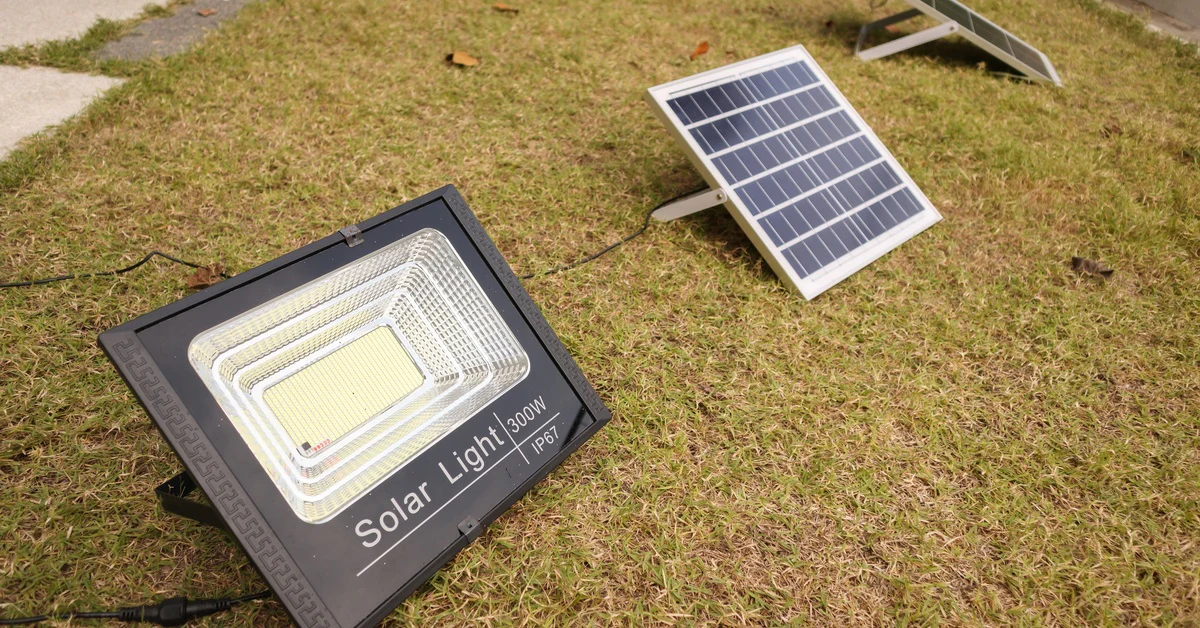
The same principle applies to first charge. If you cannot give a new light six hours of direct sun on day one, charge it somewhere else. Put the panel on a south facing roof. Clip it to a fence post that gets midday sun. Use an extension cord for the panel if the light has a detachable panel. Some brands like Lithonia and LuminAria sell separate panels for this purpose. A 10 foot extension cord for a solar panel costs $12 on Amazon. Worth every penny.
A specific price I checked this morning
I looked up the LuminAria replacement battery on their website. A new 3.2 volt lithium iron phosphate battery costs $24. That is for one battery. Expensive. But the battery should last five to seven years. Spread that cost out and it is fine.
The Aootek floodlights use a non replaceable battery. You cannot buy a replacement from Aootek. When the battery dies, you throw away the whole light. That is a hidden cost of buying cheap best sellers. A $37 four pack sounds cheap. But if you replace it every two years, you spend $185 over ten years. A $65 LuminAria light with a replaceable battery costs less over a decade.
I did not expect to find that pattern when I started testing first charge times. But the data pushed me toward brands that let me change the battery. That is the kind of thing you only learn from owning these products for years, not from reading a product page.
What to do on day one
Take the lights out of the box. Turn the switch to the on position. Some lights ship with the switch set to off to prevent discharge in the box. If you forget to turn them on, they will not charge at all.
Place the lights or their separate solar panels in a spot with full direct sun. South facing is best. East or west facing works but needs more hours. North facing is useless for charging.
Leave them alone for a full sunny day. Do not check on them every hour. Do not move them around to chase the sun. Pick a good spot and walk away.
After the sun goes down, check if the lights turn on automatically. Most do. If they turn on but die within an hour, they did not charge enough. Leave them in the same spot for another full day. Some batteries need two or three cycles to reach peak performance.
If after three sunny days the lights still die within two hours, you have a bad product or a bad battery. Return them. Buy from a brand with replaceable batteries next time.
The honest bottom line
How long do solar lights take to charge for the first time? Six to twelve hours of direct sun for good brands. Twice that for cheap brands. Double it again for cloudy weather. Triple it for winter.
Patience on day one saves frustration for the next two years. I learned that by wasting a Friday night sitting in a dark garden with dead lights. Do not be me. Let them cook in the sun. Go inside. Watch a movie. Check them in the morning. They will thank you.
FAQs
Can I charge solar lights through a window on a cloudy day?
No. Window glass blocks up to 30 percent of the UV and infrared spectrum that solar panels need. Cloudy days already cut output by 50 to 80 percent. Combining both leaves you with almost no charging power. I tested this with a LuminAria light on a south facing windowsill during an overcast week. After five days, the battery measured 15 percent full. Outside on the same week, another light reached 60 percent. Keep them outside.
Should I leave the switch on while charging for the first time?
Yes. The switch controls the connection between the battery and the LED. Even when the light is off during the day, the switch needs to be in the on position for the battery to accept a charge. Many people miss this step. I helped a neighbor who left his new lights in the off position for three days. Nothing charged. He thought the lights were broken. Flip the switch to on before placing them in the sun.
How do I know when the first charge is complete?
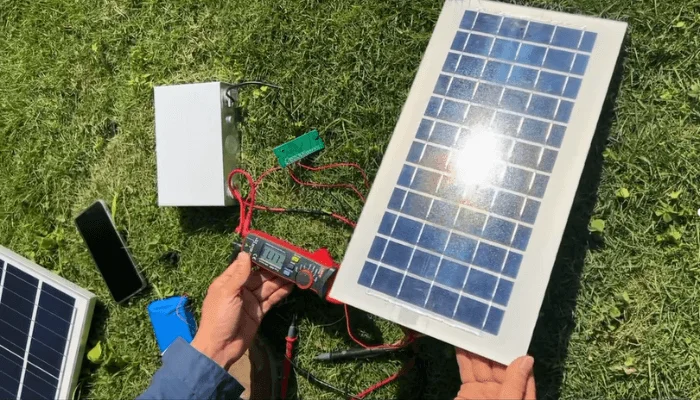
Some lights have a small LED indicator on the solar panel or battery pack. Red means charging. Green means full. If your lights lack an indicator, charge them for a full sunny day (6 to 12 hours) and then test them at night. If they run for more than six hours, the first charge succeeded. If they die quickly, give them another full day. A voltage meter costs $15 on Amazon and removes all guesswork.
Does cold weather affect first charge time?
Yes. Lithium and NiMH batteries charge slower below 50 degrees Fahrenheit. The chemical reactions inside slow down. I tested an Aootek floodlight at 40 degrees on a sunny day. The battery took thirteen hours to reach full compared to nine hours at 75 degrees. Cold weather also reduces battery capacity temporarily. A battery that runs for eight hours in summer might run for five hours in winter even when fully charged. That is normal. Do not panic.
Can I overcharge solar lights on the first day?
No. All decent solar lights have a charge controller that stops accepting power once the battery reaches full voltage. Leaving the light in the sun for a week will not hurt it. The controller simply disconnects the panel. Cheap lights like the TomCare set I tested have poor controllers that never reach a true full charge. But they also cannot overcharge because they never get there. Overcharging is not a real risk with modern solar garden lights. I left a LuminAria light in full sun for two weeks as a test. It worked fine afterward.
Summary
Most solar lights need 6 to 12 hours of direct sun for their first charge. I tested eight brands including LuminAria, Aootek, and Urpower. A cheap set from Amazon took three days to reach full capacity. A LuminAria light reached 80 percent in one afternoon. Cloudy days double the time. Winter sun barely works. Put new lights in direct sun for a full day before expecting them to last all night. Patience on day one saves frustration on day two.