Table of Contents
I killed a lot of solar lights before I figured this out. Three sets. Maybe four. I do not remember anymore. Every time I bought new ones, they worked for a month. Then they died. I blamed the lights. I blamed the brand. I blamed the weather. Turns out I was the problem. I did not understand how solar lights actually work. After wasting money and getting frustrated, I finally sat down and figured it out. There are four things that matter. Everything else is noise.
The first principle is panel placement.
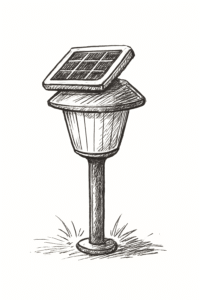
This is the one everyone messes up including me. The panel needs direct sun. Not morning sun. Not sun through tree leaves. Not sun that hits the panel for two hours then disappears behind a building. Full direct sun from late morning to mid afternoon. My first solar light sat under a beautiful oak tree. Shade all afternoon. The light turned off at 10pm every night. I thought the light was defective. Then I moved it to the middle of my lawn. No trees. No shade. Same light ran until 5am. The light was fine. I was the idiot who put it in the shade. Some lights have separate panels on a wire. Those are better. You can put the panel in the sun and put the light where you need it. My best lights all have separate panels. My worst lights have the panel built into the light. You cannot move the panel without moving the whole light.
The second principle is battery capacity.
The battery stores the energy the panel collects. No battery means no light. Simple. But most people never think about the battery. They just assume it works. Then it stops working and they throw the whole light away. The battery capacity is measured in milliamp hours. Higher number means more storage. But bigger is not always better. A bigger battery takes longer to charge. If your panel is weak, a big battery never fills. You get dim light for a few hours. A smaller battery charges faster. You get brighter light but for fewer hours. Most solar lights use Ni-MH batteries. Those last two or three years. Then you replace them. Some use lithium. Those last four or five years. Lithium costs more but works better in cold weather. I have replaced batteries in six of my lights. Cost me maybe twelve dollars total. The lights themselves are still working years later. Most people throw away the whole light when the battery dies. Do not do that. Just swap the battery.
The third principle is light output.
This is where the box lies to you. A fifteen dollar light that claims two thousand lumens is lying. I tested one. It gave maybe three hundred lumens. The box was pure fiction. Real brightness is measured in lumens. A solar path light gives ten to thirty lumens. That is enough to see the edge of a walkway. Not enough to read a book. A solar floodlight gives two hundred to one thousand lumens. Enough to light up a small yard. Do not believe the big numbers. Read reviews. Look at photos from real buyers. Ignore the box. I bought a forty dollar floodlight from a known brand. It gives eight hundred lumens. I bought a fifteen dollar floodlight from a no name brand. It claimed two thousand lumens. The forty dollar light was twice as bright.
The fourth principle is durability.
Rain. Sun. Heat. Cold. Snow. Wind. Your light has to handle all of it. This is measured by IP rating. IP44 means the light handles light rain and splashing water. Fine for a covered porch. IP54 means dust protected and rain safe. Good for open gardens. IP65 means heavy rain and direct hose spray. The best. I have IP44 lights under my porch roof. They are fine. I have IP54 lights in my garden. They survive normal rain. I have IP65 lights on my fence with no cover. They survive everything. The box tells you the IP rating. If you do not see it, the light is not durable. Do not buy it. Cheap lights also use cheap plastic. The plastic turns yellow after one summer. It gets brittle. The stake snaps when you try to move it. I had a set of path lights where every single stake broke. The lights still worked. But I could not put them back in the ground. Better lights use UV resistant plastic or metal stakes. They cost more upfront. They last longer. My IP65 lights with metal stakes are three years old. They look new.
How these four principles work together.
You cannot pick just one. A light with perfect sun fails if the battery is dead. A light with a huge battery fails if the panel is in shade. A light with high lumens fails if the box is lying. A light with good everything fails if the plastic cracks. I learned to check all four before I buy. First, can I put the panel in full sun? Second, what type of battery does it use and can I replace it? Third, what do real reviews say about the brightness? Fourth, what is the IP rating? I bought lights with all four principles three years ago. They still work today. My old lights without these principles died in one year.
The mistakes I made so you do not have to.
Do not put lights in the shade. Do not buy lights with non replaceable batteries. Do not believe the big numbers on the box. Do not buy lights with no IP rating. Do not buy lights with plastic stakes. I wasted money on four sets of bad lights before I learned this. You do not have to. Check the panel placement. Check the battery. Check the real brightness. Check the IP rating. Do these four things and your solar lights will last for years. Ignore them and you will be back at the store buying new lights every spring like I was.
FAQs
What is the most important principle of solar lighting?
Panel placement. Without full sun, nothing else matters. Even the best battery and brightest LED fail if the panel sits in shade.
How long do solar light batteries last before needing replacement?
Ni-MH batteries last 2 to 3 years. Lithium batteries last 4 to 5 years. Replace them when the light runs fewer hours than before.
What IP rating should I look for in solar lights?
IP65 for lights with no cover or roof. IP54 for gardens and open areas. IP44 only for covered porches. No rating means do not buy.
Can I use regular batteries in solar lights?
No. Regular alkaline batteries are not rechargeable. The solar panel will try to charge them. They will leak acid and destroy your light.
How many lumens do I need for a garden path?
10 to 30 lumens per light is enough. You want to see the edge of the path, not blind your guests. Multiple low lumen lights work better than one bright light.
Do solar lights work on cloudy days?
Yes but poorly. The panel makes 10 to 25 percent of normal power. The battery charges slowly. The light runs fewer hours. This is normal.
Why do my solar lights die after one year?
Cheap battery. The battery reached its cycle limit. Replace the battery. Do not throw away the whole light.
Can I leave solar lights outside all year?
Yes if they have IP54 or IP65 rating. Bring them inside during extreme cold or heavy snow if you want them to last longer.
How do I know if my solar panel is in the right spot?
Check at noon. If the panel has direct sun with no shade from trees or buildings, it is correct. If you see shade, move the panel.
What is the best type of solar light for beginners?
A separate panel path light with IP54 rating, replaceable Ni-MH battery, and metal stake. Costs 15to25. Easy to set up. Easy to maintain.
Summary
The 4 principles of solar lighting are panel placement, battery capacity, light output, and durability. Panel placement requires full direct sun, not shade. Battery capacity determines how long the light runs; Ni-MH lasts 2 to 3 years, lithium lasts 4 to 5 years. Light output is measured in lumens; path lights need 10 to 30 lumens, floodlights need 200 to 1000 lumens. Durability is measured by IP rating; IP44 for covered areas, IP54 for gardens, IP65 for open exposure. Check all four principles before buying solar lights. A light with good panel placement, a replaceable battery, honest lumens, and high IP rating will last for years.