The Author
Table of Contents
If you searched for “solar hydrogen tank review,” you probably expected a tidy list of products with star ratings. That list doesn’t exist, and after digging through manufacturer filings, funding announcements, and Australian installer data for this update, it’s clearer than ever why: one of the two products people mean when they say “hydrogen home battery” has spent years described by its own staff as still “in trials,” and the other doesn’t launch until 2027. This isn’t a mature retail category. It’s two early-stage technologies solving two different problems, and this guide separates them properly, with sourcing you can check yourself.
Quick Answer: What to Do Based on Your Problem
- You want backup power for a few hours during outages, full stop. Skip hydrogen. A lithium battery like a Tesla Powerwall 3 does this cheaper, more efficiently, and is actually sitting on a truck today.
- You want multi-day backup and hate the idea of a battery degrading over the years. LAVO’s hydrogen battery is built for exactly this — but as of the most recent public confirmation we could find, it’s still not a straightforward retail purchase. Read the LAVO section before you get attached to the idea.
- You’re trying to cut winter heating and power costs by storing summer solar surplus. That’s a seasonal storage problem. Photoncycle is building a system for it, funded and named, but not shipping to most people until 2027 at the earliest.
- You’re just curious how this technology works. Keep reading.
There Are Now Two Very Different “Hydrogen Storage” Products, Don’t Confuse Them
Most articles on this topic talk about “solar hydrogen storage” as one thing. It isn’t. There are two distinct approaches in 2026, aimed at two distinct problems, and conflating them is where most coverage goes wrong.
Daily Storage (LAVO), replaces your battery for day/night cycling
LAVO’s hydrogen battery is meant to do what a home lithium battery already does: absorb daytime solar surplus and give it back at night. The medium is different, hydrogen split from water and stored in a metal hydride “sponge,” then reconverted to electricity through a fuel cell, but the job is the same daily rhythm a Powerwall does.
Seasonal Storage (Photoncycle), shifts summer solar surplus into winter power and heat
Photoncycle is solving a completely different problem: the gap between what solar panels overproduce in summer and what they underdeliver in winter, exactly when heating demand peaks. Its system stores hydrogen underground in solid-state form at a scale meant to carry that surplus across months, not hours, each residential unit is designed to hold up to roughly 10,000 kWh, around 700 times a typical home battery’s capacity.
Confusing these two is like comparing a thermos to a grain silo. Both store something for later use. That’s where the similarity ends.
How It Works, Solar → Electrolyzer → Tank → Fuel Cell
Both systems share the same core loop, just built at very different scales:
Daily / above-ground (LAVO-style): Rooftop solar surplus → Electrolyzer splits water into H₂ + O₂ → Hydrogen stored in a low-pressure metal hydride vessel, on-site, above ground → Fuel cell recombines H₂ + O₂ into electricity that night
Seasonal / underground (Photoncycle-style): Summer solar surplus, months' worth → Electrolyzer splits water into H₂ + O₂ → Hydrogen converted to solid-state form and stored underground, at ~10,000 kWh scale → Reversible fuel cell converts it back to electricity in winter, with waste heat captured through a heat pump for space and water heating
It’s essentially a rechargeable water battery either way. The “recharge” just involves splitting molecules instead of shuffling lithium ions, and in the seasonal version, the storage vessel is buried instead of sitting in a cabinet by your garage.
LAVO, The Daily Hydrogen Battery
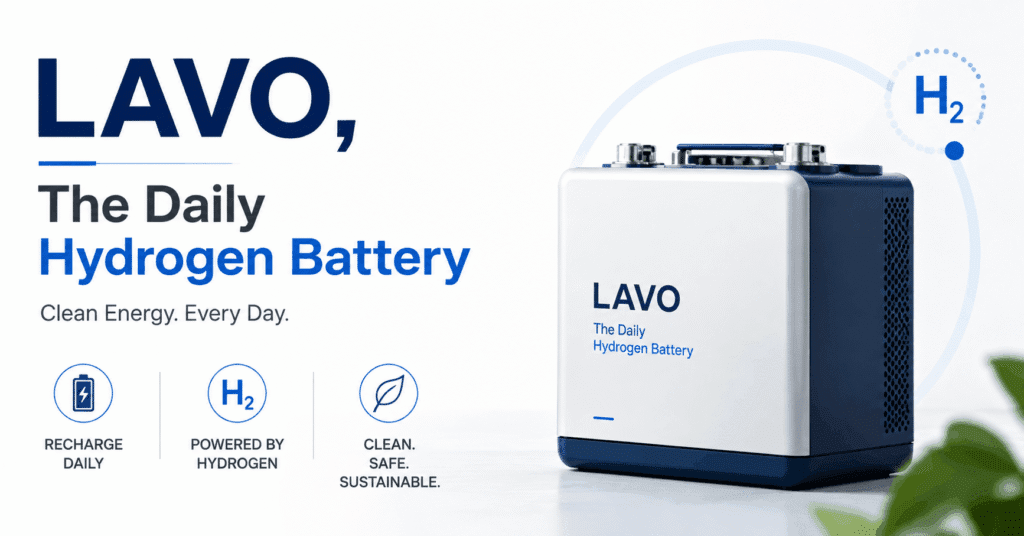
LAVO is a Sydney-based company that launched its residential hydrogen battery in 2021, developed with the University of New South Wales. The specs below are pulled from the manufacturer’s own materials and independent Australian coverage, flagged where they haven’t visibly changed in years, which is itself a signal worth noticing.
- Usable capacity: over 40 kWh, roughly three times a Tesla Powerwall 3’s 13.5 kWh
- Output: 5 kW continuous, with some spec sheets citing a peak closer to 6.8 kW
- Round-trip efficiency: around 50%, with a 2026 Australian installer review putting the range at 50–60%
- Price: launched at AU$34,750, with a later edition priced around AU$29,450 before installation, this is the most recent public pricing we could locate; there’s no evidence of an updated 2026 price list, so confirm directly with LAVO before budgeting
- Requirements: a separate hybrid inverter, a water connection, and annual professional maintenance
- Claimed lifespan: the metal hydride storage vessels are rated for around 20,000 cycles, with some manufacturer materials citing a roughly 30-year vessel lifetime; the standard warranty is 10 years, comparable to typical lithium battery warranties
The honesty check the rest of the internet skips
Here’s what a deeper dig turns up that most “review” pages don’t mention: as of the most recent public statement we could verify, company staff quoted in November 2023, LAVO described both its residential and utility-scale hydrogen batteries as still “in trials.” At the same time, the company soft-launched a different, more concrete commercial product called LAVO Life: a lithium iron phosphate (LFP) battery, built with CATL cells, bundled with Yingli solar panels and EV charging, sold via a 10-year, no-upfront-cost subscription. That product is not hydrogen-based at all.
We found no verified evidence of the hydrogen battery reaching general residential customers since those early trial-stage reports. If you’re seriously considering LAVO’s hydrogen product specifically, treat every spec above as a starting point and confirm current availability, pricing, and lead times directly with the company, this is a niche where the gap between “launched” and “shippable to your house” has stayed open for years.
LAVO vs. Tesla Powerwall
| Feature | LAVO Hydrogen Battery | Tesla Powerwall 3 |
|---|---|---|
| Capacity | ~40 kWh | 13.5 kWh |
| Round-trip efficiency | ~50–60% | ~90%+ |
| Degradation over time | Minimal (claimed) | Gradual, like all lithium batteries |
| Continuous output | 5 kW | Up to 11.5 kW |
| Installation complexity | High (water hookup, hybrid inverter) | Low — inverter is integrated |
| Upfront cost | ~AU$29,450–$34,750 (unit only, pricing unconfirmed for 2026) | Roughly AU$9,000–$14,500 (unit), higher installed |
| Maintenance | Annual professional service | Minimal |
| Real-world availability | Unclear — last confirmed status was “in trials” | Widely installed across Australia today |
The capacity gap looks like a slam-dunk for LAVO until you hit the efficiency and availability rows. Roughly half the energy you put in doesn’t come back out, and, as of the most recent evidence available, you may not be able to actually buy the hydrogen version yet.
Photoncycle, Seasonal Hydrogen Storage (Coming 2027)
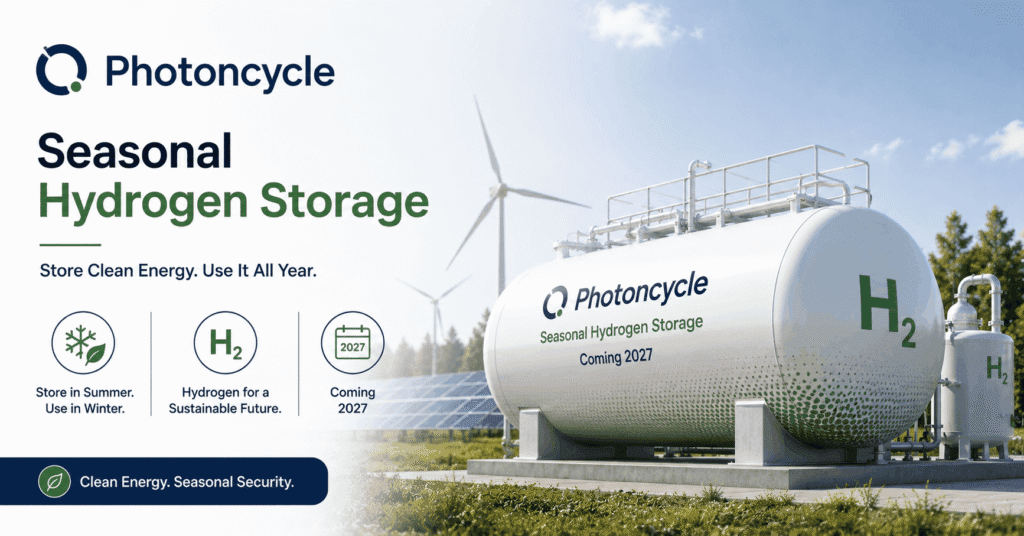
Photoncycle isn’t trying to replace your battery. It’s trying to replace your winter energy bill.
The Oslo-based company, founded in 2020 by CEO Bjørn Brandtzæg, converts summer solar surplus into solid-state hydrogen and stores it underground in a residential unit sized for roughly 10,000 kWh, enough to carry a household through a heating season rather than a single night. When winter arrives, a reversible fuel cell converts the stored hydrogen back into electricity, and the fuel cell’s waste heat is captured through a heat pump to help warm the home and its water supply.
In March 2026, Photoncycle closed a €15 million Series A round, led by NordicNinja and Voima Ventures with participation from existing backers Lifeline Ventures, Eviny Ventures, Luminar Ventures, and Momentum. The funding is earmarked for scaling manufacturing and supporting early commercial deployment, targeting Denmark first, then the Netherlands. The Dutch sequencing is deliberate: the Netherlands is phasing out net metering in 2027, which will make exporting summer solar surplus to the grid far less financially attractive than storing it at home. The company’s longer-term plan is a 1.4 TWh annual manufacturing capacity coming online from 2027, roughly enough to supply seasonal storage to 140,000 homes at that 10,000 kWh scale.
Photoncycle also plans to sell the system on a subscription model rather than a large upfront purchase, with the subscription covering hardware, maintenance, system operation, and access to energy trading markets, a meaningfully different economic proposition than LAVO’s one-time buy, and one aimed squarely at homeowners who can’t or won’t front a five-figure sum for a battery.
Why Seasonal Storage Is a Different Problem Than Daily Backup
Lithium batteries are excellent at short-duration cycling: charge during the day, discharge at night, repeat. They’re a poor fit for storing energy across months, because doing so would require an enormous, expensive bank of cells sitting mostly idle for half the year. Hydrogen’s advantage here isn’t efficiency, Photoncycle’s own materials acknowledge its electrical round-trip efficiency lags short-duration batteries, and the company leans on captured heat to offset that. The advantage is that storing hydrogen at scale is structurally cheaper per kWh than storing that same energy in lithium once you’re talking about months of storage rather than hours, a genuinely different engineering problem, not just a bigger version of the same one.
Hydrogen Storage vs. Lithium Battery, Full Comparison Table
| Factor | Lithium Battery (e.g. Powerwall 3) | LAVO (Daily Hydrogen) | Photoncycle (Seasonal Hydrogen) |
|---|---|---|---|
| Best for | Daily cycling, outage backup | Multi-day backup, anti-degradation | Summer-to-winter energy shifting |
| Round-trip efficiency | ~90%+ | ~50–60% | Lower than daily batteries; offset by captured heat |
| Typical capacity | 10–15 kWh | ~40 kWh | Up to ~10,000 kWh |
| Degradation | Yes, gradual | Minimal (claimed) | Minimal (claimed) |
| Upfront cost | Moderate, rebates available in Australia | High, and unclear if purchasable right now | Unclear — subscription model, no public pricing |
| Availability today | Widely available | Unclear — last confirmed status was “in trials” | Not yet — targeting Denmark from 2026–27, Netherlands after |
| Maintenance | Low | Annual service, water hookup | Underground unit, details TBD |
Is It Safe?

Hydrogen has an image problem, mostly thanks to the Hindenburg, a hydrogen airship that caught fire in 1937, and that single event still colors how people feel about the gas nearly a century later.
Home hydrogen storage systems are engineered around this concern directly. LAVO stores hydrogen at low pressure inside a solid metal hydride rather than as a compressed gas, and the company states that any leaks disperse quickly, putting the system’s risk profile in the same ballpark as storing conventional fuels like gasoline or natural gas. That’s a manufacturer claim rather than an independent safety audit, so treat it as a starting point, not the final word, but it does reflect a real, verifiable design choice: low-pressure solid storage is inherently safer than high-pressure gas cylinders, which is exactly why both LAVO and Photoncycle chose solid-state approaches over compressed or liquid hydrogen.
The honest takeaway: hydrogen isn’t risk-free, but residential systems are specifically engineered to avoid the failure modes that made hydrogen famous for the wrong reasons.
The Real Cost, What You’d Actually Pay
LAVO: The only public pricing we could find is still the original launch pricing, roughly AU$29,450 to AU$34,750 before installation, plus a hybrid inverter and any plumbing work for the water connection, plus annual maintenance. That’s a five-figure purchase before you’ve generated a single kilowatt-hour, and it’s worth repeating that we found no confirmation the hydrogen unit is currently for sale to residential customers at all. Some Australian solar-comparison sites suggest LAVO’s 40 kWh capacity would likely qualify for the federal Cheaper Home Batteries Program (a point-of-sale rebate scheme that began 1 July 2025), but that’s an assumption on their part, not a confirmed eligibility listing, check directly before counting on it.
Photoncycle: No public pricing exists yet. The company has been consistent across every announcement in signaling a subscription-based model rather than a large upfront cost, closer to how solar-as-a-service already works in some markets. That could make seasonal storage accessible to people who’d never front $30,000+ for a battery, but it also means paying indefinitely rather than owning outright. Real numbers won’t exist until the Denmark rollout is further along.
For comparison, lithium: A Tesla Powerwall 3 unit runs roughly AU$9,000–$14,500 before installation, with fully installed pricing commonly landing somewhere between AU$12,000 and AU$17,000 depending on the installer and site, and Australia’s federal battery rebate, active since mid-2025, can meaningfully cut that. Exact figures vary a lot by installer and postcode even within a single week of quotes, so treat any specific number, including these, as a starting point for your own quotes rather than a fixed price.
Neither hydrogen system is priced like a mature consumer product yet. This is still early-stage infrastructure, priced and, in LAVO’s case, gated, like early-stage infrastructure.
Pros and Cons, Side by Side
Pros of hydrogen storage:
- Minimal capacity degradation over time, unlike lithium
- No lithium mining or battery-disposal footprint
- Genuinely suited to long-duration or seasonal storage, where batteries fall short
- Hydride vessels and underground tanks are rated to last decades
Cons of hydrogen storage:
- Round-trip efficiency lags well behind lithium, you lose real energy in the conversion
- High upfront cost (LAVO) or no published pricing at all (Photoncycle)
- Genuinely limited commercial availability, LAVO’s residential unit has an unclear purchase path, and Photoncycle doesn’t launch until 2026–27
- Ongoing maintenance requirements most battery owners never think about
Who Should Actually Consider This
Off-grid households or anyone facing frequent multi-day outages, who can actually source a unit: LAVO’s long-duration, low-degradation profile is built for exactly this, assuming you can confirm a purchase path and afford it.
Homeowners in Denmark or the Netherlands with high winter heating costs: worth joining Photoncycle’s waitlist and watching for pricing, but this is a 2026–27 story, not something to plan around today.
Everyone else: a lithium battery remains the better answer on cost, efficiency, and simple availability. If that’s you, our full guide to solar battery storage options is the more useful next read.
FAQs
Is hydrogen home storage safe?
Modern residential systems store hydrogen at low pressure in solid-state form specifically to avoid the risks associated with compressed gas. Manufacturers describe leak behavior as comparable to other common home fuels, though that comes from company claims rather than independent third-party safety testing.
What’s the difference between LAVO and Photoncycle?
LAVO is designed to cycle daily like a battery, storing and releasing hydrogen roughly on a day-night rhythm, though its real-world commercial availability is currently unclear. Photoncycle stores hydrogen underground at a much larger scale to shift energy from summer to winter, and isn’t commercially available anywhere yet. They solve different problems and aren’t really competitors.
How much does a hydrogen home battery cost?
LAVO’s most recently published pricing sits in the AU$29,450–$34,750 range before installation, though that figure dates back several years and current availability is unconfirmed. Photoncycle hasn’t published consumer pricing and is expected to use a subscription model instead of an upfront purchase.
Is hydrogen storage better than a lithium battery?
Not for most people, not yet. Lithium wins on cost, efficiency, and availability today. Hydrogen wins on long-duration storage and resistance to capacity degradation, a narrower but real advantage, and one that currently comes with real questions about whether you can actually buy the product.
Can hydrogen storage power my home through winter?
That’s specifically what Photoncycle is designed to do, using stored summer solar surplus plus captured waste heat. It’s targeting Denmark first, then the Netherlands, with broader manufacturing from 2027, so for now this is a “watch this space” answer, not a purchasable solution.
When will seasonal hydrogen storage be available where I live?
Photoncycle is targeting Denmark first, then the Netherlands ahead of that country’s 2027 net metering phase-out, with broader manufacturing capacity expected to come online from 2027. Availability elsewhere hasn’t been announced, check the company’s site directly for the latest.