
Last updated on October 25th, 2026 at 05:30 pm
Quick answer: Do solar porch ceiling lights work on a covered porch? Yes, but only with the right design. Choose a remote-panel light (panel placed in direct sun) or a hybrid light with USB charging, because a panel built into the fixture gets little sun under a roof.
For a deep, shady porch or safety lighting at steps and doors, hardwired lights are more reliable. Pick a damp-rated fixture for a covered porch, or wet-rated if rain can blow in.
Table of Contents
Myth: a solar light works anywhere, as long as you hang it up.
Fact: solar porch ceiling lights work under a covered porch only when the solar panel can see the sky. That means a remote panel in a sunny spot, or a light with a backup USB charge. A panel stuck to your porch ceiling gets about as much sun as a mushroom in a cellar. This guide explains why, shows what to buy, and tells you when to pick a different light.
Key Takeaways
- A roof blocks the sun, so a panel built into a ceiling light often charges poorly.
- Remote-panel and hybrid lights solve most shade problems.
- A covered porch usually needs a damp-rated fixture, and wet-rated is safer if rain blows in.
- For steps and entry doors, reliability matters more than going solar.
Do Solar Ceiling Lights Work on a Covered Porch?
The Short Answer
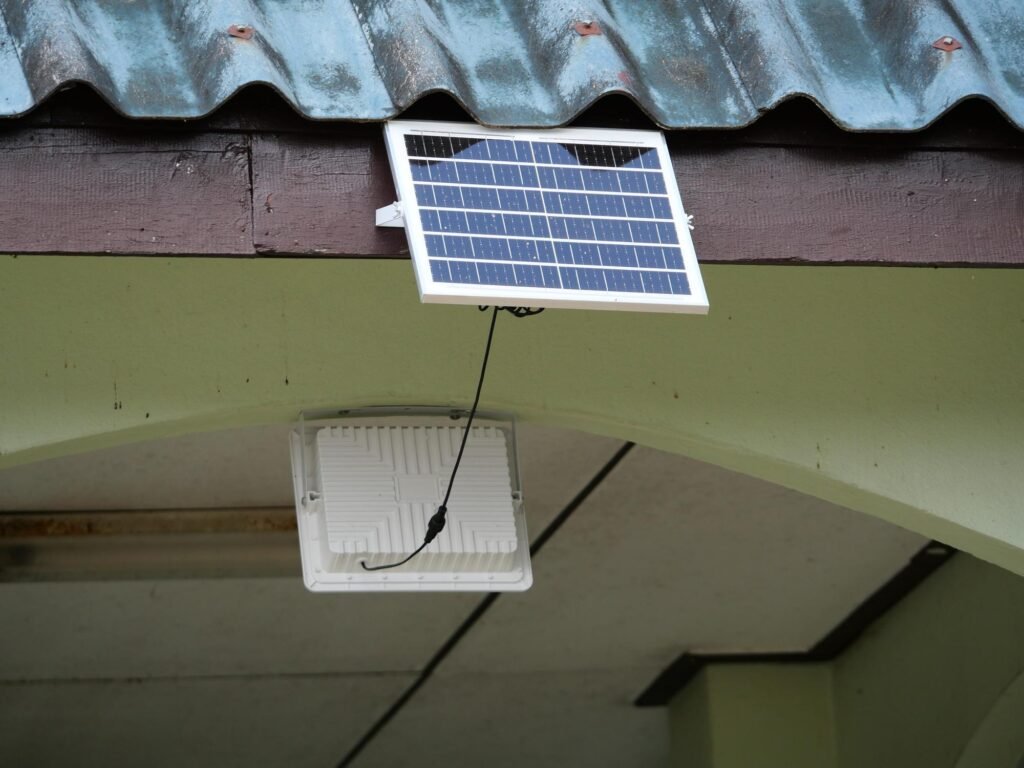
Yes, but only with the right design. Solar ceiling lights work on a covered porch when a remote panel sits in direct sun, or when the light can charge by USB. Fixtures with the panel built into the lamp body usually charge poorly under a roof, because the roof blocks the sky.
Which Setup Fits Your Porch
| Your porch | What the panel gets | Best for |
|---|---|---|
| Deep porch, roof overhead, trees nearby | Almost no direct sun | Hybrid or hardwired light |
| Covered porch, sunny spot within cable reach | Panel can sit in full sun | Remote-panel light |
| Shallow overhang, some angled sun reaches the ceiling | Short, seasonal charging | Decorative use only |
| Steps and entry door you must light every night | Needs steady power | Hardwired or hybrid light |
Direction matters a little. In the Northern Hemisphere, the sun travels across the southern sky. A south-facing porch opening lets angled light reach a ceiling panel. A north-facing opening gives it the least. The roof still blocks overhead light either way.
How Solar Porch Ceiling Lights Work
The Four Parts
Every solar light has four main parts:
- Solar panel: turns daylight into electricity.
- Battery: stores that power for the night.
- LED: gives off the light and uses little power.
- Controller and sensor: switch the light on at dusk, or when it detects motion.
The weak link is almost always the panel and battery pair. If the panel cannot refill the battery, the light shuts off early.
How Much Sun Do They Need?
Solar scientists measure sunlight in “peak sun hours.” One peak sun hour equals one hour of sunshine at a strength of 1 kilowatt per square meter. Eight hours of weak, partial sun may add up to only three or four peak sun hours.
The National Renewable Energy Laboratory (NREL) reports that solar radiation on a flat surface ranges from about 3.0 to 6.0 kWh per square meter per day across most of the continental U.S. Those numbers describe open sky. Your porch ceiling is not open sky.
Light that bounces around still counts, but it carries much less power. Under indirect light, panels typically make 10% to 25% of their rated output. No standard figure covers a porch ceiling. Still, a ceiling sits in deeper shade than open overcast sky, so expect weaker results than that range.
Types of Solar Porch Ceiling Lights
Integrated-Panel Flush-Mount Lights
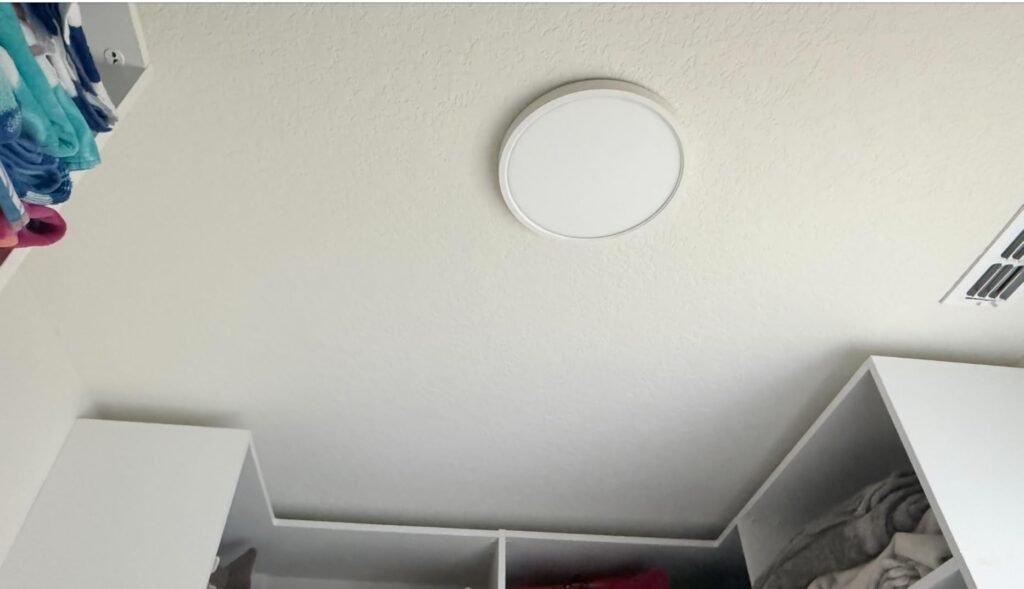
The panel sits on top of, or inside, the fixture. Installation is simple, and you need no cable. The catch is obvious: the panel faces your porch roof. These work best on open or shallow porches that get real sun.
Remote-Panel Lights
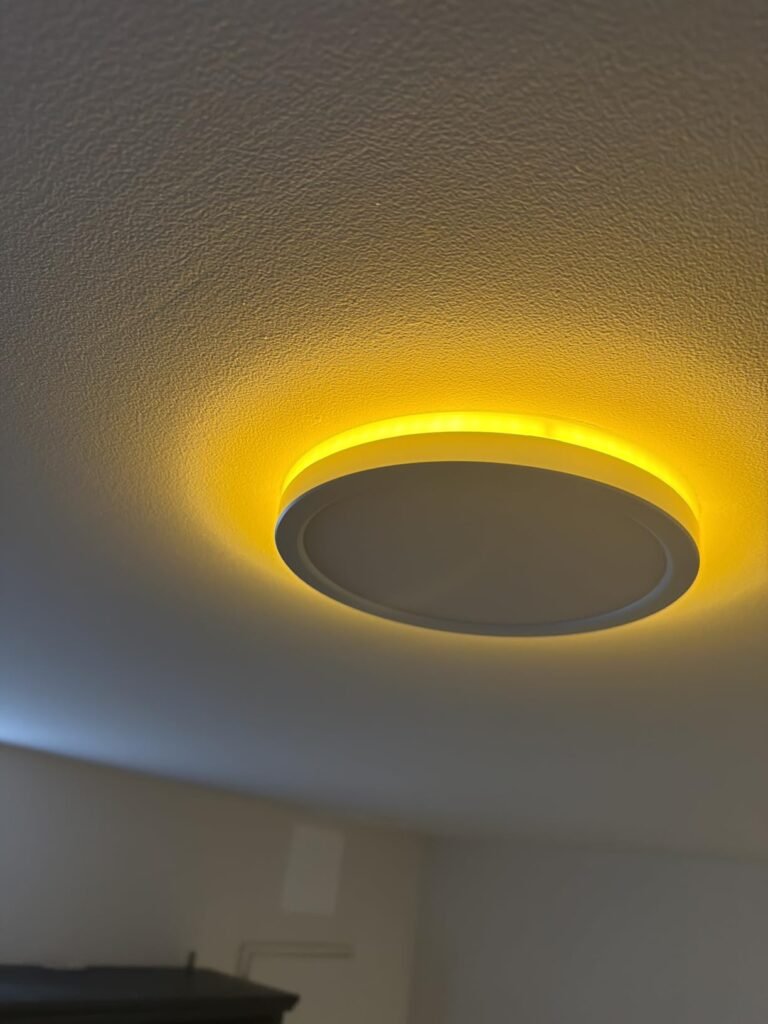
A cable connects the fixture to a separate panel. You hang the light where it looks good and put the panel where the sun is. Lighting professionals use the same idea for shaded sites. One approach is a panel and battery in a shade-free spot, linked to the light by cable. For most covered porches, this is the best solar option.
Hybrid Lights (Solar Plus USB or Plug-In)
These lights charge from the sun when they can and from a cable when they can’t. They suit deep porches, cloudy regions, and winter. Check that the USB charge works while the light stays mounted, or you’ll take it down every few weeks.
Pendant and Lantern Styles
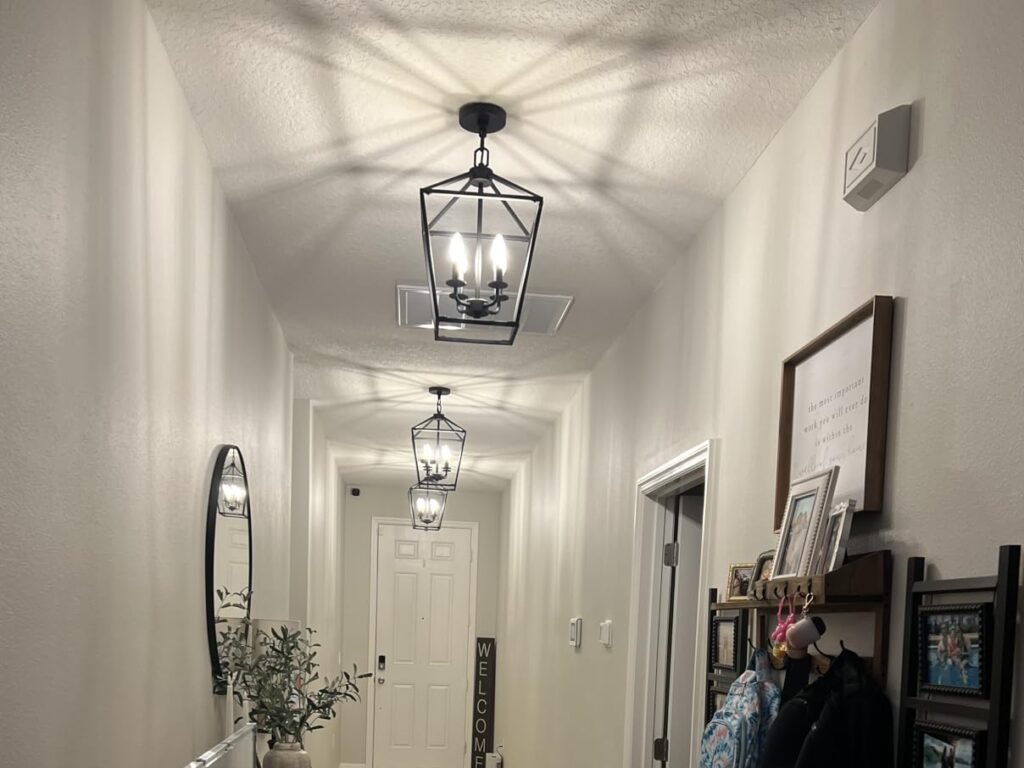
Pendants and lanterns look great, but the panel usually sits on top. That puts it right under your roof again. Look for a version with a separate panel. Want to light more of your home’s exterior? See our guide to solar facade lights for modern homes.
Motion Sensor vs Dusk-to-Dawn
- Motion sensor: stays dim or off until someone walks by. It saves battery, which helps weak-charging porches.
- Dusk-to-dawn: turns on at dark and stays on. It gives steady light but drains the battery faster.
Many models offer both modes. Pick the one that matches the job. A porch you sit on at night needs steady light. A side entrance needs motion.
What to Look For Before Buying
Lumens: How Bright Should It Be?
Lumens measure brightness. Guidance varies, and no official rule exists. One lighting guide suggests 100 to 400 lumens in total for entryways and porches, with smaller porches at the low end. Another says at least 100 lumens for safe walking. For clear sight at a front door, many guides point to 300 to 500 lumens.
Solar lights often claim big numbers for their highest mode. Check the lumens at the mode you will use every night, and check the runtime at that mode.
Battery Type and Capacity
| Battery | Typical service life | Notes |
|---|---|---|
| NiMH | About 2 to 3 years | Common in small lights; often replaced every 1 to 2 years in small garden lights |
| LiFePO4 | About 5 to 10 years in better-quality products | Higher cost, longer life logo elektroda +2 |
Manufacturer-reported figures vary, so treat these as ranges. Bigger capacity (mAh) helps your light survive a run of gloomy days, but only if the panel can refill it.
Panel Wattage and Cable Length
A larger panel charges faster. For a remote panel, measure the distance from the fixture to your sunniest spot. Then add extra for corners and slack. A cable that stops one foot short is a classic DIY disappointment.
IP Rating and Damp vs Wet Location
Two labels matter here.
IP rating. The IP code comes from the international standard IEC 60529. The first digit covers solid objects and dust. The second covers water. For example, IP44 means protection against objects of 1 mm or more and against water splashes from all directions. IP65 adds total dust protection, and its second digit covers low-pressure water jets from all directions.
UL location rating. Under UL’s definitions, damp locations include covered outdoor areas not directly exposed to rain, such as porches. A wet location is one where water can drip, splash, or flow on or against the equipment. If wind blows rain onto your fixture, buy wet-rated. When in doubt, wet-rated costs little extra and saves you a headache.
Colour Temperature
Warm white (2700K to 3000K) gives a cozy, inviting glow. One lighting guide calls it usually the better choice for a covered porch. Cool white feels sharper and suits security lighting.
Warranty and Replaceable Battery
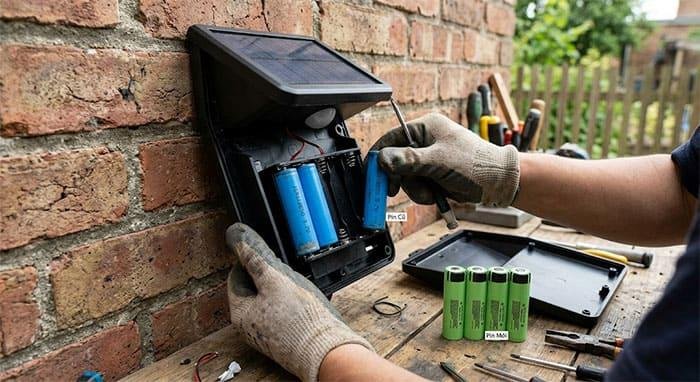
Batteries wear out first. Pick a light with a battery you can swap, and a warranty that covers more than a few months. A sealed battery turns a $15 repair into a new purchase.
Solar vs Hardwired vs Battery-Powered Porch Lights
| Solar | Hardwired | Battery-powered | |
|---|---|---|---|
| Upfront cost | Low to medium | Medium, plus wiring work | Low |
| Brightness consistency | Varies with weather | Steady | Steady until batteries drain |
| Maintenance | Clean panel, replace battery | Very little | Replace batteries often |
| Reliability on a deep porch | Low (integrated panel) | High | Medium |
| Wiring needed | None | Yes, usually an electrician | None |
When to Skip Solar
Solar is not always the smart choice. Skip it, or choose a hybrid or hardwired light, if:
- Your porch is deep and gets no direct sun anywhere nearby.
- The light covers stairs, a door, or a safety path you need every night.
- You live where winter days are short and cloudy.
- You want one setting that stays bright all night, every night.
Shaded spots show the limit clearly. One gardening guide says porch shade is weak unless the sky is open, and suggests a wired or battery lamp there. It also warns against relying on weak shade charging for steps, gates, and safety spots.
Installation Guide
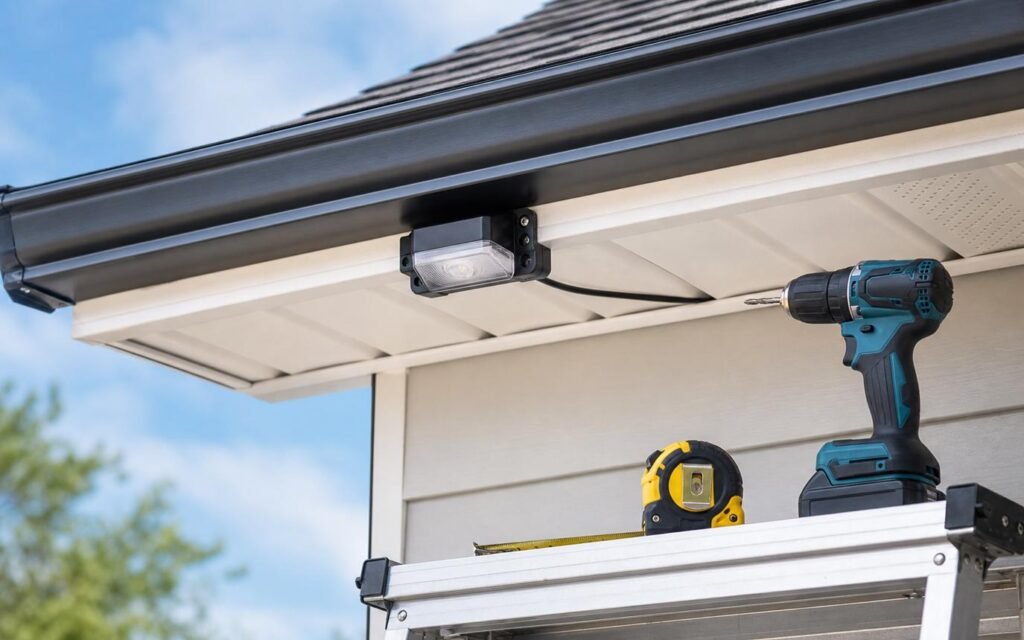
Always follow your fixture’s instructions. Turn off any power if you are working near existing wiring, and use a stable ladder.
By Ceiling Material
- Wood: drill pilot holes so the wood does not split, then screw into solid wood.
- Concrete or masonry: use a masonry bit and anchors rated for the fixture’s weight.
- Vinyl or aluminum soffit: thin panels cannot hold a fixture. Find the framing behind them and fasten into it.
Where to Put a Remote Panel
Pick the spot with the longest stretch of open daylight. Common choices are the roof edge, a sunny wall, or a short pole. Keep leaves and mulch away from the panel face. Aim the panel at open sky and test it for a few days before you tuck the cable away.
Solar lighting follows the same sun-first rule everywhere. If you also fly a flag, our solar flagpole light buyer’s guide covers the same idea.
Common Mistakes
- Mounting an integrated panel directly under the porch roof.
- Buying a cable that is too short.
- Ignoring the damp or wet rating.
- Setting the light to its brightest mode and expecting it to last all night.
- Skipping a test run before final mounting.
What to Expect in Real-World Use
Brightness Claims
No independent public test covers solar porch ceiling lights as a category. So read the box carefully. Check the lumens, the mode that lumen number applies to, and the stated runtime. If a listing hides these, move on.
Cloudy Days and Winter
Weather changes everything. Clouds cut output sharply. Heavy overcast can drop panels to roughly 10% to 25% of rated capacity, while partly cloudy days reach 50% to 80%. Winter adds a second hit. NREL-based estimates for Austin, Texas, show about 2.73 peak sun hours in December versus about 6.77 in July. A light that works fine in July can struggle in December.
For the continental U.S., average peak sun hours range from 3.5 a day in western Washington and Oregon to about 6 in parts of the Southwest. Your region sets your baseline.
Maintenance: Cleaning and Battery Replacement
Wipe the panel when it looks dusty or pollen-covered. A dirty panel charges less. Replace the battery when runtime drops. Use the same type and voltage as the original, because mixing types can cause problems.
Troubleshooting Common Problems
The Light Won’t Charge
Check the panel first. Is it shaded, dirty, or facing a wall? Move it to open sky. Then check that the power switch is on, and look for loose or damaged cable.
The Light Is Dim or Dies Early
This usually means a weak charge or a worn battery. Try a few clear days of charging. If it still fails, replace the battery. A fresh battery that fixes the problem confirms the old one was the culprit.
The Sensor Doesn’t Work
A simple test helps. Cover the panel with your hand after dusk. That tricks the light into thinking it’s dark. If it still won’t turn on, the switch, sensor, or battery likely has a fault. Also check that nothing blocks the sensor lens, such as a spider web or dirt.
FAQs
How often do I replace the battery?
Often every one to three years for small NiMH batteries, and less often for LiFePO4. Replace it when the runtime shrinks.
Do solar lights stay on all night?
Not always. Runtime depends on battery charge, brightness mode, and recent weather. Motion mode usually lasts longer than constant mode.
How many lumens do I need for a porch?
Many guides land between 100 and 400 lumens. Use the low end for small porches and the high end for entry doors or larger areas. Guidance varies, so use it as a starting point.
Are solar lights safe in the rain?
Only if the fixture’s rating fits where you mount it. Covered porches are usually damp locations. If rain can reach the fixture, choose a wet-rated light with a suitable IP rating.
How long do solar porch lights last?
LEDs last a long time. The battery is the usual limit. Small NiMH batteries often need replacing within a few years, while better LiFePO4 batteries can last longer, based on manufacturer-reported figures.
Do solar lights work in shade?
They work, but poorly. Shade cuts the light that reaches the panel, so the battery charges less. A remote panel in the sun fixes most shade problems.
Summary
Match the light to the porch, not the other way around.
- Sunny, open or shallow porch: an integrated-panel light can work.
- Covered porch with a sunny spot nearby: pick a remote-panel light.
- Deep or shady porch, or a safety-critical spot: choose a hybrid or hardwired light.
Solar lighting is a great tool when the sun can reach it. Under a roof, give the panel a window to the sky, or let a cable do the job.
Sources and references
- National Renewable Energy Laboratory (NREL), solar radiation data and PVWatts estimates
- International Electrotechnical Commission, IEC 60529 (IP Code)
- UL luminaire location definitions (dry, damp, wet)
- Manufacturer-reported battery lifespan figures